One of the great pleasures of being here in Arizona is putting up a bird feeder and watching the wild birds who come to visit. This is not something we have seen done in Italy, and it seems a pity, because it is both interesting and amusing. Not that Italians aren’t bird fanciers (leaving out for the time being all the recipes for songbirds) – we have seen homing pigeons flying near our house, and many houses have a cages with parakeets, canaries, and others of that exotic ilk. In fact there is a pet store right in the center of the Rapallo; every fine day they put out cages of little birds which twitter and sing like mad, poor things. But the coaxing to the home of wild birds does not seem to have yet appealed to the Italian householder, at least not in Rapallo.
Of course this being America, bird-watching has become big business. There are whole stores dedicated to the feeding and watching of birds (Wild Birds Unlimited, Bird Watcher Supply Company, Duncraft, and a zillion local stores). In a similar, but less commercial vein, the National Audubon Society is dedicated to the preservation of wild birds and, by extension, their habitat. We buy bird seed in 50-pound sacks, usually black oil sunflower seed, because it appeals to so many different kinds of birds.
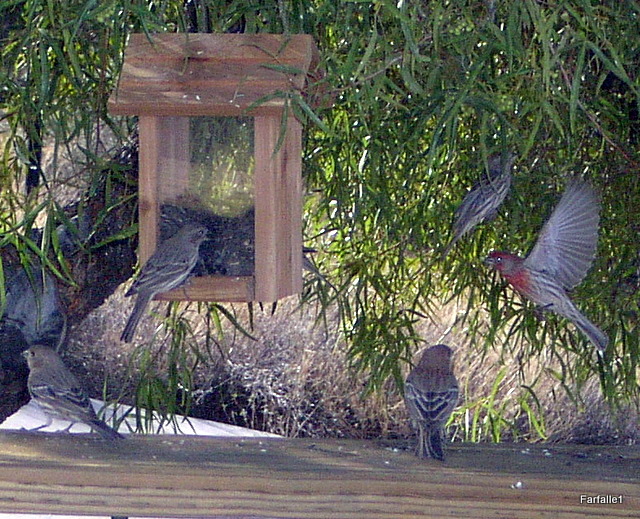
We have hung one small feeder from an ironwood tree off our deck, and have a small ‘bath’ from which the birds can drink. The house finches, our most frequent guests, arrive in the greatest numbers, and they are terribly piggy. We limit the birds to one feeder-full of seed a day, and it has usually been consumed within an hour of our putting it out, most all of it by the finches.
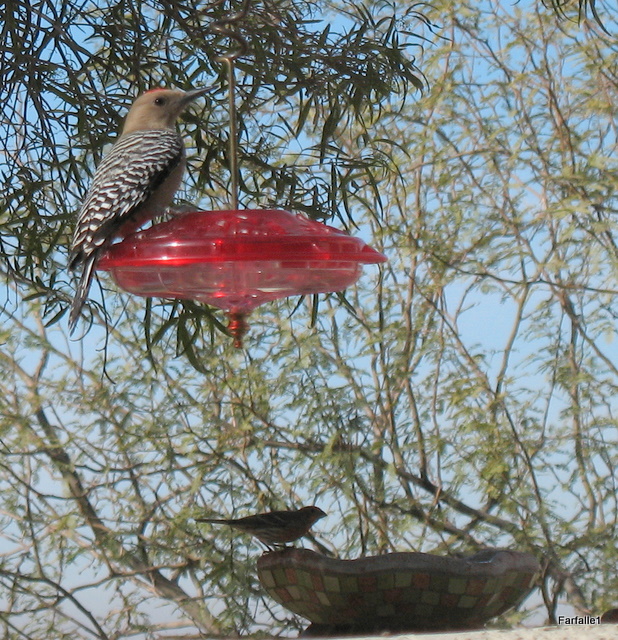
Second in number are the raucous gila woodpeckers. They announce their arrival with a piercing call that is something between a caw and a woody-woodpecker laugh, accompanied by a great deal of head-bobbing. After all that effort they extract one seed from the feeder and fly off to peck it open. They are also extremely partial to the one other feeder we have installed: a hummingbird feeder, which is filled with sugar water (1 to 4 dilution).
Other birds we see frequently at the feeder include the curved bill thrasher, a lovely, shyer bird; and the cactus wren, which is Arizona’s state bird.
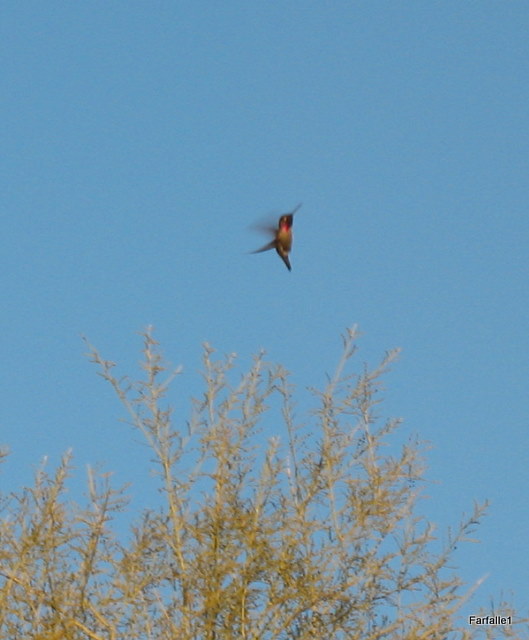
Eighteen species of hummingbirds call Arizona home, and happily some of them visit our nectar feeder every day. They are a lot feistier than their diminutive size would suggest. They offer amazing exhibitions of aggressive battle flights as they try to lay claim to the big red ‘flower’ that never quits.
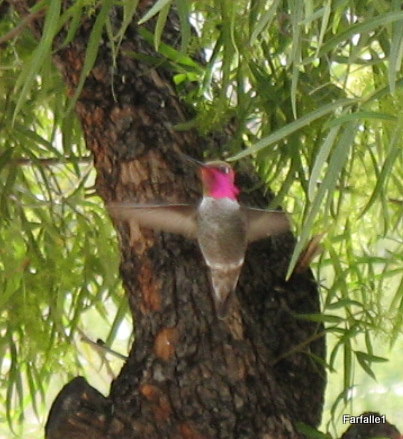
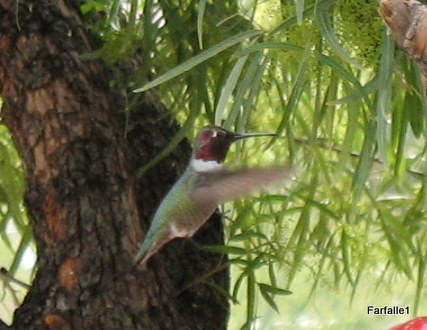
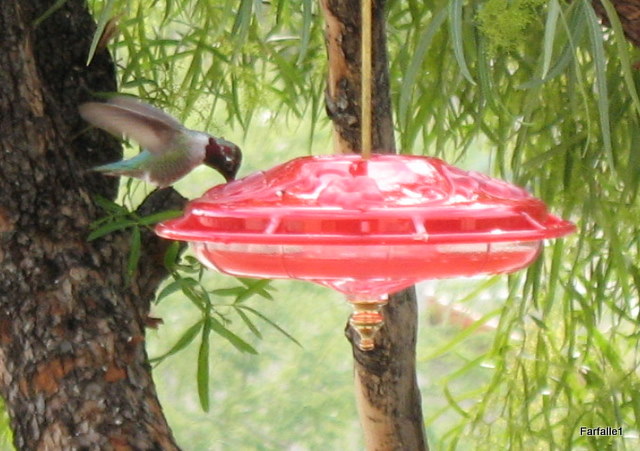
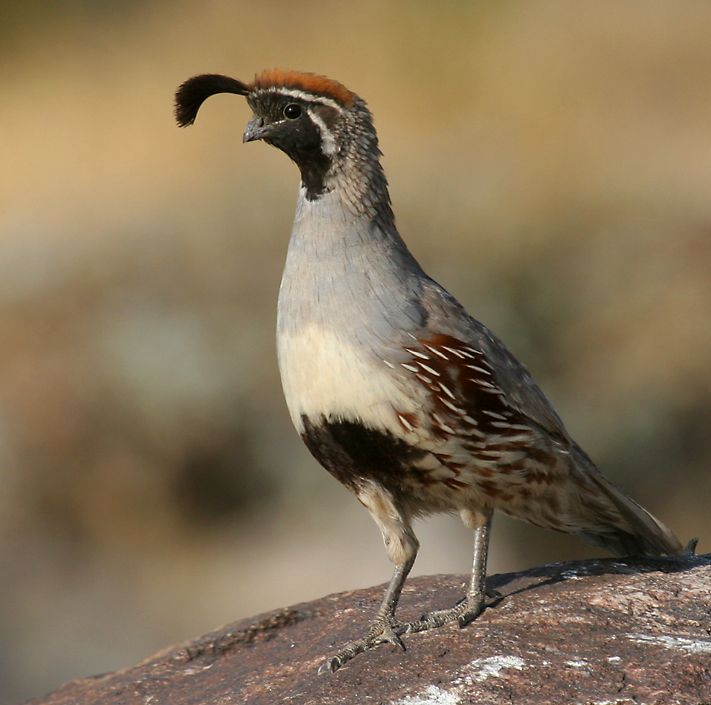
Because they are so greedy, the finches tend to be careless in their eating habits – they spray seed all over the place, most of which ends up on the ground under the feeder. This is good news for the doves and Gambel’s quail who scrabble around in the dirt and eat all the spillage.
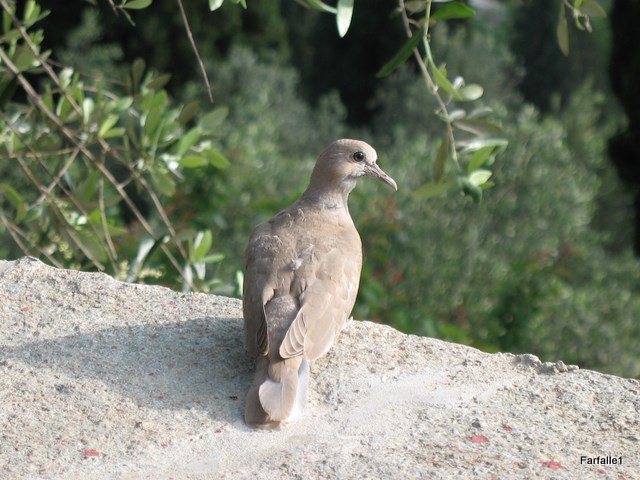
 It’s hard to understand how there can be a Gambel’s quail left in the world – though it doesn’t show in the photo above, the male has a bullseye on his chest. They all have a very funny little plume that jerks up and down as they run (they never walk).
Every now and then inviting birds to share your space can lead to unintended consequences. The first year we came here we put up a Christmas tree, and, because it was very warm, we left the door open. The result was festive, though not exactly what we had in mind.

Then there are the less cheerful consequences. Italians aren’t the only ones who enjoy dining on songbirds. Now and then an unwanted guest comes to our feeder.
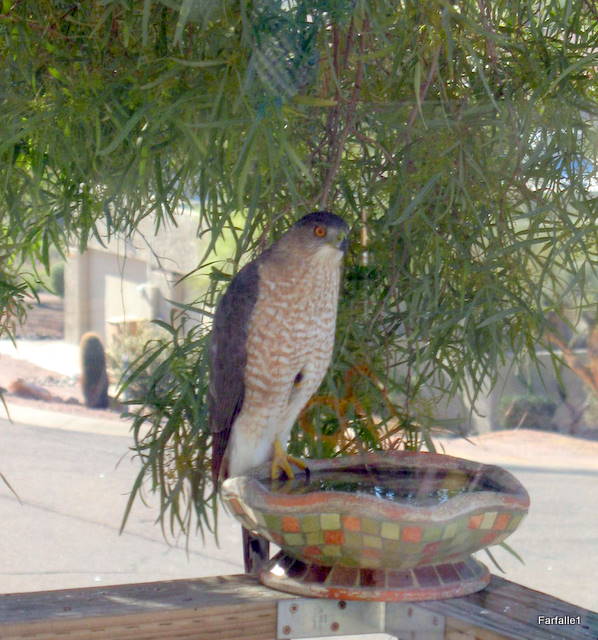
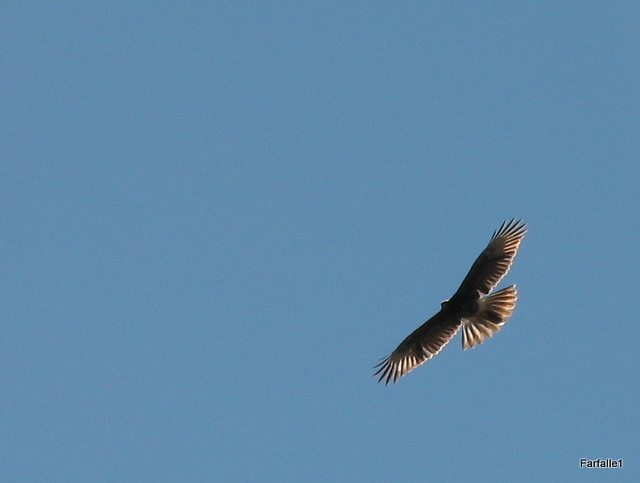
Hawks come by regularly and scare off all the little birds. They scatter in a great clatter of wings and every now and then one will fly into a window and hurt himself. If a bird is just stunned, you can pick it up and hold it close in your hands, keeping it warm until it comes out of shock, as the Captain illustrates below.

This little fellow made a quick recovery, and with joy we took him outside and set him free. He flew about twenty feet and then the hawk swooped down and plucked him out of the air and flew off with him.
It’s enough to make you believe in fate.
 An Ex-Expatriate
Thank you so much for sharing those photos! I haven’t seen hummingbirds in ages. I think they’re the most magical of birds.
You’re right, Karen, they are magical – and aggressive and beautiful…
You and the Captain are the best bird lovers in the world!!! How I wish we could have more of the local twitters on the terrace (I leave some seed in a dish and on the ground). The problem, as always, is that as soon as Maddie hears even one of them chirping outside, she is quick to dash out and chase them. Imagine her frustration when the owls hooted at night. She’d run out, bark, then run back in with a look on her face that said “I hear ’em but I can’t see them!”
Too funny, Rowena. Does Maddie have some feline genes? I wonder what kind of birds come to your seed dish?
Great pictures. Nature does have a way of keeping things in balance.
Thank you! And great videos on your website. We always had a big problem with squirrels when we lived in CT – but it was fun to watch them, too. Less fun were the two times a black bear came to the feeder!
wonderful photos of birds in motion! I’m eager to see them all when I come out to visit.
I’ve started a Google reader because two other friends have started blogs – I hope I can keep up…
With luck the road-runner will still be bopping around – he’s pretty funny. Why not make your reader your home page? You can put a lot more than blogs on it, and never miss anything you want to see… Just more unsolicited advice. You’re welcome!