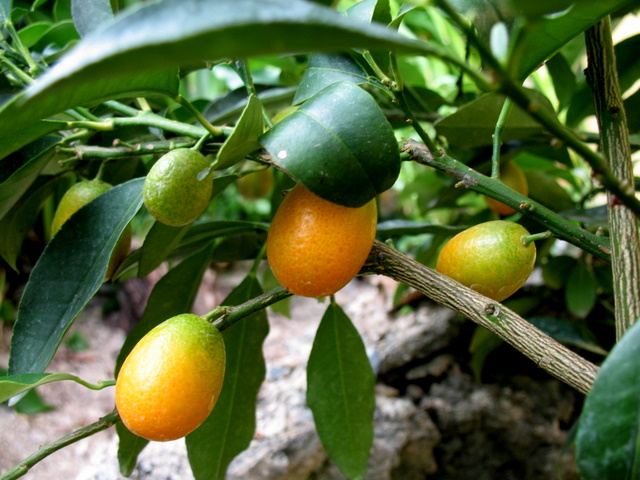
Kumquats are amusing because they are made inside out. Though they appear to the observer to be a normal, if rather small, citrus fruit, it becomes clear immediately to the eater that they have sweet skins and a very tart interior. Ha ha.
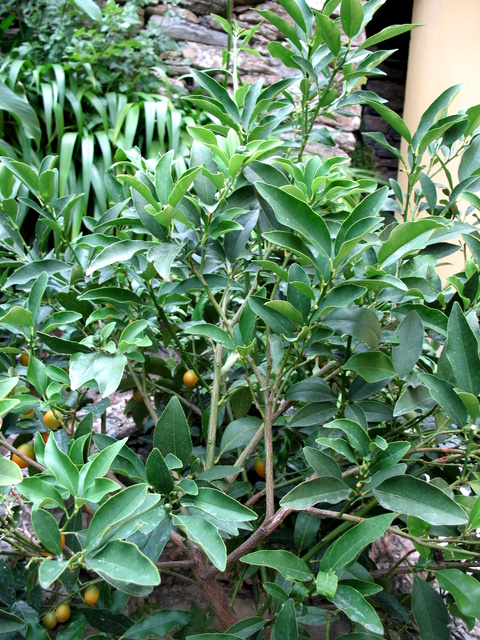
Wikipedia tells us that “they are slow-growing evergreen shrubs or short trees, from 2.5 to 4.5 metres (8 to 15 ft) tall, with sparse branches, sometimes bearing small thorns. The leaves are dark glossy green, and the flowers pure yellow, similar to other citrus flowers, borne singly or clustered in the leaf-axils. The kumquat tree produces 30 to 50 fruit each year.[dubious – discuss] The tree can be hydrophytic, with the fruit often found floating on water near shore during the ripe season.[citation needed]” I can’t speak for the hydrophytic (growing in water) nature of the tree, but the information on fruit production is dubious indeed. We have a very nice, short kumquat tree that we planted in ordinary garden soil a couple of years ago, and it gives us more fruit than we can count. Here is a photo of it after our most recent harvest:
“The plant is native to south Asia and the Asia-Pacific,” continues Wikipedia. “The earliest historical reference to kumquats appears in literature of China in the 12th century. They have long been cultivated in Japan, Taiwan, the Philippines and southeast Asia. They were introduced to Europe in 1846 by Robert Fortune, collector for the London Horticultural Society, and shortly thereafter into North America.” Their late arrival may account for the fact that they are not a particularly well-known or frequently grown garden tree in America. And their unusual taste guarantees that they are not going to be in a bowl on everyone’s table.
There are only so many one can eat in passing. Eating a kumquat really does wake you up. First you say, oooh, sweet. Then you say, yikes! sour!! A kumquat is a truly happy marriage of sweet and sour, in a pre-packaged and ready to eat form.
So what does one do with all the kumquats? We have asked ourselves that very question, but we are hardly the first to do so. Marmalade is the obvious answer, but we passed this year. Our shelves are already groaning under the weight of cherry, apricot and plum jam; we don’t need more jam. The people at Chow.com have some great answers to the question, all the way from soup to nuts… or at least from salad, through main course to dessert, with a nice rum drink to wash it all down.
The Captain found and adapted a delicious and unusual chicken dish that uses kumquats on the epicurious web-site.
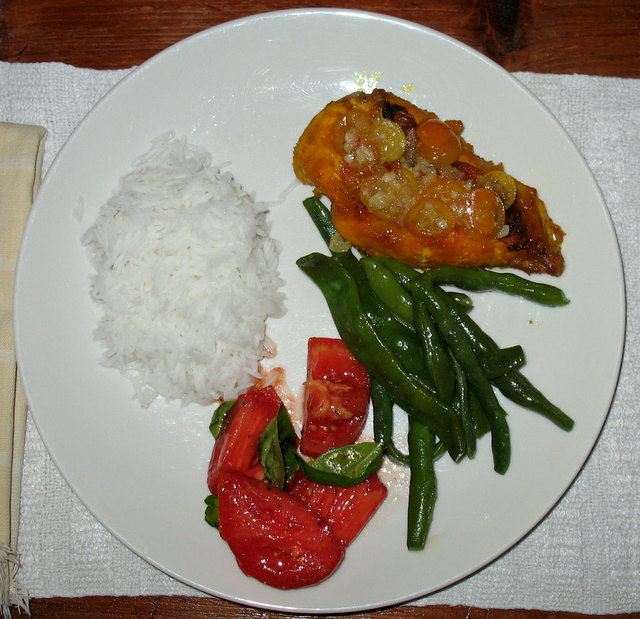
You can find the recipe here, or over on the right in the recipe index.
But whether you look at the recipe or not, I hope some day you’ll have a chance to eat some kumquats. They’ll make you sit up and say ‘howdy!’
 An Ex-Expatriate
Would a kumquat shrub make it in the champlain valley in Vermont?
My little yard is quite warm — zone 5, I think. I haven’t gotten artichokes to winter over, but the lavender plants are making it by and large.
I don’t think they’ll survive outside, Kate. They seem to like zones 9-11, and will tolerate 8 with heavy protection. However, it seems they make a very satisfactory and productive potted plant as they are slow growing. Maybe you could have one that summers outdoors and moves in for winter?
Kumquats are such cute little things and I love the trees. They grow quiet well in Australia as well. I havn’t used them in cooking much. Your recipe looks good.
Check out the recipes at chow.com, Debra… I couldn’t believe the number of ways they have to use kumquats. I agree – they are cute, and the trees quite lovely when they’re older, don’t you think? Ours is still in its hip-high infancy.
Do you have some growing here in Italy? I would like to grow a plant if it is possible.
LindyLou, we do have a plant (in fact those are our kumquats in the photos) – it will take a harsher climate than regular citrus, so while our lemon suffered a bit from the unusual cold last winter, the kumquat came through with flying colors. Perhaps your local vivaio could track one down for you?