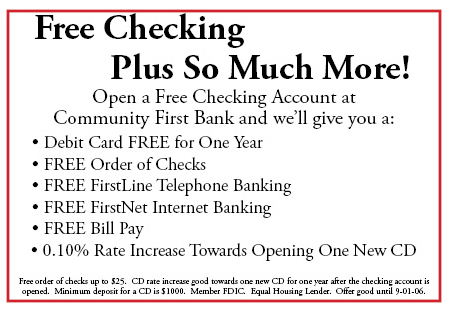
 We have gotten so accustomed in the U.S. to banks being very open about the charges they make – not because they necessarily want to be, but because they are obliged to by law. We’re spoiled in the U.S.! We get free checking accounts, free credit cards, and if we go on the right day, free donuts and coffee.
 It’s not as simple here (and I don’t mean just the donuts and coffee, which I have never, ever seen in an Italian bank lobby, never mind finding a bank branch in a super market or even a donut shop as you can in the U.S.). Every service the bank provides carries a charge. It’s not that they’re hidden, exactly; we do receive a long list annually of bank services and their attendant fees. It’s just that they are so unexpected. We see them on the quarterly statement (quarterly!) that the bank provides… for a fee of E 5.70 every two months (actually, this fee is for the stamp that attests that the account is… what? is something! Correct? Still there?).
There’s a mysterious fee on each statement which is called ‘interessi e competenze’, usually about E5 or 6. I can’t figure out exactly what it’s for; as it’s levied only once a quarter, perhaps this is the fee for the statement. Anyway. To my mind ‘interest’ is something the bank pays us for being kind enough to let them use our money. To the Italian banker’s mind, ‘interest’ is something to be charged on a checking account.
 One gets Telepass, the Italian equivalent of E-Z Pass for automated payment of highway tolls, at the bank (I know! Why??!) and it’s easy to arrange to have your tolls deducted right from your account. Back when we first started with Telepass we had to pay a monthly fee for that convenience. Fortunately in the last few years that fee has been dropped. However, the bank gets a commission on your Telepass charges; not a lot (about 1.50 on our last statement), but still.
My favorite charge is the one we pay every month for the privilege of accessing our account online. That’s E2. Each month. However, if we make two bill payments in one month through online banking, the fee is waived for that month. We’re not always able to do that, as not many places are set up for automated payment in this manner. Recharging the cell phone credit is one good way to accomplish this mission, though.
Things are better than they were. Of the 61 activities listed for a checking account for which the bank could charge, the 2007 list of applicable charges reports 30 have been repealed and another 13 are listed with a charge of 0. That leaves a mere 18 activities which carry charges. It just happens that they are the very things many people do on a regular basis – use Telepass, access the bank online, carry a debit card. To give them credit though (ha ha), they do not charge a per-use for the debit card.
I guess we shouldn’t complain. The banks are open Monday-Friday from 8:30 to 12:15 and again from 3:45-4:30 – that’s real convenience! The ATM’s, which we use to transfer US money to Italy (the easiest way to do it, and what we recommend to all traveling friends), frequently work, which is handy. That’s an improvement from ‘sometimes,’ which was the best they could do a few years ago. In fact, I’ll give a little free advertising here to Deutsche Bank – their ATM’s always work (well, almost always), even when every other bank in town is spitting our card back with a suggestion to call our bank.
Bottom line? Banks do very well in Italy. You might want to invest in one!

 An Ex-Expatriate
I agree that DB has the best ATM’s but I also have to say that getting my statement in the US it charged the highest fees for currency exchange.. BCI (Banca Commerciale Italiana) was better for that. Now in my world here in Ohio (i moved about a month ago from North Carolina)… If I want to deposit a check into my Bank of America Account I have to drive 45 miles … Not the greatest thing no
Oh dear, that is a long drive indeed. Better opt for direct deposit of all checks! It’s always hard to choose a bank. We chose Banco di Chiavari e della Riviera Ligure because we loved the name, and because they had a great calendar every year. Now they are called Banco di Lodi… and there’s no calendar, boo hoo. Hope you find Ohio agreeable.
thanks for this very interesting information. After all these years, banking procedures still mystify me…
We too – and it doesn’t help that the procedures seem to change frequently (but usually for the better)…
Despite the charges we have been quite happy with our bank here. They pay most of our bills for us – very necessary when we are in Australia. They have always been very helpful when we have had problems with debit cards and even speak English when we can’t find the right Italian words. My Australian credit card was skimmed at the Deutsche Bank in Lucca – not that it was their fault of course.
We’ve always had great service, too, Debra – and very personalized service, which is nice. I don’t really begrudge the banks their fees (well, maybe a little) – it’s just not what we were used to before we moved here. Like so much in Italy, the banking procedures seem overly complicated and bureaucratic – but no doubt there are good reasons (or at least reasons) for it all…
humph! And I’ve been cross about US bank fees…
questions: what’s the relationship between government corruption/greed and bank corruption/greed? Would more government regulation lead to less bank overcharging? Banks (most anyway) have stockholders – what responsibility do banks have to maximize profits for the stockholders? What do these questions imply about capitalism?.. Maybe I’ll move to Sweden!
Phew – you ask some complex questions, to which I haven’t the answers. The deeper ills of both government and business (including banks) are a bit beyond the scope of this blog, at least for today. I’m not sure there is a direct connection between the two kinds of greed (I see politicians as being greedy for power and influence, with greed for money a secondary concern; maybe it’s the other way around for bad business people?) Let me quickly add that I haven’t heard anything about the banks here being corrupt; but surely many of the politicians are (most of the government of all five of the Cinque Terre have recently been arrested). I would agree that banks have a responsibility to shareholders, as do all publicly held corporations. Before you pack your bags for Sweden you should know that individual income taxes there run from 29-59% (compared to 0-35% in US) and that payroll taxes are 31% (US, 15.3%). What it all comes down to is that services, whether publicly or privately provided, must be paid for…