
Hot as it is outside these days (35 C, or +/- 95F) there is definitely an end-of-season feel in the air. The birds that were noisily nesting for so long have abandoned the eaves, the cicadas drone on, but with a new weariness in their thrum. The sun is setting much earlier, and the shops are full of back-to-school gear.
We’ve been picking and eating tomatoes for a month, and those in the garden which have already set fruit continue to ripen, in spite of the nasty disease that is killing some of their leaves. No new fruit is forming. The same plight has visited all our viney plants as well – cukes, pumpkins, squash and melons (we have just a few plants of each so each loss is felt all the more). First the leaves close to the main stem shrivel, then the stem desiccates and the leaves farther along wither and die. Once the stem dies, the fruit at the end of it stops developing and dies as well. I don’t know what this malady is, but I notice that we are not the only ones afflicted – all the gardens up and down the mountain are looking pretty sad.
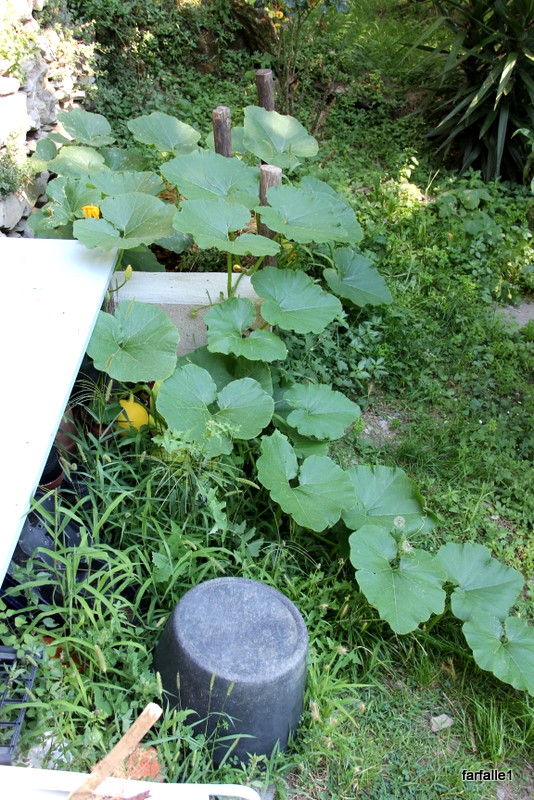
We have had one huge success, though. The only problem is we have no idea what it is. A squashy something emerged from the compost pile a while back, and as you can see in the photo above, it is rampaging all around our former orto (abandoned because of lack of sun). It sure looks healthy, doesn’t it? No withering leaves here; the worst you can say is there are a few spots of the usual fungus, but even that disease hasn’t been able to get any traction.
Now it is forming gigantic fruits:
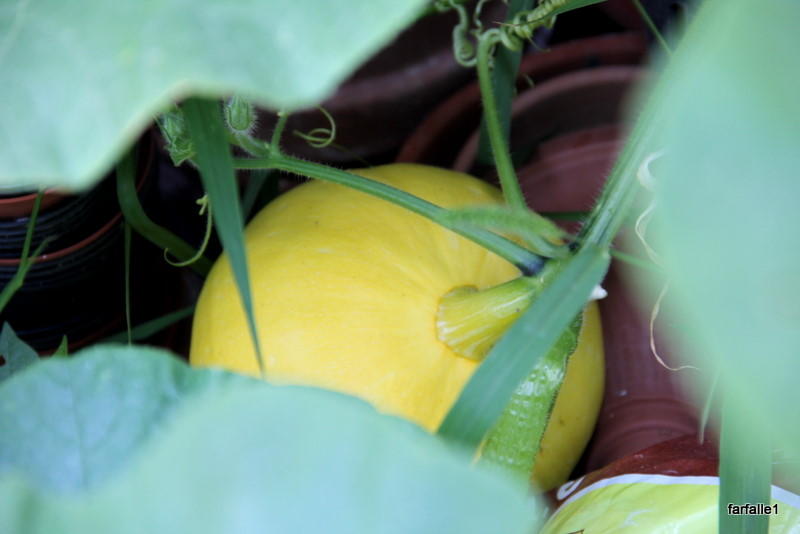 They have the size and shape of rapidly growing pumpkins, but the color of summer squash, which we’ve never grown. I can only guess that this plant is some kind of hybrid born of the alchemy of a compost pile. And like so many mutts, this item seems stronger and healthier than all the hot-house sissies that are dying apace in our other gardens. Bah. The only problem is, we don’t know if we should carve it or eat it. Maybe both? In the meantime, we want to wait and see just how big it will grow, and try to come up with a good name for it – squashkin? pumpkish? Any ideas?
 An Ex-Expatriate
I have the same thing!!! anyone figure out what this is and how to cook it?
We never ate ours, I think. We have a friend in Richmond, VA, who has the same kind of thing growing in her garden. Let us know if you come up with a good recipe! Cheers…
for tomatoes you have to use a pesticide on the leaves, not now of course, but earlier. I use the traditional made of copper into water, added “calce” (don’t know the english for it). But in shops you can find the new chemicals. For pumpkings and the like, of course they dry up, but you have the fruits, you also let the fruits dry into the sun and you can use in winter. I use until spring. Oh, you move to Arizona in winter, so no possibility of export, the FDA would not appreciate!
Oh Agostino, I sprayed the copper sulphate religiously this year – and the leaves were healthy until all of a sudden they weren’t. Well, well, I don’t know. I’m going to look in the U.S. this winter and see if I can find some ‘wilt-resistant’ seeds. Italy isn’t quite as fussy as the US about bringing in vegetable matter. I wish I could take our one little pumpkin with us to Arizona – I guess we’ll just have to make some ravioli and soup and enjoy it here instead.
yellowkin! what a gorgeous color nestled in those aqua leaves set off by purple stems. What a beauty! Oh, all right, I know that’s just your camera, but it certainly is lovely. Perhaps the naming should wait until you’ve tasted it?
Maybe we should wait. While I applaud ‘yellowkin’ it is becoming inappropriate… the veg in question seems to be taking on an orange hue.
We have these hybrid yellow pumpkin-like squash as well growing in our garden. We have one that is 16″in diameter and turned an orange color, another 12″ in diameter and bright yellow. We went to nurseries to ask what type of squash this is, but nobody could tell us.
We even brought a 7″ diameter yellow squash with us and cut it in half to show what it looks like inside.
The squash has the flavor and texture of a cucumber. These whatever they are, grow faster than any vegetable I have seen. Has anybody seen and tasted of this hybrid squash?
Boneman, we never did eat ours, so I’m really interested to hear that it tasted like a cucumber – sounds quite delicious, actually. We’re waiting with some interest to see what might come up in the compost this year! So far it’s just been a few morning glories… but it’s still early in the season.