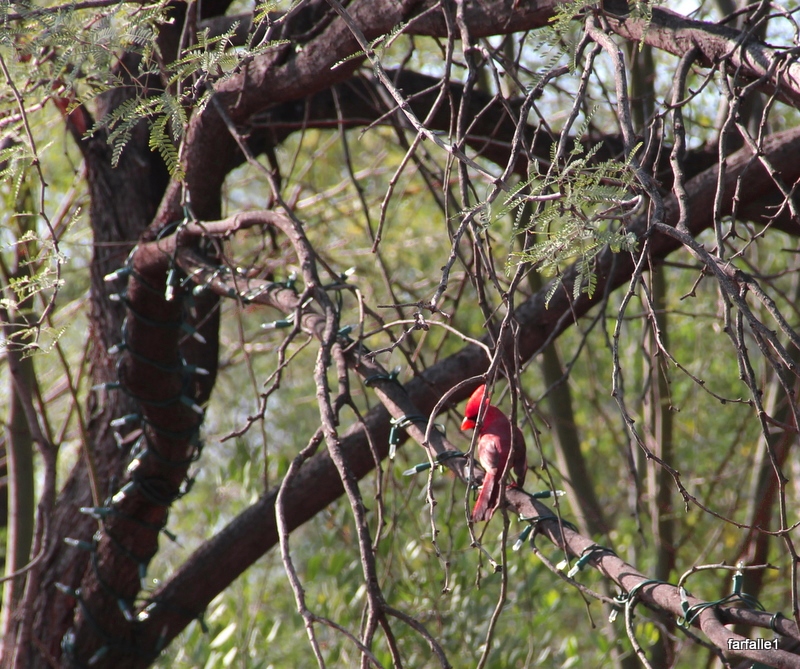
Expatriate (and Speedy!) wish each of you a joyful, fruitful, colorful, healthy, wealthy, fun, flamboyant and happy 2012.
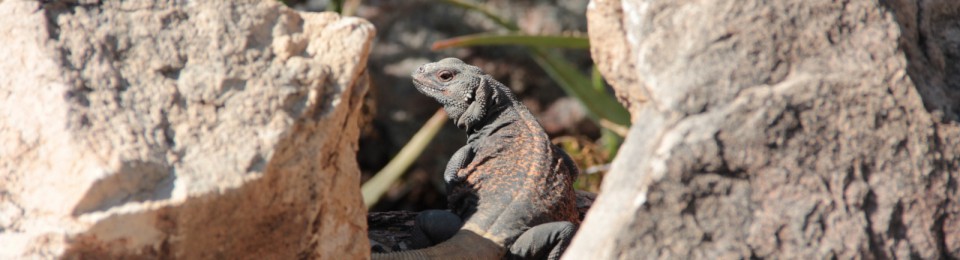
23 Friday Dec 2011
Posted in Uncategorized
Expatriate (and Speedy!) wish each of you a joyful, fruitful, colorful, healthy, wealthy, fun, flamboyant and happy 2012.
11 Sunday Dec 2011
Posted in Animals in the U.S., Arizona, Photographs, Uncategorized
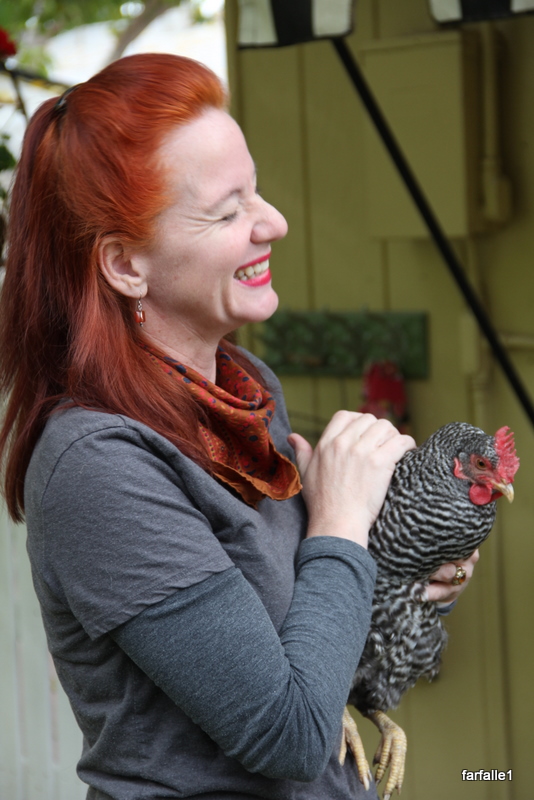
Chicken people are happy people. My intrepid friend Mrs. H and I learned this when we went to downtown Phoenix last weekend for the third annual Tour de Coops. That’s right, downtown Phoenix! Urban agriculture is alive and well in the Valley of the Sun, in part due to the efforts of the Valley Permaculture Alliance, under whose auspices the Tour is sponsored.
Twenty-one generous chicken farmers opened their coops to several hundred visitors, all of whom probably asked the same tiresome questions. How many chickens do you have? (anywhere from three to a dozen or so); how old are your chickens? (anywhere from six months to eleven years); do you eat your chickens? (yes. no.); how many eggs do you get a day? (in general about two eggs for every three chickens); what are the names of your chickens? (way too many to list; some of my favorites were Itchy, Lafawndut, St. Alfonso’s Pancake Breakfast, Waffles, Tika, Roti and Catchatori); is it really fun to have chickens in the back yard? (YES!)
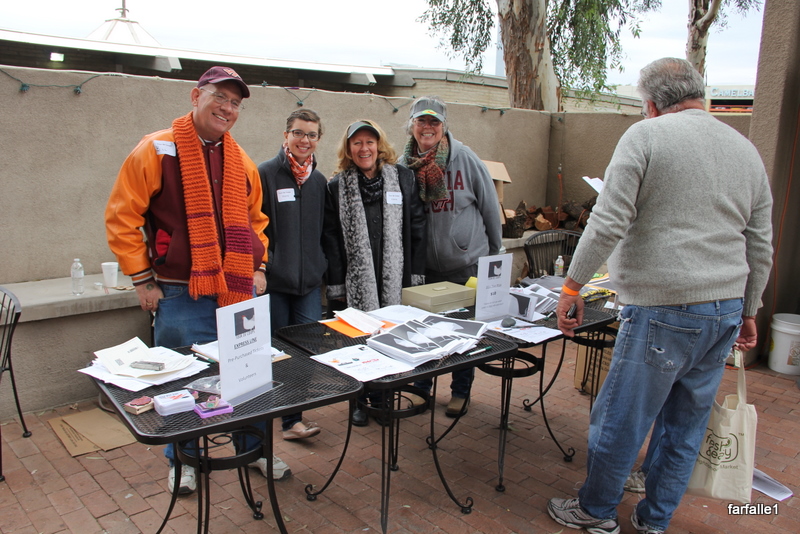
The Tour was meticulously organized. Tourists registered at one of two starting points where they were given a muslin shopping bag containing water and chick feed (thank you Fresh Foods and Nutrena) and a thirty-two page directory of the Coops on the tour which was a model of clarity. Each coop location had its own page with a map indicating its location and a brief description of the coop and its inhabitants.
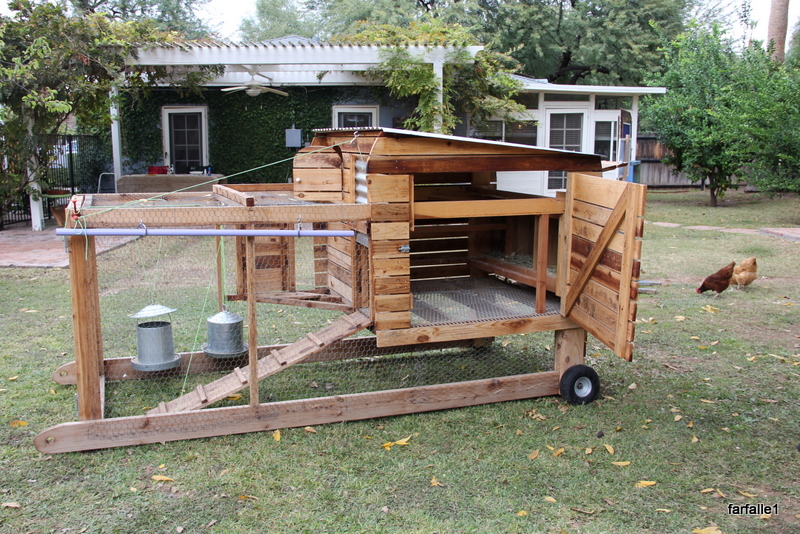
Mrs. H and I did not have time or energy (mostly energy) to visit all twenty-one coops, but were mightily impressed by the ones we did see. Coops come in all sizes and shapes, and are as diverse as the people who devise them. The first coop we visited was belonged to Maggie and Bjorn Olson. It was the only portable coop we saw:
The Van Slyke coop is renowned for its chandelier:

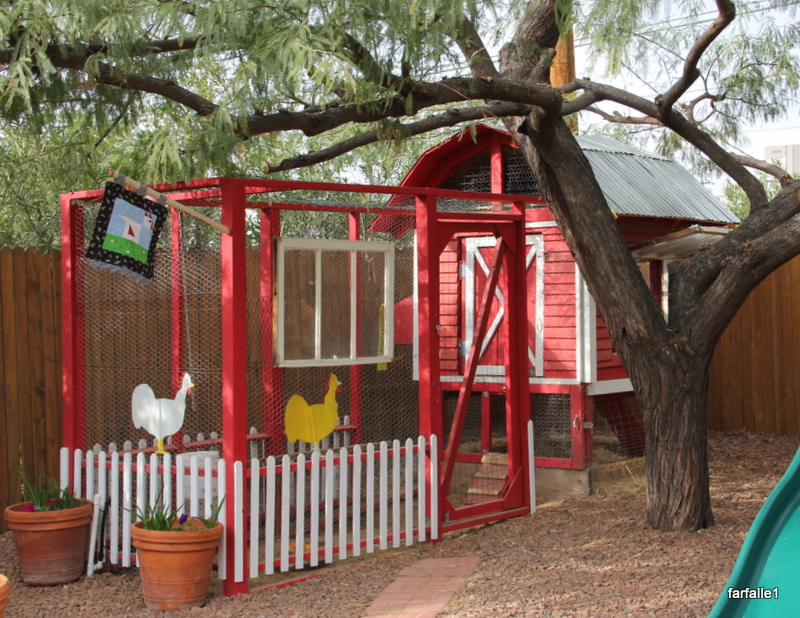
The Poulins pay homage to their roots in Vermont and New York with their barn-like coop:
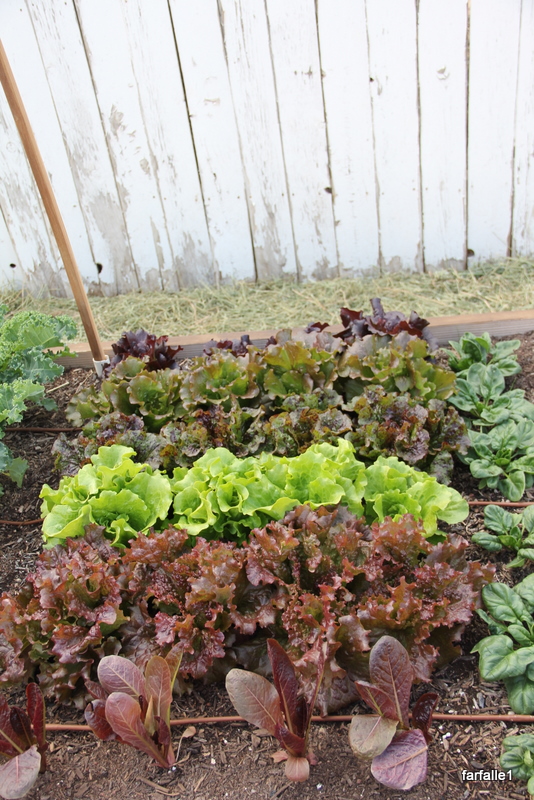
As diverse as the Chicken People are, they all share an interest in sustainable living and in gardening (what else are you going to do with the chicken poop?). Whether on the ground or in raised beds, the veggies these families are growing are uniformly robust and appetizing.

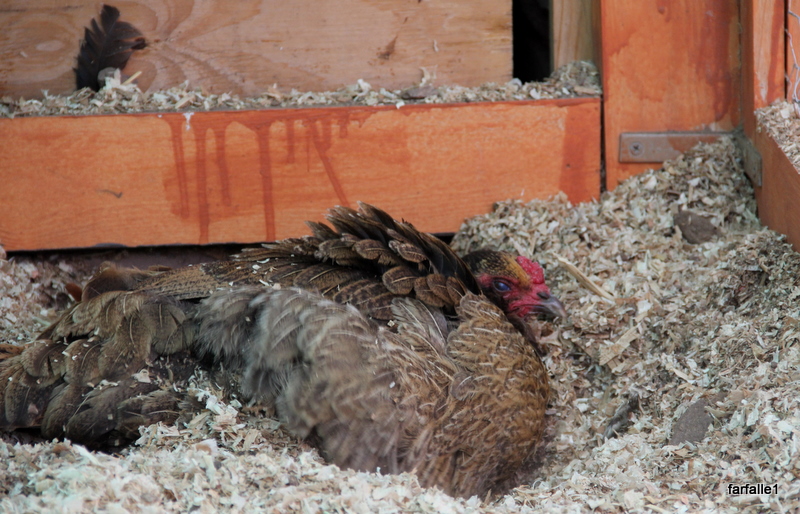
But I digress. Let’s get back to the hens and their houses. Each coop we saw had several nesting boxes where the girls take turns laying their eggs. By the way, egg production is the impetus for a huge amount of self-congratulatory clucking. The Taylors were dealing with a broody hen in one of their boxes:
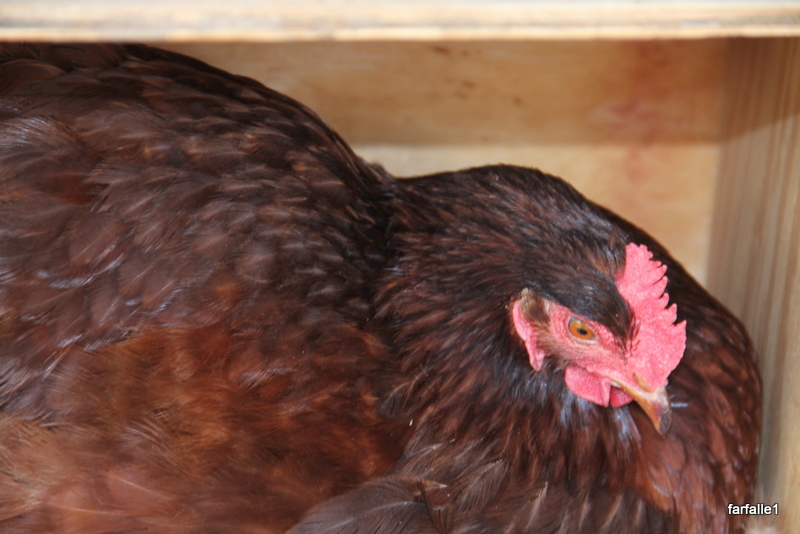
Every now and then a hen just decides that she must sit on her egg(s) and will peck at anyone who tries to remove them. Fortunately hens are not the smartest birds in the world, and a plastic egg or even a golf ball will satisfy a broody bird. (This is, in fact, the genesis of all those plastic eggs that children receive at Easter. They are hatched from other plastic eggs by broody hens. The chocolate inside them, as we all know, is from the bunnies. But again, I digress.)
Each coop has an integral yard outside the structure itself. Like all of us, hens like to move around and need a little space in which to do so. They like to take dirt, dust, or sawdust baths to clean themselves – they fluff around in the dirt, the what-ever-it-is they want to get rid of sticks to the dirt, and then they groom out the whole business from their feathers.
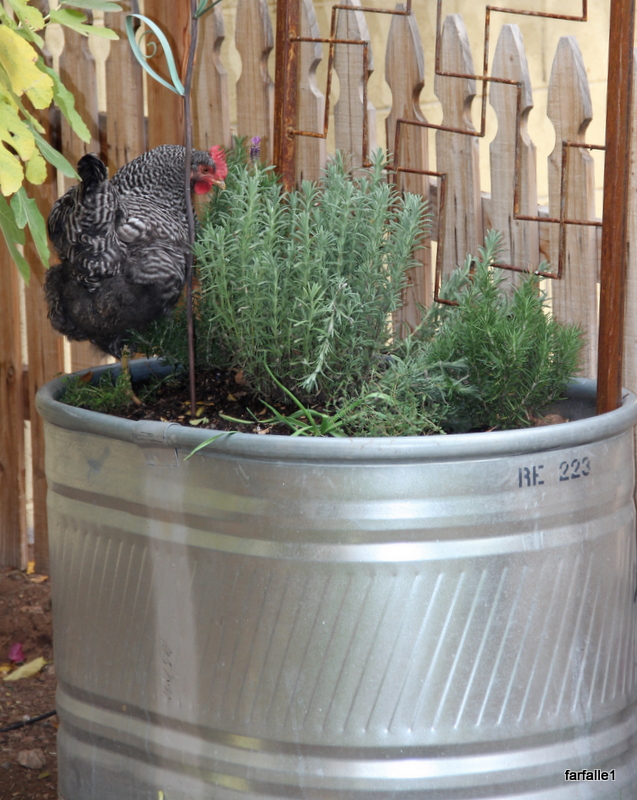
Most of the owners let their hens out to ‘free-range’ for at least part of the day. Depending on the neighborhood they may or may not need supervision. Watchful chicken parents are not worried about gangs or drugs; those close to the city worry about the peregrine falcons that now hunt from the tall buildings.
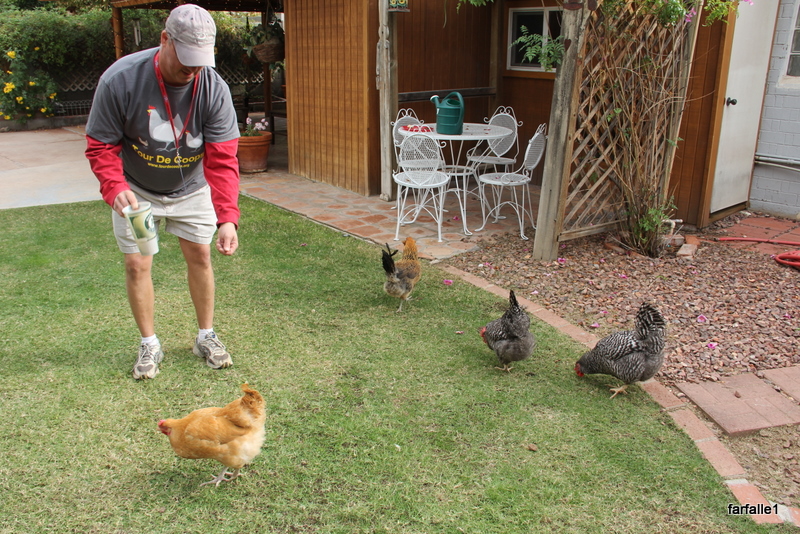
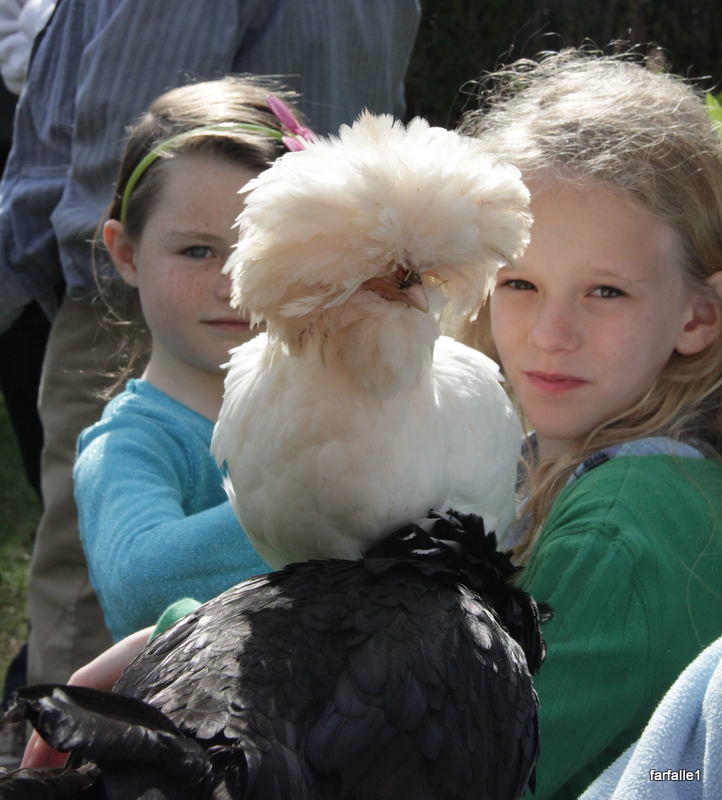
We saw quite a variety of chicken breeds. The most common were probably the Barred Rocks, the Ameraucana, and the Buff Orpingtons. At the Perry house we saw exotic and silly looking polish hens:
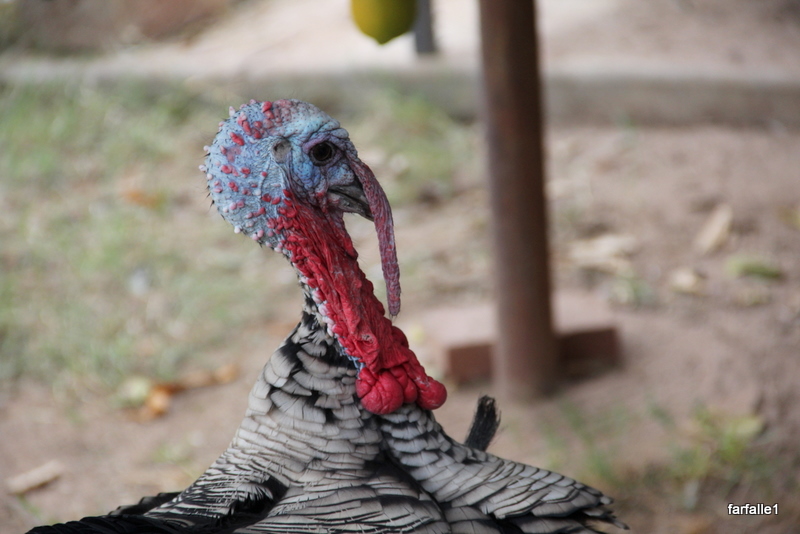
And at the Olesen house we admired a pair of turkeys. They turn blue when they’re upset or uneasy. Probably the combination of all the guests and the proximity to both Thanksgiving and Christmas ruffled their feathers.
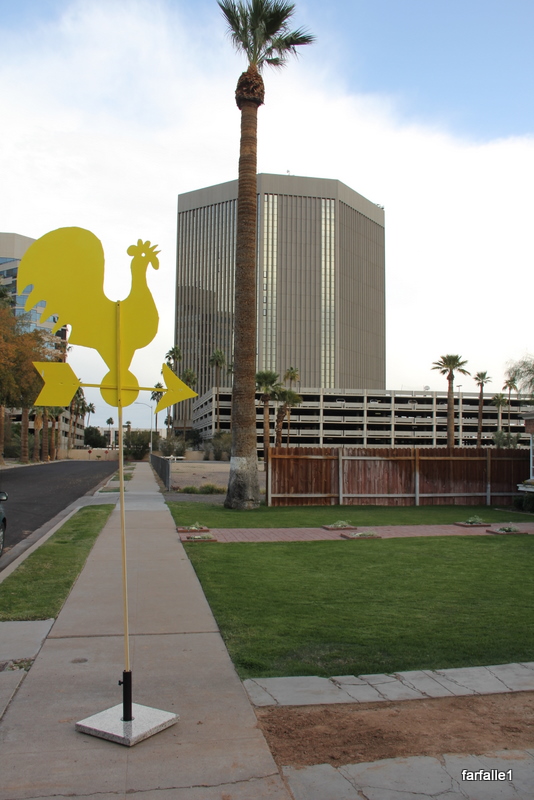
I’d like to say a few more words about the organization of the Tour, because it really impressed us. Each house was identified by a large yellow chicken cut-out sign, which was very helpful as we drove down unknown streets hunting for house numbers.
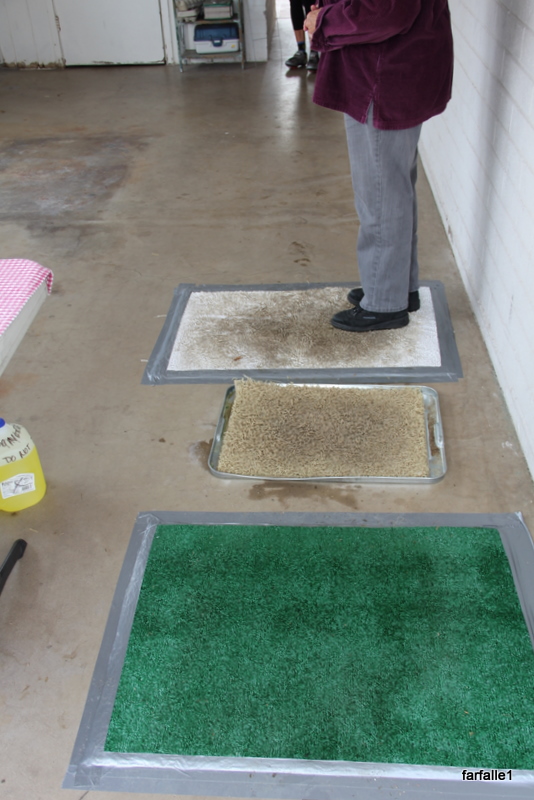
Volunteers staffed a table in front of every house to check visitor bracelets and to ensure that every visitor stepped through the foot bath and used the hand sanitizer.
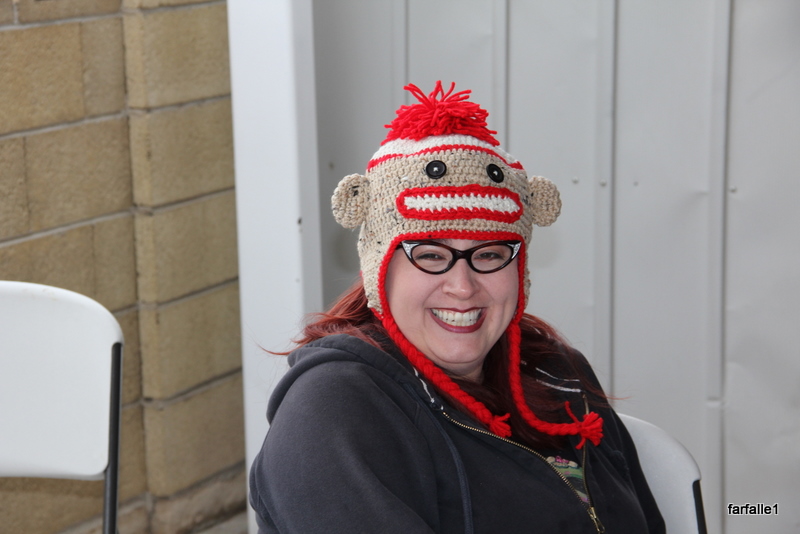
All the owners were on hand to talk about their hens, and many had posters describing the various chicken breeds present. Some of these posters were made by grown-ups, some by children, and at the Williams house the hens did all the work.
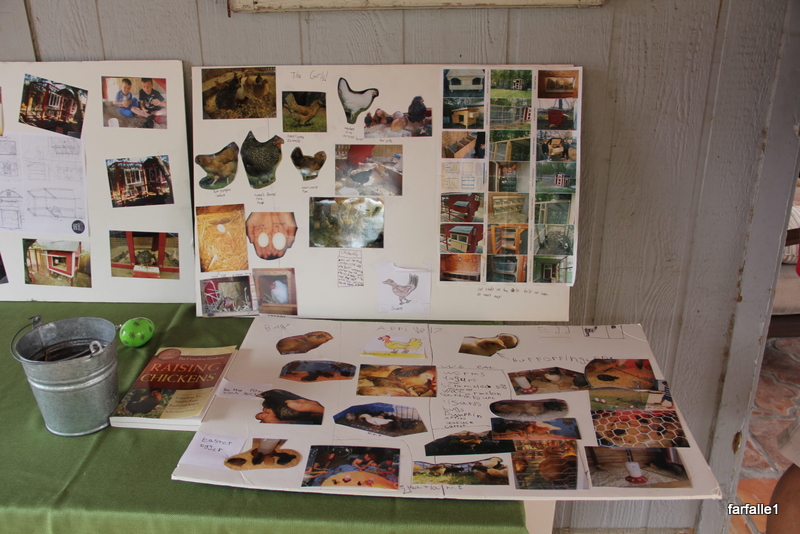
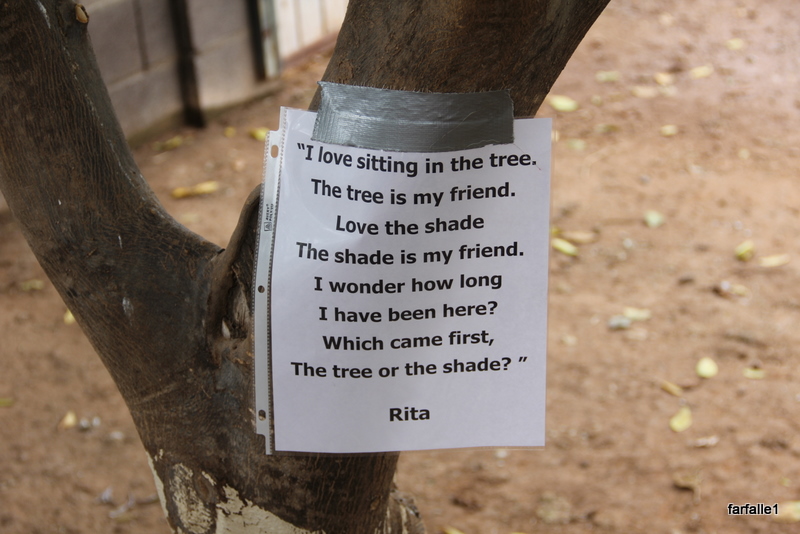
If you are interested in more photographs from the Tour de Coops, pop on over here and select the slide show option.
If you are interested in more information on the Valley Permaculture Alliance (“committed to promoting the conscious design of cultivated urban ecosystems to include diversity, stability and resilience”), visit their web-site here, where you can find out more about their mission and the many classes they offer in its service.
02 Friday Dec 2011
Posted in History, Liguria, Rapallo, Uncategorized
From November 4 – 20 the Castello in Rapallo hosted a terrific annual exhibit called “Mare Nostrum” (“Our Sea”) which included history, art and most specially, many ship models. This year’s exhibit focused on the 150th anniversary of Italy’s unification, and included a special exhibit outlining the sea-faring highlights of that very complex and violent undertaking. Called ‘Garibaldi, un Uomo di Mare’ it was curated by Maurizio Brescia, Emilio Carta and Carlo Gatti (who has one of my favorite last names). Fascinating. In one glass case there was an actual ‘Red Shirt’ worn by one of Garibaldi’s thousand (six of whom hailed from Rapallo, according to the exhibit catalog), a little the worse for wear, but definitely red.
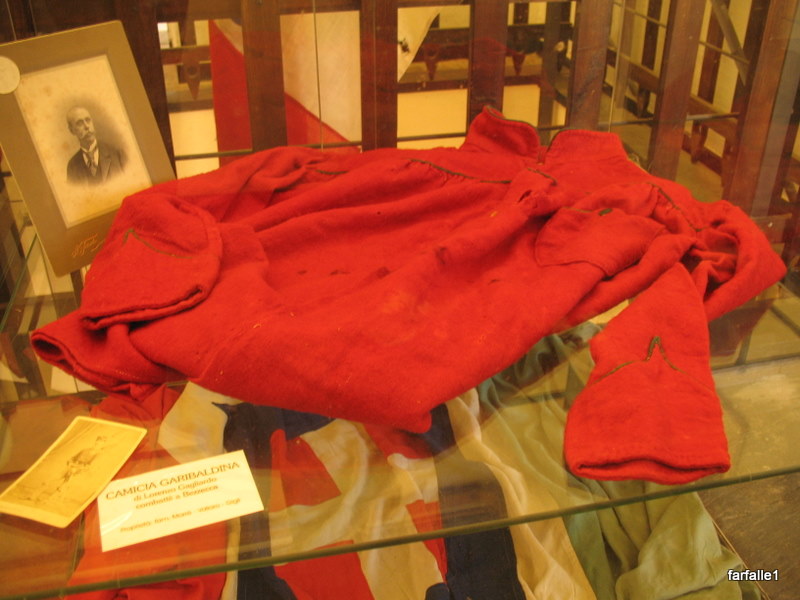
Both the exhibit and the catalog,a handsome 64-page booklet chock full of photos, describe the preparations and outfitting for the voyage from Genova Quarto down to Sicilia, with special attention paid to the ships, models of which could be seen in other rooms.
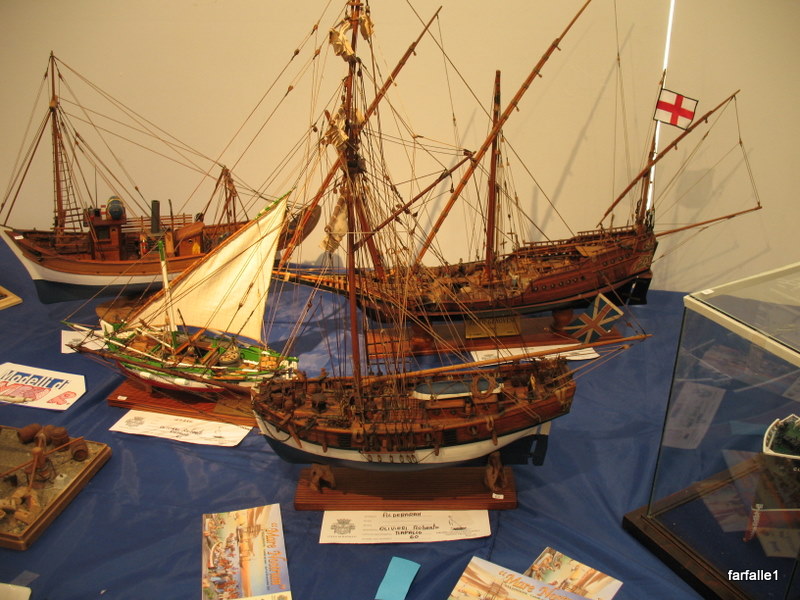
The models are remarkable. Most are made from what we usually assume models will be made of: wood, bits of string and fabric, like the “Aldebaran” below by Roberto Oliveri.
But several of the boats were made from more unexpected raw material. Umberto Rogma made his models from riveted steel:
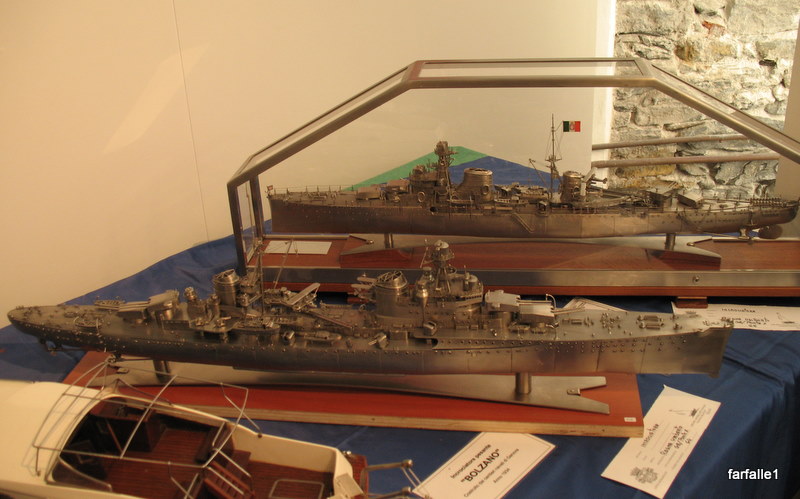
He must have a rather sophisticated work shop. I doubt Mrs. Rogma would welcome riveting on the kitchen table.
Andrean Brown chose paper for his model medium:
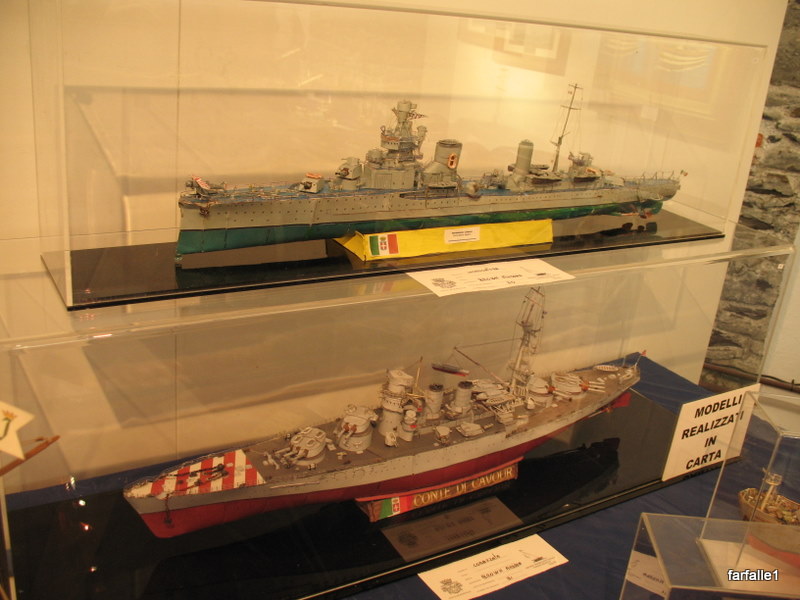
In addition to being very compliant in the bending department, paper has the added advantage of being a quiet material – no pesky sawing or riveting. But really, look at the detail – can you believe that’s all made from… paper?!
Many of the models are of particular vessels, like the famous Kon Tiki by Fulvio Fusetti:
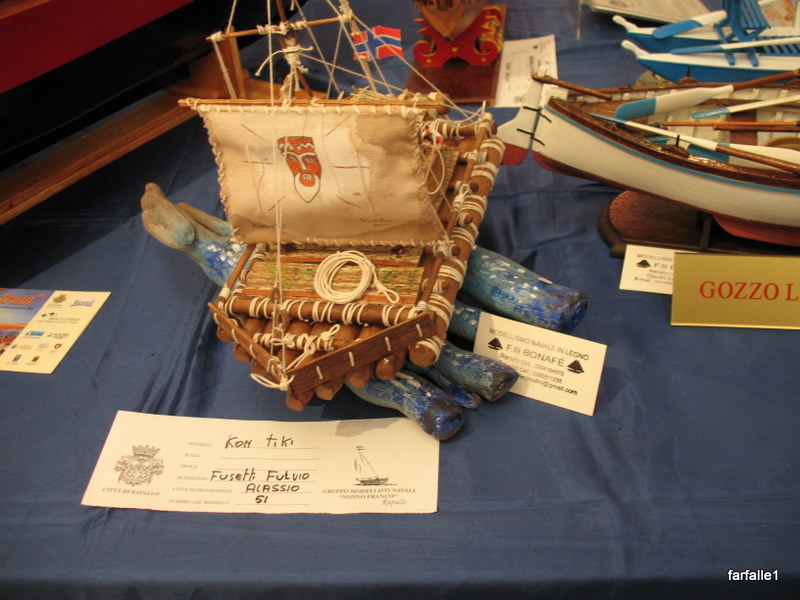
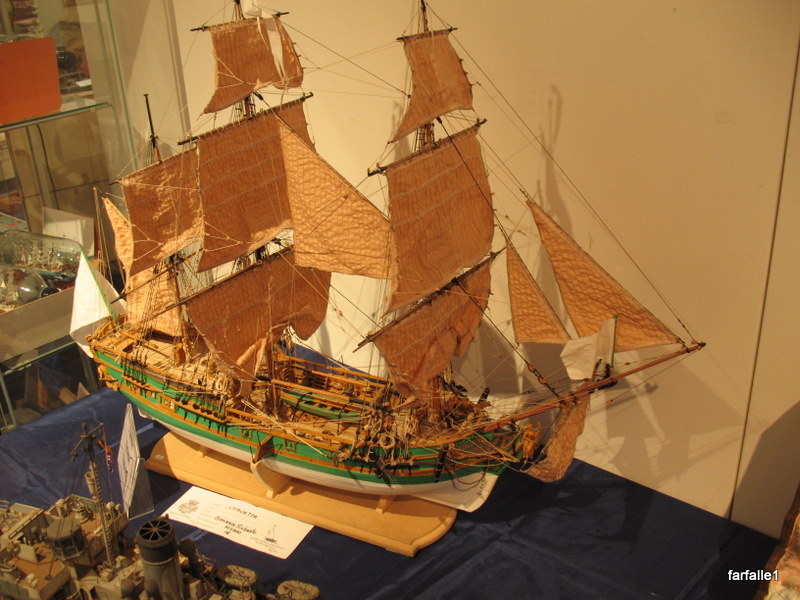
and others are of a particular class of ship, such as this Corvette by Roberto Boniardi:
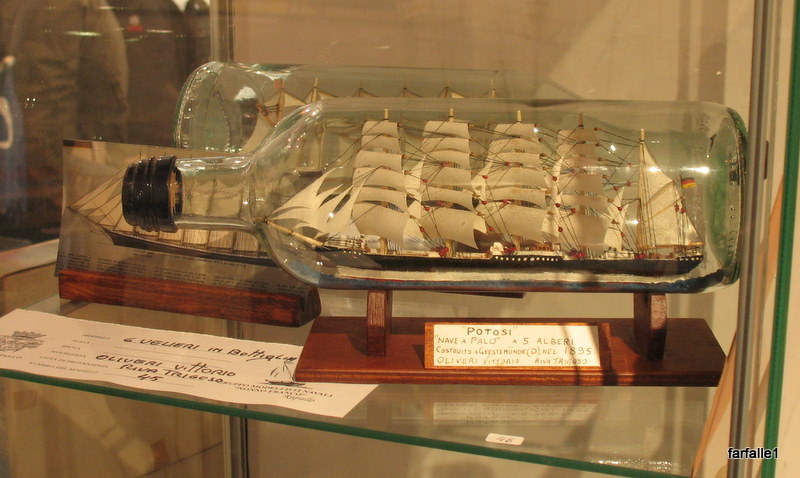
What would a model ship exhibit be without a ship in a bottle? The complexity of this construction takes my breath away. This is the ship Potosi, by Vittorio Oliveri:
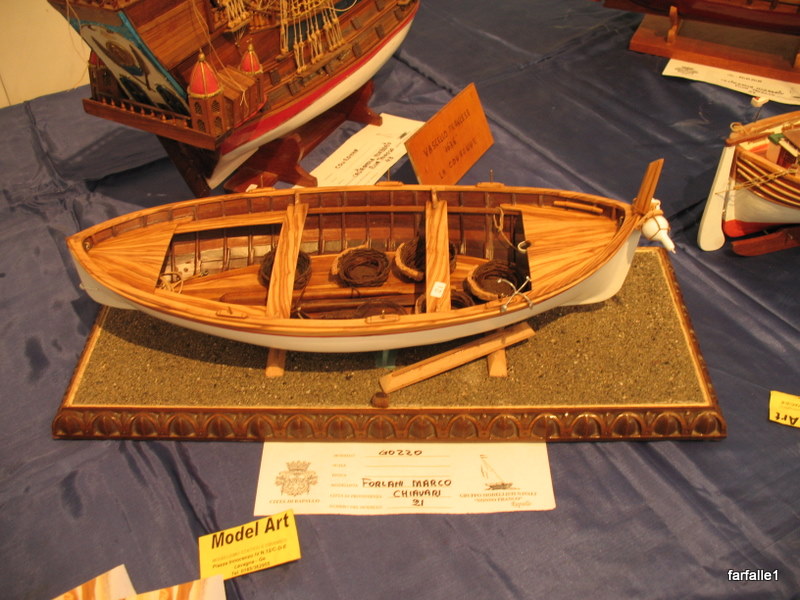
Three of the models particularly captivated me. The Gozzo is the typical Ligurian fishing boat of yore. How brave the sailors were who set out in these small boats with no Loran, radar, GPS, etc. You will still see many Gozzi in the harbors around Rapallo, but they are now used as daytime pleasure craft; the fishermen have moved on to more elaborate boats, thank goodness. This model was made by Marco Forlani.
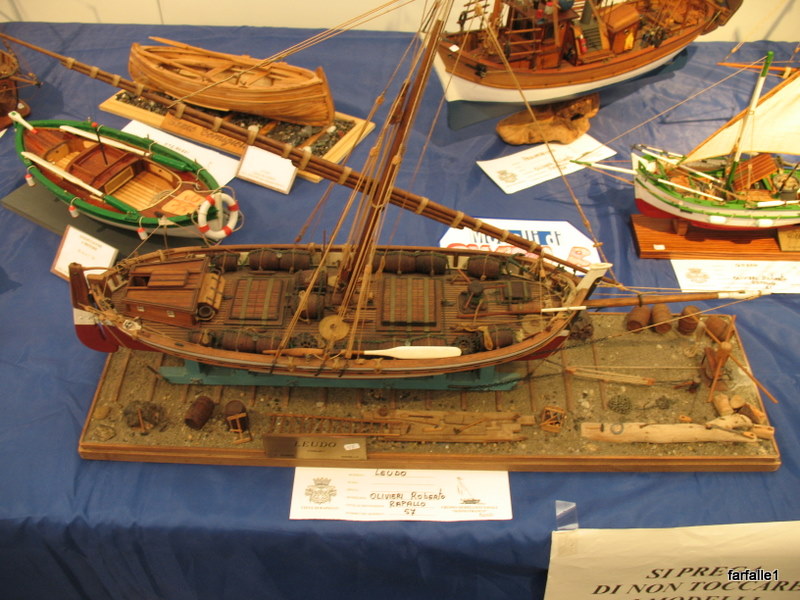
Some of the models recreate the ships’ on-shore environs. I loved this one for all the on and off-board detail, the tools, casks and ladder lying on the beach next to the boat. Roberto Oliveri fashioned each element himself.
Luigi Barletta has shown us what the old ‘cantiere’ (ship-building works) looked like:
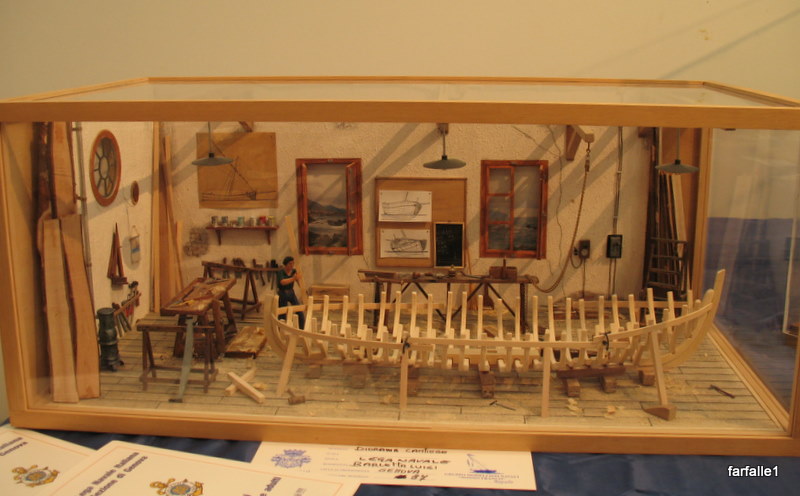
Could that be a Gozzo under construction?
These are just a few of the many, many models that were on exhibit. The show is over for this year but it will almost certainly return next year. If you’re in the neighborhood of the Castello at the right time, do go see it. It’s free and it’s wonderful.
 An Ex-Expatriate