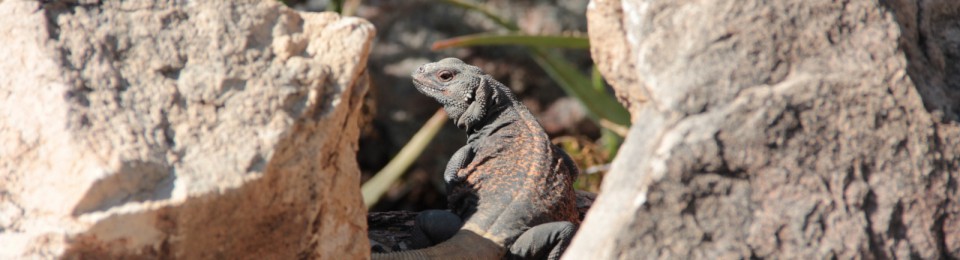
It means ‘without water’ and if you’ve spent time in the Arizona desert, you know it’s appropriate. The Sinagua were a group of Indians who lived in the Verde Valley from about 1000 to 1400 AD or so. What became of them is a mystery, though one theory is that they left their own pueblos and were absorbed into other tribes, perhaps after a long period of drought.
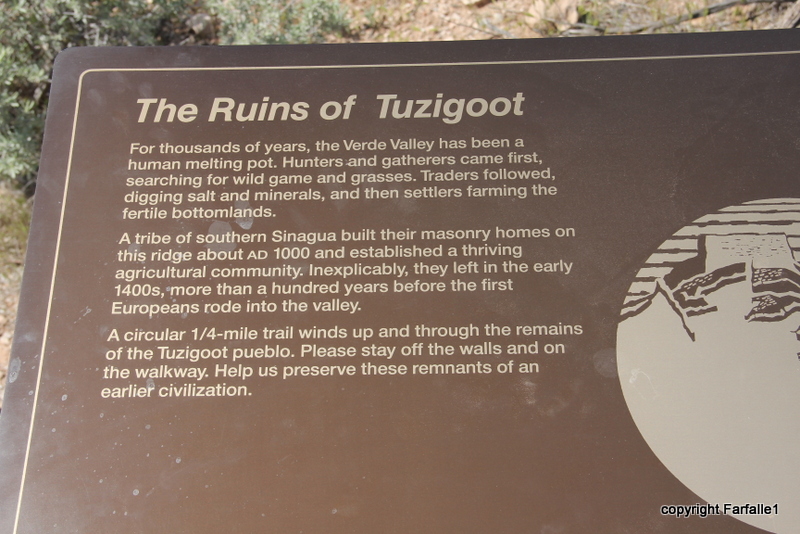
Photo of National Park Services informational sign.
Tuzigoot, a fascinating restored Sinagua pueblo, is a National Monument near Sedona, overseen by the National Parks Service . (It’s also a wonderful word and fun to shout at unsuspecting strangers.) At nearby Sacred Mountain you can see what the remains of Tuzigoot probably looked like before the Civil Works Administration put people to work on the site in the 1930’s.
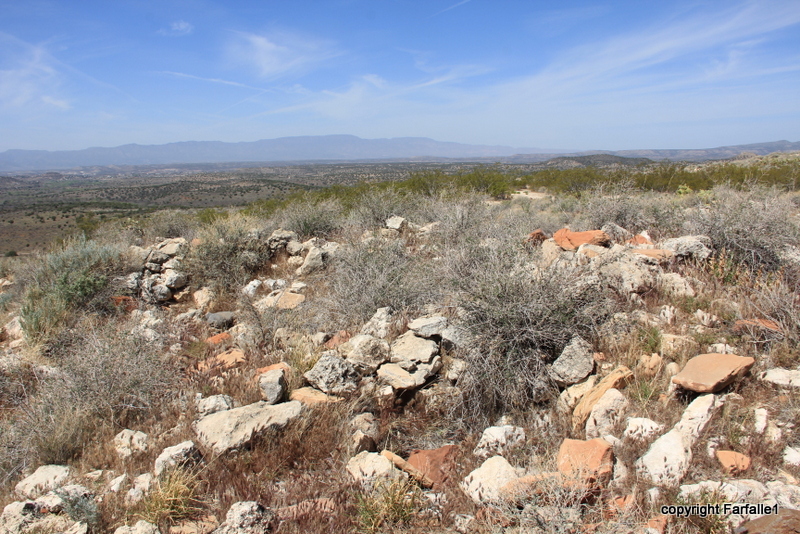
It takes a lot of work and study to get from that to this:
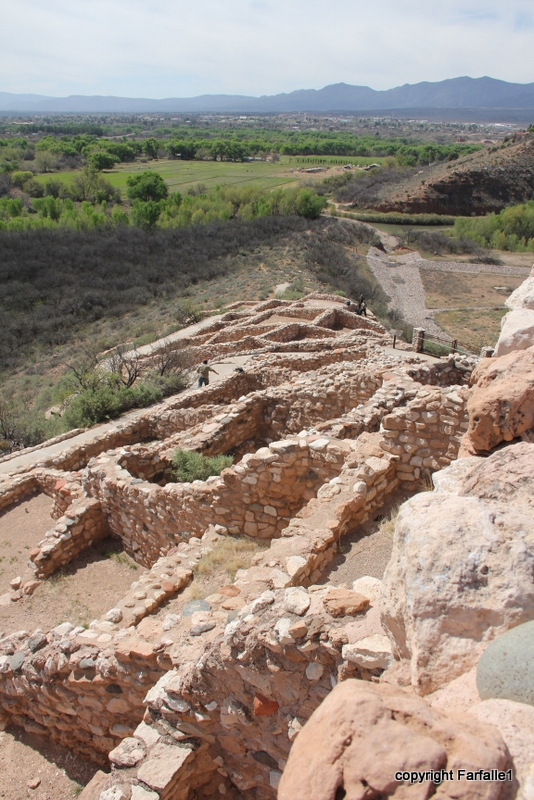
During the Great Depression there were plenty of people looking for work in the region after the copper mines shut down. From a work group of eight, the excavation party grew to forty-eight men who learned to be archologists by working this site without previous experience.
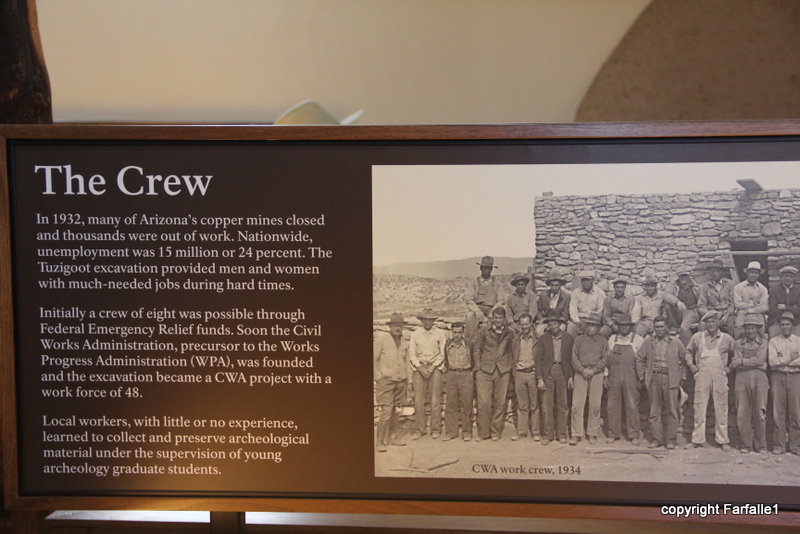
Photo of National Park Services informational sign.
Fussy work is women’s work. The ladies got to take the zillions of pieces of pottery and so forth that were found at the site and piece them together.
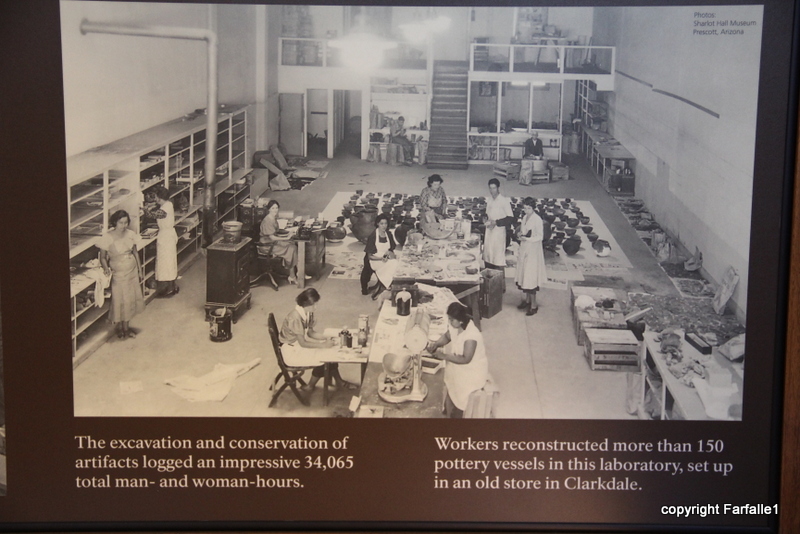
Photo of National Park Services informational sign.
The appeal of the Verde Valley to the Indians is obvious – water!
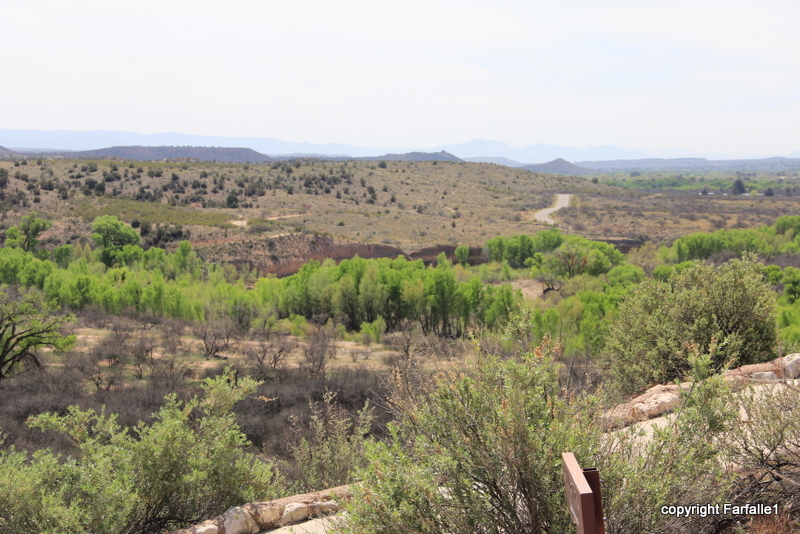
It’s not hard to figure out where the river is. The Indians lived on hilltops – I assume for security – but irrigated and gardened in the flats below. More fussy women’s work – carrying water from the river to the pueblos above. Here’s the path they may have taken at Sacred Mountain.
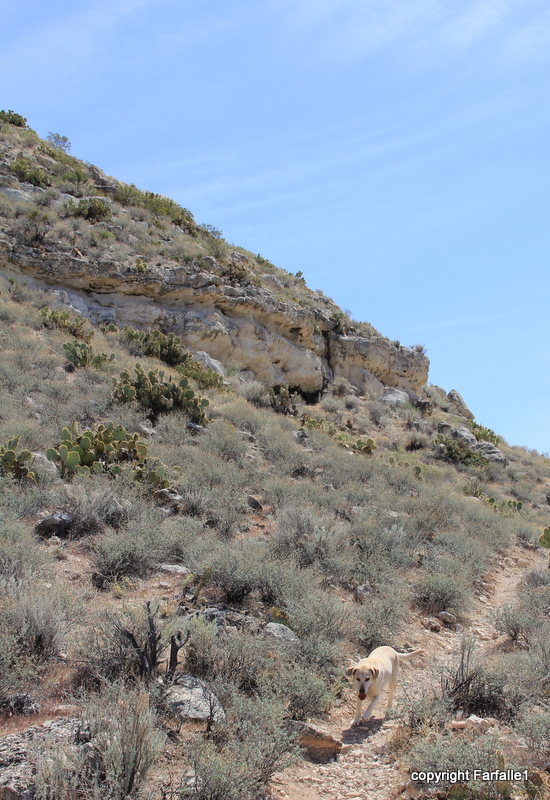
Not steep-steep, but give me a faucet with running hot and cold any day!
While the Sinagua didn’t read and write by our definitions of those acts, they certainly had a sophisticated method of communication: petroglyphs. Found all over the southwest they presumably gave information about people, places, hunting, planting – all the important aspects of the Indians’ lives.
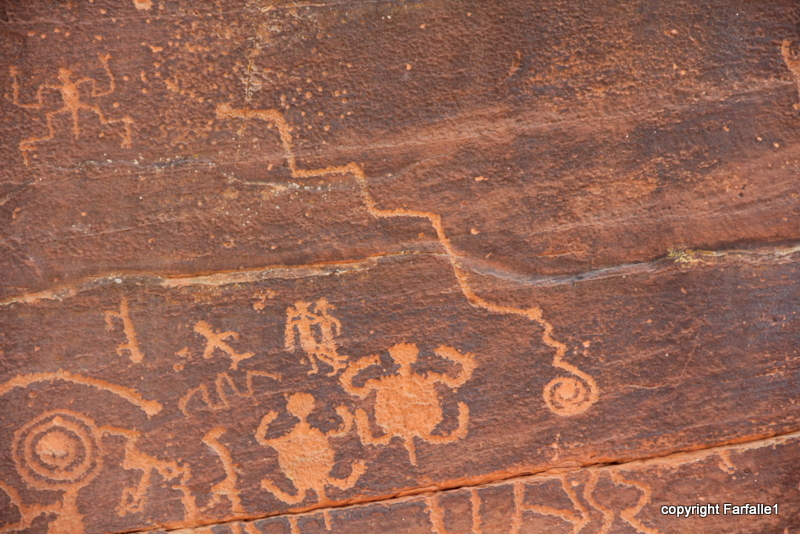
V Bar V petroglyphs
The guide at the V Bar V petroglyph site, adjacent to Sacred Mountain, told us that one interpretation of this design is that the ladder shape traced the seasons of the year, culminating in the summer monsoons, depicted as a swirling circle. The sun hits different parts of the ladder at different seasons, so it may have served as a calendar. Maybe. The guide reminded us constantly that we have no way of knowing for sure what any of the petroglyphs mean.
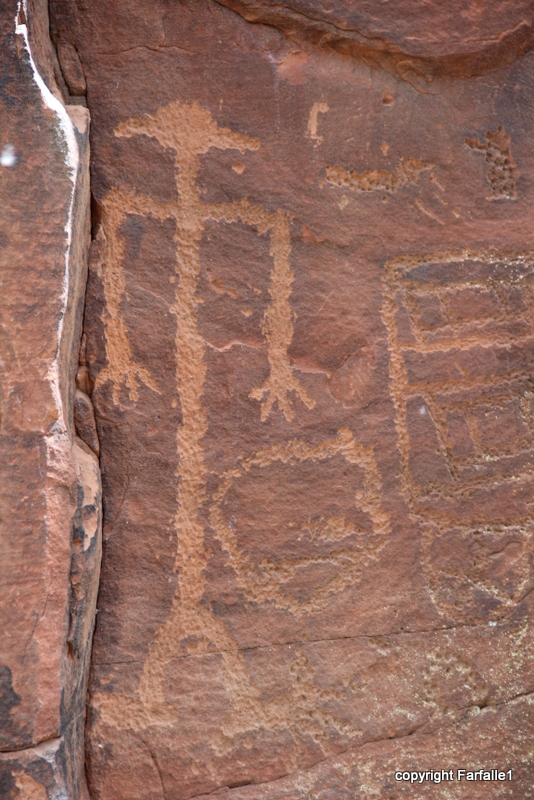
V Bar V petroglyphs
The one above, the guide told us, may represent a woman, with the big circle under her left hand representing the new baby. The oddly-shaped head may be showing hair coils, a feminine rather than masculine style. On the other hand, our host returned to the site a couple of weeks later and filed this report: ” A week or so ago I went back tot he V Bar V with a friend from A. High School who was here on vacation with her family. The fellow who was explaining the petroglyphs told a different story about he figure you included in your blog. In his version, the figure is a shaman. The circle figure is a demon. Just to the right of the shaman is a crack in the rock which the guide explained as being the entrance to the underworld. He explained the story as the shaman sending the demon down into the underworld. As he said, “Ask me any question. If I don’t’ know the answer, I’ve gotten pretty good at making something up.””

Photo courtesy of JBH
This rock is fascinating. Each afternoon the sun strikes the forward carved piece, placing a shadow on the rock behind; the shadow has the exact configuration of the nearby San Francesco Peaks – it’s a map! This photo was taken by our friend and host JBH.
About fifty Sinagua pueblo sites have been identified in the Verde Valley region, an area that encompasses the National Park sites of Montezuma Castle and Montezuma Well. (By the way, Montezuma wasn’t born until a century after the Sinagua left, and as far as anyone knows he never lived in the eponymous castle or drank from the well.) One wonders how many other sites there may be awaiting discovery. I’m already looking forward to exploring again next year!
 An Ex-Expatriate
Nice synopsis of the Sinagua tribes that inhabited the Verde Valley over 800 years ago. Fun to read your blog, and see your pictures of the area. Looking forward to more articles in the future.
Thank you Ellie. I’m looking forward to doing more. But for the next half year or so the broadsides will be issuing from Italy… once we recover from jet lag and get our lives back in order.
Love your curiosity and enjoyment of the natural world around you! Thanks!
Thank you, DSS! Hope to be able to show you around our neck of AZ one of these years…
Fascinating! We stopped at Montezuma Castle – all very touristy but still intriguing. Let’s take a trip back up there when I next get out to visit! I want to be able to shout “Tuzigoot!”
We will, we will – both visit and shout (since we’re too old now to twist and shout). There is so much to explore in that area – I have a plan for next year to really get to know other areas in AZ – it is an amazing and beautiful (and completely cuckoo) state.
Great post!John just got back from Colorado where he was working in Cortez. He got to visit Mesa Verde.
I bet he loved it! It’s a fascinating area.
Thanks! I think I learned more reading your post than I did when I visited the area thirty or so years ago.
Thanks, Gil. There is probably a lot more info available now than there was thirty years ago. They find more every year. I can’t say enough good things about the Park Services and their presentations – and everyone is so friendly.
Utterly fascinating! Thanks for this last US post before the ones that will come from the continent. You have the most remarkable way of putting together prose and pictures, and you do the world (and the world of bloggers) proud! Tuzigoot!
Whoa! Thank you. Praise of prose from you is praise indeed! Tuzigoot!