• Contact
  • Elaborations
    • A Policeman’s View
    • Driving School Diary
    • Great Danes
    • IVA charged on Tassa Rifiuti
    • Nana
    • Old trains and Old weekends
    • The peasant, the virgin, the spring and the ikon
    • Will Someone Please, Please Take Me to Scotland??
  • Recipes
    • ‘Mbriulata
    • *Baked Barley and Mushroom Casserole*
    • *Captain’s Boston Baked Beans*
    • *Cherry Tart*
    • *Crimson Pie*
    • *Louise’s Birthday Cake*
    • *Melanzane alla Parmigiana* – Eggplant Parmesan
    • *Penne with Cabbage and Cream
    • *Pizzoccheri della Valtellina*
    • *Pumpkin Ice Cream*
    • *Risotto alla Bolognese*
    • *Rolled Stuffed Pork Roast* on the rotisserie
    • *Shrimp and Crayfish Tail Soup*
    • *Spezzatino di Vitello*
    • *Stuffed Grape Leaves*
    • *Swordfish with Salsa Cruda*
    • *Tagliarini with Porcini Mushrooms*
    • *Tagliatelli al Frutti di Mare*
    • *Tzatziki*
    • 10th Tee Apricot Bars
    • Adriana’s Fruit Torta
    • Artichoke Parmigiano Dip
    • Best Brownies in the World
    • Clafoutis
    • Cod the Way Sniven Likes It
    • Cold Cucumber Soup
    • Crispy Tortillas with Pork and Beans
    • Easy spring or summer pasta
    • Fagioli all’ucelleto
    • Fish in the Ligurian Style
    • Hilary’s Spicy Rain Forest Chop
    • Insalata Caprese
    • Kumquat and Cherry Upside Down Cake
    • Lasagna Al Forno con Sugo Rosato e Formaggi
    • Lemon Meringue Pie
    • Leo’s Bagna Cauda
    • Leo’s Mother’s Stuffed Eggs
    • Louis’s Apricot Chutney
    • Mom’s Sicilian Bruschetta
    • No-Knead Bread (almost)
    • Nonna Salamone’s Famous Christmas Cookies
    • Pan-fried Noodles, with Duck, Ginger, Garlic and Scallions
    • Pesto
    • Pesto
    • Pickle Relish
    • Poached Pears
    • Polenta Cuncia
    • Pumpkin Sformato with Fonduta and Frisee
    • Rustic Hearth Bread
    • Sicilian Salad
    • Soused Hog’s Face
    • Spotted Dick
    • Swedish Tea Wreaths
    • The Captain’s Salsa Cruda
    • Tomato Aspic
    • Vongerichten’s Spice-Rubbed Chicken with Kumquat-Lemongrass Dressing
    • Winter Squash or Pumpkin Gratin
    • Zucchini Raita

An Ex-Expatriate

~ and what she saw

An Ex-Expatriate

Author Archives: farfalle1

Sea Sculpture

24 Sunday Jun 2012

Posted by farfalle1 in Arts and crafts, Liguria, Rapallo

≈ 5 Comments

Tags

Cairns in the Sea, Rick Gush, Sculpture in the Sea, Sea Cairns, Underwater sculpture

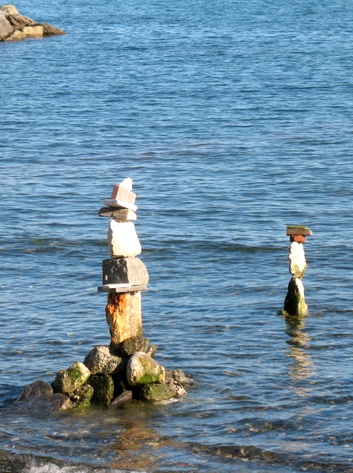
In the bay along the Lungomare, next to the Castello, an informal grouping of stone sculptures has sprung up.  They add zest to a visit to town because the display changes with every tide.

I asked who was responsible, but my sources would only say, ‘un marinaio,’ that is, a seaman.  There is a club of such who hang out right near the exhibit, so I expect it’s one (or more?) of them.

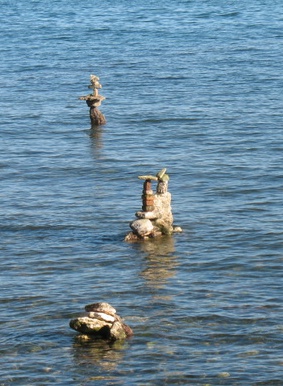
The sculptures are delicate, amusing and temporary – performance art at its best.  Thank you, Il Marinaio, for livening up greater downtown Rapallo.  Here are some more shots of the sculptures as they were several days ago:

(This one I found particularly amusing for its obvious reference to fishing.)

I’m not sure how these two remained upright for as long as they did.  Superb balance, I guess.

While art above the waves is accessible to all, that below the waves is harder to visit.  Underwater sculpture, mostly of a religious nature, is a common theme along the Riviera.  At San Frutuoso you can find (if you’re lucky) the submerged Cristo degli Abissi:

Photo courtesy of Francesca at scubakix.blogspot.com

In Zoagli, a bit to the south, the 1997 sculpture Madonna del Mare, made by artist Marian Hastianatte, is resting nine meters down:

Photo courtesy of http://www.commune.zoagli,ge.it

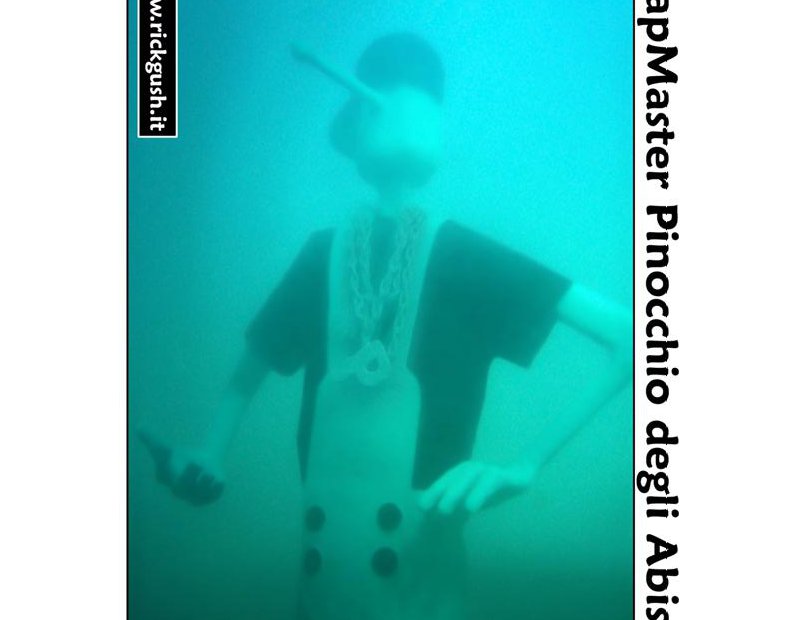
Not all the underwater art here is, or has been, sacred. On the first day of summer, 2008, local artist Rick Gush submerged  Rapmaster Pinocchio in the waters off San Michele, between Rapallo and Santa Margherita. Because the sculpture was an outlaw, it did not remain long; like the cairns of Il Maranaio, it was fleeting, and all the more interesting for that.

Photo courtesy of rickgush.it

If you are particularly interested in underwater sculpture, you can see some more of it here and here. If not, I’ll meet you on the Lungomare, we can get an ice cream at Fridgedarium, and admire the evolving work of Il Maranaio.

Where it comes from…

10 Sunday Jun 2012

Posted by farfalle1 in American habits and customs, Italian food, Uncategorized

≈ 12 Comments

Tags

Catch of the day, Eating locally, Fresh fish, Italian fishing fleet, Locavore, Santa Margherita Ligure

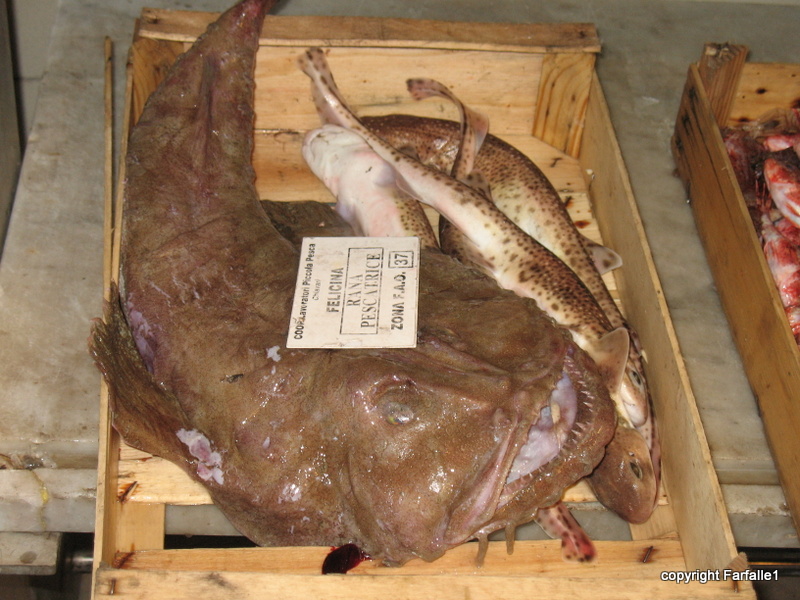
Possibly the world’s ugliest fish?

‘Locavore’ is a word I abhor.  Oh I know, it’s a perfectly good word and absolutely descriptive.  But, to me, it carries moral overtones that I don’t like – the idea that if I eat food that is all grown/produced within, let us say, fifty miles of where I live, I am somehow a better person than the poor sod who has to eat out-of-season apples from Argentina and whose beef comes from the mid-west and which enjoyed a last supper of who knows what.

We lived in New England when I first heard the term.  I thought it was laughable. What would we, in Connecticut, eat in January if all our food had to be grown nearby?  Frozen food?  But think of the energy costs associated with that.  Food that was grown in our own gardens that we lovingly canned.   While it’s true that canned fruits and veggies seem to retain most of their nutritional value, they likely give up a great deal in texture and crispness.  Wouldn’t you rather eat a fresh green bean than a canned one?

Then I thought about the long arc of the history of what we eat.  In the Middle Ages people were restricted to a diet of food produced nearby because the means to move it any great distance simply did not exist.   Their teeth turned black and fell out.  They had diseases associated with vitamin deficiencies: rickets, scurvy and beriberi.   How wonderful it was when  trade began to bring spices and food from the East, the Caribbean  and South America, and eating changed forever.  Sugar!  Coffee and tea!  Sublime.  Lemons and limes.  Pineapple!  Poi. No, forget about poi. Chocolate!! (never forget chocolate…)  Empires grew and food moved ever more freely from point A to point B, and it was all good (and from more than just a culinary point-of-view, but that’s another subject altogether).

Then, about a decade or so ago, the specter of eating locally reared its head.  Farm markets (of which I am a huge fan, incidentally) sprouted on every village green.  Calves seen cavorting in a neighbor’s pasture one day were in his freezer the next day.  Everyone had a chicken. And that was good too.  But the idea that that’s all we should eat seems to me to be nonsense.

So, having said all that, let me recant just a bit.  I think it’s really important to know where our food comes from, and to make intelligent choices about what we eat using that information as one criterion.  I have a personal preference against eating a fish from China – God only knows what that fish ate, so I don’t want to eat him.  I also think it’s really important for everyone, especially children, to know that food doesn’t ‘come’ from supermarkets.  Milk comes from cows and goats, and cheese comes from milk – these are really good things to know.  Jellies and jams are not born that way, and spaghetti doesn’t grow on trees, despite what you see about Switzerland on Youtube.

People in Italy take food very seriously.  The fresh fods  we buy here are marked with a quality grade and geographical source.  There are plenty of Italians who won’t eat food not grown in Italy (or, maybe, France and Switzerland) – but there are plenty who will.  The important thing is that the information is available and one can make a choice.

Fish is a topic of often spirited discussion: wild caught or farm raised?  As ocean stocks grow ever smaller, there’s much to be said for farm-raised fish, as long as the farmer is responsible about the fish food he uses (I suppose the same thing could be said for chickens – but when was the last time you ate a wild-caught chicken?  I digress.)  There is a large fish-farm off the coast in nearby Chiavari; you can see the pens as you drive down the hill into the city.  But in neighboring Santa Margherita Ligure you can do one better – you can go to the port at about 3:30 or 4:00 p.m. and watch the day’s catch as it is delivered to the fish stalls in the arcade across the street.  Then, if you’ve seen something that whets your appetite, you can go over and buy it immediately, sometimes still squirming.

Many of the small Rivieras communities no longer have fishing fleets, but Santa and several others still do.  The boats are all business, as you can see above.  They usually moor  a short distance from the port, and the catch is ferried in by skiff.

The fish are all neatly sorted and put in flats.  The person taking the box will trot through a gauntlet of curious onlookers, cross the street, and deliver the goods to the vendors.    Sometimes the fellow who transports the fish is the vendor.  Who goes to see the fish come in?  Some are tourists who have just happened by, some are buyers for the local restaurants, and some are consumers looking for a good fish for dinner.

Yum!  Someone’s having octopus tonight.

This guy was so pleased with his fishies he had to share the good news with his friends.

This is the kind of ‘locavore’ I adore.  It’s just people doing what they’ve done their whole lives, and what’s been done in their town for centuries.  It has nothing to do with a Philosophy, or a Point of View, and there’s certainly no sense that if you go buy your fish from Supermercato Billa you’re less of a person than if you go to the port to buy it.  It’s just the way things are. As a matter of fact, with the whole sea at their door,   one of the great winter treats for Ligurians is, surprisingly, stoccafisso, dried cod.  I think it is odious, but people here love it cooked with tomatoes, potatoes, carrots, onions and garlic. That’s the Ligurian style.  In Milan it is cooked with cream, which is even worse. Why would you eat that when you can have fresh fish?  I don’t know, but it is highly regarded here, and eaten with great gusto. Cod, by the way, doesn’t live in the warm Tigullio Sea – it comes from New England or Scandinavia.

So yes, please grow your own veggies in your garden, or buy them from your local farm market or CSA, but please, oh please, don’t make me feel guilty when I buy a peach from Israel.  Don’t turn eating fresh local food into a Cause or a Movement.  Good food is good food no matter where it comes from.  I understand the arguments about the cost of transport, but transporting goods is something that has gone on for centuries.  Let’s not go back to the Middle Ages.

Taxing Times

05 Tuesday Jun 2012

Posted by farfalle1 in Italian bureaucracy, Taxes in Italy, Uncategorized

≈ 15 Comments

Tags

Ici, IMU, Italian taxes, IVIE

Just when we think we’re finally getting a handle on the ins-and-outs of Italian bureaucracy, Italian bureaucracy throws us a curve ball. This year it is the in the form of two new taxes.

Well, actually one re-instated tax and one new tax.

The reinstated tax used to be call l’ICI, and it was a modest tax on one’s real estate holdings in Italy. Several years ago then Prime Minister Silvio Berlusconi abolished the tax in an effort to appease voters and gain re-election, in which endeavor he succeeded. If you have been following events in Italy, you know she is in deep financial crisis, and that the new Prime Minister, Mario Monti, is a technocrat.  ” Technically (no pun intended), a technocratic government is one in which the ministers are not career politicians; in fact, in some cases they may not even be members of political parties at all. They are instead supposed to be “experts” in the fields of their respective ministries.” (For a more in-depth explanation of a technocracy, read this article by Joshua A. Tucker, writing for ‘Aljazeera,’ from which the preceding quote is taken.)  Monti has been given the unenviable task of ‘fixing’ the Italian economy, and one of his steps has been to reinstate the ICI, now known as the IMU  (Imposta Municipale Unificata).  It is pronounced exactly as below.

Photo courtesy of http://www.mdahlem.net

Figuring out what one owes for the IMU is not terribly difficult, fortunately. There is a handy-dandy website (Google IMU *your town’s name* to find it) that will tell you just what you owe, and will even print out the F24 form to use when paying it. The first payment is due June 18. The second payment is due in September if you are paying in three installments, or in December if you are paying in two. The tricky part is that part of the tax goes  to the federal government and part goes to municipalities. Rates for the later have not yet been set, and probably won’t be until August; so while you can figure out what you owe and need to pay for June, the second and third installments are still a bit of a mystery. The tax is only slightly higher than the old ICI for first homes. It is a good bit higher for second homes.

Speedy and I have no problem with this tax being stout-hearted believers in paying for civic services, even curtailed as they have become through the austerity measures.  We DO have a big problem with the second tax.

Ivy courtesy of sparkle-and-fadeaway.blogspot.it

The IVIE (Imposta sul valore degli immobili situati all’estero) is a tax on any real property owned in another country.  Designed to catch out the big fish who hide large assets overseas, this tax is sadly also netting all us little minnows.  It is not a particularly small tax either, as it is equal to 0.76% of the value of your property.  The tricky part here (aside from actually paying the damn thing) is knowing what the correct value of the overseas property is.  Fortunately in the U.S. we all have assessed values placed on our homes for tax purposes, so I suppose we could use them.  And one does get a limited amount of credit for real estate taxes paid to the locality of the property in question.

There is yet another tax which is sort of bundled in with the dreaded IVIE (dubbed ‘Poison IVIE’ by The Informer website which, by the way, I highly recommend to anyone living in Italy).  Strictly speaking it is not IVIE, but it feels like it – it is a tax on the value of any money, funds, pensions and so forth that you might have in another country.  For 2011 and 2012 it’s 0.10% of the value of said investments; in 2013 that goes up to 0.15%.  Probably by then no one will have any money left anyway, so never mind.

We understand the reasoning behind these IVIE taxes but they seem hideously unfair to an expatriate.  They are, once again, meant to catch big fish: the wealthy who have secreted their resources in foreign countries or off-shore safe havens, something rich Italians are famous for doing.  The penalties for not reporting/paying are extortionate – 10%-50% the value of the unreported assets.  Many of us “victims” of this tax wish the government huge success so as to alleviate the burden on us in the future.

It is ‘Poison IVIE’ indeed to those of us who are just trying to enjoy a quiet  expatriate life.  At some point Italy will ask just one thing too much of us; our backs will break.  We understand that we all have to do our bit to save the country, but taxing assets in our home country just isn’t right.  And don’t get any ideas, U.S.A. – don’t think you can start taxing our property here in Italy!

Tragedies Natural and Man-Made

29 Tuesday May 2012

Posted by farfalle1 in Italy, Uncategorized

≈ 10 Comments

Tags

Brindisi bombing, Earthquake Italy May 2012, Earthquakes in Italy, Italian earthquakes, Melissa Bassi, Murder in Brindisi

I was sitting on our bed this morning about 9 a.m., finishing the chapter in the book I was reading, when I heard the tinkle, tinkle, tinkle of small objects moving, and a millisecond later felt the bed swaying beneath me.  Uh oh, I thought, that sure sounds and feels like an earthquake.  I shouted down to Speedy who was working out on the terrace, but he had felt nothing, so I went back to my book.

Later in town, the friend with whom I was having a cuppa in her apartment near the top of a seven-story building asked me if I had felt the earthquake.  Oh yes.  And no sooner did we start discussing it than we felt an aftershock, much gentler.  This was certainly alarming, as an apartment building is no place to be for an earthquake.  Fortunately for us, that was the end of it.

But the north/central part of the country was not nearly so fortunate.  The 5.8 quake was centered near Modena, right near where the last one occurred, and more buildings, many already weakened by the previous quake, came tumbling down.  Early reports indicate ten people have died, and more are trapped under rubble.

A week ago Sunday morning a 6.0 earthquake centered between Bologna and Mantova killed seven people and did untold damage to buildings.  Italy is no stranger to earthquake; a rocky country covered with ancient buildings made of stone, the effects are often catastrophic.

#1 is Rapallo, #2 is where the 2nd quake hit, and #3 is where the first quake was centered (roughly)

Meanwhile in Brindisi, just a day before the first quake, a bomb went off  outside a girls’ vocational school, killing 16-year-old Melissa Bassi. An only child, she was at the top of her class. I think of her as she might have been earlier in the morning, getting up, getting dressed for school, fixing her hair, putting on make-up, making plans, maybe day-dreaming a little.  And then bam, gone before her life was truly under way.

Italy is in mourning.  These tragedies, perhaps small in the Grand Scheme of Things, are large in the national psyche.  Both instill a sense of fear: on the one hand for the Big One, like the quake that destroyed Aquila in 2009 which killed over three hundred people; and on the other for the return of the ‘years of lead’ in the 1970’s and ’80’s when the Red Brigades terrorized the country.

What these events all have in common is their utter randomness, meaninglessness and ultimate uselessness.  Is that what makes them tragedies?

Already beset by a worsening economic crisis, the recent tragedies have only added to the sense of unease abroad in this beautiful country.

I Didn’t Know: Ancient Tower in Chiavari

28 Monday May 2012

Posted by farfalle1 in Italian history, Uncategorized

≈ 2 Comments

Tags

Castle in Chiavari, Chiavari

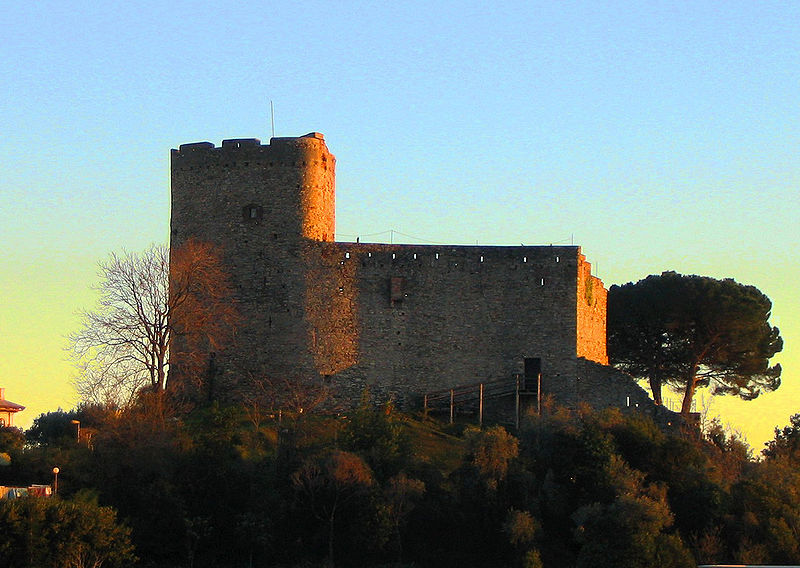
Photo courtesy of vengomatto on Flikr

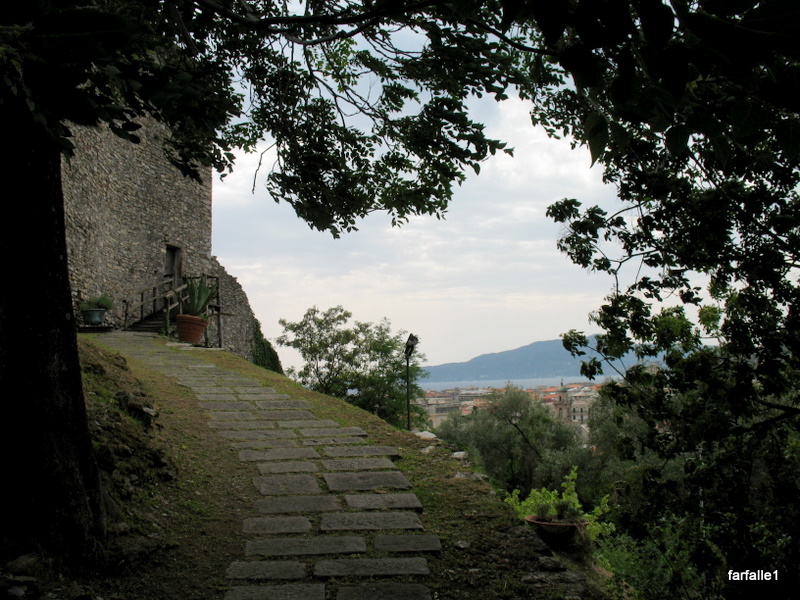
On the same walk that brought Passion Fruit to my attention, Angela and I discovered the ancient walls and Tower above Chiavari.  I had no idea they were there!

Chiavari, two towns down the coast from Rapallo, is an ancient city.  A necropolis discovered near the city center suggests that there was habitation as early as the 8th – 7th century B.C.E.  and it was an important way station during Roman times.  In 1146 construction was begun on the castle which was, at that time, a military fort.   In 1178 Chiavari was appropriated by Genova, by which time it seems the castle was finished.

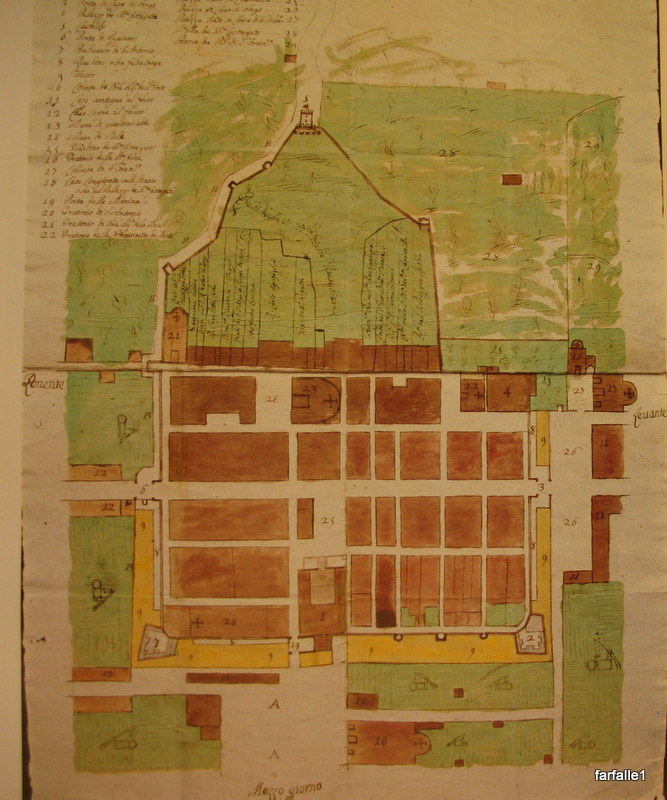
And this is where my paltry research breaks down.   Rapallo has a wonderful library, and I was able to find a good history of Chiavari (“La Citta’ della Liguria: Chiavari” by Franco Ragazzi and Carla Carallo, 1981), but it didn’t tell me nearly enough about the castle.  Who lived there?  Why was it pretty much dismantled in the Sixteenth century, leaving only the tower seen above and some wall segments?  More research required!  I took a picture of a lovely aquarelle illustration of the castello complex made in the first half of the Seventeenth century which is in the above mentioned book:


You can see why the location had military significance. From its hilltop perch the castle offers a splendid view of the whole bay and the Portofino peninsula.

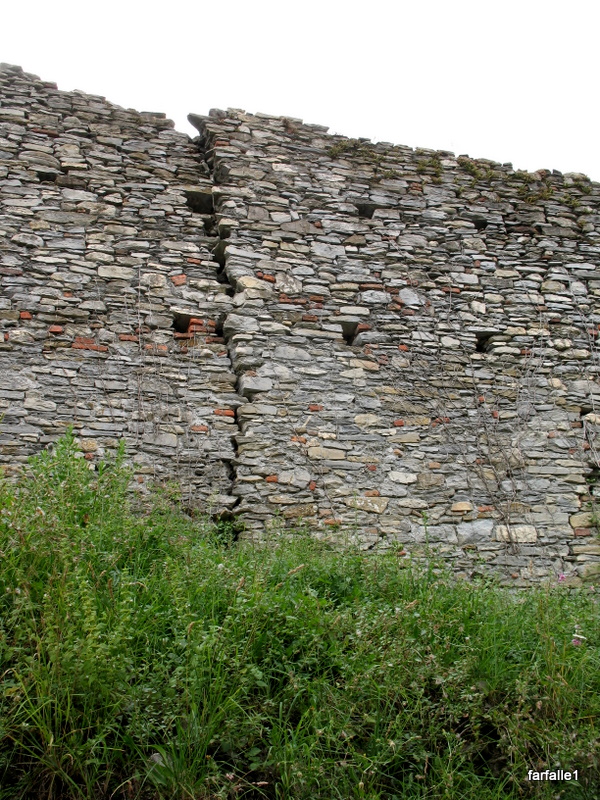
Here is one of the sections of once extensive walls that is still standing… barely?

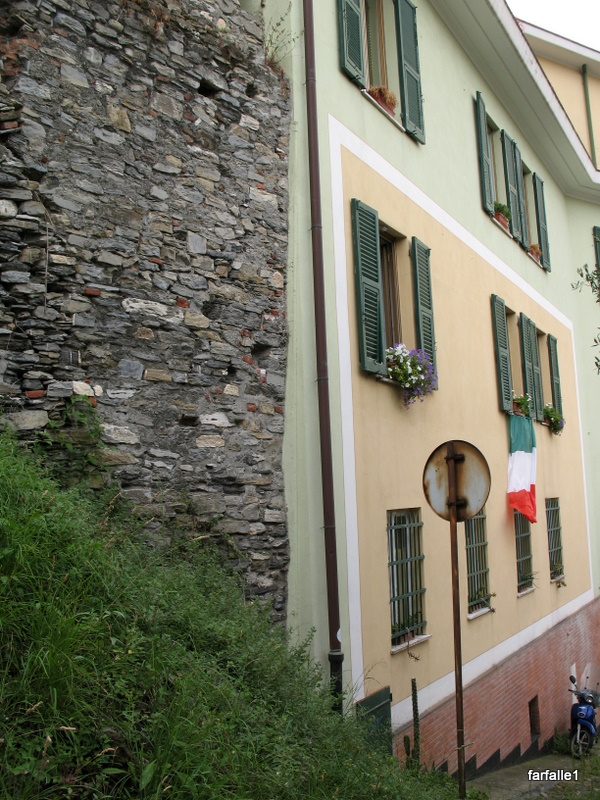
One of the beautiful things about Italy is the way old and new live so happily together.

Another beautiful aspect of life here is that every town offers a surprise, an “I didn’t know that” moment. Sometimes it’s as small as a special painting (about which more in a later post); other times it’s as large and obvious as a ruined castle. You simply have to look around here, and you will discover something special.

What Would Be the Dumbest Thing in the World to Tax?

19 Saturday May 2012

Posted by farfalle1 in Animals in Italy, Cats, Italian bureaucracy, Italian gardens, Italy, Law and order, Taxes in Italy, Uncategorized

≈ 10 Comments

Tags

Silly Taxes, Tax on Pets

Pets.  That would be ridiculous, wouldn’t it?

Real Luciano

Speedy sent me an article he came across  from Reuters (reported by Philip Pullella; edited by Andrew Osborn) about the yahoos in Rome considering a tax on  family pets.  Evidently a parliamentary commission felt that this would be an excellent way to give a little boost to the nation’s diminished coffers.  The outcry was immediate and loud; the proposal was dead by the end of the day.

It got me thinking, though.  Didn’t Italy once tax house windows, and isn’t that why there are so many trompe L’oeuil windows painted on the houses of Liguria, where people are famously tight with their cash?

Tax Evasion Luciano

Probably the idea of taxing pets is not the silliest tax proposal ever made.  A quick Google search turned up an amusing list of the ten most ridiculous taxes ever, written by Jamie Frater.  It turns out that Rome is no stranger to bizarre taxes.  The emperors Nero and Vespasian taxed urine.  Poor Romans fortunate enough to have a pot to piss in paid a tax when they emptied their pots in the common cesspool.

Go ahead, tax my dog Rover – just get rid of the tax on my hat and my beard.  I think my favorite is the one called the Crack Tax: drug dealers in Tennessee were, before the law was declared unconstitutional, supposed to pay a tax, anonymously, on the illegal substances they sold.  If they got caught dealing crystal meth, say, and didn’t have the tax stamp… well, can you imagine?  They’d have been in pretty hot water!

It did give me an idea for another tax the Roman legislators might consider:

Photo courtesy of thedragonpages.blogspot.com

The Intergluteal Cleft Tax would either raise a lot of money or send fashion careening in a new direction.

Not all strange taxes are so amusing.  The poll tax in America was a de facto method of denying voting privileges in the southern states to recently freed slaves.  It was not repealed until 1964.

Anti-Poll Tax sentiment from the U.K.

The way things are going in this election year they may have to pay people to come to the polls instead.  Especially here in Rapallo where only 16,000 of 28,000 possible voters turned out two weeks ago to elect the Mayor.

There will always be taxes, I guess.  And I guess there will always be some silly ones.  I’m just glad that, for the time being anyway, there will be no taxes in Italy for owning a pet.  Speedy suggests that instead of taxing pets perhaps the legislators could tax vegetable gardens….

A nicely laid out garden on Via Betti in Rapallo

Well phew!

15 Tuesday May 2012

Posted by farfalle1 in Uncategorized

≈ 5 Comments

This from foxbusiness.com, originally published May 11, by Dow Jones Newswires:

ROME –  Italy’s highest appeals court, the Cassazione, ruled online blogs don’t constitute a “clandestine” press and aren’t outlawed under a 1948 law, Corriere Della Sera reports Friday on its website.

The ruling means blogs don’t need to be registered as newspapers and don’t have to conform to the press law, including an obligation to run corrections.

It concludes a legal question begun in 2004 when Carlo Ruta was accused of defamation for publishing documents about the 40-year-old murder of a journalist. He was found guilty of both defamation and operating a clandestine press in 2008. It meant he had to close his blog.

******

Those of you with an arithmetical bent will notice that the accusation occurred four years before the verdict, and eight years before the overturn of that  verdict.  Obviously Italian jurisprudence operates in base four.  In any event, with all the mistakes that crop up in this blog, I am hugely relieved that it is not ‘clandestine’ and that corrections do not need be published.  And I’m not an outlaw.  Phew.

A disturbing event…

06 Sunday May 2012

Posted by farfalle1 in Crime, Customs, Uncategorized

≈ 8 Comments

Tags

Bicycle Thief, Crime in Italy, Petty Crime in Italy

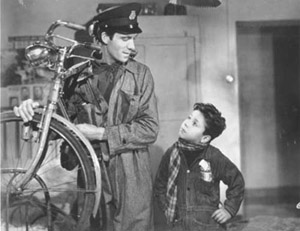
Still from the 1948 De Sica film “The Bicycle Thief,” courtesy of filmnight.org

You know how sometimes something happens in the wink of an eye, and you’re left with your mouth hanging open and an endless loop of ‘I should haves’ playing in your brain? That’s what happened to us last evening.

We parked at the train station on the way to a friend’s house for dinner. As we approached the section reserved for parked motor scooters I saw a large man who  looked… well, he just looked suspicious. So I stopped and watched him. He was bent over a very expensive bicycle that was chained to the metal railing of the parking lot, next to some old junky old bikes. As I watched he went snick, snick, the chain, which was very thin, fell away from the bike, and he began to turn. Then he saw me watching.

The man I saw was using a much smaller tool. Photo courtesy superstock.com

“E il mio bici! E il mio!” he said, brandishing his chain cutter. This pegged him immediately as a non-Italian. ‘Bici’ (pronounced bee-chee) is feminine because it’s short for ‘bicicleta,’ a feminine noun.

‘ I bet. E la tua adesso,’ I thought to myself as he hopped on and pedaled off. Speedy hadn’t noticed what was going on and had walked ahead a little, but turned back when he sensed my absence. By now the thief, because surely he was a thief, was pedaling out of the parking lot.

I felt so stupidly helpless. There I was with a camera in my purse, but my hands full of umbrealla and a focaccia in tinfoil. If only I had gotten a photo of the ladro! But I didn’t, and it’s been driving me nuts ever since.

When we arrived at the dinner party we told our hostess and the other guests what had happened. “What should we do?” I asked, “Should we call the police?”

“Eh, beh!” said one friend. “What are the police going to do? When the thieves broke through my wall and stole my safe the police didn’t come for three days, even though I called immediately.” So last night, on advice of all present, we did nothing. Besides, I had an ace up my sleeve.

I knew our friend the policeman would be coming by for a visit this afternoon, so I decided to wait and ask him, which I did. He just shrugged. “It happens every day,” he said. “There’s nothing to do.” So there’s an end to it. I’m not sure I could identify the thief if I saw him; everyone says it’s good I didn’t take his photo as he might have become violent (I disagree, but…). It just doesn’t sit right with me, though.

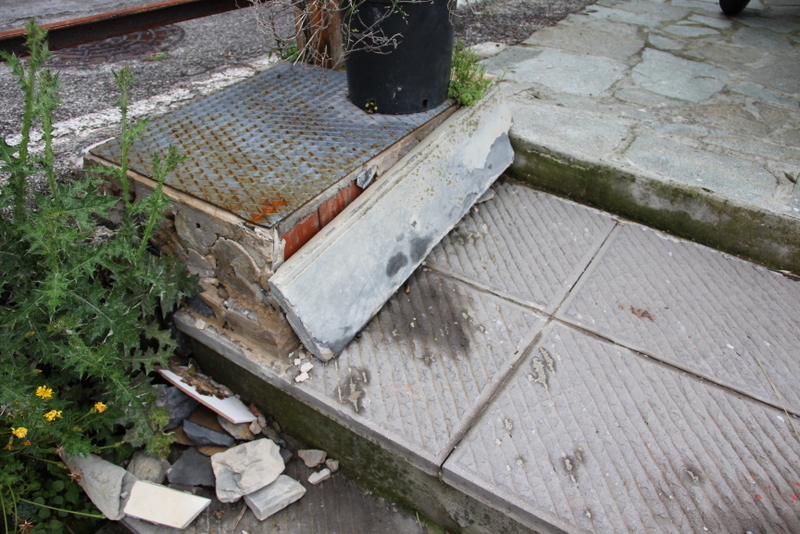
Putting this together with two other incidents that have occurred since we returned has taken a bit of the shine off our joy at being reunited with Rapallo. The first thing we saw when we got home was that someone had destroyed the facing around the sewer pozetta (box) that Speedy had worked hard at making attractive.

Evidently a very large, heavy something was brought down on the heavy, solid metal cover over the box; it has a big rusty dent in the top. All the facing stones popped out of their cement base from the force of the blow. Well, maybe it was an accident (though honestly, it didn’t look like one).

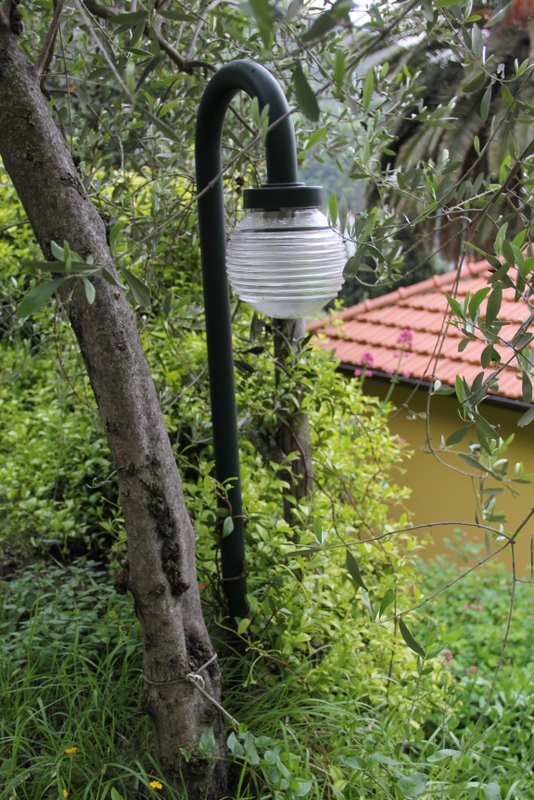
Then we realized that none of our outdoor lights were functioning. Why not? Probably water got into the lines, we surmised, because it has been exceptionally rainy of late. But no. On further examination today I realized that the light bulbs have been stolen. Three lightbulbs.  How lame is that??!  And note that in order to take them someone had to go to the trouble of unscrewing and removing the glass globes.  We were lucky, I think, that they replaced them – yet more work!

It all got me thinking about how different some things are in the States.  What I sometimes don’t feel so much here is a sense of all of us in a community looking out for each other’s welfare. The police evidently have so much to do that something like a stolen bicycle just doesn’t register on their crime-meters. (I’m not being sarcastic, there’s an enormous amount of crime here it seems, and the police have to jump through hoops to follow correct procedure. Read about it here.) If we don’t look out for our fellow citizens, who will? I was guilty last night for not doing something, anything; the police are guilty for not caring about petty crime; the thieves are guilty for breaking the social contract, and we’re all guilty for looking the other way when we see something wrong.  It’s all  disturbing, and I hate that I’m part of the problem. I’m not in favor of armed vigilantes prowling neighborhoods (ahem), but I certainly think we should all take an interest in looking out for each other.*

Am I crazy?

*Disclaimer.  Having had a good rant, I have to say that our neighbors are very kind about keeping an eye on our house when we’re not at home, and even when we are.  I’m sure they’ve saved us no end of problems with their watchfulness.  Are they the exception that proves the rule?

My Visit to Jamaica!

01 Tuesday May 2012

Posted by farfalle1 in Restaurants, Travel, Uncategorized

≈ 10 Comments

Tags

Jamaica (Queens), Jamao Coffee Shop and Restaurant, Liberty Avenue (Jamaica), Shaheem "The Dream", Sleep Inn

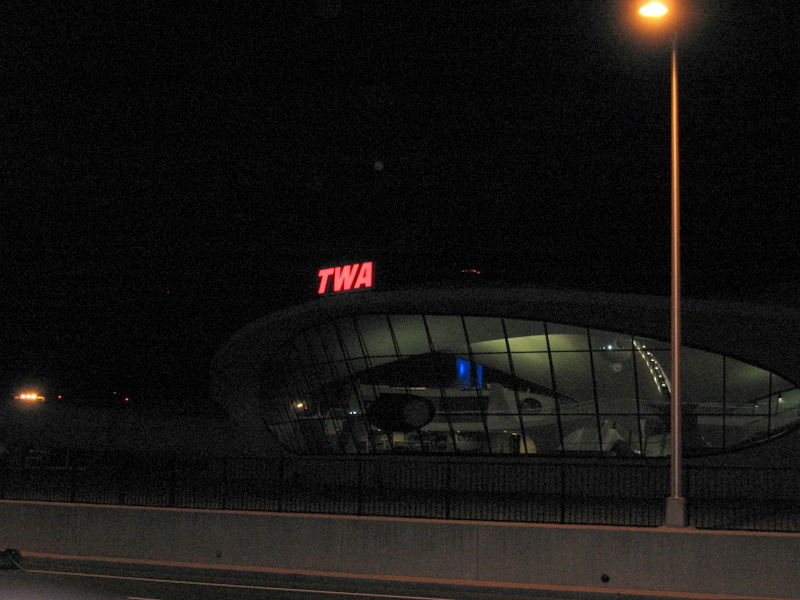
No, not the gorgeous Caribbean island, alas.  Speedy and I made our way to Italy via JFK.  We hadn’t been to that airport in years.  And what did we see when we exited the American Airlines terminal?

What a pleasure it was to see the famous terminal designed by Eero Saarinen and completed in 1962 (it’s been closed since 2001).   Readers who know Speedy personally will know that this was his ‘office’ for many years.  It was rather emotional to see the old sign lit up (TWA ceased operations on Dec. 1, 2001, and its assets were acquired by American Airlines which, in an odd twist of fate, is now in reorganization/ bankruptcy.)

After taking a night flight from Arizona and the bus that deposited us at Federal Circle (JFK’s public transportation hub) at 5 a.m. we wanted to sleep for a few hours, but we wanted to stay close to the airport.  Do you know what you can’t do on any of the automated travel services?  You can’t book a day room!  We were so surprised, and not in a good way, because we wanted to check in at about 6 a.m. and check out again at about 3 p.m.  The only way to do it was to call hotels one by one and request a very late check-in from the night before as well as a late check-out.  Many were not willing to accommodate us – the latest check-out they would allow was 2 p.m. – too early for us, as we needed rest before our evening flight to Europe.

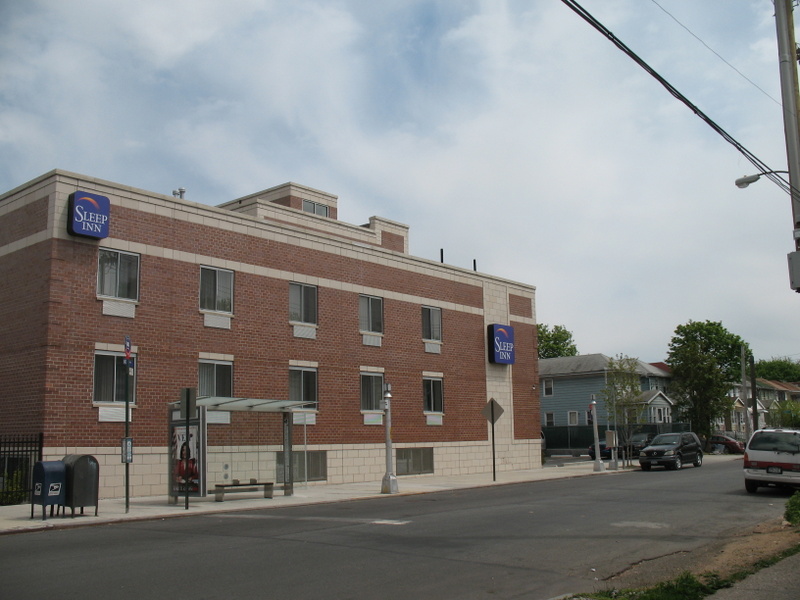
The Sleep Inn in Jamaica came to the rescue.
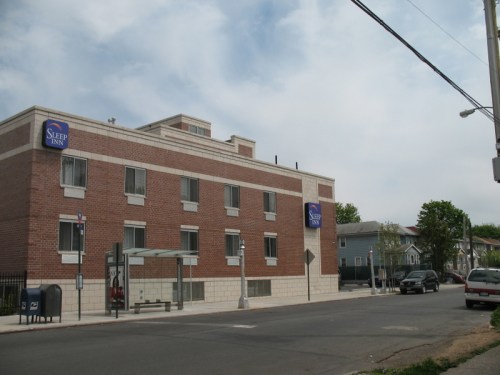
I’ll be honest with you. Jamaica is not exactly the garden capital of greater New  York City.  In fact, it could be described as rather gritty.  But we had a marvelous time there.

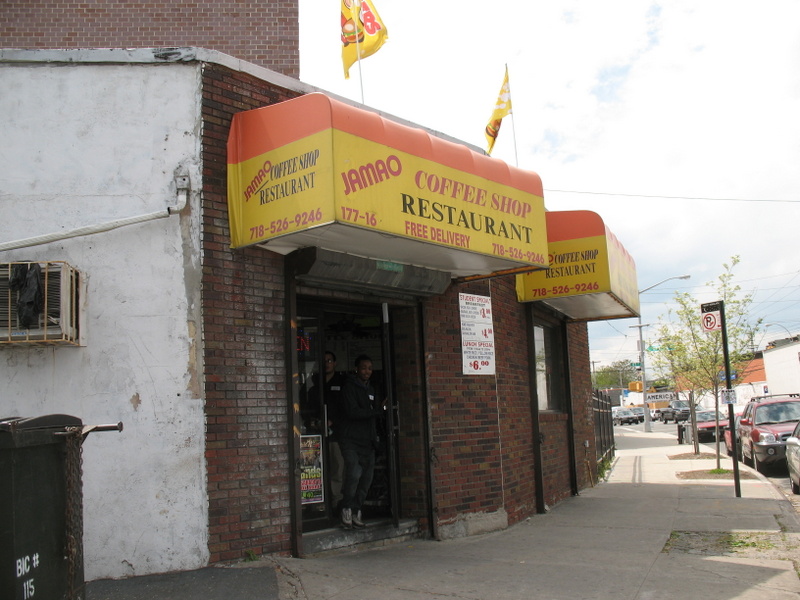
First off, the staff at the Sleep Inn were incredibly helpful and friendly.  They sent a carry-van for us as soon as we arrived at Federal Circle, and the same van carried us to the airport on our own schedule that afternoon.  We awoke from our morning nap starving, so we inquired about nearby restaurants.  There’s nothing 4-star in the vicinity, or probably even 1-star, but we ate a delicious breakfast at the Jamao Restaurant, a joint with true island influence. The proprietress is from Domenica, and in addition to normal American breakfasts, she cooks up and serves a large selection of hearty Latin dishes.  Speedy couldn’t resist- after his breakfast sandwich he had a nice helping of lechon.  He didn’t think it was an appropriate breakfast, but it looked so fantastic he had to have a bit of early lunch.  It didn’t disappoint; it was as flavorful and succulent as it looked.
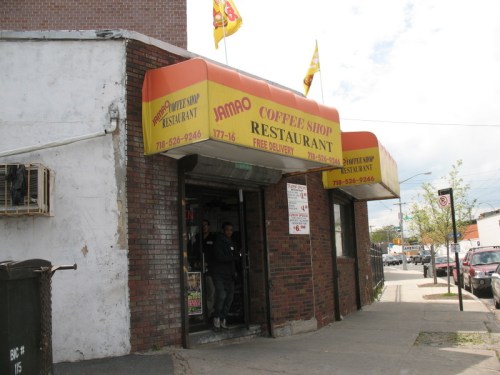
We took our stroll on streets that are mostly commercial, but there are large residential areas.  Jamaica (which has nothing to do with the Caribbean isle of the same name, other than the fact that lots of people from the island live there) was settled by the Dutch in 1656.  Today it is home to some 200,000 people of widely diverse backgrounds.  The ‘white flight’ that took place in the 1970’s is in the process of reversal as some neighborhoods become ‘gentrified.’ Where did the name come from?  The Lenape tribe gave the area their name for ‘beaver,’ which sounded like ‘Jameco’ to the English colonists who took over in 1664, according to Wikipedia.

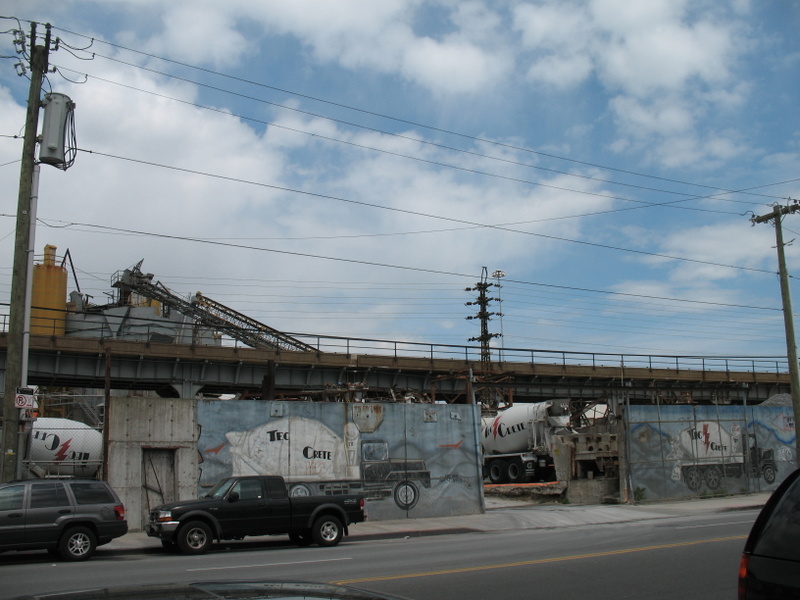
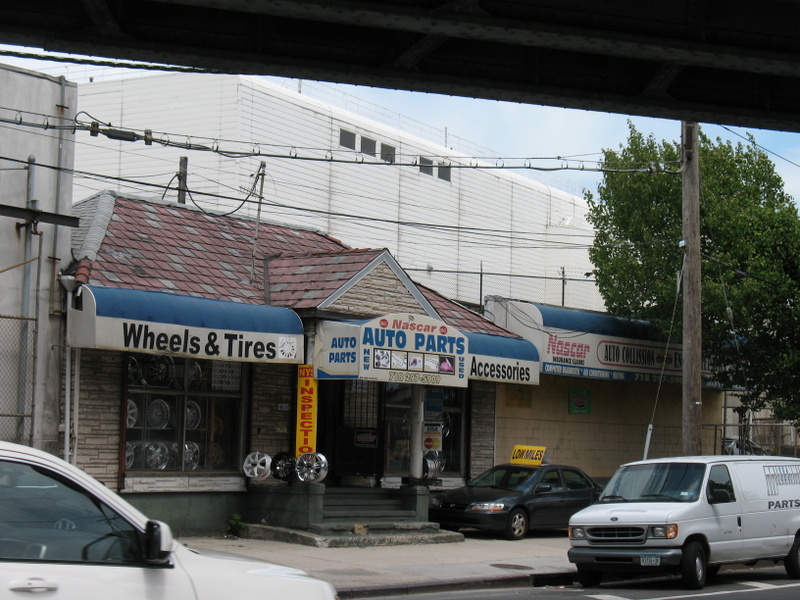
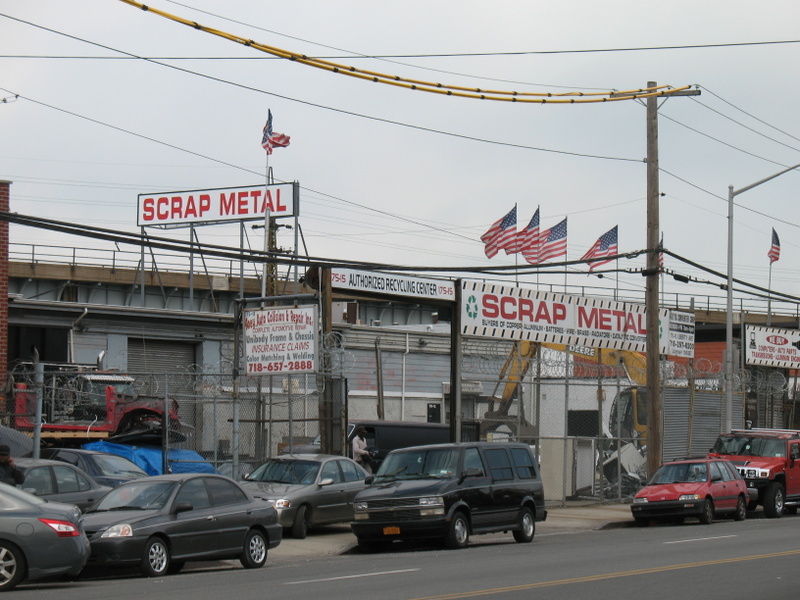
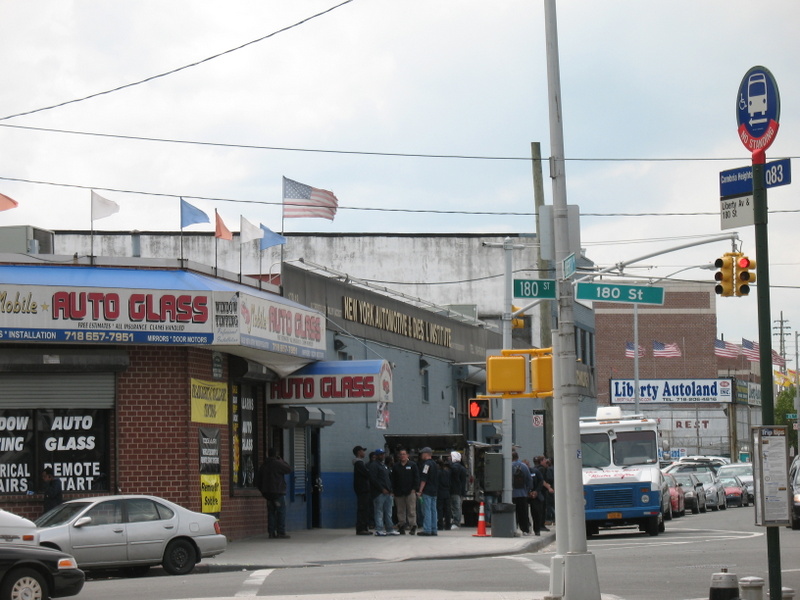
Our visit centered on Liberty Avenue, which runs parallel to Jamaica Avenue, the main artery of the city.  Here are some ‘postcards’ from our visit to Jamaica:
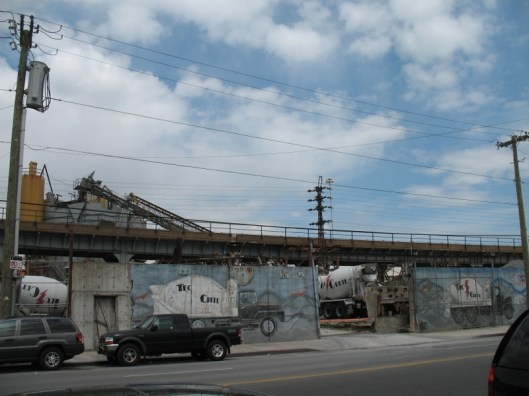
The walls of the cement plant are the canvas for a block-long painting of what goes on at a cement plant – very colorful and engaging.
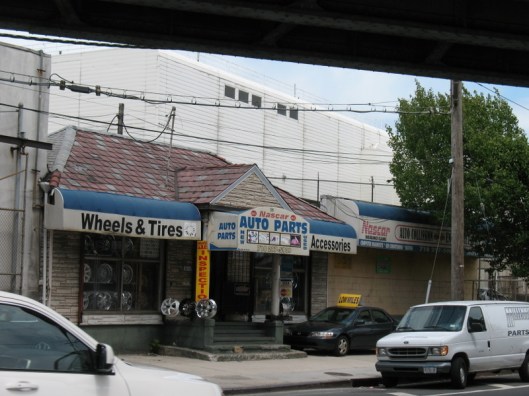
If you need anything at all for your car you can buy it on Liberty Avenue.  We must have seen six different auto parts stores.

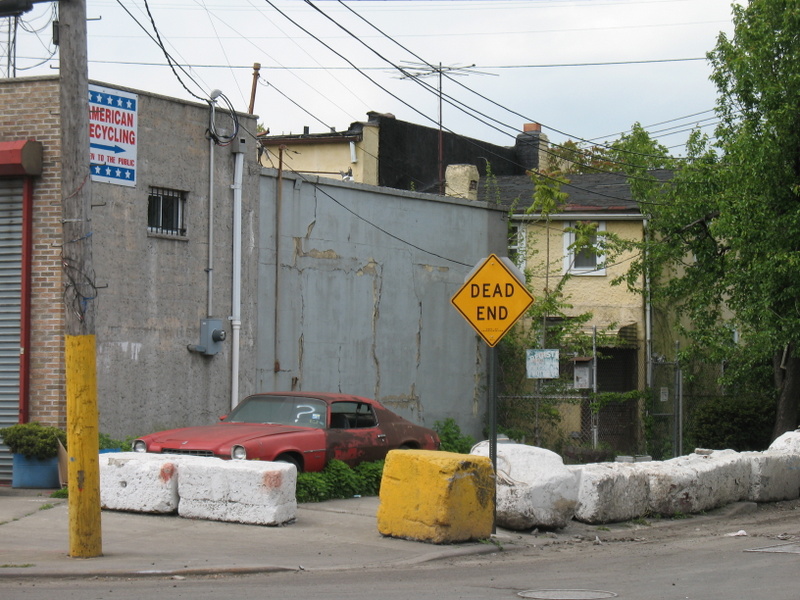
And if your car is beyond repair, perhaps it will end up at this patriotic establishment.  Nearby there was a large plant for processing ordinary household recyclables.
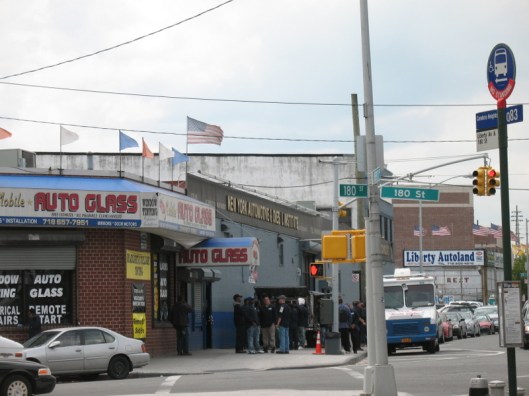
If you want to learn to be an automobile mechanic you might want to attend the New York Automotive and Diesel Institute, as this group of young men are doing.  To tell you the truth, they gave us quite a start when we walked by.  One of them said, in what seemed to be an aggressive voice, “Where are you going?!”

Gulp.  “Nowhere,” we replied, “we’re just going back to our hotel.”

“Oh, okay,” he said. “I thought maybe you were lost and needed help.”  Well, isn’t that just like Jamaica?  A class act in work clothes.

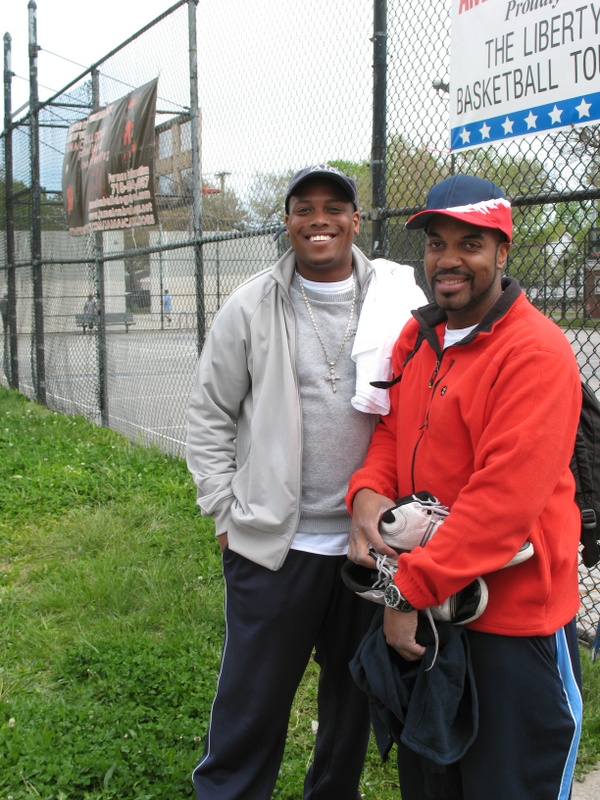
As we continued we had the pleasure of meeting Shaheem “The Dream” and one of his pals who were getting ready for a spirited handball practice in Detective Keith L. Williams Park (also known as Liberty Park), home of handball courts, tennis courts, basketball courts and, we suspect, a baseball diamond, though we didn’t see that.
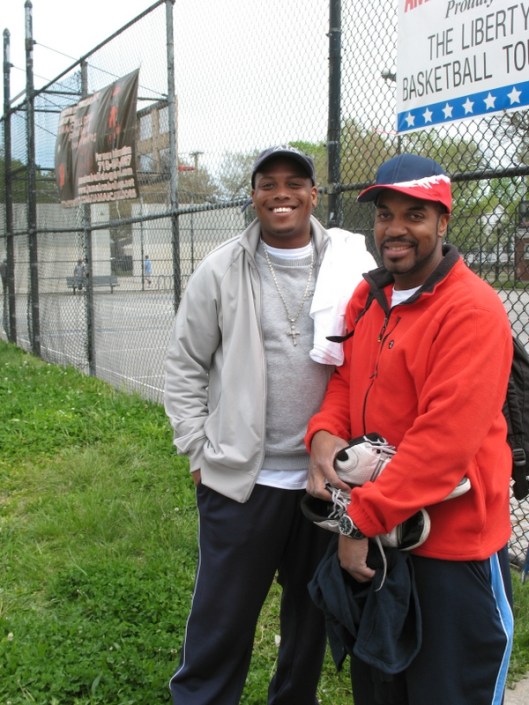
They had organized and were preparing for the Park’s first ever Opposites Tournament, designed for men and women to play together (but the men must use their non-dominant hands).  We spent a pleasant ten minutes learning about Shaheem’s prowess on the handball court, and continued on towards the Sleep Inn to prepare for the next leg of our journey. (That’s Shaheem in back wearing gray sweats, a cross and a huge smile.)

The Sleep Inn’s service did not end with our departure.  One of us left our toiletries kit hanging on the back of the bathroom door.  They are mailing it back to us.

In conclusion, while some might look at Jamaica and think this:
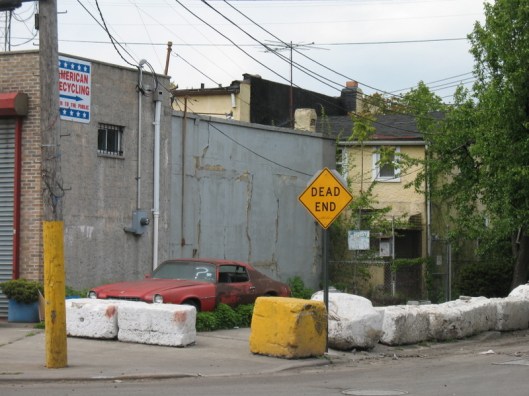
we would have to disagree.  Our visit was short, but it was packed with interest and with people who were kind and helpful.  Anytime people offer unsolicited help and conversation in the space of three blocks, you know you have found a real community.  And where else will you find an existential auto?

So if you find yourself needing a quick night’s sleep near JFK and you don’t want to spend a king’s ransom, we recommend the newly built (2010) Sleep Inn.  The rooms are well-appointed, the staff is superb, and the beds are very comfortable.  No, it’s not a five-star hotel, but the service rivals that which you will find at any other hotel.
Sinagua Updated

29 Sunday Apr 2012

Posted by farfalle1 in Uncategorized

≈ Leave a comment

For those of you interested in the previous post about the Sinagua, a friend has updated the post with a better photo of ‘the map’ and a different interpretation of the petroglyph figure… check it out.

← Older posts
Newer posts →

Enter your email address to follow this blog and receive notifications of new posts by email.

Join 114 other subscribers

rss

Subscribe in a reader

Search the Blog

A. Useful Links

  • bab.la language dictionary
  • Bus schedules for Tigullio
  • Conversions
  • English-Italian, Italian-English Dictionary
  • Expats Moving and Relocation Guide
  • Ferry Schedule Rapallo, Santa Margherita, Portofino, San Frutuoso
  • Italian Verbs Conjugated
  • Piazza Cavour
  • Rapallo's Home Page – With Link to the Month's Events
  • Slow Travel
  • The Informer – The Online Guide to Living in Italy
  • Transportation Planner for Liguria
  • Trenitalia – trains! Still the most fun way to travel.

C. Elaborations

  • A Policeman’s View
  • Driving School Diary
  • IVA refunds due for past Rifiuti tax payements
  • Nana
  • Old trains and old weekends
  • The peasant, the Virgin, the spring and the ikon
  • Will Someone Please, Please Take Me to Scotland?

D. Good Recipes - Best of the Week winners are starred

  • 'Mbriulata
  • *Baked Barley and Mushroom Casserole*
  • *Captain’s Boston Baked Beans*
  • *Crimson Pie*
  • *Louise’s Birthday Cake*
  • *Melanzane alla Parmigiana*
  • *Penne with Cabbage and Cream
  • *Pizzoccheri della Valtellina*
  • *Pumpkin Ice Cream*
  • *Risotto alla Bolognese*
  • *Rolled Stuffed Pork Roast*
  • *Spezzatini di Vitello*
  • *Stuffed Grape Leaves*
  • *Stuffed Peaches (Pesche Ripiene)*
  • *Swordfish with Salsa Cruda*
  • *Tagliarini with Porcini Mushrooms*
  • *Tagliatelli al Frutti di Mare*
  • *Three P's Pasta*
  • *Tzatziki*
  • 10th Tee Oatmeal Apricot Bars
  • Adriana’s Fruit Torta
  • Aspic
  • Bagna-calda
  • Best Brownies in the World
  • Clafoutis
  • Cold cucumber soup
  • Crispy Tortillas with Pork and Beans
  • Easy spring or summer pasta
  • Fish in the Ligurian Style
  • Hilary's Spicy Rain Forest Chop
  • Insalata Caprese
  • Lasagna al forno
  • Lasagna al Forno con Sugo Rosato e Formaggi
  • Lemon Meringue Pie
  • Leo’s Bagna Cauda
  • Leo’s Mother’s Stuffed Eggs
  • Louis’s apricot chutney
  • Mom's Sicilian Bruschetta
  • No-Knead (almost) Bread
  • Nonna Salamone's Christmas Cookies
  • Pan Fried Noodles with Duck, Ginger, Garlic and Scallions
  • Pesto, the classic and original method
  • Pesto, the modern, less authentic method
  • Pickle Relish
  • Poached pears
  • Poached Pears
  • Polenta Cuncia
  • Recipes from Paradise by Fred Plotkin
  • Rustic Hearth Bread
  • Shrimp and Crayfish Tail Soup
  • Sicilian salad
  • Slow Food Liguria
  • Slow Food Piemonte and Val d'Aosta
  • Spinach with Garlic, Pine Nuts and Raisins
  • Stuffed Eggs, Piemontese Style
  • The Captain’s Salsa Cruda
  • Tomato Aspic
  • Zucchini Raita

E. Blogroll

  • 2 Baci in a Pinon Tree
  • Aglio, Olio & Peperoncino
  • An American in Rome
  • Bella Baita View
  • Debra & Liz's Bagni di Lucca Blog
  • Expat Blog
  • Food Lovers Odyssey
  • Italian Food Forever
  • L’Orto Orgolioso
  • La Avventura – La Mia Vita Sarda
  • La Cucina
  • La Tavola Marche
  • Rubber Slippers in Italy
  • Southern Fried French
  • Status Viatoris
  • Tour del Gelato
  • Weeds and Wisdom

Photographs

  • A Day on the Phoenix Light Rail Metro
  • Apache Trail in the Snow
  • Aquileia and Croatia
  • Birds on the Golf Course
  • Bridge Art
  • Canadair Fire Fighters
  • Cats of Italy
  • Cloudy day walk from Nozarego to Portofino
  • Fiera del Bestiame e Agricultura
  • Football Finds a Home in San Maurizio
  • Hiking Dogs
  • Mercatino dei Sapori – Food Fair!
  • Moto Models
  • Olive pressing
  • Rapallo Gardens
  • Rapallo's Festa Patronale
  • Ricaldone and the Rinaldi Winery
  • Rice Fields
  • Sardegna ~ Arbatax and Tortoli
  • Sardegna ~ San Pietro above Baunei
  • Sardegna ~ The Festa in Baunei
  • Scotland, including Isle of Skye
  • Slow Food 2008 Salone del Gusto
  • The Cat Show and the Light Rail Fair
  • The desert in bloom
  • Trip to Bavaria

Pages

  • Fagioli all’ucelleto

Archives

Recent Posts

  • A Superior Visit
  • Fun at the Ranch Market
  • The MAC
  • Welcome Tai Chi
  • Bingo Fun for Ferals
December 2025
M T W T F S S
1234567
891011121314
15161718192021
22232425262728
293031  
« Jul    

Member of The Internet Defense League

Blog at WordPress.com.

  • Subscribe Subscribed
    • An Ex-Expatriate
    • Join 114 other subscribers
    • Already have a WordPress.com account? Log in now.
    • An Ex-Expatriate
    • Subscribe Subscribed
    • Sign up
    • Log in
    • Report this content
    • View site in Reader
    • Manage subscriptions
    • Collapse this bar
 

Loading Comments...