• Contact
  • Elaborations
    • A Policeman’s View
    • Driving School Diary
    • Great Danes
    • IVA charged on Tassa Rifiuti
    • Nana
    • Old trains and Old weekends
    • The peasant, the virgin, the spring and the ikon
    • Will Someone Please, Please Take Me to Scotland??
  • Recipes
    • ‘Mbriulata
    • *Baked Barley and Mushroom Casserole*
    • *Captain’s Boston Baked Beans*
    • *Cherry Tart*
    • *Crimson Pie*
    • *Louise’s Birthday Cake*
    • *Melanzane alla Parmigiana* – Eggplant Parmesan
    • *Penne with Cabbage and Cream
    • *Pizzoccheri della Valtellina*
    • *Pumpkin Ice Cream*
    • *Risotto alla Bolognese*
    • *Rolled Stuffed Pork Roast* on the rotisserie
    • *Shrimp and Crayfish Tail Soup*
    • *Spezzatino di Vitello*
    • *Stuffed Grape Leaves*
    • *Swordfish with Salsa Cruda*
    • *Tagliarini with Porcini Mushrooms*
    • *Tagliatelli al Frutti di Mare*
    • *Tzatziki*
    • 10th Tee Apricot Bars
    • Adriana’s Fruit Torta
    • Artichoke Parmigiano Dip
    • Best Brownies in the World
    • Clafoutis
    • Cod the Way Sniven Likes It
    • Cold Cucumber Soup
    • Crispy Tortillas with Pork and Beans
    • Easy spring or summer pasta
    • Fagioli all’ucelleto
    • Fish in the Ligurian Style
    • Hilary’s Spicy Rain Forest Chop
    • Insalata Caprese
    • Kumquat and Cherry Upside Down Cake
    • Lasagna Al Forno con Sugo Rosato e Formaggi
    • Lemon Meringue Pie
    • Leo’s Bagna Cauda
    • Leo’s Mother’s Stuffed Eggs
    • Louis’s Apricot Chutney
    • Mom’s Sicilian Bruschetta
    • No-Knead Bread (almost)
    • Nonna Salamone’s Famous Christmas Cookies
    • Pan-fried Noodles, with Duck, Ginger, Garlic and Scallions
    • Pesto
    • Pesto
    • Pickle Relish
    • Poached Pears
    • Polenta Cuncia
    • Pumpkin Sformato with Fonduta and Frisee
    • Rustic Hearth Bread
    • Sicilian Salad
    • Soused Hog’s Face
    • Spotted Dick
    • Swedish Tea Wreaths
    • The Captain’s Salsa Cruda
    • Tomato Aspic
    • Vongerichten’s Spice-Rubbed Chicken with Kumquat-Lemongrass Dressing
    • Winter Squash or Pumpkin Gratin
    • Zucchini Raita

An Ex-Expatriate

~ and what she saw

An Ex-Expatriate

Category Archives: American habits and customs

Shhhh

01 Monday Aug 2011

Posted by farfalle1 in American habits and customs, Arizona, Customs, Italian festas, Italian habits and customs, Italy, Uncategorized

≈ 13 Comments

Tags

How to Listen, Julian Treasure, Listening, Noise, Noise Pollution, Sound

The Captain always teases me by saying, “You know I never listen;” and I tease back by saying, “True.  We have the perfect arrangement for living in Italy – you speak and I listen.”  (He’s much better at speaking the language than I.)

While the captain may be teasing, it seems true to me that often people really don’t listen to others (I include myself in this group). The reasons are many – self-involvement, disinterest, hearing impairment, multi-tasking, language challenges, etc., etc.

The TED website recently put up a talk by sound specialist Julian Treasure which I found fascinating. He talks about why people don’t listen, and how we can all improve our listening skills.  It’s a short video, just over seven minutes – here, take a look.

https://ted.com/talks/view/id/1200

One of the things that has always struck me about Italy is the non-stop noise, at least where we live.  As I type this it’s 10:30 at night and there’s a festa down the street a way with live music – very loud live music.  Driving bass, banging drums and a songstress who is, alas, a bit flat.  It’s not my taste in music, to be honest, but I don’t really resent it being forced on us (at least not until after 11 p.m. – last night the live music went til midnight and I did get a bit cranky).  It happens only a few times a year up here. The amazing thing to me is that no one complains or seems to mind.

But if it’s not live music, there is always some other kind of aural stimulation – scooters and cycles tearing up and down the mountain; the bus slowly groaning its way up, merrily tootling its horn at every curve (a necessary precaution on these narrow roads) and then loudly sighing and chuffing at each stop; church bells from our village, from Montallegro and, if the wind is right, from the Rapallo Cathedral; ambulance and police sirens; cruise ship horns; airplanes overhead; dogs barking; cocks crowing at all hours; birds; children shouting (a particularly cheerful noise, that) and always, always conversation.  Conversation as an art form is alive and well in this courteous country.  Finding three minutes of silence daily, as recommended by Mr. Treasure (can that really be his name??) is a challenge here.  Every now and then one of us awakens at 3 or 4 a.m., and we are struck by the relative silence – it is such a rarity.

In contrast the U.S. seems much quieter in general (not the cities, to be sure).  The example the Captain likes to give is this:  when Italy won the World Cup (European football) in 2006 the racket from Rapallo was amazing – horns blasted, cars tore through the center of town with kids hanging out waving flags and shouting, ships in the harbor blew their horns – it was an explosion of celebratory sound.  In 2008 when the Arizona Cardinals (American football) won the game that sent them to the Super Bowl we stuck our heads outside right after the game.  Our Arizona neighborhood was as silent as a tomb, the town was silent; and we were a mere forty miles from the stadium where the game was played.  No one was out and about because anyone not at the game was surely inside watching it on TV – but afterwards there was no public demonstration of glee.  And if someone’s party is noisy in the U.S. it takes the neighbors no time at all to call the police and complain.

So, is it harder to listen in Italy, where there is so much more ambient noise?  Though the Captain might well disagree,  I don’t really think so.  But as we know, he doesn’t listen anyway…
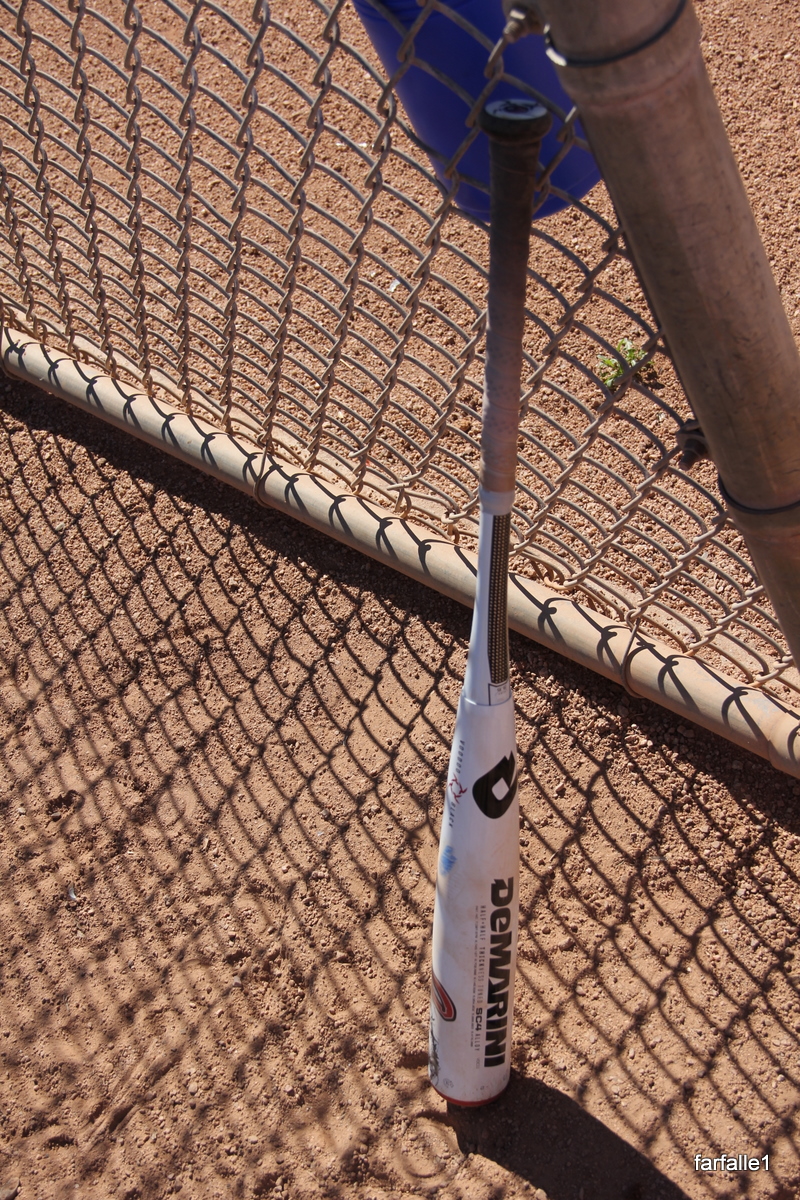
The Future of MLB

18 Monday Apr 2011

Posted by farfalle1 in American habits and customs, Arizona, Sports, Uncategorized

≈ Leave a comment

Tags

Baseball, College baseball, Denver Christian School, Ephs, Spring training, Williams College Baseball


The Phoenix area is famously the site of much of baseball’s Spring Training.  Many teams, both Major and Minor, get the off-season kinks out in the Arizona sun, including the New York Yankees, the Cubs and White Sox of Chicago, the Cincinnati Reds, Cleveland Indians, Colorado Rockies… the list goes on and on, and if you’re interested in that list you can see it here.  The excitement is over for this year; the teams have left to take up the ardors of regular season play.

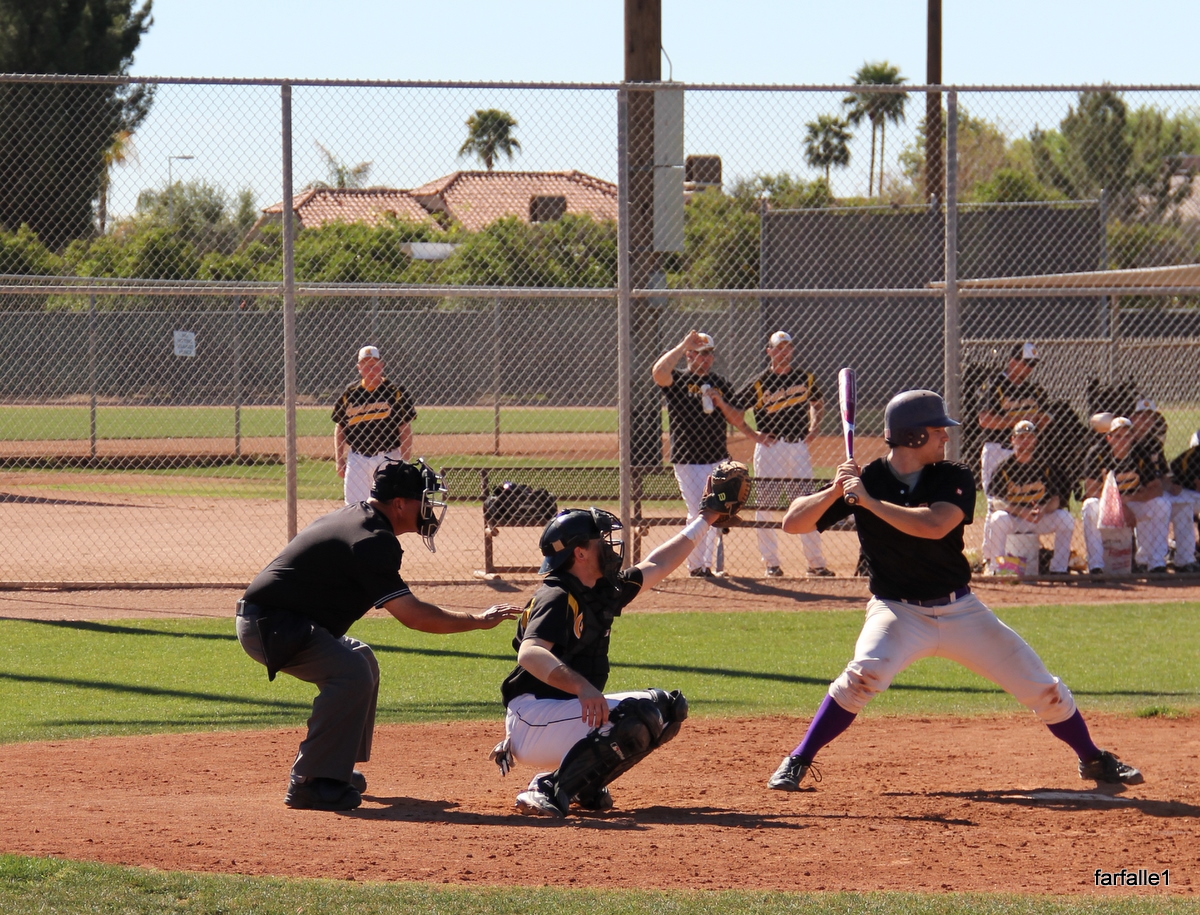
But wait!  It turns out professional baseball players aren’t the only ones who take advantage of this climate to get in some Spring training.  High school and college teams from all over the Northern part of the country come to the Gene Autry Park in Mesa to take part in a series of warm-up games, some of which count in their regular season of play.  There are two baseball fields in the park as well as other fields and amenities including a building with rest rooms and a concession stand.  Can’t have a baseball game without a hot dog close by.

The Captain stumbled on a college game one day when he went to the Park to while away a little time.  He saw Middlebury College playing Oberlin.  We were so excited!  Our friends Kate,  John, Charles and Angus live in Middlebury – it made them seem so close.  The Captain spoke to some of the fans, hoping to find a friend in common with our friends, but of course the stands were filled mostly with parents and girlfriends of the Middlebury players.

And that makes sense.  It turns out it is the parents who foot the bill for this spring break odyssey.  They hold fund-raisers during the year, but I have to imagine that mostly they just pay.  It would take a lot of bake sales to underwrite an eastern baseball team’s stay in the southwest.

I met the Captain a couple of days later to watch some ball.  That morning  featured two high school teams from Colorado.  It also, evidently, featured a most interesting pitcher, Chris by name.

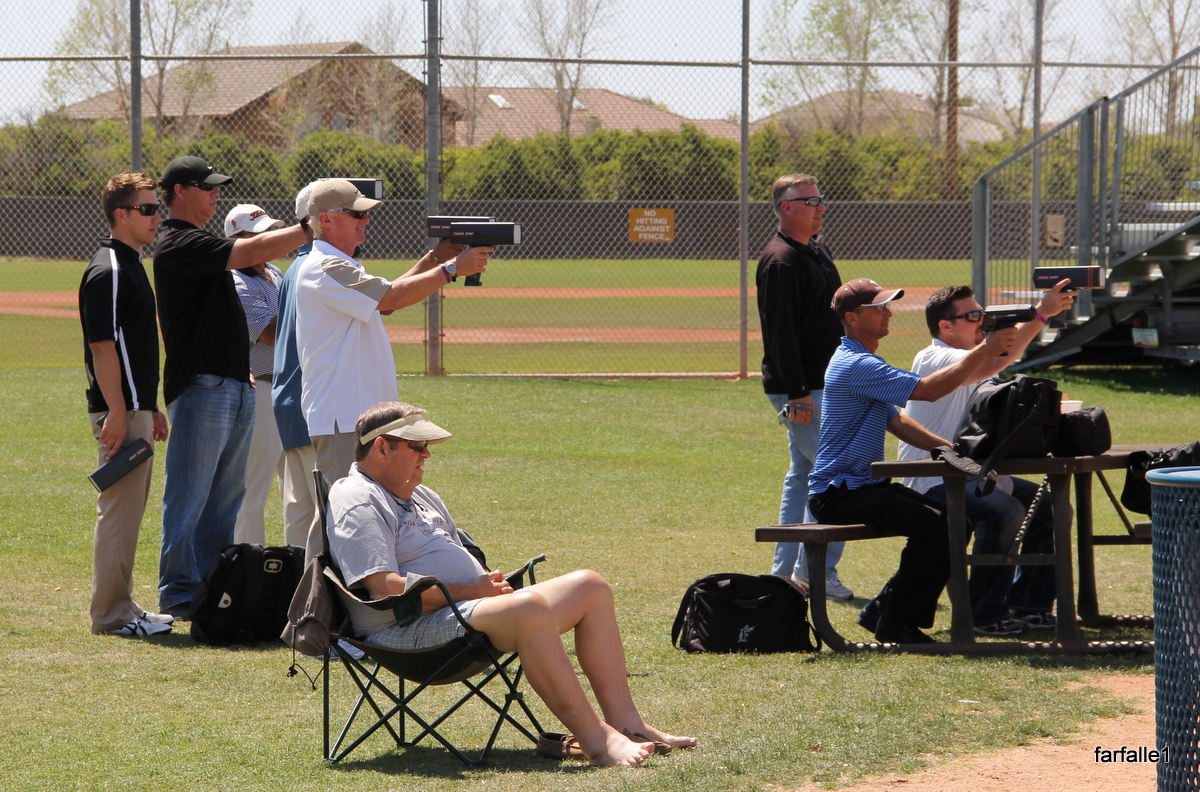
He was so interesting that he was being followed around by a bunch of scouts.  No, not college scouts, as we initially thought; major league scouts.  Huh?  Don’t young baseball players go through the college system before turning pro, or is that just football?  I’m not enough of a sports-meister to know.

Here they all are, timing Chris’s pitches.  What makes him so interesting, evidently, is the fact that he can throw a ball at about 91 miles per hour.  The professional pitchers are in the 94-97 mph range, according to one of the scouts I spoke to.

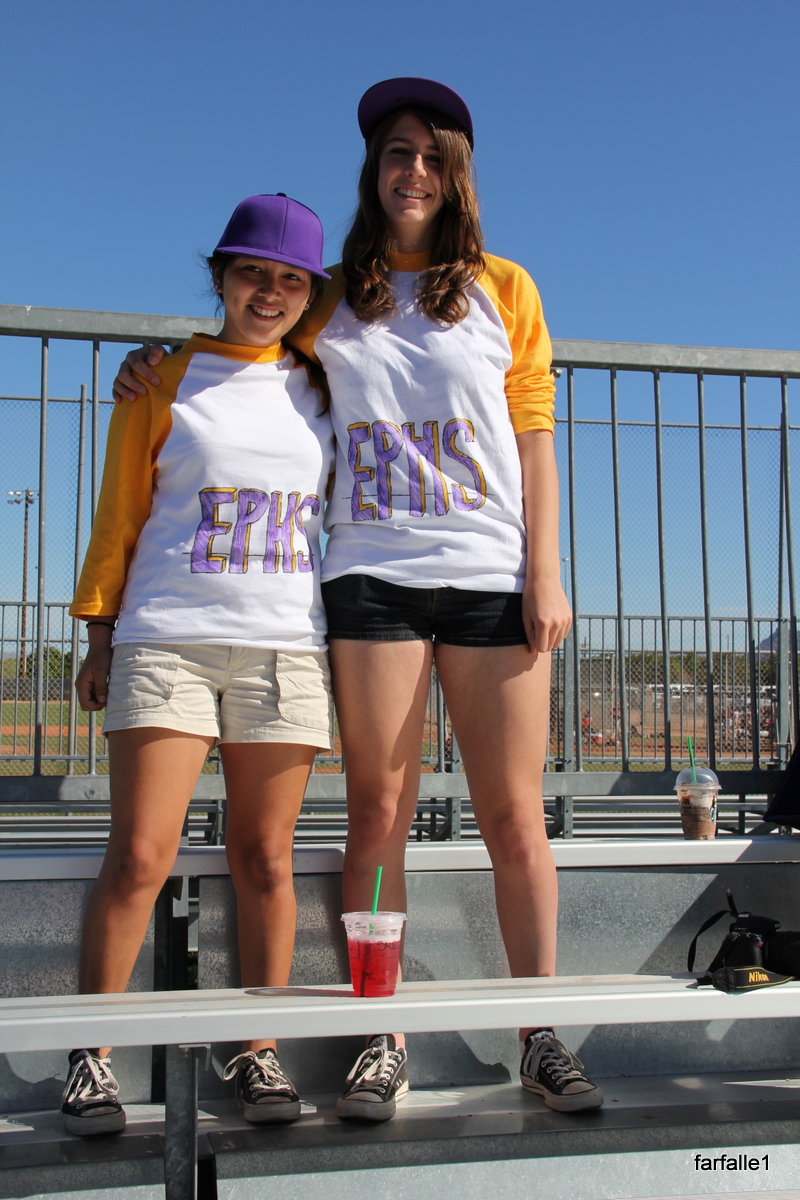
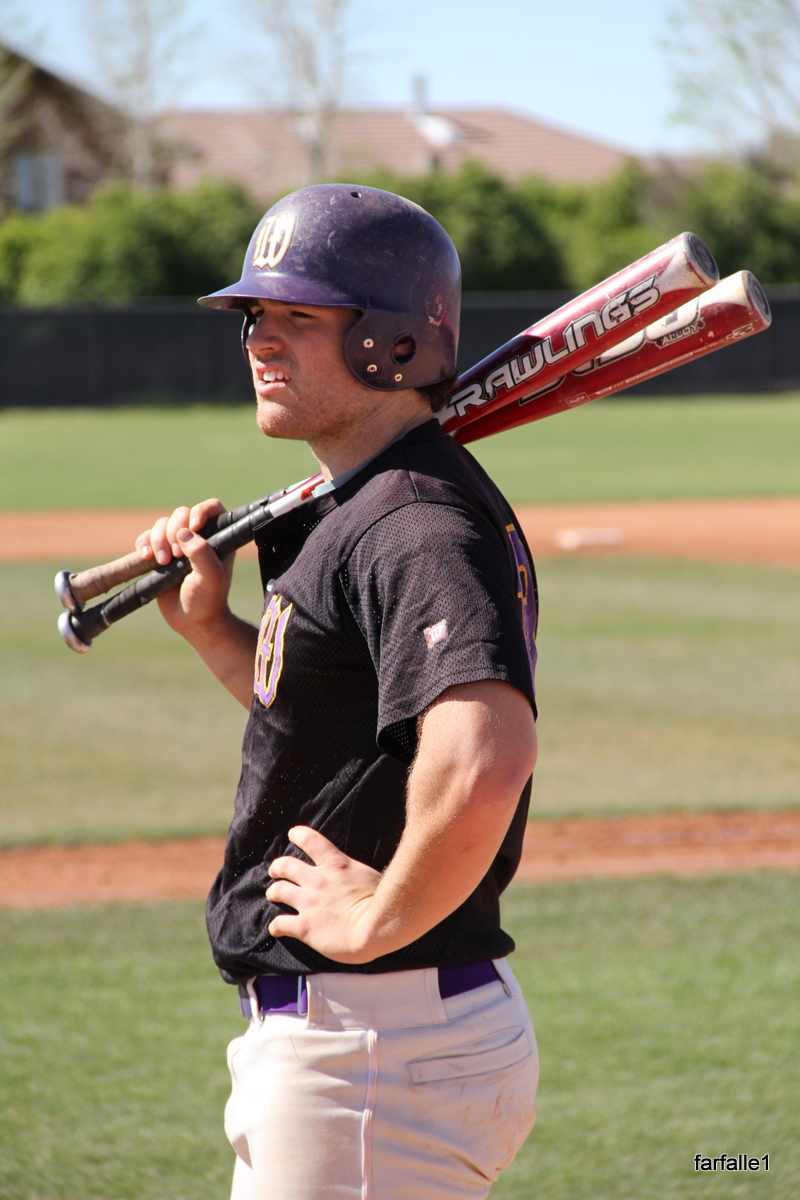
A couple of days later I returned alone because the team from my beloved Williams College was scheduled to play.  Sure enough, there they were in all their understated glory.  (I grew up in Williamstown and later attended the College as part of the first experiment in co-education – that was an experience.)  It felt really great to be able to holler, “Go Ephs!” again – words that haven’t passed my lips in years (Williams teams are always ‘The Ephs’ after the founder of the college, Ephraim Williams). I was not the only fan present.

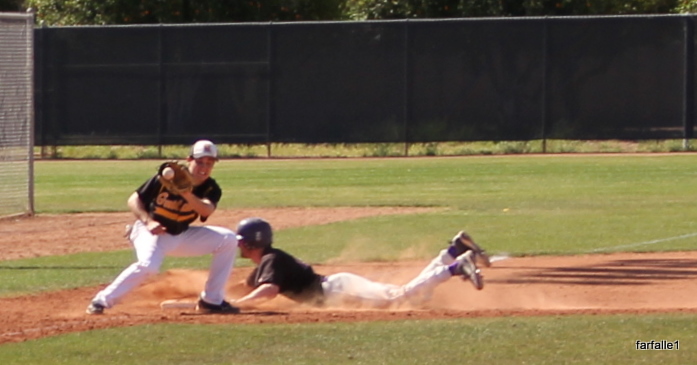
Williams College enjoys a fine reputation as a center of undergraduate learning; it is, perhaps, less lauded for its baseball teams.  How amusing it was to hear such sideline chatter as, “Jason, you have a really discerning eye!”  An unsuccessful batter returning to the bench looked more like someone worrying over a perplexing physics problem than a pissed-off athlete.  And perhaps he was.  Even though the scouts weren’t there to see the left-handed pitcher Steve, below, Williams was still enjoying a good week; they had already won 11 of their 13 games.

Pitching has always looked extremely uncomfortable to me – doesn’t it look like his arm is glued on backwards?

The future of Major League Baseball might be more Chris and less Steve, but the games in Mesa were all good fun. It’s such a pleasure to watch a good baseball game on a hot dusty day in a small park with just a few other fans.

So Sorry!

28 Monday Mar 2011

Posted by farfalle1 in American habits and customs, Customs, Italian habits and customs, Italian women, Uncategorized

≈ 6 Comments

Tags

Apologizing

Photo courtesy of dreamstime.com

The other day I followed a woman out of Costco, each of us pushing our heavily laden carts.  She moved away from the door and paused; I walked past her with my cart.  After I was past she said to me, “Oh, I’m sorry!”  It took me a full beat to figure out what she was talking about; evidently she felt by stopping she had somehow put herself in my way.  She hadn’t.  And she certainly didn’t owe me an apology.

This incident was preceded by no fewer than three other women apologizing for passing nearby in the aisles of the store.  What is it with American women? When did we become so apologetic for taking up a little space? For existing? It’s driving me nuts!  Women, answer this question honestly:  If you’re walking down the street and a person bumps into you, do you immediately say, “I’m sorry?”

I’m pretty sure that doesn’t happen so much in Italy!  Granted, if an Italian of either gender bumps into you, or you into him, there will follow a two-minute scusi-fest.  But space is always shared in Italy, be it on the narrow roads or in the narrow shopping aisles.  Simply being in close proximity to another is not a misdemeanor. I’ve never had the feeling that my Italian women friends feel they must apologize if they’re taking up a patch of ground that someone else might wish to occupy.  Perhaps it’s simply that Americans have a much larger sense of ‘personal space’ than do Italians.  There’s more space in the U.S. for everything, so perhaps we Americans create larger ‘me-mine’ zones than do residents of more crowded countries.

I first noticed this apology trend about 10 years ago.  Three women friends and I took a vacation together in California.  We made a pact at the very start of the holiday that whoever said, “I’m sorry” would put a quarter in the kitty.  It worked pretty well, and I think we all finished the holiday feeling we were a much less ‘sorry’ bunch.  And how rich the kitty was! Maybe that experience overly sensitized me.

It’s just that I hate to hear women apologizing when they have no reason to. And yes, it seems to be only women – certainly not men, and rarely young people.  And it seems to be happening more and more here in America.

Ladies – Stop It!  You have every right to be exactly where you are.    Please, if you catch yourself apologizing for passing close to someone else or when someone else bumps into you,  put a quarter in a kitty and save up for a treat for yourself (I hope a very small treat).

Win, Win, Win

13 Sunday Feb 2011

Posted by farfalle1 in American habits and customs, Food, Uncategorized

≈ 10 Comments

Tags

Citrus-picking, Fruit-picking, Grapefruit, Lori Wegner, Terry Parsons, United Food Bank, Volunteering, Volunteerism

My last post was hard to write because it was about a very disturbing subject.  What better antidote than to tell you about something really positive?

Are you sick of hearing me say, “We’re in Arizona?”  (Will it make you feel any better if I tell you the temperature was 27 F a few mornings ago (-2 C)?)  One of the things the Phoenix valley is famous for is its citrus orchards.  There are far fewer now than there once were, as many have been ripped out to make room for housing developments, but some of the developments saved as many trees as possible and built the houses among them.

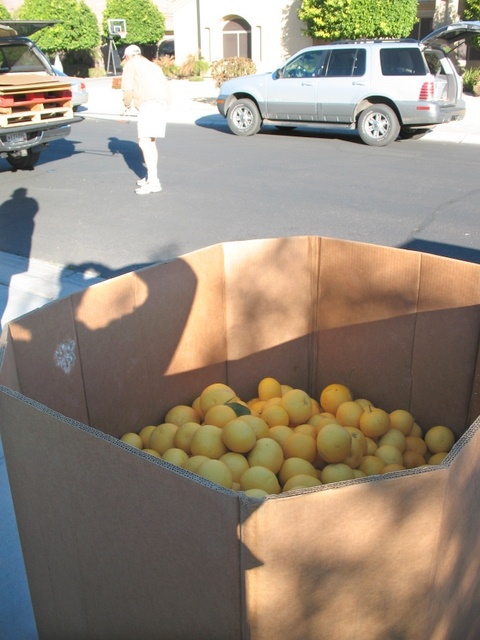
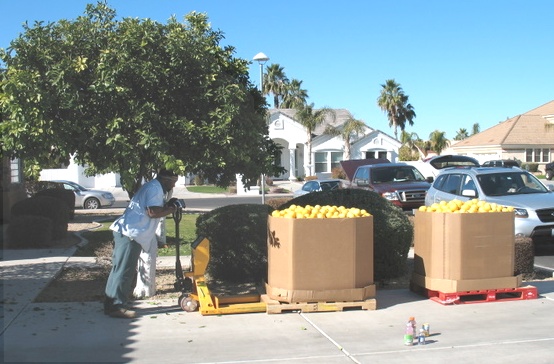
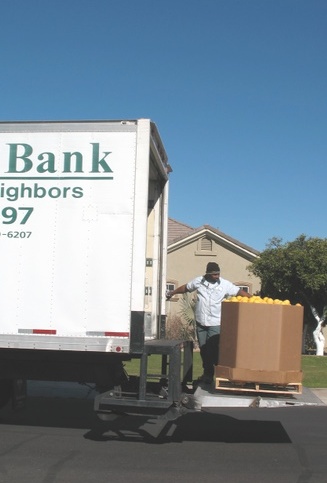
Such is the case in a lovely development in Mesa where I was recently fortunate enough to join a bunch of volunteers who were picking citrus for the United Food Bank, which acquires, stores and distributes food through partner social service agencies.  Many of the houses in this development have ten or more fruit trees in their yards.  I guess there’s only so much grapefruit a family can eat. And yes – it’s mostly grapefruit.  Why?  Grapefruit is faster-growing and more productive than the other citruses, so more grapefruit trees were planted than orange or lemon (or tangerine, or tangelo, or…)

Here’s how it works.  The United Food Bank coordinator has teams of people who gather at a staging area and then carpool to wherever we’re picking.  Our team leader is the indefatigable Terry Parsons, who happens to be a neighbor.

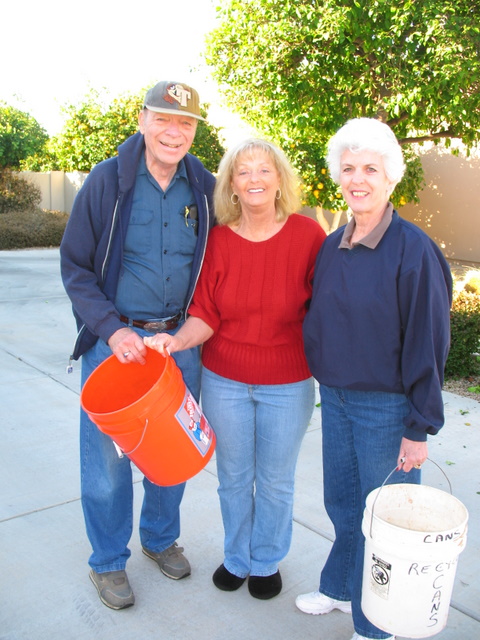
On this particular day we began picking at the home of Lori Wegner (seen below with a couple of hardy pickers).  That was a good thing, because she puts out great goodies.  It turns out that most of the homeowners put out great goodies; at a subsequent house we were invited to take whatever we wanted from an outdoor fridge, which included soft drinks, water and beer.

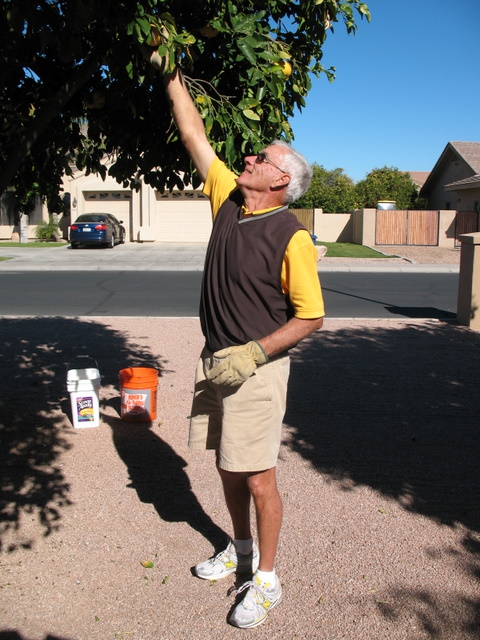
Picking is not especially easy work.  In fact I can’t imagine doing it all day long; I’m pooped after two and a half or three hours.  There are three basic jobs in the picking operation.  The first is just to hand-pick whatever is easily accessible, and that is what I try to do because it is the least back-breaking approach.  But one must be sly and quick to be successful, because others also want to do this work, and most of the fruit is not low-hanging.

The higher-up fruit is reached with long poles with a curved prong at the end.  You put the prong around the stem of the fruit and drag or jerk down; then you duck because the fruit may well land on your head.  In any event it will eventually land on the ground  where the third kind of work is required: stooping down to pick the fruit up and put it in pails.  The pails fill up pretty fast, and they are heavy.

Someone who is not me (my aching back!) then carries the pails and dumps the fruit into huge cardboard bins that other volunteers have assembled on palettes.

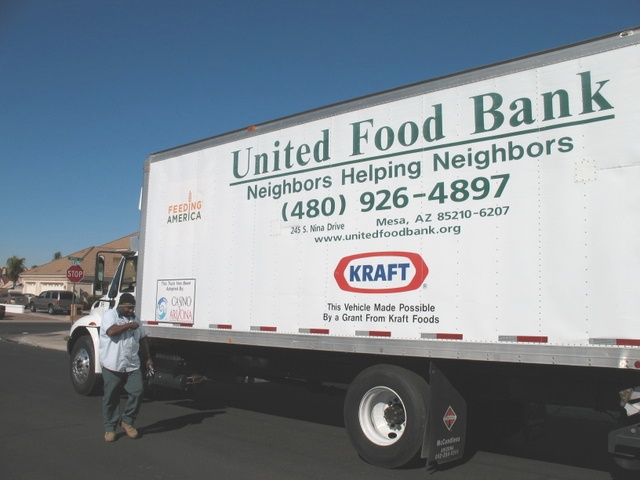
At the end of the morning the Food Bank truck miraculously appears and a man with a small fork lift picks up the bins and puts them into the truck.

Once they arrive at the food bank there are other volunteers who sort the fruit; that which is not suitable for consumption is sent to the squeezing station where it is turned into juice.

Terry told me that there is an even larger food bank in the area that sends semi-trucks of citrus up to Oregon where they have no citrus, and comes back full of surplus Oregon apples.  How clever that is!  (It got me thinking about all the untended olive trees in Liguria – could volunteers pick the olives for oil which could be sold to benefit the food banks?  Or the oil given to hospitals or to the food banks themselves?)

So – who wins the citrus lottery?  First the homeowner.  She has more fruit than she knows what to do with and has to pay someone to come and remove it from her trees if the volunteers don’t do it.  She also will get a small tax write-off for the value of the fruit, if she wants one.  The second winner is the Food Bank and by extension the hungry people whom it feeds.  (I  wonder if some of them say, “Oh no, not more grapefruit!”)  The third, and biggest, winners are the volunteers.  They get to be outdoors in the lovely weather with a group of jolly others, to see parts of town and lovely homes they otherwise might not see,  to eat delicious snacks, and they get to feel really good about doing something helpful for others.  And no one at all loses.

Death in America

06 Sunday Feb 2011

Posted by farfalle1 in American habits and customs, Crime, Law and order, Uncategorized

≈ 8 Comments

Tags

Murder in America, Shooting in Arizona, Shooting in Tucson, Suicide

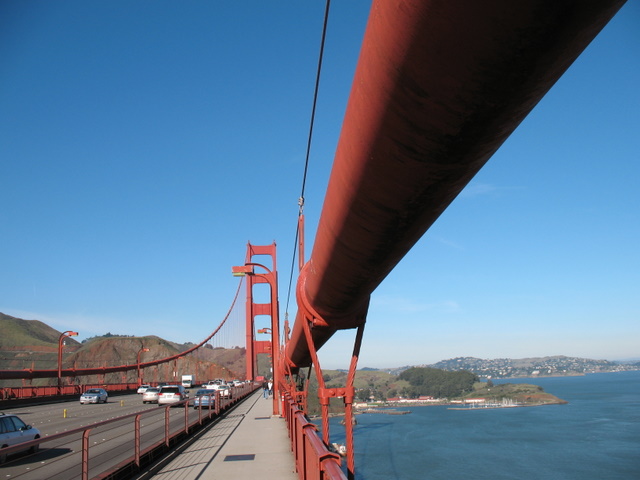
Here we are in Arizona, now famous around the world for its violence and death, and I have to tell you that in early January I felt a bit like an  angel of death myself.  Friends visiting from Italy very much wanted to go to San Francisco, so that is what we did for three days in the early days of the new year.  One of our goals?  Walk across the Golden Gate Bridge.  We met our goal on a crisp, breezy (read ‘cold, windy’) afternoon, and it could not have been lovelier.

On almost every bridge support we were somewhat surprised to see one of these signs:

The blue sign says, “Crisis Counseling – There is Hope – Make the Call.  The consequences of jumping from this bridge are fatal and tragic.”  Also, the bridge railings are surprisingly low, making it very easy for would-be suicides to clambor over and make the leap.

On our walk back across the bridge, with the wind mercifully behind us, we noticed a small commotion at rail side.  Indeed, someone had just jumped to his or her death moments before we arrived.  The people responding to the tragedy were extremely low-key and very, very professional.  I doubt many bridge-walkers that day knew that anything untoward had happened.  There’s a reason why they were so good – they get a lot of practice.  Someone jumps off the bridge about once every ten days.  No one survives.

Flash forward a few days to January 8 – what a good day for our visit to Tucson to look for a church my friends particularly wanted to see.  There was a fair amount of traffic in the outskirts of the city, and as we waited in an accident-caused traffic jam the Captain called to tell us there had been some kind of assassination attempt somewhere nearby and we might want to head home.  We didn’t want to head home, so we pushed ahead and eventually arrived downtown.  Downtown Tucson on a Saturday is a very sleepy place – most of the shops were closed and there were very few people about.  I don’t think it had anything to do with the terrible events that had unfolded at the suburban Safeway Market a few hours previous.

These two experiences with our friends, one right after the other, made me feel extremely uneasy – is America really and truly such a violent place?  More violent that the rest of the world?  I’ve waited a long time to write about what happened because it’s taken a while to sort out my thoughts on this question.

Here is a picture of Jared Lee Loughren, the unrepentent man who shot and killed six people and injured twelve others (including the now famously and miraculously recovering Representative Gabrielle Giffords)  in Tucson the day we were there:

This is what insanity looks like, at least in one of its iterations.  And my point, I guess, is that insanity is all around us, not only in the United States, but on every continent in the world, even in our beloved Italy.  It is a difficult to find hard figures, but according to Wikipedia there were 5.7 murders per 100,000 population  in the U.S. in 2006 and in Italy there were 1.06 per 100,000.   The difference between the U.S. and Italy, I suspect, is the ease with which one can get guns and the number of guns that are in private hands.  Here in Arizona, which is one of the gun-totingest states, it is legal to carry licensed guns both openly and concealed.  I can’t tell you how disconcerting it is to be in a store and see a fellow swagger in with a pistol on his belt.

The NRA will tell you that it is not guns that kill, but people who kill.  They will also tell you that it is our Constitutional right to arm ourselves.  The first is a nonsense.  People cannot kill nearly as effectively without guns – it is guns in the hands of people like Mr. Loughren  that kill, and kill often and very effectively.  The second assertion is open to frequent debate.  The second amendment of the U.S. Constitution says, ” A well regulated Militia, being necessary to the security of a free State, the right of the people to keep and bear Arms, shall not be infringed.”  Some say that it means anyone and everyone has the right to own and carry guns.  Others say that the framers intended that guns be owned privately but used in a militia setting to protect the country.

It doesn’t matter who’s right – what matters is that as things stand now there are a lot of guns in the hands of a lot of people.  Most people are responsible and careful.  But there is a small percentage who are not, and they are the ones who are deadly.

So why the description of the suicide at the beginning of this screed?  Only this.  It is disturbed people who kill – either themselves or others.  Some take their own lives, some decide to take the lives of others.  It all adds up to the tragedy of senseless death.  These deaths, all of them, are tragic to the close circle of family and friends around the dead and the killers; but they are also tragic and harmful to the fabric of society as a whole.

So… what to do?  One of the men taking care of the suicide on the bridge told me that if only the authorities would put up a wire fence high enough to make it difficult for people to jump the number of jumpers would decrease.  And it seems logical that if only we could keep guns out of the hands of those who are not stable enough to have them we would all be a lot safer.  The first isn’t happening because the bridge authorities do not want to ruin the view from the bridge.  The second is not happening because no one knows how to do it.

Church!

03 Monday Jan 2011

Posted by farfalle1 in American habits and customs, Italian Churches, Italian women, Italy

≈ 6 Comments

Tags

Catholic church, Catholic mass, Church services in Italy, Church services in the U.S.

Here’s a switch.  usually I write about my experiences as an expatriate, either in Italy, where I truly am one, or in Arizona, where I mostly just feel like one.  Our friends Elena and Michela arrived from Italy yesterday, and now I get to see our country through their expatriated eyes.

Being practicing Catholics they went to mass this morning at the closest appropriate church, the Church of the Holy Cross in Mesa which is a half hour’s drive away.  Now if only they were Mormons, Methodists, Baptists or Lutherans I could have accommodated them in a matter of a few minutes.  Don’t let the photo above fool you – the place was mobbed for 10 a.m. mass.  I had to go to a nearby shopping center to find a parking place while I waited for my friends.  There are two churches, and there was standing room only.

How was it different? I asked.  In lots of ways, it turns out.  First, in Italy going to church is mostly women’s work.  If you see a solitary man in church he is very likely a recent widower, according to Elena.  Here you see many couples and families worshipping together; it is more the rule than the exception.  And it is beyond rare in Italy to see the church packed to the gills and overflowing for Sunday mass.

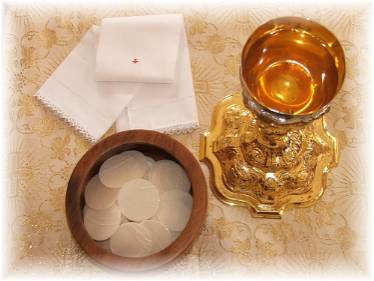
In Italy the congregants are offered only the host.  Here they are offered both host and wine, either for sipping or dipping.

The wafers are thinner and yellower than those in Italy, but Elena opined the caloric value was probably about the same.

Going to the altar for communion can be very disorderly in Italy with everyone getting as close as they can as fast as they can.  Likewise, people come and go at will, frequently not remaining for the whole mass.  At the service today Elena observed that everyone formed a line to take communion, and each person patiently awaited his turn.  No one left early.

She was enthusiastic about the music, which was almost like a concert.  Everyone sang!  In Italy only a few wurbley-voiced matrons participate, but here the singing was hearty and heart-felt.

So what were the impressions she came away with in general?  She was impressed by the number of people and the active and orderly participation in all parts of the service.  But she found herself wondering if there was the same spirit of joy in today’s mannerly congregation as she frequently sees in the smaller masses of her home church in Italy.  She couldn’t say yes, or no, but it was an interesting question for all of us.

Only in America

17 Wednesday Mar 2010

Posted by farfalle1 in American habits and customs, Uncategorized

≈ 1 Comment

Tags

Liquor in Weird Bottles, Tequilla

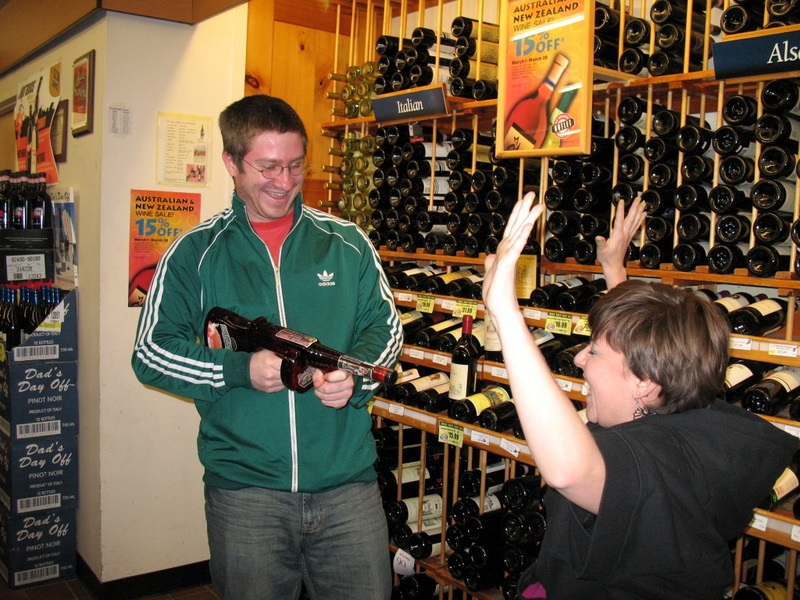
Expatriate finds herself in Vermont again. We think of the West as being wild, wooly and lawless, but things can get out of hand in a Vermont State Liquor Store as well!

Stick ’em up! Your Tequilla or your life!!

Picture Rocks Fire Department Rocks!

28 Sunday Feb 2010

Posted by farfalle1 in American habits and customs, Animals in the U.S., Arizona, Italian women, Uncategorized

≈ 14 Comments

Tags

Arizona-Senora Desert Museum, Picture Rocks Fire Department


Our friends Elena and Michela, sisters, arrived from Italy for a visit a couple of weeks ago.  It was their first ever plane ride and, obviously, their first visit to the USA.  We ran ourselves ragged seeing the sights the Phoenix-Tucson area offers, and each day I asked them what had impressed/amused/irritated them the most.

The answers were pretty much the same each day – everything is bigger here than in Italy (cars, roads, even the host at communion); everything is so clean. Elena was fascinated by the Adopt-a-Highway program, something which does not (yet) exist in Italy.

But the thing that amazed them the most, over and over, was how friendly and welcoming people here are.  (Interestingly, when we moved to Italy we were struck by how very welcoming people there were to us.)   Elena and Michela both enjoy meeting new people in new situations.  Michela has a special gift for drawing people out.  Her secret?  She just walks up to people and starts speaking to them in Italian; they are completely charmed.  Then it’s my turn to insinuate myself as translator, and before you know it, we all have some new friends.

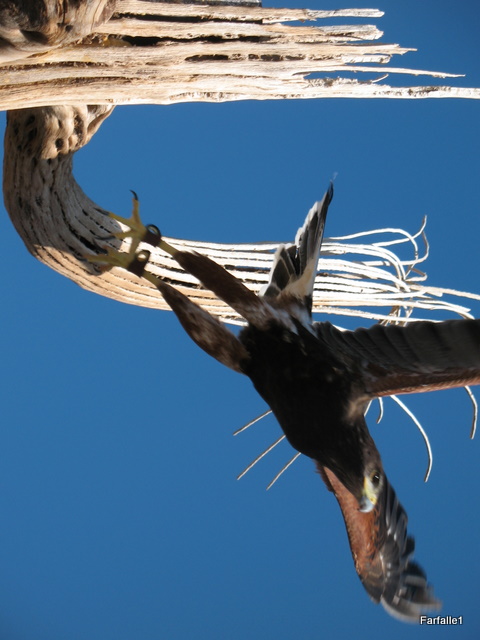
Nowhere was this better illustrated than in Picture Rocks, north of Tucson.  The famous Mrs. Harris took Elena, Michela and me to the fascinating and beautiful Arizona-Senora Desert Museum.  If you’re ever in Arizona this is so worth a visit –  you can learn about all the Sonora Desert plants and see all the animals that are residents, including (among many others) the Harris Hawk

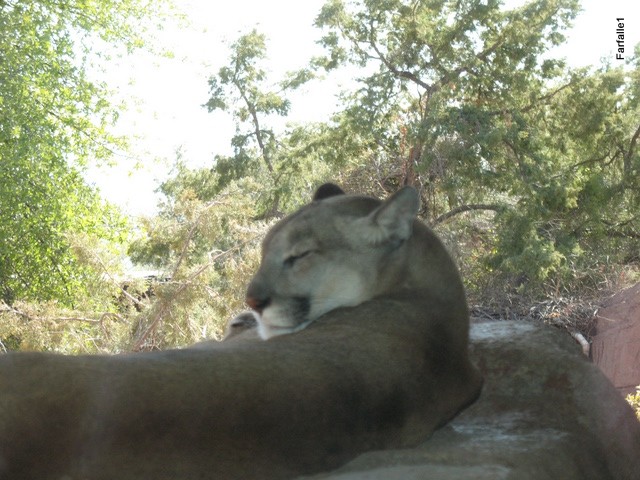
and the dozy mountain lion.

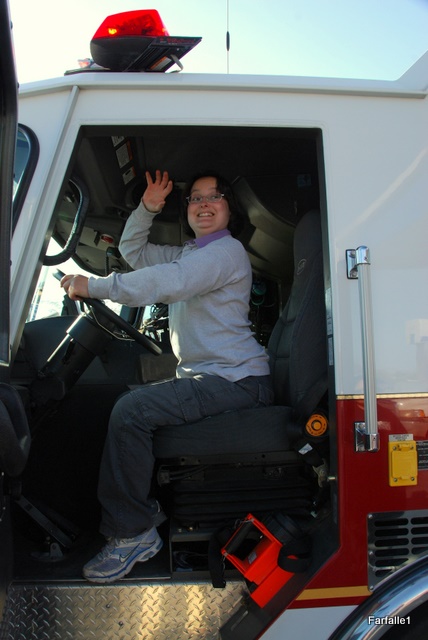
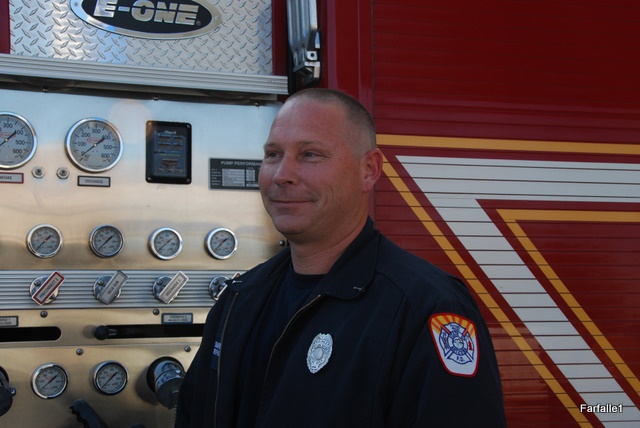
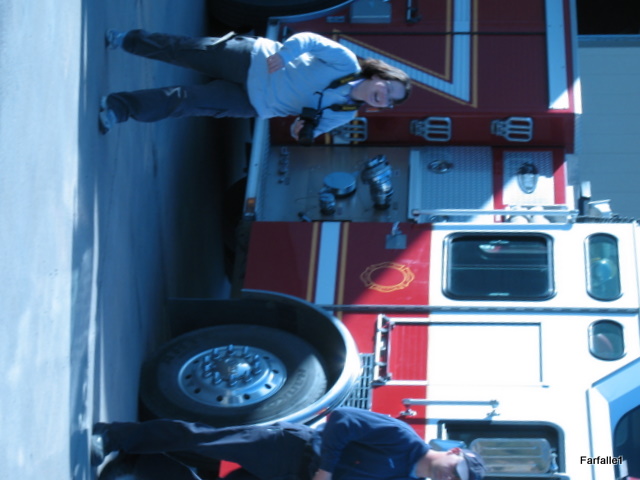
But the really exciting part of the day happened as we were on our way home.  A big red fire engine pulled in to the gas station where we stopped to tank up.  As Michela is an avid amateur photographer, Mrs. H marched up to the firemen and asked if it would be alright if Michela photographed the truck.

Of course! was the answer.  They couldn’t have been nicer.  They opened up all the doors and secret compartments of the engine so she could photograph them, and explained what all the different tools were and how they are used.  Then they got permission from the Fire Chief to give Michela a ride to the fire station in the truck.

(Not the best picture ever taken of Michela, but one that shows her glee.)

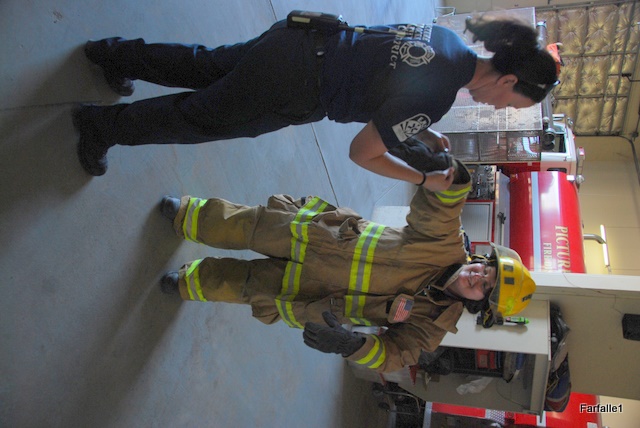
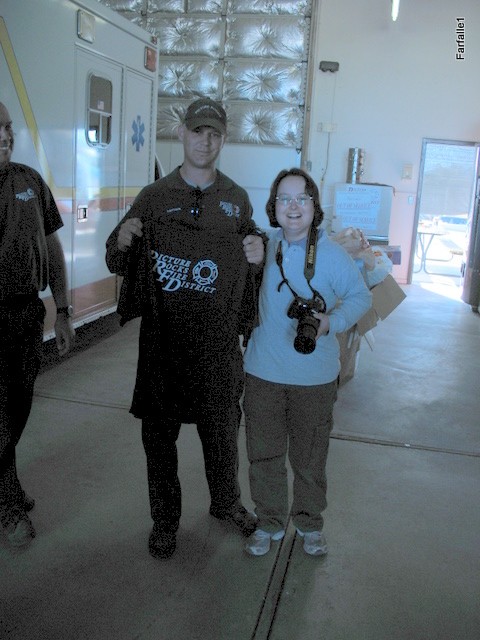
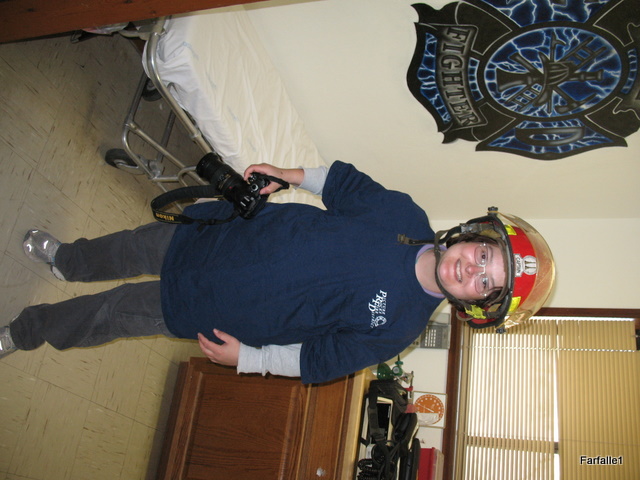
Back at the fire station the kindness escalated.  We were all given Fire Department tee shirts – deep blue, my color!  Then they found a helmet for Michela to try on, and before we knew it, she was all kitted out in complete fire-fighting regalia.

We were given a tour of the whole building – including the kitchen where the smell of cooking brisket got our appetites revved up.

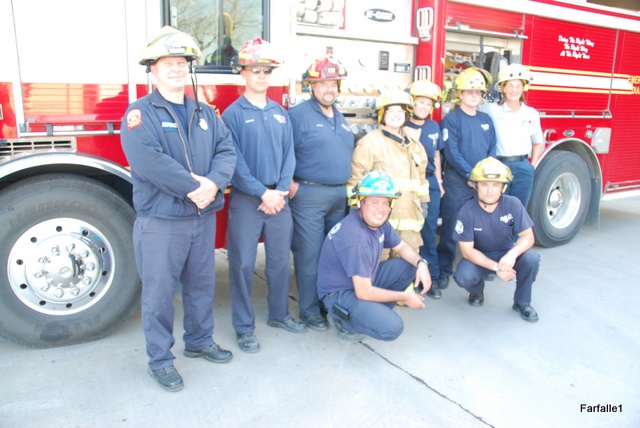
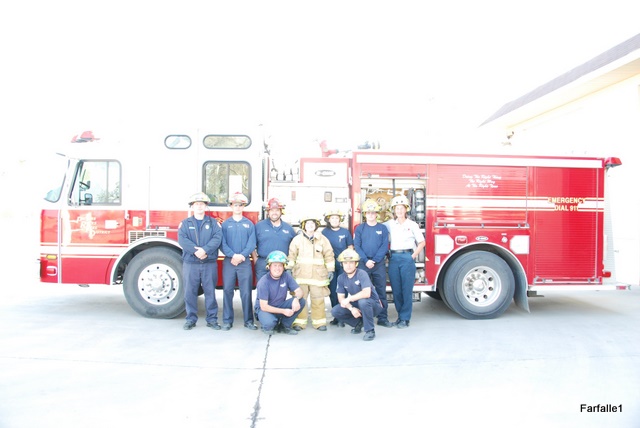
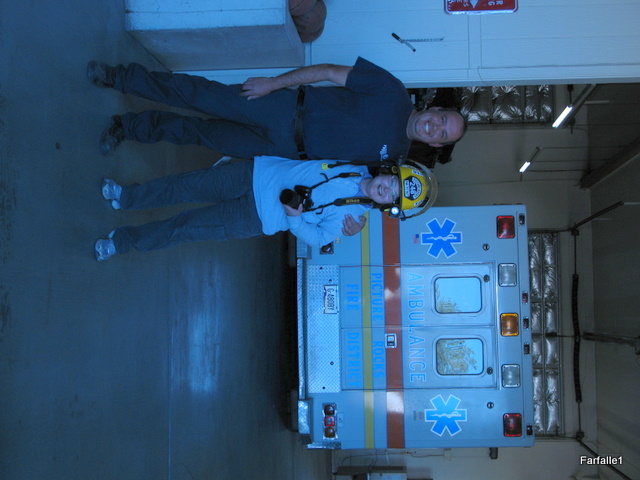
Some of the firemen who weren’t present at the moment were summoned, and we took pictures of the whole  group in front of the beautiful fire engine.

They showed us the small plastic name tags that they each have attached to the inside of their helmets with velcro.  Anyone who goes into a burning building removes his name tag and leaves it with those remaining outside.  That way, as one of the firemen told us, “they’ll know whose mother to call.”  It was a reminder that much of their work is hot, dirty, hard, dangerous and unhappy.  They each removed their name tags and velcroed them to a strip of cloth for Michela to take back to Italy, a symbol of a new friendship – it was a real hands across the ocean moment.

Picture Rocks Fire Department employs about 64 people, men and women, and covers an area of about 64 square miles.  They are very likely to be called out numerous times daily, because in addition to fighting fires, they are the emergency response team.

All in all we spent about an hour and a half at the fire station – it was the highlight of the sisters’ visit to Arizona, and certainly one of the most interesting and moving experiences I’ve ever had here. Every member of the team was generous and kind to us, for no reason other than that that’s how they are. It was humbling.

And oh yeah – they gave Michela the helmet to take home, too – a real helmet that had been damaged and can no longer be used.  Our friends left on Thursday evening, and they had an interesting time packing around that helmet.  But they, and the helmet, have arrived safely back in Rapallo with some memories which we hope they will never forget; we know we won’t.

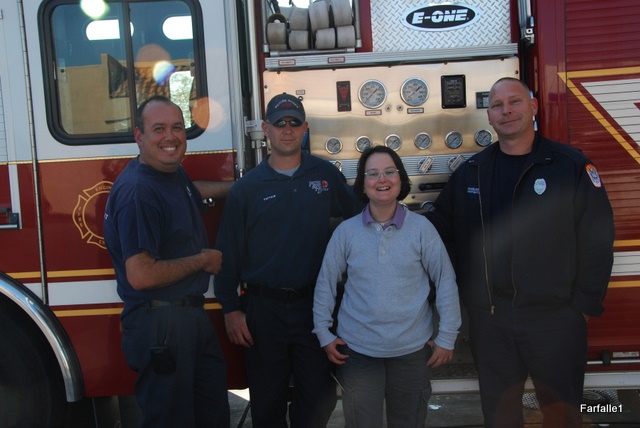
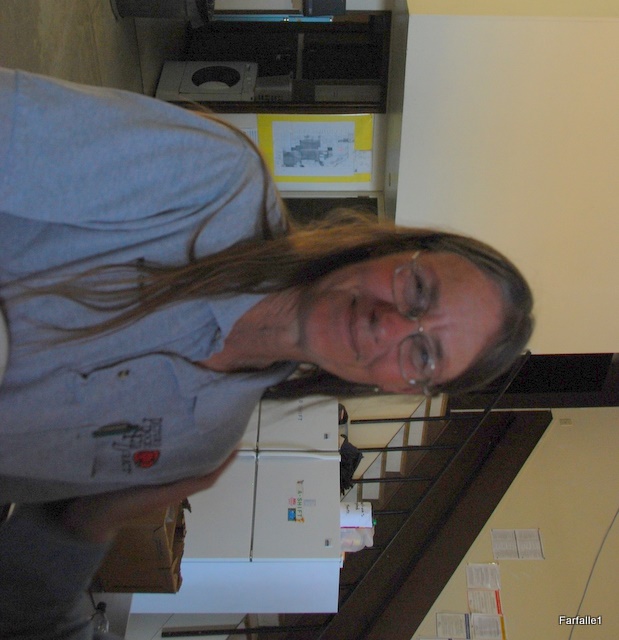
Here are a few more photos from our visit to the Picture Rocks Fire Department which, I have to imagine, is the best Fire Department in the world.

Fire Chief:  Kathy Duff-Stewart - 27 years service with the department!

Fire Chief Kathy Duff-Stewart, 27 years service with the department!

Dinner at Eight

17 Sunday Jan 2010

Posted by farfalle1 in American habits and customs, Customs, Italian habits and customs, Italy, Uncategorized

≈ 9 Comments

Tags

American dinner hour, Eating in Italy, Italian dinner hour

There are some differences in living habits between the US and Italy that are just plain hard to get used to. For us, coming back to the States for a while, it is very hard to get used to the fact that most people eat dinner at 6 o’clock, or earlier. There’s a restaurant down the street from us here, and when I drove by at 4:45 yesterday evening the parking lot was jammed with cars. Everyone was there for a 5 o’clock dinner (All You Can Eat Fish Fry on Wednesdays and Fridays – another concept that would be foreign and bizarre to an Italian restaurateur).

For us, 5 o’clock is the Hour of Tea, 6 o’clock is the Hour of Drink-n-Snack, 7 o’clock is the Hour of Dinner Preparation and 8 o’clock is the Dinner Hour. We’ve just gotten used to it that way, because that’s the dinner hour in Italy. In fact, away from the main tourist cities you would be hard pressed to find a restaurant that opens its doors before 8 p.m., or perhaps 7:30.

This eating schedule has a ripple effect. Last weekend my friend Margaret and I went to a play at the ASU Gammage Hall – the ‘darkly comic’ ‘August: Osage County‘ by Tracy Letts (it was great – we laughed and groaned). What time did it start? 7 p.m.! The week before the Captain and I went to a delightful John O’Conor piano recital down the street (glorious); it started at 7:30. That would never happen in Italy! When would one eat??!  Typically in Italy the cultural events are before dinner, starting at 4, 5, or even 6 p.m., or after dinner, starting at 9 or 9:30 p.m.

Why the difference?  I think (and this is pure conjecture on my part) that the early eating habits in Arizona are due to the fact that there are so many mid-western transplants here.  On a big mid-western farm you might get up with the sun and have a cup of coffee and a snack.  Then you might work for a few hours and stop mid-morning for an enormous breakfast.  Then you would work again until the sun got low (5 o’clock?) when it would be time for a hearty dinner.  Even though fewer and fewer people work on farms, I think the early eating habit has persisted.

In Italy the large meal was typically eaten mid-day with an hour or two of rest following.  Then work continued until the evening, when a much smaller meal (minestrone?) was eaten.  That is changing somewhat, especially in the large cities, as Italy becomes more an Office Culture.  But most stores and businesses are still closed mid-day and then are open again from 3:30 or 4 until 7:30 or 8, at which point it is time for dinner.

I don’t much care for the late night events any more, but it is delightful to go to a wonderful concert at 5 p.m., come out at 6:30 or 7, take a stroll through the town, find a good restaurant and sit down for a fine meal at 8 or so, a pleasure we miss when we’re in the U.S.

So, why the Dinner at Eight video above?  Well, the title is appropriate, and as a librarian I just couldn’t resist sharing Jean Harlow’s book review.  I bet everyone would like to be a member of her book club!

Olive Oil

29 Tuesday Dec 2009

Posted by farfalle1 in American habits and customs, Food, Health and health care, Italian habits and customs, olives

≈ 2 Comments

Tags

olive oil, Olive Oil in Softgels, Puritan's Pride Vitamins, Softgel Olive Oil

Olive Oyl/King Features

We didn’t have a TV when I was growing up (I know! but it’s true!!).  But my best friend Taffy had one, as did other friends, so somehow stray bits and pieces of TV-lands-and-people crept into my brain.  One of these was Popeye and his interestingly shaped girlfriend Olive Oyl.

In fact, I knew this crowd pretty well from the daily comic strip in the North Adams Transcript (Popeye first appeared way back in 1929, and King Features still presents the strip, the creation of Elzie Crisler Segar. Interestingly, Robin Williams’ first movie role was in the 1980 film adaptation (Jules Feiffer, Robert Altman) of the cartoon). I never cared much for Popeye.  Unable to see the kind, generous and lovable character behind his ‘coarse’ speech and fightin’ ways, I avoided him and his cronies (Wimpy, arch-rival Bluto, etc.) for the more mundane Peanuts and Archie.  Talk about Wimpy!

As far as I knew back in those days, olive oil was a misspelled character; we didn’t know anything about olive oil in the mid- to late-20th century New England kitchen, and we certainly didn’t have any in the cupboard.  That all changed sometime in the latter part of the century as Mediterranean cuisine became popular in the States, both for its deliciousness and for its health benefits.  In fact, worldwide consumption of olive oil grew substantially, from 1,779,000 MT in 1990 to 2,553,000 in 2005. Suddenly restaurants were offering little saucers of oil for dipping bread, and connoisseurs were comparing flavors and production methodologies.  Olive oil became a low-key cooking and eating craze. (If you’d like to read an account of our own olive harvest, click here and here.)

Hirts Gardens photo

Italians have been cooking with and consuming olive oil from the year dot. Perhaps it is just their good fortune that natural circumstances gave them a fat product from a tree rather than from a cow. 1 tablespoon of butter contains 12 grams of fat, 8 of which are saturated (bad!) and it has 33 mg of cholesterol; 1 tablespoon of olive oil contains 14 grams of fat, only 2 of which are saturated, and it has no cholesterol at all.  In addition, olive oil contains antioxidenats, beta-caratene and vitamin E.  AND it tastes great and makes everything else taste great too.

Imagine our surprise when we received the wonderful Puritan’s Pride catalog the other day, and discovered that you can now buy olive oil in softgels.  Why on earth would you want to when you can buy a lot of olive oil in a bottle and have the pleasure of consuming it on salads and in sauces?  Pills??  Only, I think, in America! Then consider the economics of the thing.  You can get 300 60-mg softgels of olive oil (just writing it makes me shake my head) for $21.98.  That’s 10 ounces of olive oil for $21.98 – kind of pricey, if you ask me.  In fairness, the same catalog offers a 16 ounce bottle of cold-pressed organic extra-virgin olive oil for $9.63, as well as an olive leaf complex.

photo from China Suppliers.com

It makes me think of all the Futurama stuff we read about when we were kids watching Popeye – we would all zip around with personal jet-packs, and we wouldn’t have to eat food anymore because we’d be getting all our nutrients from pills. What a horrid thought that is! My advice? When in Rome, or anywhere else for that matter, do as the Romans – use lots of olive oil, but use it from a bottle, not from a softgel!

(More info on olive growing and harvesting here and here, and a photo album of the harvest and pressing here.)

← Older posts
Newer posts →

Enter your email address to follow this blog and receive notifications of new posts by email.

Join 114 other subscribers

rss

Subscribe in a reader

Search the Blog

A. Useful Links

  • bab.la language dictionary
  • Bus schedules for Tigullio
  • Conversions
  • English-Italian, Italian-English Dictionary
  • Expats Moving and Relocation Guide
  • Ferry Schedule Rapallo, Santa Margherita, Portofino, San Frutuoso
  • Italian Verbs Conjugated
  • Piazza Cavour
  • Rapallo's Home Page – With Link to the Month's Events
  • Slow Travel
  • The Informer – The Online Guide to Living in Italy
  • Transportation Planner for Liguria
  • Trenitalia – trains! Still the most fun way to travel.

C. Elaborations

  • A Policeman’s View
  • Driving School Diary
  • IVA refunds due for past Rifiuti tax payements
  • Nana
  • Old trains and old weekends
  • The peasant, the Virgin, the spring and the ikon
  • Will Someone Please, Please Take Me to Scotland?

D. Good Recipes - Best of the Week winners are starred

  • 'Mbriulata
  • *Baked Barley and Mushroom Casserole*
  • *Captain’s Boston Baked Beans*
  • *Crimson Pie*
  • *Louise’s Birthday Cake*
  • *Melanzane alla Parmigiana*
  • *Penne with Cabbage and Cream
  • *Pizzoccheri della Valtellina*
  • *Pumpkin Ice Cream*
  • *Risotto alla Bolognese*
  • *Rolled Stuffed Pork Roast*
  • *Spezzatini di Vitello*
  • *Stuffed Grape Leaves*
  • *Stuffed Peaches (Pesche Ripiene)*
  • *Swordfish with Salsa Cruda*
  • *Tagliarini with Porcini Mushrooms*
  • *Tagliatelli al Frutti di Mare*
  • *Three P's Pasta*
  • *Tzatziki*
  • 10th Tee Oatmeal Apricot Bars
  • Adriana’s Fruit Torta
  • Aspic
  • Bagna-calda
  • Best Brownies in the World
  • Clafoutis
  • Cold cucumber soup
  • Crispy Tortillas with Pork and Beans
  • Easy spring or summer pasta
  • Fish in the Ligurian Style
  • Hilary's Spicy Rain Forest Chop
  • Insalata Caprese
  • Lasagna al forno
  • Lasagna al Forno con Sugo Rosato e Formaggi
  • Lemon Meringue Pie
  • Leo’s Bagna Cauda
  • Leo’s Mother’s Stuffed Eggs
  • Louis’s apricot chutney
  • Mom's Sicilian Bruschetta
  • No-Knead (almost) Bread
  • Nonna Salamone's Christmas Cookies
  • Pan Fried Noodles with Duck, Ginger, Garlic and Scallions
  • Pesto, the classic and original method
  • Pesto, the modern, less authentic method
  • Pickle Relish
  • Poached pears
  • Poached Pears
  • Polenta Cuncia
  • Recipes from Paradise by Fred Plotkin
  • Rustic Hearth Bread
  • Shrimp and Crayfish Tail Soup
  • Sicilian salad
  • Slow Food Liguria
  • Slow Food Piemonte and Val d'Aosta
  • Spinach with Garlic, Pine Nuts and Raisins
  • Stuffed Eggs, Piemontese Style
  • The Captain’s Salsa Cruda
  • Tomato Aspic
  • Zucchini Raita

E. Blogroll

  • 2 Baci in a Pinon Tree
  • Aglio, Olio & Peperoncino
  • An American in Rome
  • Bella Baita View
  • Debra & Liz's Bagni di Lucca Blog
  • Expat Blog
  • Food Lovers Odyssey
  • Italian Food Forever
  • L’Orto Orgolioso
  • La Avventura – La Mia Vita Sarda
  • La Cucina
  • La Tavola Marche
  • Rubber Slippers in Italy
  • Southern Fried French
  • Status Viatoris
  • Tour del Gelato
  • Weeds and Wisdom

Photographs

  • A Day on the Phoenix Light Rail Metro
  • Apache Trail in the Snow
  • Aquileia and Croatia
  • Birds on the Golf Course
  • Bridge Art
  • Canadair Fire Fighters
  • Cats of Italy
  • Cloudy day walk from Nozarego to Portofino
  • Fiera del Bestiame e Agricultura
  • Football Finds a Home in San Maurizio
  • Hiking Dogs
  • Mercatino dei Sapori – Food Fair!
  • Moto Models
  • Olive pressing
  • Rapallo Gardens
  • Rapallo's Festa Patronale
  • Ricaldone and the Rinaldi Winery
  • Rice Fields
  • Sardegna ~ Arbatax and Tortoli
  • Sardegna ~ San Pietro above Baunei
  • Sardegna ~ The Festa in Baunei
  • Scotland, including Isle of Skye
  • Slow Food 2008 Salone del Gusto
  • The Cat Show and the Light Rail Fair
  • The desert in bloom
  • Trip to Bavaria

Pages

  • Fagioli all’ucelleto

Archives

Recent Posts

  • A Superior Visit
  • Fun at the Ranch Market
  • The MAC
  • Welcome Tai Chi
  • Bingo Fun for Ferals
December 2025
M T W T F S S
1234567
891011121314
15161718192021
22232425262728
293031  
« Jul    

Member of The Internet Defense League

Blog at WordPress.com.

  • Subscribe Subscribed
    • An Ex-Expatriate
    • Join 114 other subscribers
    • Already have a WordPress.com account? Log in now.
    • An Ex-Expatriate
    • Subscribe Subscribed
    • Sign up
    • Log in
    • Report this content
    • View site in Reader
    • Manage subscriptions
    • Collapse this bar
 

Loading Comments...