• Contact
  • Elaborations
    • A Policeman’s View
    • Driving School Diary
    • Great Danes
    • IVA charged on Tassa Rifiuti
    • Nana
    • Old trains and Old weekends
    • The peasant, the virgin, the spring and the ikon
    • Will Someone Please, Please Take Me to Scotland??
  • Recipes
    • ‘Mbriulata
    • *Baked Barley and Mushroom Casserole*
    • *Captain’s Boston Baked Beans*
    • *Cherry Tart*
    • *Crimson Pie*
    • *Louise’s Birthday Cake*
    • *Melanzane alla Parmigiana* – Eggplant Parmesan
    • *Penne with Cabbage and Cream
    • *Pizzoccheri della Valtellina*
    • *Pumpkin Ice Cream*
    • *Risotto alla Bolognese*
    • *Rolled Stuffed Pork Roast* on the rotisserie
    • *Shrimp and Crayfish Tail Soup*
    • *Spezzatino di Vitello*
    • *Stuffed Grape Leaves*
    • *Swordfish with Salsa Cruda*
    • *Tagliarini with Porcini Mushrooms*
    • *Tagliatelli al Frutti di Mare*
    • *Tzatziki*
    • 10th Tee Apricot Bars
    • Adriana’s Fruit Torta
    • Artichoke Parmigiano Dip
    • Best Brownies in the World
    • Clafoutis
    • Cod the Way Sniven Likes It
    • Cold Cucumber Soup
    • Crispy Tortillas with Pork and Beans
    • Easy spring or summer pasta
    • Fagioli all’ucelleto
    • Fish in the Ligurian Style
    • Hilary’s Spicy Rain Forest Chop
    • Insalata Caprese
    • Kumquat and Cherry Upside Down Cake
    • Lasagna Al Forno con Sugo Rosato e Formaggi
    • Lemon Meringue Pie
    • Leo’s Bagna Cauda
    • Leo’s Mother’s Stuffed Eggs
    • Louis’s Apricot Chutney
    • Mom’s Sicilian Bruschetta
    • No-Knead Bread (almost)
    • Nonna Salamone’s Famous Christmas Cookies
    • Pan-fried Noodles, with Duck, Ginger, Garlic and Scallions
    • Pesto
    • Pesto
    • Pickle Relish
    • Poached Pears
    • Polenta Cuncia
    • Pumpkin Sformato with Fonduta and Frisee
    • Rustic Hearth Bread
    • Sicilian Salad
    • Soused Hog’s Face
    • Spotted Dick
    • Swedish Tea Wreaths
    • The Captain’s Salsa Cruda
    • Tomato Aspic
    • Vongerichten’s Spice-Rubbed Chicken with Kumquat-Lemongrass Dressing
    • Winter Squash or Pumpkin Gratin
    • Zucchini Raita

An Ex-Expatriate

~ and what she saw

An Ex-Expatriate

Category Archives: American recipes

Our Natural Easter Eggs

27 Sunday Mar 2016

Posted by farfalle1 in American recipes, Cooking, Food, Holidays, Uncategorized

≈ 2 Comments

Tags

Coloring eggs, Dyeing eggs, Easter, Easter eggs

I can’t remember how it started, but once upon a time Speedy either read about or dreamed up himself the idea of dying Easter eggs using flowers and leaves that we found outdoors. Now that we live in the desert the types of things we find has changed considerably; but it is spring and there are a lot of flowers blooming right now, on trees, bushes and cacti, so there was plenty to choose from.

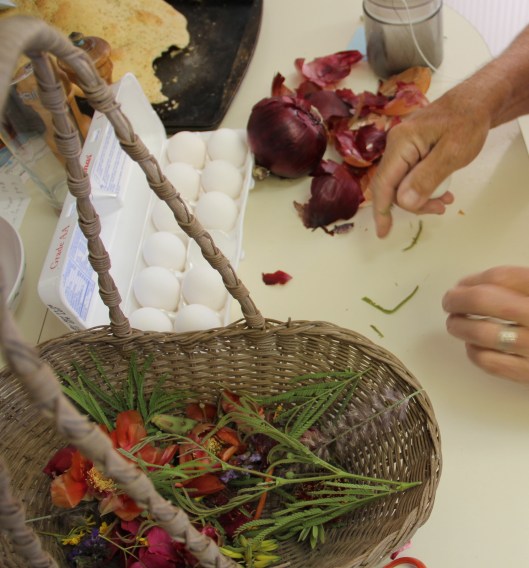
IMG_3127

This basket contains Speedy’s gleanings from our yard: some frondy leaves from a mesquite, some flowers from hedgehog cactus (ouch – I’m still pulling spines from my fingers today), bougainvillea flowers and flowers of sage and lavender. There are also a few odd stems in the mix, and I have no idea what they are. I should add that the dry skins of both red and yellow onions are always part of the process.

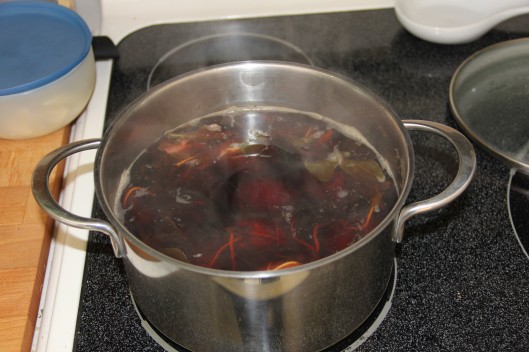
First we boil up a big pot of water with tea and vinegar added to it, take it off the stove when it’s good and murky colored and let it cool for a while.

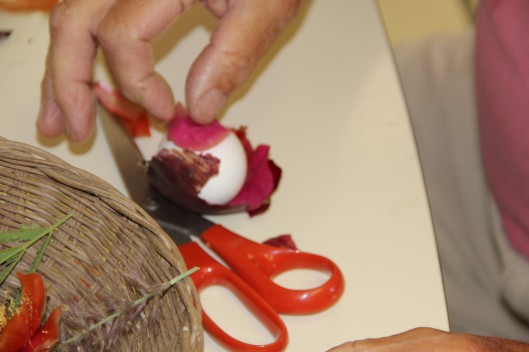
IMG_3129

While the cooking water is cooling we wrap the beautiful white eggs. The skins of the onions go on the outside, the various leaves and petals go on the inside, held in place by the onion skins. Then we tie each egg package securely with cotton twine. This is tricky because the twine wants to slip, and frequently does, either before or during the cooking.

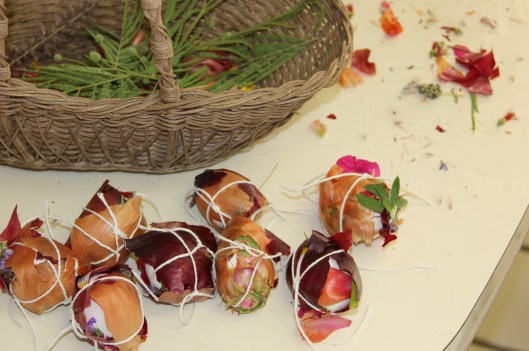
IMG_3130

Into the warm water the little packets go. We slowly bring the water back up to a boil and cook the eggs for 15 minutes to a half hour.

IMG_3135

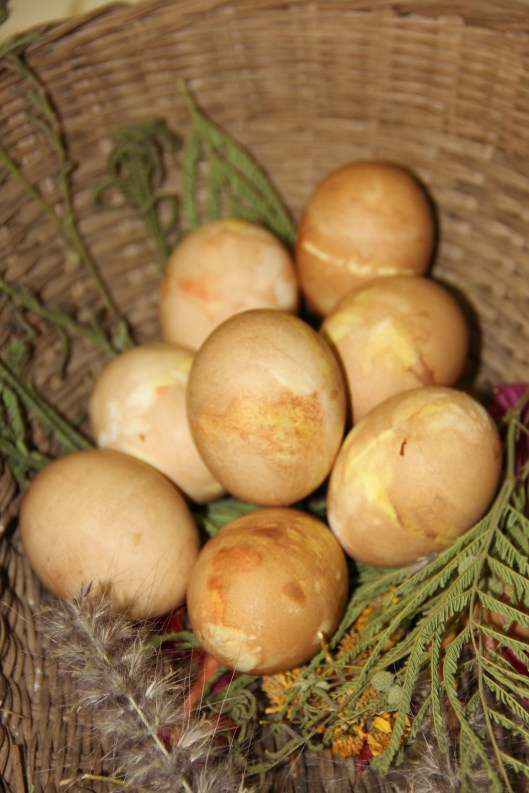
We take them out let them cool and then unwrap them. This year’s efforts were a bit underwhelming, but still lovely. For some reason our red flowers did not share any of their colors – we’ll have to search for others next year. (We’re not remotely expert on the flora of this area, and this is a good way to get to know some new plants.) We also did not have very tightly wrapped bundles this time, and I think too much tea water got underneath the petals, which blurs the shapes they are supposed to leave on the eggs.

easter eggs for cardStill, it makes a pretty Spring Time basket and we’ll enjoy eating the well-cooked eggs.

Next year I want to try coloring eggs with Speedy’s old silk ties, the few that he still has. When we moved back to the States he gave most of them away, but there are a few left, and I’m sure more are readily available at thrift shops. Kate Jones and Sara Wells have a great tutorial over at Our Best Bites – it looks easy and fun. Come back next year to see how it goes. It is certainly a different look from our tea, leaf and flower eggs.

Meanwhile, Happy Spring to all!

The Best Thing We Ate This Week: Cherry Tart

12 Friday Jul 2013

Posted by farfalle1 in American recipes, Uncategorized

≈ 8 Comments

Tags

Cherries, Cherry tartlet

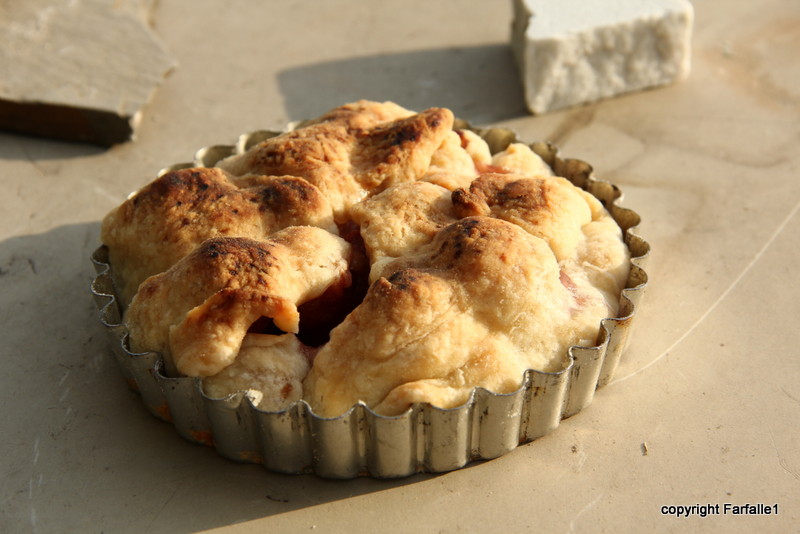
The cherries were very late this year and because of the cold rainy spring many of them matured and spoiled without getting sweet.  I would guess that about only a third of our cherries ripened to red juicy sweetness on the tree.  Most years we have cherries I make jam, but with the reduced quantity this year we simply ate most of them.  As our dwindling reserves began to go bad, I decided to make a pair of small cherry tarts for our tea-time, even though we’re both stouter than we want to be and are trying to ‘do something’ about it.

cherry tart-003

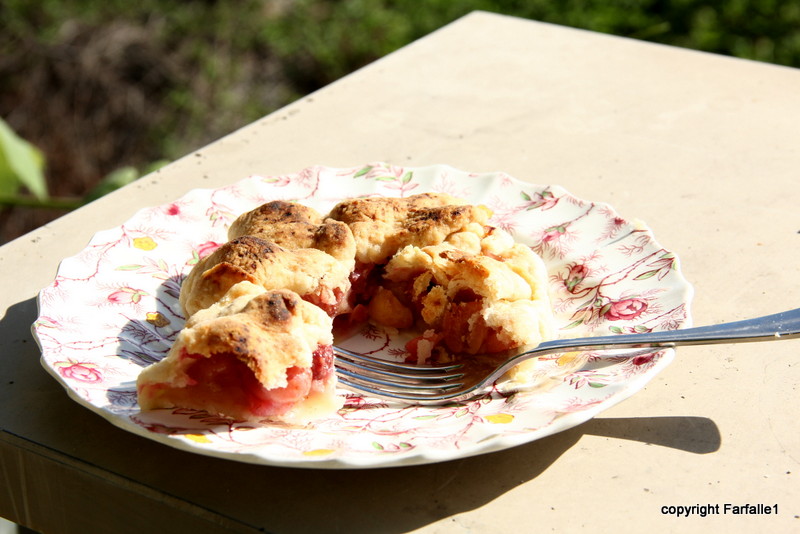
Was it good?

cherry tart half eaten

Yes it was! If you have a few cherries, not enough for a pie or jam, why not throw together a cherry tart? It takes very little time and is a true seasonal treat. You can read how I made mine here.

Nonna Salamone’s Christmas Cookies

29 Saturday Dec 2012

Posted by farfalle1 in American recipes, Desserts, Food, Uncategorized

≈ 4 Comments

Tags

Christmas Cookies, Cookies, Sugar Cookies

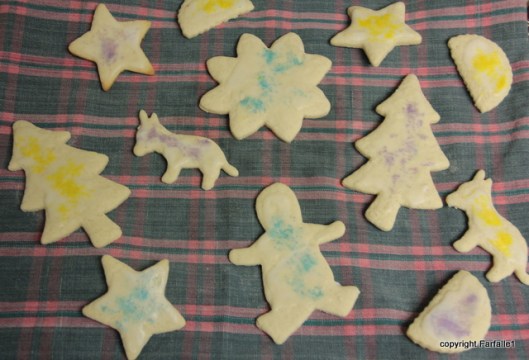
christmas cookies

Bowing to the clamor from at least three faithful blog readers, I herewith present you with the recipe for Speedy’s mother’s Christmas cookies.  Too late for this year, I know, but tuck it away for early next December.

Speedy’s father came to the U.S. from Sicily, and his mother was born here shortly after her parents arrived from the same island.  Somehow through all the years that I’ve been scarfing down these yummy cookies I figured that they were adapted from an old Sicilian Christmas recipe.  Not at all.

In fact, if I were to be completely honest, this recipe should be called Mrs. Stockwell’s Christmas cookies.  I asked Speedy what the history of his Mom’s cookies was and he said, “I don’t know.  They were just always there.  Ask my sister.”  So I did.

Back when Speedy wasn’t even a twinkle in his father’s eye his parents lived across the street from Mrs. Stockwell; her divorced daughter, Darlene Johnson; and her little boy Jerry Johnson. Little Jerry and Speedy’s sister Fran were best friends when they were very young, and frequently played together.  On the days when they were not allowed to play together each would sit on his own curb and they would converse across the then-sleepy Wisconsin Avenue.

They went to kindergarten together, Fran and Jerry, and Fran remembers that Jerry was quite a talker.  In fact, she well remembers the day the kindergarten teacher ran out of patience with Jerry’s continual chatter, put tape across his mouth and deposited him in the cloak room.  Somehow I can’t see that happening nowadays.

And the cookies?  Well, they were Mrs. Stockwell’s recipe, and she shared it with Mrs. Johnson’s friend Nonna Salamone who turned them into her own Christmas tradition.  I got wondering about the Crisco – was that even around in the mid-1930’s when all this recipe exchanging and mouth-taping was going on?  Yes, it turns out that Crisco was introduced in 1911 and packaged sour cream was introduced a year later.  So there had been plenty of time for this great recipe to be invented. I like to imagine that maybe Mrs. Stockwell and Mrs. Johnson invited Frances over to bake cookies with Jimmy – can’t you just picture it?

Illustration courtesy of http://www.etsy.com/shop/GoodlookinVintage?ref=seller_info

Illustration courtesy of http://www.etsy.com/shop/GoodlookinVintage?ref=seller_info

I have no idea who that other little boy is – must be another of Jerry’s friends invited over for the fun. Isn’t Fran adorable?  Hard to imagine we just celebrated her 83rd birthday!

These are the simple cookies of long ago.  They’re fun and easy to make with children, and tasty to eat.  While Crisco has had a lot of bad press over the years, and still suffers a dubious reputation, the Smucker Company has done much to improve it in recent years – you can read its rather interesting history here (I am always amazed at what we can learn from Wikipedia).  It’s probably just fine to use it on those infrequent occasions when you make Nonna Salamone’s Christmas cookies and ‘Mbriolata.  The cookie recipe is here.  I hope you enjoy making (and eating) these cookies as much as Speedy and I do.

La Cervara

13 Monday Aug 2012

Posted by farfalle1 in American recipes, Italian Churches, Italian gardens, Italy, Uncategorized

≈ 6 Comments

Tags

Monasteries in Italy

Photo from helicopter courtesy of http://www.parks.it

Monasteries in Italy have had a tough time of it.  La Cervara, a monastery constructed in 1361 which sits above the road between Santa Margherita and Portofino, is no exception. When France invaded at the end of the 18th century the monastic orders here were suppressed and the resident Benedictines had to abandon La Cervara.

The monastery has been in a state of loving rehabilitation since 1990; the present owners report that the work is 50% complete.  It’s hard to believe there’s as much to do as has already been done.  It looks perfect to the casual visitor.  In fact, when a friend and I recently took the tour I was reminded of nothing so much as the exquisitet restorations that one sees all through Tuscany, and which are not as common here in Liguria.

The first building was erected by Ottone Lanfranco, a Genovese priest, on land owned by the Carthusians.  Around 1420 ownership was transferred to the Benedictine order, who stayed until the above mentioned troubles.

As was the case for Montallegro, bad weather played a role in La Cervara’s history.  Pope Gregory XI was returning the papacy from Avignon to Rome in 1377 when a tempest arose, and his ship took shelter in the harbor near La Cervara.  The Pope rested with the monks there for a while, and got to know and respect them.  Upon his return to Rome he showed favor to the monastery, eventually elevating it to the status of Abbey.

The monks at La Cervara were not uneducated simple men; rather they were cosmopolitan, well-traveled and worldly wise.  La Cervara was a prestigious abbey and its inhabitants, usually about twenty in number, were frequently looked to for counsel in the great houses of Genova and throughout Europe.

The 15th and 16th centuries were the high points of La Cervara’s history. More buildings were added to the complex, including, in the 16th century, a tower from which to watch for the raiding pirates from Africa, those pesky Saracens.
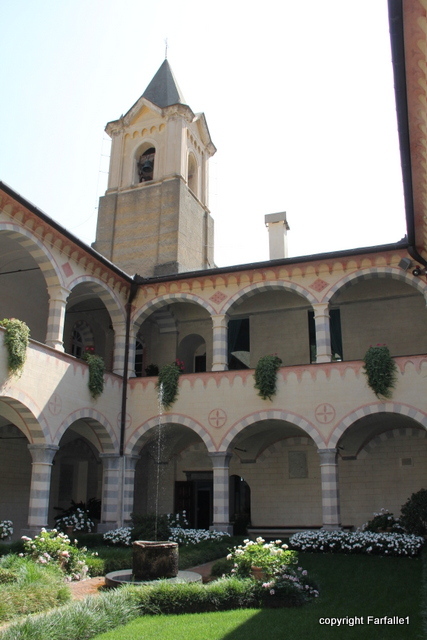
In 1525 poor  King Francis I of France was defeated by the Holy Roman Emperor Charles V at nearby Pavia.  He was brought to La Cervara where he was imprisoned in a different tower, one with a lovely view looking out to sea.
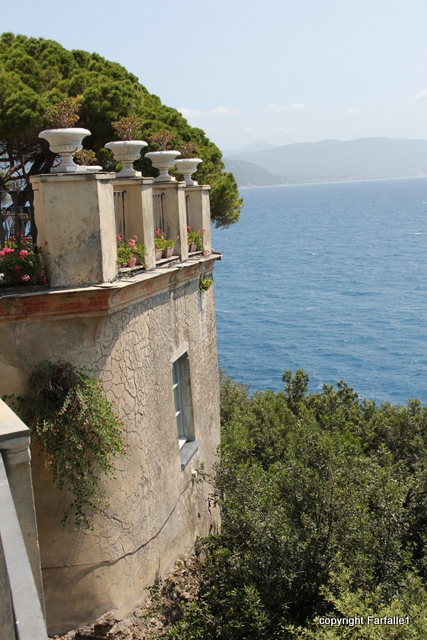
During the suppression, most of La Cervara’s beautiful artifacts and art works were removed.  The Polyptych, painted by Gerard David was separated.  Four panels are now in Palazzo Bianco in Genova, and the other three are in the Metropolitan Museum in New York and the Louvre in Paris.

Image courtesy of the Metropolitan Museum of Art

In the beginning of the 19th century La Cervara again became a religious house, passing through the hands of several orders (Trappists, Somaschi, Carthusians) and eventually it was placed under the Diocese of Chiavari.  Finally in 1937 it passed into private hands.  The first private owner added a long hall and built a grand double stairway and a very large room.  More interested in sport and socializing, he did little to preserve or augment the chapel (but neither did he do any damage).

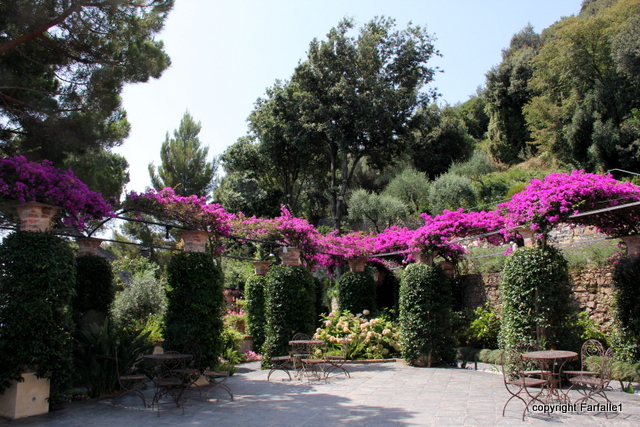
The present owners have been painstaking in their restoration of La Cervara.  The work has been under the direction of architect Mide Osculati and the art restoration has been overseen by Pinin Brambilla Barcilon, who restored the famous painting of The Last Supper in Milano. A private home, La Cervara is also available to rent for conferences, weddings, parties and the like.  A fortunate friend has been to several evening events there and describes how  the soft candlelight inside echoes the twinkling lights on the coast across the bay.  No electric lights – only candles; it is, she says, ‘magical.’  Her favorite place, she says,  “is the cloister at night with only one single shiny jet of water ….not a big splashy fountain, one single jet is all it takes to create beauty.”  You can see the fountain, elegant and eloquent in its simplicity in two of the photos above. Thank you for sharing that lovely image, fortunate friend!

An example of the care taken in the restoration:  it was thought the original floor of the chapel was ardesia, the dark slate indigenous to this area, because that’s what was there, albeit in deplorable condition.  The architect was reluctant to use that material again because it is so dark.  Further digging  revealed, though, that before the ardesia was put down, the floor had been brick.  Unable to find hand-made bricks that matched the light original color, the architect procured the new bricks from Spain.  They look just right, too.

Photo by Roberto Bozzo, courtesy of http://www.fotografi-matrimonio.com

Instead of trying to recreate the missing sacred art in the chapel the owners have installed four enormous tapestries – not religious in theme, but somehow absolutely appropriate for the setting.  You can see just a wee bit of one in the photo above.

In an extraordinary and successful attempt to save a 150-year old wisteria, the owners used a crane to life the ancient branches from where they had fallen on the ground, one or two inches every week.  It took over a year to get the vine into position, but the wisteria survived and is splendid.
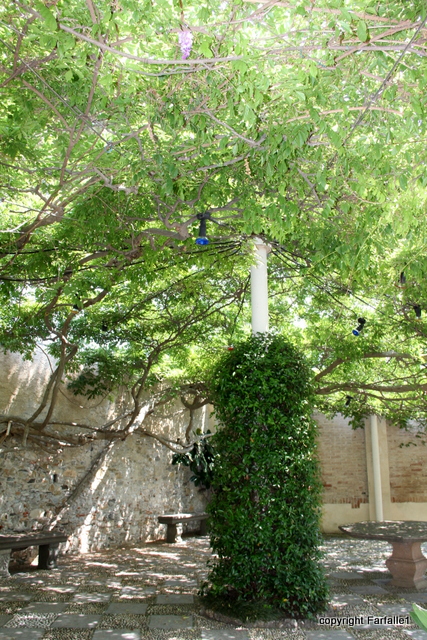
Center pole supports some of the branches, which also grow along the wall on the left.
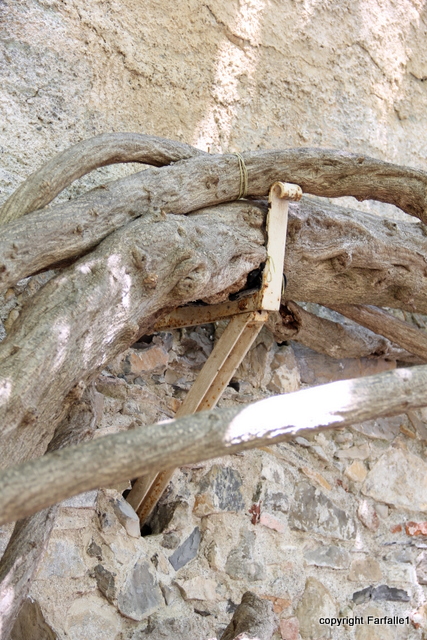
Ancient branch, now well supported

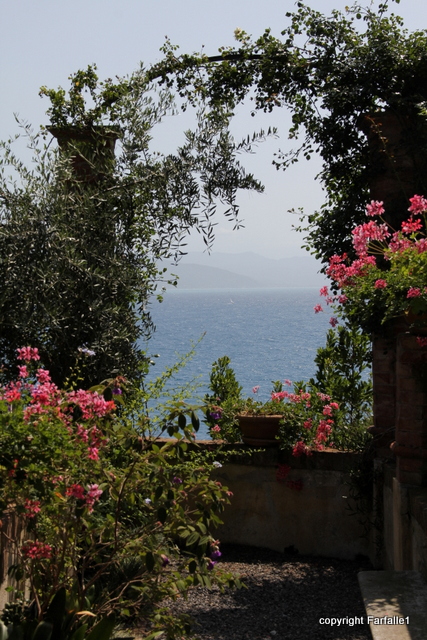
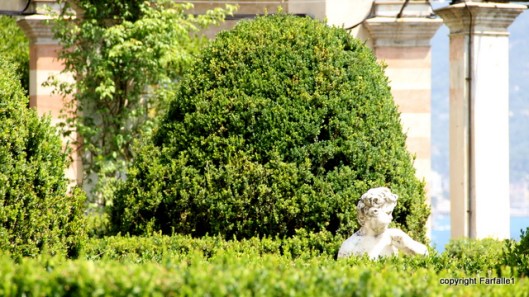
Unfortunately one is not allowed to take photographs inside the buildings, but the gardens (formerly the monks’ orchard) are fair game.
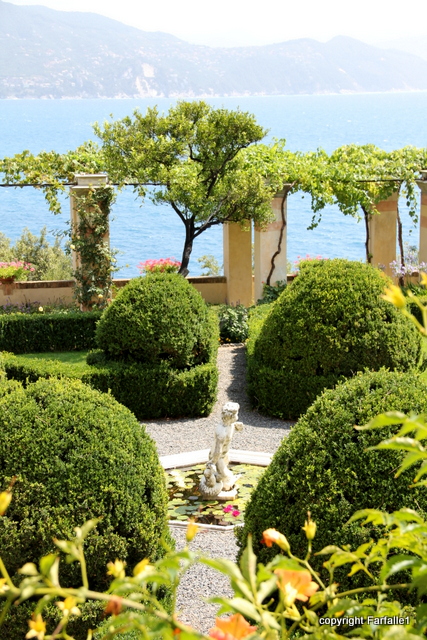
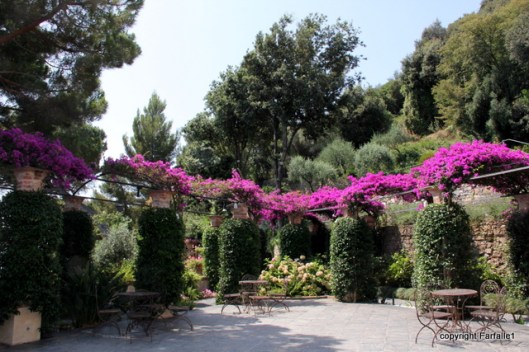
La Cervara is open to the public on the first and third Sunday of each month  from March through October; guided tours are run at 10, 11 and 12 o’clock.
Mystery Solved…

24 Monday Oct 2011

Posted by farfalle1 in American recipes, Food, gardening, Uncategorized

≈ 8 Comments

Tags

Good food for cold weather, Pumpkin gratin, pumpkin sformata, Squash gratin, Squash sformata


No, not the heinous murder on Via Enrico Toti, about which I told you last week.  That is still under investigation; our friend on the State Police force here in Rapallo has told us they have enlisted the aid of the Vigili del Fuoco, the Guardia Forestale and  the Polizia Provinciale to solve the crime.  No doubt the Guardia di Finanza will be called in at some point too.

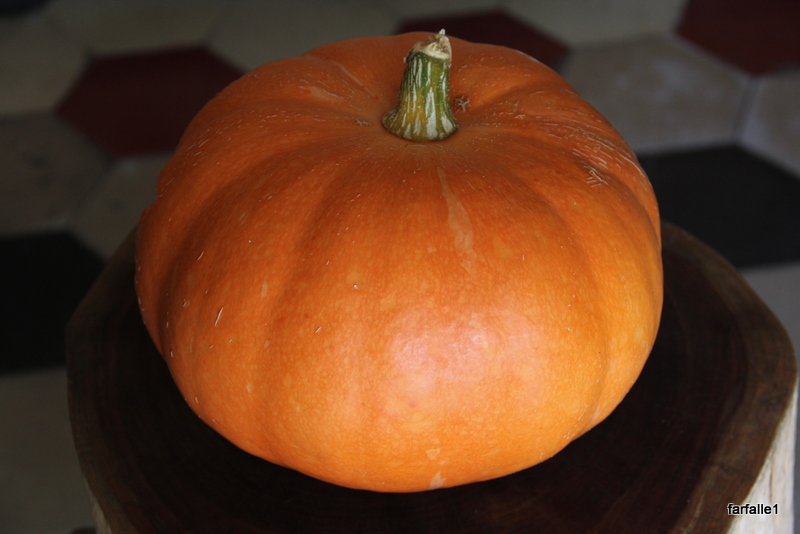
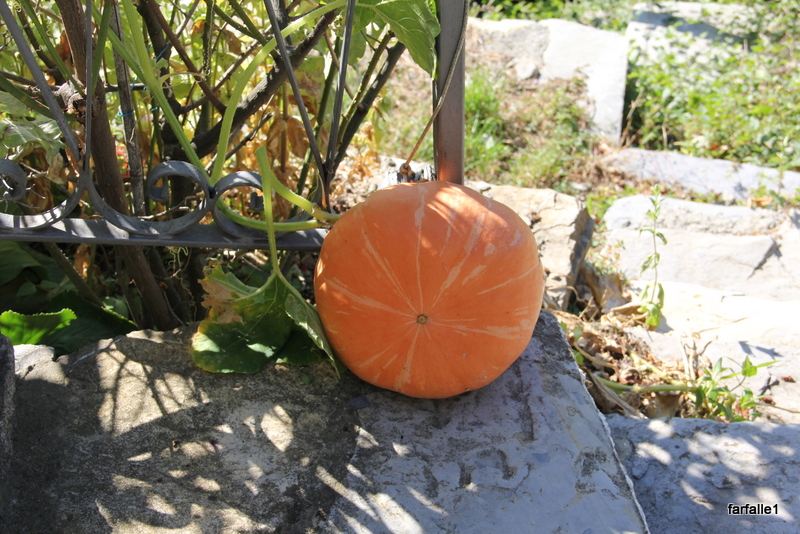
The mystery that is solved, almost to my satisfaction, is the one I told you about on August 18, having to do with a strange vegetable that arrived uninvited both in the compost pile and under a climbing rose.  And am I embarrassed!  You’d think after umpety-bumpteen years of gardening I would recognize a pumpkin when I saw one, but I didn’t recognize these as pumpkins, not at all. And while I’m calling it a pumpkin, I’m still not 100% convinced it is a true pumpkin.

As the strange yellow squash-like orbs of August matured they began to take on a more pumpkiny look – orange skin, though not as orange as a good old New England pumpkin gets.  I find the light stripes highly suspicious:

I never grew a pumpkin before that had this sort of stripes.  It’s almost as if a decorative gourd eloped with a smallish pumpkin and had a couple of dubious, if beautiful, offspring.

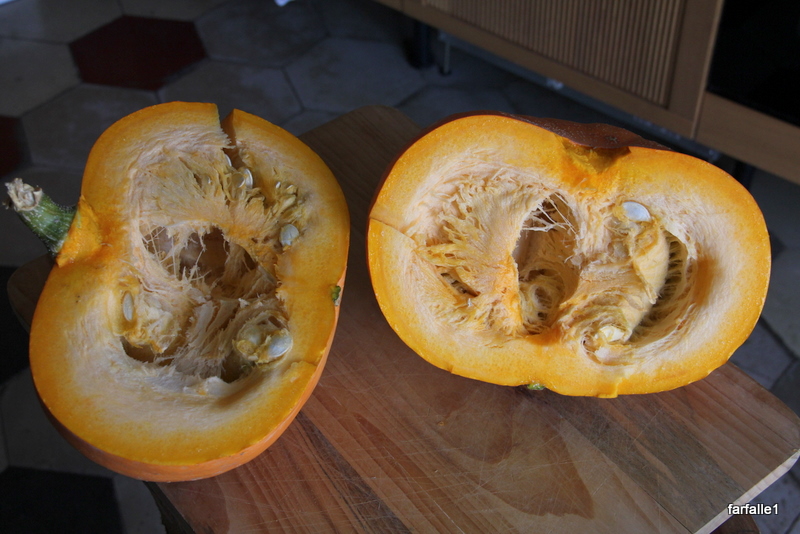
The pumpkins (I’ll call them that for the sake of ease) each weighed about seven pounds.  Inside the one we opened were more seeds than anything else, which is a pumpkiny trait.  But there was not as much non-fibrous flesh as I associate with true pumpkins.

So what did we do with this gorgeous thing?  One night I made a baked squash (pumpkin)  gratin, which used about half of one pumpkin (recipe of Deborah Madison here).  After peeling and cutting it into cubes and boiling briefly I whizzed up the other half in the food processor, and a few nights later made a fabulous sformata of squash (pumpkin), courtesy of Mario Batali (recipe here).

We had company for both these dishes, and they were really well received.  So if you have a squash kicking around, or a pumpkin, or something in between, try one of these autumn/winter dishes – you won’t be disappointed.

That’s one mystery solved.  Now back to Via Toti…

Jammin’ in the Kitchen

29 Sunday May 2011

Posted by farfalle1 in American recipes, Uncategorized

≈ 19 Comments

Tags

Cherries, Cherry Jam, Jam Making, Pectin

When we restructured our house ten years ago we planted many fruit trees, among them a sweet cherry tree.  It grew and grew but gave us no fruit.  Then four years ago we had five cherries – great excitement!  The next year we had fifteen.  The year after that there were more than we could count, but we were able to eat them all in one sitting.   And this year – ta dah!


More than we could count AND more than we could eat.

Clearly it was cherry jam time.

Jam is much easier to make than jelly – none of that time-consuming drip, drip, drip to get a clear jelly.  For anyone who likes instant gratification in their preserves, jam is the way to go.


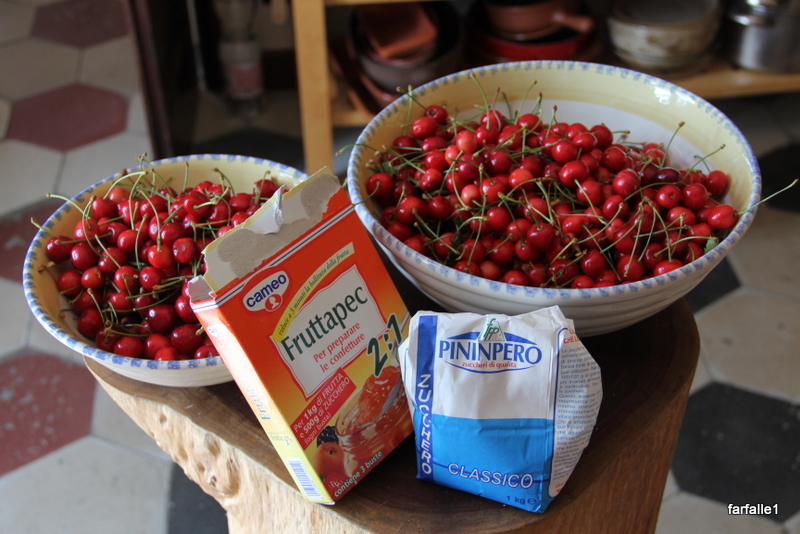
Here are the ingredients: the cherries, sugar, and a pectin product made from apples, among other things.  Apples, guavas, quince, plums, gooseberries, oranges and other citrus fruits, contain large amounts of pectin, while soft fruits like cherries, grapes and strawberries contain small amounts of pectin, according to Wikipedia.  Pectin is what puts the ‘jel’ in jams and jellies, so if you’re working with a low-pectin fruit you want to add some to make a good jam. I once made cherry ‘jam’ without adding pectin, and ended up with a lovely cherry sauce.  In the good old days people simply boiled their fruit and sugar mixture until it was reduced to a jelly or jam.  I’ve tried this and have ended up with a sort of sticky goo.  For me adding pectin produces a better result. Sure-Jell, Ball and Certo are some of the name-brands of Pectin in the U.S., and many grocery chains sell it under their own label.  I’ve read complaints about liquid pectin; some people have trouble getting it to set.

The Fruttapec above is called 2:1 because the recipe calls for only 1/2 kilo of sugar to a kilo of fruit.  Many jam recipes call for equal weights.  I know!  It’s a great way to take something healthy like a cherry and turn it into something a lot less healthy.  So, even though 2:1 jam is still full of sugar, you can feel very virtuous because you’ve reduced your intake by half.

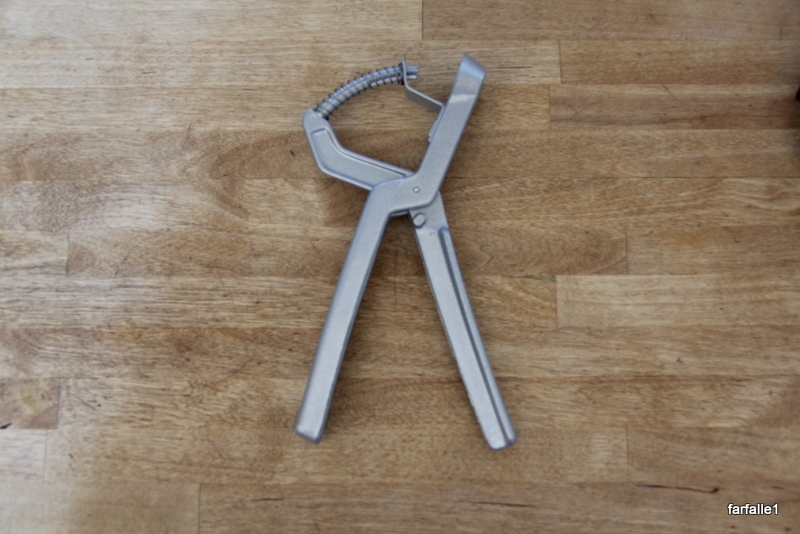
All you have to do is mix the pectin with the sugar, then add the room-temperature prepared fruit (cleaned, and in the case of cherries, pitted).  On that subject, here is the best purchase of the year:


Made by a German company, it is marketed as an olive-pitter, but it works just fine for cherries.  You put the cherry in, squeeze the handle and the pit (and only the pit!) pops out the bottom.  It’s fun, and a great time saver.  The first day I made jam it took me an hour and a half to pit the fruit with a manicure tool, a wee spatula-like thing.  With the new tool the next day it took less than half an hour.


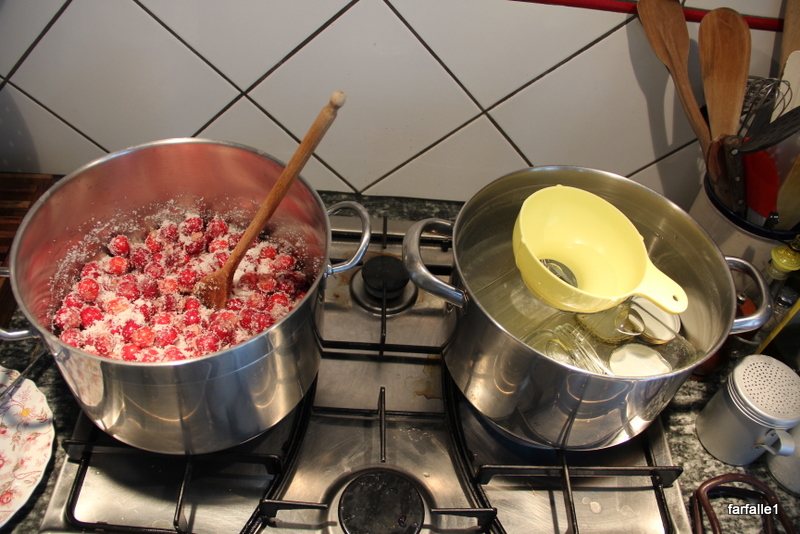
You put the mixture on high heat, and at the same time boil up a pot of jam jars, lids and any other tools you will use.  In addition to the pitter I use a jar-lifter, barely visible on the bottom right of the photo, and a wide-bottomed funnel for getting hot jam into the jars.

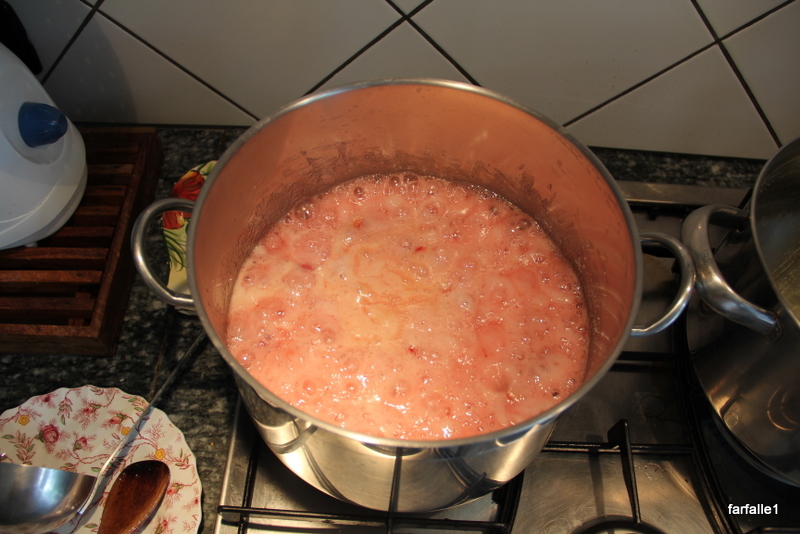
You bring the jam mix to a full roiling boil stirring all the while:


Once you’ve achieved boil, set a timer for three minutes.  Then remove the pan from the heat and stir for a minute; then get as much of the foamy scum off the top as you can – it’s easier for some fruits than others (for cherries it’s difficult).  Add three TBL of lemon juice, put back on the high fire, and boil for one more minute.  Then it’s jar time.


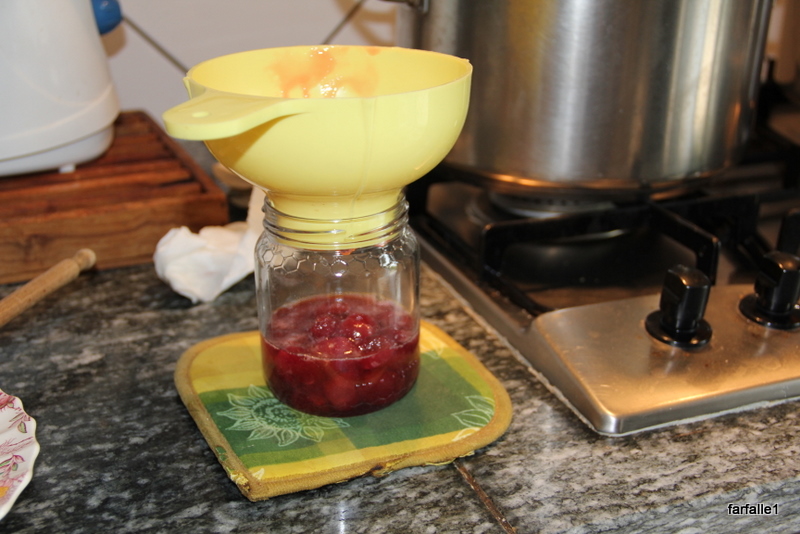
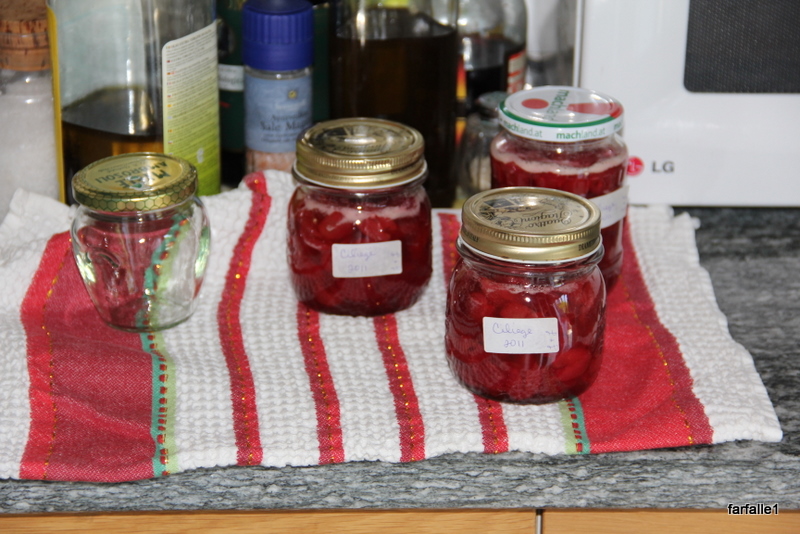
Remove a jar from the pot of boiling water, fill it with hot fruit mix, remove a lid from the boiling water and screw it on, not too tightly.  Then set the jar on a folded tea towel to cool.  You’ve made jam!

Make sure your vacuum jars have sealed. If they haven’t, either re-do the process, or simply eat the jam right away.

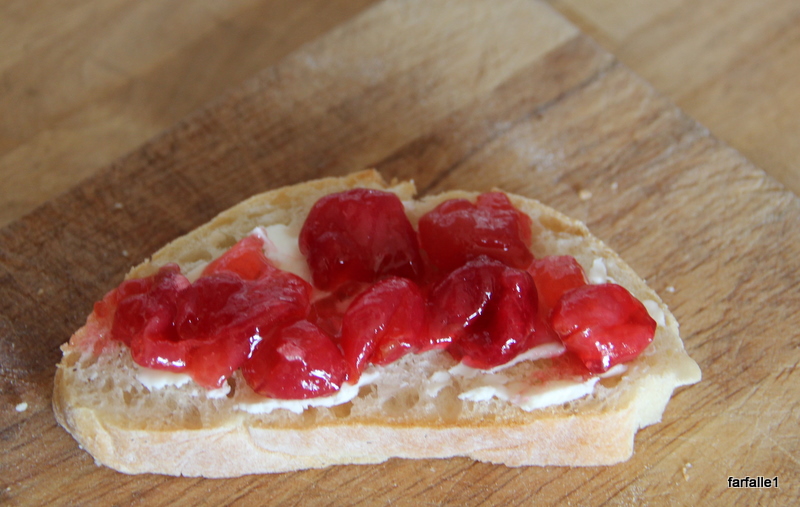
Here’s your reward:

Yum!

Oddly enough, cherry jam does not seem to be prevalent in Italy.  The jars I’ve given Italian friends have produced more curiosity than delighted recognition.  One taste has been sufficient to turn them into believers, so maybe one day soon the grocery shelves will be groaning under jars of cherry jam.  But I’m not going to hold my breath; instead I’m going to hope for another banner crop next year.

Tenth Tee Apricot Bars

18 Friday Mar 2011

Posted by farfalle1 in American recipes, Animals in the U.S., Golf, Uncategorized

≈ 4 Comments

Tags

Cookies and bars, Oatmeal cookies, Peach-faced lovebirds

I took up golf this winter.  I’m not proud of it, but I did it.  It seemed like a good way to spend time with the Captain who engages in this foolish and impossibly difficult sport five or six times a week.  I’ve always scoffed at all things golf, from the size of the ball to the costumes of the participants.  But it has turned out to be far more challenging than I ever imagined.  And irritating. And, sometimes, exhilarating.

We joined a club not too far from here, one of a mere 250 such in the greater Phoenix area.  It has two stand-out characteristics.  One is the view of Red Mountain that one gets from various angles at different parts of the course.

The Captain with Red Mountain in the distance

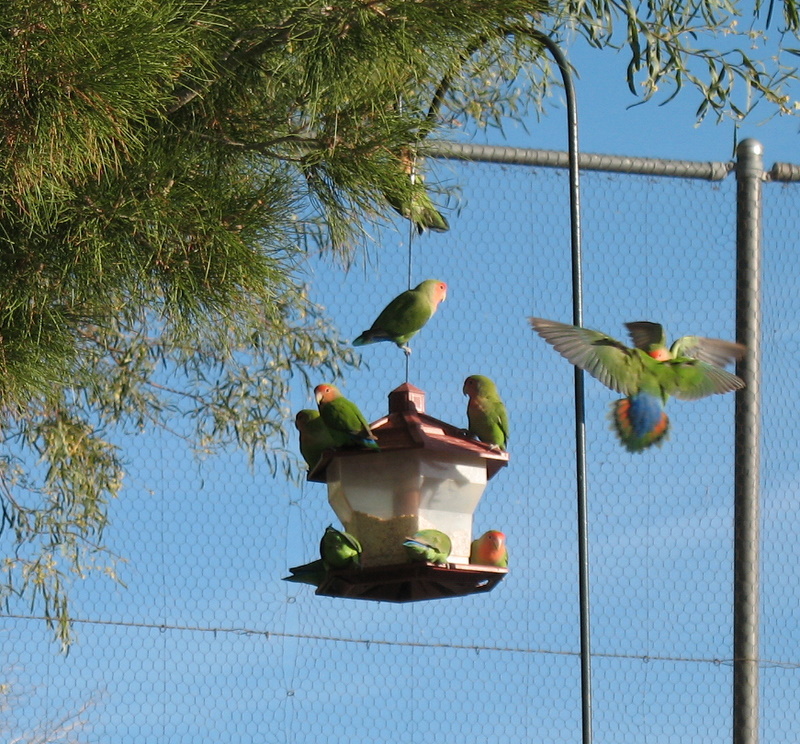
The other is the population of Peach-Faced Love Birds.

Peach-faced lovebirds at a course-side feeder

The birds are native to two places on earth: West Africa and East Mesa, Arizona.  They look like parakeets and make a constant twittery racket.  They have the adorable habit of sitting next to each other and leaning in, very lovey-dovey.  There are hundreds of them twittering and tweeting all through the golf course.  No, not THAT kind of twitter and tweet…

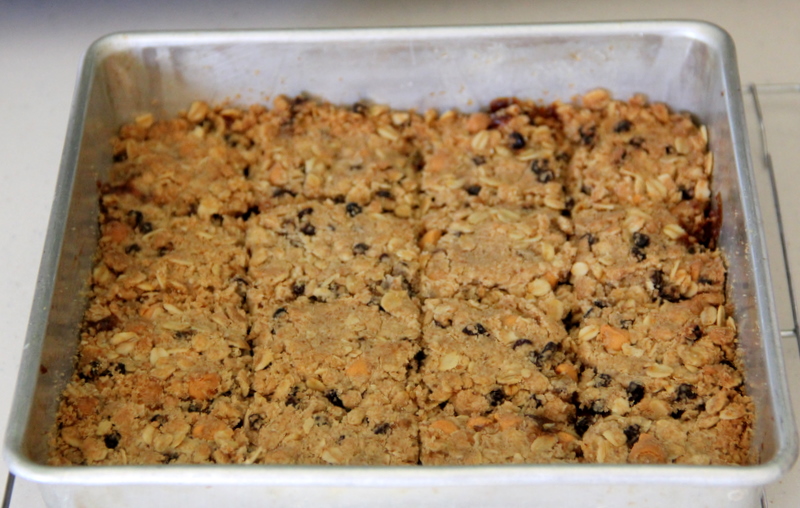
Part of our golf routine is the Snack that takes place on the tenth tee (for me and others) and the eleventh fairway (for the Captain).  This is always something home baked, and recently it has been these delicious oatmeal bars.  I found the recipe at   allrecipes.com, but have made some alterations.  Our stalwart 2:00 p.m. Canadian golf pal (he’s got the same kind of membership we have that allows for afternoon play) is quite fond of them, I think.  So Bob, this recipe’s for you.

Swedish Tea Wreath

28 Tuesday Dec 2010

Posted by farfalle1 in American recipes, Food, Holidays, Swedish food, Swedish recipes

≈ 2 Comments

Tags

Christmas baking, holiday baking


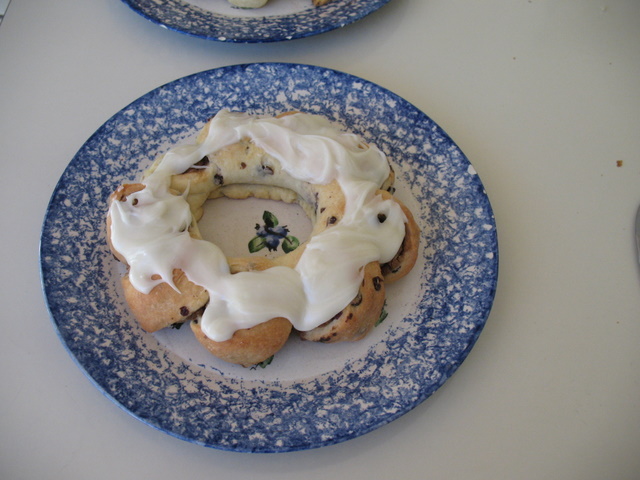
Between traveling to the States for a lengthy visit, flying to Tennessee for a familial visit and negotiating the madness that is Christmas here, it has been a busy time for the Captain and yours truly.  We took some time out to enjoy cooking special holiday treats, though, such as the cookies the Captain learned to make at his mother’s knee, and the Swedish Coffee Cake we’ve enjoyed on Christmas mornings for the past few years.  Be warned: you may want to make an appointment with your cardiologist before embarking on this recipe.

I found the recipe at about.com, where it is called Swedish Tea Log, by Linda Larsen.  We’ve made very few changes – why mess with success? – but have changed the shape to give it a more Christmasy appearance.  Every year I say to myself that the frosting is too thick and should be runnier and applied more sparingly.  I’ve adapted the recipe to accommodate that opinion.

There’s no reason not to make this yummy treat any time of the year.  Everyone loves it, which makes it well worth the little bit of extra effort (really time, more than effort) it takes to make.

Click here for the recipe, invite some friends over for tea and have fun!

J-E-L-L-Oooooooo

26 Sunday Jul 2009

Posted by farfalle1 in American recipes, Food, Uncategorized

≈ 10 Comments

Tags

aspic, gelatin, Jello, tomato aspic

Usually here in Italy we’ve been able to find any foodstuff that we want.  We might not recognize the name, or the packaging, but by asking friends we’ve been able to find almost everything culinary that we’ve wanted.  And usually when we find it, it looks about the way we’d expect it to. I can imagine being in some really exotic country and buying something that you think is soup, say, only to open it up and find goats’ eyes.  That doesn’t happen here.

virtual-jelloOne thing I’ve never seen here, though, is Jello, the kind of wobbly, luridly colored Jello that we have in the States.  There are ‘budino’ (pudding) mixes – chocolate, lemon and so forth.  But not jello, per se, which is too bad, because it is a really silly, fun food.  (If you want to read a fairly cantankerous and thoroughly amusing history of non-commercial and commercial gelatin, which may or may not have been written by S.R. Brubaker, click here.)  Is there anything more cheerful, than a bowl of cubed up jewel-toned Jello, quaking and shaking?  No, I don’t think so either.  But you won’t be eating it in Rapallo.
Of course one can make one’s own jello with fruit, sugar and unflavored gelatin.  But it’s a little hard to come by red dye #14 or any other of the poisonous dyes that give Jello its unique colors (colors never found in nature!), so the likelihood of achieving true jello-hood at home is remote… it just isn’t jello if it doesn’t look like a false gemstone that’s got the vapors.

For some reason I got a bee in my bonnet about making tomato aspic the other day.  To my shock, many of the recipes I found call for lemon Jello.  Yuck.  Fortunately I found plenty of suggestions for ingredients in other recipes that did not include anything quite so yellow and all of which, of course, call for unflavored gelatin.

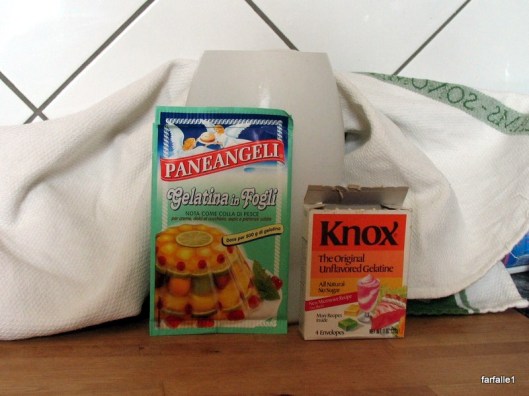
We still had some in the cupboard that moved over from the States with us in ’02 (that’s how often I make aspic), but there wasn’t really enough.  So I went a-hunting for same in the supermarket.  It is plentiful, but the package didn’t look anything like what I’m used to:

tart, beans, gelatina 020

That’s it on the left – Gelatina in Fogli.  Huh?  What are Fogli?  Well, it turns out that in Italy gelatin is one of the foods that looks completely different than it does in the U.S.  Whereas we are accustomed to a grainy powder, here the gelatin comes in thin sheets (‘fogli’ means ‘leaves’ or ‘sheets’):

tart, beans, gelatina 024

In fact, it’s really pretty.  That’s our Knox powder in the saucer, and resting behind it is one of the six fogli that come in an Italian package of gelatin.  Looks like a kind of magical quilt for an elf, doesn’t it?  It’s flexible and doesn’t feel sticky.  Fortunately the directions for using it are very simple.  You put all six sheets in a bowl of cold water and let them soften for 10 minutes.  They get slippery and feel a little slimy, but they hold their shape; it’s kind of fun to play with them a little before using them. Then you add them to a hot mixture and they simply melt away. After that, things go along just as they do with the powdered form of gelatin.  After a while in the fridge you’ve got a nice, firm, gelled whatever-you’ve-made.  One of the fun things about molded food is choosing the shape you want to make it.  Fish is a fish mold?  Certainly!  But how about a little sensory displacement: dessert in a fish mold?  Why not?  Fooling around with shapes is half the fun of the whole endeavor.

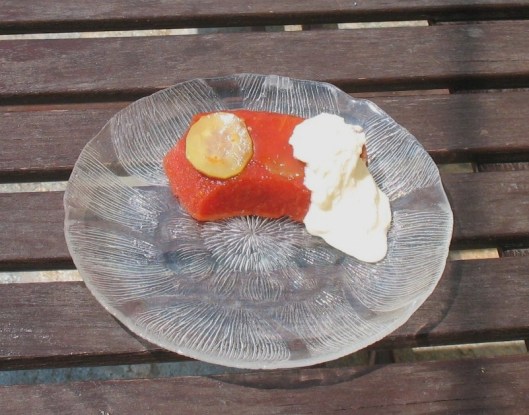
So how did the aspic turn out?  Really well!  In fact, to my utter surprise, our Italian friends loved it.  They called it tomato salad, which was generous, and they enjoyed it very much.  We served it with a sauce made of cheese, horseradish, mayonnaise and a little milk.  That thing on the left that looks like a happy face is a slice of cucumber; another is barely visible between the first one and the sauce.  The cucumber as decoration plan did not work out quite as I’d hoped.

aspic 001a

Gelatin makes food that’s playful, and that’s good.  I don’t agree with S.R. Brubaker who says, gelatin is ‘fake food,’ (just one of his salvos against this church social favorite).  It’s no more fake than bread is ‘fake wheat’ after the addition of yeast and heat.  It’s just a process.  The great thing about gelatin is you can put whatever you want in it and it will probably work out pretty well.  It is the amber of the food world, trapping and holding ingredients (let’s hope it’s not, like amber, holding flies).  If you want a rather vague tomato aspic recipe, click here.  In any event, have some jello and have some fun.

Pickle Relish

01 Wednesday Jul 2009

Posted by farfalle1 in American recipes, Customs, Food, Uncategorized

≈ 5 Comments

Tags

4th of July, Brats, Hot dogs, Independence Day, Relish

relishOh! The things we take for granted in the United States, things like peanut butter and pickle relish.  Neither of these items is readily available in Rapallo, and usually we don’t miss them very much.  But watch out – the 4th of July is just around the corner.  You can’t get through the 4th of July without a hot dog or a brat, and according to me, you can’t eat either without pickle relish on top.

The solution to the scarcity problem is obvious: we must make our own.  We made this recipe a couple of years ago and served it at a 4th party, which included many Italian friends.  To our surprise they loved it, to the point of requesting the recipe.  “It will be good with chicken and pork,” one of them said.  I suppose so, though we generally opt for the Captain’s chutney with that kind of meat.  But for a good old ‘Merican hot dog or German brat, nothing beats relish on top, and this recipe makes a relish unlike the vivid green items you can buy in American supermarkets.  We adapted it from a recipe we found on cooks.com.

Dancing hot dog C

(Picture found on web - thank you anonymous artist!)

Happy Independence Day, everyone!  Eat a hot dog!!

← Older posts

Enter your email address to follow this blog and receive notifications of new posts by email.

Join 114 other subscribers

rss

Subscribe in a reader

Search the Blog

A. Useful Links

  • bab.la language dictionary
  • Bus schedules for Tigullio
  • Conversions
  • English-Italian, Italian-English Dictionary
  • Expats Moving and Relocation Guide
  • Ferry Schedule Rapallo, Santa Margherita, Portofino, San Frutuoso
  • Italian Verbs Conjugated
  • Piazza Cavour
  • Rapallo's Home Page – With Link to the Month's Events
  • Slow Travel
  • The Informer – The Online Guide to Living in Italy
  • Transportation Planner for Liguria
  • Trenitalia – trains! Still the most fun way to travel.

C. Elaborations

  • A Policeman’s View
  • Driving School Diary
  • IVA refunds due for past Rifiuti tax payements
  • Nana
  • Old trains and old weekends
  • The peasant, the Virgin, the spring and the ikon
  • Will Someone Please, Please Take Me to Scotland?

D. Good Recipes - Best of the Week winners are starred

  • 'Mbriulata
  • *Baked Barley and Mushroom Casserole*
  • *Captain’s Boston Baked Beans*
  • *Crimson Pie*
  • *Louise’s Birthday Cake*
  • *Melanzane alla Parmigiana*
  • *Penne with Cabbage and Cream
  • *Pizzoccheri della Valtellina*
  • *Pumpkin Ice Cream*
  • *Risotto alla Bolognese*
  • *Rolled Stuffed Pork Roast*
  • *Spezzatini di Vitello*
  • *Stuffed Grape Leaves*
  • *Stuffed Peaches (Pesche Ripiene)*
  • *Swordfish with Salsa Cruda*
  • *Tagliarini with Porcini Mushrooms*
  • *Tagliatelli al Frutti di Mare*
  • *Three P's Pasta*
  • *Tzatziki*
  • 10th Tee Oatmeal Apricot Bars
  • Adriana’s Fruit Torta
  • Aspic
  • Bagna-calda
  • Best Brownies in the World
  • Clafoutis
  • Cold cucumber soup
  • Crispy Tortillas with Pork and Beans
  • Easy spring or summer pasta
  • Fish in the Ligurian Style
  • Hilary's Spicy Rain Forest Chop
  • Insalata Caprese
  • Lasagna al forno
  • Lasagna al Forno con Sugo Rosato e Formaggi
  • Lemon Meringue Pie
  • Leo’s Bagna Cauda
  • Leo’s Mother’s Stuffed Eggs
  • Louis’s apricot chutney
  • Mom's Sicilian Bruschetta
  • No-Knead (almost) Bread
  • Nonna Salamone's Christmas Cookies
  • Pan Fried Noodles with Duck, Ginger, Garlic and Scallions
  • Pesto, the classic and original method
  • Pesto, the modern, less authentic method
  • Pickle Relish
  • Poached pears
  • Poached Pears
  • Polenta Cuncia
  • Recipes from Paradise by Fred Plotkin
  • Rustic Hearth Bread
  • Shrimp and Crayfish Tail Soup
  • Sicilian salad
  • Slow Food Liguria
  • Slow Food Piemonte and Val d'Aosta
  • Spinach with Garlic, Pine Nuts and Raisins
  • Stuffed Eggs, Piemontese Style
  • The Captain’s Salsa Cruda
  • Tomato Aspic
  • Zucchini Raita

E. Blogroll

  • 2 Baci in a Pinon Tree
  • Aglio, Olio & Peperoncino
  • An American in Rome
  • Bella Baita View
  • Debra & Liz's Bagni di Lucca Blog
  • Expat Blog
  • Food Lovers Odyssey
  • Italian Food Forever
  • L’Orto Orgolioso
  • La Avventura – La Mia Vita Sarda
  • La Cucina
  • La Tavola Marche
  • Rubber Slippers in Italy
  • Southern Fried French
  • Status Viatoris
  • Tour del Gelato
  • Weeds and Wisdom

Photographs

  • A Day on the Phoenix Light Rail Metro
  • Apache Trail in the Snow
  • Aquileia and Croatia
  • Birds on the Golf Course
  • Bridge Art
  • Canadair Fire Fighters
  • Cats of Italy
  • Cloudy day walk from Nozarego to Portofino
  • Fiera del Bestiame e Agricultura
  • Football Finds a Home in San Maurizio
  • Hiking Dogs
  • Mercatino dei Sapori – Food Fair!
  • Moto Models
  • Olive pressing
  • Rapallo Gardens
  • Rapallo's Festa Patronale
  • Ricaldone and the Rinaldi Winery
  • Rice Fields
  • Sardegna ~ Arbatax and Tortoli
  • Sardegna ~ San Pietro above Baunei
  • Sardegna ~ The Festa in Baunei
  • Scotland, including Isle of Skye
  • Slow Food 2008 Salone del Gusto
  • The Cat Show and the Light Rail Fair
  • The desert in bloom
  • Trip to Bavaria

Pages

  • Fagioli all’ucelleto

Archives

Recent Posts

  • A Superior Visit
  • Fun at the Ranch Market
  • The MAC
  • Welcome Tai Chi
  • Bingo Fun for Ferals
December 2025
M T W T F S S
1234567
891011121314
15161718192021
22232425262728
293031  
« Jul    

Member of The Internet Defense League

Blog at WordPress.com.

  • Subscribe Subscribed
    • An Ex-Expatriate
    • Join 114 other subscribers
    • Already have a WordPress.com account? Log in now.
    • An Ex-Expatriate
    • Subscribe Subscribed
    • Sign up
    • Log in
    • Report this content
    • View site in Reader
    • Manage subscriptions
    • Collapse this bar
 

Loading Comments...