• Contact
  • Elaborations
    • A Policeman’s View
    • Driving School Diary
    • Great Danes
    • IVA charged on Tassa Rifiuti
    • Nana
    • Old trains and Old weekends
    • The peasant, the virgin, the spring and the ikon
    • Will Someone Please, Please Take Me to Scotland??
  • Recipes
    • ‘Mbriulata
    • *Baked Barley and Mushroom Casserole*
    • *Captain’s Boston Baked Beans*
    • *Cherry Tart*
    • *Crimson Pie*
    • *Louise’s Birthday Cake*
    • *Melanzane alla Parmigiana* – Eggplant Parmesan
    • *Penne with Cabbage and Cream
    • *Pizzoccheri della Valtellina*
    • *Pumpkin Ice Cream*
    • *Risotto alla Bolognese*
    • *Rolled Stuffed Pork Roast* on the rotisserie
    • *Shrimp and Crayfish Tail Soup*
    • *Spezzatino di Vitello*
    • *Stuffed Grape Leaves*
    • *Swordfish with Salsa Cruda*
    • *Tagliarini with Porcini Mushrooms*
    • *Tagliatelli al Frutti di Mare*
    • *Tzatziki*
    • 10th Tee Apricot Bars
    • Adriana’s Fruit Torta
    • Artichoke Parmigiano Dip
    • Best Brownies in the World
    • Clafoutis
    • Cod the Way Sniven Likes It
    • Cold Cucumber Soup
    • Crispy Tortillas with Pork and Beans
    • Easy spring or summer pasta
    • Fagioli all’ucelleto
    • Fish in the Ligurian Style
    • Hilary’s Spicy Rain Forest Chop
    • Insalata Caprese
    • Kumquat and Cherry Upside Down Cake
    • Lasagna Al Forno con Sugo Rosato e Formaggi
    • Lemon Meringue Pie
    • Leo’s Bagna Cauda
    • Leo’s Mother’s Stuffed Eggs
    • Louis’s Apricot Chutney
    • Mom’s Sicilian Bruschetta
    • No-Knead Bread (almost)
    • Nonna Salamone’s Famous Christmas Cookies
    • Pan-fried Noodles, with Duck, Ginger, Garlic and Scallions
    • Pesto
    • Pesto
    • Pickle Relish
    • Poached Pears
    • Polenta Cuncia
    • Pumpkin Sformato with Fonduta and Frisee
    • Rustic Hearth Bread
    • Sicilian Salad
    • Soused Hog’s Face
    • Spotted Dick
    • Swedish Tea Wreaths
    • The Captain’s Salsa Cruda
    • Tomato Aspic
    • Vongerichten’s Spice-Rubbed Chicken with Kumquat-Lemongrass Dressing
    • Winter Squash or Pumpkin Gratin
    • Zucchini Raita

An Ex-Expatriate

~ and what she saw

An Ex-Expatriate

Category Archives: Animals in Italy

Cows Come Home… Again!

20 Saturday Sep 2014

Posted by farfalle1 in Alps, Animals in Italy, Italian festas, Italian food, Italian men, Italy, Piemonte, Portraits of people, Uncategorized

≈ 4 Comments

Tags

Antique tractors, Cowherding, Cows, Fera 'd San Bartrame', Oropa, Tractors


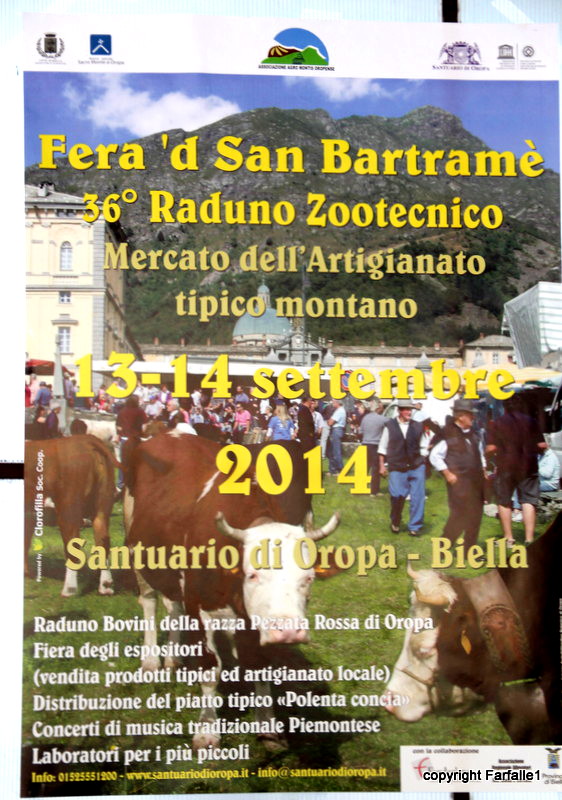
fair poster

Those who are faithful readers of this blog know there are few things that give us more pleasure than a day spent with the cows (read about last years outing here). Last weekend we enjoyed just such a day, made even better by being with dear friends.

The Santuario di Oropa sits high in the pre-Alps of Piemonte (region of Biella) at an altitude of some 1,100 meters (3,610 + feet). Its long history dates back in lore to the 4th century AD. In fact the first mention of simple churches in Oropa, dedicated to the Saints Mary and Bartholomew, occurred in the 13th century. (San Bartrame’ is Piemontese dialect for St. Bartholmew.) The present series of buildings were begun in the first years of the 17th century, with work continuing to this day. The most recent basilica was consecrated in 1960.  Our friends told us there is a saying in Piemonte to describe something that is never finished – ‘it’s another Oropa.’ There is a good, brief history of the Sanctuary, which is an important pilgrim destination here (in English).

However, it was not as pilgrims that we visited the sacred site – it was as cow fanciers, in particular to get to know the Pezzata Rossa di Oropa, one of sixteen minor cattle breeds recognized by the Italian Ministry of Agriculture. The standard for the breed calls for a ‘red’ coat with white spots. In fact, there have been breeding changes over the years and, in addition to the standard, there are now all white Pezzate and black and white Pezzate.

During the summer months the cows live with their herders on the high fields of the pre-Alps; it is too cold for them to remain there through the winter, and the Festa we attended was held to celebrate their return to civilization. The herds are brought down a very narrow road and driven into a large field where they are tied by chains to a flimsy wire fence.

pretty cowherd

That’s not a cane in the young woman’s hand, that’s the rather delicate shepherd’s crook that all the herders carry. Every now and then when a cow goes in the wrong direction she receives a little whack on the fanny with the crook along with a shout telling her what to do. Getting the cows to approach the fences in the field sometimes took a bit of effort. The crook was freely employed, as was simple strength.
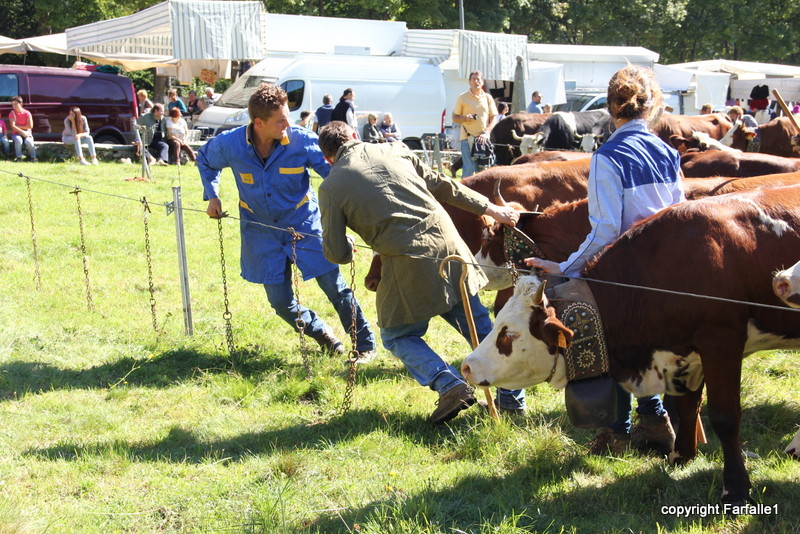
pezzata rossa di oropa chaining them up-003There was a delightful amount of confusion while the herds were being organized – some of the cows simply did not want to stand still in a row and would try to wander off.
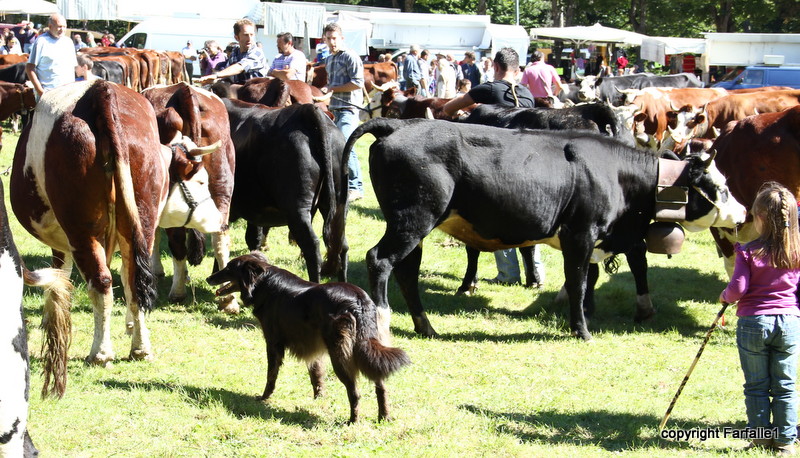
watchful dog and young cowherd

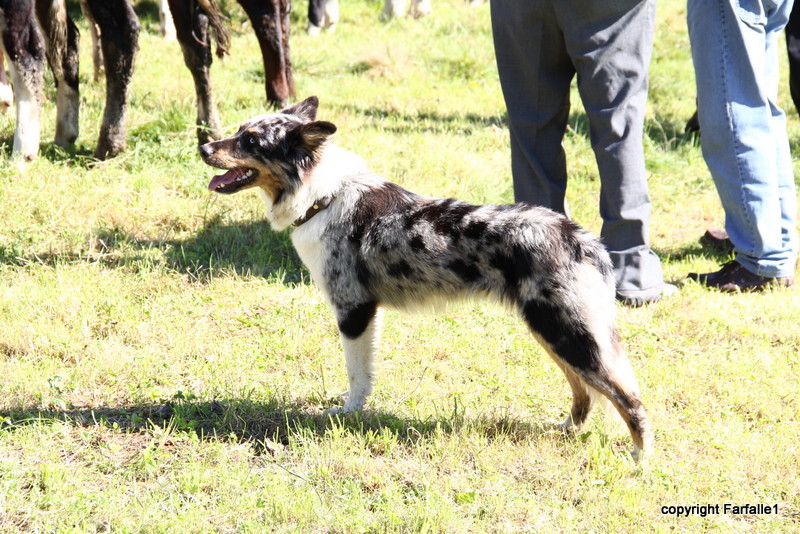
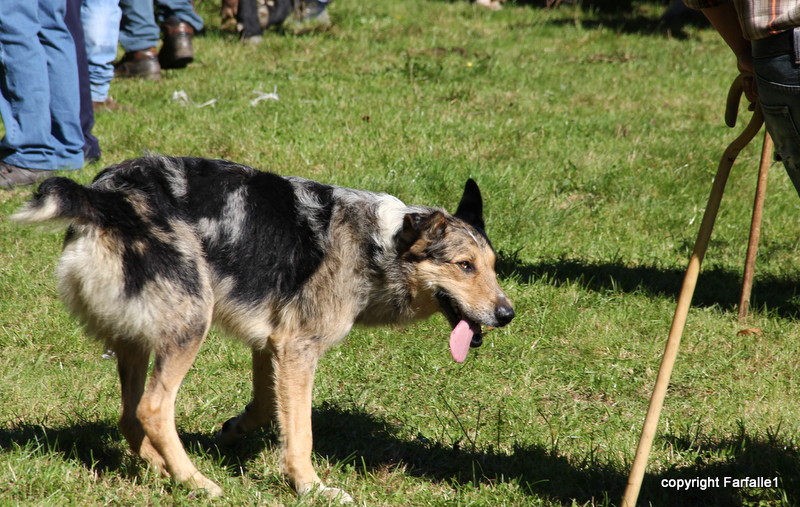
As in Scotland, dogs are central to controlling the herds, though the dogs at Oropa were very different than the border collies we have seen demonstrating herding techniques (sheep! geese!!). We asked one of the herders what the breed is and the succinct answer was, ‘bastardi.’ They certainly were bright and attentive to their work, though sometimes they looked a little goofy.
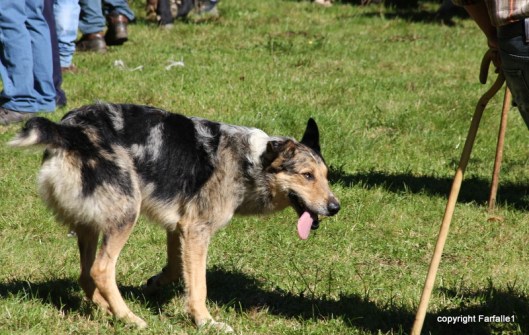
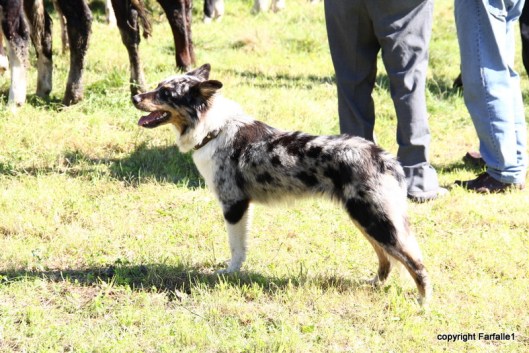
brindle dog with tongue out

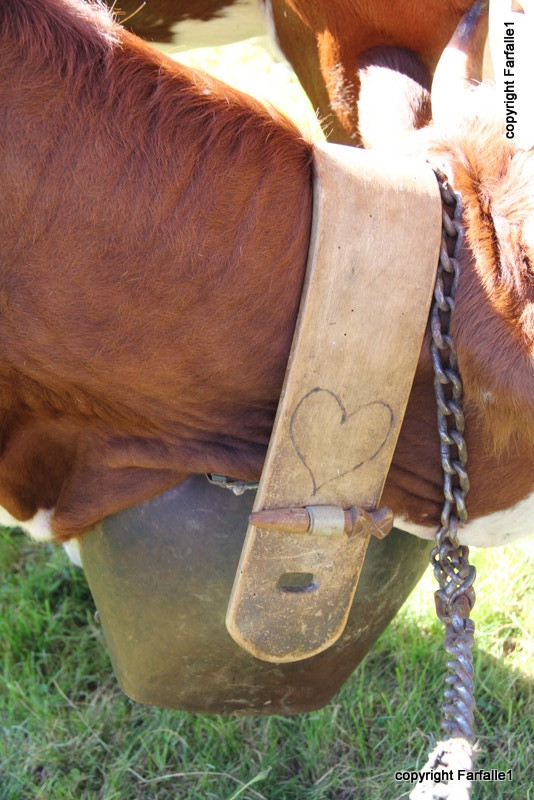
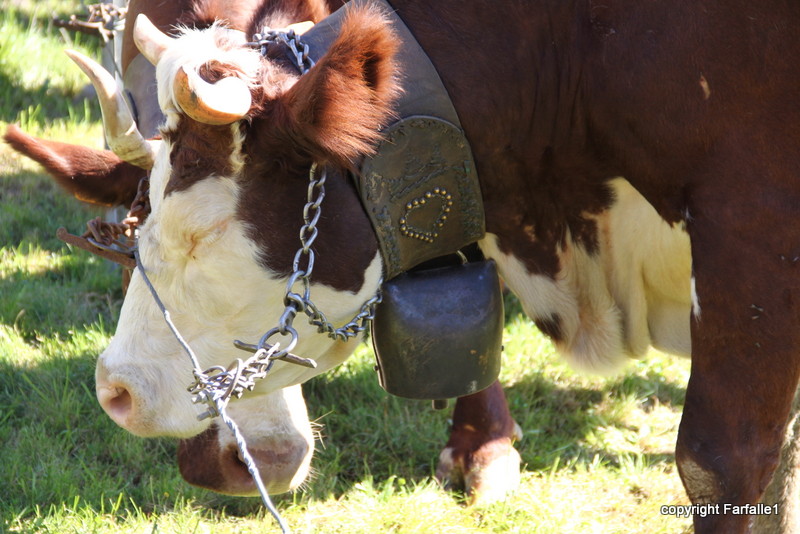
brindle cow dog-001Each herd wears its own identifying collar for the occasion. The old collars are made of wood, new ones of leather, and many are ornately decorated.

pezzata rossa di oropa leather collar pezzata rossa di oropa old wooden collar-001pezzata rossa di oropaMost of the cows were cows, but there was the occasional bull. This one was pretty randy, but he was wearing a home-made prophylactic device. Inelegant, perhaps, but effective

pezzata rossa di oropa finding shade

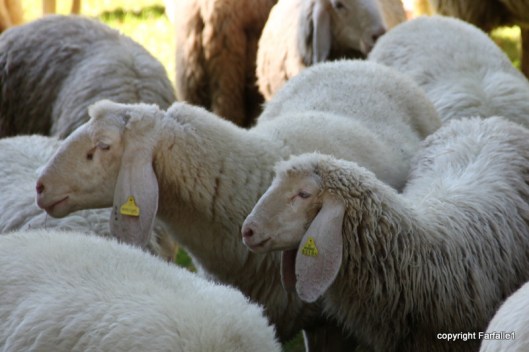
Cows weren’t the only beasts being brought down from the hills. There was a fine collection of sheep, interspersed with goats, that were put in a field across the road from the cows. I should mention that almost every single animal was wearing a bell – what with the shouting of the herders, the clanging of the bells and the bellowing and bleating of the animals there was a fine cacophony.
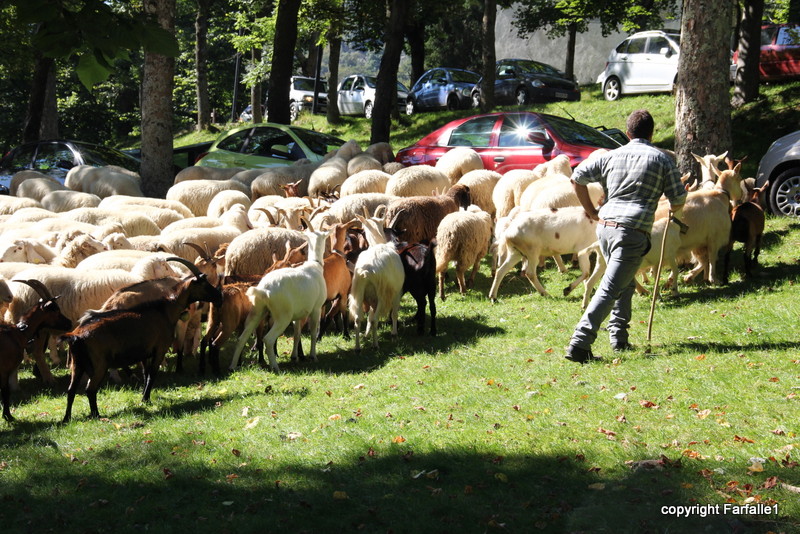
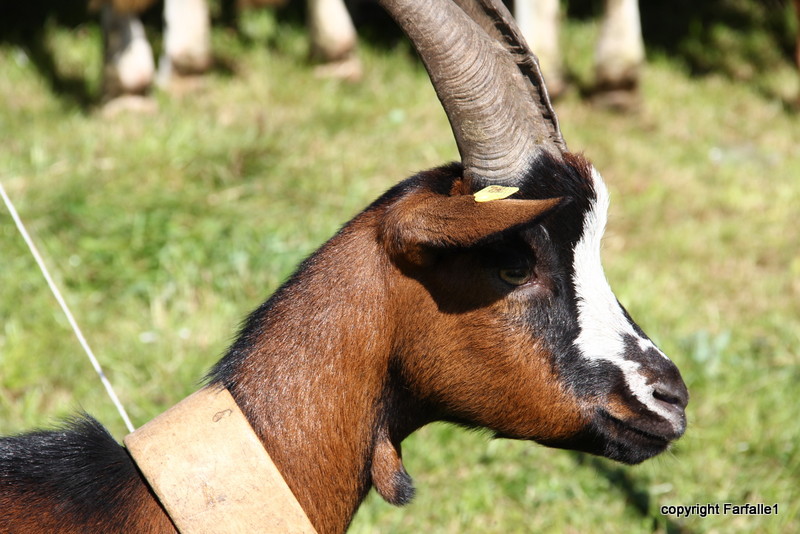
corraling the sheep and goats sheep and babygoatHaving been to Egypt in the last post here I couldn’t help but think that this pair was from that ancient land – such fine profiles.
sheep egyptian profileYou may be wondering why the cows were all tied up in that big field. The reason is that each herd was judged, and a prize awarded to the herd deemed to be in the best condition after a summer spent up on the mountain. I’m ashamed to say I was thinking about lunch and missed the prize presentation, but I did get to the stand in time to catch a glimpse of the winners. It seemed to be a rather low-key part of the event.

prize winners

There was ample opportunity for the many photographers present to take pictures of cows – and you can’t tell me the cows weren’t posing.
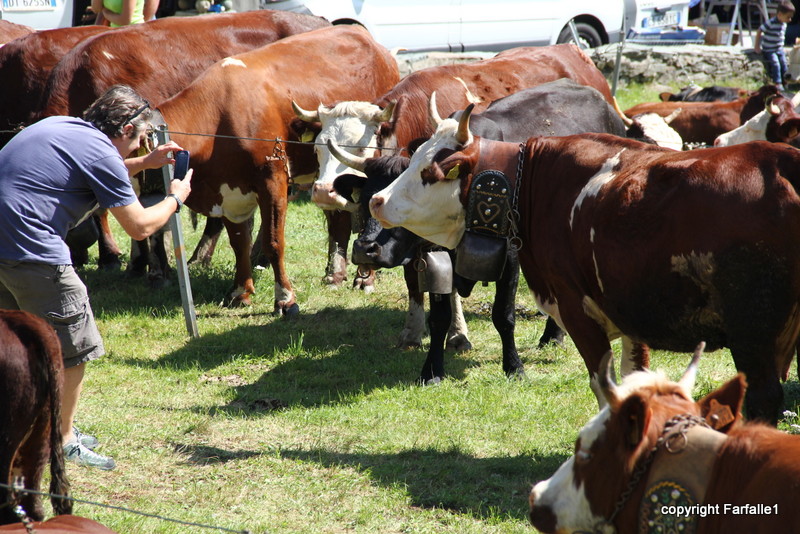
pezzata rossa di oropa posing for photographer

Did someone mention lunch?? It wouldn’t be an Italian festa without a good meal. The featured specialty was polenta cuncia, one of the world’s great comfort foods (you can find a recipe for it here). Basically it is a fairly finely ground corn meal cooked with either water or stock with the local cheese, toma, stirred in at the end. It is rich, hearty and extremely satisfying. The Oropa iteration was dressed with a couple of tablespoons of melted butter, a fine improvement. It took three ladies to serve the polenta – one to glop it in a bowl, one to add the butter, and one to stick in a spoon and hand it to the hungry pilgrim, along with a napkin.
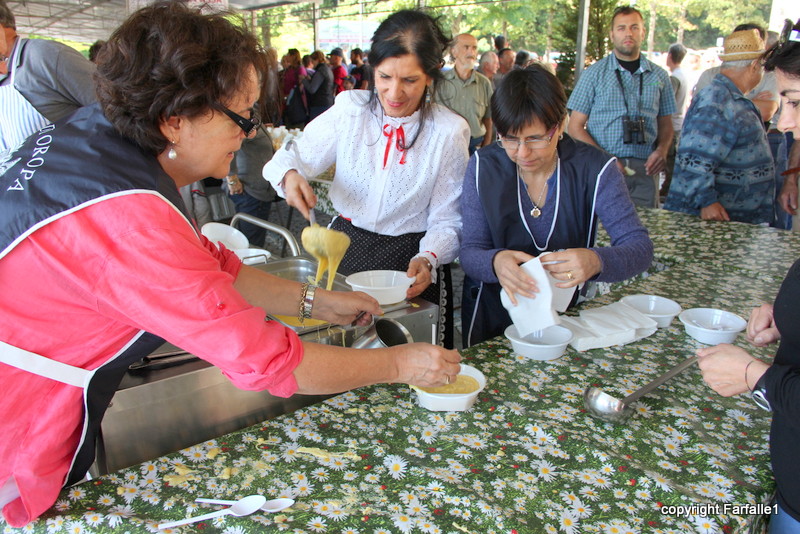
serving polenta-007polenta cuncia with black butter-001It was fabulous, and after a morning of chasing cows and sheep it was most welcome, especially washed down with the earthy local red wine.

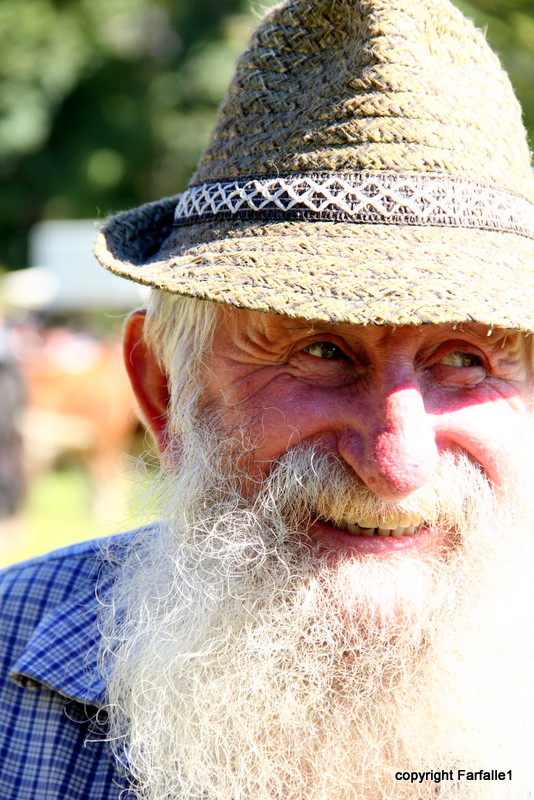
For me one of the best parts of an event like this is looking at the people. The cowherds were extremely kind in letting me take their pictures. These are men whose families have probably lived in Piemonte for centuries.
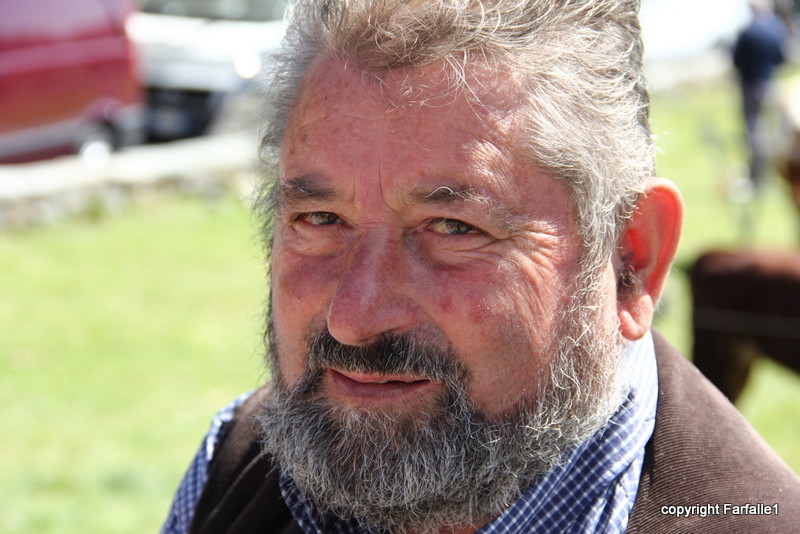
cowherd-001

cowherds cowherdThere was a lot more going on during the festa – a large array of vendors had local (and some not so local) crafts for sale; there was an excellent exhibit of tractors, old and new; there was a photo exhibit in a tram car that for decades carried sick people from Biella to Oropa for blessings and cures; in the church there was a display of preseppe (creche scenes) from all around the world (my favorite: the one from a nearby village made from marzipan); there was music. If you would like to see some pictures of these things, in addition to more pictures of the animals, please click here (for a slide show click the icon in the upper right that looks like a couple of small rectangles).

The weather was glorious, one of the few sunny days Oropa enjoys each year; it was warm, the crowd was happy, and the animals seemed to be too. It was just so much fun – and exhausting – for everyone.
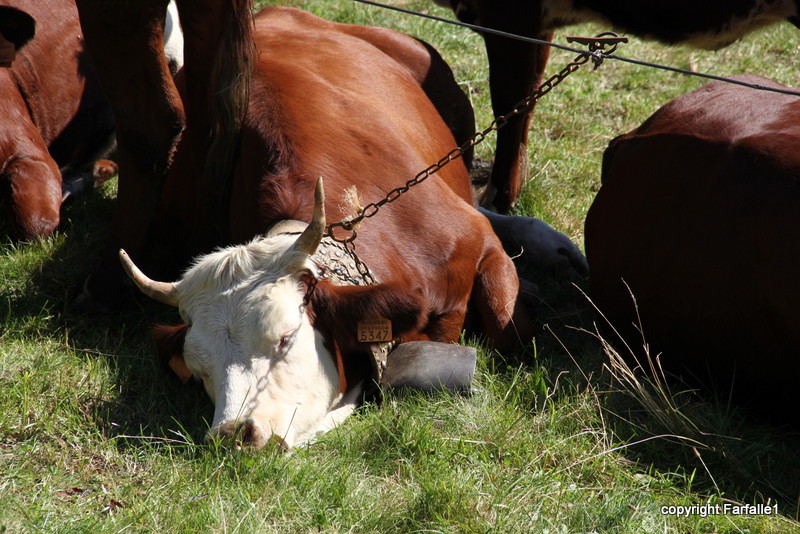
pezzata rossa di oropa tired

THE END
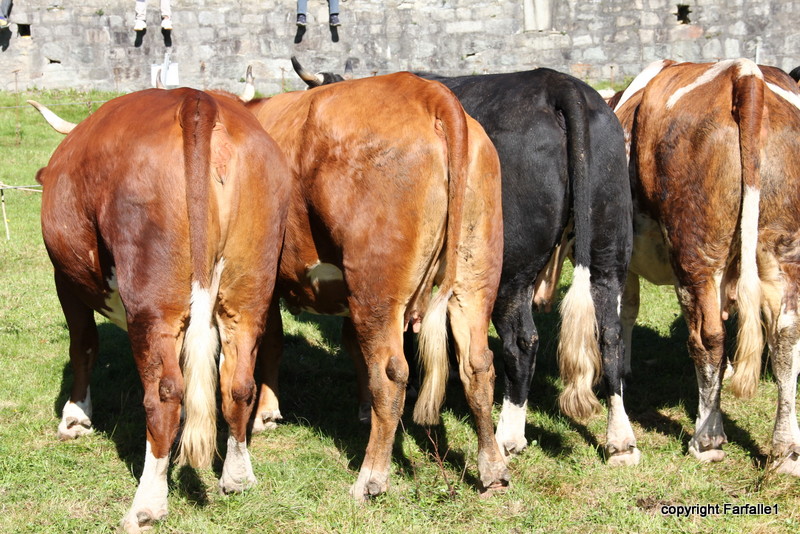
cow backsides

Andiamo via…

10 Sunday Nov 2013

Posted by farfalle1 in Animals in Italy

≈ 3 Comments

Tags

Lumaca, Snail

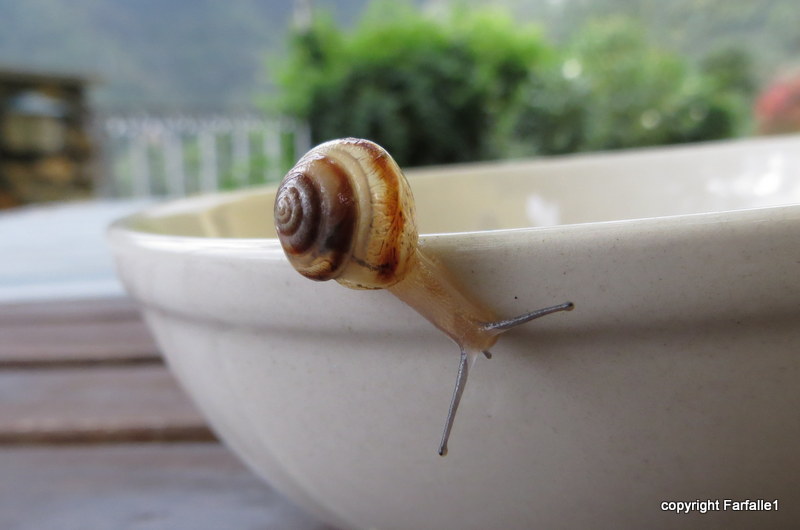
snail two-001

We are leaving for the States tomorrow. As we travel about as fast as my friend above it may be a while before you hear from your Expatriate again… but don’t give up, okay?

Small Tragedy on a Lemon Branch

24 Saturday Aug 2013

Posted by farfalle1 in Animals in Italy, gardening

≈ 9 Comments

Tags

Fungi, Fungus on bees, Fungus on insect

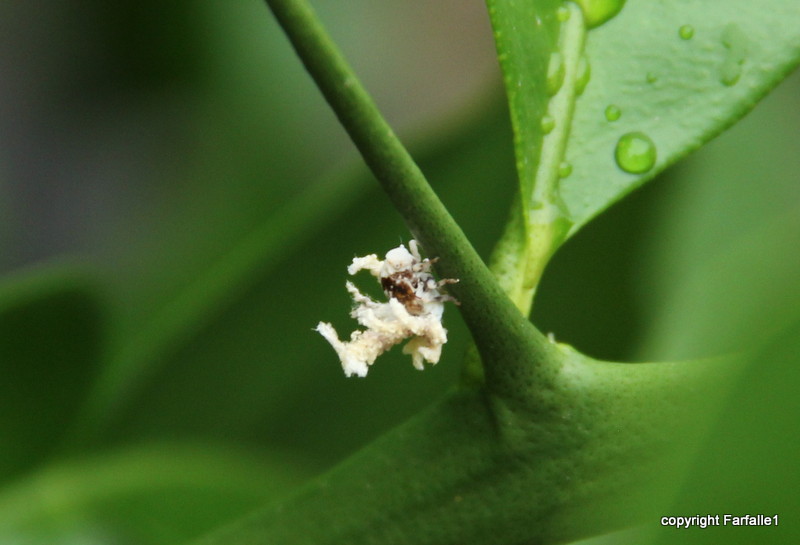
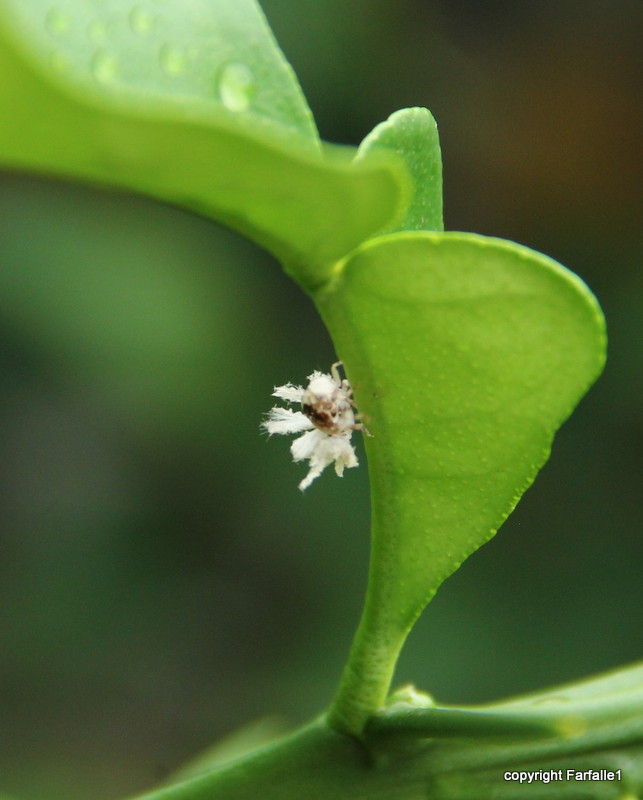
There were a pair of exotic insects creeping along the stems of the lemon tree last week – or so I thought. On closer inspection it proved to be something sadder:

fluffy bug-005

fluffy bug

I’m pretty sure these are bugs that have been infected with a cruel yet beautiful fungus, which one I do not know. There seem to be a lot of fungi that infect various animals and insects; in fact there’s research being done in the use of fungi to control unwanted pests.

It was sad to see these two little critters, though. Such an infection doesn’t end well for the host, as you might imagine. And while it’s hard to tell exactly who is under the disease, I suspect  they are small bees – and we need all the bees we have.

Bird Man of Rapallo

18 Thursday Jul 2013

Posted by farfalle1 in Animals in Italy, Birds in Italy, Italian men, People, Portraits of people, Rapallo, Uncategorized

≈ 10 Comments

Tags

Bird man, Pappagallo

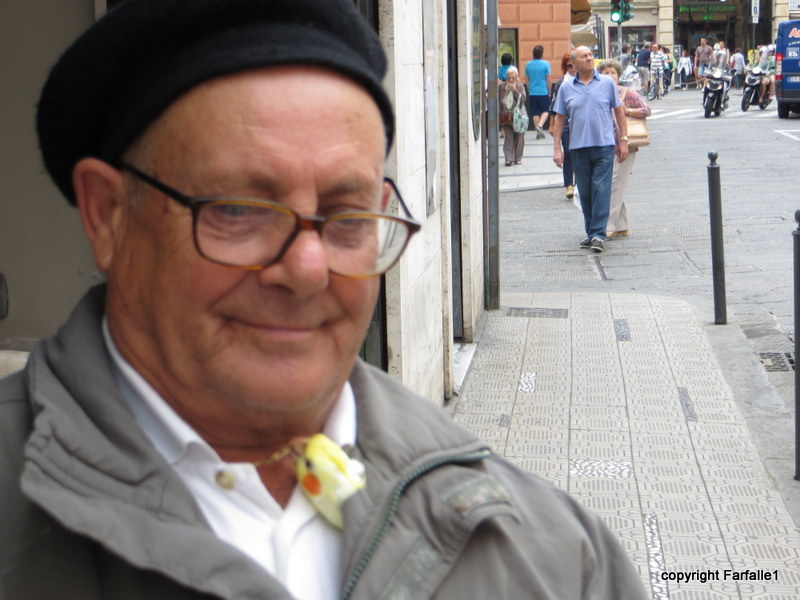
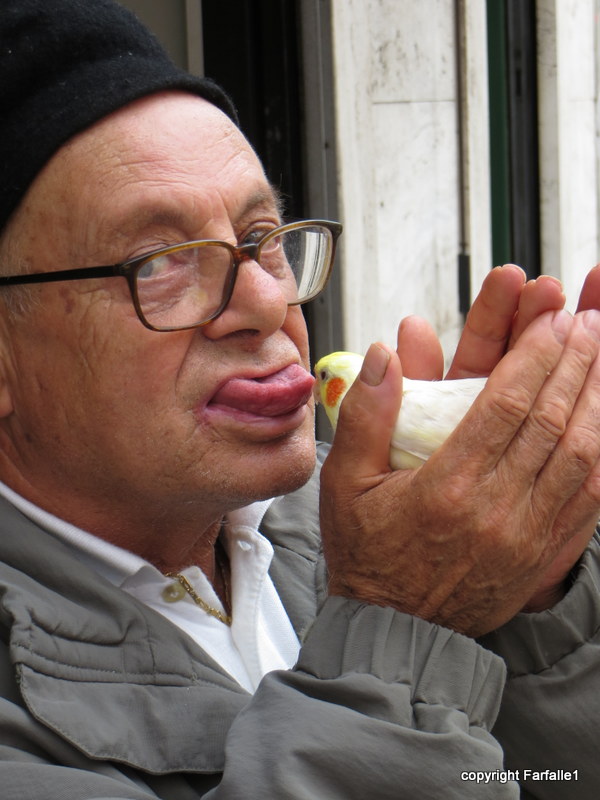
Strolling through town the other day (before it got so hot)  I was pleased to encounter this eccentric gent. He was happy to pose for me with his little bird. I wasn’t expecting the kissing event, but evidently it’s something they’re both accustomed to. I wonder if the bird thinks he has a very well-trained man?

bird man of rapallo-002

Sorry it’s out of focus, but it’s a nice shot of the tourist in the background. This is how they walk around together; every now and then the bird nibbles the man’s gold necklace.

bird man of Rapallo

After I asked if I could photograph him the man struck a pose. I particularly like the man’s costume with its northward nod to the Alps and its westward nod to France.

bird man of rapallo-001

Wasn’t expecting this, and I have to say it kind of grossed me out! The bird took little nips at the man’s tongue, which made me suspect that sometimes the man gives the bird treats in this unorthodox manner. When I asked what the bird’s name was the man replied, ‘pappagallo,’ which just means ‘parrot.’ I felt no wiser, but was somehow unable to continue the conversation.

Birth Day

25 Tuesday Jun 2013

Posted by farfalle1 in Animals in Italy, Birds in Italy

≈ 8 Comments

Tags

Duck egg hatching, Ducklings, Sitting duck

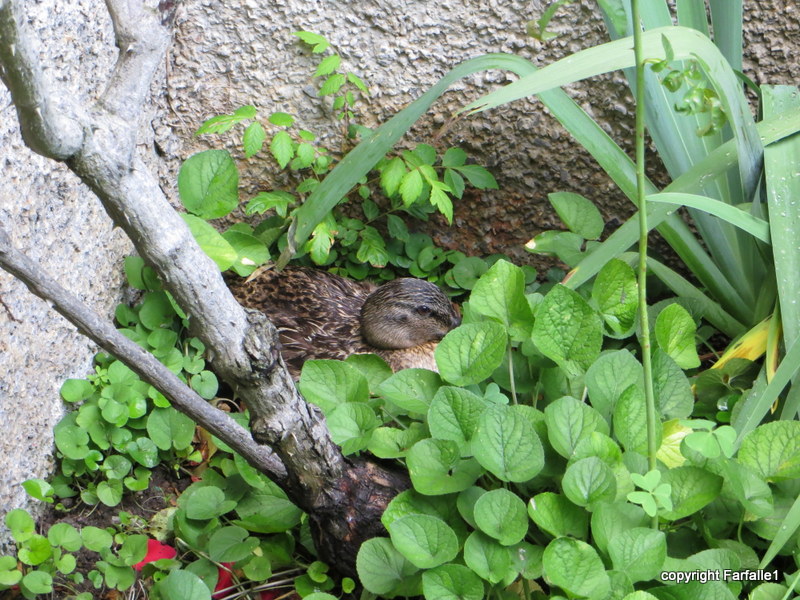
sitting duckA week or so some friends showed us the quite unpromising location of this sitting duck’s nest.: the corner of their house made by the outside staircase descending from the second floor.  Silly duck.  A dog and a cat both live upstairs.  We didn’t give this lady, far from a friendly pond, much chance of survival.

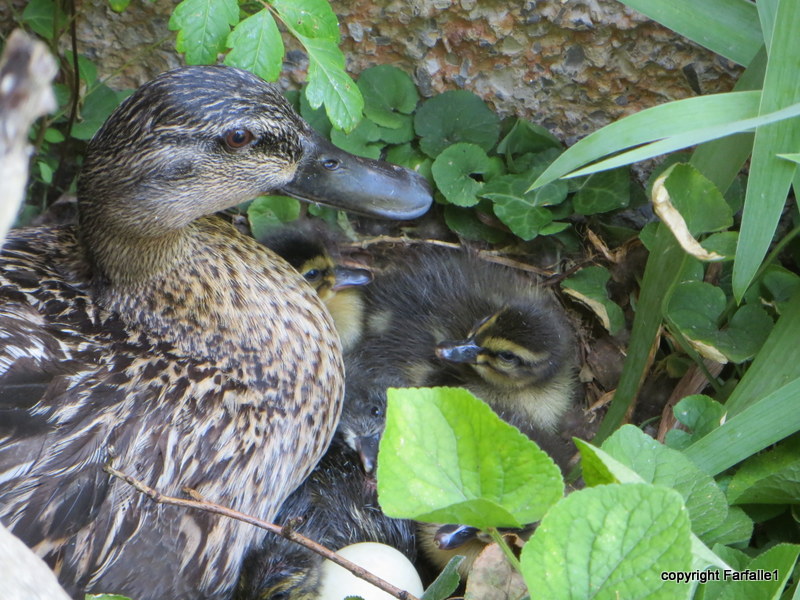
Whether because of good luck or watchfulness on the part of the second floor family, there was Good News today.  The eggs hatched.

mama and chicks

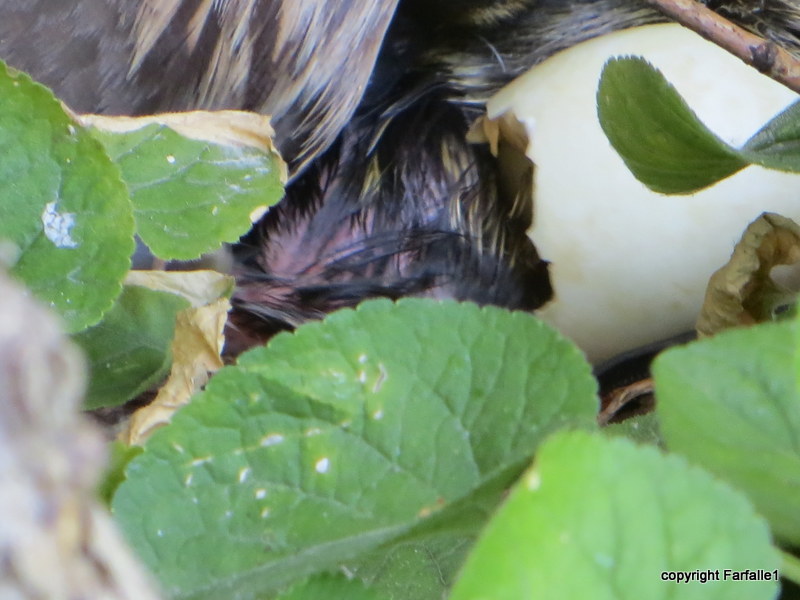
We had the good fortune to arrive in the midst of it all. This photo is hard to figure out, but it’s a wet duckling struggling out of the egg:

chick emerging from egg

There’s still the problem of pets upstairs, and the distance from water. When we left, our friends were discussing whether they should put the new family in a box and transfer them to the closest pond, buy a child’s wading pool and set it up next to the pan of bread they put out every day, or simply let nature take her course.


Damn Pigs

10 Tuesday Jul 2012

Posted by farfalle1 in Animals in Italy, Liguria, Uncategorized

≈ 26 Comments

Tags

Cinghiale, Wild boar, Wild pigs

Photo courtesy of /www.atripaldanews.it

Oh sure, they look kind of cute and fuzzy when you see a photo like the one above.

You want to know how they look even better? Like THIS:

Photo of Cinghiale alle Cacciatore courtesy of maremmaguide.com

I’m as soft as the next person, and if I had to kill my own meat I’d definitely be a vegetarian. But what we really need around here is a ‘cacciatore’ – a hunter. After ten years with nary a sign we’ve been invaded by the wild boars, known here as ‘cinghiale’ (pronounced ching-ghee-ah’-lay).  They have visited and torn up each of our six fascie though, through some miracle, they have so far left the vegetable garden untouched.

Wikipedia has a great deal of information about this widely-dispersed ungulate.  Some of the more interesting data are: height, averages 22-43″ (that last is almost 4′ tall at shoulder – yikes!); weight, 110-210 pounds, though in Tuscany and Liguria they tend to be larger, perhaps 180-220 pounds.  They have four tusks which they keep sharp for defense and for rooting around.

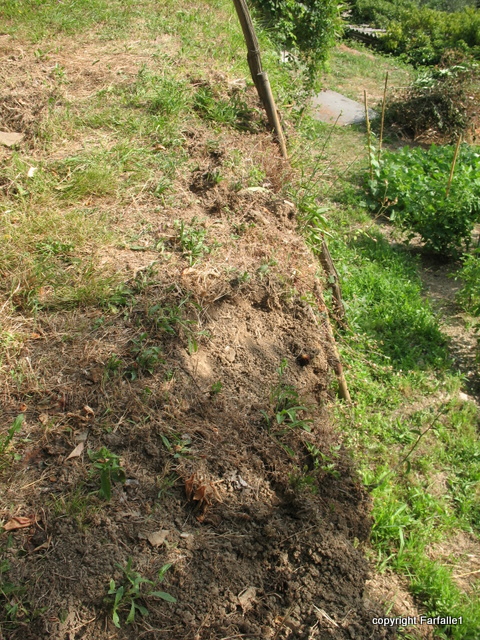
And that’s the crux of our problem with the pigs – they root around like crazy, and do an amazing amount of damage to ground and crops in a short period of time.

Looks like a roto-tiller went through, doesn’t it?

They tend to be crepuscular or nocturnal, so we don’t see them that often.  But we know when they’ve been here.  Plants are uprooted, there are big dirt holes where there used to be none, and there is a wild and pungent smell that is unmistakable (and not very pleasant).

They are more nimble than you’d imagine.  The photo above shows the chewed up edge of a wall where the pigs have scrabbled up from the fascia below.

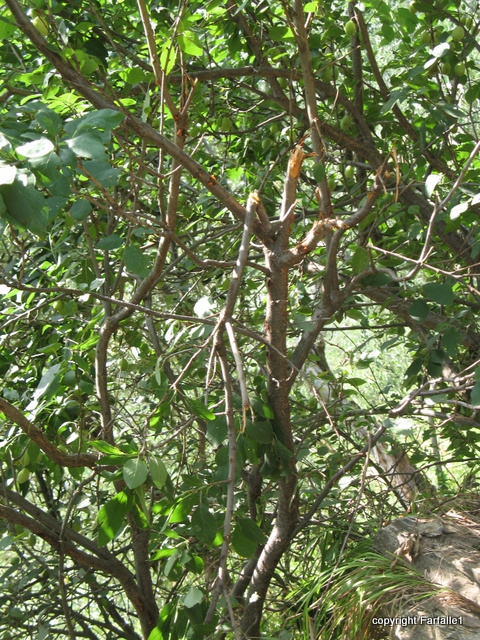
As far as I know they don’t actually climb trees, but they will certainly stand up tall and break branches if there is something there they want (in the case above, it was some plums – see previous post).

This year brought us a banner crop of apricots, most of which we harvested.  A lot of spoiled ones fell on the ground, and there were a lot left at the top of the tree which we couldn’t reach.  We were surprised that the cinghiale didn’t eat the groundfalls on the their early visits, choosing instead to dig trenches around other trees.  Then one day last week Speedy went out to the apricot tree to get some fruit for lunch.  There was no sign of an apricot anywhere.  Everything on the ground had been vacuumed up, and the tree, which had been madly speckled yellow with fruit the night before showed nothing but green leaves, not a fruit to be seen.  Turns out these rascals know how to butt the trees to get the very ripe fruit to fall.  And they’re smart enough to wait until the fruit is very ripe to do it.  Speedy couldn’t believe his eyes; he just stood there staring, wondering if he was looking at the wrong tree.  But no.  The thieves had come and taken everything.

We asked a lot of people what could be done.  The obvious solution is to fence the property.  But this is Italy!  In order to put up a permanent fence, we are told, we would have to do a ‘project’, complete with geometra, plans, town approval and so forth.  It seems a daunting prospect, in addition to sounding very expensive.  Introducing natural predators might be a solution, but somehow I think the town fathers would take a dim view if we imported tigers, wolves and, for the piglets, pythons.

Simone, who keeps our motorini running smoothly, said he had heard that the pigs don’t like shade cloth and olive nets, and that if we were to build a not terribly high fence of one or the other of these, the pigs would not come in.  Worth a try, we thought.

We did this on the two points where we surmised the pigs were gaining access, and for three nights we had no visitors.  Then they came back and tore up two upper fascie.  My theory is they simply walked down the steps from the street above our house to get there, but we don’t really know.

There is a hunting season in the fall, and we hear a lot of gunshots, but I don’t think there’s any way the hunters can keep up with the exploding population of cinghiale.  They are well adapted to suburban and country life, and the sows produce two litters a year of from anywhere between three and fourteen piglets.  They are, in short, a nuisance.

I’m sure there is a solution to our problem (see ‘fence’ above) and no doubt we’ll resign ourselves to it one of these days.  In the meantime our property is beginning to look like a Christo exhibition.  And I just know that those damn pigs are watching the garden and waiting for the tomatoes to ripen.

What Would Be the Dumbest Thing in the World to Tax?

19 Saturday May 2012

Posted by farfalle1 in Animals in Italy, Cats, Italian bureaucracy, Italian gardens, Italy, Law and order, Taxes in Italy, Uncategorized

≈ 10 Comments

Tags

Silly Taxes, Tax on Pets

Pets.  That would be ridiculous, wouldn’t it?

Real Luciano

Speedy sent me an article he came across  from Reuters (reported by Philip Pullella; edited by Andrew Osborn) about the yahoos in Rome considering a tax on  family pets.  Evidently a parliamentary commission felt that this would be an excellent way to give a little boost to the nation’s diminished coffers.  The outcry was immediate and loud; the proposal was dead by the end of the day.

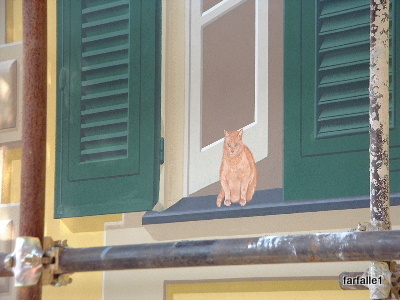
It got me thinking, though.  Didn’t Italy once tax house windows, and isn’t that why there are so many trompe L’oeuil windows painted on the houses of Liguria, where people are famously tight with their cash?

Tax Evasion Luciano

Probably the idea of taxing pets is not the silliest tax proposal ever made.  A quick Google search turned up an amusing list of the ten most ridiculous taxes ever, written by Jamie Frater.  It turns out that Rome is no stranger to bizarre taxes.  The emperors Nero and Vespasian taxed urine.  Poor Romans fortunate enough to have a pot to piss in paid a tax when they emptied their pots in the common cesspool.

Go ahead, tax my dog Rover – just get rid of the tax on my hat and my beard.  I think my favorite is the one called the Crack Tax: drug dealers in Tennessee were, before the law was declared unconstitutional, supposed to pay a tax, anonymously, on the illegal substances they sold.  If they got caught dealing crystal meth, say, and didn’t have the tax stamp… well, can you imagine?  They’d have been in pretty hot water!

It did give me an idea for another tax the Roman legislators might consider:

Photo courtesy of thedragonpages.blogspot.com

The Intergluteal Cleft Tax would either raise a lot of money or send fashion careening in a new direction.

Not all strange taxes are so amusing.  The poll tax in America was a de facto method of denying voting privileges in the southern states to recently freed slaves.  It was not repealed until 1964.

Anti-Poll Tax sentiment from the U.K.

The way things are going in this election year they may have to pay people to come to the polls instead.  Especially here in Rapallo where only 16,000 of 28,000 possible voters turned out two weeks ago to elect the Mayor.

There will always be taxes, I guess.  And I guess there will always be some silly ones.  I’m just glad that, for the time being anyway, there will be no taxes in Italy for owning a pet.  Speedy suggests that instead of taxing pets perhaps the legislators could tax vegetable gardens….

A nicely laid out garden on Via Betti in Rapallo

Songbirds: Friends or Food?

04 Wednesday Jan 2012

Posted by farfalle1 in Animals in Italy, Animals in the U.S., Birds in Italy, Crime, Customs, Italy, Uncategorized

≈ 10 Comments

Tags

Bird-feeding, Feeding Birds, Hunting in Italy, Hunting songbirds in Italy, Illegal hunting in Italy, Trapping songbirds in Italy

Somehow it’s hard to think of chickens and turkeys as birds.  Sure, they have feathers, but we never see a flock of them high overhead, migrating south for the winter, their clucking stirring our own restlessness.  Nor do we startle them when we take a walk in the woods.  We don’t listen for their sweet morning calls and try to identify exactly what chicken it is we’re hearing.  Wait!  Is that a Rhode Island Red or an Ameraucana?  Hand me my binoculars!

No.  Chickens and turkeys are ambulatory food for the most part.

Songbirds, however, are not.  One of the  pleasures of being here in Arizona is watching the birds that come to our feeder every day.

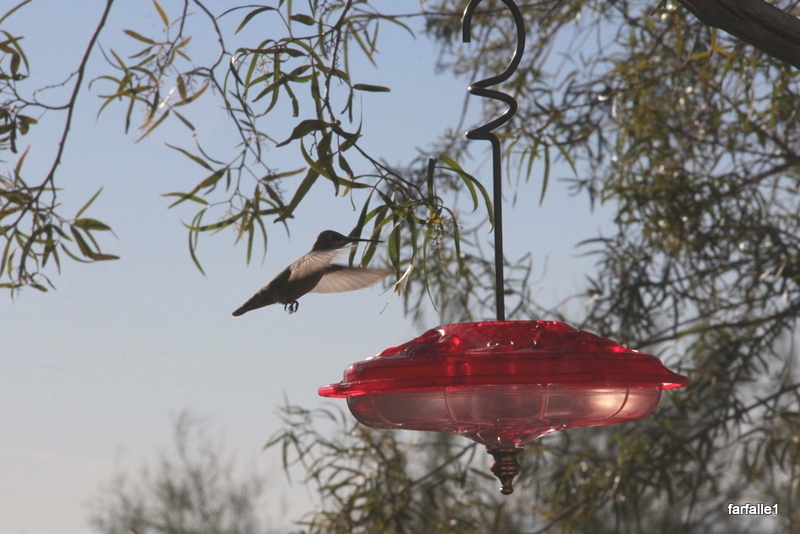
Anna's hummingbird, noisy and aggressive

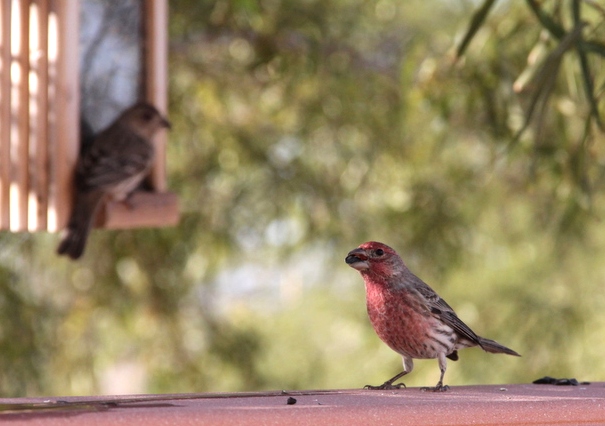
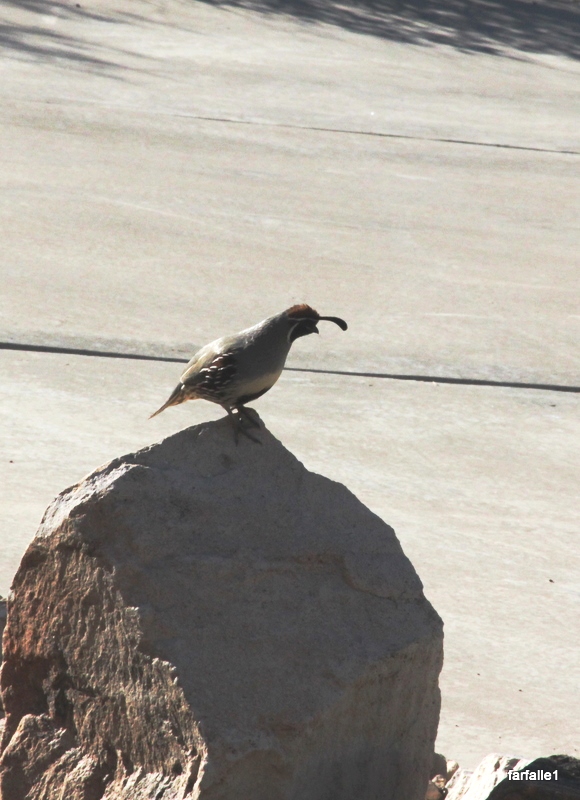
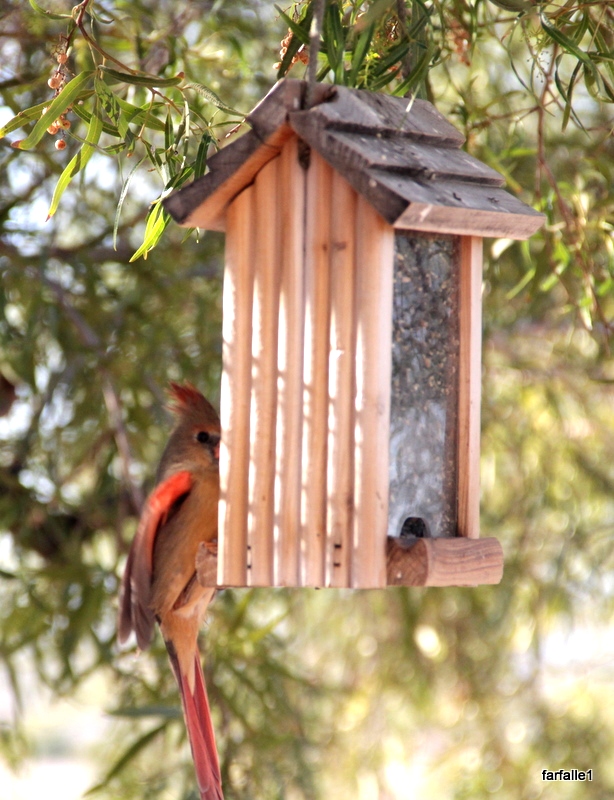
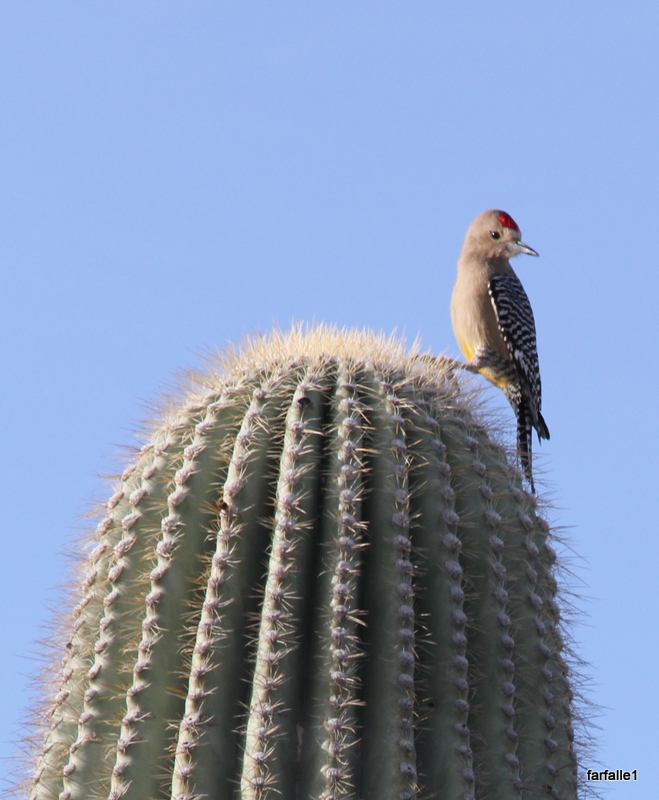
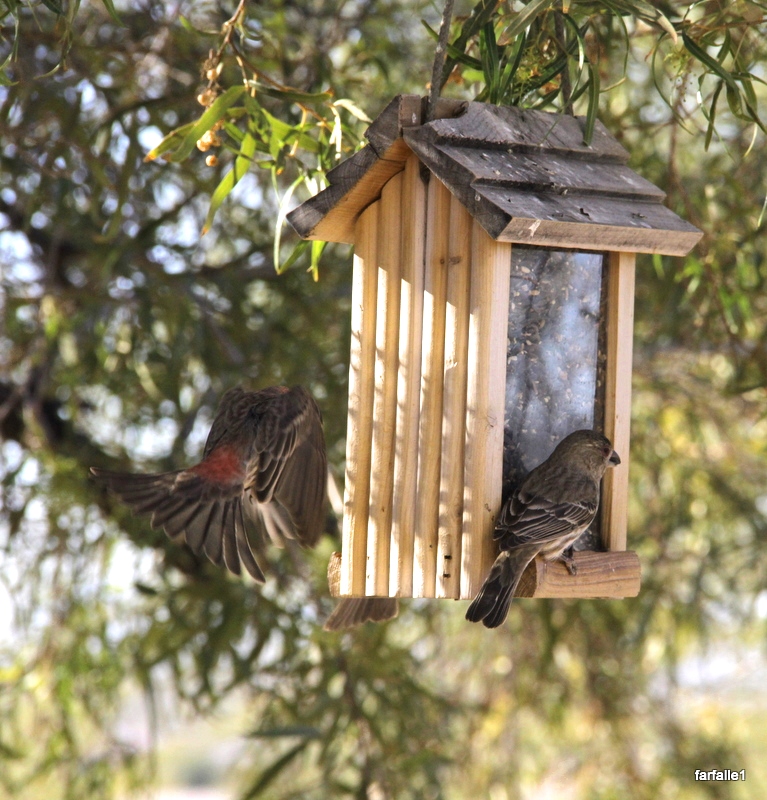
We don’t get anything terribly exotic (and we have yet to see a chicken) –  many purple finches, the ubiquitous Anna’s hummingbird, Abert’s towhee , Gila peckers, Cactus wrens, and, on the ground below, Inca doves and the amusing Gambel’s quail, which makes a bweep-bweeping sound, reminiscent of burbling water, while it wanders around beneath the feeder.

Male finch enjoying a seed while female thinks about it

Gambel's quail, males conveniently carry bulls eye on their breasts

It’s a pleasure we don’t enjoy in Italy.  Not because there are no songbirds – there are.  We get huge amusement and satisfaction from the merli (a sort of black robin with the unfortunate Latin name Turdus merula, called ‘merlo’ in the singular) which are curious and companionable, and which have the beautiful song typical to thrushes.  We seldom work outside in spring or summer without an appreciative audience of merli.  But bird-feeding as a hobby does not seem to exist in Italy, at least not in our part of the country.  I have never seen a bird-feeder at anyone’s house, and I have never seen bird feed for sale.

Male cardinal

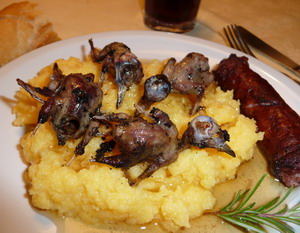
Instead in Italy there is a sizable, though fortunately shrinking, trade in trapping and killing wild birds.  The CABS (Committee Against Bird Slaughter) web site has a great deal of information about the illegal trapping of birds which occurs, in Italy, mostly in the north (Lombardia), the southern Italian coast, Sardinia and Sicily.  There are a couple of good reasons why this illicit activity continues.  One is that it is a matter of long tradition to trap songbirds, and Italy is nothing if not wed to her traditions.  In earlier times songbirds were an important source of protein for hungry Italians. Another reason is that some restaurants persist in serving songbirds, though you will never see them on the menu.

Little birds with polenta, photo courtesy of CABS

Happily, CABS reports that hunting songbirds is truly on the wane in northern Italy, a trend we can only hope (or I can only hope, anyway) will continue.

Gila woodpecker atop a nearby cactus

Hunting for sport is as popular in the U.S. as it is in Italy.  In 2006, according to the U.S. Fish and Wildlife Service, 2.3 million people hunted migratory birds such as doves or waterfowl.  Such hunting is highly regulated; hunters must have appropriate licenses and stamps, and can hunt only certain birds in certain places at certain times.  Sport hunters in both countries are generally dedicated and law-abiding conservationists, interested in protecting the populations of the species they like to hunt.  In a perfectly counter-intuitive bit of logic, sometimes bird populations must be ‘culled’ in order to protect the well-being of the species.  It makes no sense to me, but if the people at Audubon say it’s true, it must be true.  Mustn’t it?

No doubt there is illegal hunting in the U.S., but it is difficult to get away with it.  Some years ago when we lived in Connecticut a man of our acquaintance became very angry at the number of messy geese on his pond and lawn.  He got out his rifle, stood on the back porch and shot one, no doubt hoping to scare away the others.  His neighbors heard the shot and came running to find out what was wrong, so he was caught red-handed.  He did not go to prison, but he did have a reprimand and a sizable fine.  Even worse, he became known locally as ‘Goose Killer’ – and it was not the sort of affectionate and admiring nickname that, say, ‘Speedy’ is.

The illegal taking of birds in Italy is of a different order entirely.  According to CABS, ‘millions’ of birds are taken every year, hundreds of thousands of them in Northern Italy.  They are sometimes taken with guns, as in the wholesale slaughter of migrating birds videoed here (supposedly ‘legal,’ but against the very EU regulations Italy signed on to uphold), and frequently taken in any of several various types of traps, all of which are illegal (bow, snap, snare, cage and nets).

It’s hard to understand what the appeal or pleasure is in trapping or shooting  songbirds.  It’s not as if they’re particularly challenging prey, or especially meaty.  The declining number of traps in Italy attest to the gradual change of attitude towards this cruel practice; but it remains a big problem.

Male finches 'discuss' seating while a female thinks about it all

According to Wikipedia 55 million Americans are bird-watching hobbyists.  They spend $3 billion a year on seed and $800,000 million on bird feeders and other accessories.  Maybe there’s an opportunity here to help the struggling Italian economy.  Don’t kill the birds, feed them. Photograph them.   Enjoy them.  Encourage touristic bird-watching trips. And when the irresistible blood lust of the hunter comes over you, go down to Signore Marrone’s farm and bag a few chickens.

Sad Time for the Heron

13 Sunday Nov 2011

Posted by farfalle1 in Animals in Italy, Birds in Italy, Construction, Rapallo, Uncategorized

≈ 12 Comments

Tags

Dam destruction in Rapallo, Great blue heron, Heron, Via Bette


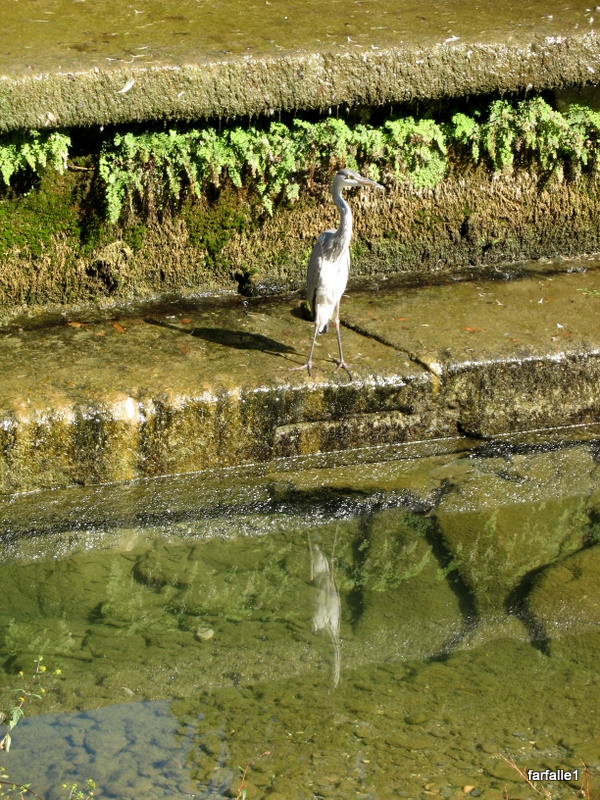
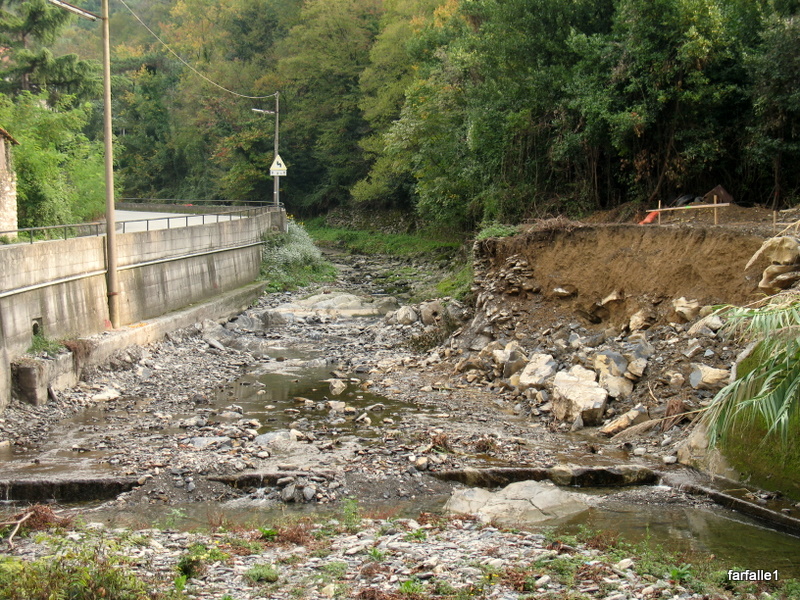
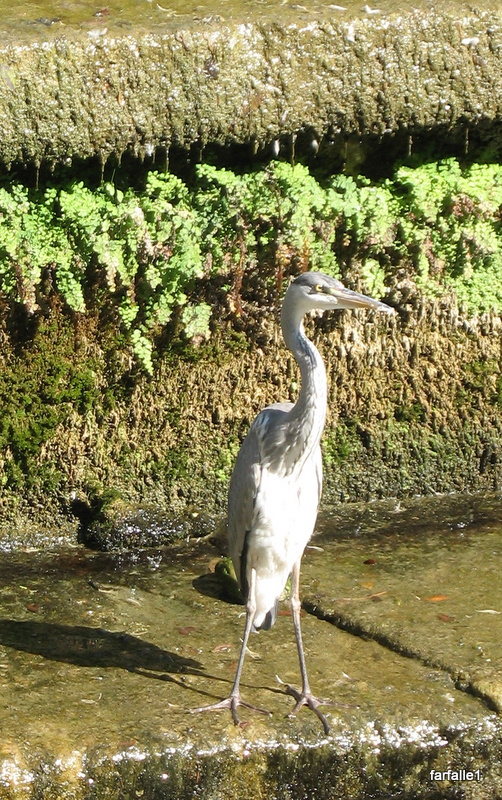
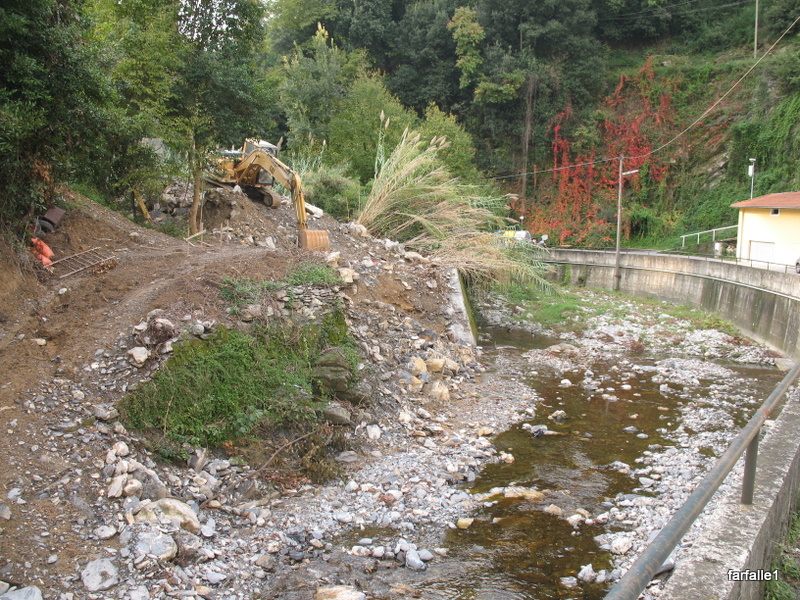
This beautiful heron, or others of his kin, live somewhere near the Torrente San Francesco, which flows down our mountain to Rapallo.  He is frequently to be seen fishing in various spots along the Torrente, but has always especially favored this small dam, under which the little fish like to congregate in a sort of heron buffet.  I’m glad I took the above photo, because the very next day this is what I found when I came down the hill:

What a mess!  And gone is the little dam where the heron fished.

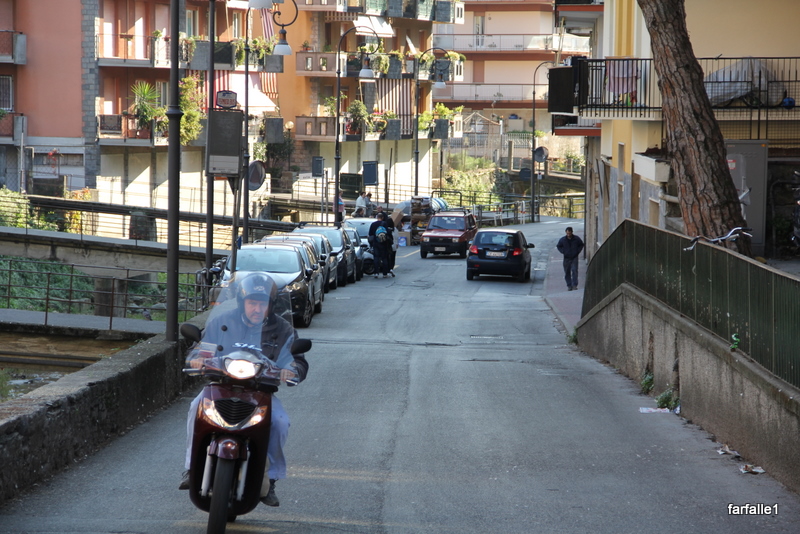
On a related topic, there is some talk of widening Via Bette, the narrow street that runs along the Torrente.  Closer to town than the section pictured above, the street is lined with shops on the non-river side. Frequently vehicles stop on the river side of the road (‘for just a moment!’) so people can do a bit of quick shopping; it can be a matter of some ingenuity to get two cars going in opposite directions past one another.  And when the bus comes: che casino!


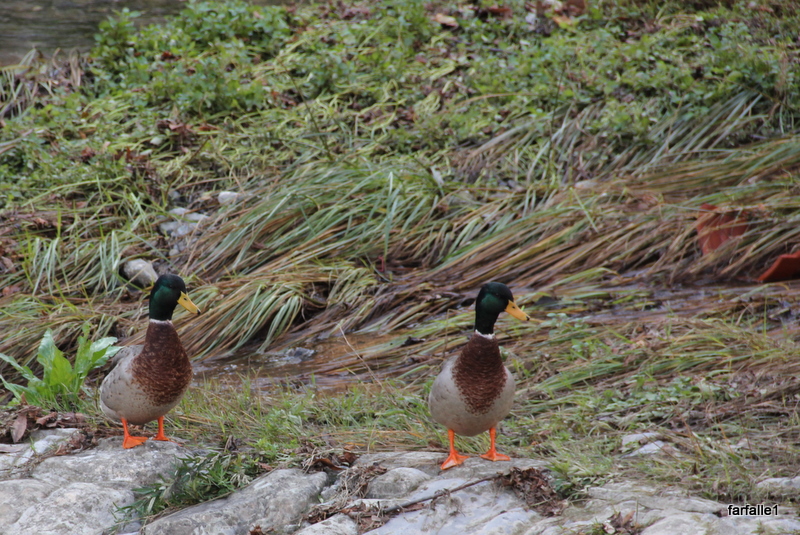
(Note that there are pedestrians on the river side, walking in the street – it’s so much nicer to walk near the water, and people often do, not only putting themselves at risk, but further constricting the available space for cars.) What is distressing about the road-widening project is that it calls for covering over the Torrente.  That will eliminate not only more fishing for the heron (who, in fact, usually doesn’t fish near the shops) but also paddling and family-raising space for the many ducks who live there.

There are also proposals for two new tunnels – one from the Autostrada to Santa Margherita Ligure, and one from Via Bette to the Val Fontanabuona, the valley on the other side of our mountain.  I hope that the road-widening project, like the tunnel projects, will remain in the talking stage for many years.  It will be some consolation to the poor heron, who has lost his seat at the all-you-can-eat special.

All is not lost for the heron though.  The destruction in the top photo is the beginning stage of a new bridge across the Torrente to serve the houses on the hill above.  Fish like to congregate under bridges; maybe the heron’s smorgasbord will return.  I hope so.

Lizards Here and There

16 Monday May 2011

Posted by farfalle1 in Animals in Italy, Animals in the U.S., Arizona, Uncategorized

≈ 6 Comments

Tags

chuckwalla, lucertola, lucertole

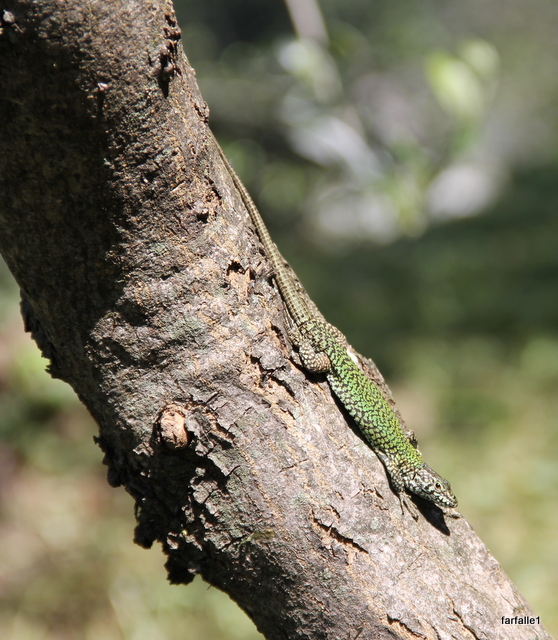
Here in Italy we live with the sweetest and shyest little lizards, called ‘lucertole‘ (prounounced loo-chair’-toe-lay).  In fact, I just took one from our interior stairs and released him outside.  They look like this:


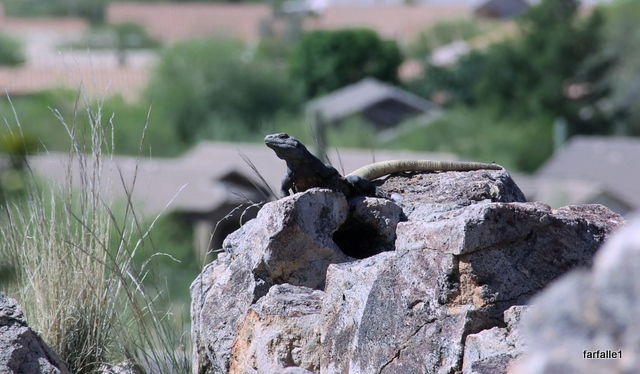
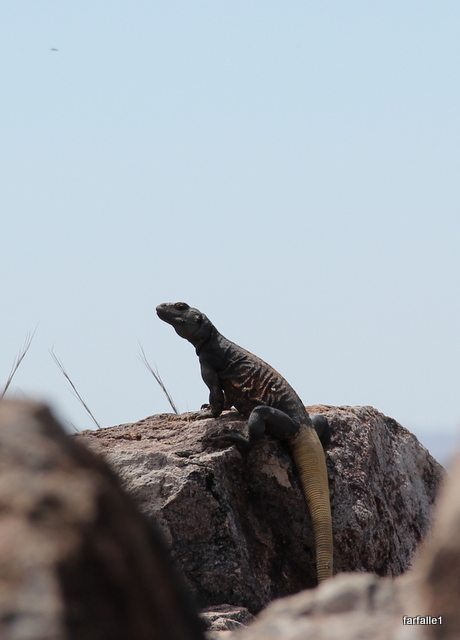
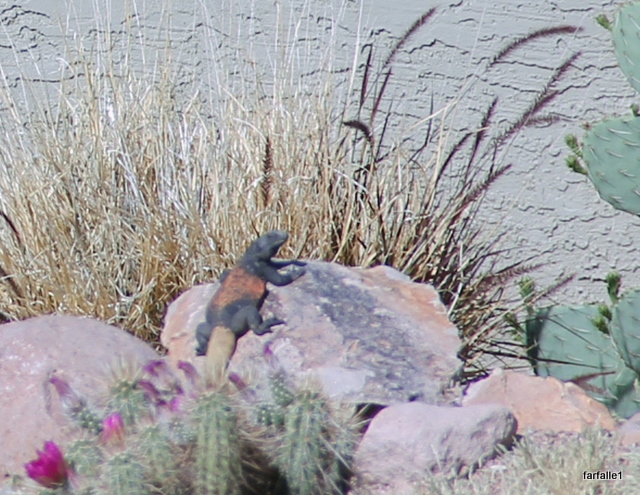
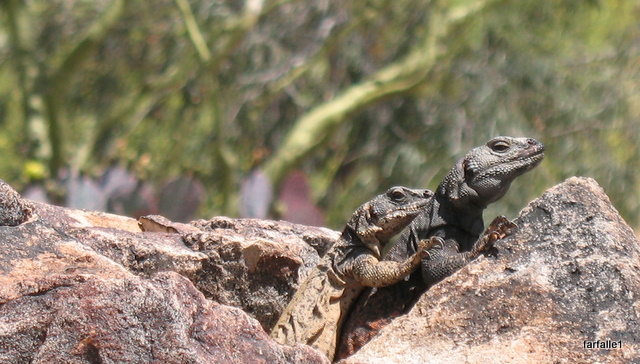
Of course in America everything must be Bigger – including the lizards.  These fellows, called chuckwallas, live in the rock pile outside our house in Arizona. They are absent in the winter, sleeping in their stony nests, but in the spring they come out to bask in the sun and engage in other typical spring behavior.


A poor photo, but the only one that shows rusty back patch


In all fairness, we see plenty of smaller lizards in Arizona, as well, most of them a dull brown and moving so fast it is impossible to get a photograph.  And, according to Wikipedia, most of the lizards are cousins to one another and share many traits. Like the lucertole, the chuckwallas are very shy and don’t let us get close with a camera.

The chuckwalla’s tail looks like we should be able to count the rings on it to determine his age, but I don’t think that’s true.  It also looks like it should unscrew and come off; it probably does come off, though we’ve never seen that.  The little lucertole frequently do lose their tails  It’s part of a defense mechanism when they are attacked by predators.  They can sharply contract a muscle which detaches the tail without loss of blood.  The predator thinks the still twitching tail is the animal; the lucertola stays very still until the predator has left with the tail.  The tail stops twitching after a time, but by then the rest of the lucertola has run away.  Every summer we have a whole sub-family of lucertole living around the house that are nick-named Stumpy.  Their tails do grow back, but never completely, which tends to leave them with an unfinished look.

There’s something about seeing a lizard, so prehistoric, timeless and ancient in appearance, that makes us feel humble, and maybe even a little smaller than the animals we are watching.

← Older posts

Enter your email address to follow this blog and receive notifications of new posts by email.

Join 114 other subscribers

rss

Subscribe in a reader

Search the Blog

A. Useful Links

  • bab.la language dictionary
  • Bus schedules for Tigullio
  • Conversions
  • English-Italian, Italian-English Dictionary
  • Expats Moving and Relocation Guide
  • Ferry Schedule Rapallo, Santa Margherita, Portofino, San Frutuoso
  • Italian Verbs Conjugated
  • Piazza Cavour
  • Rapallo's Home Page – With Link to the Month's Events
  • Slow Travel
  • The Informer – The Online Guide to Living in Italy
  • Transportation Planner for Liguria
  • Trenitalia – trains! Still the most fun way to travel.

C. Elaborations

  • A Policeman’s View
  • Driving School Diary
  • IVA refunds due for past Rifiuti tax payements
  • Nana
  • Old trains and old weekends
  • The peasant, the Virgin, the spring and the ikon
  • Will Someone Please, Please Take Me to Scotland?

D. Good Recipes - Best of the Week winners are starred

  • 'Mbriulata
  • *Baked Barley and Mushroom Casserole*
  • *Captain’s Boston Baked Beans*
  • *Crimson Pie*
  • *Louise’s Birthday Cake*
  • *Melanzane alla Parmigiana*
  • *Penne with Cabbage and Cream
  • *Pizzoccheri della Valtellina*
  • *Pumpkin Ice Cream*
  • *Risotto alla Bolognese*
  • *Rolled Stuffed Pork Roast*
  • *Spezzatini di Vitello*
  • *Stuffed Grape Leaves*
  • *Stuffed Peaches (Pesche Ripiene)*
  • *Swordfish with Salsa Cruda*
  • *Tagliarini with Porcini Mushrooms*
  • *Tagliatelli al Frutti di Mare*
  • *Three P's Pasta*
  • *Tzatziki*
  • 10th Tee Oatmeal Apricot Bars
  • Adriana’s Fruit Torta
  • Aspic
  • Bagna-calda
  • Best Brownies in the World
  • Clafoutis
  • Cold cucumber soup
  • Crispy Tortillas with Pork and Beans
  • Easy spring or summer pasta
  • Fish in the Ligurian Style
  • Hilary's Spicy Rain Forest Chop
  • Insalata Caprese
  • Lasagna al forno
  • Lasagna al Forno con Sugo Rosato e Formaggi
  • Lemon Meringue Pie
  • Leo’s Bagna Cauda
  • Leo’s Mother’s Stuffed Eggs
  • Louis’s apricot chutney
  • Mom's Sicilian Bruschetta
  • No-Knead (almost) Bread
  • Nonna Salamone's Christmas Cookies
  • Pan Fried Noodles with Duck, Ginger, Garlic and Scallions
  • Pesto, the classic and original method
  • Pesto, the modern, less authentic method
  • Pickle Relish
  • Poached pears
  • Poached Pears
  • Polenta Cuncia
  • Recipes from Paradise by Fred Plotkin
  • Rustic Hearth Bread
  • Shrimp and Crayfish Tail Soup
  • Sicilian salad
  • Slow Food Liguria
  • Slow Food Piemonte and Val d'Aosta
  • Spinach with Garlic, Pine Nuts and Raisins
  • Stuffed Eggs, Piemontese Style
  • The Captain’s Salsa Cruda
  • Tomato Aspic
  • Zucchini Raita

E. Blogroll

  • 2 Baci in a Pinon Tree
  • Aglio, Olio & Peperoncino
  • An American in Rome
  • Bella Baita View
  • Debra & Liz's Bagni di Lucca Blog
  • Expat Blog
  • Food Lovers Odyssey
  • Italian Food Forever
  • L’Orto Orgolioso
  • La Avventura – La Mia Vita Sarda
  • La Cucina
  • La Tavola Marche
  • Rubber Slippers in Italy
  • Southern Fried French
  • Status Viatoris
  • Tour del Gelato
  • Weeds and Wisdom

Photographs

  • A Day on the Phoenix Light Rail Metro
  • Apache Trail in the Snow
  • Aquileia and Croatia
  • Birds on the Golf Course
  • Bridge Art
  • Canadair Fire Fighters
  • Cats of Italy
  • Cloudy day walk from Nozarego to Portofino
  • Fiera del Bestiame e Agricultura
  • Football Finds a Home in San Maurizio
  • Hiking Dogs
  • Mercatino dei Sapori – Food Fair!
  • Moto Models
  • Olive pressing
  • Rapallo Gardens
  • Rapallo's Festa Patronale
  • Ricaldone and the Rinaldi Winery
  • Rice Fields
  • Sardegna ~ Arbatax and Tortoli
  • Sardegna ~ San Pietro above Baunei
  • Sardegna ~ The Festa in Baunei
  • Scotland, including Isle of Skye
  • Slow Food 2008 Salone del Gusto
  • The Cat Show and the Light Rail Fair
  • The desert in bloom
  • Trip to Bavaria

Pages

  • Fagioli all’ucelleto

Archives

Recent Posts

  • A Superior Visit
  • Fun at the Ranch Market
  • The MAC
  • Welcome Tai Chi
  • Bingo Fun for Ferals
December 2025
M T W T F S S
1234567
891011121314
15161718192021
22232425262728
293031  
« Jul    

Member of The Internet Defense League

Blog at WordPress.com.

  • Subscribe Subscribed
    • An Ex-Expatriate
    • Join 114 other subscribers
    • Already have a WordPress.com account? Log in now.
    • An Ex-Expatriate
    • Subscribe Subscribed
    • Sign up
    • Log in
    • Report this content
    • View site in Reader
    • Manage subscriptions
    • Collapse this bar
 

Loading Comments...