• Contact
  • Elaborations
    • A Policeman’s View
    • Driving School Diary
    • Great Danes
    • IVA charged on Tassa Rifiuti
    • Nana
    • Old trains and Old weekends
    • The peasant, the virgin, the spring and the ikon
    • Will Someone Please, Please Take Me to Scotland??
  • Recipes
    • ‘Mbriulata
    • *Baked Barley and Mushroom Casserole*
    • *Captain’s Boston Baked Beans*
    • *Cherry Tart*
    • *Crimson Pie*
    • *Louise’s Birthday Cake*
    • *Melanzane alla Parmigiana* – Eggplant Parmesan
    • *Penne with Cabbage and Cream
    • *Pizzoccheri della Valtellina*
    • *Pumpkin Ice Cream*
    • *Risotto alla Bolognese*
    • *Rolled Stuffed Pork Roast* on the rotisserie
    • *Shrimp and Crayfish Tail Soup*
    • *Spezzatino di Vitello*
    • *Stuffed Grape Leaves*
    • *Swordfish with Salsa Cruda*
    • *Tagliarini with Porcini Mushrooms*
    • *Tagliatelli al Frutti di Mare*
    • *Tzatziki*
    • 10th Tee Apricot Bars
    • Adriana’s Fruit Torta
    • Artichoke Parmigiano Dip
    • Best Brownies in the World
    • Clafoutis
    • Cod the Way Sniven Likes It
    • Cold Cucumber Soup
    • Crispy Tortillas with Pork and Beans
    • Easy spring or summer pasta
    • Fagioli all’ucelleto
    • Fish in the Ligurian Style
    • Hilary’s Spicy Rain Forest Chop
    • Insalata Caprese
    • Kumquat and Cherry Upside Down Cake
    • Lasagna Al Forno con Sugo Rosato e Formaggi
    • Lemon Meringue Pie
    • Leo’s Bagna Cauda
    • Leo’s Mother’s Stuffed Eggs
    • Louis’s Apricot Chutney
    • Mom’s Sicilian Bruschetta
    • No-Knead Bread (almost)
    • Nonna Salamone’s Famous Christmas Cookies
    • Pan-fried Noodles, with Duck, Ginger, Garlic and Scallions
    • Pesto
    • Pesto
    • Pickle Relish
    • Poached Pears
    • Polenta Cuncia
    • Pumpkin Sformato with Fonduta and Frisee
    • Rustic Hearth Bread
    • Sicilian Salad
    • Soused Hog’s Face
    • Spotted Dick
    • Swedish Tea Wreaths
    • The Captain’s Salsa Cruda
    • Tomato Aspic
    • Vongerichten’s Spice-Rubbed Chicken with Kumquat-Lemongrass Dressing
    • Winter Squash or Pumpkin Gratin
    • Zucchini Raita

An Ex-Expatriate

~ and what she saw

An Ex-Expatriate

Category Archives: Birds in Italy

Bird Man of Rapallo

18 Thursday Jul 2013

Posted by farfalle1 in Animals in Italy, Birds in Italy, Italian men, People, Portraits of people, Rapallo, Uncategorized

≈ 10 Comments

Tags

Bird man, Pappagallo

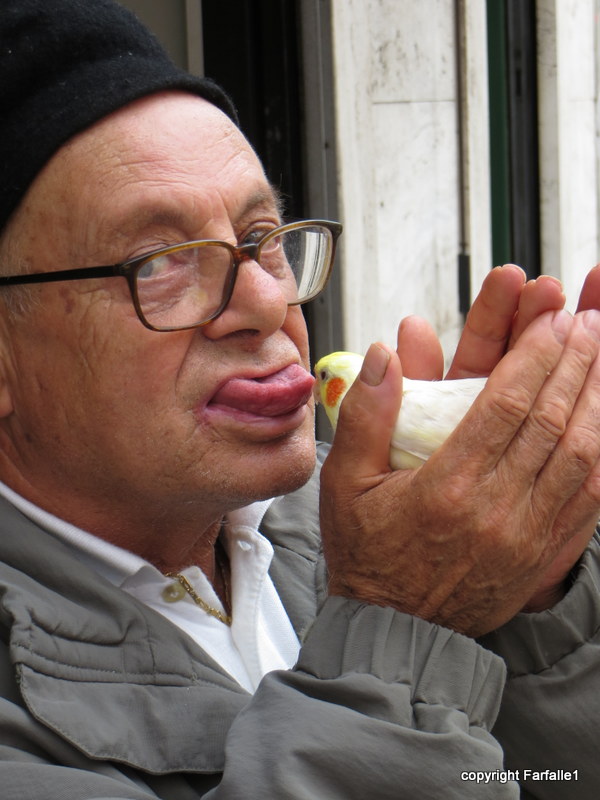
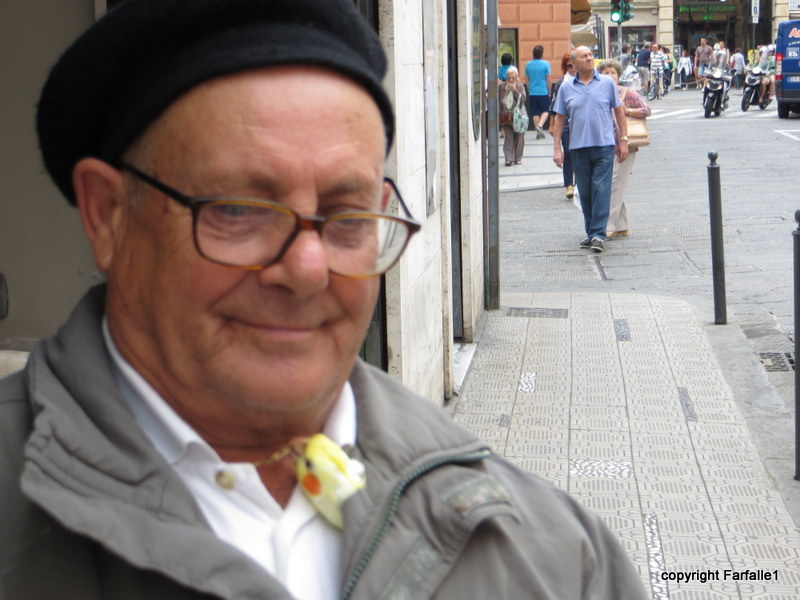
Strolling through town the other day (before it got so hot)  I was pleased to encounter this eccentric gent. He was happy to pose for me with his little bird. I wasn’t expecting the kissing event, but evidently it’s something they’re both accustomed to. I wonder if the bird thinks he has a very well-trained man?

bird man of rapallo-002

Sorry it’s out of focus, but it’s a nice shot of the tourist in the background. This is how they walk around together; every now and then the bird nibbles the man’s gold necklace.

bird man of Rapallo

After I asked if I could photograph him the man struck a pose. I particularly like the man’s costume with its northward nod to the Alps and its westward nod to France.

bird man of rapallo-001

Wasn’t expecting this, and I have to say it kind of grossed me out! The bird took little nips at the man’s tongue, which made me suspect that sometimes the man gives the bird treats in this unorthodox manner. When I asked what the bird’s name was the man replied, ‘pappagallo,’ which just means ‘parrot.’ I felt no wiser, but was somehow unable to continue the conversation.

Birth Day

25 Tuesday Jun 2013

Posted by farfalle1 in Animals in Italy, Birds in Italy

≈ 8 Comments

Tags

Duck egg hatching, Ducklings, Sitting duck

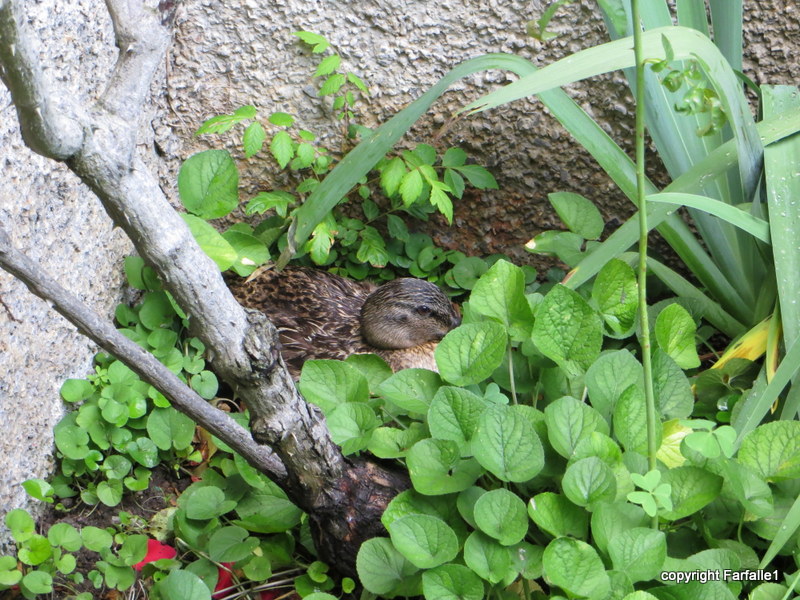
sitting duckA week or so some friends showed us the quite unpromising location of this sitting duck’s nest.: the corner of their house made by the outside staircase descending from the second floor.  Silly duck.  A dog and a cat both live upstairs.  We didn’t give this lady, far from a friendly pond, much chance of survival.

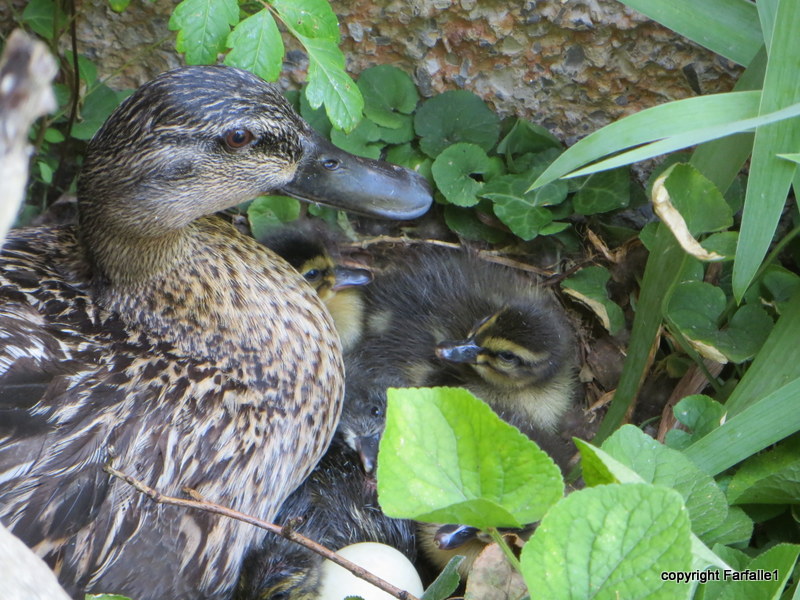
Whether because of good luck or watchfulness on the part of the second floor family, there was Good News today.  The eggs hatched.

mama and chicks

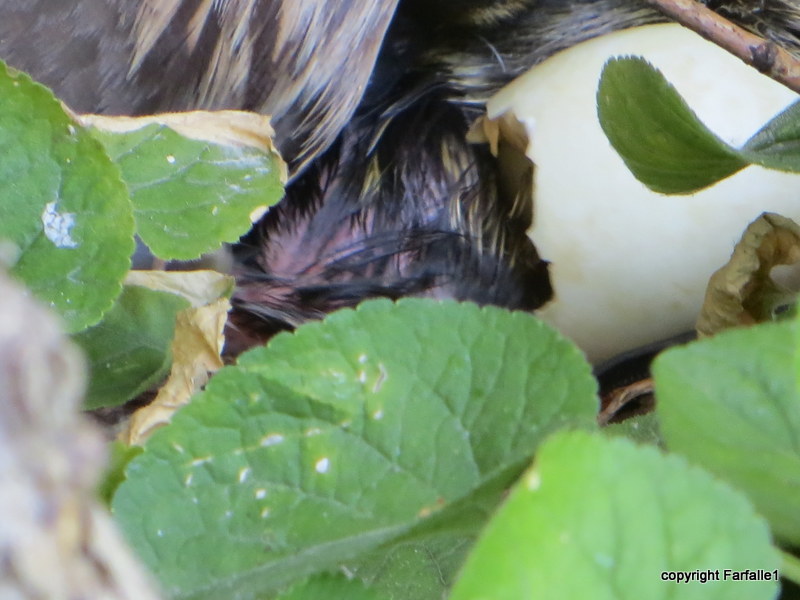
We had the good fortune to arrive in the midst of it all. This photo is hard to figure out, but it’s a wet duckling struggling out of the egg:

chick emerging from egg

There’s still the problem of pets upstairs, and the distance from water. When we left, our friends were discussing whether they should put the new family in a box and transfer them to the closest pond, buy a child’s wading pool and set it up next to the pan of bread they put out every day, or simply let nature take her course.


Songbirds: Friends or Food?

04 Wednesday Jan 2012

Posted by farfalle1 in Animals in Italy, Animals in the U.S., Birds in Italy, Crime, Customs, Italy, Uncategorized

≈ 10 Comments

Tags

Bird-feeding, Feeding Birds, Hunting in Italy, Hunting songbirds in Italy, Illegal hunting in Italy, Trapping songbirds in Italy

Somehow it’s hard to think of chickens and turkeys as birds.  Sure, they have feathers, but we never see a flock of them high overhead, migrating south for the winter, their clucking stirring our own restlessness.  Nor do we startle them when we take a walk in the woods.  We don’t listen for their sweet morning calls and try to identify exactly what chicken it is we’re hearing.  Wait!  Is that a Rhode Island Red or an Ameraucana?  Hand me my binoculars!

No.  Chickens and turkeys are ambulatory food for the most part.

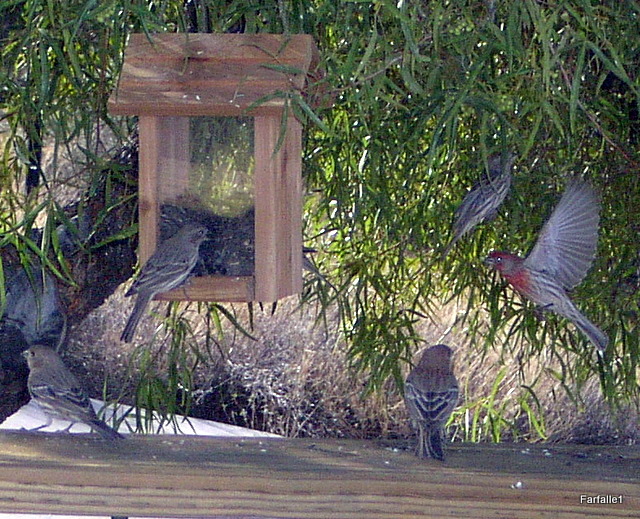
Songbirds, however, are not.  One of the  pleasures of being here in Arizona is watching the birds that come to our feeder every day.
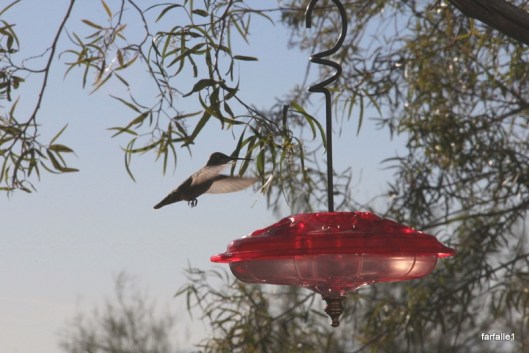
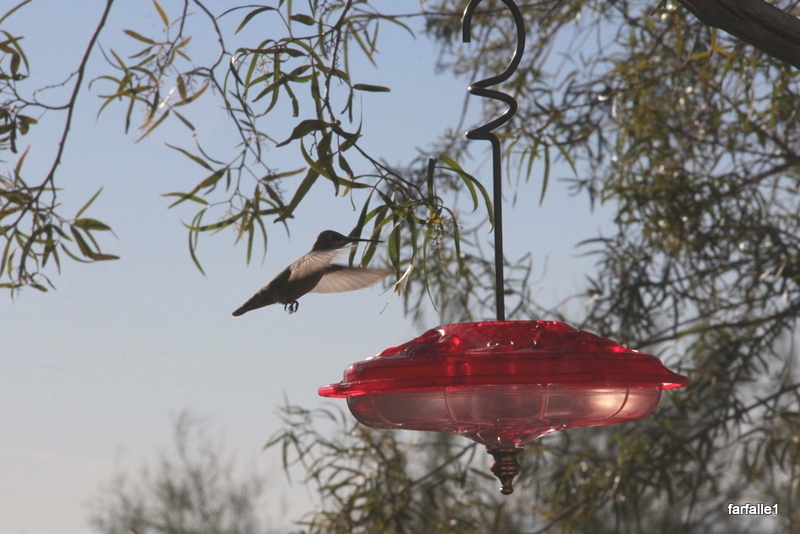
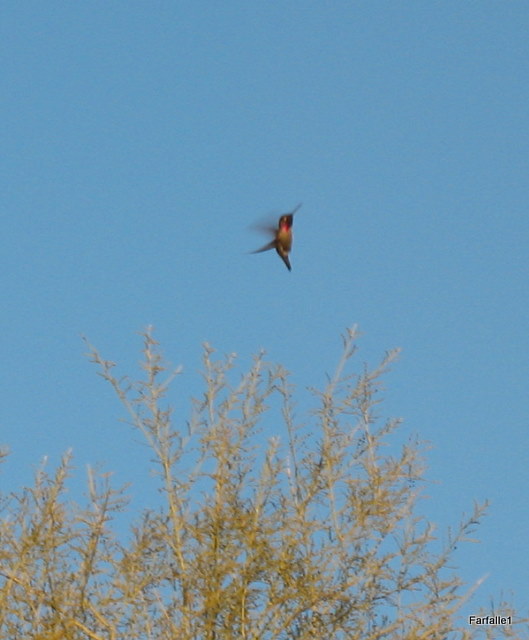
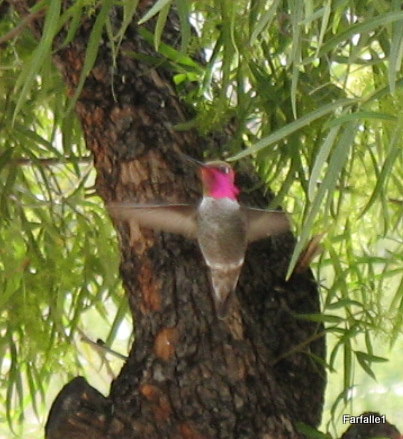
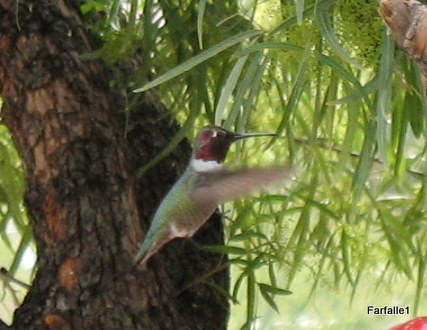
Anna's hummingbird, noisy and aggressive

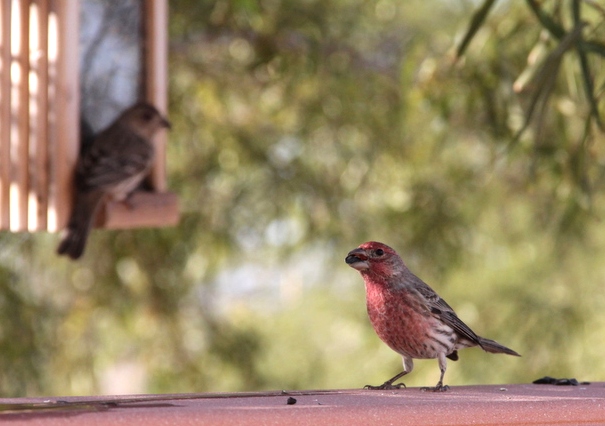
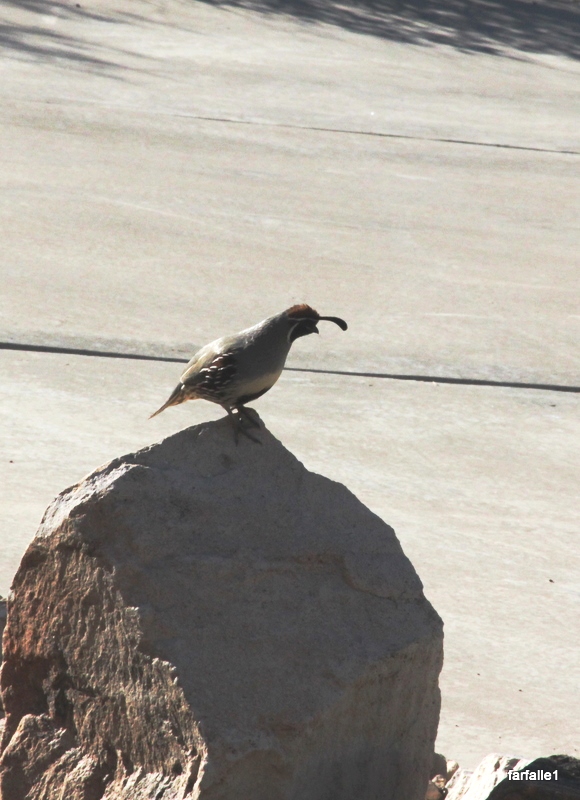
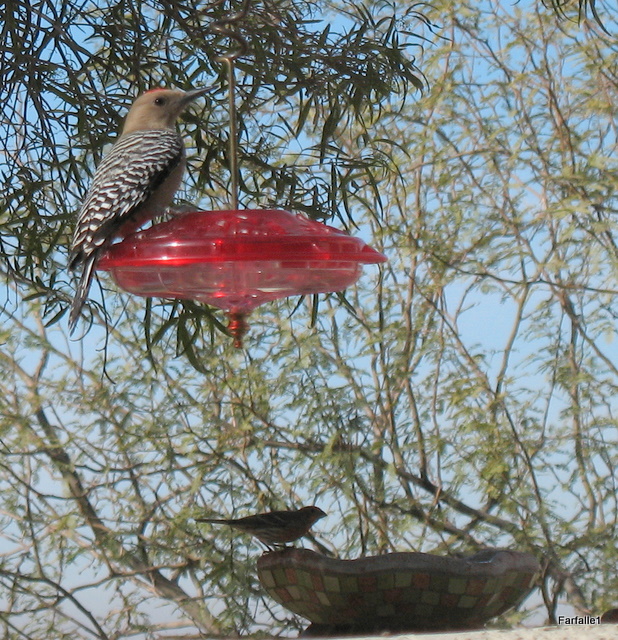
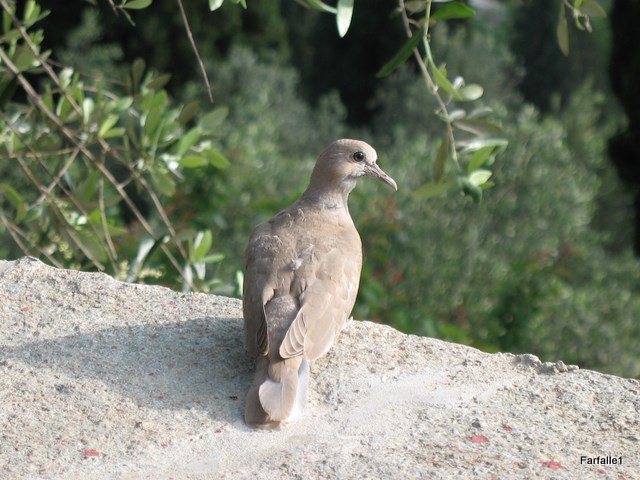
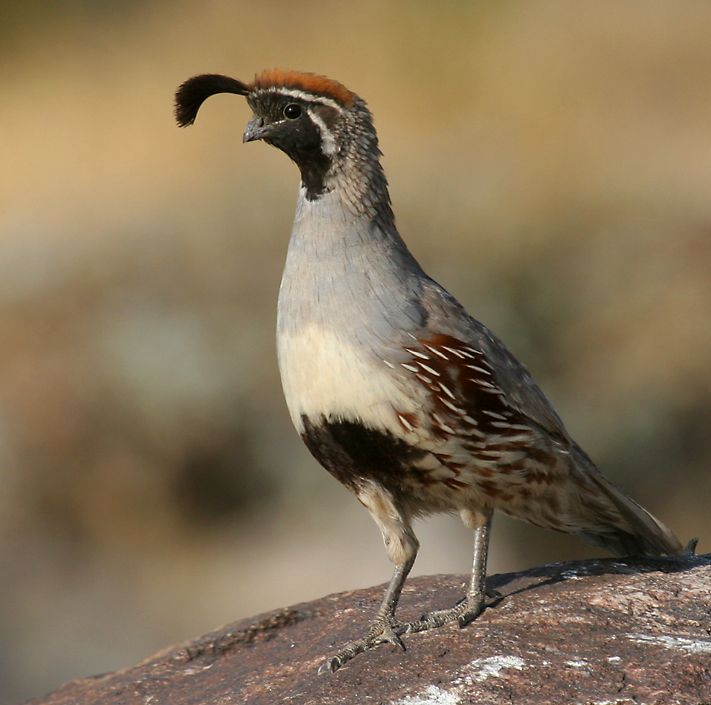
We don’t get anything terribly exotic (and we have yet to see a chicken) –  many purple finches, the ubiquitous Anna’s hummingbird, Abert’s towhee , Gila peckers, Cactus wrens, and, on the ground below, Inca doves and the amusing Gambel’s quail, which makes a bweep-bweeping sound, reminiscent of burbling water, while it wanders around beneath the feeder.
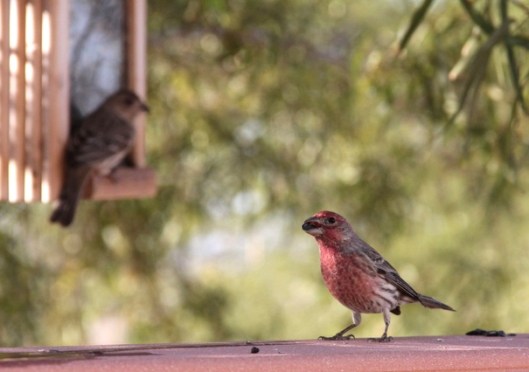
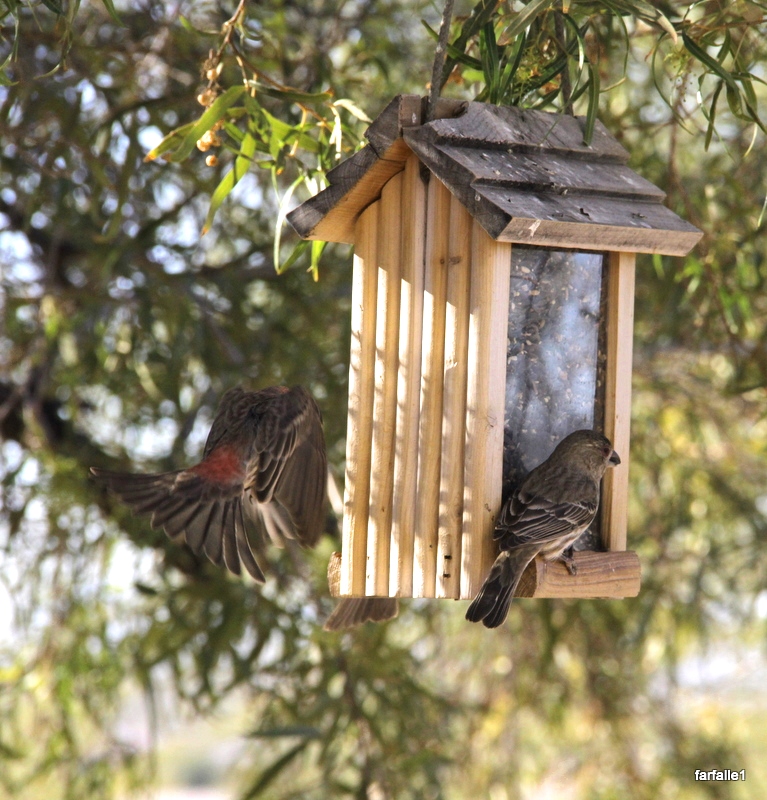
Male finch enjoying a seed while female thinks about it

Gambel's quail, males conveniently carry bulls eye on their breasts

It’s a pleasure we don’t enjoy in Italy.  Not because there are no songbirds – there are.  We get huge amusement and satisfaction from the merli (a sort of black robin with the unfortunate Latin name Turdus merula, called ‘merlo’ in the singular) which are curious and companionable, and which have the beautiful song typical to thrushes.  We seldom work outside in spring or summer without an appreciative audience of merli.  But bird-feeding as a hobby does not seem to exist in Italy, at least not in our part of the country.  I have never seen a bird-feeder at anyone’s house, and I have never seen bird feed for sale.
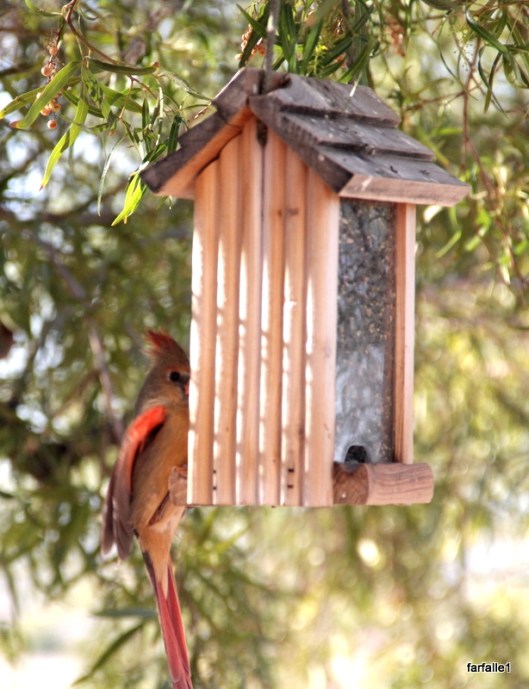
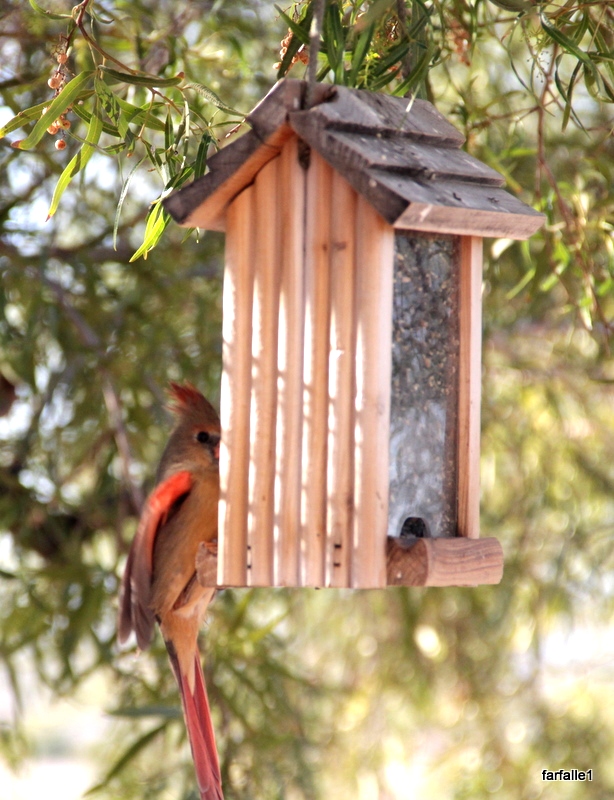
Male cardinal

Instead in Italy there is a sizable, though fortunately shrinking, trade in trapping and killing wild birds.  The CABS (Committee Against Bird Slaughter) web site has a great deal of information about the illegal trapping of birds which occurs, in Italy, mostly in the north (Lombardia), the southern Italian coast, Sardinia and Sicily.  There are a couple of good reasons why this illicit activity continues.  One is that it is a matter of long tradition to trap songbirds, and Italy is nothing if not wed to her traditions.  In earlier times songbirds were an important source of protein for hungry Italians. Another reason is that some restaurants persist in serving songbirds, though you will never see them on the menu.
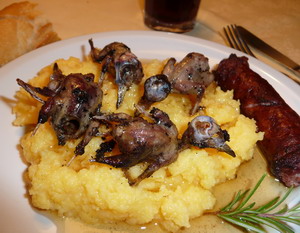
Little birds with polenta, photo courtesy of CABS

Happily, CABS reports that hunting songbirds is truly on the wane in northern Italy, a trend we can only hope (or I can only hope, anyway) will continue.
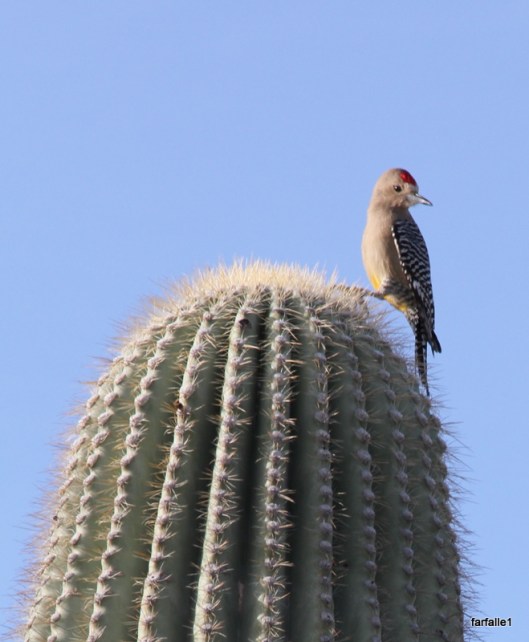
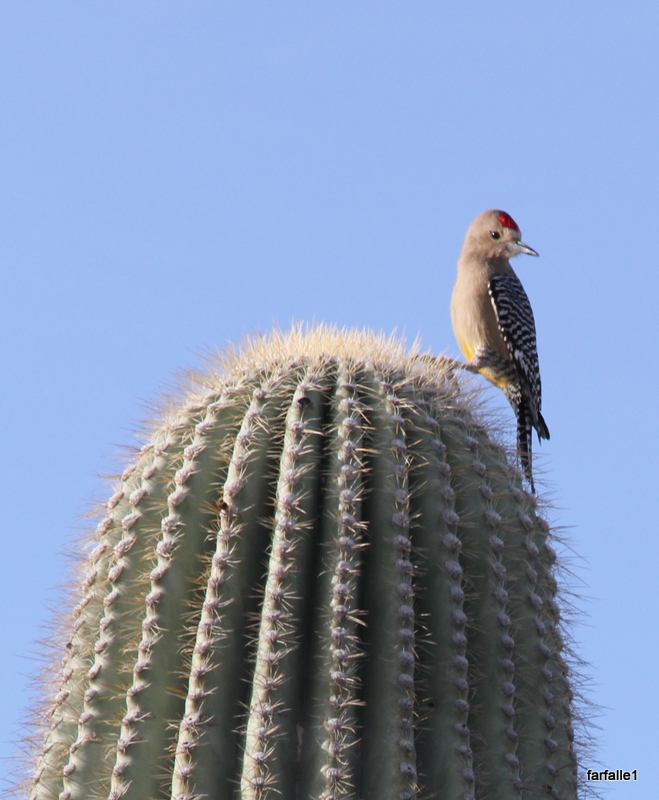
Gila woodpecker atop a nearby cactus

Hunting for sport is as popular in the U.S. as it is in Italy.  In 2006, according to the U.S. Fish and Wildlife Service, 2.3 million people hunted migratory birds such as doves or waterfowl.  Such hunting is highly regulated; hunters must have appropriate licenses and stamps, and can hunt only certain birds in certain places at certain times.  Sport hunters in both countries are generally dedicated and law-abiding conservationists, interested in protecting the populations of the species they like to hunt.  In a perfectly counter-intuitive bit of logic, sometimes bird populations must be ‘culled’ in order to protect the well-being of the species.  It makes no sense to me, but if the people at Audubon say it’s true, it must be true.  Mustn’t it?

No doubt there is illegal hunting in the U.S., but it is difficult to get away with it.  Some years ago when we lived in Connecticut a man of our acquaintance became very angry at the number of messy geese on his pond and lawn.  He got out his rifle, stood on the back porch and shot one, no doubt hoping to scare away the others.  His neighbors heard the shot and came running to find out what was wrong, so he was caught red-handed.  He did not go to prison, but he did have a reprimand and a sizable fine.  Even worse, he became known locally as ‘Goose Killer’ – and it was not the sort of affectionate and admiring nickname that, say, ‘Speedy’ is.

The illegal taking of birds in Italy is of a different order entirely.  According to CABS, ‘millions’ of birds are taken every year, hundreds of thousands of them in Northern Italy.  They are sometimes taken with guns, as in the wholesale slaughter of migrating birds videoed here (supposedly ‘legal,’ but against the very EU regulations Italy signed on to uphold), and frequently taken in any of several various types of traps, all of which are illegal (bow, snap, snare, cage and nets).

It’s hard to understand what the appeal or pleasure is in trapping or shooting  songbirds.  It’s not as if they’re particularly challenging prey, or especially meaty.  The declining number of traps in Italy attest to the gradual change of attitude towards this cruel practice; but it remains a big problem.
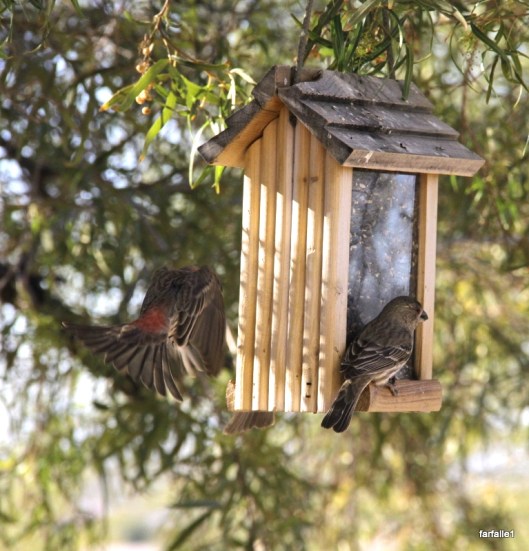
Male finches 'discuss' seating while a female thinks about it all

According to Wikipedia 55 million Americans are bird-watching hobbyists.  They spend $3 billion a year on seed and $800,000 million on bird feeders and other accessories.  Maybe there’s an opportunity here to help the struggling Italian economy.  Don’t kill the birds, feed them. Photograph them.   Enjoy them.  Encourage touristic bird-watching trips. And when the irresistible blood lust of the hunter comes over you, go down to Signore Marrone’s farm and bag a few chickens.
Sad Time for the Heron

13 Sunday Nov 2011

Posted by farfalle1 in Animals in Italy, Birds in Italy, Construction, Rapallo, Uncategorized

≈ 12 Comments

Tags

Dam destruction in Rapallo, Great blue heron, Heron, Via Bette


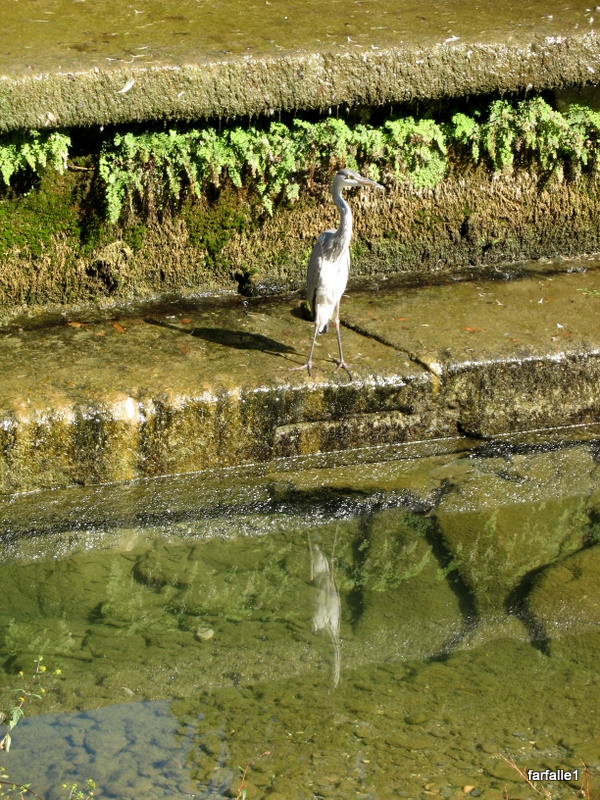
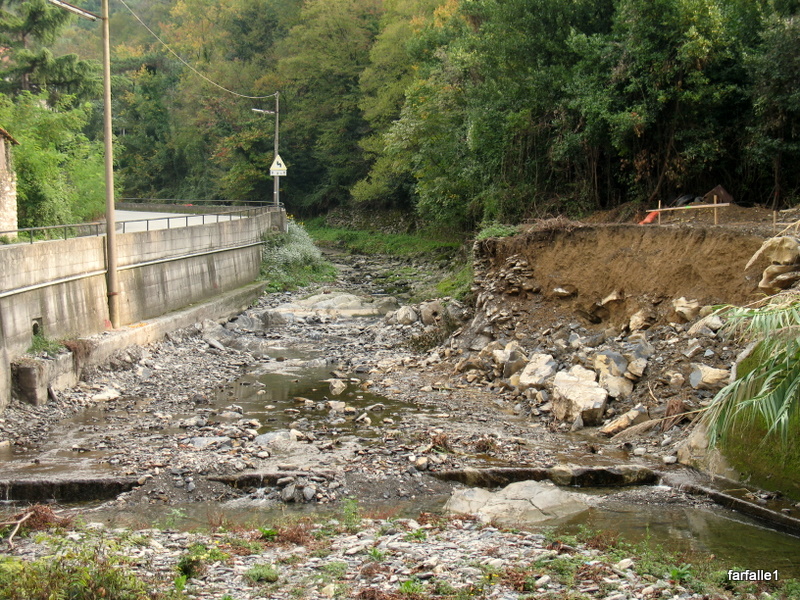
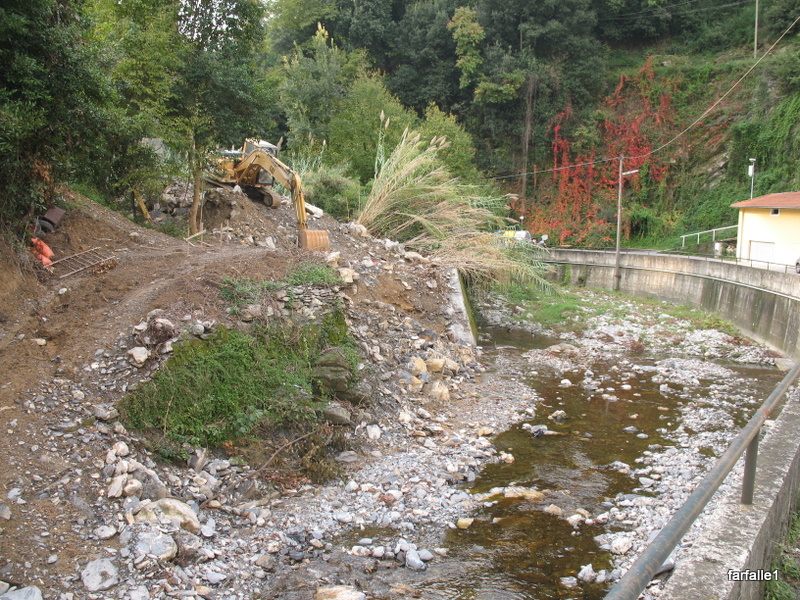
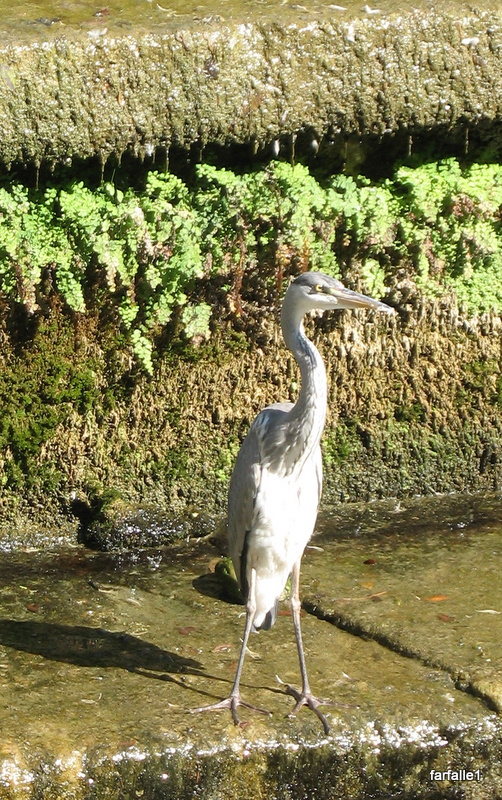
This beautiful heron, or others of his kin, live somewhere near the Torrente San Francesco, which flows down our mountain to Rapallo.  He is frequently to be seen fishing in various spots along the Torrente, but has always especially favored this small dam, under which the little fish like to congregate in a sort of heron buffet.  I’m glad I took the above photo, because the very next day this is what I found when I came down the hill:

What a mess!  And gone is the little dam where the heron fished.

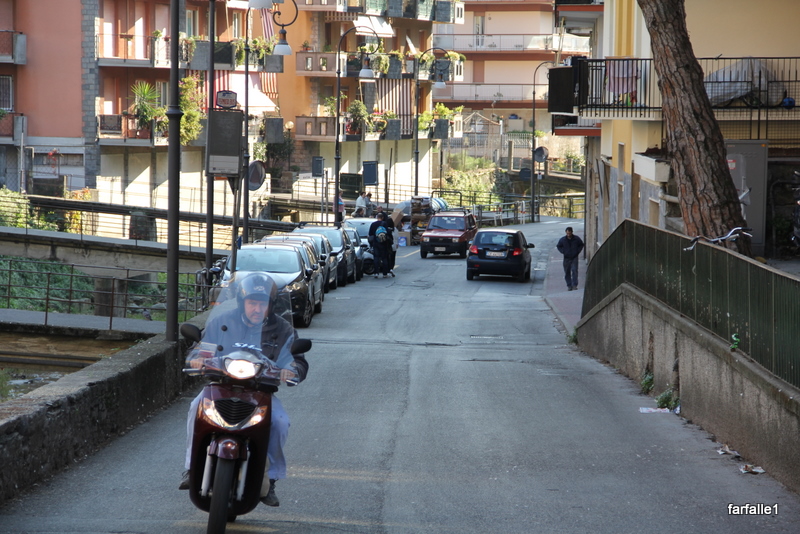
On a related topic, there is some talk of widening Via Bette, the narrow street that runs along the Torrente.  Closer to town than the section pictured above, the street is lined with shops on the non-river side. Frequently vehicles stop on the river side of the road (‘for just a moment!’) so people can do a bit of quick shopping; it can be a matter of some ingenuity to get two cars going in opposite directions past one another.  And when the bus comes: che casino!


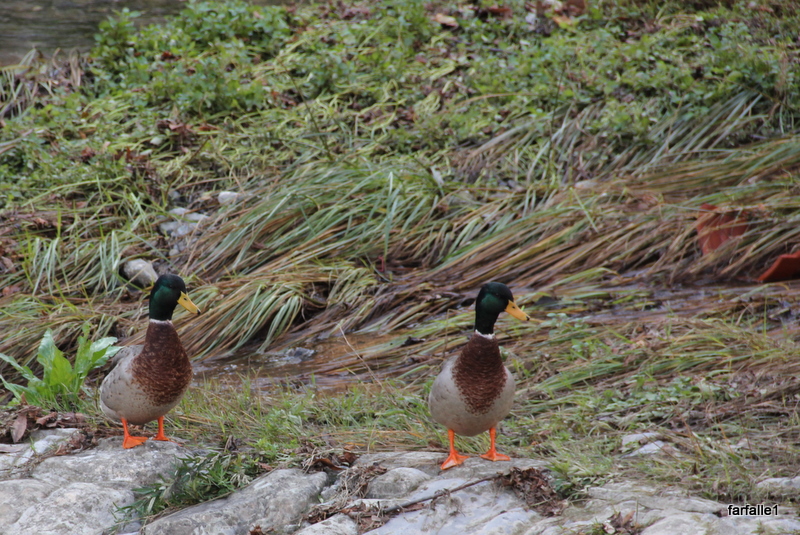
(Note that there are pedestrians on the river side, walking in the street – it’s so much nicer to walk near the water, and people often do, not only putting themselves at risk, but further constricting the available space for cars.) What is distressing about the road-widening project is that it calls for covering over the Torrente.  That will eliminate not only more fishing for the heron (who, in fact, usually doesn’t fish near the shops) but also paddling and family-raising space for the many ducks who live there.

There are also proposals for two new tunnels – one from the Autostrada to Santa Margherita Ligure, and one from Via Bette to the Val Fontanabuona, the valley on the other side of our mountain.  I hope that the road-widening project, like the tunnel projects, will remain in the talking stage for many years.  It will be some consolation to the poor heron, who has lost his seat at the all-you-can-eat special.

All is not lost for the heron though.  The destruction in the top photo is the beginning stage of a new bridge across the Torrente to serve the houses on the hill above.  Fish like to congregate under bridges; maybe the heron’s smorgasbord will return.  I hope so.

Bird Watching

10 Sunday Jan 2010

Posted by farfalle1 in Animals in Italy, Animals in the U.S., Birds in Italy, Uncategorized

≈ 8 Comments

Tags

Bird Watching, Birds of Arizona, Feeding Birds

One of the great pleasures of being here in Arizona is putting up a bird feeder and watching the wild birds who come to visit.  This is not something we have seen done in Italy, and it seems a pity, because it is both interesting and amusing. Not that Italians aren’t bird fanciers (leaving out for the time being all the recipes for songbirds) – we have seen homing pigeons flying near our house, and many houses have a cages with parakeets, canaries, and others of that exotic ilk. In fact there is a pet store right in the center of the Rapallo; every fine day they put out cages of little birds which twitter and sing like mad, poor things. But the coaxing to the home of wild birds does not seem to have yet appealed to the Italian householder, at least not in Rapallo.

Of course this being America, bird-watching has become big business.  There are whole stores dedicated to the feeding and watching of birds (Wild Birds Unlimited, Bird Watcher Supply Company, Duncraft, and a zillion local stores).  In a similar, but less commercial vein, the National Audubon Society is dedicated to the preservation of wild birds and, by extension, their habitat. We buy bird seed in 50-pound sacks, usually black oil sunflower seed, because it appeals to so many different kinds of birds.

We have hung one small feeder from an ironwood tree off our deck, and have a small ‘bath’ from which the birds can drink.  The house finches, our most frequent guests, arrive in the greatest numbers, and they are terribly piggy.  We limit the birds to one feeder-full of seed a day, and it has usually been consumed within an hour of our putting it out, most all of it by the finches.

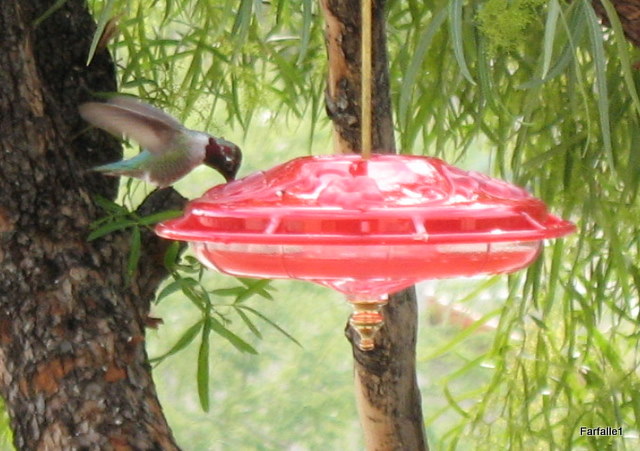
Second in number are the raucous gila woodpeckers.  They announce their arrival with a piercing call that is something between a caw and a woody-woodpecker laugh, accompanied by a great deal of head-bobbing.  After all that effort they extract one seed from the feeder and fly off to peck it open.  They are also extremely partial to the one other feeder we have installed: a hummingbird feeder, which is filled with sugar water (1 to 4 dilution).

Other birds we see frequently at the feeder include the curved bill thrasher, a lovely, shyer bird; and the cactus wren, which is Arizona’s state bird.

Eighteen species of hummingbirds call Arizona home, and happily some of them visit our nectar feeder every day.  They are a lot feistier than their diminutive size would suggest. They offer amazing exhibitions of aggressive battle flights as they try to lay claim to the big red ‘flower’ that never quits.

Because they are so greedy, the finches tend to be careless in their eating habits – they spray seed all over the place, most of which ends up on the ground under the feeder.  This is good news for the doves and Gambel’s quail who scrabble around in the dirt and eat all the spillage.

It’s hard to understand how there can be a Gambel’s quail left in the world – though it doesn’t show in the photo above, the male has a bullseye on his chest.  They all have a very funny little plume that jerks up and down as they run (they never walk).

Every now and then inviting birds to share your space can lead to unintended consequences.  The first year we came here we put up a Christmas tree, and, because it was very warm, we left the door open.  The result was festive, though not exactly what we had in mind.

Then there are the less cheerful consequences.  Italians aren’t the only ones who enjoy dining on songbirds.  Now and then an unwanted guest comes to our feeder.

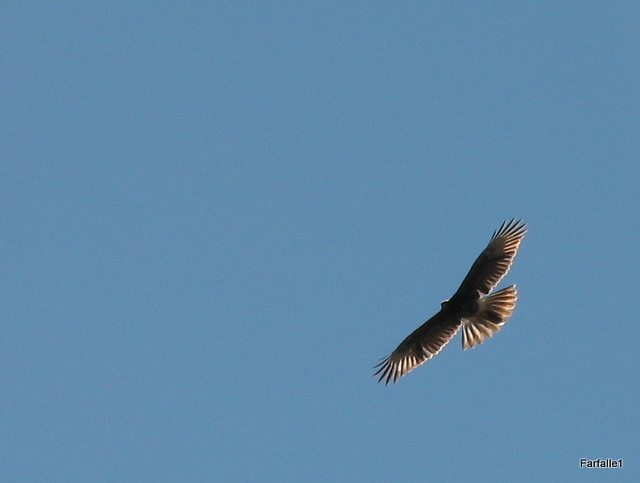
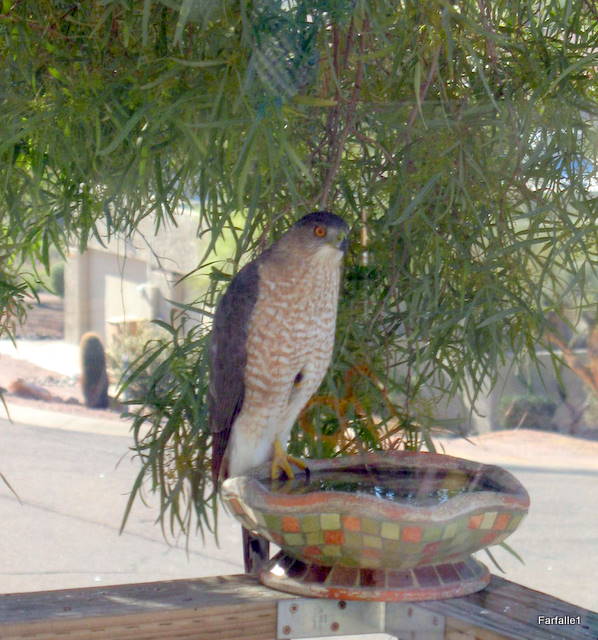
Hawks come by regularly and scare off all the little birds.  They scatter in a great clatter of wings and every now and then one will fly into a window and hurt himself.  If a bird is just stunned, you can pick it up and hold it close in your hands, keeping it warm until it comes out of shock, as the Captain illustrates below.

This little fellow made a quick recovery, and with joy we took him outside and set him free.  He flew about twenty feet and then the hawk swooped down and plucked him out of the air and flew off with him.

It’s enough to make you believe in fate.

Pigeons on the grass, alas…

16 Thursday Jul 2009

Posted by farfalle1 in Animals in Italy, Birds in Italy, Rapallo

≈ 4 Comments

Tags

city pigeons, pigeons

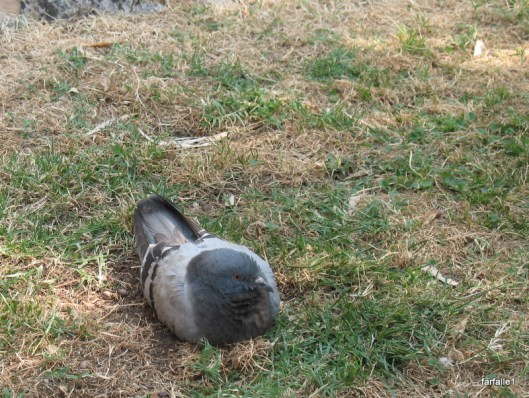
I don’t know for sure, but I suspect ‘they’ give the pigeons something to eat here that makes them infertile and stupid.  There are not nearly as many pigeons around as you would expect in a town that has one outdoor cafe after another, and the ones that are here are sluggish.  Often they can’t get out of the road in time and end up being squashed.  Look at this poor guy – he didn’t have the oom-pah-pah to fly away when I approached to take his picture.  If he can’t escape from a prying camera it’s a good bet he’s not going to be helping to make any baby pigeons…

pigeon

Whence thy egg?

14 Sunday Jun 2009

Posted by farfalle1 in Animals in Italy, Birds in Italy, Food, Italian habits and customs, Italy, Uncategorized

≈ 8 Comments

Tags

chickens, eggs, hens, Italian eggs

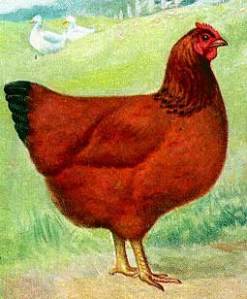
rhodeislandredWhen we lived in Connecticut we had a ‘flock’ of hens.  I use the term loosely; we had three hens.  Ever since my grandmother told stories about making little rubbers for her chickens so their feet feet wouldn’t get wet, I wanted to raise chickens.  It seemed more interactive than dolls, and less responsibility than actual children.
Our flock began with a gift of two small banty hens from a friend, which we augmented with the purchase of a Rhode Island Red and a Barred Plymouth Rock.  Oh, they were lovely.  One of the banties became despondent and went under the hen-house to die, but the other three lived with us until we gave them away upon leaving Connecticut, and they gave us just the right number of delicious small blue (the banty) and large brown (the other two) eggs.  BARROCK1

In the U.S. the provenance of the eggs one buys is something of a mystery, as is their age.  In a commercial operation, the eggs are washed and sanitized immediately, and then are sprayed with a thin coat of mineral oil ‘to preserve freshness,’ according to the USA Poultry & Egg Export Council.  The quotation marks are mine, because I suspect it is done more to give the eggs a longer shelf life than for any other reason.  When you buy a carton of eggs in the U.S., you have no idea where they’ve come from, unless the name of the farm is on the carton itself.  And even then you have no way of knowing if the hens were caged or free-range, or what they were fed.  (This is true: leftover bits of chicken at a processing plant are ground up and used as chicken feed.  Blcch.)  Fancier/organic egg producers are likely to advertise their practices on their cartons, but otherwise you’re left in the dark.

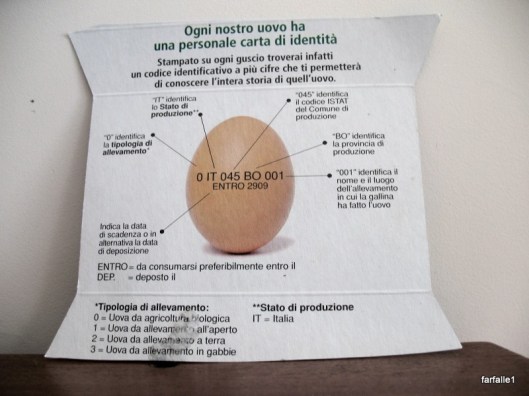
Here in Italy every commercially sold egg comes with a code stamped on it.

Egg ID

The first number identifies the life style of the producing hens: 0=biologic (what we might call ‘organic’ in the U.S.)  1 = living in the open (‘free range’)  2 = raised on the ground (something between free range and a cage) and 3 = caged.  The next two letters give the country of origin of the eggs; the next three numbers correspond to the town where the egg was laid; the next two letters are the provincial code of the town; the last three numbers identify the name of the producer (not the hen, the farmer).   So, no mystery about your egg here.  Of course, not all eggs are equally legible.

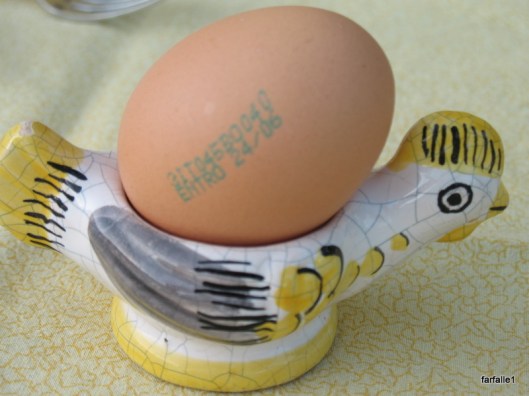
egg in cup

This one is pretty clear (oh, busted! Now you know we buy eggs from unhappy cage-raised hens in the province of Bolzano.  Shame on us.)  Sometimes the printing is quite smudged so you have no idea what it says.  Note also that there is a use-by date stamped under all the other info.

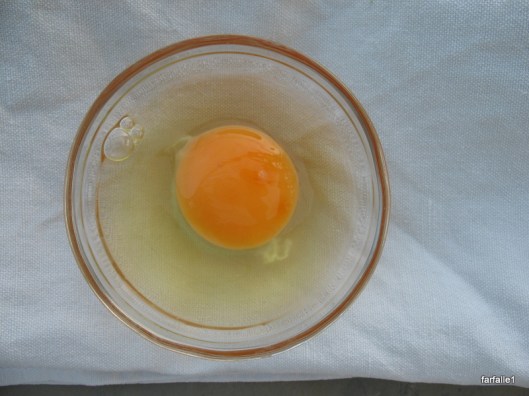
I haven’t been able to find out what Italian hens eat, but the yolks of their eggs are a rich red-yellow, almost orange.  When we go back to the egg in bowlStates the relatively pale yellow yolks seem anemic to us.  But I must say, even our own flock of Connecticut hens produced the pale American yolk.  It must be something in the Italian diet … even for the chickens.

We always feel good about buying eggs here.  The laying date is stamped on the egg box (they’re sold in quantities of 4, 6 or 10, an odd mix of metric and imperial measurement).  The egg itself will tell us exactly where it comes from.  Italian eggs are not sold from refrigerated cases.  They sit out on the shelf, proud to be fresh enough to do so.

Good as the eggs in the market are, though, the best egg is the one with no identifying marks, save perhaps a little bit of hay or something worse stuck to it, the egg your neighbor gives you.

Moving pictures

30 Friday May 2008

Posted by farfalle1 in Birds in Italy, Italy, Photographs, Piemonte, Rice, Travel, Uncategorized

≈ 1 Comment

Tags

A26, Arborio, AutoGrill, Autostrada, Canaroli, Risotto

I’m addicted to taking photographs from our speeding car. There’s something about out-of-focus grass on the verge of the highway, the slight blur of near objects and clear focus of far that is exhilerating.  Sometimes the Captain, a patient soul, stops so I can take ‘real’ pictures, but usually when we travel I shoot through the windshield, bugs and all.

Last weekend we drove in the rain up to Piemonte (about which more in a later post) via the A26, part of Italy’s magnificent and over-crowded highway system.  The A26 is one of the newer highways and features some graceful bridges and many, many tunnels. The autostrada system was one of the first highway systems in the world, and the Italians are justifiably proud of it.  Its only problems are that there are too many trucks, too much traffic in general and too few lanes… especially when many a driver wants to take his lane from the middle of the road.

In ‘Rice Fields’ under the Photograph links to the right you can see some ‘moving pictures’ of this journey taken through a rain-spattered windshield.  The Ligurian autostradas are peppered with tunnels – we went through 54 on our way home from Piemonte; the shortest was only 40 meters, the longest (Monte Castellano) was 2010 meters.  At the entry to each tunnel is a little sign which gives the name of the tunnel and its length.

Our route took us through Genova, through the many tunnels and over the graceful bridges of the A26 as it navigates the Apenines, and then onto the flat plain of the Po river with mile after mile of rice fields.  The fields are at their most beautiful now, still flooded with the broad expanses of water reflecting the trees along the edges. In many the pale green rice is already above the water. It is a shade of green that can only be described as ‘new’.  (The Captain tells me that the irrigation system still in use for the rice fields was designed by Da Vinci). If you make this trip on a clear day you will have a dramatic view of the snow-topped Alps reaching into the sky behind the fields.

The first time we approached the town of Arborio some years ago I was thrilled, imagining a small boutique village with little restaurants serving risotto in its many delicious forms.  But no.  Arborio is a very workaday looking farming town, plain to a fault.  The highway now bypasses the town altogether. Arborio gives its name to the most commonly available rice used for the dish in the U.S. Many Italians prefer the carnaroli variety of rice for risotto.

As we drove through the countryside we encountered a first-time sight: storks in Italy.  They are not uncommon, we are told, but we had never seen one in countless trips along these same roads.  Perhaps the high platforms built for nests attracted them.  They are big (this has been Big Bird month for us) and strange looking. The picture of the stork landing in its nest was from the moving car; the other when we stopped to look and wonder at the unusual sight.

You can’t make a long trip on the Autostrada without stopping at a – YUM – Autogrill.  These come in various sizes, from very small, serving only panini, to very large with sit-down restaurants. Each also has a retail section, usually featuring specialties of the region.  For me the Autogrill stops are one of the best parts of a Road Trip.

Enjoy the photos!

A most unusual visitor…

23 Friday May 2008

Posted by farfalle1 in Birds in Italy, Italy, Liguria, Photographs, Rapallo, Uncategorized

≈ 4 Comments

Tags

Airone Cenerino, Birds, Herons

This is a little off the stated theme of this blog, but as a friend told me recently, “It’s your blog, you can write whatever you want!” 

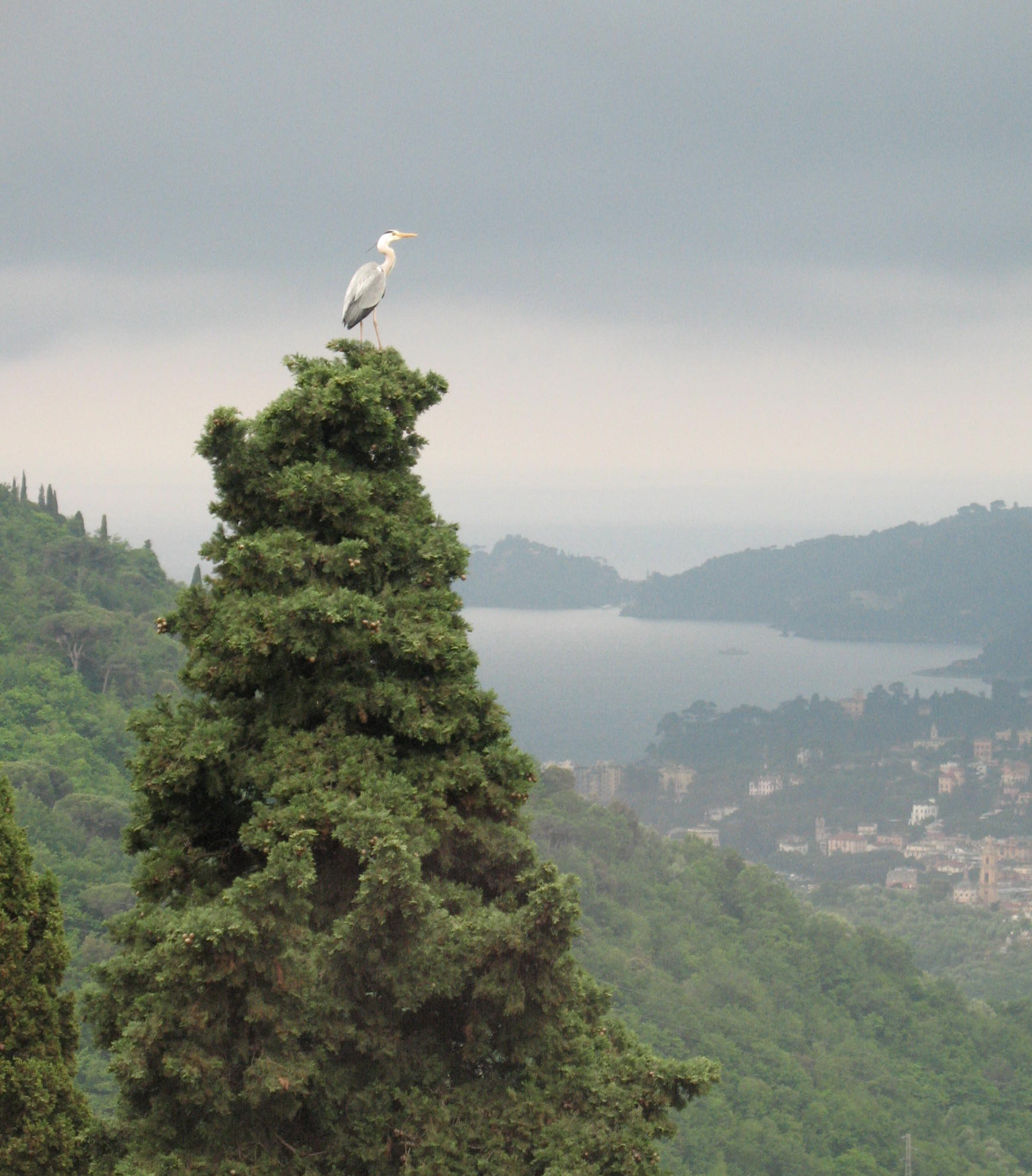
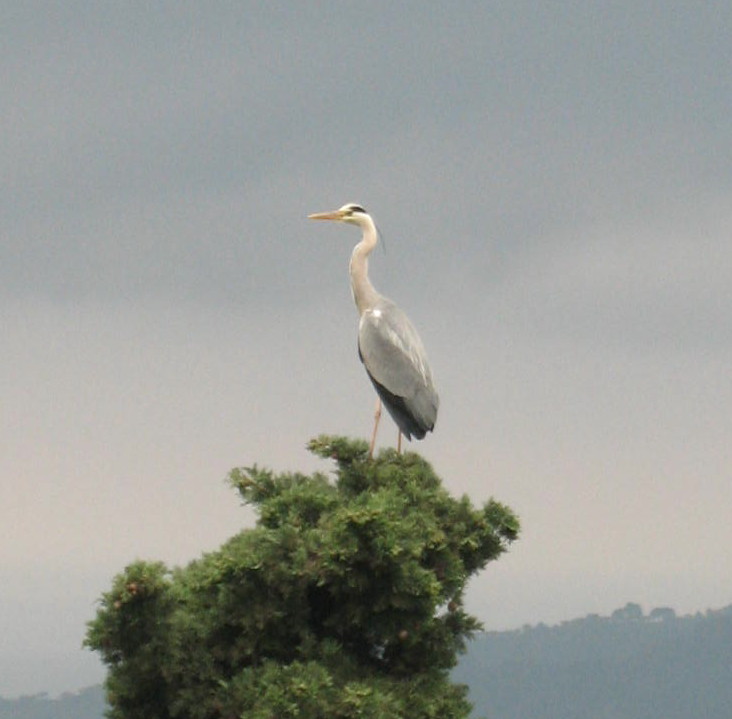
We were sitting in our upstairs studio this morning having breakfast when a movement outside caught my eye.  This is what we saw.  I think of it as a heron, the bird book calls it an Airone Cenerino, and when it sits on the top of a nearby cypress tree it is a very large bird indeed.  This one, or its kin, can frequently be found in the river that runs along Via Betti, 5 km below us on the outskirts of Rapallo proper, and while we enjoy seeing it there, we’ve never thought of it as being especially unusual.

We can’t imagine why it came to sit in a cypress tree relatively far from water.  When it left it circled higher and higher and then disappeared to the north.  Was it looking for fish in the sky?  Out joy-riding?  We like to look at birds, though we don’t seek them out or consider ourselves birdwatchers… perhaps this bird is a people-watcher and had gotten wind of a couple of Americans to add to its life-list. It just goes to show, context is everything.  In the river it’s a pleasant sight, in the cypress tree it’s astonishing.

Speaking of bird-watching, Jonathan Franzen gives a fascinating account of doing just that in China in his  ‘Letter from the Yangtze Delta,’ “The Way of the Puffin” (The New Yorker, April 21, 2008, p. 90).  I can give you a link only to the abstract of the story,  because the full article is not available free online, but if you have a library card your library may well be able to supply the full text of the story, either online or hard copy. This is culture shock seen through binoculars while searching for birds.

And on a different subject altogether, thank you all who have written comments – I am so happy you visit this site, and I love hearing what you have to say!


Enter your email address to follow this blog and receive notifications of new posts by email.

Join 114 other subscribers

rss

Subscribe in a reader

Search the Blog

A. Useful Links

  • bab.la language dictionary
  • Bus schedules for Tigullio
  • Conversions
  • English-Italian, Italian-English Dictionary
  • Expats Moving and Relocation Guide
  • Ferry Schedule Rapallo, Santa Margherita, Portofino, San Frutuoso
  • Italian Verbs Conjugated
  • Piazza Cavour
  • Rapallo's Home Page – With Link to the Month's Events
  • Slow Travel
  • The Informer – The Online Guide to Living in Italy
  • Transportation Planner for Liguria
  • Trenitalia – trains! Still the most fun way to travel.

C. Elaborations

  • A Policeman’s View
  • Driving School Diary
  • IVA refunds due for past Rifiuti tax payements
  • Nana
  • Old trains and old weekends
  • The peasant, the Virgin, the spring and the ikon
  • Will Someone Please, Please Take Me to Scotland?

D. Good Recipes - Best of the Week winners are starred

  • 'Mbriulata
  • *Baked Barley and Mushroom Casserole*
  • *Captain’s Boston Baked Beans*
  • *Crimson Pie*
  • *Louise’s Birthday Cake*
  • *Melanzane alla Parmigiana*
  • *Penne with Cabbage and Cream
  • *Pizzoccheri della Valtellina*
  • *Pumpkin Ice Cream*
  • *Risotto alla Bolognese*
  • *Rolled Stuffed Pork Roast*
  • *Spezzatini di Vitello*
  • *Stuffed Grape Leaves*
  • *Stuffed Peaches (Pesche Ripiene)*
  • *Swordfish with Salsa Cruda*
  • *Tagliarini with Porcini Mushrooms*
  • *Tagliatelli al Frutti di Mare*
  • *Three P's Pasta*
  • *Tzatziki*
  • 10th Tee Oatmeal Apricot Bars
  • Adriana’s Fruit Torta
  • Aspic
  • Bagna-calda
  • Best Brownies in the World
  • Clafoutis
  • Cold cucumber soup
  • Crispy Tortillas with Pork and Beans
  • Easy spring or summer pasta
  • Fish in the Ligurian Style
  • Hilary's Spicy Rain Forest Chop
  • Insalata Caprese
  • Lasagna al forno
  • Lasagna al Forno con Sugo Rosato e Formaggi
  • Lemon Meringue Pie
  • Leo’s Bagna Cauda
  • Leo’s Mother’s Stuffed Eggs
  • Louis’s apricot chutney
  • Mom's Sicilian Bruschetta
  • No-Knead (almost) Bread
  • Nonna Salamone's Christmas Cookies
  • Pan Fried Noodles with Duck, Ginger, Garlic and Scallions
  • Pesto, the classic and original method
  • Pesto, the modern, less authentic method
  • Pickle Relish
  • Poached pears
  • Poached Pears
  • Polenta Cuncia
  • Recipes from Paradise by Fred Plotkin
  • Rustic Hearth Bread
  • Shrimp and Crayfish Tail Soup
  • Sicilian salad
  • Slow Food Liguria
  • Slow Food Piemonte and Val d'Aosta
  • Spinach with Garlic, Pine Nuts and Raisins
  • Stuffed Eggs, Piemontese Style
  • The Captain’s Salsa Cruda
  • Tomato Aspic
  • Zucchini Raita

E. Blogroll

  • 2 Baci in a Pinon Tree
  • Aglio, Olio & Peperoncino
  • An American in Rome
  • Bella Baita View
  • Debra & Liz's Bagni di Lucca Blog
  • Expat Blog
  • Food Lovers Odyssey
  • Italian Food Forever
  • L’Orto Orgolioso
  • La Avventura – La Mia Vita Sarda
  • La Cucina
  • La Tavola Marche
  • Rubber Slippers in Italy
  • Southern Fried French
  • Status Viatoris
  • Tour del Gelato
  • Weeds and Wisdom

Photographs

  • A Day on the Phoenix Light Rail Metro
  • Apache Trail in the Snow
  • Aquileia and Croatia
  • Birds on the Golf Course
  • Bridge Art
  • Canadair Fire Fighters
  • Cats of Italy
  • Cloudy day walk from Nozarego to Portofino
  • Fiera del Bestiame e Agricultura
  • Football Finds a Home in San Maurizio
  • Hiking Dogs
  • Mercatino dei Sapori – Food Fair!
  • Moto Models
  • Olive pressing
  • Rapallo Gardens
  • Rapallo's Festa Patronale
  • Ricaldone and the Rinaldi Winery
  • Rice Fields
  • Sardegna ~ Arbatax and Tortoli
  • Sardegna ~ San Pietro above Baunei
  • Sardegna ~ The Festa in Baunei
  • Scotland, including Isle of Skye
  • Slow Food 2008 Salone del Gusto
  • The Cat Show and the Light Rail Fair
  • The desert in bloom
  • Trip to Bavaria

Pages

  • Fagioli all’ucelleto

Archives

Recent Posts

  • A Superior Visit
  • Fun at the Ranch Market
  • The MAC
  • Welcome Tai Chi
  • Bingo Fun for Ferals
January 2026
M T W T F S S
 1234
567891011
12131415161718
19202122232425
262728293031  
« Jul    

Member of The Internet Defense League

Blog at WordPress.com.

  • Subscribe Subscribed
    • An Ex-Expatriate
    • Join 114 other subscribers
    • Already have a WordPress.com account? Log in now.
    • An Ex-Expatriate
    • Subscribe Subscribed
    • Sign up
    • Log in
    • Report this content
    • View site in Reader
    • Manage subscriptions
    • Collapse this bar
 

Loading Comments...