• Contact
  • Elaborations
    • A Policeman’s View
    • Driving School Diary
    • Great Danes
    • IVA charged on Tassa Rifiuti
    • Nana
    • Old trains and Old weekends
    • The peasant, the virgin, the spring and the ikon
    • Will Someone Please, Please Take Me to Scotland??
  • Recipes
    • ‘Mbriulata
    • *Baked Barley and Mushroom Casserole*
    • *Captain’s Boston Baked Beans*
    • *Cherry Tart*
    • *Crimson Pie*
    • *Louise’s Birthday Cake*
    • *Melanzane alla Parmigiana* – Eggplant Parmesan
    • *Penne with Cabbage and Cream
    • *Pizzoccheri della Valtellina*
    • *Pumpkin Ice Cream*
    • *Risotto alla Bolognese*
    • *Rolled Stuffed Pork Roast* on the rotisserie
    • *Shrimp and Crayfish Tail Soup*
    • *Spezzatino di Vitello*
    • *Stuffed Grape Leaves*
    • *Swordfish with Salsa Cruda*
    • *Tagliarini with Porcini Mushrooms*
    • *Tagliatelli al Frutti di Mare*
    • *Tzatziki*
    • 10th Tee Apricot Bars
    • Adriana’s Fruit Torta
    • Artichoke Parmigiano Dip
    • Best Brownies in the World
    • Clafoutis
    • Cod the Way Sniven Likes It
    • Cold Cucumber Soup
    • Crispy Tortillas with Pork and Beans
    • Easy spring or summer pasta
    • Fagioli all’ucelleto
    • Fish in the Ligurian Style
    • Hilary’s Spicy Rain Forest Chop
    • Insalata Caprese
    • Kumquat and Cherry Upside Down Cake
    • Lasagna Al Forno con Sugo Rosato e Formaggi
    • Lemon Meringue Pie
    • Leo’s Bagna Cauda
    • Leo’s Mother’s Stuffed Eggs
    • Louis’s Apricot Chutney
    • Mom’s Sicilian Bruschetta
    • No-Knead Bread (almost)
    • Nonna Salamone’s Famous Christmas Cookies
    • Pan-fried Noodles, with Duck, Ginger, Garlic and Scallions
    • Pesto
    • Pesto
    • Pickle Relish
    • Poached Pears
    • Polenta Cuncia
    • Pumpkin Sformato with Fonduta and Frisee
    • Rustic Hearth Bread
    • Sicilian Salad
    • Soused Hog’s Face
    • Spotted Dick
    • Swedish Tea Wreaths
    • The Captain’s Salsa Cruda
    • Tomato Aspic
    • Vongerichten’s Spice-Rubbed Chicken with Kumquat-Lemongrass Dressing
    • Winter Squash or Pumpkin Gratin
    • Zucchini Raita

An Ex-Expatriate

~ and what she saw

An Ex-Expatriate

Category Archives: gardening

The Lavender Mob

20 Monday Jul 2009

Posted by farfalle1 in Animals in Italy, Flowers, gardening, Uncategorized

≈ 8 Comments

Tags

bee photographs, bees, bees on lavender, butterflies, butterflies on lavender, butterfly photographs, farfalle, honey bees, lavender

It’s got all the ingredients of a summer blockbuster: violence, pathos, beauty, love, and finally the triumph of good hard work.  And where can you see this great show?  At our house, in the lavender plant on the entry terrace. There’s more action in an hour there than there is at your Cineplex on any given evening.

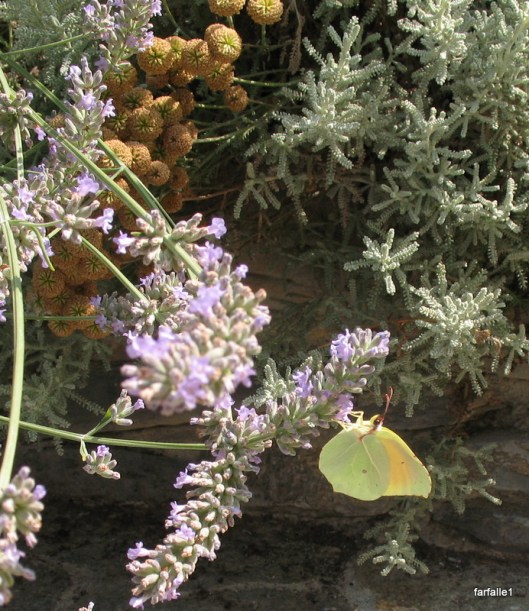
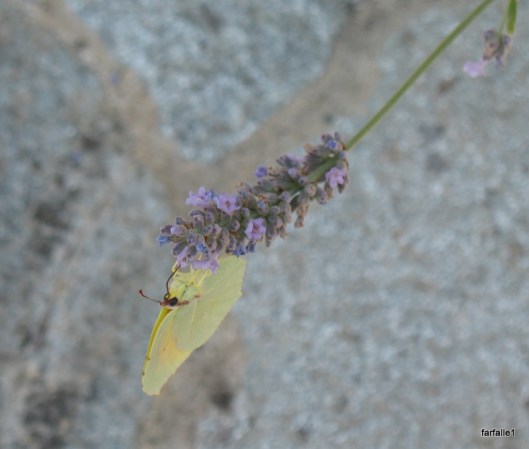
First the beauty:  the butterflies.  They come in a series as summer progresses.  Last week the pale greeny yellow ones that look like leaves were everywhere:
bees 019

butterfly on lavender

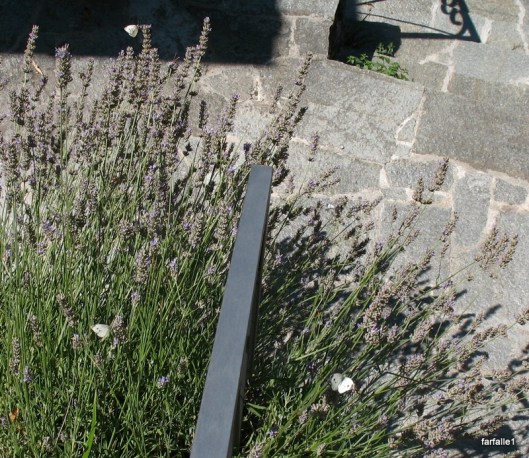
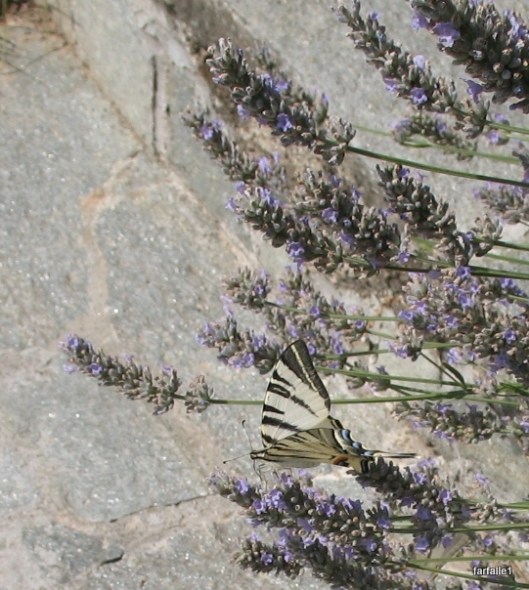
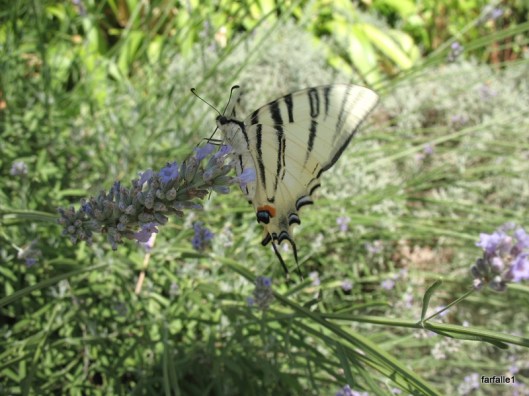
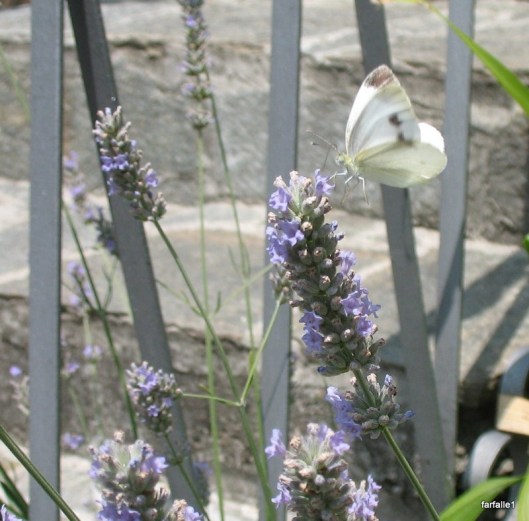
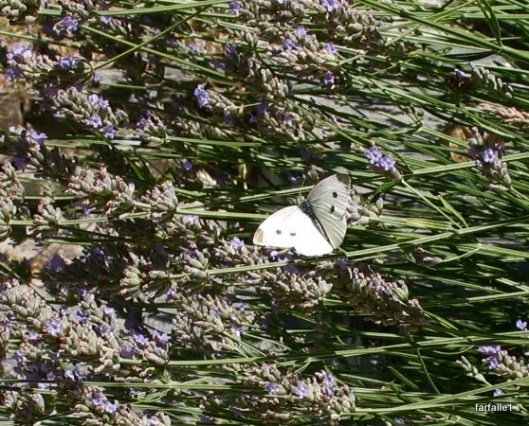
This week it is the swallowtails and the smaller white ones with dark wing smudges which travel in small herds:
tart, beans, gelatina 019

019a

023a

swallowtail butterflya

swallowtail butterfly (5)a

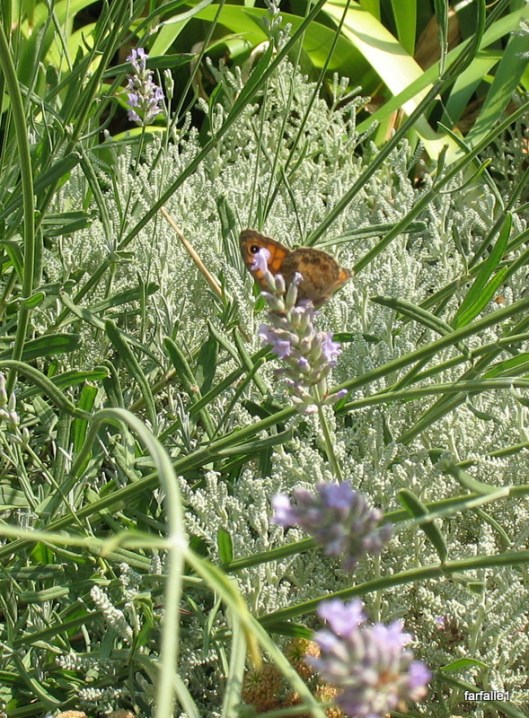
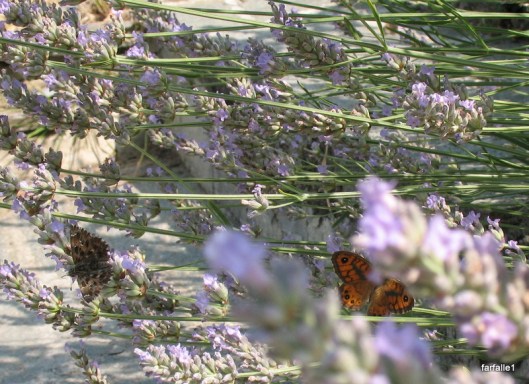
Our friend Tay calls swallowtails the upside-down butterfly, because they really do look like they’re upside down when they’re perched on a flower.  There are a host of other butterflies that come and go, from teeny little brownish ones to the lovely orange ones accented with circles.
butterfly on lavender-2

butterflies on lavender-4

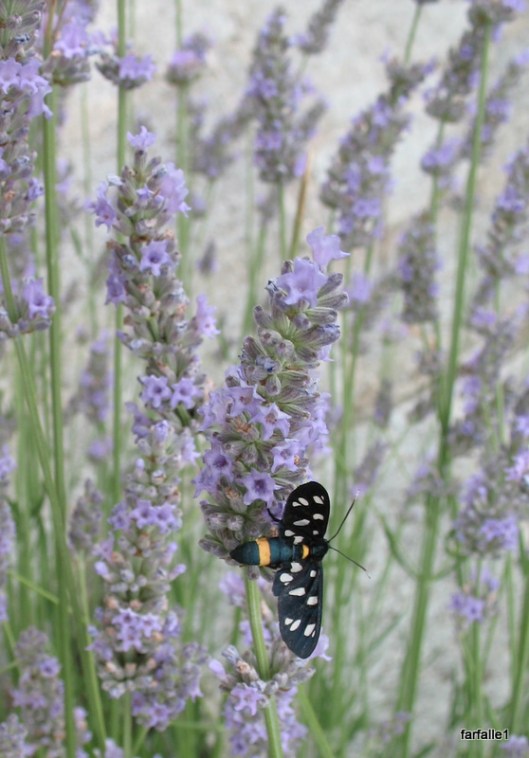
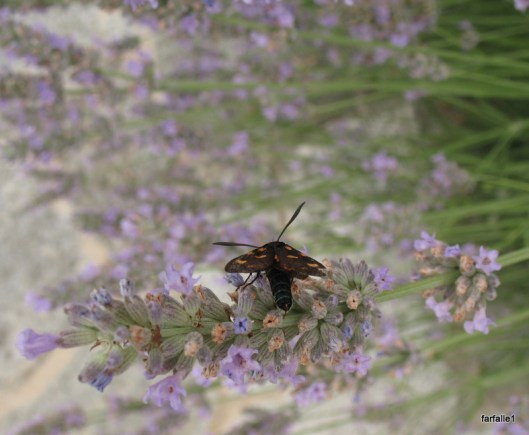
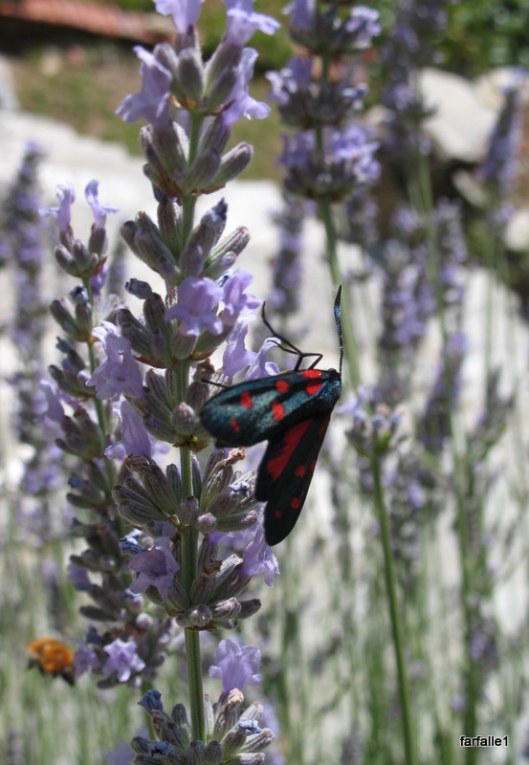
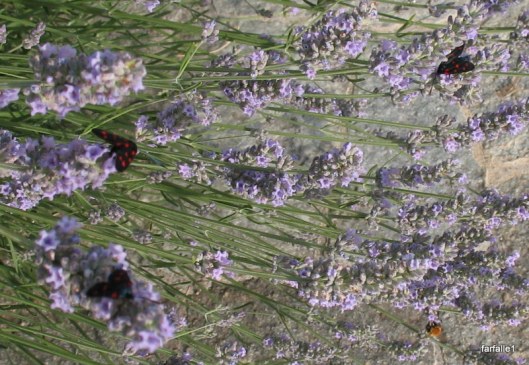
Two weeks ago I saw one butterfly of a type I’ve never seen before, or since: small and cobalt blue.  Then there are the not-quite-butterflies not-quite bugs, with their dramatic red, white or yellow spots, as well as the good old bugs.
bees on lavender 001

garden tour 031

Pestle Revised + Insects 015

bees 007

Pestle Revised + Insects 012

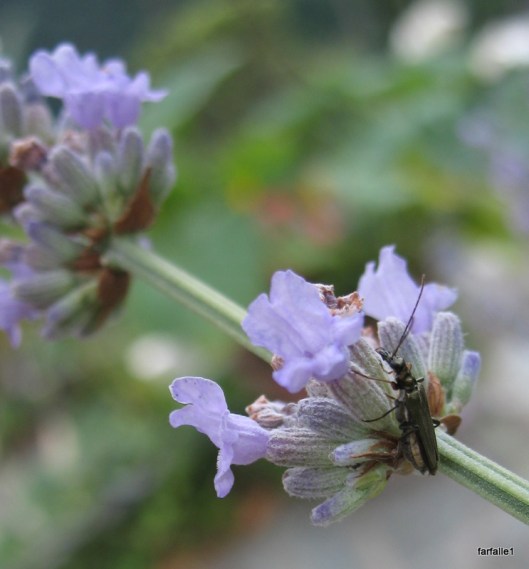
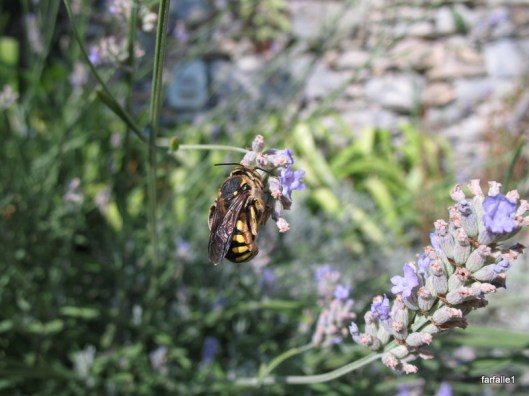
The pathos and violence go hand in hand.  There are nasty little beetles that hide deep inside some of the lavender flowers.  When a careless bee sticks his head in to drink from that flower, the beetle kills him with a swift swipe of his serrated razor-like arm.  We tried, but couldn’t get a picture of these little bastards. The poor dead bees just hang on the flower, giving every appearance of being drunk.  But no, not drunk. Dead.
bees 002

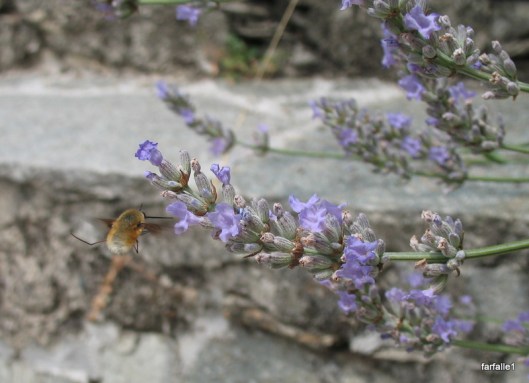
The triumph of good hard work?  The bees, of course.  There are more bees than you can shake a stick at.  My favorites are the small fuzzy yellow bombers that never even bother to retract their proboscis as they move from flower to flower.  They’re quick, and hard to catch with the camera.
bees 014

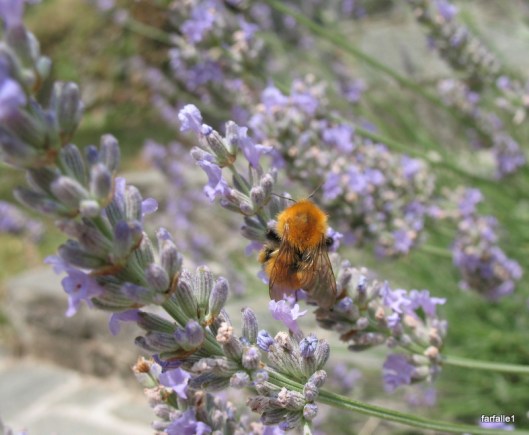
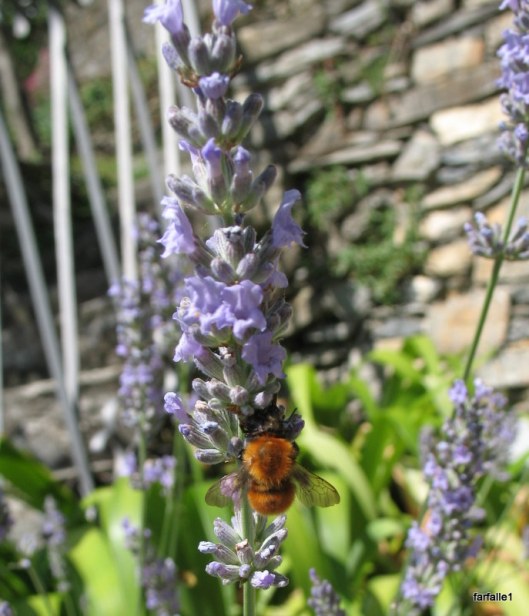
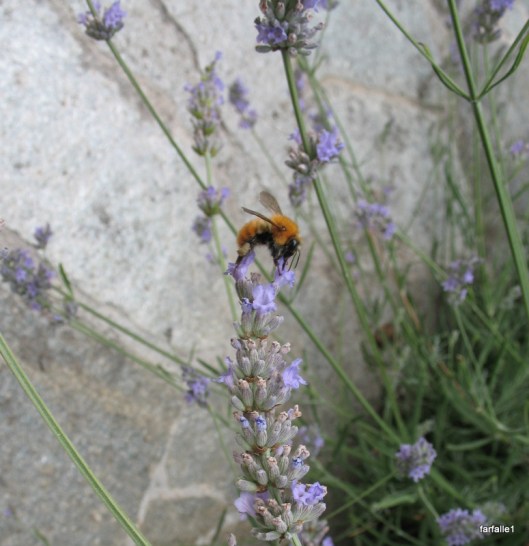
Next in size is the medium-sized fuzzy orange drudge who methodically moves from flower to flower, taking his time but being thorough.
bees on lavender 002

bees 001 (2)

bees 011

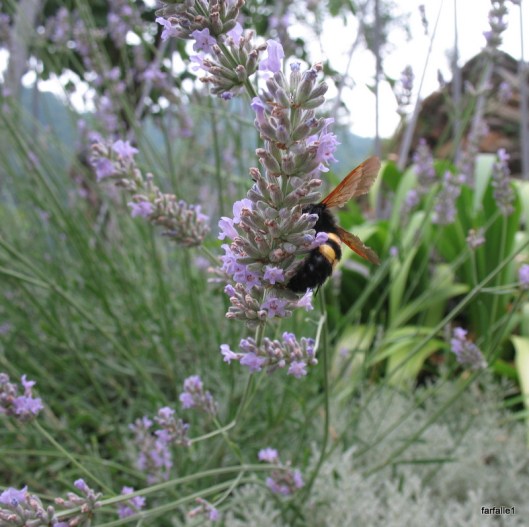
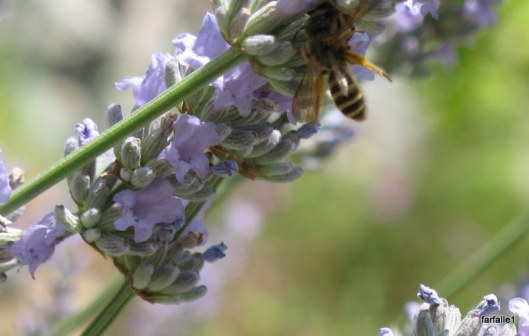
There are three very large bees, two with bright yellow stripes on their backs, and one who dresses entirely in black and refuses to be photographed.
bees 005

bees on lavender 015

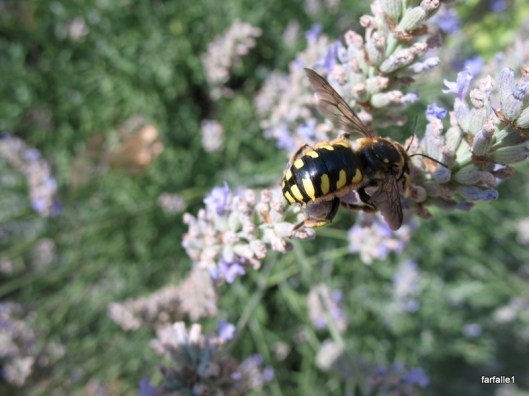
Towards the end of the lavender’s bloom a bee that looks like a Mini Cooper with racing stripes arrives in great number.
bees 012

Italian honey bees are reputed to have a gentle temperament and be excellent honey producers. I can’t vouch for the honey production because I haven’t found any, but the bees certainly are gentle.  We brush by their lavender bush a dozen times a day, and while they buzz around and complain, neither of us has ever been stung.

There’s a downside to being so hospitable to the bees.  Some of them nest in the ground, and we have a resident badger.  In his efforts to find bee grubs to eat he has dug numerous holes under our trees, especially the olive trees.

badger hold under olive

The odd thing is there is never enough dirt left outside the hole to fill it in completely again.  Where does he take the excess dirt, and what does he do with it?

You’re wondering about the love part of the equation?  It’s just that I love to watch the action around the lavender bush.  If you’ve got one, sit down sometime and watch it for an hour; it’s worth way more than the price of admission.

ETs?

11 Saturday Jul 2009

Posted by farfalle1 in gardening, Rapallo, Uncategorized

≈ 4 Comments

Tags

mowing the river, river maintenance, Torrente San Francesco

mowing the river
No, extra-terrestrials have not landed in Rapallo.  Instead it is time to mow the river.    The Torrente San Francesco is fed by all the little streams and rivulets that start in the folds of our high mountain and head towards the sea.  By the time they arrive on the plain of Rapallo they have become the Torrente.  For most of the year that is a misnomer, as you can see in the photo below.  Not only is it not a torrent, you can see hardly any water at all in some places.  What you can see is a lot of greenery, including the dreaded bamboo on the right in the picture above.  To give you an idea of how much water there can be after heavy rains, in 2002 I saw the top of the river almost breach the high retaining walls that you see below.  The mowers tackle not only the river bed itself, but also the walls which sprout quantities of viney, clingy weeds in all seasons.

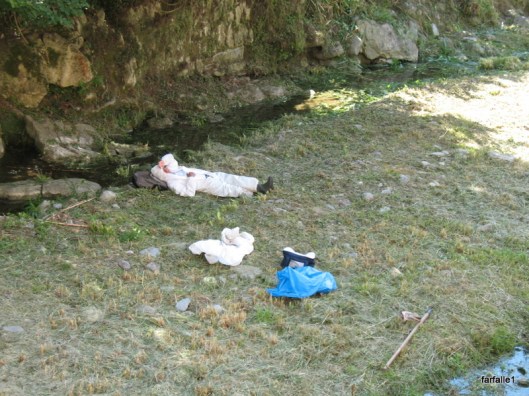
Why the haz-mat suits?  I’m not sure.  Just to be safe, I guess.  I can tell you what they wear under them.  Not much.  Sometimes a wife-beater tee-shirt, sometimes no shirt at all, and, I suppose, trousers, although I didn’t  verify that.   The river is home to many, many ducks and geese as well as the occasional cat.

mowing the river4

I asked mower Luis how often they have to mow the river. They last did it two months ago, he said. How long does it take to finish the river? A week or more, it’s hard work after two months of heavy growth. When I asked him what was the most interesting or amusing thing they found in the river his face clouded for a minute. “We find a lot of dead animals,” he said. But then he smiled sweetly and continued, “but we also find the birds’ nests, and we always mow around them.”

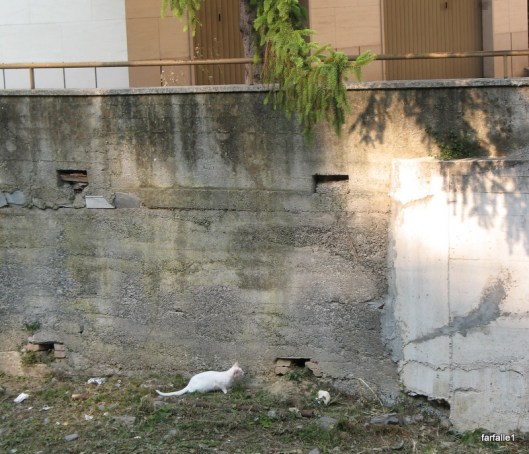
Everybody’s happy when the river has been mowed.  Something minty grows down there, and the perfume fills Via Bette from the Autostrada Bridge all the way down to Giorgio’s bakery, where the mouth-watering smell of freshly baked bread prevails.  Also you can see what’s going on so much better after the mowing.  Something delicious must be hiding in that hole; this cat was so intent that even loud shouts of ‘hey, kitty!’ didn’t get his attention.

bees 022
mowing the river resting

Uh oh!  Looks like Luis found some hazardous material after all… but no.  He’s just having a little ‘pisolino’ (nap) after his picnic lunch.

Every Inch

10 Wednesday Jun 2009

Posted by farfalle1 in gardening, Italian habits and customs, Italian men, Liguria, People, Rapallo, Uncategorized

≈ 2 Comments

Tags

Cliff gardening, Rick Gush

It has always amazed me how every square inch of space in Italy seems to be put to some kind of good use.  There are 60 million people living in Italy, a population density of 515 people per square mile.  In the US the population density per square mile is 80.  No wonder roads, houses, cars and people there are large – there’s enough space for everything and everyone.  But here in Italy every square inch must give the most it can.  You realize this particularly if you’re out walking on a woodsy mountainside and suddenly notice overgrown stone walls: the land on those mountains was important enough that people put in hundreds of hours of labor to terrace and farm them.

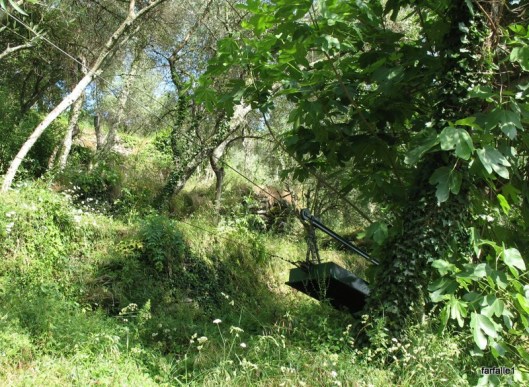
Now agri-business has arrived in Italy, too, and some of the farming land on the really steep and inaccessible mountains has gone wild.  But individuals will squeeze an enormous amount of production from whatever land is available to them.  And they have devised some very clever inventions to make the job easier.  It’s not uncommon to see a small cable and carrier system stretching across a wooded valley from one hillside to another – a way to transport cut wood.  Or to see the same thing coming down the olive-studded hill to a road below – a way to get the harvested olives to a waiting Ape (the little three-wheeled workhorse truck named for bees, because that’s what the two-stroke engine sounds like).

cable system (2)

People practice intensive gardening here – a lot of the garden maintenance is done by hand, so rows to do not have to be widely spaced to accommodate a tiller.  Down the hill in Rapallo I have watched an elderly gentleman prepare and plant his garden this spring – he did it all by hand.  First he turned the dirt with a spade, then he put in mounds of fertilizer (probably cow manure from the farm up the road), then he forked it all in by hand, and finally he was ready to plant.

garden squares-1aIsn’t it tidy and pretty?  If you get out your magnifying lens you might just be able to spot the man himself in the midst of his tomato stakes behind the tree in the center.  Or you can just take my word for it that he’s there.
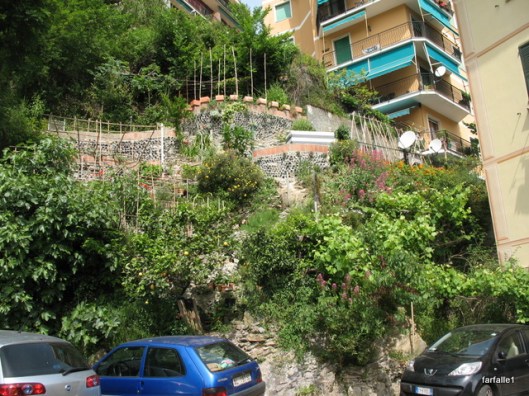
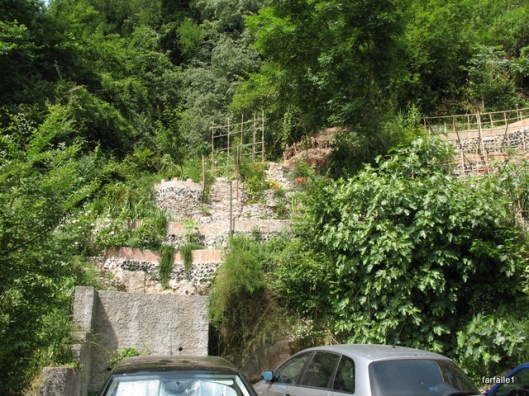
The prize for getting the most out of every inch, though, goes to this man’s neighbor a bit farther down the road, another American transplant by the name of Rick Gush.  Rick is the guy that if you give him a sow’s ear he’s going to give you a purse the next time you meet.  He’s the guy who’s never even heard of the box everyone else is trying to think outside of.  Every time we meet Rick we learn of some new  job he once had.  An incomplete list of his accomplishments includes adventure game designer (Kyrandia, Lands of Lore), psychic soil analyst (easier than it sounds, he says, if you live in Las Vegas, as he did at the time), intimacy counselor (“those that can’t do, teach,” he says), artist, uranium miner, gardener and garden writer.  He took all the disparate skills suggested by these activities and put them to work in building his hillside garden.

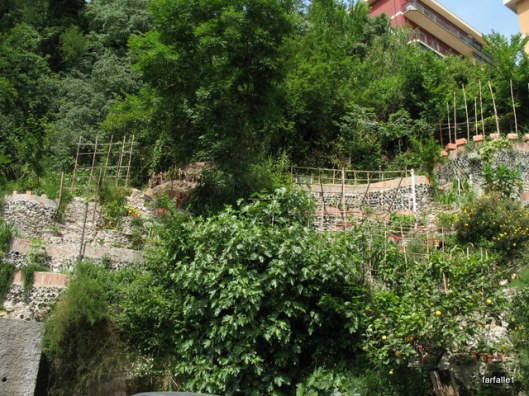
The steep, stony land, a cliff really, behind his and his wife Marisa’s apartment building had gone completely to seed.  Over the last few years Rick has terraced it and built walls of cement and old wine bottles laid on their sides with the bottoms facing out.  Sounds weird, but it’s really pretty and a very clever way to recycle hundreds of wine bottles.  And being a fanciful fellow he has put turrets on the walls.

Rick's garden

This is a view of the right side of the garden.  There are grapes on the right and a big fig tree on the left, with a smaller lemon between them.  There’s a set of steps, invisible in the photo, above the blue car roof.  Above you can see flowers, bean poles, tomato poles and satellite dishes. Just below the uppermost wall there is a very pretty curved arbor with a flowering vine  growing over it.

Rick's garden-1

This is the left, and more recently constructed part of the garden.  More turrets, the big fig, and more poles to support cukes, squash and pumpkins.

Rick's garden-3

This pictures shows the amount of wall building Rick has done, but it’s hard to see the details of the plants.  This is a garden in the true spirit of Italy – there’s not one centimeter wasted, and, best of all, it’s beautiful.  There’s been an addition since I took this photo – up on the top fascia now sits a small, gleaming white greenhouse – heated by manure.  (To read more about Rick and his cliff garden, click here.)

Rick strangles thin air-1

Smoke

05 Friday Jun 2009

Posted by farfalle1 in Customs, gardening, Italian habits and customs, Italy, Uncategorized

≈ 6 Comments

Tags

agricultural burning, agricultural fires, brush burning in Italy

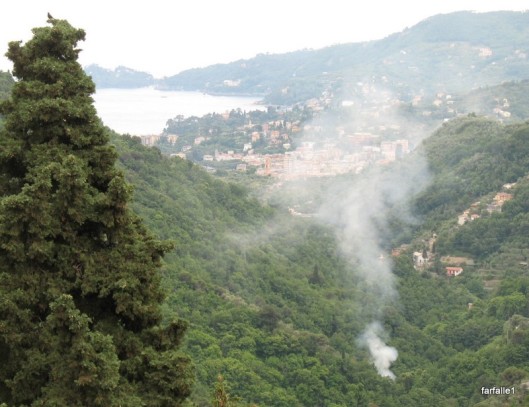
Native Americans knew how to use smoke to force rodents to flee their desert burrows; once they emerged the Indians killed and ate them.  We’re feeling a bit that way – like the rodents, that is, not Native Americans.

fire in the valley2

Italy is a burning country.  Visit Tuscany in late October or November and you will find a shroud of smoke from agricultural fires over the landscape.  Coming from a part of New England where one needed a permit from the Fire Marshall to do any burning on one’s property, it was a shock to us to see how many fires there are, almost every day, dotting the hills and mountains around us.  After a year, though, we understood.  It is such a verdant, lush country, there is simply no way to compost or keep up with the excess growth that needs to be removed. (According to the European Commission, agriculture is responsible for 9% of the world’s total greenhouse gas emissions (though to be fair, agriculture also serves as a G.G. sink).  A large percentage of those emissions come from methane and manure – turns out all those cow-fart jokes were based on fact after all)

Burning becomes delicate when you live amongst others.  It’s best if you or your neighbors burn on a day that is not dry and windy.  A day without a thermal inversion is good – then the smoke goes up instead of around and around.  And most of all, it’s really nice if you burn so your smoke doesn’t go right into your neighbors’ windows.

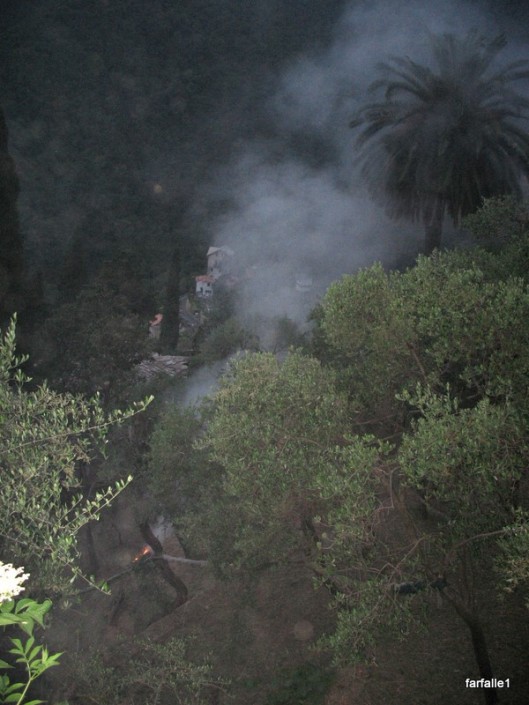
sandro's evening fire

Our neighbor Sandro has recently cut his grass, using, as everyone else does, a weed whacker rather than a mower.  It’s back-breaking, dirty, unpleasant work, and I’m happy to say Sandro does it once or twice a year, whether he needs to or not.  Oh meow! Of course the grass and weeds were up to his waist, which made his job even nastier.  Then, because there were so many whackings (can’t really call them ‘clippings’ in this case), he had to rake them into piles, and then he burned them.  Right under our terrace.  Ordinarily this wouldn’t bother us one whit, but that day we had an inversion, and the slight air movement we did have brought the smoke from his fire right into our house, never mind our yard where we had been hoping to work ourselves.  It started at 9:30 a.m. and he lit his last fire at 8:30 p.m.

There was a strange principle of physics at work that day: we were able to receive most of the smoke from two separate fires, one on either side of our terrace.  How this happens is not quite clear to me.  I think there’s probably a formula, something like:  NI = (e) SD + (w) SD +T / square root H, where ‘e’ is east, ‘w’ is west, SD is smoke diffusion, T is temperature, H is humidity and NI is neighbor irritability.  Risking the Bad Neighbor Award the Captain took our longest hose and put out one of the fires. Our eyes were still watering, and our throats were scratchy the next day.
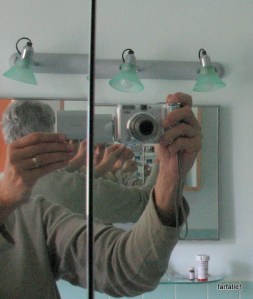
I’m hoping to be able to get out in our own garden tomorrow.  I’ve got a big brush pile that needs burning.

Ouch

15 Friday May 2009

Posted by farfalle1 in gardening, olives, Uncategorized

≈ 6 Comments

Tags

olive trees, tree pruning

Last year was a banner year for olive oil production.  We got more than we ever had before, and so did a lot of other people.  Since last year was so good, no one had very high expectations for this year, which made this winter a fine time prune the trees.

Olives love to be cut back.  In fact, the more you cut off, the more they seem to like it.  Our friend Richard, who has taken a course in the care of olive trees and is therefore our guru for all things olive, tells us that olive trees can move more than 30 meters over the course of a century.  Frequently when a trunk gets thick or a tree goes too long without tending, the contadino will simply cut down the tree several feet above the ground.  A new mirror-1shoot will shortly grow on the side of the remaining trunk, and that will eventually become the tree.  After a time it too will be too old, will be cut down, and will produce another – it’s kind of like looking at yourself in a mirror, in a mirror – the images recede seemingly forever.  So too the olives march away from the original tree. (It’s harder to take a picture of this than I imagined.)
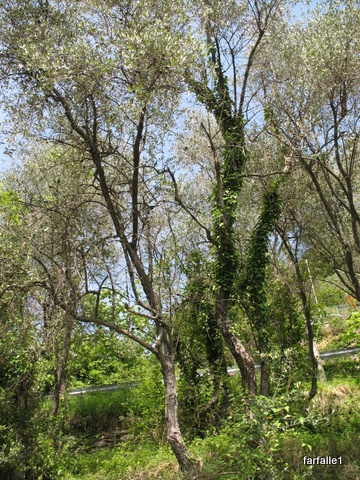
Which put me in mind of  Macbeth, who was told by an apparition in Act IV Scene i,

Macbeth shall never vanquished be
Until Great Birnam wood to High Dunsinane hill
shall come against him.

I guess if he’d lived in Italy instead of Scotland and Birnam wood was full of olive trees, it really might have arrived finally at High Dunsinane. But it would have taken far longer than the time Macbeth had available.

How bad can an olive get?  If left untended they can grow 20 or 30 feet tall.  Frequently vines and other opportunistic plants will attack them – though nothing seems to actually kill an olive tree.  Here’s a picture of a group of trees up the road from us which haven’t been touched for years, and which are bound up with ivy:

unpruned olives

pruned-olives

This is what some of our trees look like in their pruned state.  Pretty pathetic, isn’t it?  But you can see the younger one to the right of the older one in the foreground.  It’s on the move!  Looks like it’s headed for our neighbor’s property.  But he pruned his trees this year, too, so maybe eventually some of his will arrive on our land, and it will be a fair trade.

Weeds

28 Tuesday Apr 2009

Posted by farfalle1 in Flowers, gardening, Uncategorized

≈ 2 Comments

Tags

allium, weeds

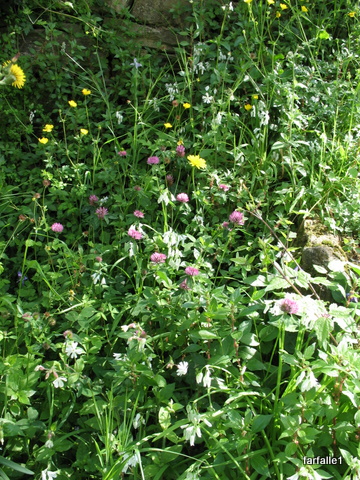
The Captain almost finished the mowing Saturday, a big job this time as it hasn’t been done since last November.  The grass is full of a kind of allium that grows all over the hillsides here and is blooming now.  The smell it makes when it is cut is, depending on your taste, heavenly or horrendous.  I happen to love onions and garlic, so I love the smell of the fresh-cut allium, but I imagine it might make my sister, who is allergic to all things allium, quake.
onion-weed
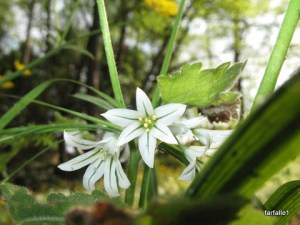
There is so much of this stuff growing, it’s a pity that it can’t be eaten. Our neighbor Rosa, the proprietress of the trattoria across the street, has warned us that eating this particular plant will make us sick. In spite of its yummy aroma we have heeded her advice. Wikipedia says there are 1250 varieties of allium – I haven’t been able to figure out exactly which this one is.  Here’s a close-up of its very sweet flower.

wild-onion-flower

After a winter of neglect the orto (veggie and flower garden) was in serious need of attention, which is my department. I tackled the ‘weeds’ around one of the rose bushes that act as sentries on the north side of the garden. One man’s weed is another man’s flower, I’ve heard it said, and I agree. It is hard to weed when the intruders are so pretty:
weed

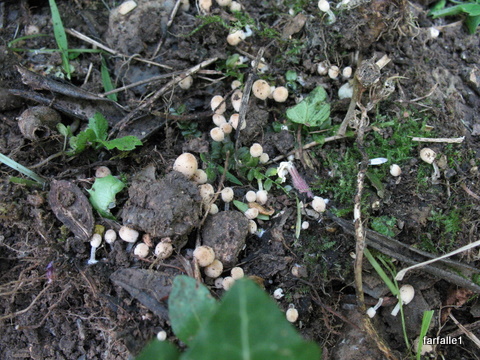
But the rose will be happier if it has some air around its feet, so the allium, buttercups and clover are now all in the compost. We knew it rained a lot over the winter, and proof was evident under the weeds:
little-mushrooms
Each of these mushrooms was about the size of the head of a pin – teeny. Their frilly cousins over on the stone wall are somewhat larger:

mushrooms-in-rocks

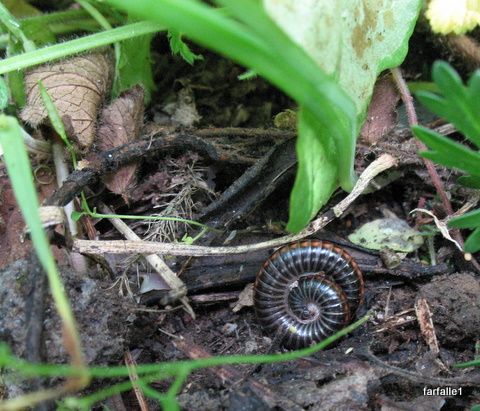
Digging around in the dirt, which is soft now from all the rain, one frequently turns up surprises such as worms, grubs, ants,or  beetles.  I found a few of this animal tightly curled up just under the surface of the ground. Uncurled they look ickily like worms and tend to thrash around in an unbecoming way, but curled up they are quite attractive.
curled-up-bug

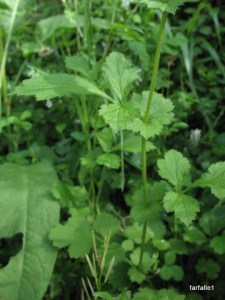
stinging-nettleWorking in the garden isn’t all sweet perfume and curious fauna. There is treachery hiding amongst the allium: the wretched stinging nettle. It looks innocuous enough, but touch it with your bare skin and you will get a prickly rash and a nasty stinging feeling that will last for ten or twenty minutes: not the end of the world, but something to watch out for.
There’s always a serpent in the garden, I guess, no matter where you live.

Olives!

02 Sunday Nov 2008

Posted by farfalle1 in Customs, Food, gardening, Italian habits and customs, Italy, Liguria, Uncategorized

≈ Leave a comment

Tags

olive harvest, olives

‘Tis the season to be harvesting olives.  All around us the hills are festooned with colorful nets, principally orange and yellow.  They are wrapped around the trees and are attached one to the next making the steep terraces look like a brightly colored slopes.  The olives drop into pockets in the low parts of the nets, whence they are easily collected.

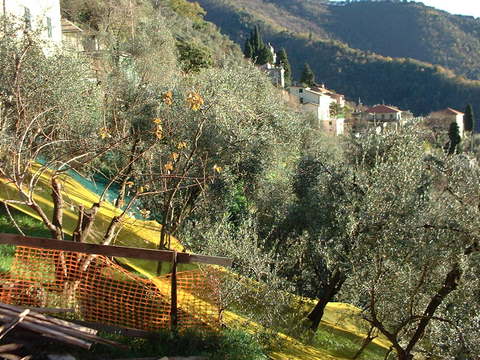
Our friends T and J have 51 trees which have been beautifully pruned and cared for.  They do not use nets, but instead hand-pick the olives, which is easy to do with their trees, none of which is much taller than we are.  The pruned and umbrella-shaped trees are much more productive than trees which are ‘let go.’

Our trees are in the latter category, very much in need of a pruning, which they will receive this winter.  They had been untended for at least 20 years when we bought our place.  Just after we moved in a friend sent a friend over who pruned some of the trees, but none of them very dramatically, and we’ve done nothing about it since.  This means the trees are huge.

We use a system that falls somewhere between the Old-Timers’ and T and J’s.  We have one net, which we carry from tree to tree (we have only about 15 trees).  Then we spend a very long time positioning poles to hold the net in place and form a bowl under the tree we’re working on.  There’s usually a fair amount of good-natured discussion about the placement of the poles, but eventually the net is positioned in a more or less stable way.  Then the Captain takes a long, thick bamboo stick and whacks the trees to make the fruit fall.  This is a time-honored way of removing fruit, but it’s fallen out of favor with modern olive-culturists.  The preferred method for removing fruit these days is the olive rake, a plastic rake with tines spaced just less than the average olive.  You attach the rake to the weapon of your choice (bamboo stick for us, this year as in photo) and comb out the branches.  The tines pull the olives off and send them spraying all over the place.  With luck a large percentage of them end up in the net.  The Captain alternates whacking with a stout stick and whacking with the rake on a long pole.  Meanwhile I use a rake on a small pole and wander around looking for low branches to strip.  I’m also crazy about finding olives on the ground and putting them in my basket – treasures!

This year the weather has not co-operated with many Ligurian harvesters.  We’ve had heavy rains and very strong winds, the heaviest since the great storm of 2000. A lot of olives have come down, and the weather for several days was just too nasty for gathering those that are still on trees.  Those who got their nets up in a timely fashion are doing very well (it’s a stand-out olive year).  Those who waited will have lost a lot of the crop unless, like me, they like to creep around on their hands and knees under the trees – not an efficient way to gather.

Once the olives are collected it’s good to get them to the mill, the ‘frantoio’, within three days.  Our favorite frantoio over the mountain in Val Fontanabuona went out of business while we weren’t looking last year (there was no olive harvest for anyone in Liguria last year – no olives). So instead yesterday we went to a different mill here in Rapallo.  Stay tuned for the report.  In past years we’ve gotten a liter of oil for each 7 or 8 kg of olives.  We had 111 kg this year (we also didn’t get all of our fruit picked before the weather turned on us).

If you’re really interested in olives, Mort Rosenblum has written a delightful book called ‘Olives’ and subtitled “The Life and Lore of a Noble Fruit,” which is stuffed with history, culture and even some recipes.  If you enjoy Life-in-Italy tales, Extra Virgin by the Englishwoman Annie Hawes is an engaging account of her purchase of a rustico and grove of olive trees above Imperia some twenty years ago; she writes appealingly and amusingly of her neighbors and of the land itself.

Foraging, or The Yin and Yang of Via San Maurizio di Monti

19 Tuesday Aug 2008

Posted by farfalle1 in gardening, Italy, Liguria, Rapallo, Uncategorized

≈ 4 Comments

Tags

blackberries, figs, foraging, nespolo, wild grapes

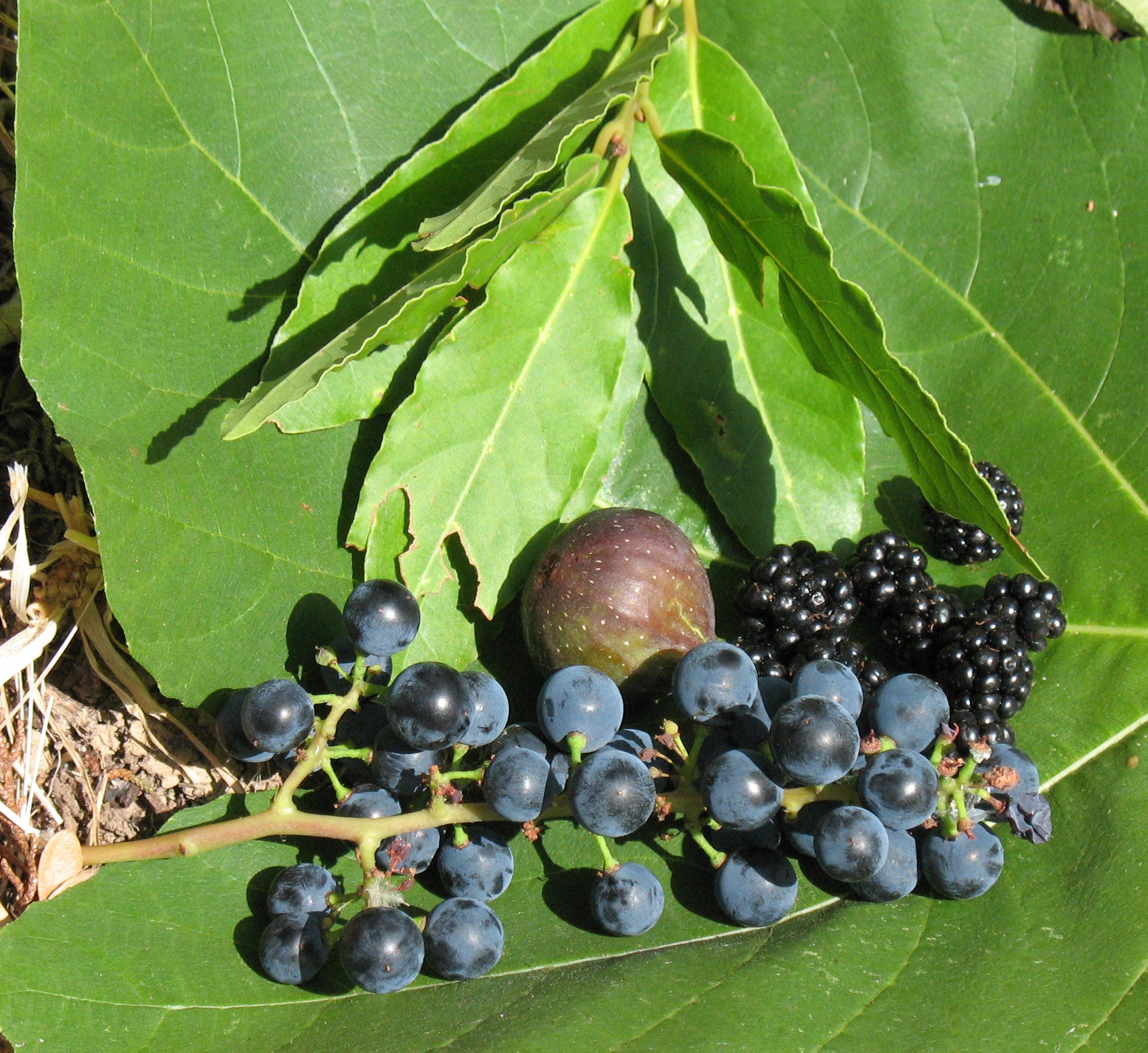
Just last week I was carping about the litter along the roads.  But look at what bounty the same stretch of road provided today:

These items are all growing wild in untended patches of hillside, so I guess they are free for the taking.

I’ve been watching the blackberries for the last weeks as they went from flowers to gnarly little green berries – finally they are ripe and as sweet as can be.

The grapes are very small, as you can see, but they explode with flavor in the mouth.  They have climbed up a nespolo (medlar tree).  The nespolos around here are all afflicted with some disease that turns the fruit black and wizzened, so we never get to harvest that.

The fig is also miniature, but the tree it’s from is enormous and uncared for and sprawling.  The fruits are just beginning to ripen.  I don’t happen to care for figs, but the captain does, so this one will not go to waste.

Behind it all is a sprig of bay, the kind that we used to buy in New England to flavor our stews and soups.  We have a bay tree beside our house, but it’s nice to know that anyone along the road can have as much bay as they need from the large stand that grows there.  The road crew hacks it back each year as it encroaches on the highway sight-lines (yes, the same wide highway that you will read about soon in “Parking”… stay tuned); the annual pruning keeps it low, thick and extremely productive.

No matter the season, it seems there’s something to be harvested in the wild.  Now it’s grapes, blackberries and figs; soon it will be mushrooms and chestnuts; in the spring it’s the wild herbs and greens to make preboggion.  Probably a lot of these roadside plants have sprung up from seeds the birds have dropped or from discarded plant material. It’s the kind of litter I like.

Public Gardens and Parks in Paradise

20 Sunday Jul 2008

Posted by farfalle1 in gardening, Italy, Photographs, Rapallo, Uncategorized

≈ Leave a comment

Tags

parks, public gardens

Being a tourist town, Rapallo has a vested interest in looking pretty, and pretty it is, especially the parts of town most frequented by visitors.  I took some photos of the gardens to show you (earlier in the summer, as a matter of fact).  You’ll find them here or over on the right under photographs (Rapallo Gardens).  When you click on the link you’ll find yourself on a Picasa page; I suggest choosing the slide show.

Each season the various beds are replanted with appropriate flowers.  In  Winter it’s cyclamen, in the Spring pansies, and so forth.  Even the smallest traffic circle has a little bed of flowers around the familiar blue sign with white arrows.

Rapallo has a large park which includes a play area for children, a mini-golf (!) and the public library (Biblioteca Internationale: books in Italian, French, German and English).  There are lovely gardens all through this park.  There are at least two other parks for children, one with a pint-sized train that toot-toots around the perimeter.  There is another park near an elementary school which is largely cement, but has the advantage of having a basketball court.

Upon entering Rapallo from the Autostrada the first thing you see is an island garden, lately with a desert theme.  It has sprouted almost as many signs as cacti, but is attractive none the less.  As an aside, in the photo of this garden take a look at the traffic coming into town – a Friday afternoon in July is not the optimum time to arrive in Rapallo by car.

The area between the Lungomare and the street that borders it is planted with cactus, palm trees (festooned with lights at Christmas) and low flowers.  The benches along the edge of the gardens are always filled to capacity with ancient Rapallesi.

The Whimsicality Prize has to go to a small garden at the end of Via Marsalla.  It boasts two kayaks that have been painted yellow and white and filled with flowers.  It is about the silliest thing I’ve ever seen.

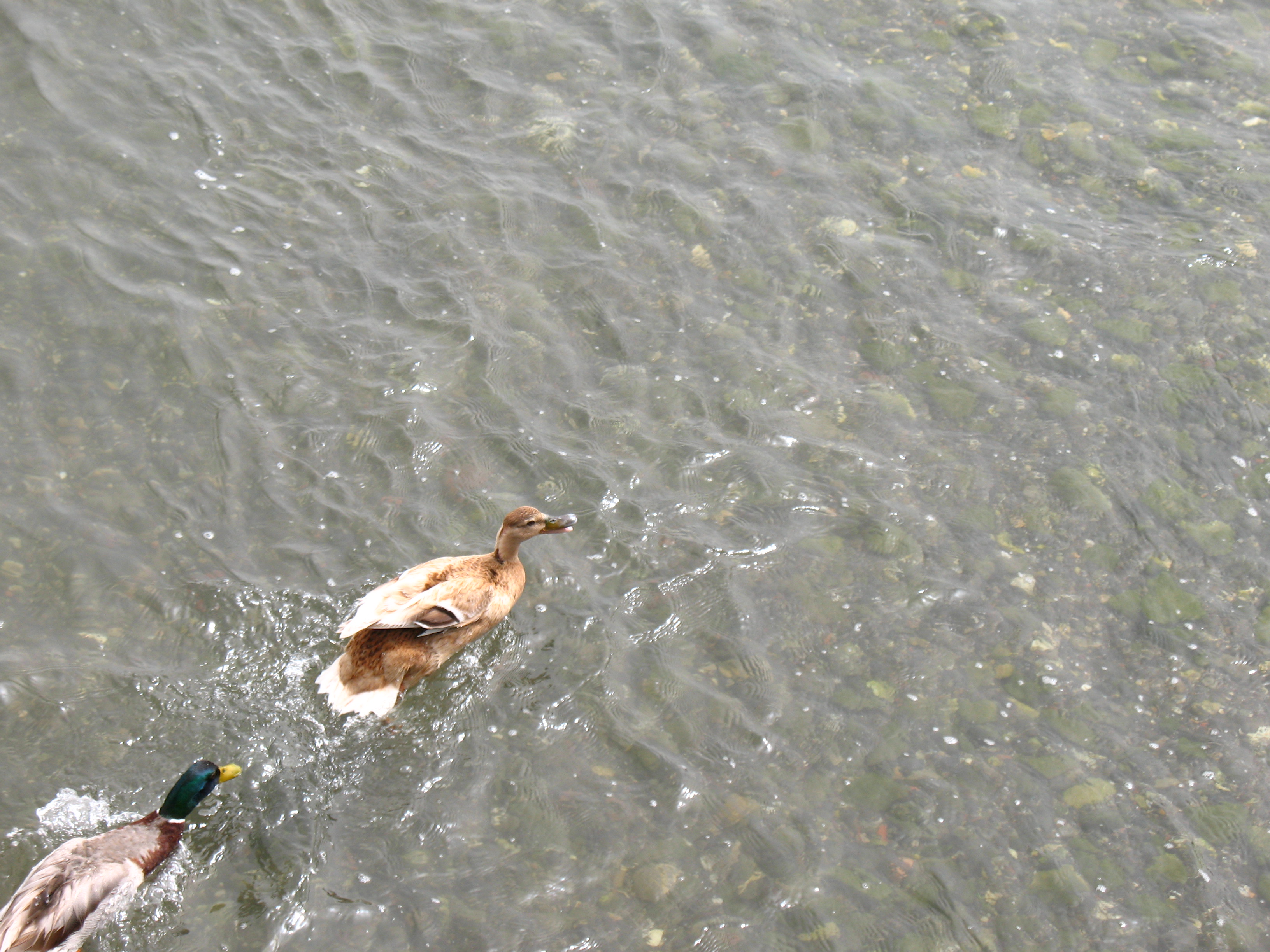
If the Polipo Fountain is the sculptural mascot of Rapallo (it is), the living mascots have certainly got to be the ducks.  There are zillions of them, some right at the shore, many more in the various rivers that empty into the Gulf.  The greatest number of them are mallards, but there are some large white ducks as well. And as if the city were running a genetics experiment, there are several pockets of very confusing looking ducks which are neither one species nor another, but are greatly speckled and strange.  The Rapallesi love their ducks; it’s not unusual to see someone with a huge sack hanging over the San Francesco Torrente tossing bread bits to the ducks below.  And oh my, in spring when the babies are born everyone keeps track of the number of chicks in each clutch and tallies the survivors weekly.

The ducks are amusing, especially when they turn up where you don’t expect them – walking along the top of a wall, for instance, or trying to enter a shop (this is where I won’t tell you the duck-in-store groaner with the punch line, “Oh I’ll just put it on my bill”) (oh all right, I’ll tell you: the duck walks into the Norfolk Pharmacy and asks for ChapStick.  Ever helpful Kevin supplies same and asks, “will that be cash or charge?” and the duck replies… but you know what the duck replies.)  Their quacking is one of Rapallo’s background noises; why is it that ducks quacking sound so officious?

What the ducks have to do with the gardens, I can’t say, certainly they are not frequent garden visitors.  They are both prominent features of the shore area, though, so they’ve ended up together here.

There are other gardens in Rapallo which I haven’t photographed or mentioned, for example the Verdi garden, where the famous Wall of the Partigiani is, and where a very interesting dog show was held last year for both pure-breeds and what the Italians gallantly call Fantasie (or less gallantly, Bastardi), which is what you and I call mutts.  The gardens and parks of Rapallo are lovely to look at, but above all they are put to great use, both casually by individuals and in an organized way for events.  Whether it is the above mentioned dog show, or movies and shows behind the Library, there is frequently something going on in one of the park areas of the town.  It’s very satisfying in a Yankee kind of way to see space not only made beautiful, but also put to good use.  Take a look at the pictures…

PS  There are two new recipes today, too – Clafoutis (no kidding, that’s what it’s called!): if you like custard and fruit you will love Clafoutis; it’s easy and yummy.  The Sicilian salad is made from oranges and onions; again, really easy, and quite beautiful as well.

One reason to love living in Rapallo…

11 Sunday May 2008

Posted by farfalle1 in gardening, Liguria, Rapallo

≈ 10 Comments

Tags

gardening, jasmine, roses

Climbing roses in front of jasmineThere’s something in the soil, the air, the water, the light, or perhaps all of them, that makes it impossible for things NOT to grow here.  This climbing rose began its life in Liguria as a little branch cut from the climbing roses that cover one side of the house of friends in Piemonte.  We stuck it in the dirt and the next spring we had a small rose bush ready to plant; it flowered the first year.  Now we have to prune it severely to keep it from running wild.

The jasmine, just fading away behind the rose, is another case in point.  It was here when we bought our house, but we enlarged the terrace and were quite sure that we had destroyed the jasmine.  We were sad about that, but accepting, because having a larger terrace was worth the cost in jasmine flowers.  To our surprise the next year the jasmine reappeared, and it, too, is a wanderer and spreader.  It has moved to the neighbors’ walls below us, and it is threatening to hide completely a small faucet/sink on the other side of the steps.  There’s no stopping either of these plants.

Italians are famous for their love of life; its true of the plants here too.  Especially in spring everything is bursting, flowering, fruiting, promising much and delivering more. 

We suffered in New England with our perennial gardens, coaxing and spoiling the plants, feeding, begging them to grow, flower, reproduce.  We worked on the soil, took out rocks, added mulch, and in general treated our gardens like spoiled children.  Here the soil looks unpromising.  It is very heavy with lots of clay and is full of rocks.  Evidently it’s just what the plants want.  I guess the moral is that the easiest path is not always the most productive (groan… well, there has to be a moral, right?)

Newer posts →

Enter your email address to follow this blog and receive notifications of new posts by email.

Join 114 other subscribers

rss

Subscribe in a reader

Search the Blog

A. Useful Links

  • bab.la language dictionary
  • Bus schedules for Tigullio
  • Conversions
  • English-Italian, Italian-English Dictionary
  • Expats Moving and Relocation Guide
  • Ferry Schedule Rapallo, Santa Margherita, Portofino, San Frutuoso
  • Italian Verbs Conjugated
  • Piazza Cavour
  • Rapallo's Home Page – With Link to the Month's Events
  • Slow Travel
  • The Informer – The Online Guide to Living in Italy
  • Transportation Planner for Liguria
  • Trenitalia – trains! Still the most fun way to travel.

C. Elaborations

  • A Policeman’s View
  • Driving School Diary
  • IVA refunds due for past Rifiuti tax payements
  • Nana
  • Old trains and old weekends
  • The peasant, the Virgin, the spring and the ikon
  • Will Someone Please, Please Take Me to Scotland?

D. Good Recipes - Best of the Week winners are starred

  • 'Mbriulata
  • *Baked Barley and Mushroom Casserole*
  • *Captain’s Boston Baked Beans*
  • *Crimson Pie*
  • *Louise’s Birthday Cake*
  • *Melanzane alla Parmigiana*
  • *Penne with Cabbage and Cream
  • *Pizzoccheri della Valtellina*
  • *Pumpkin Ice Cream*
  • *Risotto alla Bolognese*
  • *Rolled Stuffed Pork Roast*
  • *Spezzatini di Vitello*
  • *Stuffed Grape Leaves*
  • *Stuffed Peaches (Pesche Ripiene)*
  • *Swordfish with Salsa Cruda*
  • *Tagliarini with Porcini Mushrooms*
  • *Tagliatelli al Frutti di Mare*
  • *Three P's Pasta*
  • *Tzatziki*
  • 10th Tee Oatmeal Apricot Bars
  • Adriana’s Fruit Torta
  • Aspic
  • Bagna-calda
  • Best Brownies in the World
  • Clafoutis
  • Cold cucumber soup
  • Crispy Tortillas with Pork and Beans
  • Easy spring or summer pasta
  • Fish in the Ligurian Style
  • Hilary's Spicy Rain Forest Chop
  • Insalata Caprese
  • Lasagna al forno
  • Lasagna al Forno con Sugo Rosato e Formaggi
  • Lemon Meringue Pie
  • Leo’s Bagna Cauda
  • Leo’s Mother’s Stuffed Eggs
  • Louis’s apricot chutney
  • Mom's Sicilian Bruschetta
  • No-Knead (almost) Bread
  • Nonna Salamone's Christmas Cookies
  • Pan Fried Noodles with Duck, Ginger, Garlic and Scallions
  • Pesto, the classic and original method
  • Pesto, the modern, less authentic method
  • Pickle Relish
  • Poached pears
  • Poached Pears
  • Polenta Cuncia
  • Recipes from Paradise by Fred Plotkin
  • Rustic Hearth Bread
  • Shrimp and Crayfish Tail Soup
  • Sicilian salad
  • Slow Food Liguria
  • Slow Food Piemonte and Val d'Aosta
  • Spinach with Garlic, Pine Nuts and Raisins
  • Stuffed Eggs, Piemontese Style
  • The Captain’s Salsa Cruda
  • Tomato Aspic
  • Zucchini Raita

E. Blogroll

  • 2 Baci in a Pinon Tree
  • Aglio, Olio & Peperoncino
  • An American in Rome
  • Bella Baita View
  • Debra & Liz's Bagni di Lucca Blog
  • Expat Blog
  • Food Lovers Odyssey
  • Italian Food Forever
  • L’Orto Orgolioso
  • La Avventura – La Mia Vita Sarda
  • La Cucina
  • La Tavola Marche
  • Rubber Slippers in Italy
  • Southern Fried French
  • Status Viatoris
  • Tour del Gelato
  • Weeds and Wisdom

Photographs

  • A Day on the Phoenix Light Rail Metro
  • Apache Trail in the Snow
  • Aquileia and Croatia
  • Birds on the Golf Course
  • Bridge Art
  • Canadair Fire Fighters
  • Cats of Italy
  • Cloudy day walk from Nozarego to Portofino
  • Fiera del Bestiame e Agricultura
  • Football Finds a Home in San Maurizio
  • Hiking Dogs
  • Mercatino dei Sapori – Food Fair!
  • Moto Models
  • Olive pressing
  • Rapallo Gardens
  • Rapallo's Festa Patronale
  • Ricaldone and the Rinaldi Winery
  • Rice Fields
  • Sardegna ~ Arbatax and Tortoli
  • Sardegna ~ San Pietro above Baunei
  • Sardegna ~ The Festa in Baunei
  • Scotland, including Isle of Skye
  • Slow Food 2008 Salone del Gusto
  • The Cat Show and the Light Rail Fair
  • The desert in bloom
  • Trip to Bavaria

Pages

  • Fagioli all’ucelleto

Archives

Recent Posts

  • A Superior Visit
  • Fun at the Ranch Market
  • The MAC
  • Welcome Tai Chi
  • Bingo Fun for Ferals
December 2025
M T W T F S S
1234567
891011121314
15161718192021
22232425262728
293031  
« Jul    

Member of The Internet Defense League

Blog at WordPress.com.

  • Subscribe Subscribed
    • An Ex-Expatriate
    • Join 114 other subscribers
    • Already have a WordPress.com account? Log in now.
    • An Ex-Expatriate
    • Subscribe Subscribed
    • Sign up
    • Log in
    • Report this content
    • View site in Reader
    • Manage subscriptions
    • Collapse this bar
 

Loading Comments...