• Contact
  • Elaborations
    • A Policeman’s View
    • Driving School Diary
    • Great Danes
    • IVA charged on Tassa Rifiuti
    • Nana
    • Old trains and Old weekends
    • The peasant, the virgin, the spring and the ikon
    • Will Someone Please, Please Take Me to Scotland??
  • Recipes
    • ‘Mbriulata
    • *Baked Barley and Mushroom Casserole*
    • *Captain’s Boston Baked Beans*
    • *Cherry Tart*
    • *Crimson Pie*
    • *Louise’s Birthday Cake*
    • *Melanzane alla Parmigiana* – Eggplant Parmesan
    • *Penne with Cabbage and Cream
    • *Pizzoccheri della Valtellina*
    • *Pumpkin Ice Cream*
    • *Risotto alla Bolognese*
    • *Rolled Stuffed Pork Roast* on the rotisserie
    • *Shrimp and Crayfish Tail Soup*
    • *Spezzatino di Vitello*
    • *Stuffed Grape Leaves*
    • *Swordfish with Salsa Cruda*
    • *Tagliarini with Porcini Mushrooms*
    • *Tagliatelli al Frutti di Mare*
    • *Tzatziki*
    • 10th Tee Apricot Bars
    • Adriana’s Fruit Torta
    • Artichoke Parmigiano Dip
    • Best Brownies in the World
    • Clafoutis
    • Cod the Way Sniven Likes It
    • Cold Cucumber Soup
    • Crispy Tortillas with Pork and Beans
    • Easy spring or summer pasta
    • Fagioli all’ucelleto
    • Fish in the Ligurian Style
    • Hilary’s Spicy Rain Forest Chop
    • Insalata Caprese
    • Kumquat and Cherry Upside Down Cake
    • Lasagna Al Forno con Sugo Rosato e Formaggi
    • Lemon Meringue Pie
    • Leo’s Bagna Cauda
    • Leo’s Mother’s Stuffed Eggs
    • Louis’s Apricot Chutney
    • Mom’s Sicilian Bruschetta
    • No-Knead Bread (almost)
    • Nonna Salamone’s Famous Christmas Cookies
    • Pan-fried Noodles, with Duck, Ginger, Garlic and Scallions
    • Pesto
    • Pesto
    • Pickle Relish
    • Poached Pears
    • Polenta Cuncia
    • Pumpkin Sformato with Fonduta and Frisee
    • Rustic Hearth Bread
    • Sicilian Salad
    • Soused Hog’s Face
    • Spotted Dick
    • Swedish Tea Wreaths
    • The Captain’s Salsa Cruda
    • Tomato Aspic
    • Vongerichten’s Spice-Rubbed Chicken with Kumquat-Lemongrass Dressing
    • Winter Squash or Pumpkin Gratin
    • Zucchini Raita

An Ex-Expatriate

~ and what she saw

An Ex-Expatriate

Category Archives: Italian festas

An Unexpected Festa

13 Monday Oct 2014

Posted by farfalle1 in Holidays, Italian festas, Italian history, Italian holidays, Rapallo, Uncategorized

≈ 2 Comments

Tags

Columbus Day, Statue of Columbus

Speedy and I took a stroll along the Lungomare and over to the Port in Rapallo on Sunday. To our delight we stumbled on a small festa we had not known about: a celebration of the centennial of the statue of Columbus that points to the new world.

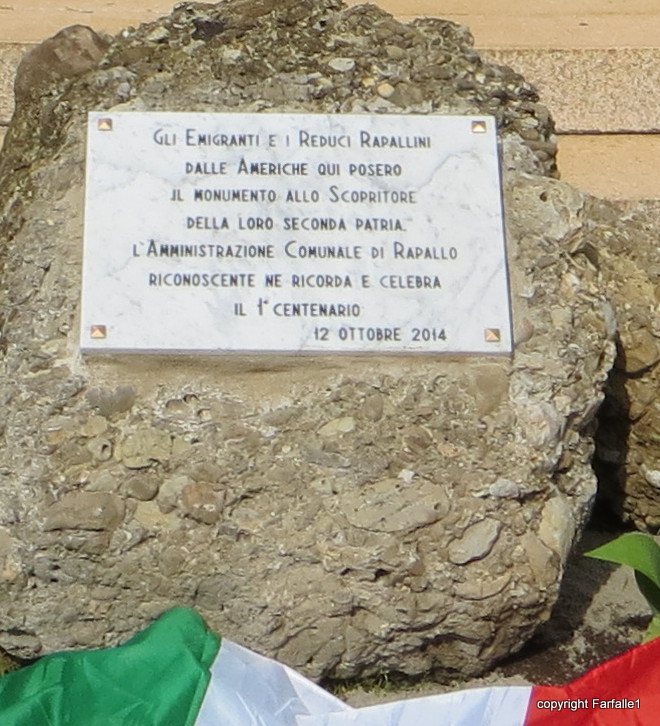
Columbus statue in Rapallonew plaque on columbus statueThe festa was in honor of the 100th anniversary of the erection of the statue. The marble plaque newly placed on the rock in front of the statue says, “The Rapallini emigrants and those who returned from the Americas here placed a monument to the discoverer of their second country. The Administration of the Town of Rapallo gratefully remembers and celebrates the first centenary.”

A small crowd gathered to hear distinguished Professor Massimo Bacigalupo (Literature in English, University of Genova) speak on the history of the statue and meaning of the various figures on it. He was eminently qualified, being the product of an Italo-American marriage. He told me he remembers that when he was young his visiting American grandmother would point to the statue and say, “That is the direction I must go soon.”

Professor Bacigalupo after his talk.

Professor Bacigalupo after his talk.

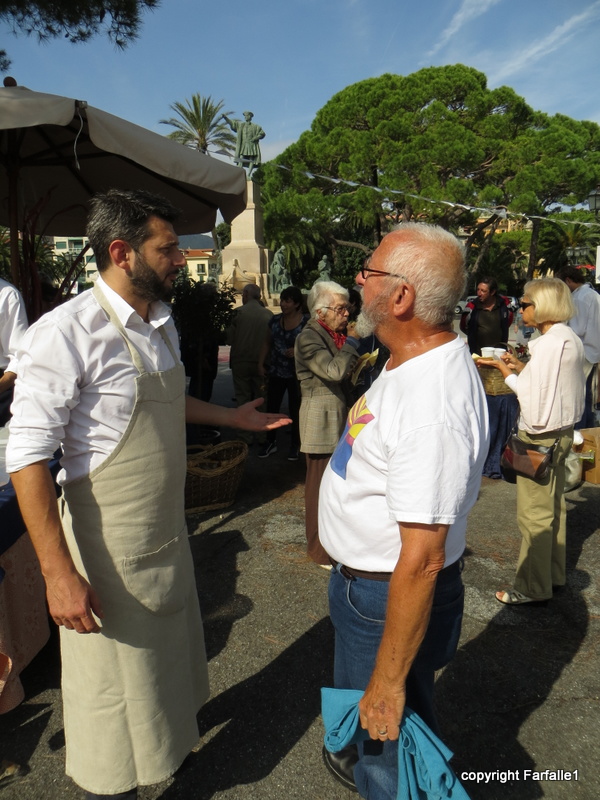
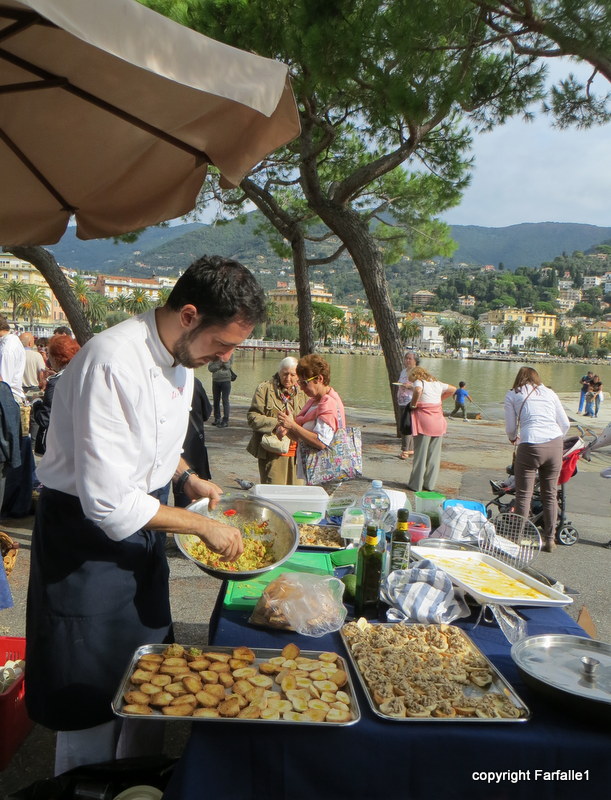
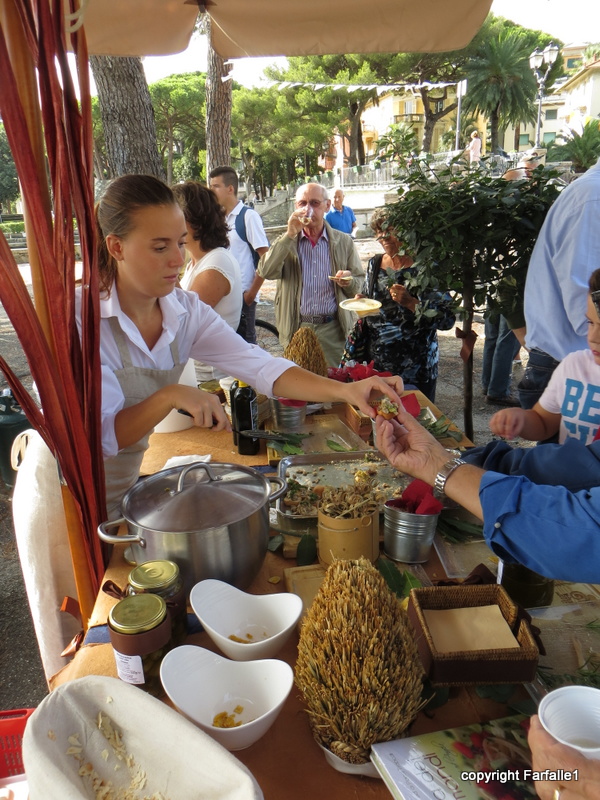
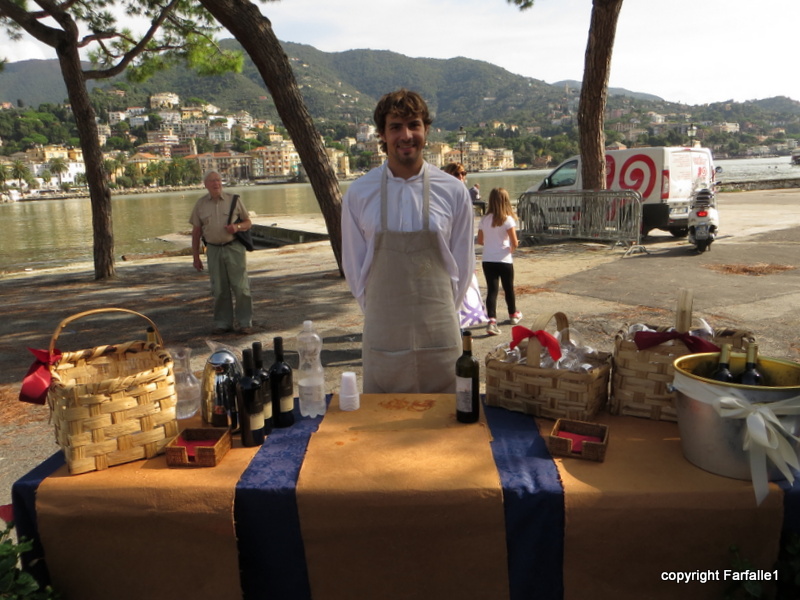
Would it be an Italian celebration without food? It would not! Food was under the capable direction of Guido, owner of Parla come Mangi, a fine food emporium in the old section of Rapallo. His choices of food reflected the new world (guacamole, tortilla chips) as well as the old (wine).

Guido and Speedy catch up.

Guido and Speedy catch up.

guacamole and other festive food

A big bowl of guacamole destined for toast points.

food almost all gone

Tortilla chips were a hit – the bowls are empty.

Red or white, the choice is yours

Red or white, the choice is yours

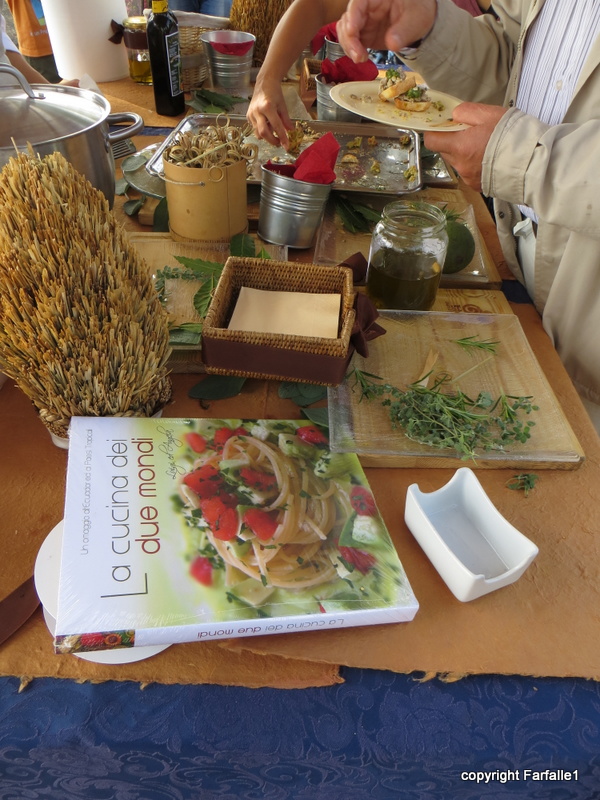
cookbook

a cookbook celebrating Italian-American cuisine

When we read about Italians emigrating to ‘America’ we Americans think of the U.S. In spite of the large number of Italian immigrants and their descendants in the States, more Italians emigrated to Central and South America. According to Wikipedia Brazil has the largest number of people with full or partial ancestry outside of Italy itself.  50-60% of Argentinians can lay claim to full or partial Italian ancstry. Uruguay and later Venezuela also attracted many emigrants, as did chilly Canada.

And that is why, in the photo at the top of this post, there are flags of so many countries, all of whom welcomed Italians in the 19th and 20th centuries, and continue to do so today, just as Italy welcomes those of us coming in the other direction.

Happy Columbus Day!

Cows Come Home… Again!

20 Saturday Sep 2014

Posted by farfalle1 in Alps, Animals in Italy, Italian festas, Italian food, Italian men, Italy, Piemonte, Portraits of people, Uncategorized

≈ 4 Comments

Tags

Antique tractors, Cowherding, Cows, Fera 'd San Bartrame', Oropa, Tractors


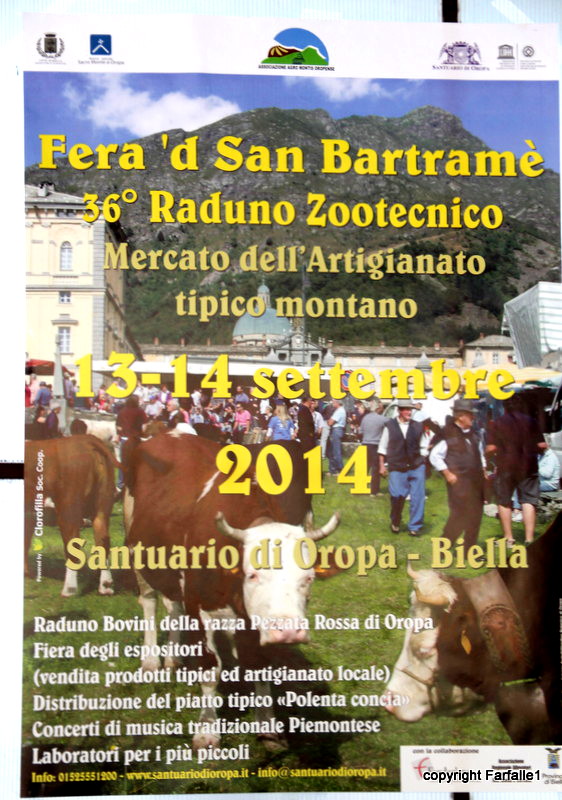
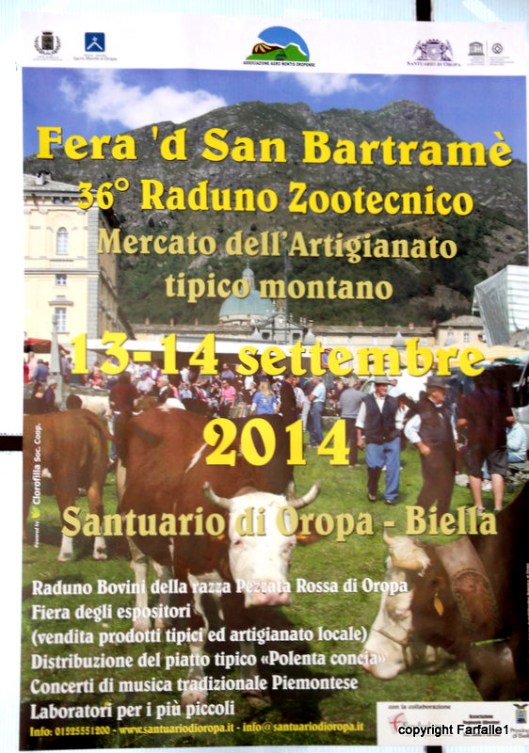
fair poster

Those who are faithful readers of this blog know there are few things that give us more pleasure than a day spent with the cows (read about last years outing here). Last weekend we enjoyed just such a day, made even better by being with dear friends.

The Santuario di Oropa sits high in the pre-Alps of Piemonte (region of Biella) at an altitude of some 1,100 meters (3,610 + feet). Its long history dates back in lore to the 4th century AD. In fact the first mention of simple churches in Oropa, dedicated to the Saints Mary and Bartholomew, occurred in the 13th century. (San Bartrame’ is Piemontese dialect for St. Bartholmew.) The present series of buildings were begun in the first years of the 17th century, with work continuing to this day. The most recent basilica was consecrated in 1960.  Our friends told us there is a saying in Piemonte to describe something that is never finished – ‘it’s another Oropa.’ There is a good, brief history of the Sanctuary, which is an important pilgrim destination here (in English).

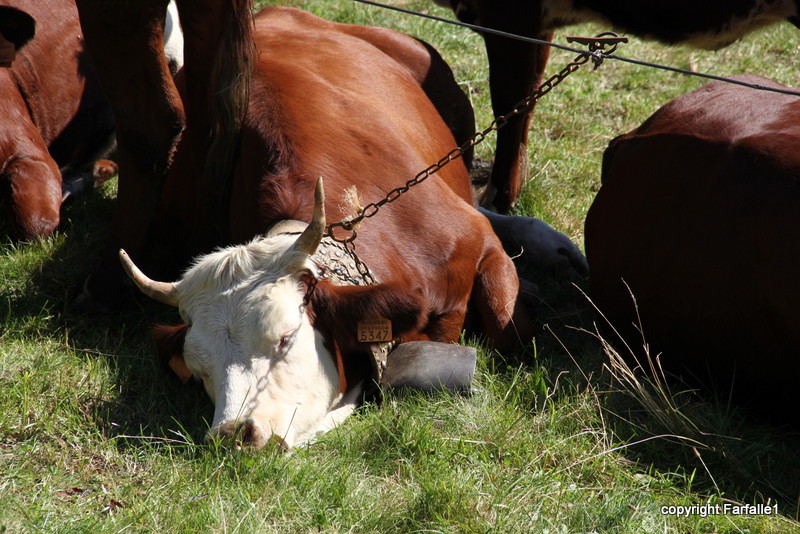
However, it was not as pilgrims that we visited the sacred site – it was as cow fanciers, in particular to get to know the Pezzata Rossa di Oropa, one of sixteen minor cattle breeds recognized by the Italian Ministry of Agriculture. The standard for the breed calls for a ‘red’ coat with white spots. In fact, there have been breeding changes over the years and, in addition to the standard, there are now all white Pezzate and black and white Pezzate.

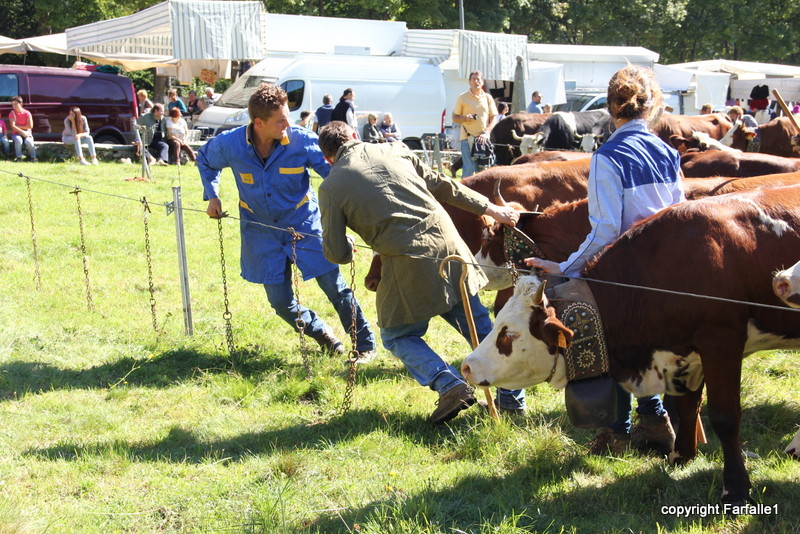
During the summer months the cows live with their herders on the high fields of the pre-Alps; it is too cold for them to remain there through the winter, and the Festa we attended was held to celebrate their return to civilization. The herds are brought down a very narrow road and driven into a large field where they are tied by chains to a flimsy wire fence.

pretty cowherd

That’s not a cane in the young woman’s hand, that’s the rather delicate shepherd’s crook that all the herders carry. Every now and then when a cow goes in the wrong direction she receives a little whack on the fanny with the crook along with a shout telling her what to do. Getting the cows to approach the fences in the field sometimes took a bit of effort. The crook was freely employed, as was simple strength.
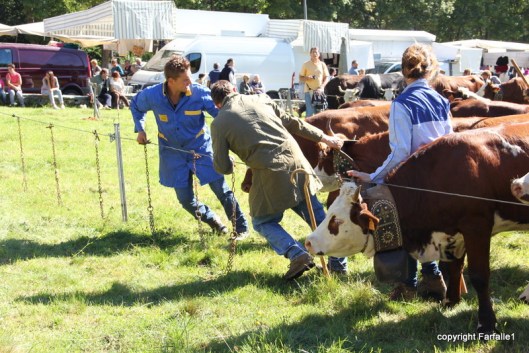
pezzata rossa di oropa chaining them up-003There was a delightful amount of confusion while the herds were being organized – some of the cows simply did not want to stand still in a row and would try to wander off.
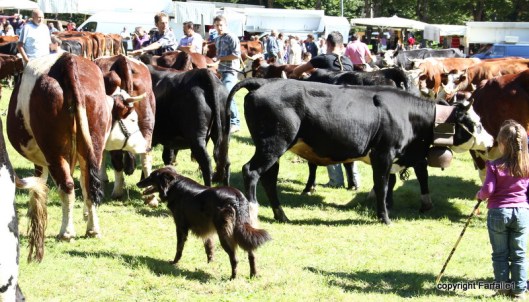
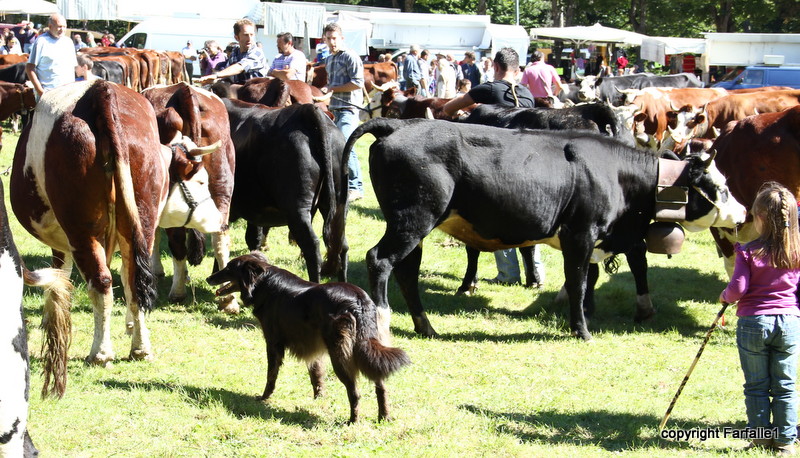
watchful dog and young cowherd

As in Scotland, dogs are central to controlling the herds, though the dogs at Oropa were very different than the border collies we have seen demonstrating herding techniques (sheep! geese!!). We asked one of the herders what the breed is and the succinct answer was, ‘bastardi.’ They certainly were bright and attentive to their work, though sometimes they looked a little goofy.
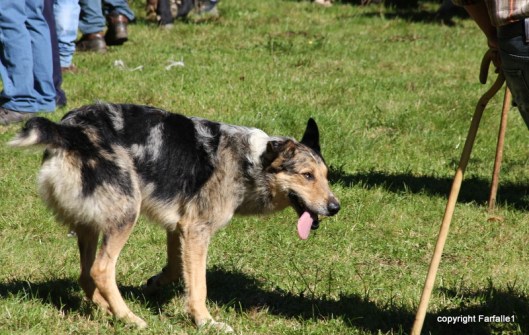
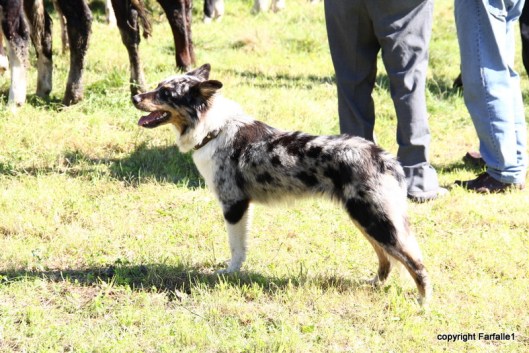
brindle dog with tongue out

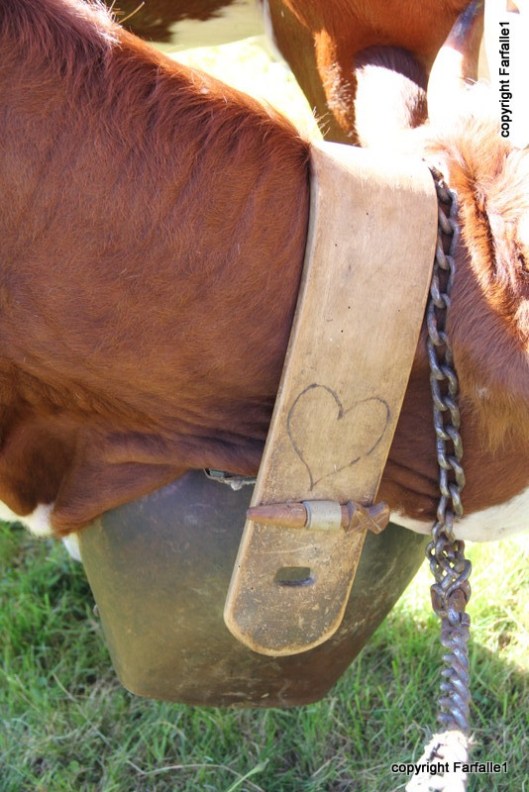
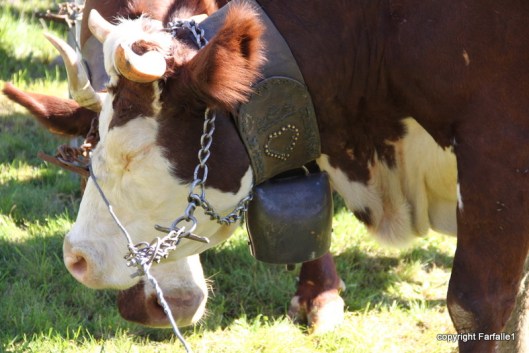
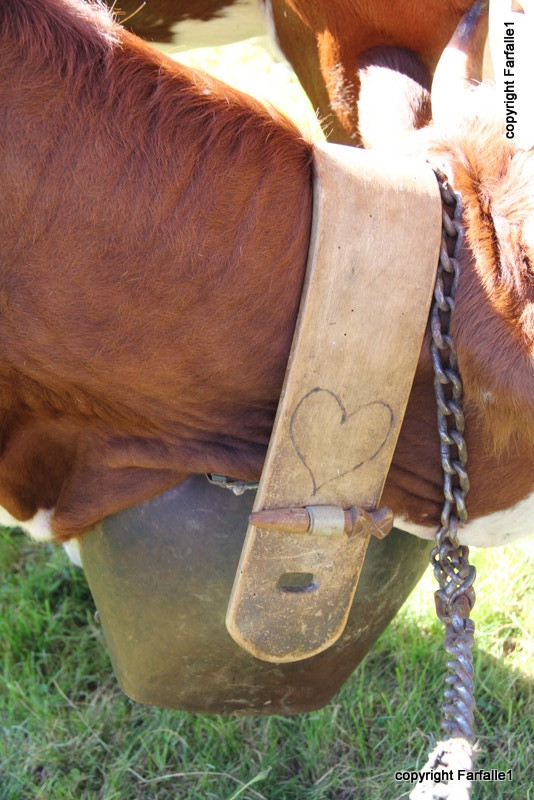
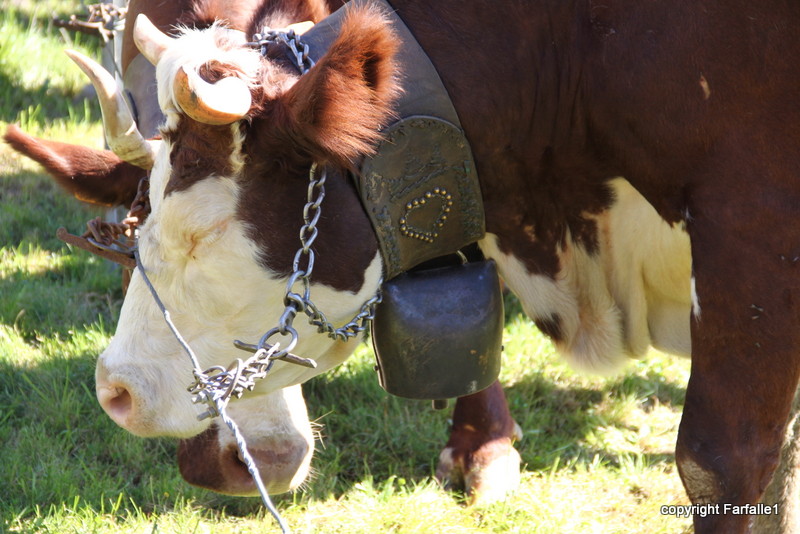
brindle cow dog-001Each herd wears its own identifying collar for the occasion. The old collars are made of wood, new ones of leather, and many are ornately decorated.
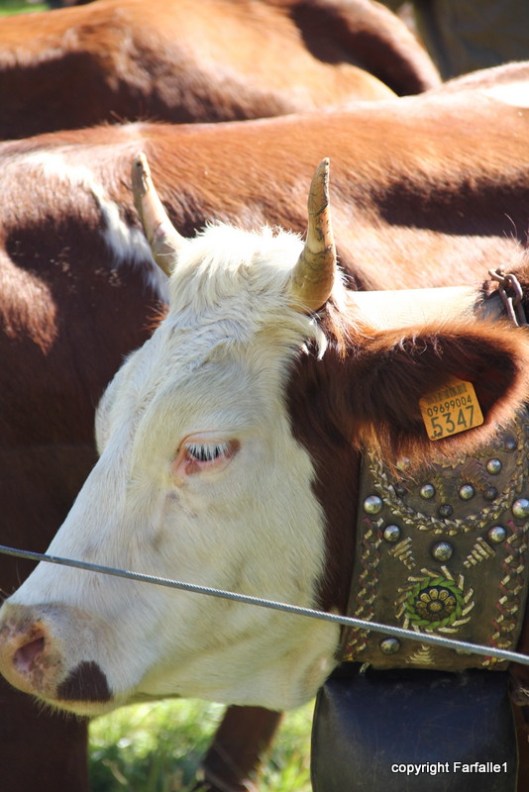
pezzata rossa di oropa leather collar pezzata rossa di oropa old wooden collar-001pezzata rossa di oropaMost of the cows were cows, but there was the occasional bull. This one was pretty randy, but he was wearing a home-made prophylactic device. Inelegant, perhaps, but effective
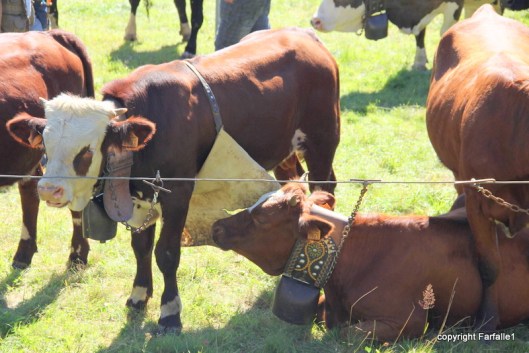
pezzata rossa di oropa finding shade

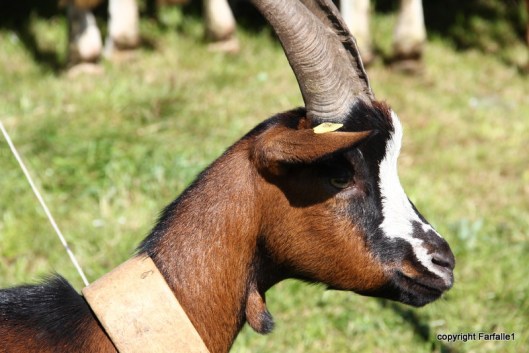
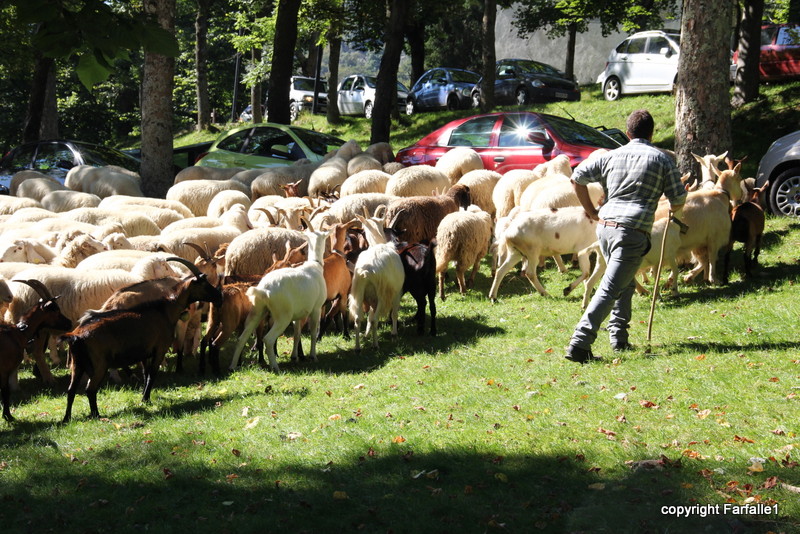
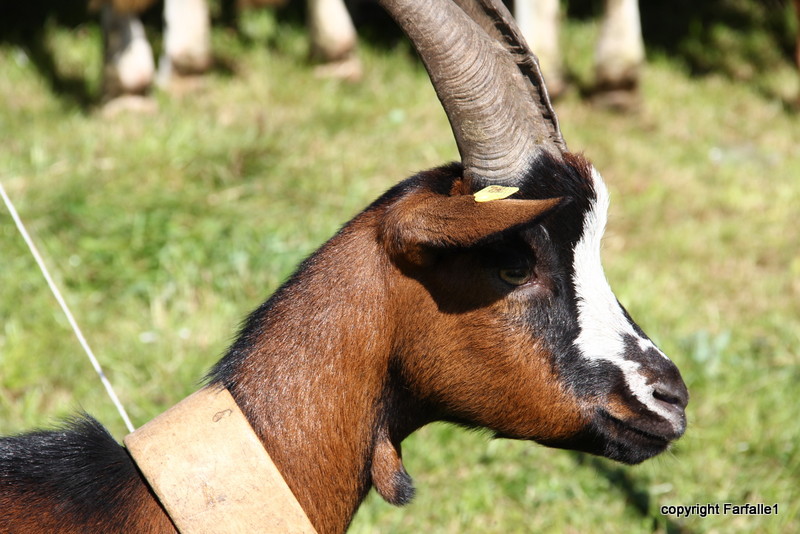
Cows weren’t the only beasts being brought down from the hills. There was a fine collection of sheep, interspersed with goats, that were put in a field across the road from the cows. I should mention that almost every single animal was wearing a bell – what with the shouting of the herders, the clanging of the bells and the bellowing and bleating of the animals there was a fine cacophony.
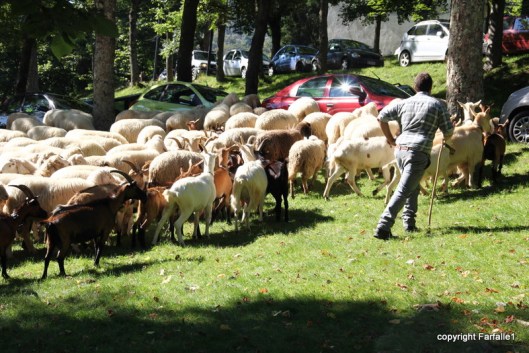
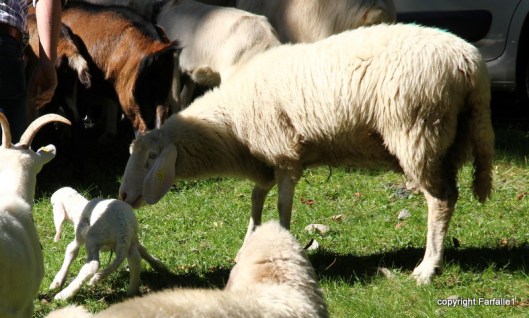
corraling the sheep and goats sheep and babygoatHaving been to Egypt in the last post here I couldn’t help but think that this pair was from that ancient land – such fine profiles.
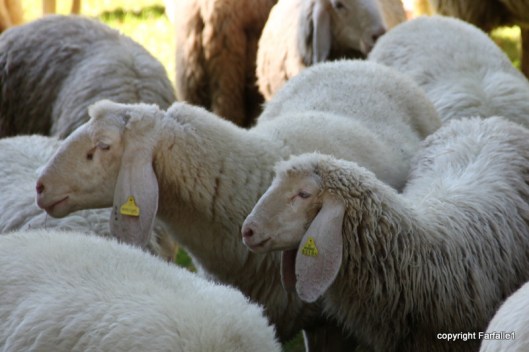
sheep egyptian profileYou may be wondering why the cows were all tied up in that big field. The reason is that each herd was judged, and a prize awarded to the herd deemed to be in the best condition after a summer spent up on the mountain. I’m ashamed to say I was thinking about lunch and missed the prize presentation, but I did get to the stand in time to catch a glimpse of the winners. It seemed to be a rather low-key part of the event.
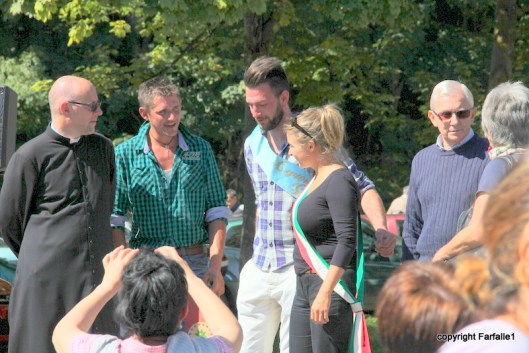
prize winners

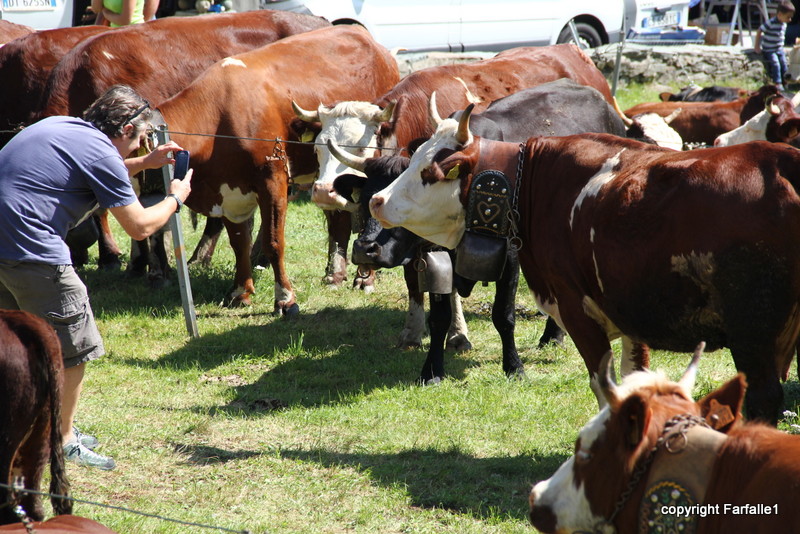
There was ample opportunity for the many photographers present to take pictures of cows – and you can’t tell me the cows weren’t posing.
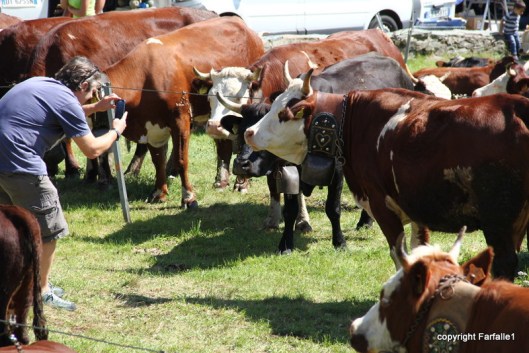
pezzata rossa di oropa posing for photographer

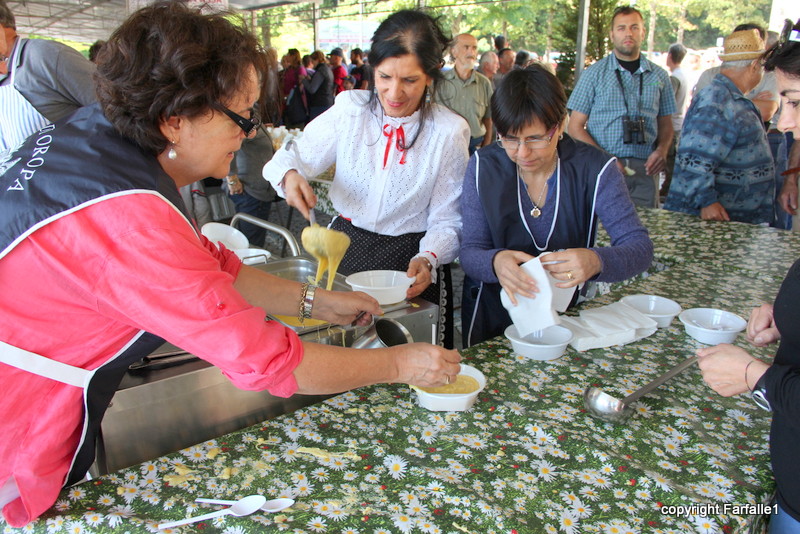
Did someone mention lunch?? It wouldn’t be an Italian festa without a good meal. The featured specialty was polenta cuncia, one of the world’s great comfort foods (you can find a recipe for it here). Basically it is a fairly finely ground corn meal cooked with either water or stock with the local cheese, toma, stirred in at the end. It is rich, hearty and extremely satisfying. The Oropa iteration was dressed with a couple of tablespoons of melted butter, a fine improvement. It took three ladies to serve the polenta – one to glop it in a bowl, one to add the butter, and one to stick in a spoon and hand it to the hungry pilgrim, along with a napkin.
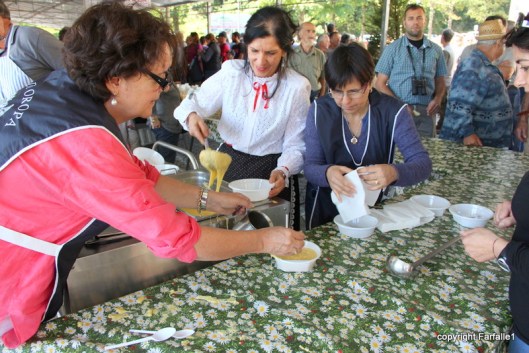
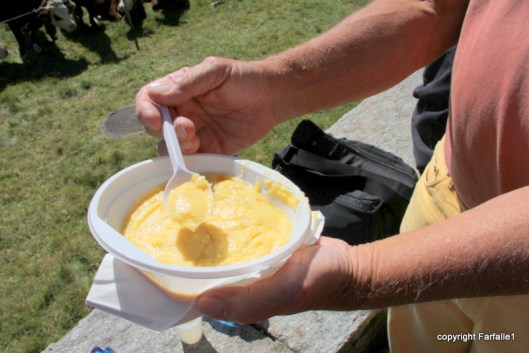
serving polenta-007polenta cuncia with black butter-001It was fabulous, and after a morning of chasing cows and sheep it was most welcome, especially washed down with the earthy local red wine.

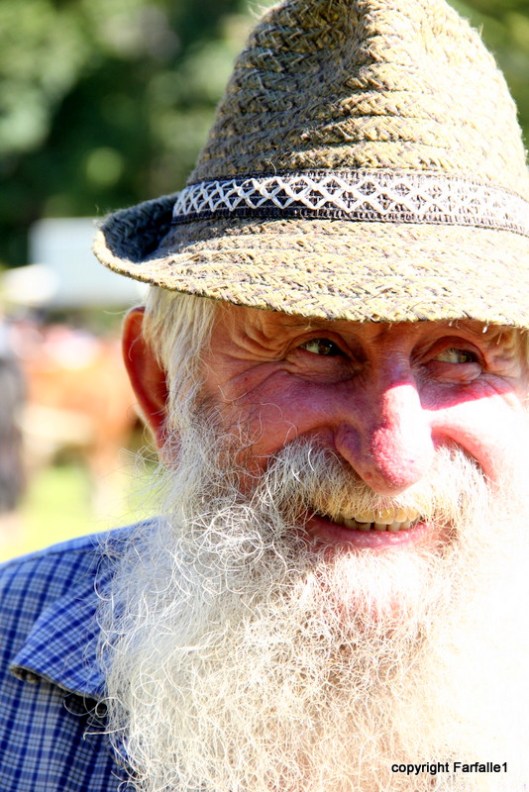
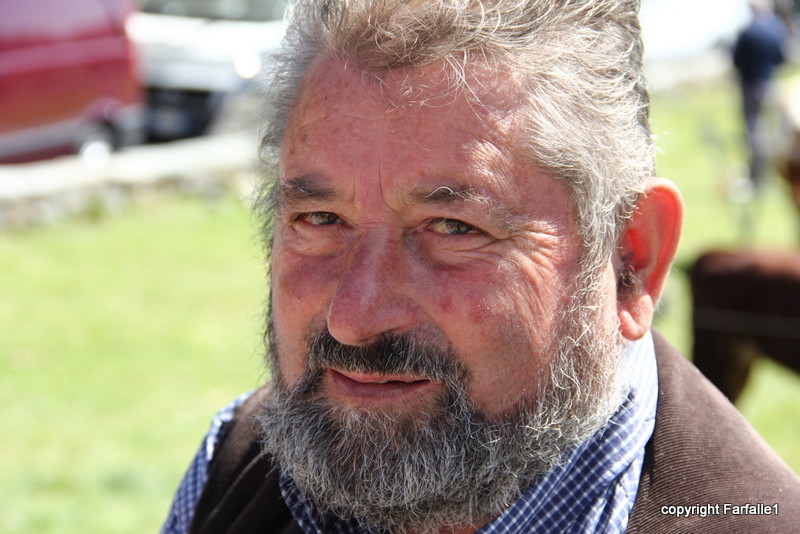
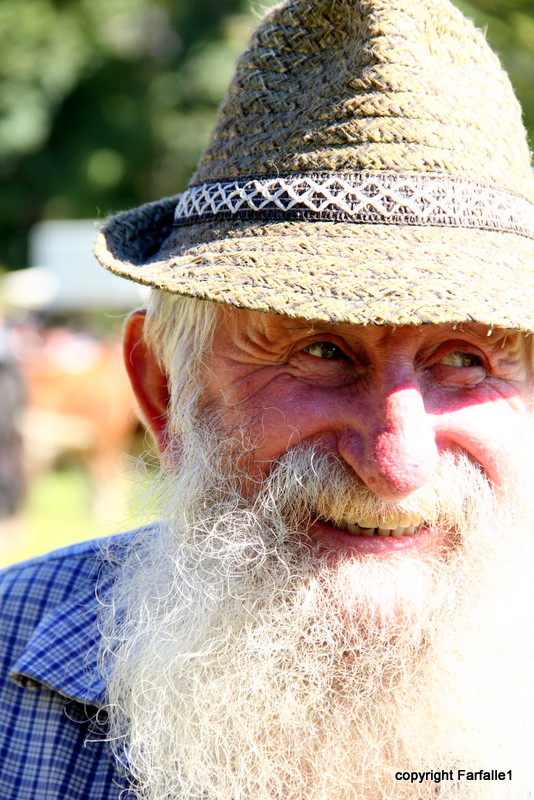
For me one of the best parts of an event like this is looking at the people. The cowherds were extremely kind in letting me take their pictures. These are men whose families have probably lived in Piemonte for centuries.
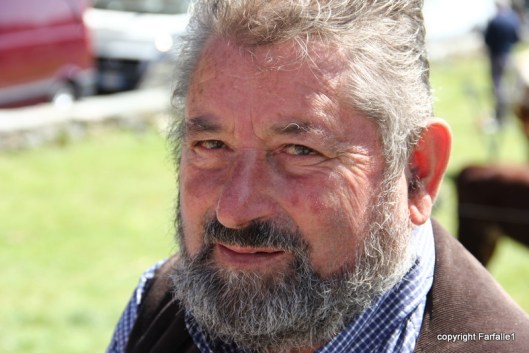
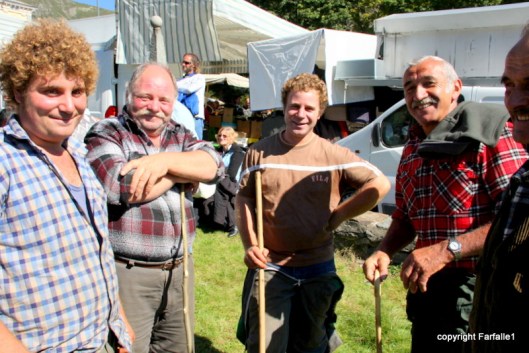
cowherd-001

cowherds cowherdThere was a lot more going on during the festa – a large array of vendors had local (and some not so local) crafts for sale; there was an excellent exhibit of tractors, old and new; there was a photo exhibit in a tram car that for decades carried sick people from Biella to Oropa for blessings and cures; in the church there was a display of preseppe (creche scenes) from all around the world (my favorite: the one from a nearby village made from marzipan); there was music. If you would like to see some pictures of these things, in addition to more pictures of the animals, please click here (for a slide show click the icon in the upper right that looks like a couple of small rectangles).

The weather was glorious, one of the few sunny days Oropa enjoys each year; it was warm, the crowd was happy, and the animals seemed to be too. It was just so much fun – and exhausting – for everyone.

pezzata rossa di oropa tired

THE END

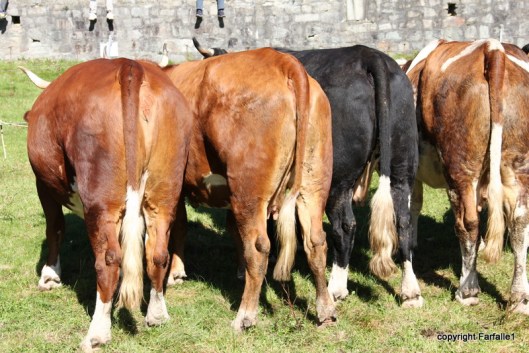
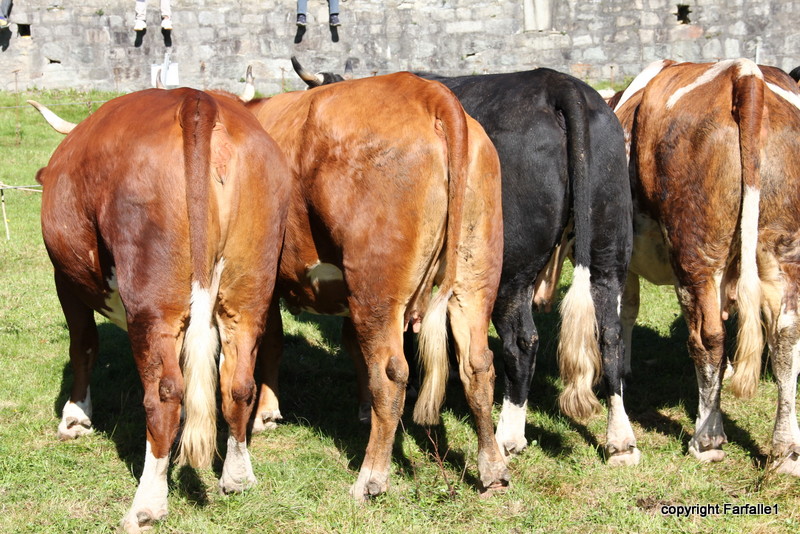
cow backsides

Porchetta

05 Tuesday Aug 2014

Posted by farfalle1 in Customs, Food, Italian festas, Italian food, Italian recipes, Liguria, Rapallo, San Maurizio di Monti, Uncategorized

≈ 12 Comments

Tags

Comitato Fuochi, Festa di San Maurizio

Festa at San Maurizio porchetto-002San Maurizio’s wonderful Comitato Fuochi put on a weekend-long shindig a couple of weeks ago, their Summer Festival. This doughty group of volunteers was first formed in 1903. In the early days the Committee divided our frazione into three districts.   In the 1940’s the three districts became two, and in the 1980’s the two became one; since 2006 the group has been particularly active. Working with the town of Rapallo they helped organize the construction of the soccer field where they now hold their events. In the intervening years they have added several permanent and temporary structures so events can be held in all weather.

The main purpose of the group is to have a Festa in honor of our frazione’s patron saint, San Maurizio each September. One of the highlights of the annual Festa Patronale is the fireworks display; this, of course, costs money, and part of the reason for the other four annual Festas (Carnivale, Spring, Summer, Chestnuts) is to raise money for the main event.

The weekend festa is comprised of food and entertainment. Being old farts we didn’t make it down to the soccer field to enjoy the entertainment.

Festa at San Maurizio the talent

In fact, sadly the Friday night show was rained out. We did, however, stop in for lunch on Sunday, not knowing what we would find on the menu. To our delight we found trofie al pesto (a traditional Ligurian pasta), totani (small fried squid) and porchetta, seen above, amongst other things.

Wikipedia describes porchetta as “a savoury, fatty, and moist boneless pork roast of Italian culinary tradition. The body of the pig is gutted, deboned, arranged carefully with layers of stuffing, meat, fat, and skin, then rolled, spitted, and roasted, traditionally over wood. Porchetta is usually heavily salted in addition to being stuffed with garlic, rosemary, fennel, or other herbs, often wild. Porchetta has been selected by the Italian Ministero delle Politiche Agricole, Alimentari e Forestali as a prodotto agroalimentare tradizionale (“traditional agricultural-alimentary product”, one of a list of traditional Italian foods held to have cultural relevance).” The dish originated in central Italy, but is now popular throughout the country. You can frequently find it at weekly markets at a special truck, and it turns up often at festas like ours as well. This particular porchetta came from Tuscany, from Montepulciano to be exact. And it was delicious, according to Speedy (I ate the totani, which was also really, really good).
Festa at San Maurizio where pork was fromI asked Speedy to write down the story of his introduction to porchetta to share with you. This is what he said, “I first learned about Porchetta and its charms back in the 1970’s when I was flying cargo from New York to Rome.  Without flight attendants and the access to First Class fare which was available to crews on passenger flights, the guys and I would arrive in Rome famished–and with the usual thirst that follows long flights.  One day I asked one of the agents meeting the flight where was the best place to stop to take care of this problem on the way to the crew hotel in central Rome.  He suggested telling the taxi driver to take the Via del Mare where we would find one of those open-sided trucks that are, in fact, full kitchens that serve the food out on paper from a high counter that runs the length of the vehicle–this is the Italian version of a Truck Stop.  And, the ground in front would, in fact, be crawling with huffing trucks.  Anyway, we would get slabs of steaming porchetta on thick slices of crusty, chewy bread and a small glass of frascati for about a dollar.  For a couple more glasses of frascati one had to put out another quarter or so.” It is a very happy memory for him!

Image courtesy of Charcouterie Ltd.

A porchetta-like dish is not hard to make at home. You can find many recipes on the internet, for example this one from Epicurious or this one from Bon Appetit. My own favorite, natch, is Speedy’s own recipe for rolled, stuffed pork roast, which is very porchetta-like. But for the true porchetta experience you have to come to Italy and visit one of the many stands or festas where it is served. I recommend the ones at San Maurizio. You won’t find a harder-working group of volunteers any where and the food is always great. Here are a few more photos of our visit to the tent and there are more over here if you are interested.

One of my favorite poems from the book Unleashed: Poems by Writers’ Dogs (1999) is this one by a yellow lab, whose writer companion I don’t remember. The poem goes something like this:

Ya gonna eat that?
Ya gonna eat that?
Ya gonna eat that?
I’ll eat that!

Festa at San Maurizio

I love how they keep the porchetta swaddled up in a sheet – keeps the flies off.

Festa at San Maurizio the gang

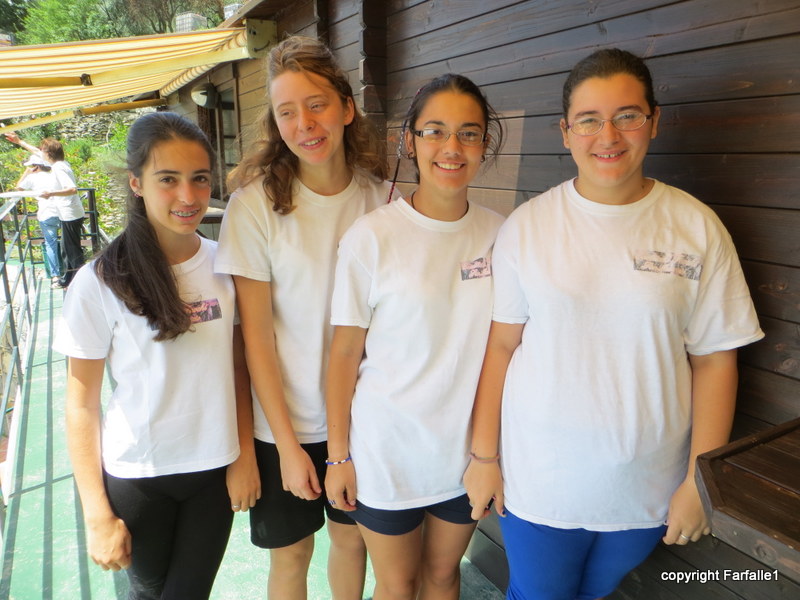
These girls are run off their feet when things get busy, but they never mess up an order.Festa at San Maurizio the waitresses

La Transumanza (Till the cows come home…)

04 Monday Nov 2013

Posted by farfalle1 in Italian festas, Italian habits and customs, Italian holidays, Italian men, Liguria, Photographs, Uncategorized

≈ 12 Comments

Tags

Festival of Cows, Santo Stefano, Santo Stefano d'Aveto, Transumanza

Il Secolo XIX calls the transumanza ‘the most spectacular event of the year in the val d’Aveto.’  Not having seen other events there I can’t say if I agree, but this festa, held when the cows are brought down from the high pastures where they’ve spent the summer to the barns and lower land of the valley is charming and fun.

Friends took me with them to Santo Stefano d’Aveto to see the transumanza on a rainy Sunday.  The arrow on the map below points to Santo Stefano; at an elevation of about 3200 feet, ‘low land’ is a relative term.

map of Santa StefanoArrow

We arrived in plenty of time to walk through the small village (population about 1200, probably double that the day we were there) and savor the anticipation. When would the cows arrive??

Not being able to stand the suspense we started walking up the street down which they would come, a walk which provided a sweet view of the town from above.

Santo Stefano from above

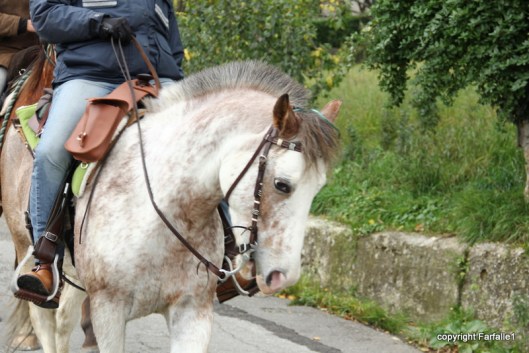
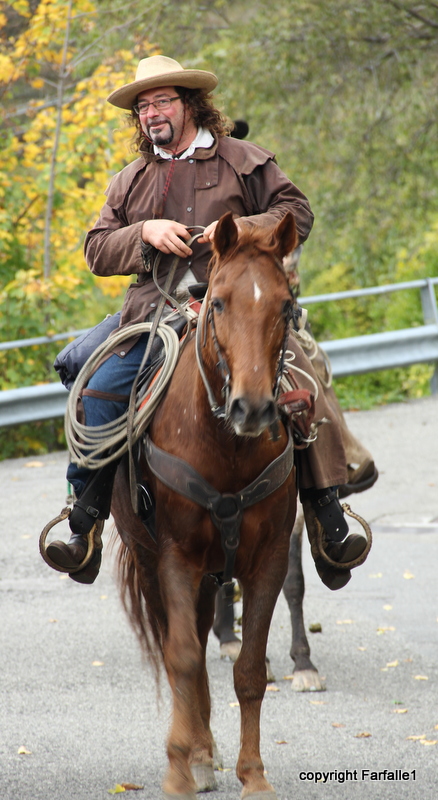
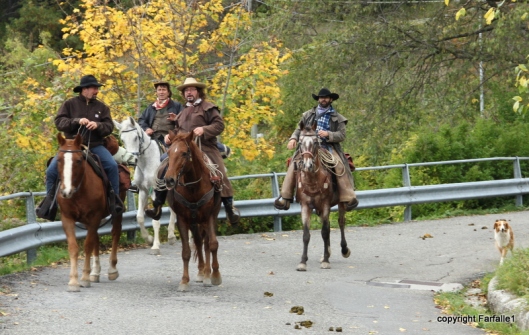
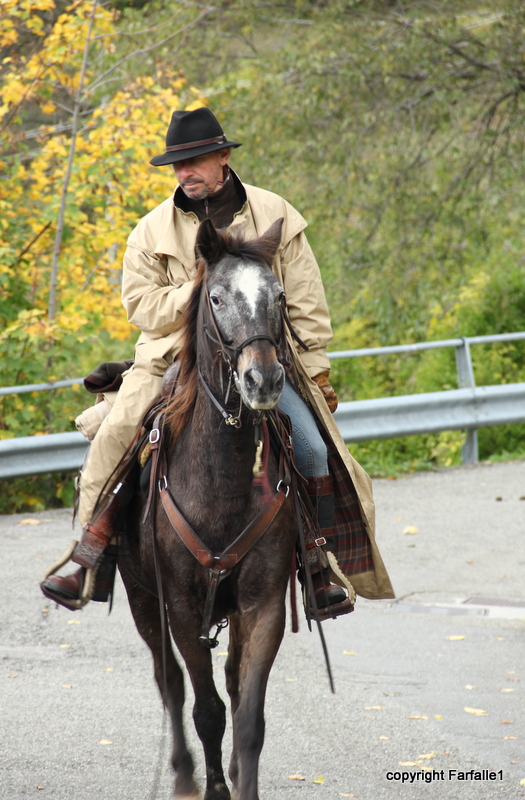
We met and chatted with others whose level of excitement matched our own. When would they arrive? When would they arrive? Finally the first outriders appeared, and it quickly became evident that this had as much to do with costume and play-acting as it did with herd movement. All to the good! The horses were buffed, fluffed and bedecked:

be-ribboned horse

well-trimmed horse

The riders, dressed as gauchos, gave the impression they had spent the summer keeping order among the vast herds on the mountain side:

gaucho

more advance riders

a real gaucho

rider

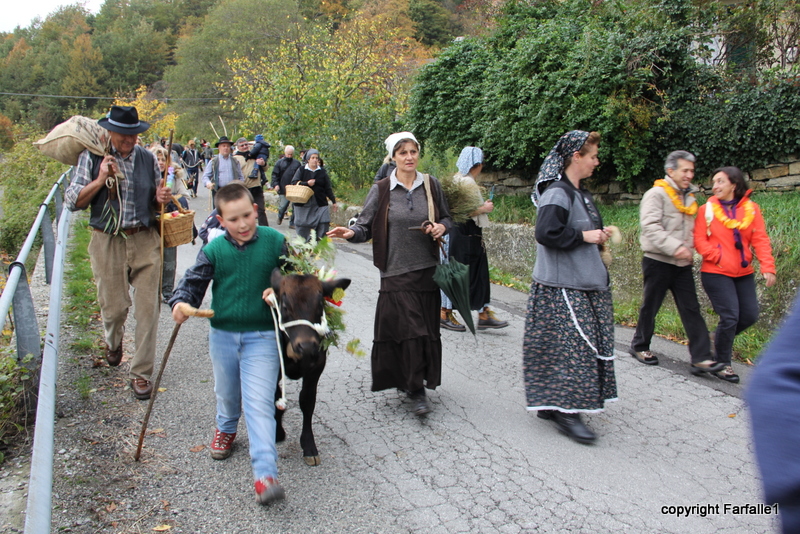
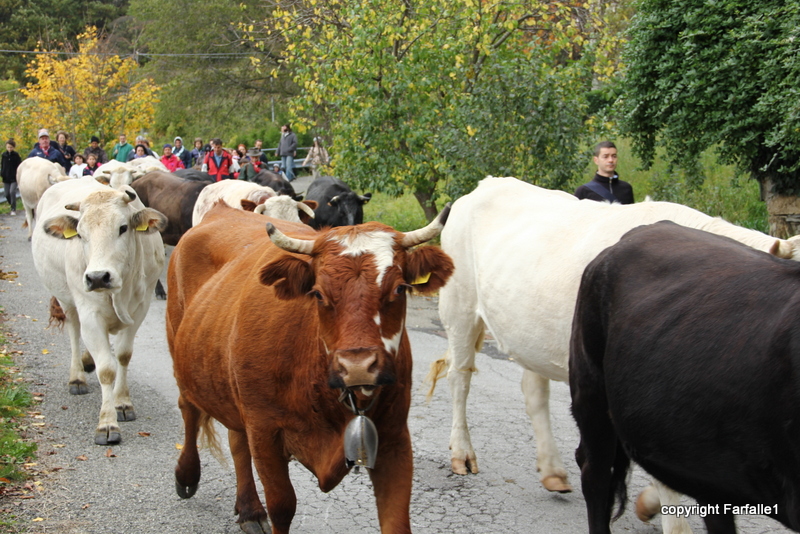
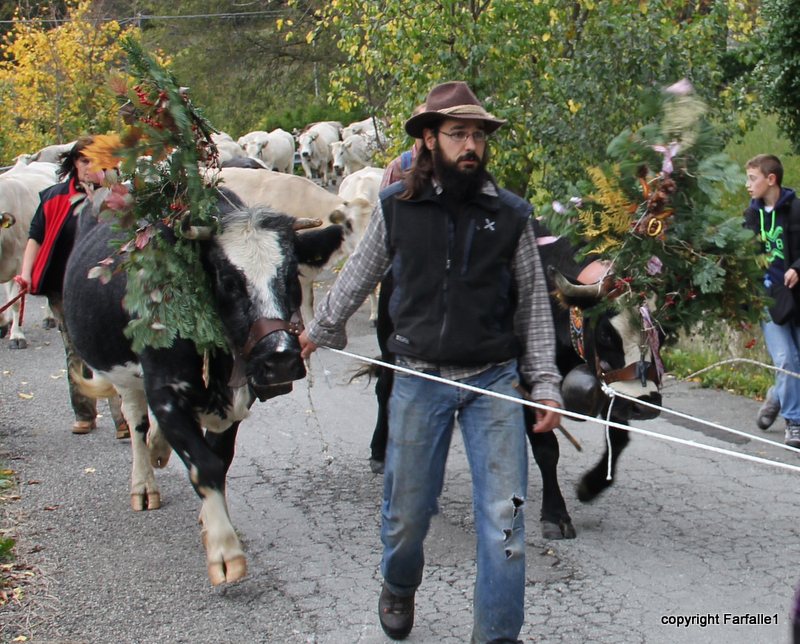
Then the first cows arrived, festooned with flowers and accompanied by a pair of flowery goats.  Many of them moved to the music of their cowbells, a sound we associate much more with Switzerland than with Italy.  Each bell has a slightly different pitch, making the herd an orchestra of happy random dissonance. With them was a group of people dressed as old-timey farmers, brandishing the antique tools of high meadow agriculture.

cows festooned

people in peasant dress

the cows arrive

cows-001

longhorn

And then it was over:

cows-003

The fact that there were perhaps 50 head of cattle made me suspect that those handsome gauchos had not, in fact, been tending the herd all summer.

The cows continued their procession through the village and disappeared up a winding road on the other side of town.  We did what all sensible people do after so much excitement and activity:

Locanda dei Doria menu

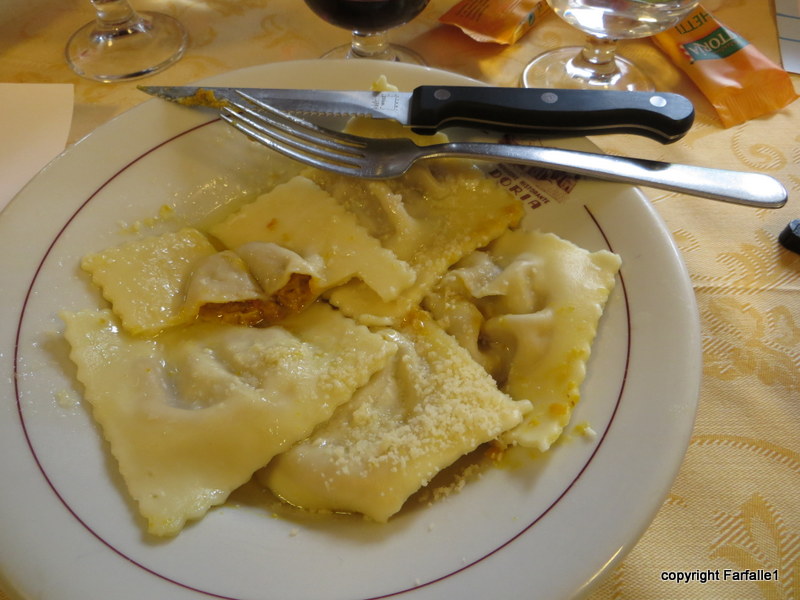
At E18 this huge mid-day meal was a real bargain.  I enjoyed the anti-pasti, followed by the squash stuffed ravioli, veal scallopini with fresh porcini mushrooms and a killer plum tart.

ravioli with pumpkin

Such a large meal calls for a post-prandial stroll, which we took, admiring the shops (closed at that time of day) along the narrow streets of the old part of town. (Santo Stefano, with a rich history, has been inhabited for centuries. Its first written mention is from the 2nd century BCE at the time of a battle between the Romans and the Ligurians. The castello in the center of town dates from 1164.)  At a time when many small towns are dying for lack of occupation, Santo Stefano has cast itself as a center of ‘bio’ food – what we would call organic.  People from a wide radius make the long windy drive up the mountain to buy fresh locally produced cheese (San Sté cheese has been made in the same way by the same families for several centuries), yogurt, eggs, vegetables and at this time of year chestnuts.  My friends staggered out of a small food shop we found open with bags of locally ground flour, fresh ricotta and other delectables.  I brought Speedy a small basket of ricotta, and I have to say, it is the best either of us has ever eaten.

other chestnuts

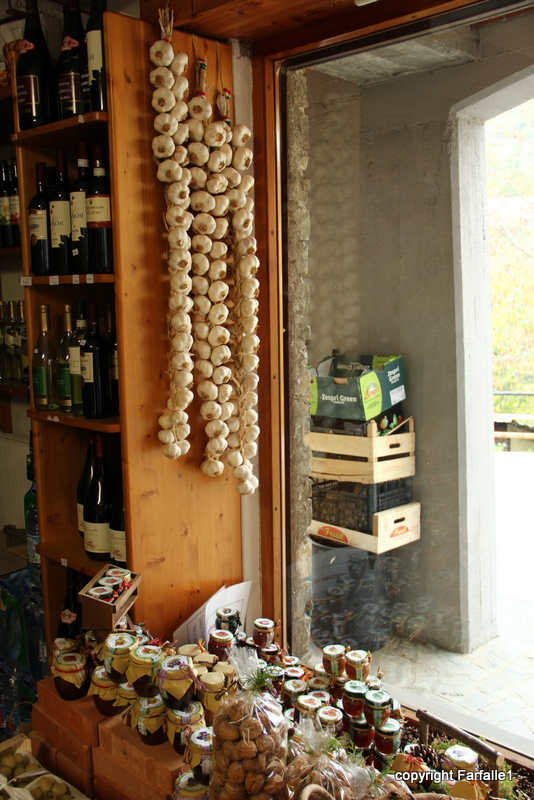
garlic in market

You can’t have a good festa without some live music.  A trio of musicians was performing (and clearly enjoying themselves) under the covered arcade in front of the shops on the main street.  If you want to see and hear them you can do so here and here.

Is life in a mountain all fun and games?  I would say not. Farming in what is one of the wettest parts of Italy comes with its own particular set of problems, exacerbated by long cold winters.  But we saw plenty of indication that people still farm there, in spite of the influx of holiday homes.

he took goats up the mountain
Maybe you could call this man ‘before.’  He’s clearly serious about his farming – he was just returning from taking the festive goats up the hill to march with the procession of cows.

Then you could call this man ‘after.’  Giorgio Carpanese has lived all of his 84 years in Santo Stefano d’Aveto.  When I asked him if he had seen an awful lot of changes there in his life he just shook his head with a whimsical look and said, ‘Si.  Si.’

Giorgio Carpanese

The Two Faces of San Maurizio

27 Friday Sep 2013

Posted by farfalle1 in History, Holidays, Italian Churches, Italian festas, Italy, San Maurizio di Monti, Uncategorized

≈ 8 Comments

Tags

Procession San Maurizio di Monti, Saint Morris

September 22 is San Maurizio’s Saint Day, so of course there is a procession here in San Maurizio di Monti, and lots of other celebration too.  But who was he?  According to Wikipedia there is some disagreement about the veracity of the tale.  However, it is said that he was a general at the head of the legendary Theban Legion, which operated in Mesopotamia during the third century CE.  Later Emperor Diocletian sent the legion to Gaul to subdue both barbarians arriving from the north and a rebellious local population.

Diocletian’s successor, Emperor Maximian ordered the legion to persecute and kill the local population of Valais, whom he felt were not being loyal to Rome.  Many of this population had converted to Christianity, and the Legion was also Christian; they refused to murder their fellow believers.  Now it gets really bloody.  Maximian, angered by this  mutinous behahavior, ordered a decimation of the Legion, that is, one of every ten soldiers was to be beheaded.  After this gruesome punishment he again ordered the killing of the Valais population.  Again the Legion demurred and a second decimation ensued.  Still they refused to kill their fellow Christians.  This time the furious Maximian ordered that the entire remaining Legion be killed.  This extreme punishment was carried out in what is now Saint-Maurice-en-Valais, in Switzerland (by whom I couldn’t discover).  As general of this steadfastly Christian legion Maurice, or Maurizio here in Italy, is the one who became a saint.

He is usually depicted with a sword and, here in Italy, with a red cross.  He is the patron saint of the Alpini, the incredibly brave and strong Italian Alpine military group.  And he is depicted as either black or white.  He is assumed to have been born in Egypt, and was perhaps Nubian.

Nubian San Maurizio, painted between 1517 and 1523 by Matthias Gruenewald

Nubian San Maurizio, painted between 1517 and 1523 by Matthias Gruenewald

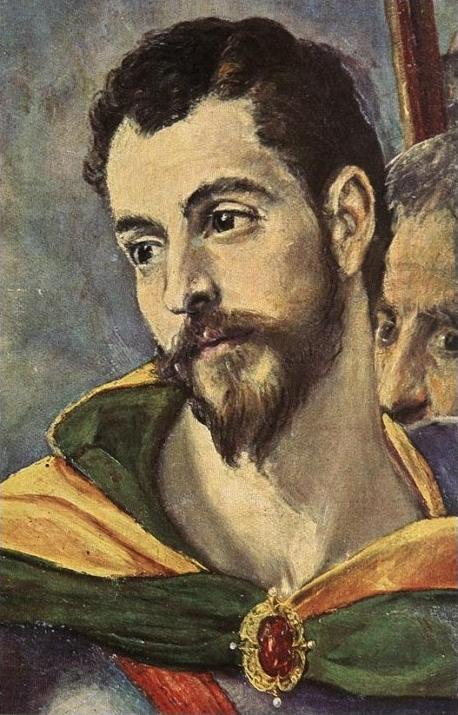
White San Maurizio

White San Maurizio painted in 1580 by El Greco

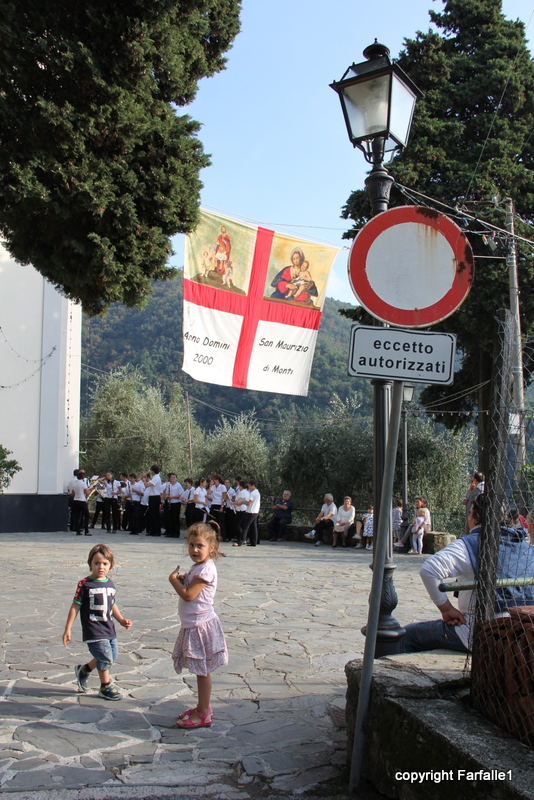
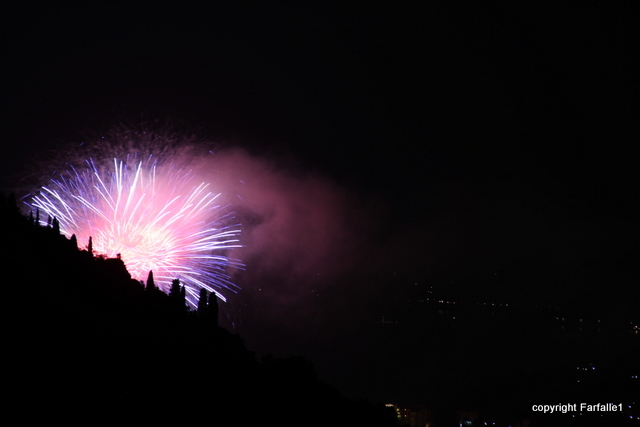
The celebrations in San Maurizio di Monti included the usual food stand, music and dancing for two evenings.  As well we had our very own fireworks display.  The serious part of the celebration took place in the late afternoon on September 22.

The Rapallo Band gave a short band concert before the celebratory mass, including some pretty snappy numbers.  Here are a couple of shots of the piazza in front of the church during the concert:

Note the red cross on the flag.

Note the red cross on the flag.

The band plays

The band plays

Red motorcycle in front of tablets commemorating war dead.

Red motorcycle in front of tablets commemorating war dead.

When the church was gussied up for the second millenium the portrait of San Maurizio over the door was repainted.

Goofy San Maurizio

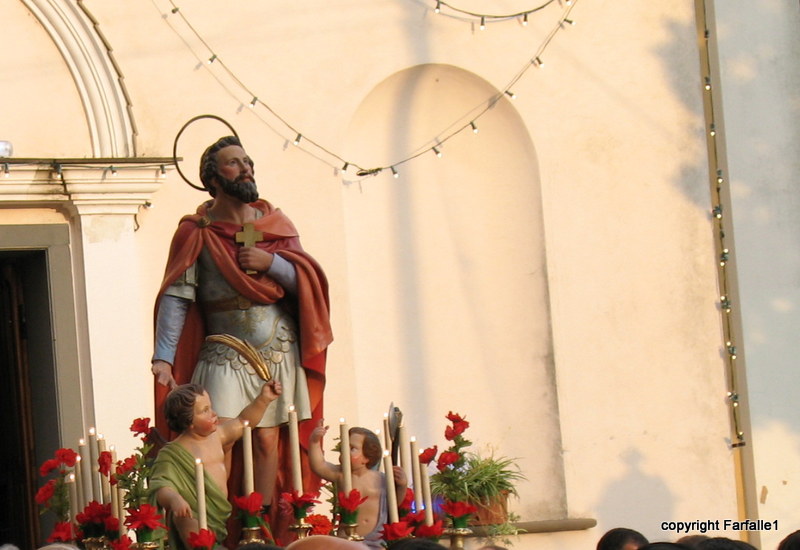
Is it just me, or does he look kind of goofy? At the very least he looks like he has a very good secret.  That’s one of his faces in San Maurizio.  The other is much more serious, and can be seen on the statue that is the central part of the procession through town (‘through town’ is a grand way of saying the procession leaves the church, marches up the road about 400 meters to a fork in the road, turns around and marches back to the church for the conclusion of the mass).

Older photo taken in 2007.

Older photo taken in 2007.

On the statue Maurzio’s expression seems wistful – perhaps he would like to get out in the air more than once a year.  You can see a short video of the procession going from the church (with prayer) here, and another of it returning (with music) here.

He is our mystery saint, black or white, goofy or sad – like the rest of us, he’s… complicated.

Happy 4th of July!

04 Wednesday Jul 2012

Posted by farfalle1 in Holidays, Italian Churches, Italian festas, Italian habits and customs, Italian holidays, Rapallo, Uncategorized

≈ 4 Comments

Tags

Festa della Madonna di Montallegro, fireworks

(Click on any photo for a slightly sharper image.)

July 3rd, a quiet night in Rapallo:

Then suddenly all hell broke loose!

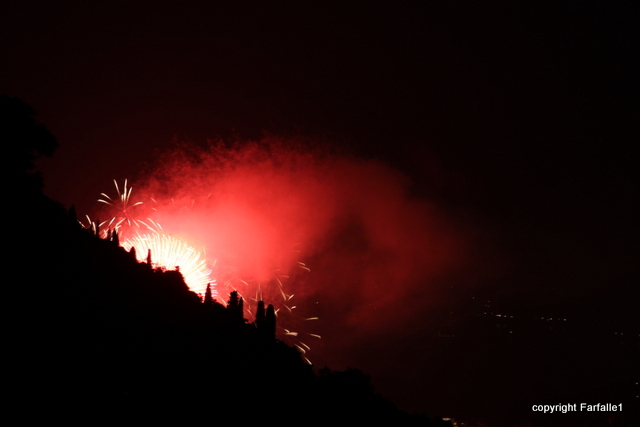
July 1, 2 and 3 are the special days Rapallo has set aside to honor the Madonna of Montallegro. It’s crazy in town – huge crowds; lots of noise; a wonderful procession with crosses, bishops and mayors, and children; all culminating in the tradional ‘attack and burning’ of the ancient castello. To give you an idea of the scope and the noise, over the course of the day on Monday, the middle day of the Festa, some 6,000 mortars were fired off.  These are the bright flashes accompanied by an ear-splitting and echoing BOOM that can be heard all through the area.

This year we did not go down into the hub-bub. Instead we stayed ‘quietly’ home and enjoyed a partial show of fireworks. (‘Quiet’ does not exist here on July 1, 2 or 3.)  I love that this happens right before our own traditional Fireworks Day, the 4th of July.  If you’d like to see some photos and read more about the doings in town, read this post from last year.  And if you’re interested in knowing why Rapallo has chosen the Madonna as her patron saint you can read about it here (spoiler: The Blessed Virgin was an early tourist).

Happy Independence Day to one and all!

The Real Reason??

29 Thursday Sep 2011

Posted by farfalle1 in Holidays, Italian festas, San Maurizio di Monti, Uncategorized

≈ 4 Comments

Tags

Festa di San Maurizio, San Maurizio's Soccer Field

When we returned from our jaunt to Germany we found the ‘Soccer Field’ fully decked out for our village’s Festa in honor of San Maurizio.  At Last the Committee has a spacious area in which to prepare and serve food.  It is so much easier than the old narrow fascia on this site, and much roomier than the small house and little paved courtyard around the corner which the Committee has used for the last couple of years.

Behind the ‘Amici’ sign is the new cabin which is fully equipped as a kitchen.  The tables are obvious.  Behind the tent and truck in the foreground there was a solid dance floor put down and a small stage for a band erected.  Sunday was the night for the Great Pyrotechnic Show.

Alas, as so often happens in September, it rained.  It seems like our Festa has been rained out a lot in the last few years – and what a pity it should happen the first year we have new festa grounds, I mean ‘a new soccer field.’   It cleared at the end of the rainy Sunday, but the men who set up the fireworks had not had an opportunity to do so, so the show was cancelled.

So… soccer field?  festa field?  both?  I vote for the last.  We have yet to see any soccer played here, but that doesn’t matter.  Building this public space took a lot of time (25 years, according to the Piazza Cavour web site) and a lot of citizen participation and volunteer work.  It surely contributes to San Maurizio having a sense of community.  In my dark heart I imagine that there was some grant money out there available to build soccer fields and our Festa Committee thought ‘what a good idea.  A soccer field is an ideal spot for a festa.’  If that’s what happened, I say more power to them (and I have to be honest: I have no idea what the stated purpose of the Comitato Amici di San Maurizio might be).

Surely someone will organize a soccer program one of these days, and in the meantime we can spend the next year looking forward to La Festa di San Maurizio, 2012 edition – please let it not rain!

Shhhh

01 Monday Aug 2011

Posted by farfalle1 in American habits and customs, Arizona, Customs, Italian festas, Italian habits and customs, Italy, Uncategorized

≈ 13 Comments

Tags

How to Listen, Julian Treasure, Listening, Noise, Noise Pollution, Sound

The Captain always teases me by saying, “You know I never listen;” and I tease back by saying, “True.  We have the perfect arrangement for living in Italy – you speak and I listen.”  (He’s much better at speaking the language than I.)

While the captain may be teasing, it seems true to me that often people really don’t listen to others (I include myself in this group). The reasons are many – self-involvement, disinterest, hearing impairment, multi-tasking, language challenges, etc., etc.

The TED website recently put up a talk by sound specialist Julian Treasure which I found fascinating. He talks about why people don’t listen, and how we can all improve our listening skills.  It’s a short video, just over seven minutes – here, take a look.

https://ted.com/talks/view/id/1200

One of the things that has always struck me about Italy is the non-stop noise, at least where we live.  As I type this it’s 10:30 at night and there’s a festa down the street a way with live music – very loud live music.  Driving bass, banging drums and a songstress who is, alas, a bit flat.  It’s not my taste in music, to be honest, but I don’t really resent it being forced on us (at least not until after 11 p.m. – last night the live music went til midnight and I did get a bit cranky).  It happens only a few times a year up here. The amazing thing to me is that no one complains or seems to mind.

But if it’s not live music, there is always some other kind of aural stimulation – scooters and cycles tearing up and down the mountain; the bus slowly groaning its way up, merrily tootling its horn at every curve (a necessary precaution on these narrow roads) and then loudly sighing and chuffing at each stop; church bells from our village, from Montallegro and, if the wind is right, from the Rapallo Cathedral; ambulance and police sirens; cruise ship horns; airplanes overhead; dogs barking; cocks crowing at all hours; birds; children shouting (a particularly cheerful noise, that) and always, always conversation.  Conversation as an art form is alive and well in this courteous country.  Finding three minutes of silence daily, as recommended by Mr. Treasure (can that really be his name??) is a challenge here.  Every now and then one of us awakens at 3 or 4 a.m., and we are struck by the relative silence – it is such a rarity.

In contrast the U.S. seems much quieter in general (not the cities, to be sure).  The example the Captain likes to give is this:  when Italy won the World Cup (European football) in 2006 the racket from Rapallo was amazing – horns blasted, cars tore through the center of town with kids hanging out waving flags and shouting, ships in the harbor blew their horns – it was an explosion of celebratory sound.  In 2008 when the Arizona Cardinals (American football) won the game that sent them to the Super Bowl we stuck our heads outside right after the game.  Our Arizona neighborhood was as silent as a tomb, the town was silent; and we were a mere forty miles from the stadium where the game was played.  No one was out and about because anyone not at the game was surely inside watching it on TV – but afterwards there was no public demonstration of glee.  And if someone’s party is noisy in the U.S. it takes the neighbors no time at all to call the police and complain.

So, is it harder to listen in Italy, where there is so much more ambient noise?  Though the Captain might well disagree,  I don’t really think so.  But as we know, he doesn’t listen anyway…

Fireworks Addendum

23 Saturday Jul 2011

Posted by farfalle1 in Italian festas, Rapallo, Uncategorized

≈ 4 Comments

Tags

Festa di Rapallo, fireworks, Gianni Pistori, Pyrotechnics

As luck would have it we made the acquaintance of Gianni Pistori last weekend.  A man of wide and varied interests (rally driving, stamp collecting) he is a pyrotechnic expert.  In fact this year it was he who lit the Castello in Rapallo on June 3.  He began his work at 3:30 a.m. and finished at 2 a.m. the next morning – long work day.

We also learned that one of the Sestieri wins the fireworks competition and one, San Michele this year, loses.  The judges are all the experts who organize and set off the endless fireworks displays.  I’m uncertain what, if anything other than honor, the winning team receives.  The losers are given a large plastic toad.  I’ve been unable to get a photograph of the toad yet, but if I can get one I’ll be sure to share it.  When last heard of, the toad had been carried (by Gianni, who else?) up to Montallegro where it will reside in amphibian splendor and solitude until next year.

Thank you Tay and Gianni for all this useful and amusing information!

Rapallo Castello Attacked and Burned!

04 Monday Jul 2011

Posted by farfalle1 in Holidays, Italian Churches, Italian festas, Italian holidays, Photographs, Uncategorized

≈ 12 Comments

Tags

fireworks, Madonna di Montallegro, Rapallo's Festa Patronale

Not really – it’s simply the culmination of three days of pyrotechnic excess at the hands of Rapallo’s Sestieri, all in honor of the Madonna of Montallegro, patron saint of our city.  (The ‘sestieri’ are the six districts of the town – they have no administrative function, but rather are historic and traditional divisions, and serve to provide lively rivalry in the fireworks arena.)

It began at 8 a.m. on Friday morning (July 1) with a half hour of ka-booms provided by all the Sestieri  in honor of the Madonna.  Subsequent fireworks took place at 10:15 p.m. with another Salute to the Madonna (these are a great many very loud explosions, without the fanciful colors and light of fireworks) and at 10:30 p.m. two separate fireworks displays, each provided by one of the Sestieri.

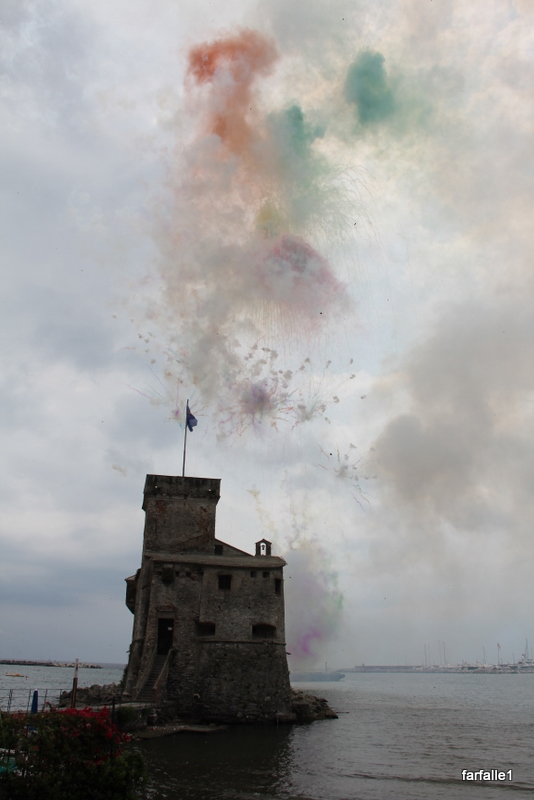
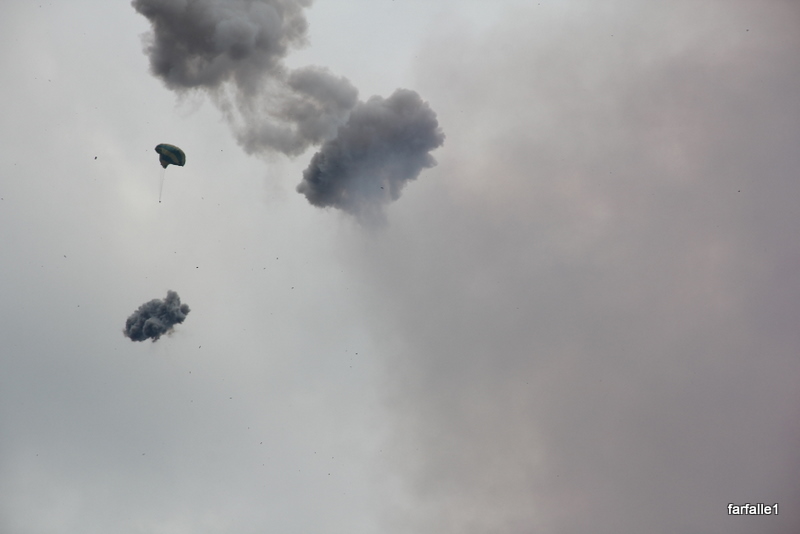
I never thought much of daytime firework shows, but we happened to be in town at mid-day on Saturday when there was a short ‘Sparata del Panegirico”, that is, ‘Praise with Noise.’  The show turned out to be rather pretty and amusing:


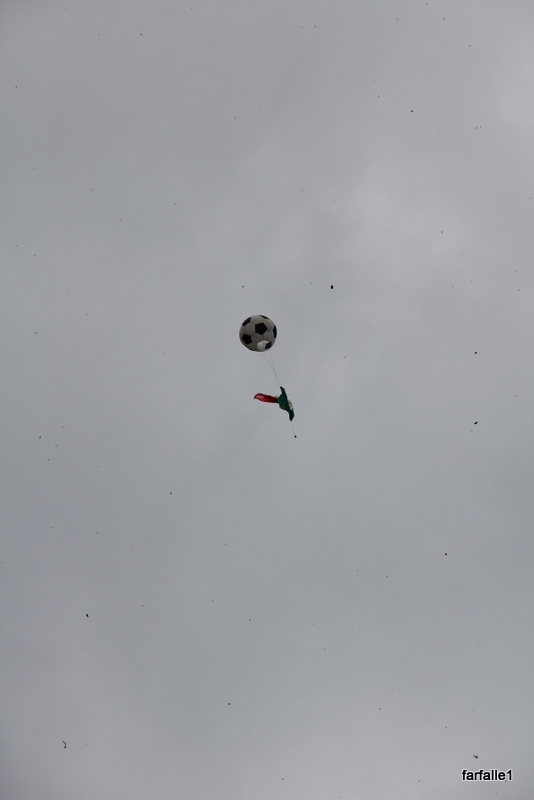
In addition to colorful smoke, the onshore breeze showered us all with bits of cardboard debris, flag-bearing soccer balls and parachutes delivering who-knows-what:


That evening there was another mortar Salute to the Madonna followed by another two fireworks shows, again each the work of two other of the sestieri.

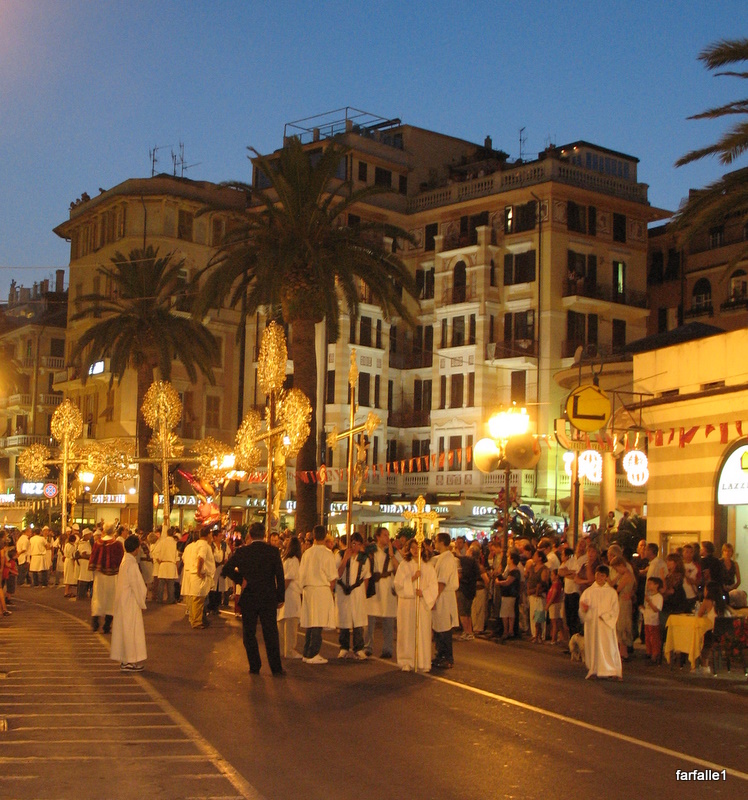
Sunday, the final day of the Festa, gave us a Salute at 10 p.m. followed by the famous Procession of the crosses and the icon from Montallegro. Sadly we arrived too late to see the Procession this year, but here are a few photos from 2009:

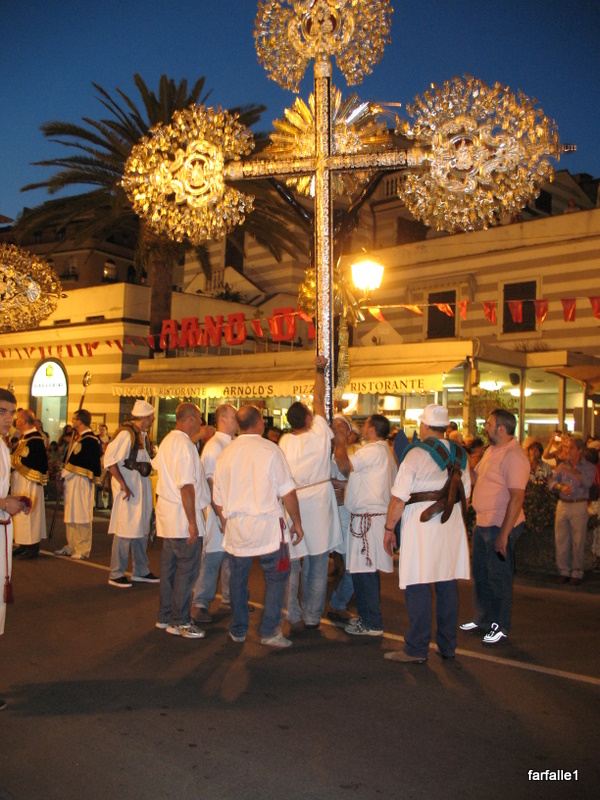
Just a few of the many crosses on parade

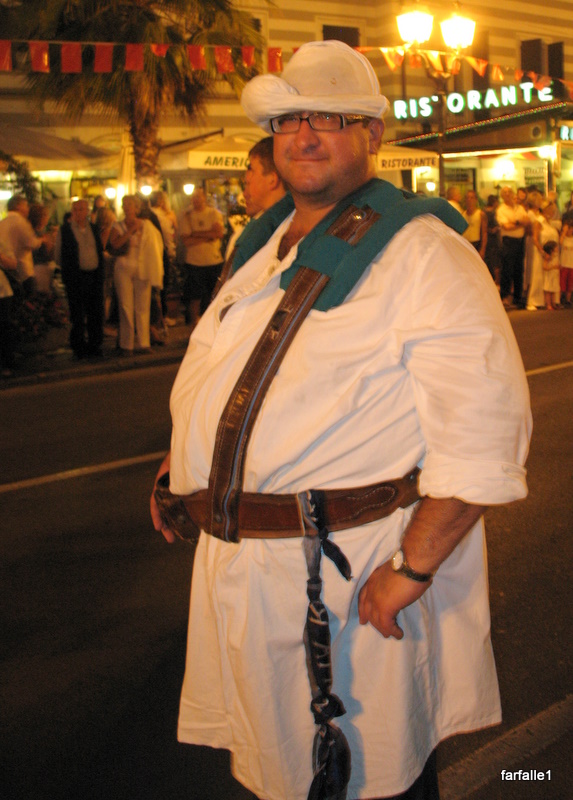
A very strong man, one of the cross-bearers

The famous icon, barely visible amidst all the silver

Change of porter

The Archbishop

That year’s crop of confirmands

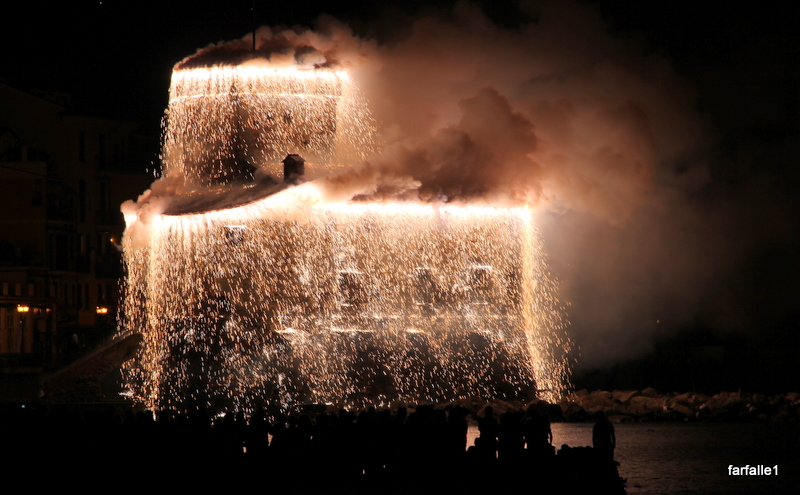
At 10:15 or thereabouts there was another Sparata and short fireworks with the annual Burning of the Castello which you’ve seen in the first photo above.  After an interminable wait there was a lengthy series of Saluti alla Madonna issuing from various public parks around the city, all very loud and exciting.  I have not a doubt in the world that the Madonna heard them and came to watch the last two of the annual fireworks shows that followed.


There are many other activities associated with the annual ‘Solenni Festeggiamenti in Onore di N.S. di Montallegro, Patrona di Rapallo e del Suo Antico Capitaneato,’ principally masses and musical offerings.  It’s a full three days – and it happens every year.  It’s proximity to the 4th of July is a happy coincidence for Americans like us… fireworks and the 4th go together like, well,  hotdogs and beer.  Happy Festa della Madonna!  Happy Fourth of July!

← Older posts

Enter your email address to follow this blog and receive notifications of new posts by email.

Join 114 other subscribers

rss

Subscribe in a reader

Search the Blog

A. Useful Links

  • bab.la language dictionary
  • Bus schedules for Tigullio
  • Conversions
  • English-Italian, Italian-English Dictionary
  • Expats Moving and Relocation Guide
  • Ferry Schedule Rapallo, Santa Margherita, Portofino, San Frutuoso
  • Italian Verbs Conjugated
  • Piazza Cavour
  • Rapallo's Home Page – With Link to the Month's Events
  • Slow Travel
  • The Informer – The Online Guide to Living in Italy
  • Transportation Planner for Liguria
  • Trenitalia – trains! Still the most fun way to travel.

C. Elaborations

  • A Policeman’s View
  • Driving School Diary
  • IVA refunds due for past Rifiuti tax payements
  • Nana
  • Old trains and old weekends
  • The peasant, the Virgin, the spring and the ikon
  • Will Someone Please, Please Take Me to Scotland?

D. Good Recipes - Best of the Week winners are starred

  • 'Mbriulata
  • *Baked Barley and Mushroom Casserole*
  • *Captain’s Boston Baked Beans*
  • *Crimson Pie*
  • *Louise’s Birthday Cake*
  • *Melanzane alla Parmigiana*
  • *Penne with Cabbage and Cream
  • *Pizzoccheri della Valtellina*
  • *Pumpkin Ice Cream*
  • *Risotto alla Bolognese*
  • *Rolled Stuffed Pork Roast*
  • *Spezzatini di Vitello*
  • *Stuffed Grape Leaves*
  • *Stuffed Peaches (Pesche Ripiene)*
  • *Swordfish with Salsa Cruda*
  • *Tagliarini with Porcini Mushrooms*
  • *Tagliatelli al Frutti di Mare*
  • *Three P's Pasta*
  • *Tzatziki*
  • 10th Tee Oatmeal Apricot Bars
  • Adriana’s Fruit Torta
  • Aspic
  • Bagna-calda
  • Best Brownies in the World
  • Clafoutis
  • Cold cucumber soup
  • Crispy Tortillas with Pork and Beans
  • Easy spring or summer pasta
  • Fish in the Ligurian Style
  • Hilary's Spicy Rain Forest Chop
  • Insalata Caprese
  • Lasagna al forno
  • Lasagna al Forno con Sugo Rosato e Formaggi
  • Lemon Meringue Pie
  • Leo’s Bagna Cauda
  • Leo’s Mother’s Stuffed Eggs
  • Louis’s apricot chutney
  • Mom's Sicilian Bruschetta
  • No-Knead (almost) Bread
  • Nonna Salamone's Christmas Cookies
  • Pan Fried Noodles with Duck, Ginger, Garlic and Scallions
  • Pesto, the classic and original method
  • Pesto, the modern, less authentic method
  • Pickle Relish
  • Poached pears
  • Poached Pears
  • Polenta Cuncia
  • Recipes from Paradise by Fred Plotkin
  • Rustic Hearth Bread
  • Shrimp and Crayfish Tail Soup
  • Sicilian salad
  • Slow Food Liguria
  • Slow Food Piemonte and Val d'Aosta
  • Spinach with Garlic, Pine Nuts and Raisins
  • Stuffed Eggs, Piemontese Style
  • The Captain’s Salsa Cruda
  • Tomato Aspic
  • Zucchini Raita

E. Blogroll

  • 2 Baci in a Pinon Tree
  • Aglio, Olio & Peperoncino
  • An American in Rome
  • Bella Baita View
  • Debra & Liz's Bagni di Lucca Blog
  • Expat Blog
  • Food Lovers Odyssey
  • Italian Food Forever
  • L’Orto Orgolioso
  • La Avventura – La Mia Vita Sarda
  • La Cucina
  • La Tavola Marche
  • Rubber Slippers in Italy
  • Southern Fried French
  • Status Viatoris
  • Tour del Gelato
  • Weeds and Wisdom

Photographs

  • A Day on the Phoenix Light Rail Metro
  • Apache Trail in the Snow
  • Aquileia and Croatia
  • Birds on the Golf Course
  • Bridge Art
  • Canadair Fire Fighters
  • Cats of Italy
  • Cloudy day walk from Nozarego to Portofino
  • Fiera del Bestiame e Agricultura
  • Football Finds a Home in San Maurizio
  • Hiking Dogs
  • Mercatino dei Sapori – Food Fair!
  • Moto Models
  • Olive pressing
  • Rapallo Gardens
  • Rapallo's Festa Patronale
  • Ricaldone and the Rinaldi Winery
  • Rice Fields
  • Sardegna ~ Arbatax and Tortoli
  • Sardegna ~ San Pietro above Baunei
  • Sardegna ~ The Festa in Baunei
  • Scotland, including Isle of Skye
  • Slow Food 2008 Salone del Gusto
  • The Cat Show and the Light Rail Fair
  • The desert in bloom
  • Trip to Bavaria

Pages

  • Fagioli all’ucelleto

Archives

Recent Posts

  • A Superior Visit
  • Fun at the Ranch Market
  • The MAC
  • Welcome Tai Chi
  • Bingo Fun for Ferals
December 2025
M T W T F S S
1234567
891011121314
15161718192021
22232425262728
293031  
« Jul    

Member of The Internet Defense League

Blog at WordPress.com.

  • Subscribe Subscribed
    • An Ex-Expatriate
    • Join 114 other subscribers
    • Already have a WordPress.com account? Log in now.
    • An Ex-Expatriate
    • Subscribe Subscribed
    • Sign up
    • Log in
    • Report this content
    • View site in Reader
    • Manage subscriptions
    • Collapse this bar
 

Loading Comments...