• Contact
  • Elaborations
    • A Policeman’s View
    • Driving School Diary
    • Great Danes
    • IVA charged on Tassa Rifiuti
    • Nana
    • Old trains and Old weekends
    • The peasant, the virgin, the spring and the ikon
    • Will Someone Please, Please Take Me to Scotland??
  • Recipes
    • ‘Mbriulata
    • *Baked Barley and Mushroom Casserole*
    • *Captain’s Boston Baked Beans*
    • *Cherry Tart*
    • *Crimson Pie*
    • *Louise’s Birthday Cake*
    • *Melanzane alla Parmigiana* – Eggplant Parmesan
    • *Penne with Cabbage and Cream
    • *Pizzoccheri della Valtellina*
    • *Pumpkin Ice Cream*
    • *Risotto alla Bolognese*
    • *Rolled Stuffed Pork Roast* on the rotisserie
    • *Shrimp and Crayfish Tail Soup*
    • *Spezzatino di Vitello*
    • *Stuffed Grape Leaves*
    • *Swordfish with Salsa Cruda*
    • *Tagliarini with Porcini Mushrooms*
    • *Tagliatelli al Frutti di Mare*
    • *Tzatziki*
    • 10th Tee Apricot Bars
    • Adriana’s Fruit Torta
    • Artichoke Parmigiano Dip
    • Best Brownies in the World
    • Clafoutis
    • Cod the Way Sniven Likes It
    • Cold Cucumber Soup
    • Crispy Tortillas with Pork and Beans
    • Easy spring or summer pasta
    • Fagioli all’ucelleto
    • Fish in the Ligurian Style
    • Hilary’s Spicy Rain Forest Chop
    • Insalata Caprese
    • Kumquat and Cherry Upside Down Cake
    • Lasagna Al Forno con Sugo Rosato e Formaggi
    • Lemon Meringue Pie
    • Leo’s Bagna Cauda
    • Leo’s Mother’s Stuffed Eggs
    • Louis’s Apricot Chutney
    • Mom’s Sicilian Bruschetta
    • No-Knead Bread (almost)
    • Nonna Salamone’s Famous Christmas Cookies
    • Pan-fried Noodles, with Duck, Ginger, Garlic and Scallions
    • Pesto
    • Pesto
    • Pickle Relish
    • Poached Pears
    • Polenta Cuncia
    • Pumpkin Sformato with Fonduta and Frisee
    • Rustic Hearth Bread
    • Sicilian Salad
    • Soused Hog’s Face
    • Spotted Dick
    • Swedish Tea Wreaths
    • The Captain’s Salsa Cruda
    • Tomato Aspic
    • Vongerichten’s Spice-Rubbed Chicken with Kumquat-Lemongrass Dressing
    • Winter Squash or Pumpkin Gratin
    • Zucchini Raita

An Ex-Expatriate

~ and what she saw

An Ex-Expatriate

Category Archives: Italian gardens

Poor, Sad Olives

19 Sunday Oct 2014

Posted by farfalle1 in Food, Gardening in Italy, Italian food, Italian gardens, olives, Rapallo, Weather

≈ 8 Comments

Tags

olive trees

Speedy and I were pretty happy this spring as we watched the olive trees blossoming – it looked to be a good year for olives, something we haven’t enjoyed for the last four or five years.  Then came the summer that wasn’t. Uncharacteristically cool and wet, the hot dry days we expect in July and August never materialized. For the first time since we’ve lived here I did not have to water the gardens at all.

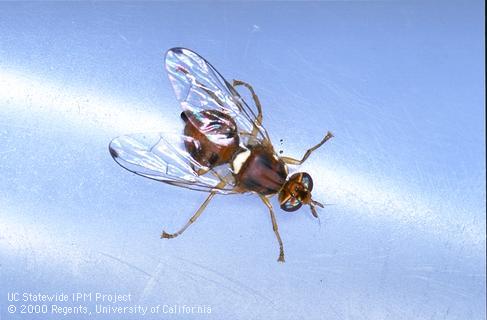
The olives didn’t like it. The first problem is an annual problem, but one that has never been as bad as this year: the Mediterannean fruit fly.

Photo by Jack Kelly Clark, courtesy of University of California

Photo by Jack Kelly Clark

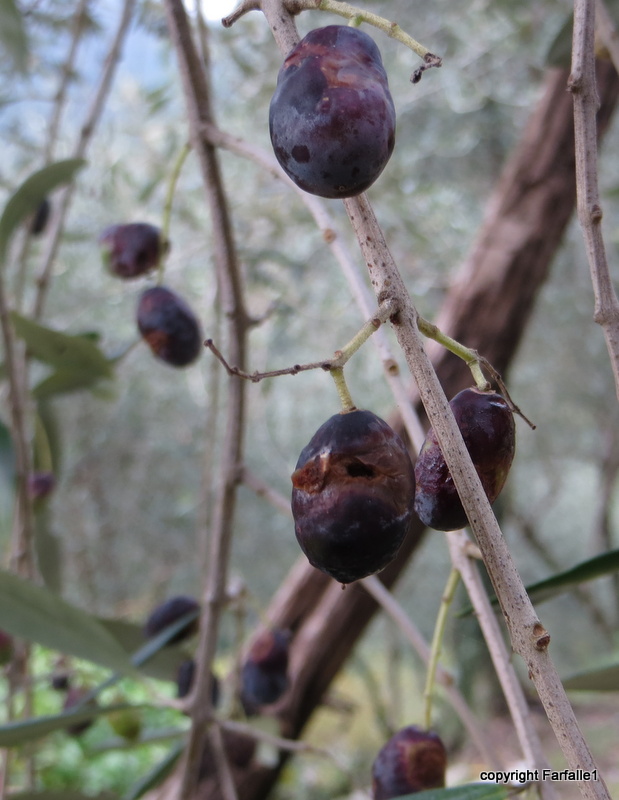
This little stinker, only about 1/4″ long, has an ovipositer that allows her to deposit her eggs in ripening olives. The maggots that hatch dine on the meat inside the olive until they are ready to burrow out, leaving behind a black and mushy mess. We’ve always had some fruit with the tell-tale dots that show an egg has been laid. This year we’ve had ample evidence that the larvae flourished. Why they were more successful this year than other years I don’t know; I think I’ll blame climate change.

bad olives-001

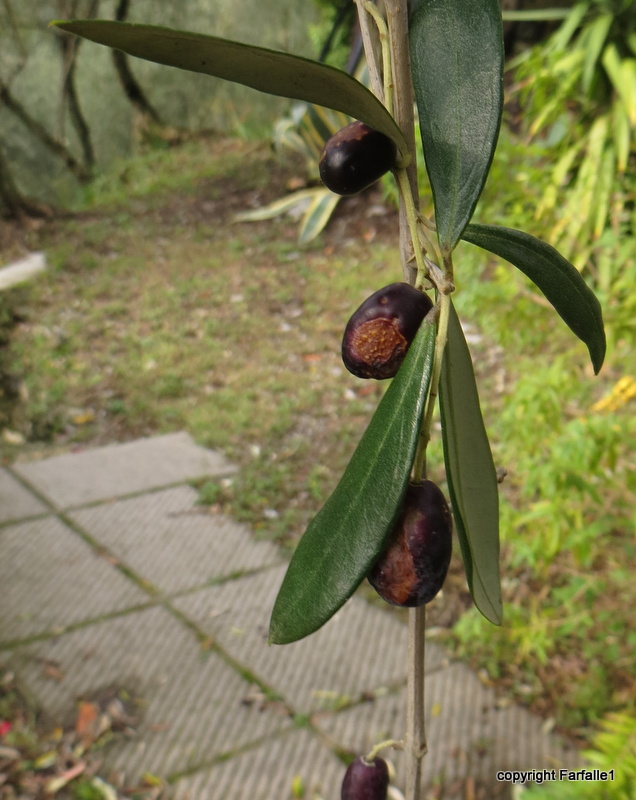
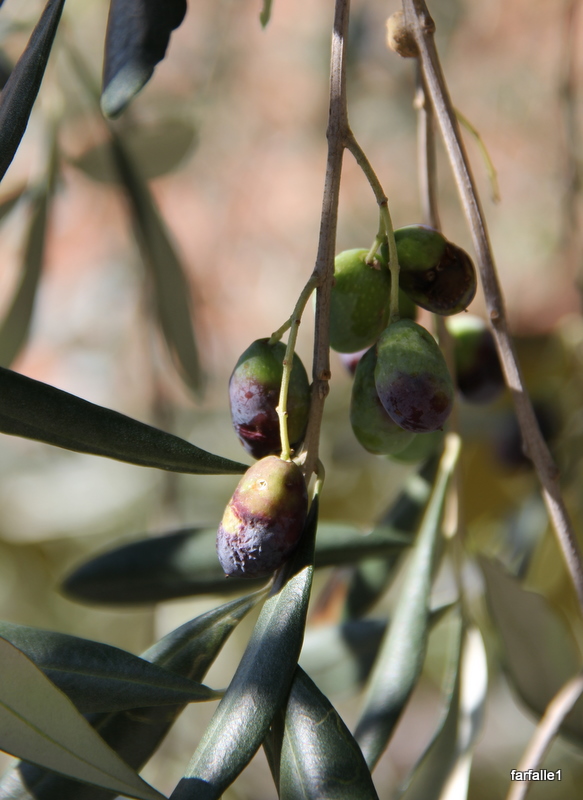
Two other problems, certainly climate related, are a kind of rusty growth on the fruit that is called either anthracnose or soft nose. I don’t know enough about either of these conditions to know which has affected our olives; I just know that either one leaves the fruit completely damaged and useless.

Fruit showing both the rusty disease and puncture wounds from egg-laying

Fruit showing both the rusty disease and puncture wounds from egg-laying

Usually at this time of year, if we are having a good year, we are dragging out nets, olive rakes and sheets for our own particular style of harvest. (You can read about our harvest by pressing here and here.) This year there is no point.

bad olives-003Many of the olives have turned dark prematurely and have fallen off the trees on their own. There’s no telling what quality of oil might lie within the few hardy individuals that are still clinging to the trees. We’re not going to invest the not inconsiderable time and effort to find out.

Ours are not the only trees thus affected. We have heard from friends that no-one in our part of Italy has an olive harvest this year. This is a pity for those of us with trees, but it’s a misery for the people who have the business of pressing olives. They will have few customers this year. Fortunately for olive-oil lovers, we have also heard that the crop in the south is excellent this year. With luck they will pick up the slack for those of us in the north.

One thing that never seems to die is hope – and I just know that next year will be the best year ever for olives.

Poster courtesy of Santa Clara Design

Poster courtesy of Santa Clara Design

La Cervara

13 Monday Aug 2012

Posted by farfalle1 in American recipes, Italian Churches, Italian gardens, Italy, Uncategorized

≈ 6 Comments

Tags

Monasteries in Italy

Photo from helicopter courtesy of http://www.parks.it

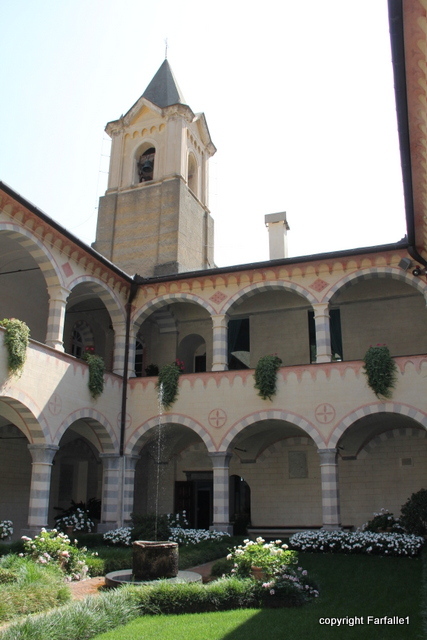
Monasteries in Italy have had a tough time of it.  La Cervara, a monastery constructed in 1361 which sits above the road between Santa Margherita and Portofino, is no exception. When France invaded at the end of the 18th century the monastic orders here were suppressed and the resident Benedictines had to abandon La Cervara.

The monastery has been in a state of loving rehabilitation since 1990; the present owners report that the work is 50% complete.  It’s hard to believe there’s as much to do as has already been done.  It looks perfect to the casual visitor.  In fact, when a friend and I recently took the tour I was reminded of nothing so much as the exquisitet restorations that one sees all through Tuscany, and which are not as common here in Liguria.

The first building was erected by Ottone Lanfranco, a Genovese priest, on land owned by the Carthusians.  Around 1420 ownership was transferred to the Benedictine order, who stayed until the above mentioned troubles.

As was the case for Montallegro, bad weather played a role in La Cervara’s history.  Pope Gregory XI was returning the papacy from Avignon to Rome in 1377 when a tempest arose, and his ship took shelter in the harbor near La Cervara.  The Pope rested with the monks there for a while, and got to know and respect them.  Upon his return to Rome he showed favor to the monastery, eventually elevating it to the status of Abbey.

The monks at La Cervara were not uneducated simple men; rather they were cosmopolitan, well-traveled and worldly wise.  La Cervara was a prestigious abbey and its inhabitants, usually about twenty in number, were frequently looked to for counsel in the great houses of Genova and throughout Europe.

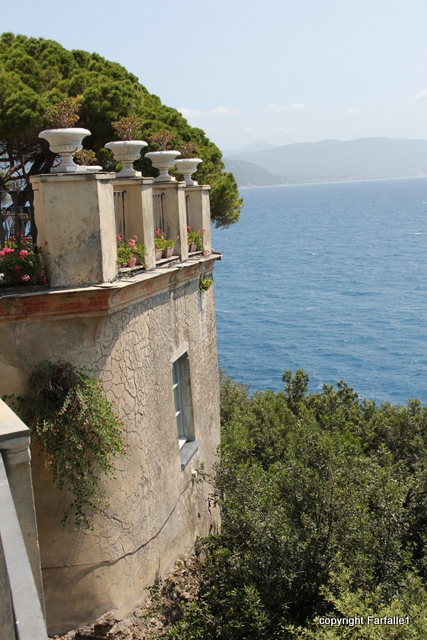
The 15th and 16th centuries were the high points of La Cervara’s history. More buildings were added to the complex, including, in the 16th century, a tower from which to watch for the raiding pirates from Africa, those pesky Saracens.
In 1525 poor  King Francis I of France was defeated by the Holy Roman Emperor Charles V at nearby Pavia.  He was brought to La Cervara where he was imprisoned in a different tower, one with a lovely view looking out to sea.
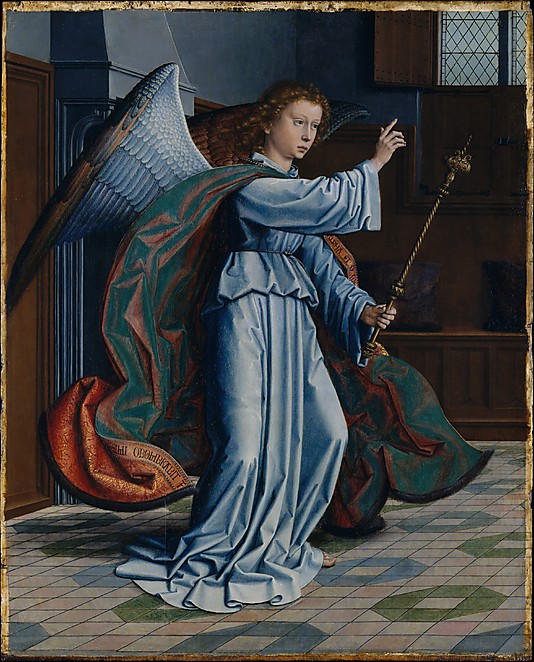
During the suppression, most of La Cervara’s beautiful artifacts and art works were removed.  The Polyptych, painted by Gerard David was separated.  Four panels are now in Palazzo Bianco in Genova, and the other three are in the Metropolitan Museum in New York and the Louvre in Paris.
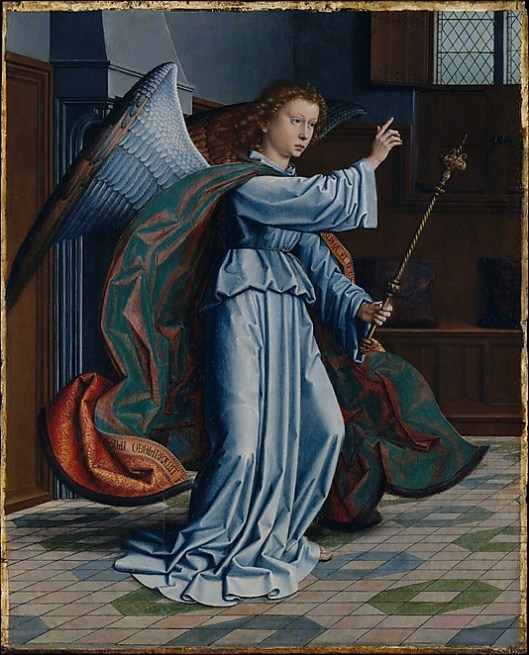
Image courtesy of the Metropolitan Museum of Art

In the beginning of the 19th century La Cervara again became a religious house, passing through the hands of several orders (Trappists, Somaschi, Carthusians) and eventually it was placed under the Diocese of Chiavari.  Finally in 1937 it passed into private hands.  The first private owner added a long hall and built a grand double stairway and a very large room.  More interested in sport and socializing, he did little to preserve or augment the chapel (but neither did he do any damage).

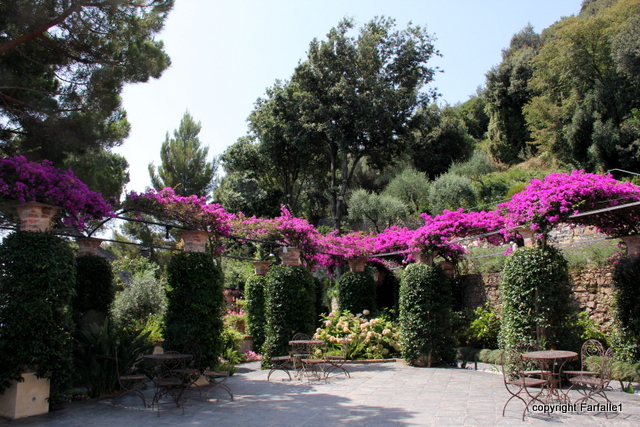
The present owners have been painstaking in their restoration of La Cervara.  The work has been under the direction of architect Mide Osculati and the art restoration has been overseen by Pinin Brambilla Barcilon, who restored the famous painting of The Last Supper in Milano. A private home, La Cervara is also available to rent for conferences, weddings, parties and the like.  A fortunate friend has been to several evening events there and describes how  the soft candlelight inside echoes the twinkling lights on the coast across the bay.  No electric lights – only candles; it is, she says, ‘magical.’  Her favorite place, she says,  “is the cloister at night with only one single shiny jet of water ….not a big splashy fountain, one single jet is all it takes to create beauty.”  You can see the fountain, elegant and eloquent in its simplicity in two of the photos above. Thank you for sharing that lovely image, fortunate friend!

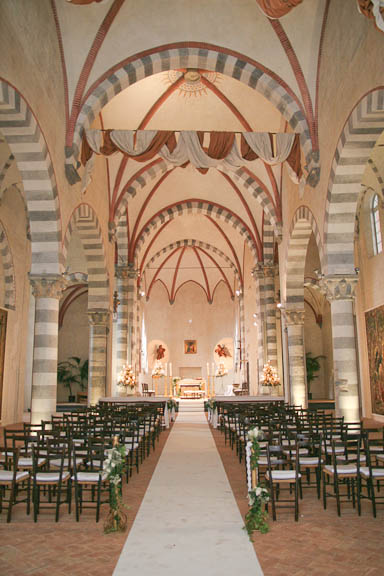
An example of the care taken in the restoration:  it was thought the original floor of the chapel was ardesia, the dark slate indigenous to this area, because that’s what was there, albeit in deplorable condition.  The architect was reluctant to use that material again because it is so dark.  Further digging  revealed, though, that before the ardesia was put down, the floor had been brick.  Unable to find hand-made bricks that matched the light original color, the architect procured the new bricks from Spain.  They look just right, too.

Photo by Roberto Bozzo, courtesy of http://www.fotografi-matrimonio.com

Instead of trying to recreate the missing sacred art in the chapel the owners have installed four enormous tapestries – not religious in theme, but somehow absolutely appropriate for the setting.  You can see just a wee bit of one in the photo above.

In an extraordinary and successful attempt to save a 150-year old wisteria, the owners used a crane to life the ancient branches from where they had fallen on the ground, one or two inches every week.  It took over a year to get the vine into position, but the wisteria survived and is splendid.
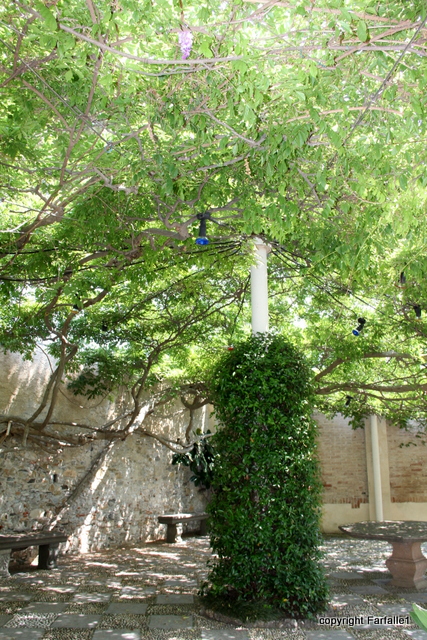
Center pole supports some of the branches, which also grow along the wall on the left.
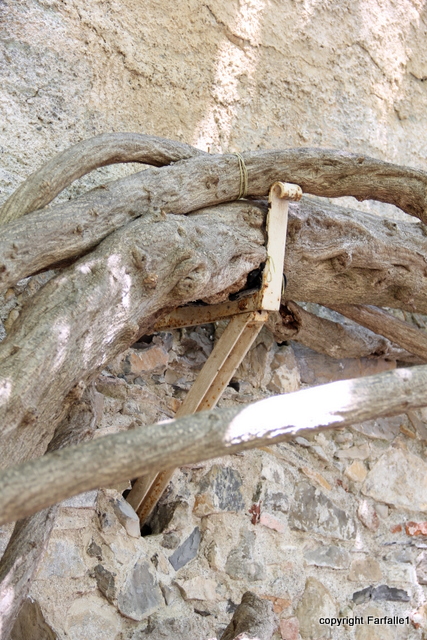
Ancient branch, now well supported

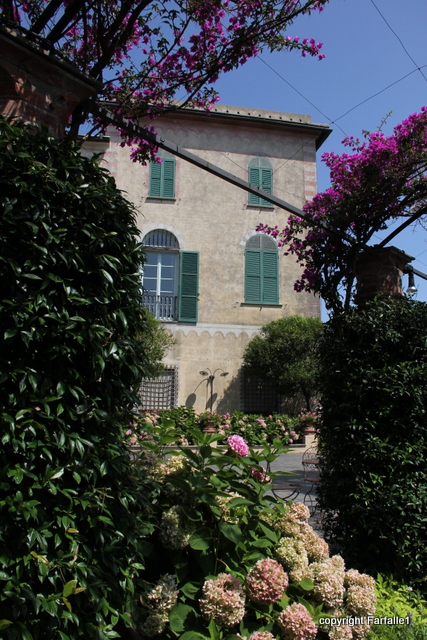
Unfortunately one is not allowed to take photographs inside the buildings, but the gardens (formerly the monks’ orchard) are fair game.
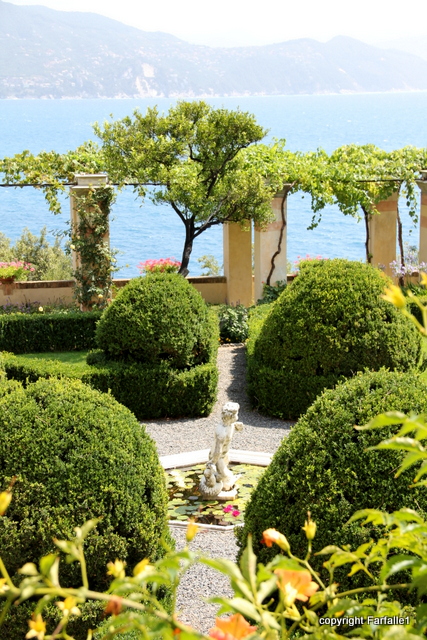
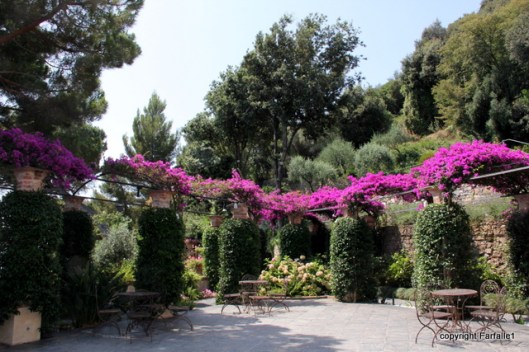
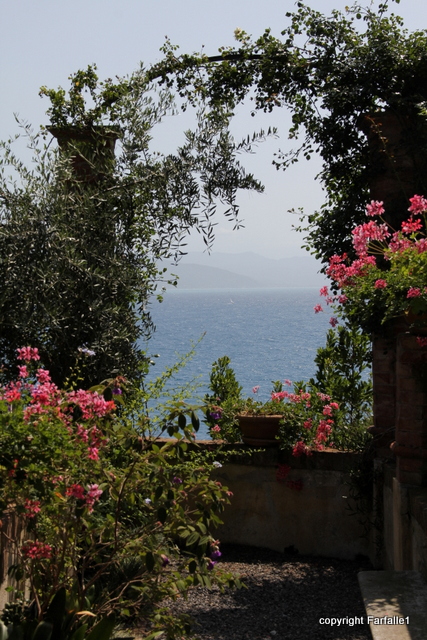
La Cervara is open to the public on the first and third Sunday of each month  from March through October; guided tours are run at 10, 11 and 12 o’clock.
First It Was the Apricots, Now It’s the Plums

08 Sunday Jul 2012

Posted by farfalle1 in gardening, Gardening in Italy, Italian food, Italian gardens, San Maurizio di Monti

≈ 9 Comments

Tags

Plum jam, Plums, yellow plum

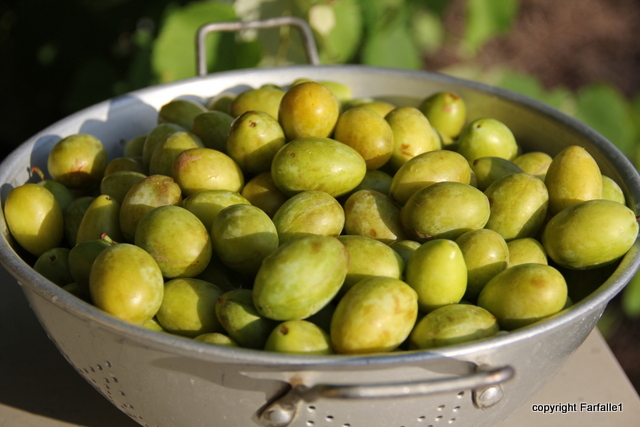
The property we live on came with a bunch of olive trees and some (to us) mystery trees that turned out to be plums of the teeny variety. I’ve had a very hard time figuring out just what type of plums these are (other than very small) – maybe one of you can help?

BEFORE!

BEFORE!

I never gave much thought to plums other than the fact that they came in blue/purple and yellow/green. It turns out there are a great many varieties, from small to large, from early ripening to late. And like so many things in the botanical world, they have wonderful common names: Dennistons’ Superb Plum (it’s ‘reliable’); wouldn’t it be great to be superb and reliable at the same time?  There is the usual smattering of place-name names, mostly British: Warwickshire, Shropshire. My favorite, I guess, is the Blue Tit Plum (‘popular’ (I bet!) and ‘reliable’).*

But losing oneself in the world of plummy nomenclature doesn’t get one any closer to identifying one’s own plums. I never did sort out what we have, other than that they are some sort of very small, early, yellow plum.

AFTER!

In the end it doesn’t matter what they’re called. It’s enough for us to know they make delicious jam.

*Names of plums harvested here.

What Would Be the Dumbest Thing in the World to Tax?

19 Saturday May 2012

Posted by farfalle1 in Animals in Italy, Cats, Italian bureaucracy, Italian gardens, Italy, Law and order, Taxes in Italy, Uncategorized

≈ 10 Comments

Tags

Silly Taxes, Tax on Pets

Pets.  That would be ridiculous, wouldn’t it?

Real Luciano

Speedy sent me an article he came across  from Reuters (reported by Philip Pullella; edited by Andrew Osborn) about the yahoos in Rome considering a tax on  family pets.  Evidently a parliamentary commission felt that this would be an excellent way to give a little boost to the nation’s diminished coffers.  The outcry was immediate and loud; the proposal was dead by the end of the day.

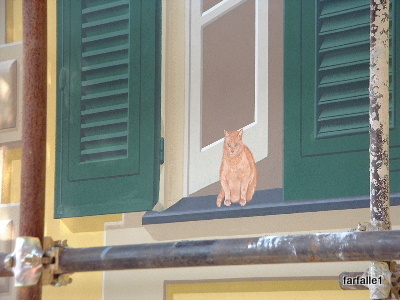
It got me thinking, though.  Didn’t Italy once tax house windows, and isn’t that why there are so many trompe L’oeuil windows painted on the houses of Liguria, where people are famously tight with their cash?

Tax Evasion Luciano

Probably the idea of taxing pets is not the silliest tax proposal ever made.  A quick Google search turned up an amusing list of the ten most ridiculous taxes ever, written by Jamie Frater.  It turns out that Rome is no stranger to bizarre taxes.  The emperors Nero and Vespasian taxed urine.  Poor Romans fortunate enough to have a pot to piss in paid a tax when they emptied their pots in the common cesspool.

Go ahead, tax my dog Rover – just get rid of the tax on my hat and my beard.  I think my favorite is the one called the Crack Tax: drug dealers in Tennessee were, before the law was declared unconstitutional, supposed to pay a tax, anonymously, on the illegal substances they sold.  If they got caught dealing crystal meth, say, and didn’t have the tax stamp… well, can you imagine?  They’d have been in pretty hot water!

It did give me an idea for another tax the Roman legislators might consider:

Photo courtesy of thedragonpages.blogspot.com

The Intergluteal Cleft Tax would either raise a lot of money or send fashion careening in a new direction.

Not all strange taxes are so amusing.  The poll tax in America was a de facto method of denying voting privileges in the southern states to recently freed slaves.  It was not repealed until 1964.

Anti-Poll Tax sentiment from the U.K.

The way things are going in this election year they may have to pay people to come to the polls instead.  Especially here in Rapallo where only 16,000 of 28,000 possible voters turned out two weeks ago to elect the Mayor.

There will always be taxes, I guess.  And I guess there will always be some silly ones.  I’m just glad that, for the time being anyway, there will be no taxes in Italy for owning a pet.  Speedy suggests that instead of taxing pets perhaps the legislators could tax vegetable gardens….

A nicely laid out garden on Via Betti in Rapallo

A Sorry State of Affairs

08 Saturday Oct 2011

Posted by farfalle1 in Gardening in Italy, Italian gardens, olives, Uncategorized

≈ 9 Comments

Tags

2011 Olive Crop, Berlusconi

No I’m not talking about Prime Minister Berlusconi’s latest schenanigans… I wouldn’t know where to begin (besides, then I would have had to call this post ‘Sorry Affairs of State’).  I’m talking olives:

Our friend R says the heavy rain of a couple of weeks ago damaged all the fruit.  Our friend E says that insects are the culprits.  As I’m much more diplomatic than our Prime Minister, I’m going to say they’re both right; and whatever the reason, there is no usable olive crop for us this year, or for anyone else we know.  The aforementioned R, who is famous for taking 95 kili of fruit from one tree last year, says he’ll be lucky to get a quintale (100 kili) from his 80 + trees this year. I don’t know if he’ll bother.  We have only about 15 trees, and many of them have no fruit anyway, so it would be a complete waste of time for us to harvest.

It’s a pity, because we look forward to the fun of harvesting and then going to the frantoio with friends and watching our very own olive oil come out of the machines (you can see the process here).  But this year it’s not to be.  We’ll hope for better luck next year, with the olives AND with the Prime Minister.

What the…. ??

18 Thursday Aug 2011

Posted by farfalle1 in gardening, Gardening in Italy, Italian gardens

≈ 8 Comments

Tags

hybrid pumpkin, Hybrid squash, mystery plant

Hot as it is outside these days (35 C, or +/- 95F) there is definitely an end-of-season feel in the air.  The birds that were noisily nesting for so long  have abandoned the eaves, the cicadas drone on, but with a new weariness in their thrum.  The sun is setting much earlier, and the shops are full of back-to-school gear.

We’ve been picking and eating tomatoes for a month, and those in the garden which have already set fruit continue to ripen, in spite of the nasty disease that is killing some of their leaves.  No new fruit is forming. The same plight has visited all our viney plants as well – cukes, pumpkins, squash and melons (we have just a few plants of each so each loss is felt all the more).  First the leaves close to the main stem shrivel, then the stem desiccates and the leaves farther along wither and die.  Once the stem dies, the fruit at the end of it stops developing and dies as well.  I don’t know what this malady is, but I notice that we are not the only ones afflicted – all the gardens up and down the mountain are looking pretty sad.

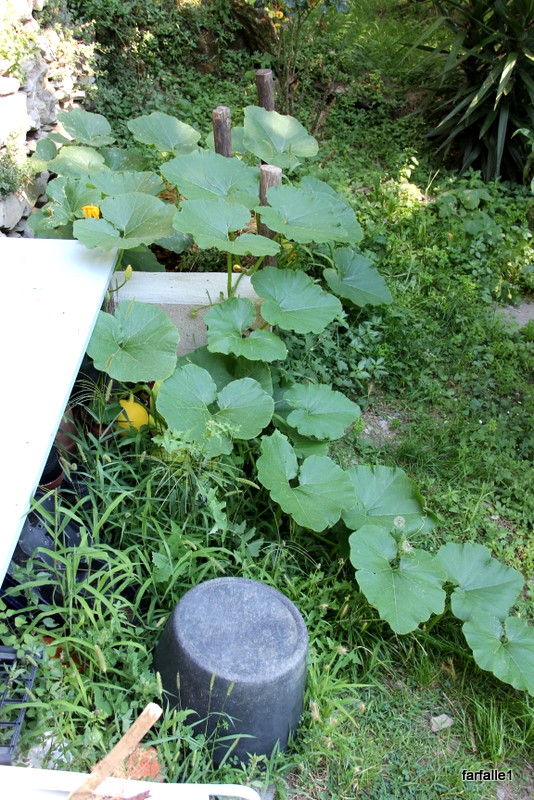
We have had one huge success, though.  The only problem is we have no idea what it is.  A squashy something emerged from the compost pile a while back, and as you can see in the photo above, it is rampaging all around our former orto (abandoned because of lack of sun).  It sure looks healthy, doesn’t it?  No withering leaves here; the worst you can say is there are a few spots of the usual fungus, but even that disease hasn’t been able to get any traction.

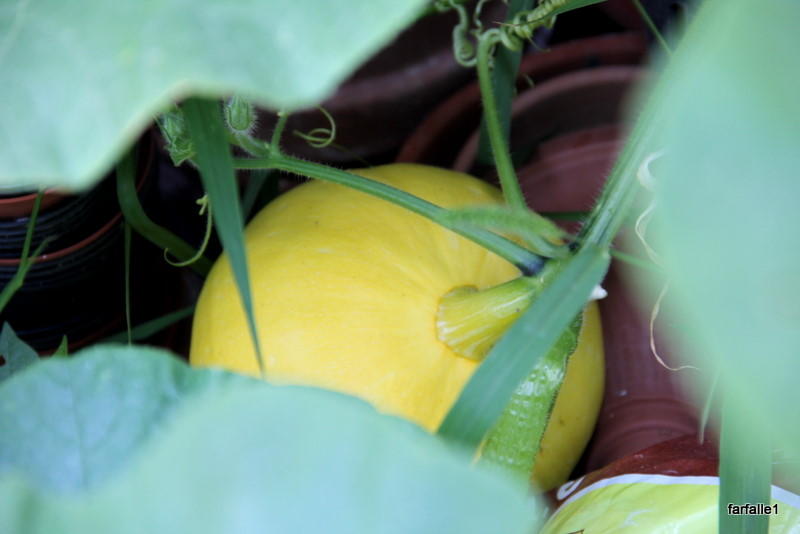
Now it is forming gigantic fruits:

They have the size and shape of rapidly growing pumpkins, but the color of summer squash, which we’ve never grown.  I can only guess that this plant is some kind of hybrid born of the alchemy of a compost pile.  And like so many mutts, this item seems stronger and healthier than all the hot-house sissies that are dying apace in our other gardens.  Bah.  The only problem is, we don’t know if we should carve it or eat it.  Maybe both?  In the meantime, we want to wait and see just how big it will grow, and try to come up with a good name for it – squashkin?  pumpkish? Any ideas?

Enter your email address to follow this blog and receive notifications of new posts by email.

Join 114 other subscribers

rss

Subscribe in a reader

Search the Blog

A. Useful Links

  • bab.la language dictionary
  • Bus schedules for Tigullio
  • Conversions
  • English-Italian, Italian-English Dictionary
  • Expats Moving and Relocation Guide
  • Ferry Schedule Rapallo, Santa Margherita, Portofino, San Frutuoso
  • Italian Verbs Conjugated
  • Piazza Cavour
  • Rapallo's Home Page – With Link to the Month's Events
  • Slow Travel
  • The Informer – The Online Guide to Living in Italy
  • Transportation Planner for Liguria
  • Trenitalia – trains! Still the most fun way to travel.

C. Elaborations

  • A Policeman’s View
  • Driving School Diary
  • IVA refunds due for past Rifiuti tax payements
  • Nana
  • Old trains and old weekends
  • The peasant, the Virgin, the spring and the ikon
  • Will Someone Please, Please Take Me to Scotland?

D. Good Recipes - Best of the Week winners are starred

  • 'Mbriulata
  • *Baked Barley and Mushroom Casserole*
  • *Captain’s Boston Baked Beans*
  • *Crimson Pie*
  • *Louise’s Birthday Cake*
  • *Melanzane alla Parmigiana*
  • *Penne with Cabbage and Cream
  • *Pizzoccheri della Valtellina*
  • *Pumpkin Ice Cream*
  • *Risotto alla Bolognese*
  • *Rolled Stuffed Pork Roast*
  • *Spezzatini di Vitello*
  • *Stuffed Grape Leaves*
  • *Stuffed Peaches (Pesche Ripiene)*
  • *Swordfish with Salsa Cruda*
  • *Tagliarini with Porcini Mushrooms*
  • *Tagliatelli al Frutti di Mare*
  • *Three P's Pasta*
  • *Tzatziki*
  • 10th Tee Oatmeal Apricot Bars
  • Adriana’s Fruit Torta
  • Aspic
  • Bagna-calda
  • Best Brownies in the World
  • Clafoutis
  • Cold cucumber soup
  • Crispy Tortillas with Pork and Beans
  • Easy spring or summer pasta
  • Fish in the Ligurian Style
  • Hilary's Spicy Rain Forest Chop
  • Insalata Caprese
  • Lasagna al forno
  • Lasagna al Forno con Sugo Rosato e Formaggi
  • Lemon Meringue Pie
  • Leo’s Bagna Cauda
  • Leo’s Mother’s Stuffed Eggs
  • Louis’s apricot chutney
  • Mom's Sicilian Bruschetta
  • No-Knead (almost) Bread
  • Nonna Salamone's Christmas Cookies
  • Pan Fried Noodles with Duck, Ginger, Garlic and Scallions
  • Pesto, the classic and original method
  • Pesto, the modern, less authentic method
  • Pickle Relish
  • Poached pears
  • Poached Pears
  • Polenta Cuncia
  • Recipes from Paradise by Fred Plotkin
  • Rustic Hearth Bread
  • Shrimp and Crayfish Tail Soup
  • Sicilian salad
  • Slow Food Liguria
  • Slow Food Piemonte and Val d'Aosta
  • Spinach with Garlic, Pine Nuts and Raisins
  • Stuffed Eggs, Piemontese Style
  • The Captain’s Salsa Cruda
  • Tomato Aspic
  • Zucchini Raita

E. Blogroll

  • 2 Baci in a Pinon Tree
  • Aglio, Olio & Peperoncino
  • An American in Rome
  • Bella Baita View
  • Debra & Liz's Bagni di Lucca Blog
  • Expat Blog
  • Food Lovers Odyssey
  • Italian Food Forever
  • L’Orto Orgolioso
  • La Avventura – La Mia Vita Sarda
  • La Cucina
  • La Tavola Marche
  • Rubber Slippers in Italy
  • Southern Fried French
  • Status Viatoris
  • Tour del Gelato
  • Weeds and Wisdom

Photographs

  • A Day on the Phoenix Light Rail Metro
  • Apache Trail in the Snow
  • Aquileia and Croatia
  • Birds on the Golf Course
  • Bridge Art
  • Canadair Fire Fighters
  • Cats of Italy
  • Cloudy day walk from Nozarego to Portofino
  • Fiera del Bestiame e Agricultura
  • Football Finds a Home in San Maurizio
  • Hiking Dogs
  • Mercatino dei Sapori – Food Fair!
  • Moto Models
  • Olive pressing
  • Rapallo Gardens
  • Rapallo's Festa Patronale
  • Ricaldone and the Rinaldi Winery
  • Rice Fields
  • Sardegna ~ Arbatax and Tortoli
  • Sardegna ~ San Pietro above Baunei
  • Sardegna ~ The Festa in Baunei
  • Scotland, including Isle of Skye
  • Slow Food 2008 Salone del Gusto
  • The Cat Show and the Light Rail Fair
  • The desert in bloom
  • Trip to Bavaria

Pages

  • Fagioli all’ucelleto

Archives

Recent Posts

  • A Superior Visit
  • Fun at the Ranch Market
  • The MAC
  • Welcome Tai Chi
  • Bingo Fun for Ferals
January 2026
M T W T F S S
 1234
567891011
12131415161718
19202122232425
262728293031  
« Jul    

Member of The Internet Defense League

Blog at WordPress.com.

  • Subscribe Subscribed
    • An Ex-Expatriate
    • Join 114 other subscribers
    • Already have a WordPress.com account? Log in now.
    • An Ex-Expatriate
    • Subscribe Subscribed
    • Sign up
    • Log in
    • Report this content
    • View site in Reader
    • Manage subscriptions
    • Collapse this bar
 

Loading Comments...