• Contact
  • Elaborations
    • A Policeman’s View
    • Driving School Diary
    • Great Danes
    • IVA charged on Tassa Rifiuti
    • Nana
    • Old trains and Old weekends
    • The peasant, the virgin, the spring and the ikon
    • Will Someone Please, Please Take Me to Scotland??
  • Recipes
    • ‘Mbriulata
    • *Baked Barley and Mushroom Casserole*
    • *Captain’s Boston Baked Beans*
    • *Cherry Tart*
    • *Crimson Pie*
    • *Louise’s Birthday Cake*
    • *Melanzane alla Parmigiana* – Eggplant Parmesan
    • *Penne with Cabbage and Cream
    • *Pizzoccheri della Valtellina*
    • *Pumpkin Ice Cream*
    • *Risotto alla Bolognese*
    • *Rolled Stuffed Pork Roast* on the rotisserie
    • *Shrimp and Crayfish Tail Soup*
    • *Spezzatino di Vitello*
    • *Stuffed Grape Leaves*
    • *Swordfish with Salsa Cruda*
    • *Tagliarini with Porcini Mushrooms*
    • *Tagliatelli al Frutti di Mare*
    • *Tzatziki*
    • 10th Tee Apricot Bars
    • Adriana’s Fruit Torta
    • Artichoke Parmigiano Dip
    • Best Brownies in the World
    • Clafoutis
    • Cod the Way Sniven Likes It
    • Cold Cucumber Soup
    • Crispy Tortillas with Pork and Beans
    • Easy spring or summer pasta
    • Fagioli all’ucelleto
    • Fish in the Ligurian Style
    • Hilary’s Spicy Rain Forest Chop
    • Insalata Caprese
    • Kumquat and Cherry Upside Down Cake
    • Lasagna Al Forno con Sugo Rosato e Formaggi
    • Lemon Meringue Pie
    • Leo’s Bagna Cauda
    • Leo’s Mother’s Stuffed Eggs
    • Louis’s Apricot Chutney
    • Mom’s Sicilian Bruschetta
    • No-Knead Bread (almost)
    • Nonna Salamone’s Famous Christmas Cookies
    • Pan-fried Noodles, with Duck, Ginger, Garlic and Scallions
    • Pesto
    • Pesto
    • Pickle Relish
    • Poached Pears
    • Polenta Cuncia
    • Pumpkin Sformato with Fonduta and Frisee
    • Rustic Hearth Bread
    • Sicilian Salad
    • Soused Hog’s Face
    • Spotted Dick
    • Swedish Tea Wreaths
    • The Captain’s Salsa Cruda
    • Tomato Aspic
    • Vongerichten’s Spice-Rubbed Chicken with Kumquat-Lemongrass Dressing
    • Winter Squash or Pumpkin Gratin
    • Zucchini Raita

An Ex-Expatriate

~ and what she saw

An Ex-Expatriate

Category Archives: Italy

Learning to say goodbye…

04 Monday May 2015

Posted by farfalle1 in Italy, Liguria, Rapallo, Uncategorized

≈ 27 Comments

Tags

Goodbye, Moving

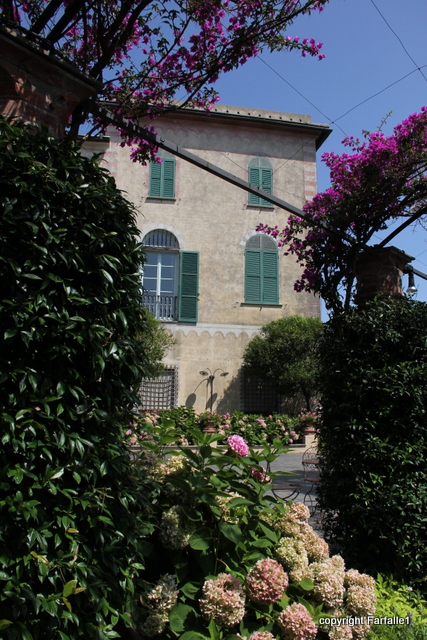
This old blog has been pretty quiet lately, but for a good reason. Speedy and I are selling our house here in Rapallo and moving back full-time to the States.

It’s hard to say goodbye. We’ve been here about 14 years, 4 of them as full-time residents. Rapallo feels as much like home as Arizona (both feel a little other-worldly, to tell you the truth).

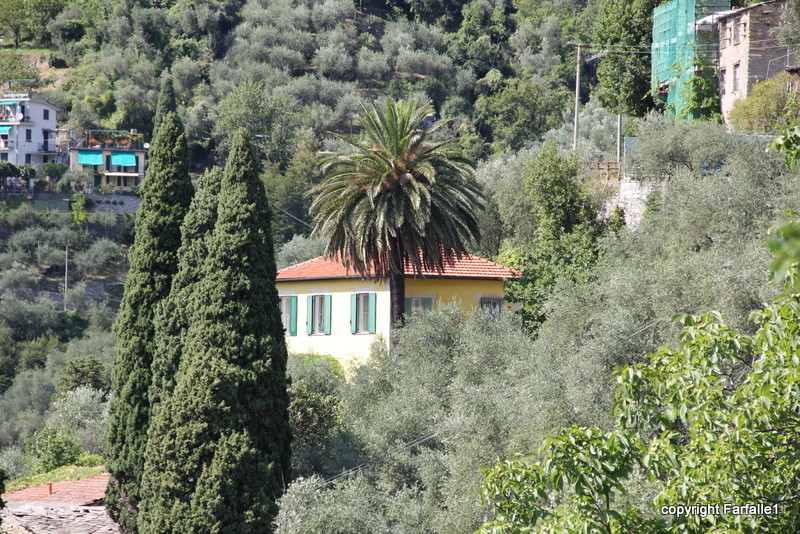
House from Rosa's

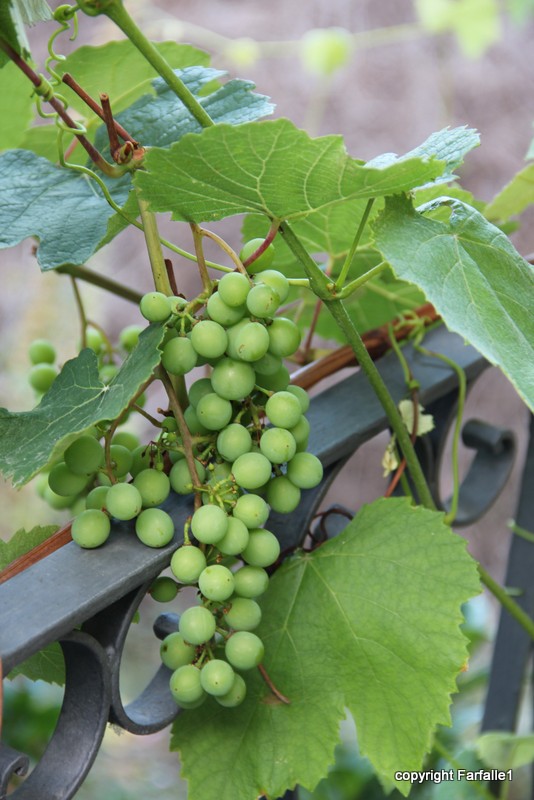
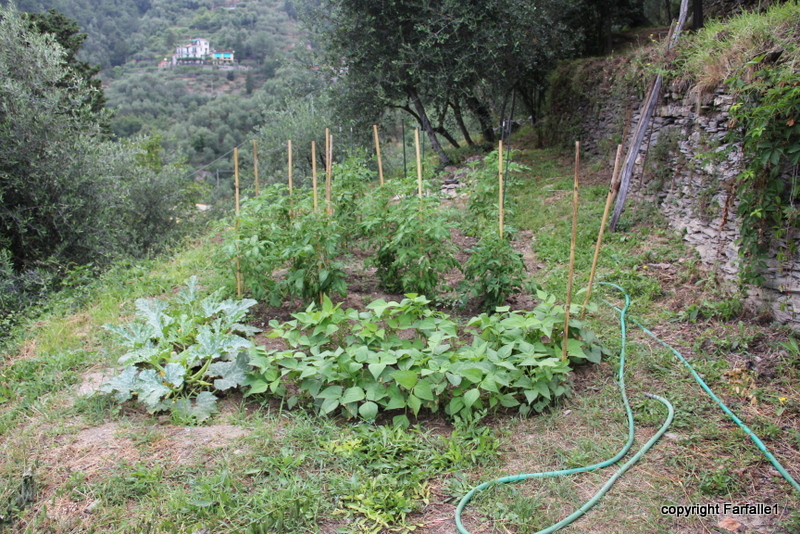
We leave behind a house into which we’ve poured our hearts and souls. We leave behind the gardens which were non-existent when we started, but which now produce oranges, cherries, apricots, pomegranates, grapes, plums and persimmons, in addition to basil, parsley, sage, thyme, rosemary, more basil, and any veggies we feel like growing. Sometimes there’s even a good olive crop.

grapes our garden

But a house is just stones, stucco and paint, and a garden is just dirt and plants. Either can be replaced in another location. What can’t be replaced is the friendships we’ve made over so many years. From our first visit in nearby Camogli, when we met a friend of a friend, to a meeting just a few days ago, people have been welcoming, kind and – always! – helpful. The community here helps one another when necessary in ways that are humbling and heartwarming. We’ve been befriended by people from all over Europe, from Asia, from America, some through introductions, some simply by chance.

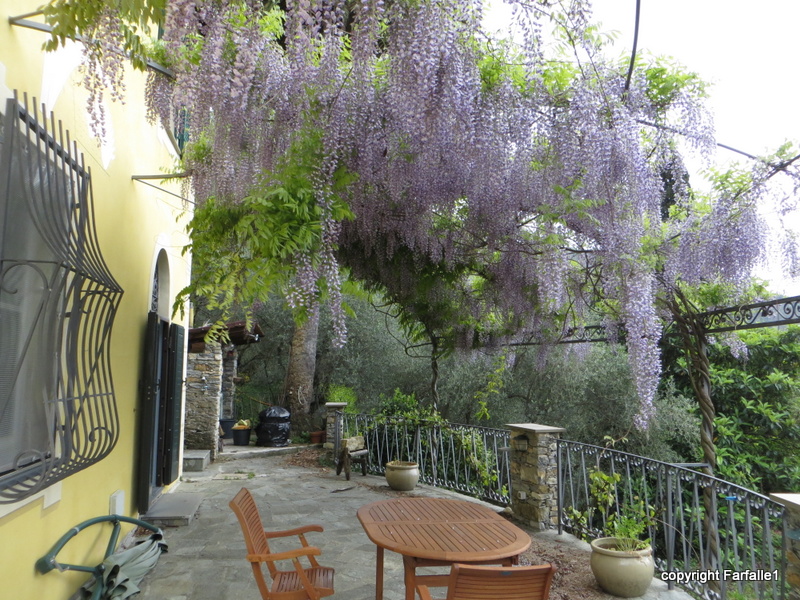
We’ve had adventures in Rapallo and beyond, many described in the pages of this blog. We’ve entertained under the wisteria which, just last year began to provide the shade we planned for.

glicine-001

We’ve had guests visit from near and far, some old friends, some family, and some new friends too.

View from the guest room

View from the guest room

Speedy has cooked fantastic meals in the kitchen, on the outdoor BBQ and, beginning a couple of years ago, in the tandoor that he built himself.

There are so many stories I could tell you! Some of them I have, but many not. And now I won’t. Most likely this will be the last post from Expatriate in Rapallo, but I hope you’ll return for a visit now and then when you want a dose of beautiful Italy, or want to rustle up one of Speedy’s amazing dishes.

Thank you for reading and commenting on Expatriate. Your presence has kept my eyes open and my mind interested. It wouldn’t have been any fun without you.

I have an idea for a new blog – but not quite yet, as we’re very busy trying to move.

And busier still learning to say goodbye…

It’s All About the Weather

11 Saturday Oct 2014

Posted by farfalle1 in Genova, Italy, Liguria, Uncategorized, Weather

≈ 7 Comments

Tags

Floods in Genova, Genova floods, Heavy rain in Rapallo

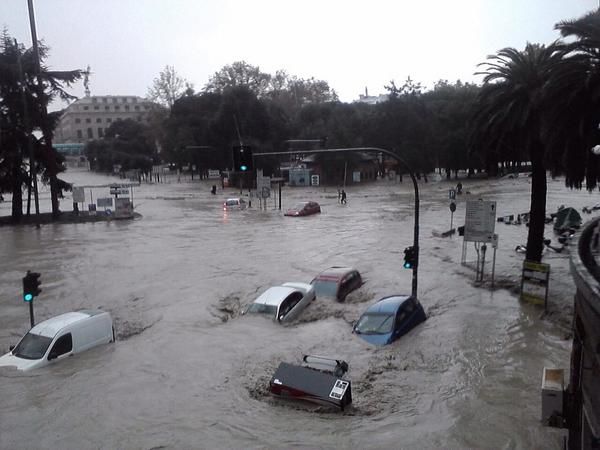
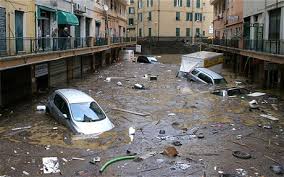
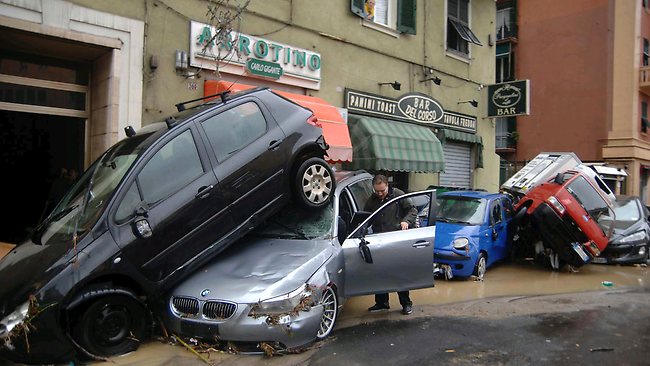
You may have heard about the terrible flooding that killed six people in Genova three years ago. Poor Genova! Again the Bisagno River overflowed and went crashing through the city’s streets, tossing cars around like matchsticks, leaving a trail of mud, debris, ruined businesses and homes, and at least one person dead.

flood genoa_italy

Press photo

Photo courtesy of The Telegraph

Photo courtesy of The Telegraph

Photo courtesy of The Herald Sun

Photo courtesy of The Herald Sun

Other parts of Liguria were hard hit by the fierce electrical storms, which went on for hours and knocked out power to many zones of Genova. In our own small area of Rapallo we received some damage. Above us a landslide closed the road that leads to the Valley behind us. Below us trees fell down into the road, damaging a guard rail. Enough were quickly removed to open up one narrow lane for traffic. Seems like very small patooties compared to what’s happened in Genova.

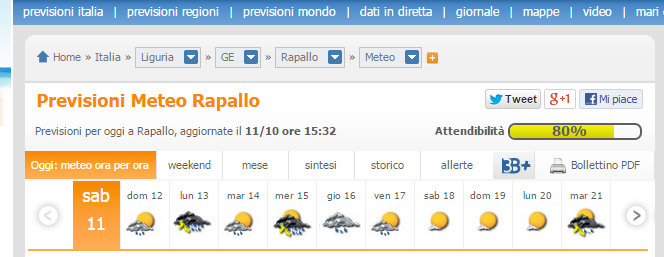
More rain fell this morning (Saturday, Oct. 11) with more forecast for this afternoon and tomorrow.

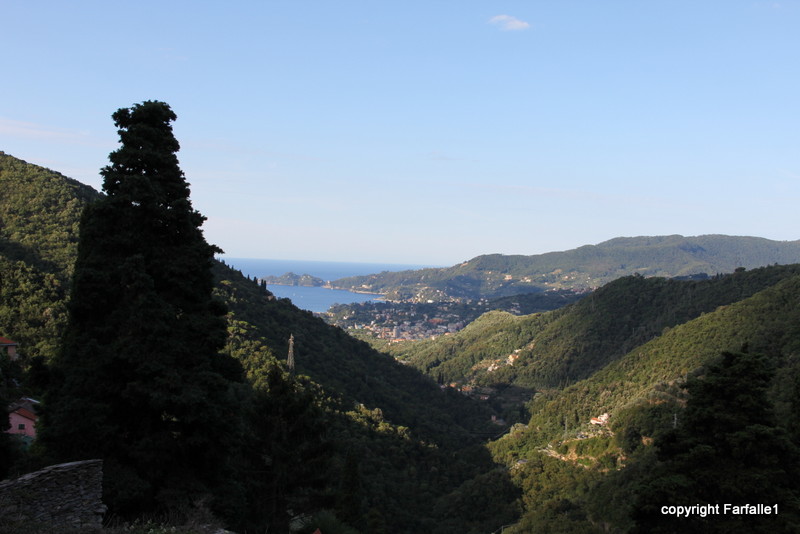
Liguria is a narrow bean-shaped region that hugs the Mediterranean, with high mountains that tumble right down to the sea. The mountains all drain into stream beds which, for most of the year hold only a trickle of water. Workers were mowing the weeds from our own San Francesco torrente just a couple of months ago. This is what it looked like today:

cascade

San Francesco near autostrada

It always amazes us when we open our windows or go outside after a big storm and hear the roar of falling water that fills the valley. We were lucky because the water stayed within its banks. Genova, which is also built on the thin strip of land between mountains and sea, had worse luck.

“It’s a mass of problems together. You have houses built in the wrong places, inadequate water channelling systems, poor planning and administration,” Carlo Malgarotto, president of the council in the region of Liguria, told Reuters.

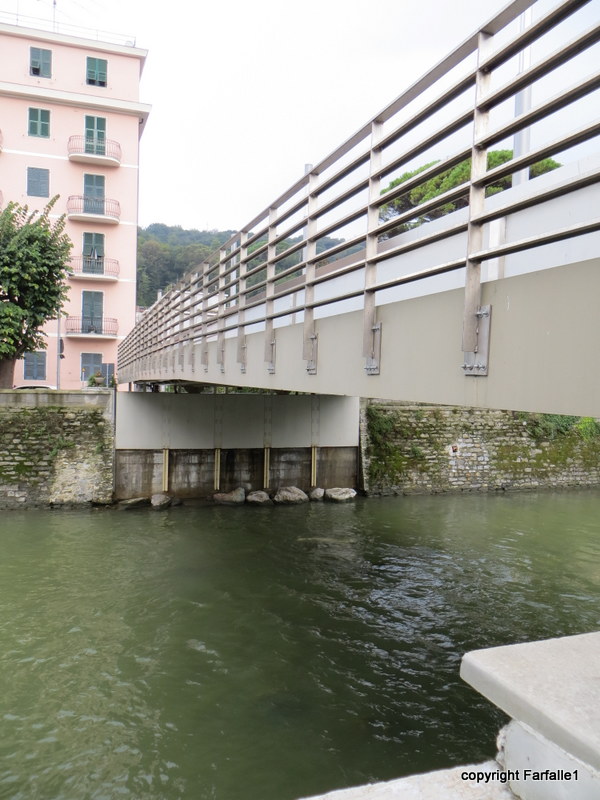
Rapallo did a bit of planning a few years ago. To prevent debris from catching on a bridge that might then back up the Boate River, they decided to rebuild it so that it could be raised in times of flood. Why? There is a new cathedral being finished upstream and a large underground parking area is part of the project. The goal was to keep the parking safe and dry. They were able to raise it yesterday, no doubt to the satisfaction of all involved in the project.

raised bridge-001

It’s a bit of an inconvenience for people who would like to use that bridge. As you can see below, the water was not really high enough to reach the bridge at all – but better safe than sorry.

water under bridge

Unfortunately Genova has not had as good luck with the plans they made after the 2011 flood. According to Reuters:  “Environment Minister Gian Luca Galletti said in a statement that 35 million euros ($44 million) had been earmarked to reinforce flood defences around the Bisagno but the funds had been blocked by a legal dispute.”

Sadly that sounds exactly like Italy. It doesn’t seem to be a country that has embraced the idea of citizens co-operating for the common good. Rather, people are much more likely to be watching out for their own interests and trying to see what they can gain personally from any project. I guess that makes Italy like a lot of other places.

Meanwhile, more rain is forecast. Fingers crossed for Genova, because they already have their hands full.

Courtesy of 3B Meteo

Courtesy of 3B Meteo

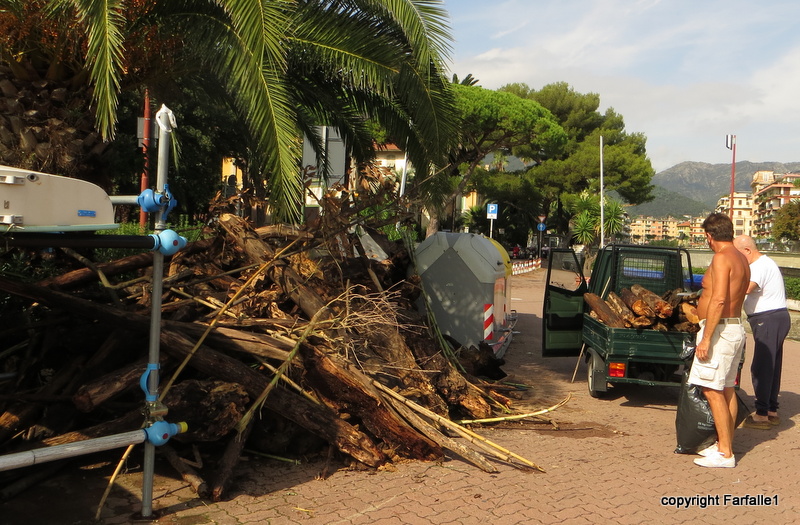
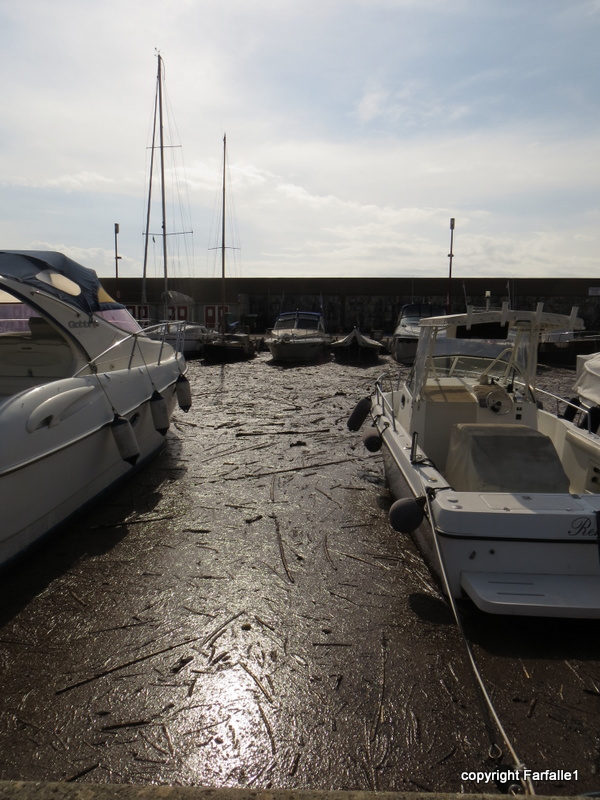
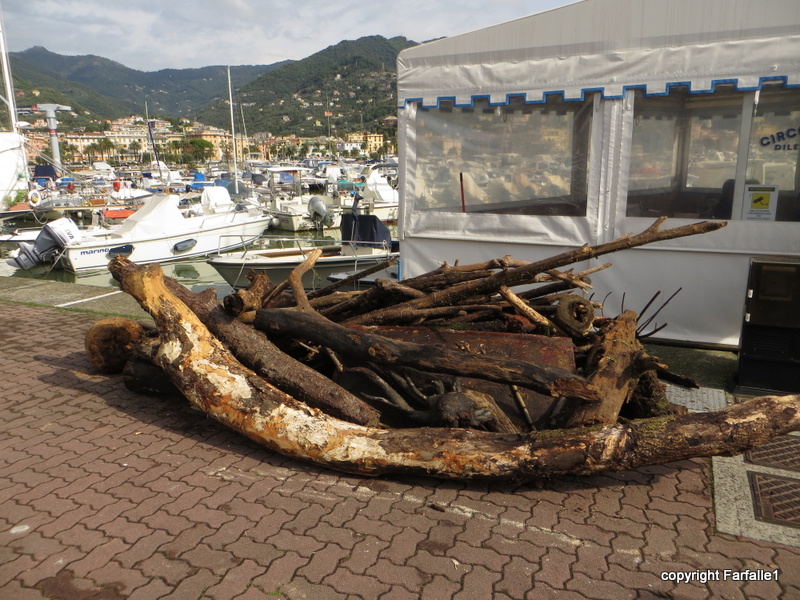
Addendum: We visited the Port on Sunday and found the aftermath of the storm: flotsam, jetsam and a lot of driftwood that had already been pulled out of the water. There was so much rubbish among the boats that the water was invisible.

driftwood in port flotsam and jetsam in port-001 driftwood


Cows Come Home… Again!

20 Saturday Sep 2014

Posted by farfalle1 in Alps, Animals in Italy, Italian festas, Italian food, Italian men, Italy, Piemonte, Portraits of people, Uncategorized

≈ 4 Comments

Tags

Antique tractors, Cowherding, Cows, Fera 'd San Bartrame', Oropa, Tractors


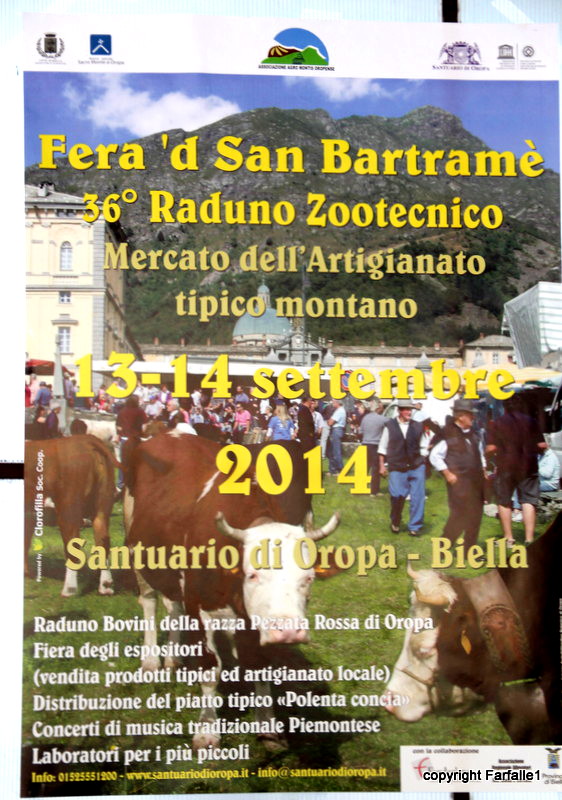
fair poster

Those who are faithful readers of this blog know there are few things that give us more pleasure than a day spent with the cows (read about last years outing here). Last weekend we enjoyed just such a day, made even better by being with dear friends.

The Santuario di Oropa sits high in the pre-Alps of Piemonte (region of Biella) at an altitude of some 1,100 meters (3,610 + feet). Its long history dates back in lore to the 4th century AD. In fact the first mention of simple churches in Oropa, dedicated to the Saints Mary and Bartholomew, occurred in the 13th century. (San Bartrame’ is Piemontese dialect for St. Bartholmew.) The present series of buildings were begun in the first years of the 17th century, with work continuing to this day. The most recent basilica was consecrated in 1960.  Our friends told us there is a saying in Piemonte to describe something that is never finished – ‘it’s another Oropa.’ There is a good, brief history of the Sanctuary, which is an important pilgrim destination here (in English).

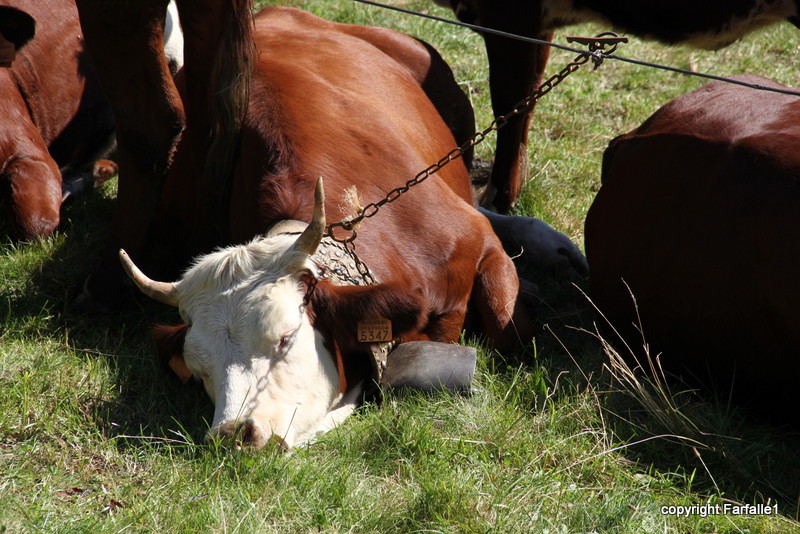
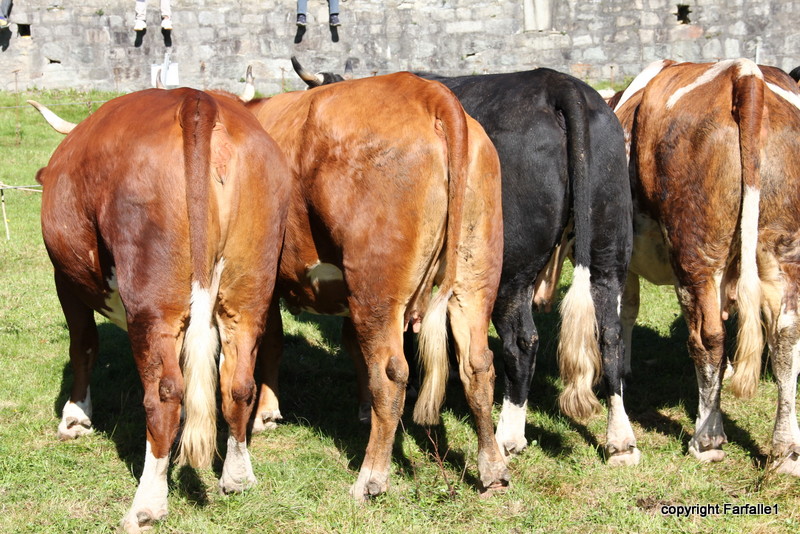
However, it was not as pilgrims that we visited the sacred site – it was as cow fanciers, in particular to get to know the Pezzata Rossa di Oropa, one of sixteen minor cattle breeds recognized by the Italian Ministry of Agriculture. The standard for the breed calls for a ‘red’ coat with white spots. In fact, there have been breeding changes over the years and, in addition to the standard, there are now all white Pezzate and black and white Pezzate.

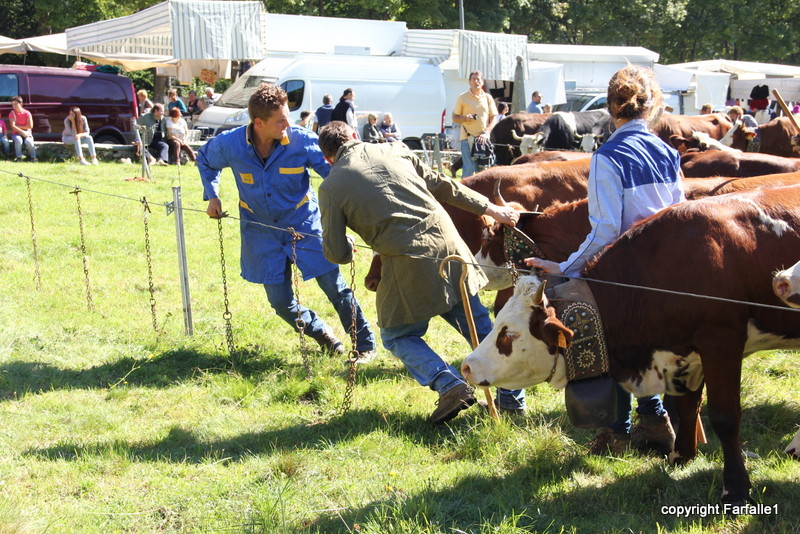
During the summer months the cows live with their herders on the high fields of the pre-Alps; it is too cold for them to remain there through the winter, and the Festa we attended was held to celebrate their return to civilization. The herds are brought down a very narrow road and driven into a large field where they are tied by chains to a flimsy wire fence.

pretty cowherd

That’s not a cane in the young woman’s hand, that’s the rather delicate shepherd’s crook that all the herders carry. Every now and then when a cow goes in the wrong direction she receives a little whack on the fanny with the crook along with a shout telling her what to do. Getting the cows to approach the fences in the field sometimes took a bit of effort. The crook was freely employed, as was simple strength.

pezzata rossa di oropa chaining them up-003There was a delightful amount of confusion while the herds were being organized – some of the cows simply did not want to stand still in a row and would try to wander off.

watchful dog and young cowherd

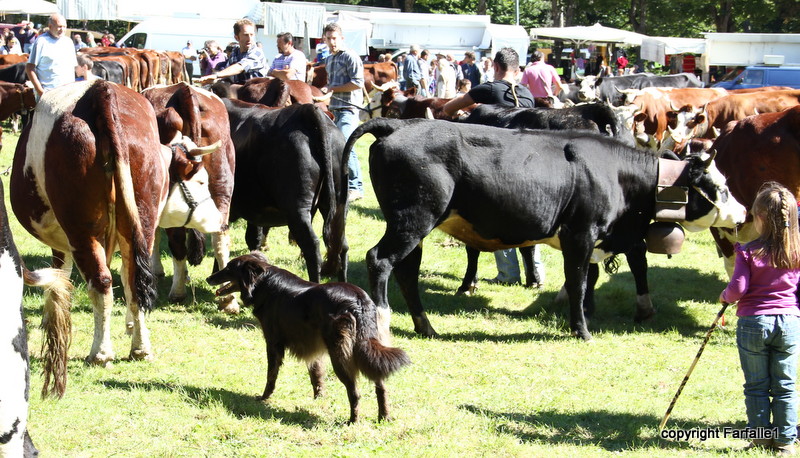
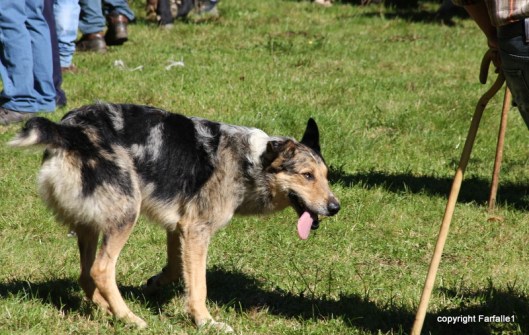
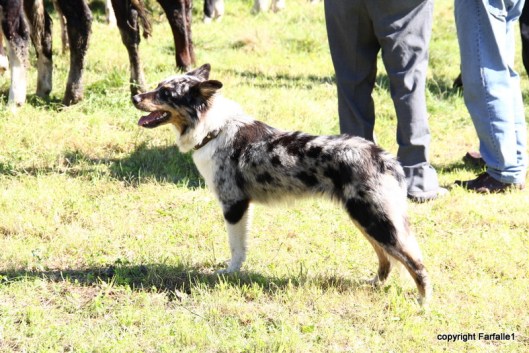
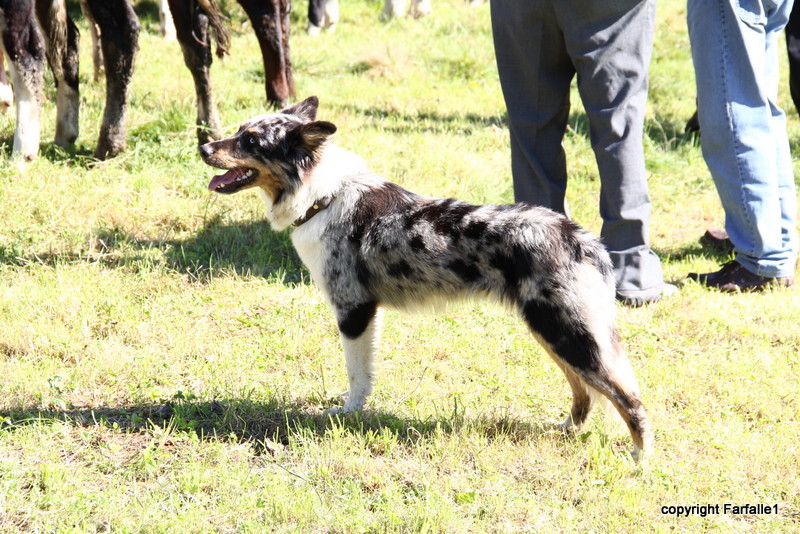
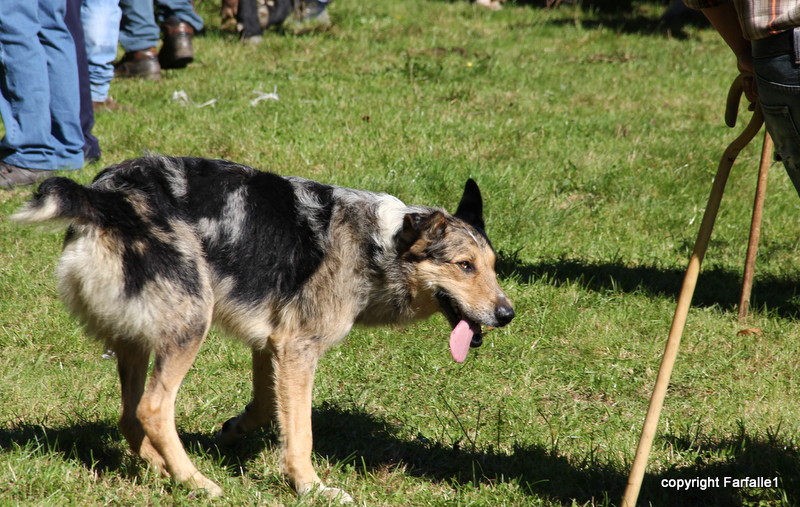
As in Scotland, dogs are central to controlling the herds, though the dogs at Oropa were very different than the border collies we have seen demonstrating herding techniques (sheep! geese!!). We asked one of the herders what the breed is and the succinct answer was, ‘bastardi.’ They certainly were bright and attentive to their work, though sometimes they looked a little goofy.

brindle dog with tongue out

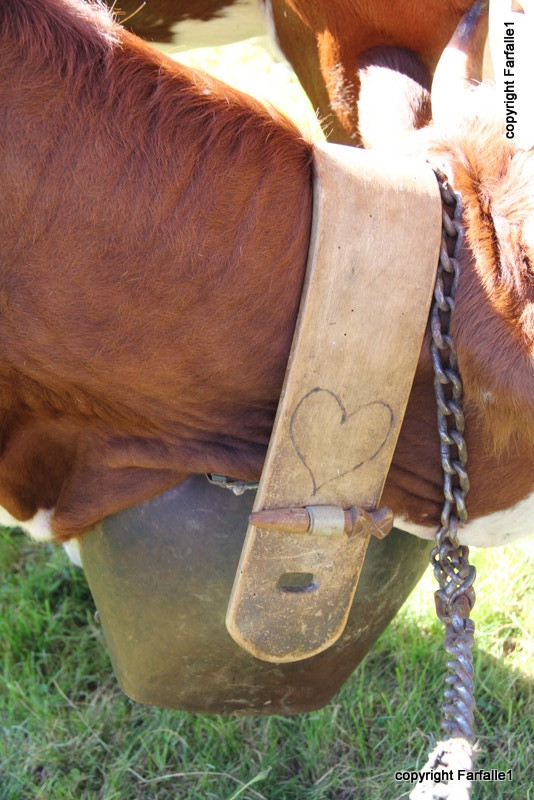
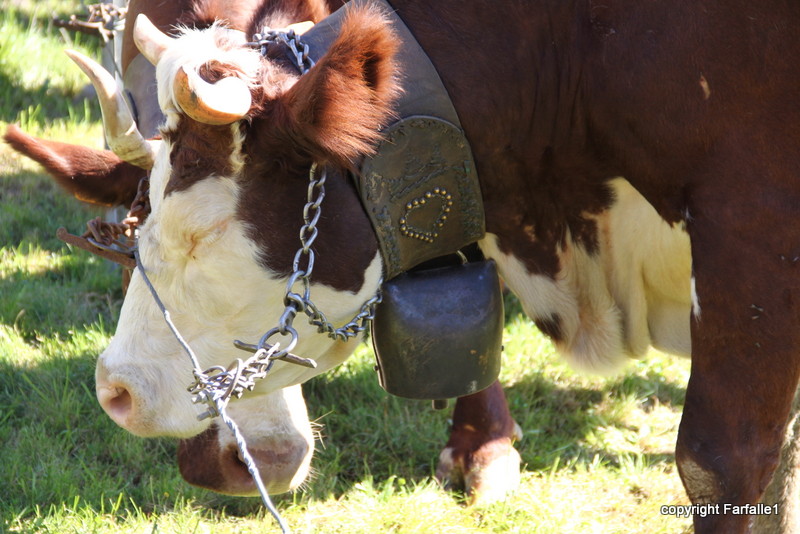
brindle cow dog-001Each herd wears its own identifying collar for the occasion. The old collars are made of wood, new ones of leather, and many are ornately decorated.

pezzata rossa di oropa leather collar pezzata rossa di oropa old wooden collar-001pezzata rossa di oropaMost of the cows were cows, but there was the occasional bull. This one was pretty randy, but he was wearing a home-made prophylactic device. Inelegant, perhaps, but effective

pezzata rossa di oropa finding shade

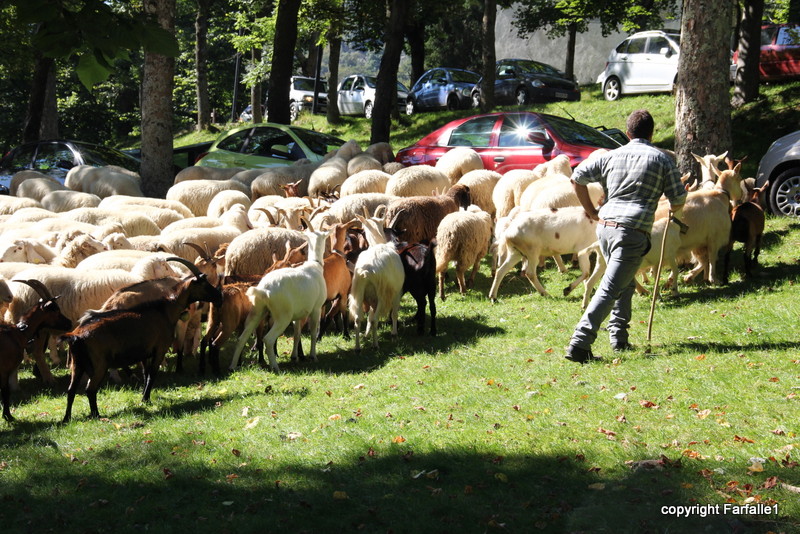
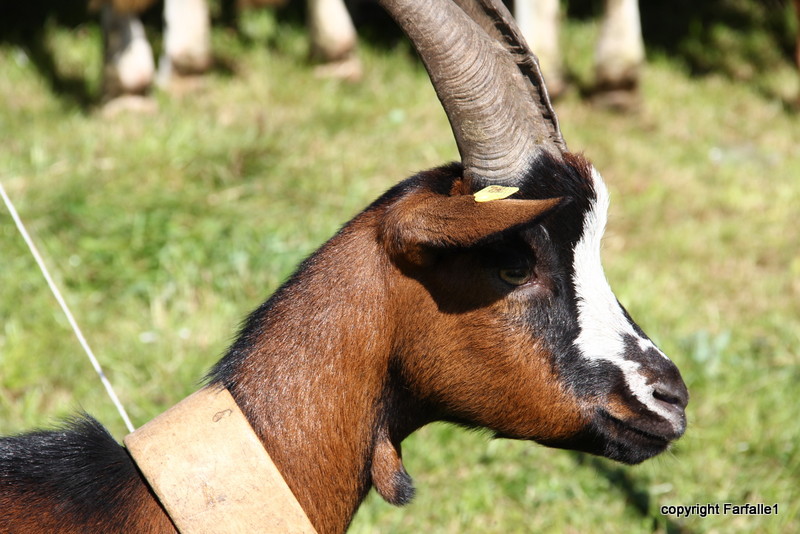
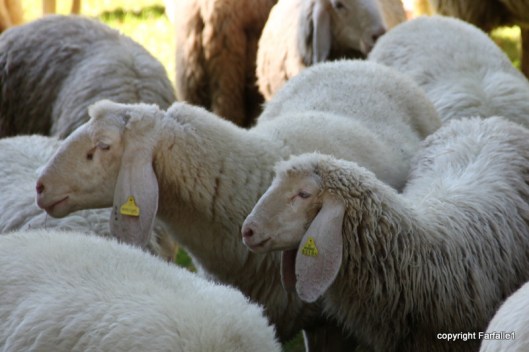
Cows weren’t the only beasts being brought down from the hills. There was a fine collection of sheep, interspersed with goats, that were put in a field across the road from the cows. I should mention that almost every single animal was wearing a bell – what with the shouting of the herders, the clanging of the bells and the bellowing and bleating of the animals there was a fine cacophony.

corraling the sheep and goats sheep and babygoatHaving been to Egypt in the last post here I couldn’t help but think that this pair was from that ancient land – such fine profiles.

sheep egyptian profileYou may be wondering why the cows were all tied up in that big field. The reason is that each herd was judged, and a prize awarded to the herd deemed to be in the best condition after a summer spent up on the mountain. I’m ashamed to say I was thinking about lunch and missed the prize presentation, but I did get to the stand in time to catch a glimpse of the winners. It seemed to be a rather low-key part of the event.

prize winners

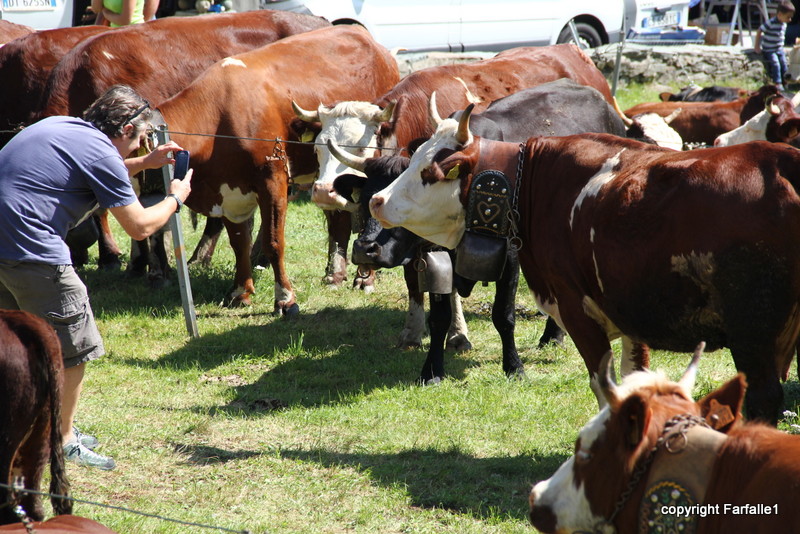
There was ample opportunity for the many photographers present to take pictures of cows – and you can’t tell me the cows weren’t posing.

pezzata rossa di oropa posing for photographer

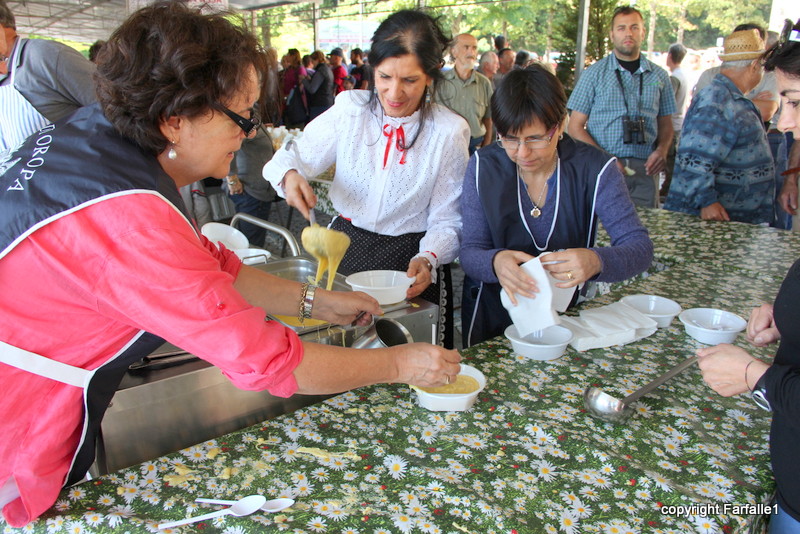
Did someone mention lunch?? It wouldn’t be an Italian festa without a good meal. The featured specialty was polenta cuncia, one of the world’s great comfort foods (you can find a recipe for it here). Basically it is a fairly finely ground corn meal cooked with either water or stock with the local cheese, toma, stirred in at the end. It is rich, hearty and extremely satisfying. The Oropa iteration was dressed with a couple of tablespoons of melted butter, a fine improvement. It took three ladies to serve the polenta – one to glop it in a bowl, one to add the butter, and one to stick in a spoon and hand it to the hungry pilgrim, along with a napkin.

serving polenta-007polenta cuncia with black butter-001It was fabulous, and after a morning of chasing cows and sheep it was most welcome, especially washed down with the earthy local red wine.

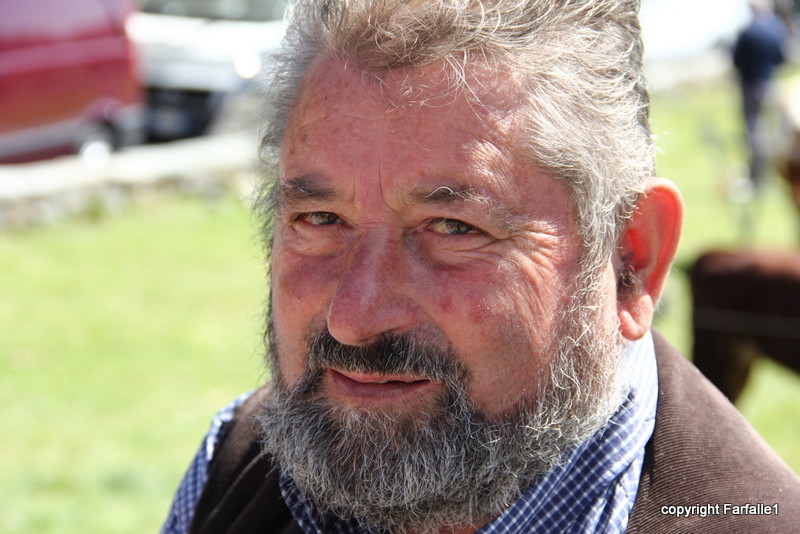
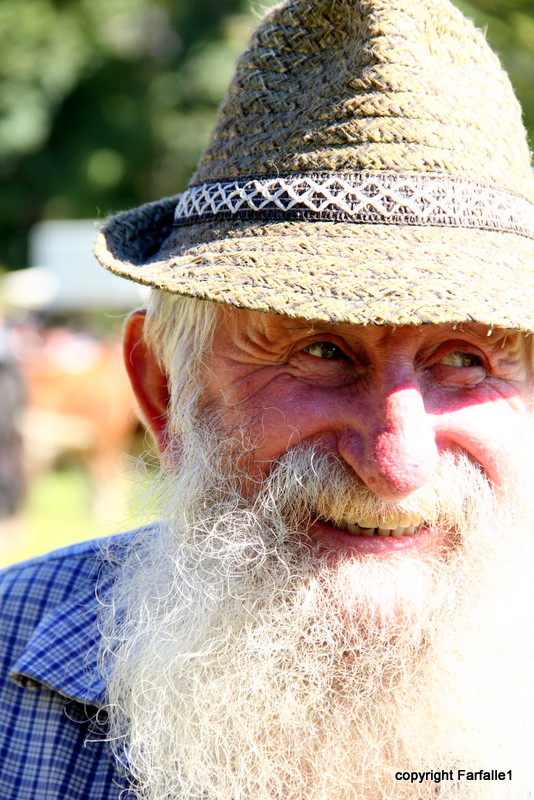
For me one of the best parts of an event like this is looking at the people. The cowherds were extremely kind in letting me take their pictures. These are men whose families have probably lived in Piemonte for centuries.

cowherd-001

cowherds cowherdThere was a lot more going on during the festa – a large array of vendors had local (and some not so local) crafts for sale; there was an excellent exhibit of tractors, old and new; there was a photo exhibit in a tram car that for decades carried sick people from Biella to Oropa for blessings and cures; in the church there was a display of preseppe (creche scenes) from all around the world (my favorite: the one from a nearby village made from marzipan); there was music. If you would like to see some pictures of these things, in addition to more pictures of the animals, please click here (for a slide show click the icon in the upper right that looks like a couple of small rectangles).

The weather was glorious, one of the few sunny days Oropa enjoys each year; it was warm, the crowd was happy, and the animals seemed to be too. It was just so much fun – and exhausting – for everyone.

pezzata rossa di oropa tired

THE END

cow backsides

Learning Something New Every Day

18 Sunday May 2014

Posted by farfalle1 in Italian history, Italy, Rapallo, Uncategorized

≈ 6 Comments

Tags

Cute puppy, Porto delle Saline, Rapallo history, Rapallo's gates

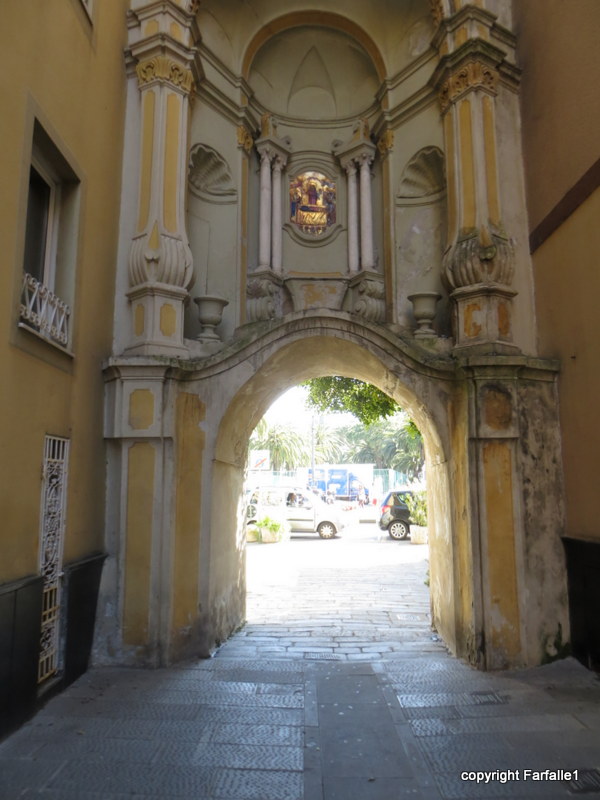
I suppose it’s like living in New York for ten years and suddenly learning the history of the Empire State Building. How many times have Speedy and I walked through or past this gate? More than we can count.

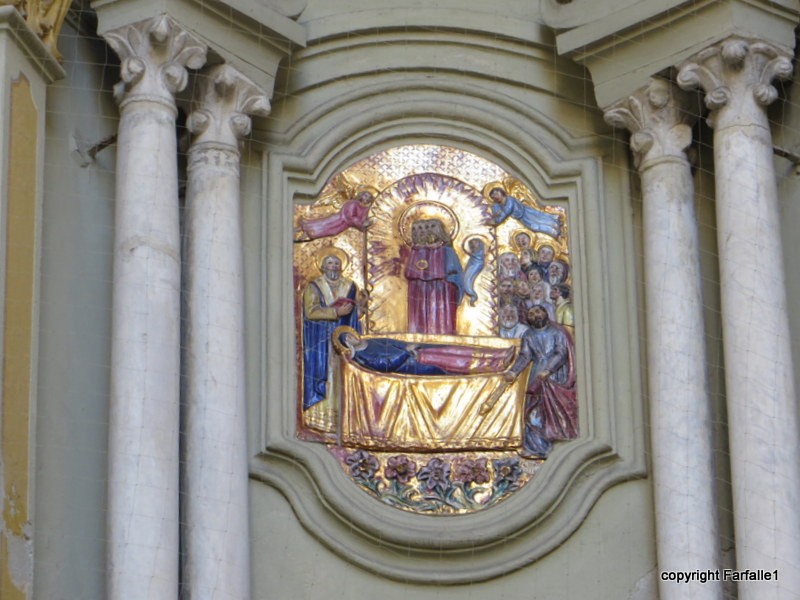
Rapallo Porto delle salineIt is the so-called Porto delle Saline, and is the only one of five original gates into the once-walled Rapallo that is still in existence.  Obviously it didn’t look much like this in the mid-1200’s when written reference to it was first made. It’s been tarted up quite a bit, as can be seen in the Baroque detail above the ornate arch. That is a reproduction of the painting of Our Lady of Montallegro, the important pilgrim church at the top of one of the hills behind Rapallo (you can read the fascinating history of the church and its ikon here).

porto delle saline detail

Back when Rapallo was walled and still had five gates, the Doria family from Genova held a monopoly on salt production in the area. The great pans in which they evaporated salt from the sea were just outside this gate – hence the name, which means Salt Port.

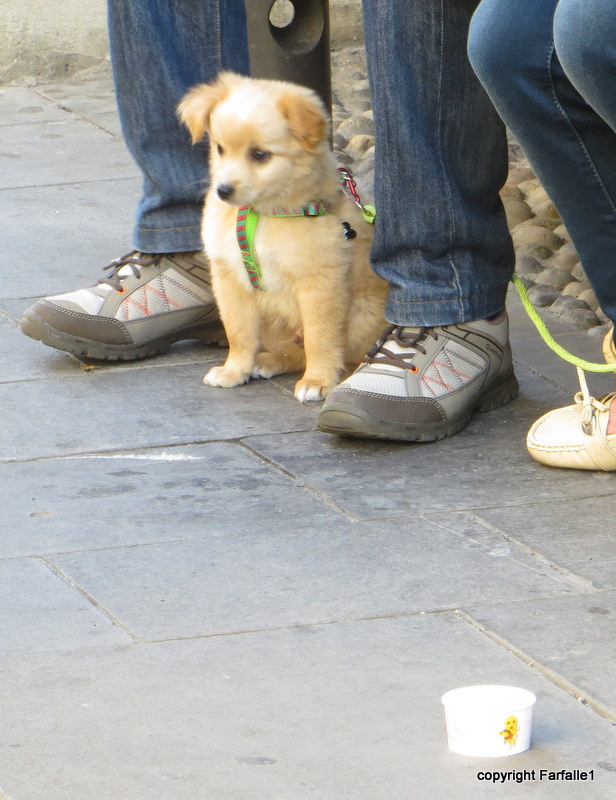
I finally learned this little bit of Rapallo’s history today during a delightful passagiata with visiting family. Although I felt foolish for not knowing the story before, I’m very glad to know it now. It was a splendid day in every way, and even had an appropriate moment of doggy cuteness. I was too slow to capture this little puppy eating the ice cream from his cup, but quick enough to catch him wondering if there was any way to get some more.

littlel pup and his ice cream cup

The Two Faces of San Maurizio

27 Friday Sep 2013

Posted by farfalle1 in History, Holidays, Italian Churches, Italian festas, Italy, San Maurizio di Monti, Uncategorized

≈ 8 Comments

Tags

Procession San Maurizio di Monti, Saint Morris

September 22 is San Maurizio’s Saint Day, so of course there is a procession here in San Maurizio di Monti, and lots of other celebration too.  But who was he?  According to Wikipedia there is some disagreement about the veracity of the tale.  However, it is said that he was a general at the head of the legendary Theban Legion, which operated in Mesopotamia during the third century CE.  Later Emperor Diocletian sent the legion to Gaul to subdue both barbarians arriving from the north and a rebellious local population.

Diocletian’s successor, Emperor Maximian ordered the legion to persecute and kill the local population of Valais, whom he felt were not being loyal to Rome.  Many of this population had converted to Christianity, and the Legion was also Christian; they refused to murder their fellow believers.  Now it gets really bloody.  Maximian, angered by this  mutinous behahavior, ordered a decimation of the Legion, that is, one of every ten soldiers was to be beheaded.  After this gruesome punishment he again ordered the killing of the Valais population.  Again the Legion demurred and a second decimation ensued.  Still they refused to kill their fellow Christians.  This time the furious Maximian ordered that the entire remaining Legion be killed.  This extreme punishment was carried out in what is now Saint-Maurice-en-Valais, in Switzerland (by whom I couldn’t discover).  As general of this steadfastly Christian legion Maurice, or Maurizio here in Italy, is the one who became a saint.

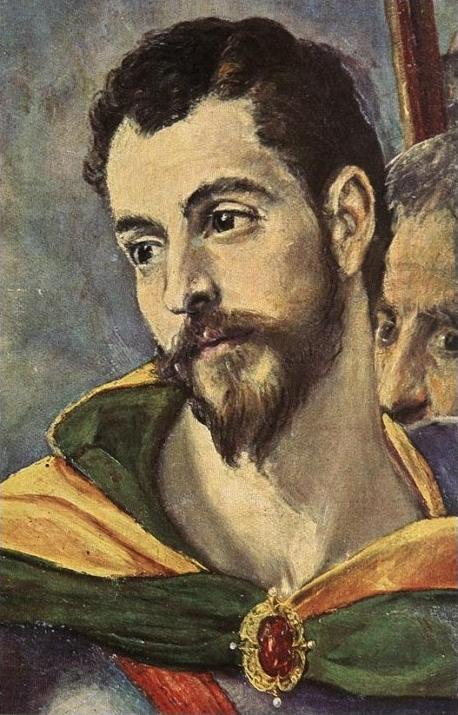
He is usually depicted with a sword and, here in Italy, with a red cross.  He is the patron saint of the Alpini, the incredibly brave and strong Italian Alpine military group.  And he is depicted as either black or white.  He is assumed to have been born in Egypt, and was perhaps Nubian.

Nubian San Maurizio, painted between 1517 and 1523 by Matthias Gruenewald

Nubian San Maurizio, painted between 1517 and 1523 by Matthias Gruenewald

White San Maurizio

White San Maurizio painted in 1580 by El Greco

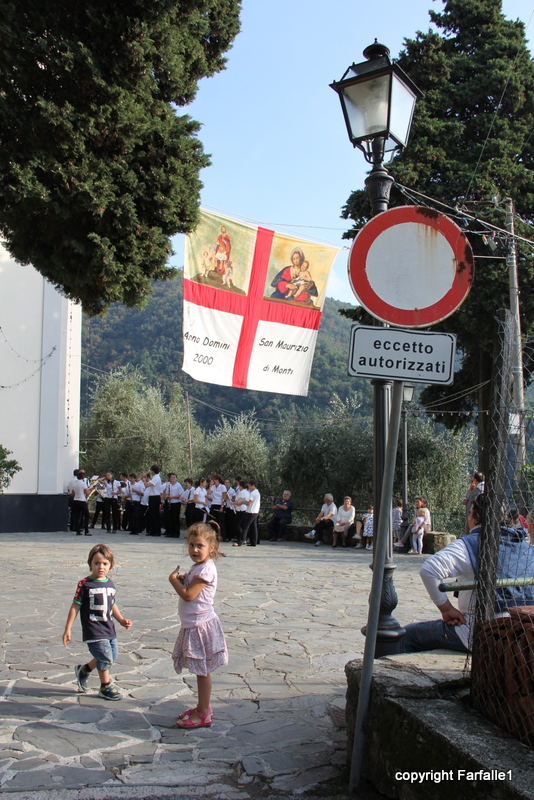
The celebrations in San Maurizio di Monti included the usual food stand, music and dancing for two evenings.  As well we had our very own fireworks display.  The serious part of the celebration took place in the late afternoon on September 22.

The Rapallo Band gave a short band concert before the celebratory mass, including some pretty snappy numbers.  Here are a couple of shots of the piazza in front of the church during the concert:

Note the red cross on the flag.

Note the red cross on the flag.

The band plays

The band plays

Red motorcycle in front of tablets commemorating war dead.

Red motorcycle in front of tablets commemorating war dead.

When the church was gussied up for the second millenium the portrait of San Maurizio over the door was repainted.

Goofy San Maurizio

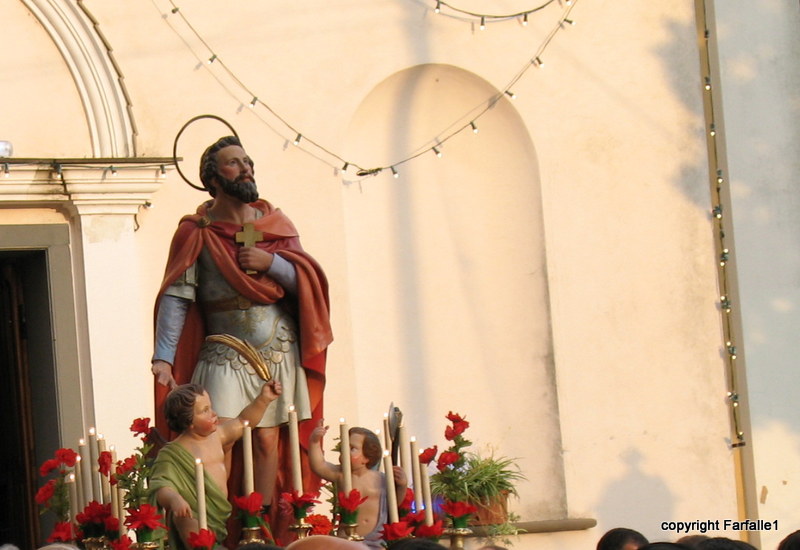
Is it just me, or does he look kind of goofy? At the very least he looks like he has a very good secret.  That’s one of his faces in San Maurizio.  The other is much more serious, and can be seen on the statue that is the central part of the procession through town (‘through town’ is a grand way of saying the procession leaves the church, marches up the road about 400 meters to a fork in the road, turns around and marches back to the church for the conclusion of the mass).

Older photo taken in 2007.

Older photo taken in 2007.

On the statue Maurzio’s expression seems wistful – perhaps he would like to get out in the air more than once a year.  You can see a short video of the procession going from the church (with prayer) here, and another of it returning (with music) here.

He is our mystery saint, black or white, goofy or sad – like the rest of us, he’s… complicated.

Where there’s smoke

04 Thursday Jul 2013

Posted by farfalle1 in Holidays, Italian Churches, Italian habits and customs, Italian holidays, Italy, Rapallo, Uncategorized

≈ 6 Comments

Tags

Festa patronale di Rapallo

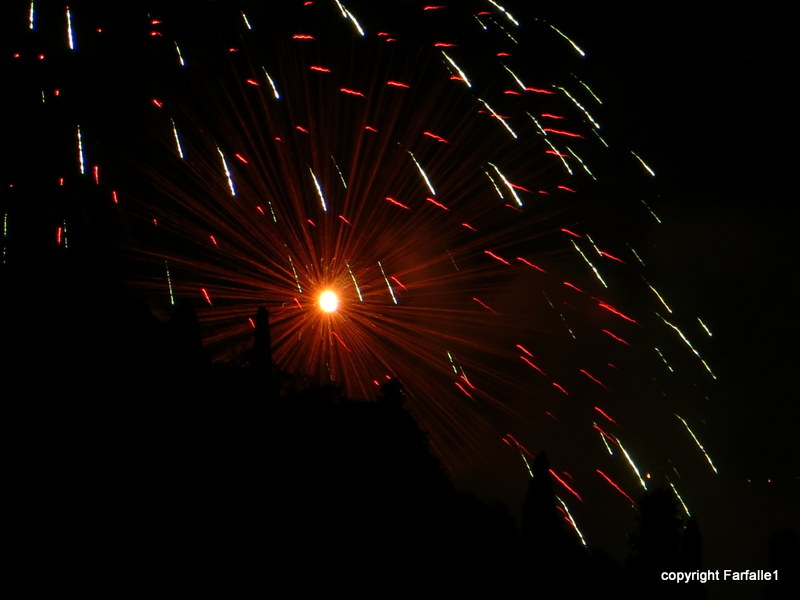
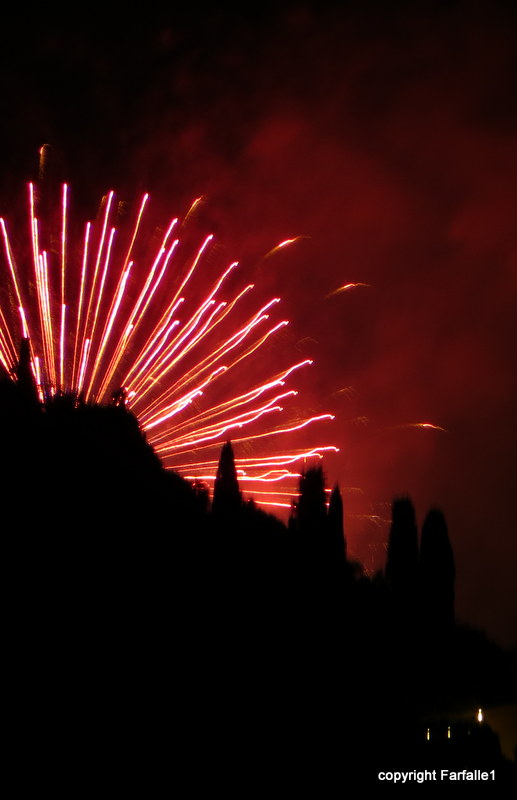
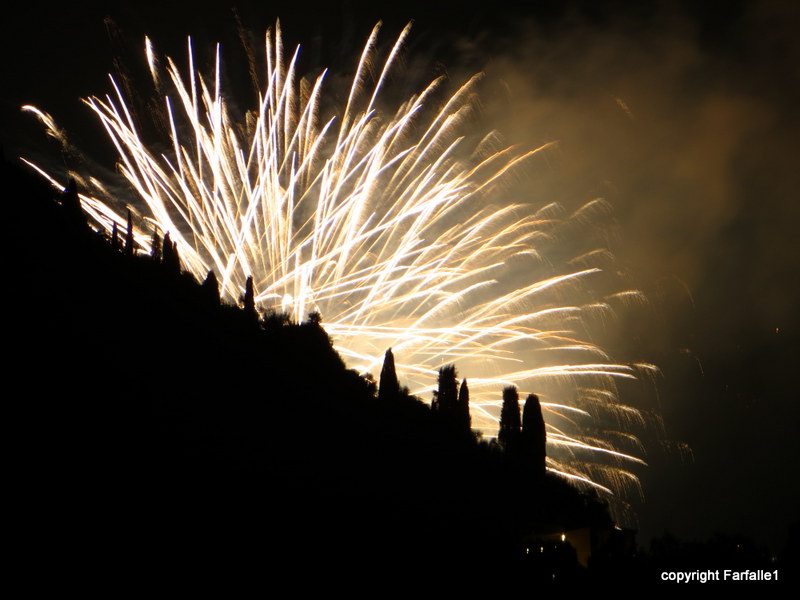
Rapallo just celebrated her Festa Patronale in honor of the Virgin Mary. It is three days of madness in town (you can see some photos of various elements of the celebration, including the parade of crucifixes here) beginning with a huge volley of mortar fire at 8 a.m. on July 1st. This is followed by fireworks presented by the Sestiere at mid-day and evening on the 1st, 2nd and 3rd. Why anyone wants to fire off huge noisy mortars first thing in the morning is beyond me (they do it to greet and salute the Virgin, to let her know the Festa has begun; it closes with another cannonade last thing on the 3rd). But fire them off they do. We were congratulating ourselves for living up above the chaos and thus missing most of the smoke:

fireworks smoke

We were smug too soon, as it turned out. Half an hour later most of the smoke had drifted up our way, but by then it was dissipated enough not to matter.

During the Festa the cathedral in town is brightly lit:

Rapallo cathedral alight

Here are a few shots of the fireworks from rather far away on the night of the 3rd (our house – I just didn’t have the om-pah-pah to join the fray this year) . I like to think of them as our own private 4th of July.

fireworks-004

fireworks-005

fireworks-006

fireworks-008

fireworks-010

If you’re interested in Rapallo’s long relationship with the Virgin you can read about it here.

Happy 4th of July, everyone!

That Special Light

26 Saturday Jan 2013

Posted by farfalle1 in Arizona, Italy, Photographs, Rapallo, Uncategorized

≈ 14 Comments

Tags

Magic of light

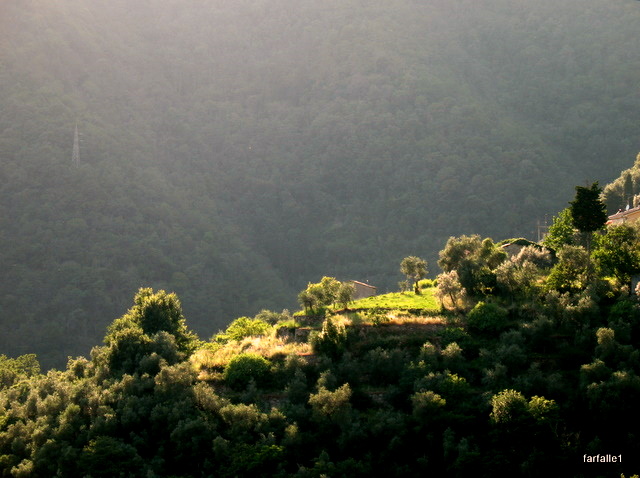
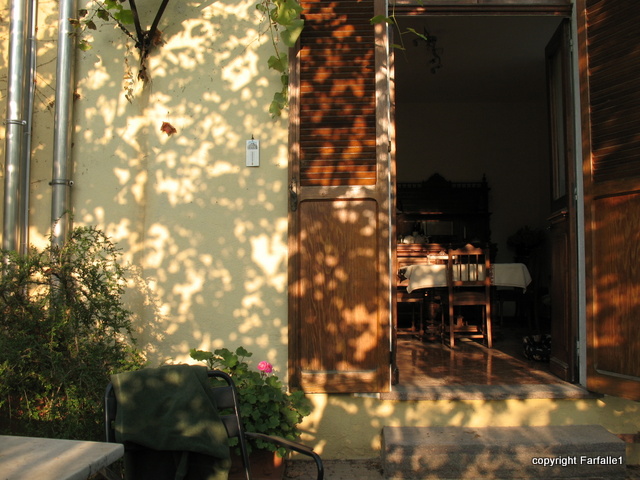
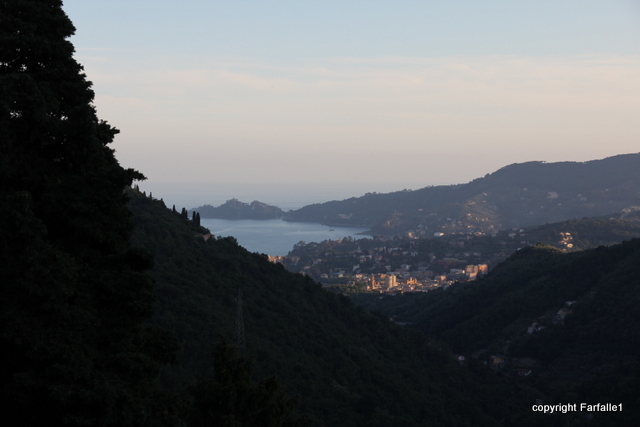
There’s something almost tangible about the light in Italy sometimes.  It’s hard to capture in photographs, but here are four examples:

gorgeous light 001C

magic light on fall golf course path

late light in Sostegno

last light on Rapallo-002

It’s as if you could actually slice through the light and, if you were very careful and lucky, bring it home with you.  There must be something in the atmosphere – smoke? magic? – that makes whatever you are looking at absolutely delicious.  Yellow light in Italy becomes golden; clouds are silver; roads seem to be bronze ribbons.

Arizona specializes in light too, but it’s a completely different kind of light, hard and hot.  The best time to see light in Arizona (or anywhere, I suppose) is early in the morning and in the evening; during those hours, even here, everything one looks at becomes softer.

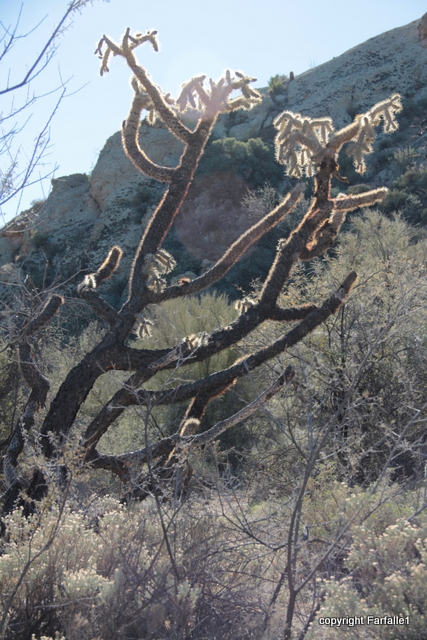
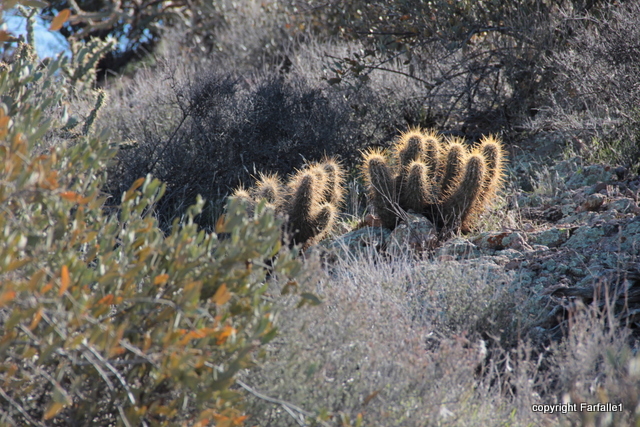
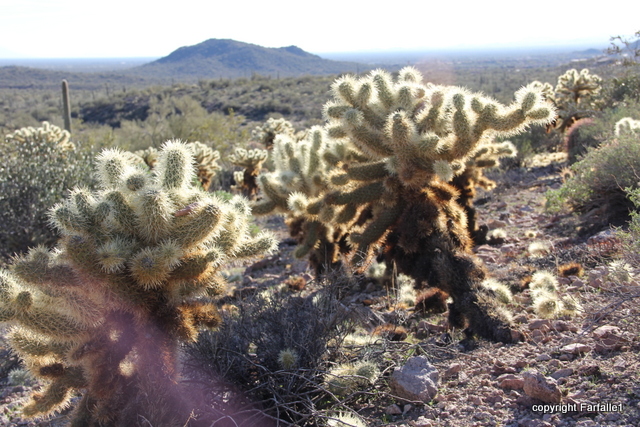
It seems to me that the cacti catch the light very dramatically.  It’s not the soft light of Italy we see here, but the sharp western light, held for a moment, reflected in the many spines of the plants and transformed into something more benign and gentle.  They seem to glow:

cholla light

Cholla

Hackberry Trail light in cholla

Hedgehog

Teddy Bear Cholla

Teddy Bear Cholla

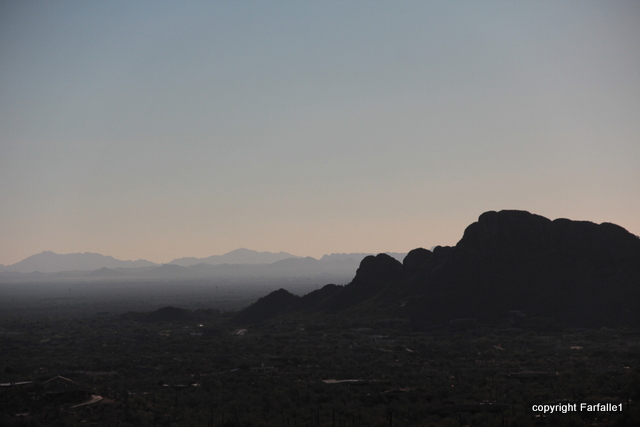
As evening falls in the desert the air above gets very clear, but down below the smog from the nearby city is evident.  It’s almost the same effect as a smoky evening after a field has been burned as happens all over Italy in the autumn. But, lovely as it is, knowing it is the result of smog and construction dust makes it so much less romantic.

view from Peralta Trail dinosaur

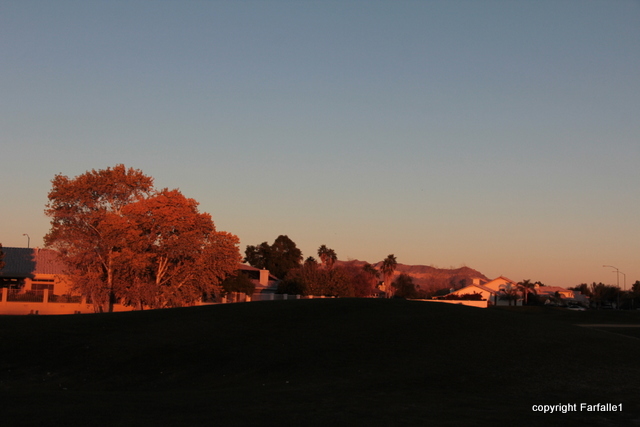
In the built-up areas and neighborhoods around the Valley of the Sun there are plenty of non-native trees, and they can be pretty spectacular in the waning light.

sunset over course - too red it was yellower

You can almost imagine yourself in New England in October, can’t you?  But no, this is Arizona, land of sharp things (about which more in the next post).

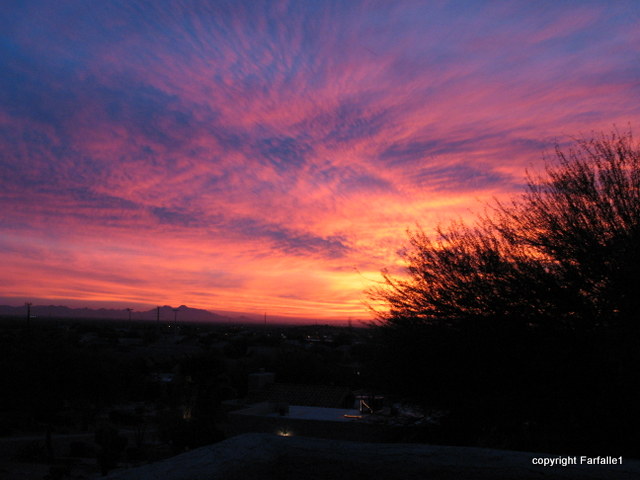
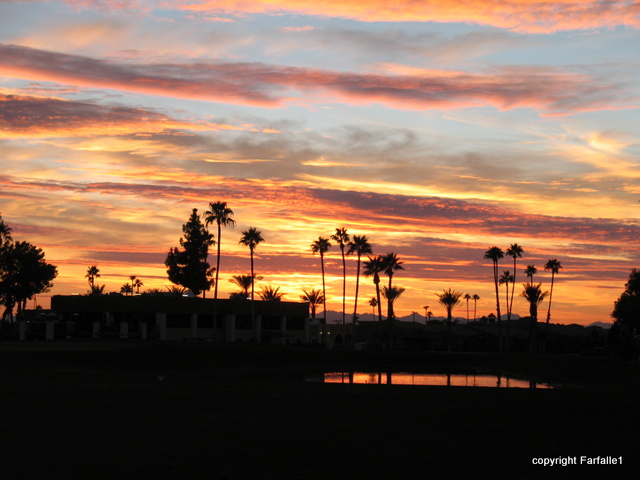
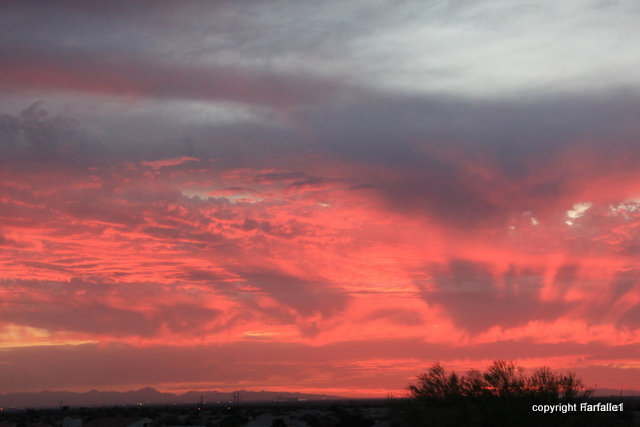
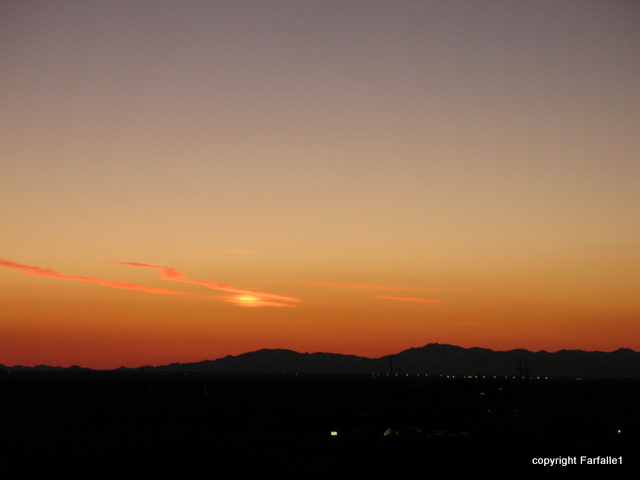
One thing Arizona has that we don’t have in our little corner of Italy is Big Sky. And with Big Sky come Dramatic Sunsets – we never get such violent skies in Rapallo, maybe because we’re on the wrong side of the Monte di Portofino.  But here in Gold Canyon, if there are any clouds in the sky we are in for a treat at sunset:

beautiful sunset

sunset over painted mountain golf course

Sunset at Painted Mountain Golf Course

sunset

Gold Canyon with the first glimmers of city lights in the distance

sunset-1

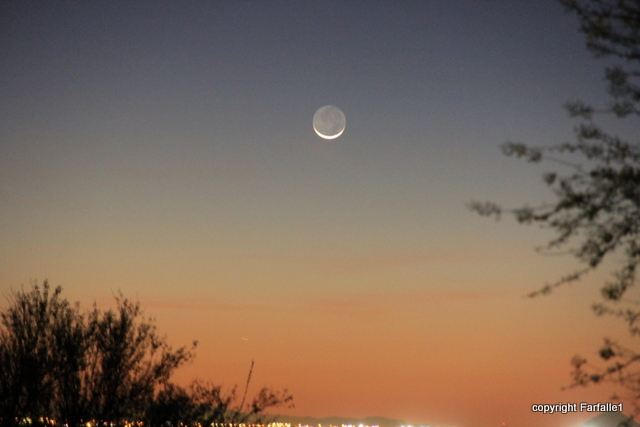
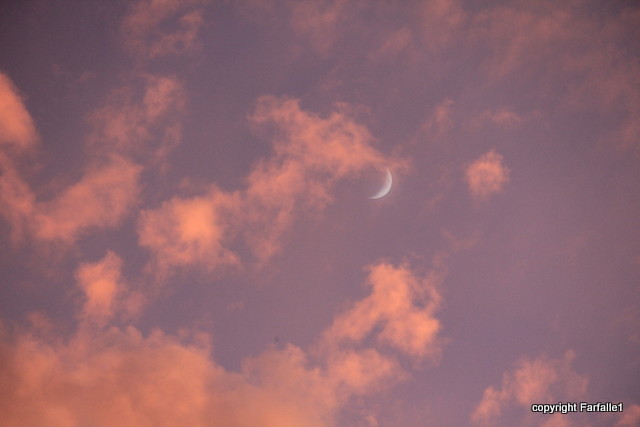
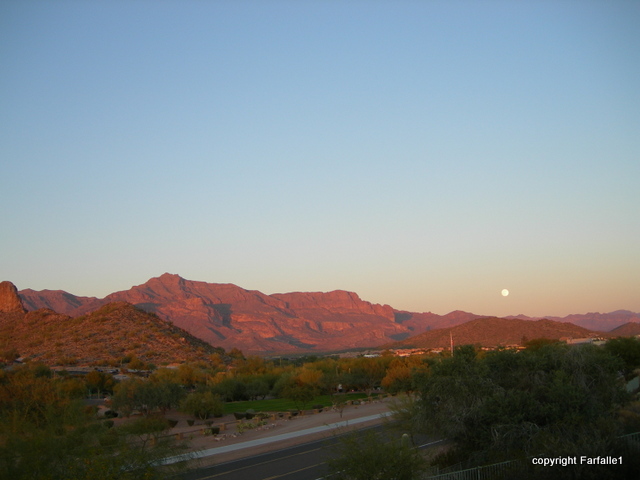
And even if there are no clouds, the midnight blue night sky is a perfect backdrop for stars, planets and especially the moon, sights that we often don’t notice when we’re in Italy.

sunset moon

MoonRise12-1-09 by Laura

Photo taken by my friend Laura

moon and city lights


moon setting over Phoenix

sunset moon-002

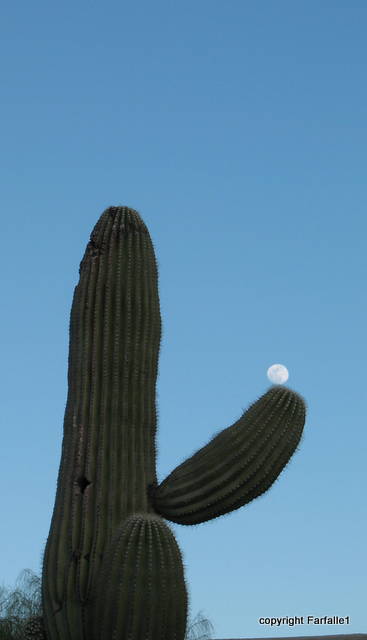
And I just couldn’t resist this one because it’s fun:

moon over cactus-1

Light: it’s around us all the time, but we seldom notice it.  Physicists may tell us that “light is simply a name for a range of electromagnetic radiation that can be detected by the human eye.”  But it can be so much more than that: all it takes is a special moment, a special angle, an unusual tableau for us to stop and say, ‘Oh.  It is so beautiful!’

Bucket or Bellyful?

27 Monday Aug 2012

Posted by farfalle1 in Italy, Law and order, Liguria, Photographs, San Maurizio di Monti, Uncategorized

≈ 11 Comments

Tags

Canadair, Corpo Forestale, Fighting forest fires in Italy, Fire Fighting planes, Forest fire in San Maurizio

(Click on photos to get larger, clearer images)

It’s been a fiery summer in both Europe and the U.S.  We’ve had our own little bit of excitement here in San Maurizio, although nothing on the scale of the tragic fires in Spain or the numerous fires in western U.S.

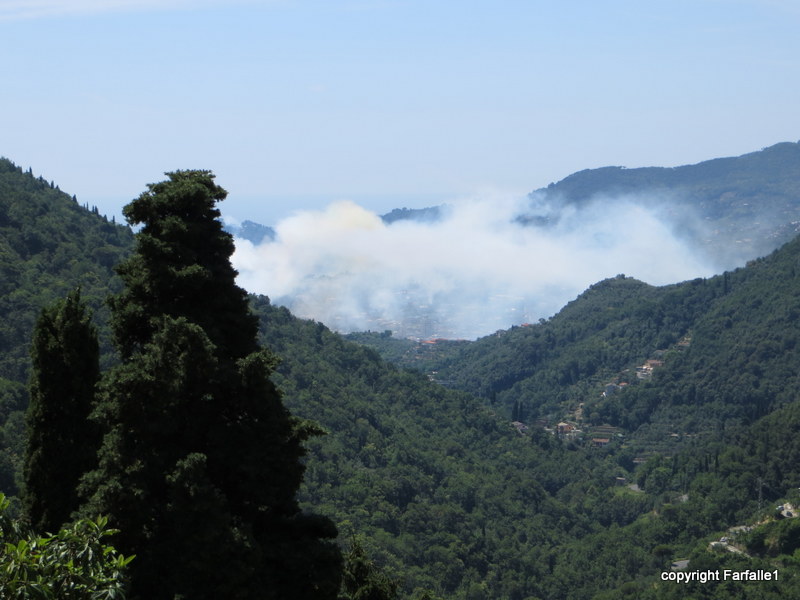
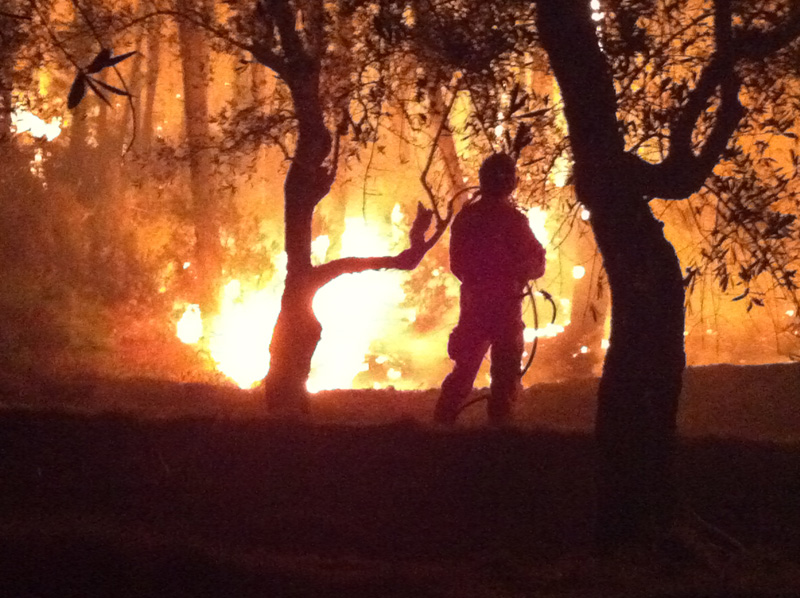
It began Thursday.  Speedy was home reading in the afternoon, and noticed there seemed to be a lot of helicopter traffic.  He had a look around, and this is what he saw on the hillside behind us:
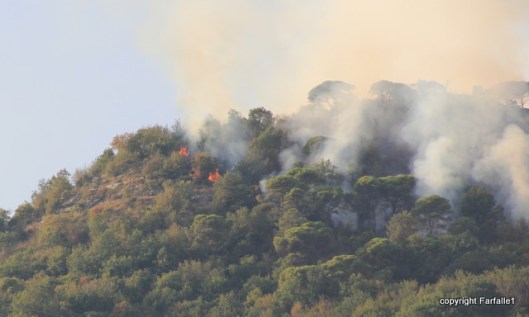
Photo by Speedy

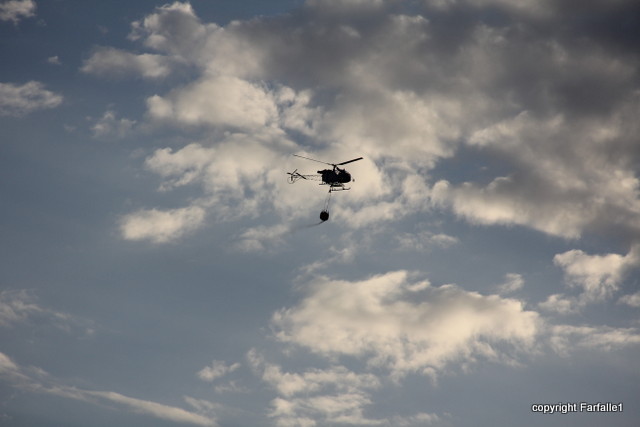
He kept track of the action all afternoon. First the wind blew to the east, then it swapped around and blew to the west. Two helicopters carried countless buckets of water to dump on the stubborn fires which, instead of going out, seemed to simply move on to another shrub or tree.  With so many individual fires we wondered if this were arson.  We don’t know, but we have been told the cause of the blazes is under investigation.

The ‘copter pilots are real sharp-shooters with their water buckets.  I wondered, though: as they move slowly to a position above their target fire, do the rotors fan the blaze and undo some of the good the water is doing? In any event, they do some demanding and amazing flying and, more often than not, their bucketful of water lands right on the selected target.
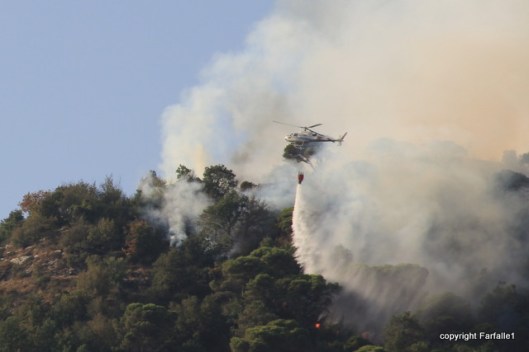
Photo by Speedy

The thing is, it looks like such a teeny amount of water – and so much effort is required to get it to the fire. It’s hard to imagine that it’s effective, but it is. By the end of the afternoon it looked like the fire was largely under control. The helicopters don’t fly at night, so it was good to see that the flames were out.

Or so we thought. I woke up at 3 a.m. and looked at the mountain to see it all ablaze again. This was disconcerting, and instead of going back to sleep I spent the rest of the night tossing, turning, and making a mental list of things to put into a box to carry away should it become necessary. Speedy spent his wakeful hour using GoogleEarth to compute how far the fire was from us. According to his calculations it was about 750 meters from our house as the cinder flies. It was less than 300 meters from the restored rustico of some friends. That’s too close!

Fortunately my list of what to pack was unnecessary. And the reason why is because, unbeknownst to us, there was a legion of volunteer firefighters  (Vigilanza Antincendi Boschivi) on the ground, not only that night but during both days of the fire. It turned out that one of our acquaintances, who is too modest to allow me to use his name, is one of these volunteers, and he was able to give me some useful information.

Photo courtesy of vab-arcetri.org

The Corpo Forestale is in charge of organizing the fighting of fires outside of cities and towns. They decide which aircraft will be used (if needed) for each fire, and where and when the volunteers will go. There are two sizes of helicopter (ours was the smaller one) and the famous bright yellow Canadair airplanes (about which more shortly). The small helicopters carry what look like rather small buckets of water, though our friends says that when the water is mistakenly dumped on the volunteers it does not feel like a small bucket. The Canadairs carry a belly full of water, much more than the small buckets. We were told that the larger helicopter carries even more water than the plane, but we’ve never seen one. There are fires that don’t require aircraft, but forests in Italy tend to be on steep mountainsides; more often than not a plane or helicopter is the only way to get water to the fire.

The volunteers often work more on fire containment than actual fire-fighting; our friend said, however, that they did both with this particular fire. They hump in some heavy equipment and somehow manage to keep the fire from spreading. That is why, on Thursday night, the fire burned up the mountain instead of coming down towards the houses below and why, even though I watched, and heard, tree after tree go up in flames, the fire slowly abated so there was less of it as the sun came up. Thank you, VAB volunteers!

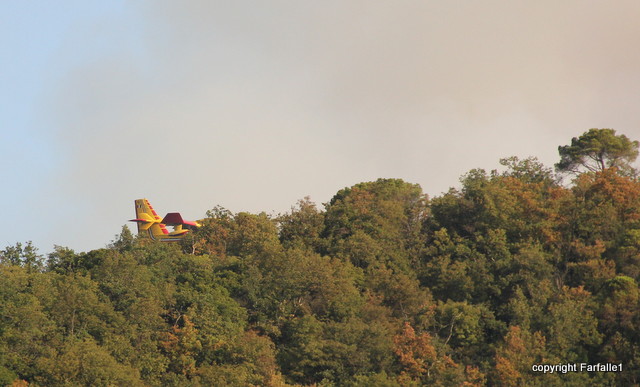
Daylight brought us a Canadair.

It is so exciting to watch these planes fly. They swoop down over the sea and fill up the plane’s belly with water, which they they carry back to the fire and release. There are moments, watching them, when it seems certain there is going to be a terrible mishap.

They use the plane’s inertia to propel the water where they want it to go. The pilot might, for instance, fly right at the side of the mountain, nosing up abruptly just before hitting, and releasing his water at the same time. The water goes straight into the mountain, and the plane, thank goodness, does not. Other times the pilot is able simply to drop his water as he goes (watch out, volunteers below!). Retired old pilot Speedy says it is no doubt very scientific, that the pilots are able to compute when to release the water based on air speed and altitude above target.
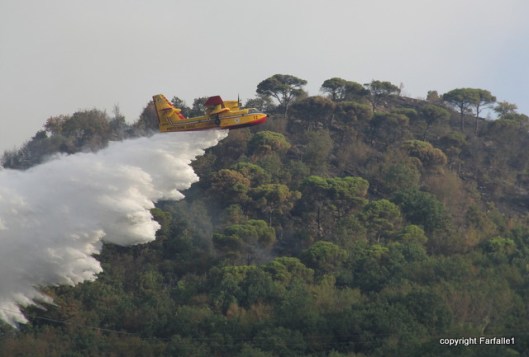
The Canadair, joined briefly by a second, grey plane, flew back and forth all morning. After lunch one small helicopter came back, and by the end of Friday it seemed the excitement was over. Our friend said he had been called to go back Saturday, but we saw no activity at ‘our’ fire. Perhaps he was out putting out other fires. Sadly, there’s no shortage of them at this time of year.

There are some more photos of the fire here, and I tried, for the first time, to make a video, which you can see here. (Sorry that it’s a little wobbly – next time I’ll use a tripod.) The most exciting part of the video is that you can hear the cock who can’t tell time (1 a.m., dawn, sunset: all the same to him), you can hear the loud sound that water meeting fire makes, and you can hear a short conversation between Speedy and myself. Very exciting. Unfortunately you won’t see the plane actually dumping water as that happened behind the mountain – but you can hear it (as well as the lovely low grumble of the twin engined plane).

The systems the Corpo Forestale have developed for fighting the numerous fires in Italy are admirable. The timely arrival and expertise of all the firefighters has surely saved millions of euros over the years (although the cost of fire-fighting with aircraft is extraordinary.  The small helicopter, the 412, costs E 2,200/hour; the larger, the Ericson S64, costs E 7,000/hour and the Canadair costs E 10,000/hour.)  What did they do before airplanes were invented? I suppose lots more forest burned. How lucky we are that we have helicopters with their little buckets and planes with their great big bellies. Given the choice, I guess I’d always choose the plane, just for the drama. But there’s an elegance to the helicopters, and a delicacy of approach which is also very appealing. Actually, I guess if my house/land were on fire I wouldn’t care who came, as long as he brought a lot of water with him!

La Cervara

13 Monday Aug 2012

Posted by farfalle1 in American recipes, Italian Churches, Italian gardens, Italy, Uncategorized

≈ 6 Comments

Tags

Monasteries in Italy

Photo from helicopter courtesy of http://www.parks.it

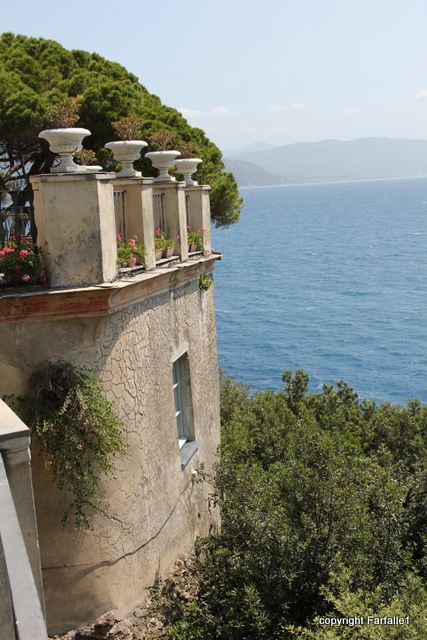
Monasteries in Italy have had a tough time of it.  La Cervara, a monastery constructed in 1361 which sits above the road between Santa Margherita and Portofino, is no exception. When France invaded at the end of the 18th century the monastic orders here were suppressed and the resident Benedictines had to abandon La Cervara.

The monastery has been in a state of loving rehabilitation since 1990; the present owners report that the work is 50% complete.  It’s hard to believe there’s as much to do as has already been done.  It looks perfect to the casual visitor.  In fact, when a friend and I recently took the tour I was reminded of nothing so much as the exquisitet restorations that one sees all through Tuscany, and which are not as common here in Liguria.

The first building was erected by Ottone Lanfranco, a Genovese priest, on land owned by the Carthusians.  Around 1420 ownership was transferred to the Benedictine order, who stayed until the above mentioned troubles.

As was the case for Montallegro, bad weather played a role in La Cervara’s history.  Pope Gregory XI was returning the papacy from Avignon to Rome in 1377 when a tempest arose, and his ship took shelter in the harbor near La Cervara.  The Pope rested with the monks there for a while, and got to know and respect them.  Upon his return to Rome he showed favor to the monastery, eventually elevating it to the status of Abbey.

The monks at La Cervara were not uneducated simple men; rather they were cosmopolitan, well-traveled and worldly wise.  La Cervara was a prestigious abbey and its inhabitants, usually about twenty in number, were frequently looked to for counsel in the great houses of Genova and throughout Europe.

The 15th and 16th centuries were the high points of La Cervara’s history. More buildings were added to the complex, including, in the 16th century, a tower from which to watch for the raiding pirates from Africa, those pesky Saracens.

In 1525 poor  King Francis I of France was defeated by the Holy Roman Emperor Charles V at nearby Pavia.  He was brought to La Cervara where he was imprisoned in a different tower, one with a lovely view looking out to sea.

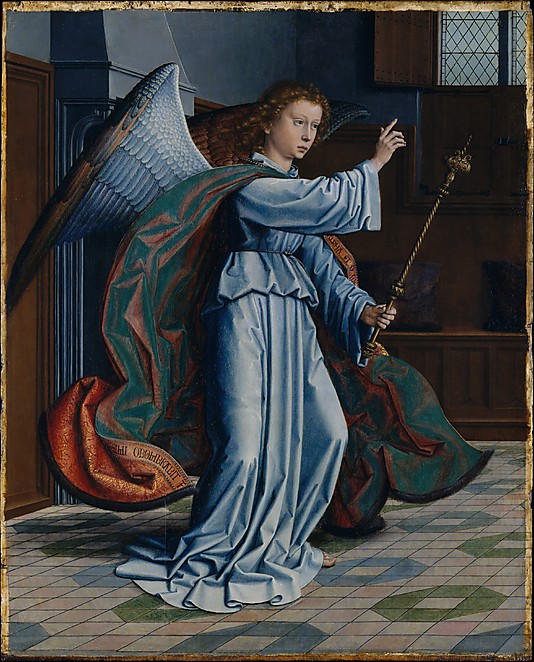
During the suppression, most of La Cervara’s beautiful artifacts and art works were removed.  The Polyptych, painted by Gerard David was separated.  Four panels are now in Palazzo Bianco in Genova, and the other three are in the Metropolitan Museum in New York and the Louvre in Paris.

Image courtesy of the Metropolitan Museum of Art

In the beginning of the 19th century La Cervara again became a religious house, passing through the hands of several orders (Trappists, Somaschi, Carthusians) and eventually it was placed under the Diocese of Chiavari.  Finally in 1937 it passed into private hands.  The first private owner added a long hall and built a grand double stairway and a very large room.  More interested in sport and socializing, he did little to preserve or augment the chapel (but neither did he do any damage).

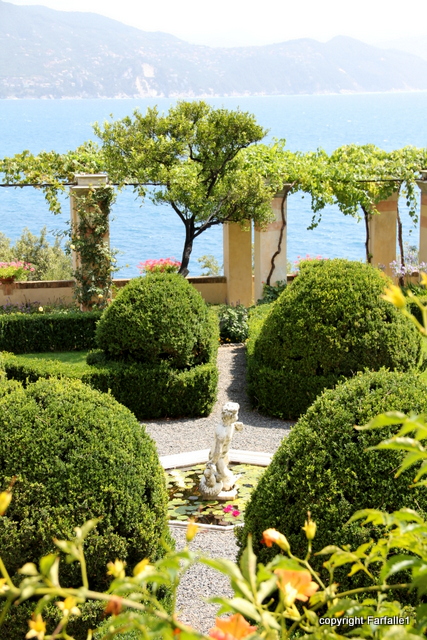
The present owners have been painstaking in their restoration of La Cervara.  The work has been under the direction of architect Mide Osculati and the art restoration has been overseen by Pinin Brambilla Barcilon, who restored the famous painting of The Last Supper in Milano. A private home, La Cervara is also available to rent for conferences, weddings, parties and the like.  A fortunate friend has been to several evening events there and describes how  the soft candlelight inside echoes the twinkling lights on the coast across the bay.  No electric lights – only candles; it is, she says, ‘magical.’  Her favorite place, she says,  “is the cloister at night with only one single shiny jet of water ….not a big splashy fountain, one single jet is all it takes to create beauty.”  You can see the fountain, elegant and eloquent in its simplicity in two of the photos above. Thank you for sharing that lovely image, fortunate friend!

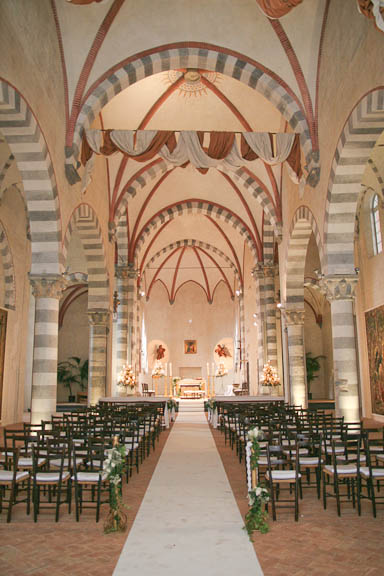
An example of the care taken in the restoration:  it was thought the original floor of the chapel was ardesia, the dark slate indigenous to this area, because that’s what was there, albeit in deplorable condition.  The architect was reluctant to use that material again because it is so dark.  Further digging  revealed, though, that before the ardesia was put down, the floor had been brick.  Unable to find hand-made bricks that matched the light original color, the architect procured the new bricks from Spain.  They look just right, too.

Photo by Roberto Bozzo, courtesy of http://www.fotografi-matrimonio.com

Instead of trying to recreate the missing sacred art in the chapel the owners have installed four enormous tapestries – not religious in theme, but somehow absolutely appropriate for the setting.  You can see just a wee bit of one in the photo above.

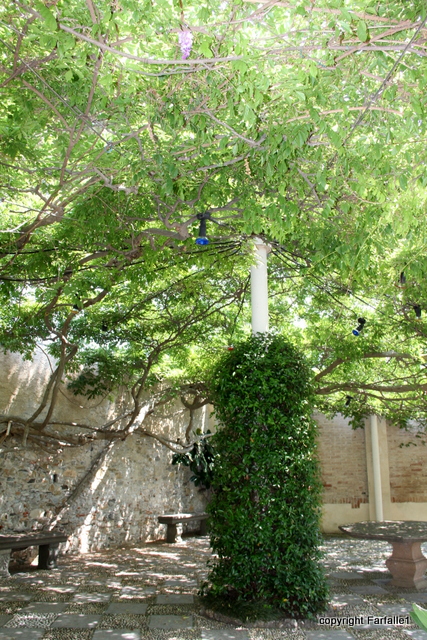
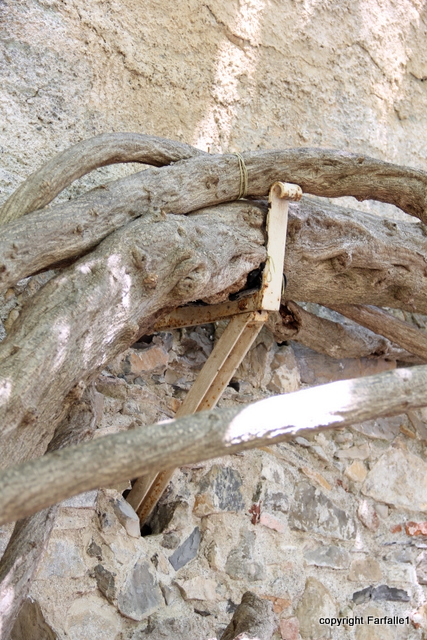
In an extraordinary and successful attempt to save a 150-year old wisteria, the owners used a crane to life the ancient branches from where they had fallen on the ground, one or two inches every week.  It took over a year to get the vine into position, but the wisteria survived and is splendid.

Center pole supports some of the branches, which also grow along the wall on the left.

Ancient branch, now well supported

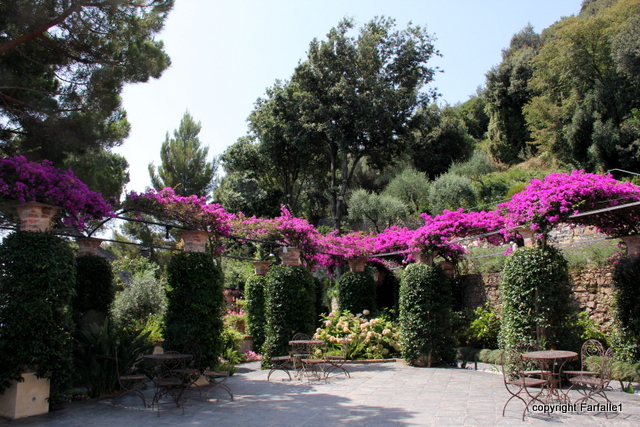
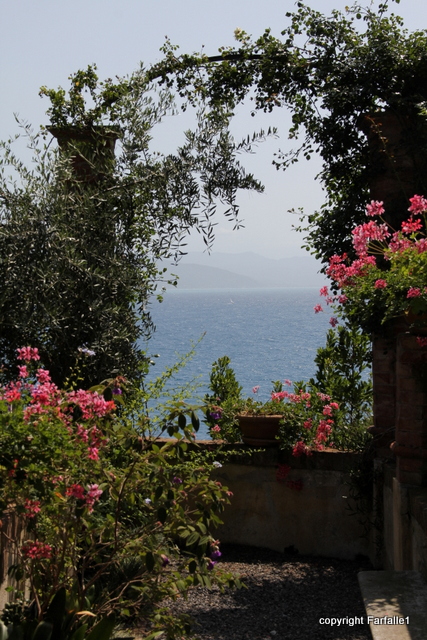
Unfortunately one is not allowed to take photographs inside the buildings, but the gardens (formerly the monks’ orchard) are fair game.


La Cervara is open to the public on the first and third Sunday of each month  from March through October; guided tours are run at 10, 11 and 12 o’clock.

A(nagrafe) to Zed

19 Thursday Jul 2012

Posted by farfalle1 in Italian bureaucracy, Italian habits and customs, Italy, Law and order, Uncategorized

≈ 12 Comments

Tags

Anagrafe, Gathering social data, Italian bureaucracy, Italian social data

Anagrafe (an-ah-gra-fey) is the office in each comune that keeps track of who’s who and the status of each inhabitant: births, deaths, marriages, divorces, that sort of thing.  This is true, it seems, for both Italians and resident expatriates  (Anagrafe issues our Carte d’Identite).  I’m sure they do other things of which we’re completely unaware.

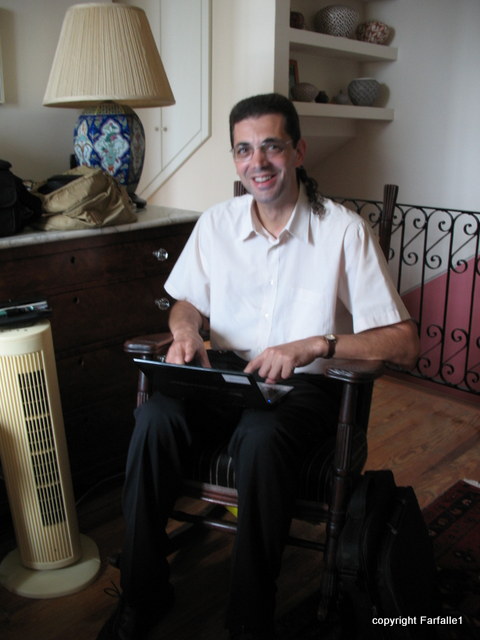
One such thing was brought to our attention last week when we received a visit from the very affable Piermanlio (a roman name, he told us) who spent two and a half hours grilling  interviewing us.  He works for the Statistics Department of Anagrafe (who knew?) and spends a good part of his life traveling from one expatriate domicile to the next interviewing people.  Then he spends some more time transmitting his data to the main office in Rome (without identity information attached) where it is all, presumably, crunched up and turned into important reports of some sort, which in turn lead to enlightened social policies, new laws and more bureaucracy.

Here are two things you might not be able to tell about Manlio from the above photo:  he is probably one of the most patient and kindest guys in the world; it is hard for him to find shoes because his feet are large.  For this reason he takes exceptionally good care of the shoes he wears. ( I guess that’s three things, but since the last two are so closely related I’m counting them as one.)

The last time the U.S. took the census we won the long-form lottery, and spent about thirty or forty minutes filling in the form with information about our race, gender, education, income and what kind of house we lived in.  Well.  Italy could certainly teach the U.S. something about long forms.

At first we thought Speedy would be the only one interviewed, which was fine by me, as it took ages.  To the surprise of all three of us Manlio was instructed by his computer to interview me when Speedy was done.  What response triggered that, I wonder?  Most of the questions were the same, but there were some amusing differences.    They were all multiple choice questions and all answers were entered immediately into Manlio’s laptop.  If an answer was wildly out of the norm the computer might give Manlio a query sign.  If it was totally ridiculous the system was blocked til a realistic answer was put in.  How do we know?  Speedy answered 8 years old when asked at what age he began working (happens to be true).  Turns out the question meant when he stopped being a student and began to work as an adult.  ‘8 years old’ caused a delicious block.

Here are some of the topics Manlio covered with us during our time together, other than the obvious of age, heritage, race, religion and education.

Do we have relatives living in Italy?  Do we have relatives living outside the US but not in Italy?

In our family, who makes the decisions?  Who does the housework, do we share the burden? Who does the marketing?  Who cooks?  Is it up to the husband to choose who the wife’s friends will be?

Do we like Italian food?  Do we eat it often? Do we eat food of other cuisines?

Are we healthy?  Smoke? Weight? Height? Do we take medicines? (polite Manlio: ‘oh yes?  They’re prescribed, I would assume.’  Us: ‘Of course!’)

Curious omission noted here: no questions about drinking and/or wine!

Do we have a car?  How many TV’s? Motorini?  A video camera? (why a video camera?)  When we watch TV, do we watch in English or Italian or ? Do we have a satellite dish?  More than one?

Do we have a telephone  land line?

Why did we move to Italy?  Who decided that we would move to Italy?  How did mother feel about it (Really!  This was a question for me, the only one of us with an extant mother when we came.)

What language do we use when speaking to each other?

Do we read newspapers, if yes in hard or virtual form? Magazines? Books?  In what language(s)?

Do we follow Italian politics?  Do we talk about politics with friends? Do we feel knowledgable about Italian Politics?  How often do we discuss politics?  Same questions again vis-a-vis the U.S.

What do we do for entertainment: movies? sports? concerts?

I guess one can catch the drift of the kinds of questions being asked and the kind of information they are trying to gather.  There are so many people from all over the world living in Italy now, there’s perhaps not unreasonable concern that the ‘national identity’ might erode.  At the very least there is also interest in knowing if the basic ‘rights’ generally recognized here are being observed by one and all.

I guess my favorite question, one directed to both of us, was: Has anyone in Italy made you feel uncomfortable because you are a foreigner?  How lucky I felt at that moment.  Italians like Americans; they do not necessarily like all the other nationalities represented in the immigrant population.  No.  No one has ever made us feel uncomfortable, I’m happy to say, though I’m certain others have not been so fortunate.
My favorite unasked question: Does your husband still beat you?

I guess it’s not just a cold, hard, statistical office after all.  They care about us, they really care.

← Older posts

Enter your email address to follow this blog and receive notifications of new posts by email.

Join 114 other subscribers

rss

Subscribe in a reader

Search the Blog

A. Useful Links

  • bab.la language dictionary
  • Bus schedules for Tigullio
  • Conversions
  • English-Italian, Italian-English Dictionary
  • Expats Moving and Relocation Guide
  • Ferry Schedule Rapallo, Santa Margherita, Portofino, San Frutuoso
  • Italian Verbs Conjugated
  • Piazza Cavour
  • Rapallo's Home Page – With Link to the Month's Events
  • Slow Travel
  • The Informer – The Online Guide to Living in Italy
  • Transportation Planner for Liguria
  • Trenitalia – trains! Still the most fun way to travel.

C. Elaborations

  • A Policeman’s View
  • Driving School Diary
  • IVA refunds due for past Rifiuti tax payements
  • Nana
  • Old trains and old weekends
  • The peasant, the Virgin, the spring and the ikon
  • Will Someone Please, Please Take Me to Scotland?

D. Good Recipes - Best of the Week winners are starred

  • 'Mbriulata
  • *Baked Barley and Mushroom Casserole*
  • *Captain’s Boston Baked Beans*
  • *Crimson Pie*
  • *Louise’s Birthday Cake*
  • *Melanzane alla Parmigiana*
  • *Penne with Cabbage and Cream
  • *Pizzoccheri della Valtellina*
  • *Pumpkin Ice Cream*
  • *Risotto alla Bolognese*
  • *Rolled Stuffed Pork Roast*
  • *Spezzatini di Vitello*
  • *Stuffed Grape Leaves*
  • *Stuffed Peaches (Pesche Ripiene)*
  • *Swordfish with Salsa Cruda*
  • *Tagliarini with Porcini Mushrooms*
  • *Tagliatelli al Frutti di Mare*
  • *Three P's Pasta*
  • *Tzatziki*
  • 10th Tee Oatmeal Apricot Bars
  • Adriana’s Fruit Torta
  • Aspic
  • Bagna-calda
  • Best Brownies in the World
  • Clafoutis
  • Cold cucumber soup
  • Crispy Tortillas with Pork and Beans
  • Easy spring or summer pasta
  • Fish in the Ligurian Style
  • Hilary's Spicy Rain Forest Chop
  • Insalata Caprese
  • Lasagna al forno
  • Lasagna al Forno con Sugo Rosato e Formaggi
  • Lemon Meringue Pie
  • Leo’s Bagna Cauda
  • Leo’s Mother’s Stuffed Eggs
  • Louis’s apricot chutney
  • Mom's Sicilian Bruschetta
  • No-Knead (almost) Bread
  • Nonna Salamone's Christmas Cookies
  • Pan Fried Noodles with Duck, Ginger, Garlic and Scallions
  • Pesto, the classic and original method
  • Pesto, the modern, less authentic method
  • Pickle Relish
  • Poached pears
  • Poached Pears
  • Polenta Cuncia
  • Recipes from Paradise by Fred Plotkin
  • Rustic Hearth Bread
  • Shrimp and Crayfish Tail Soup
  • Sicilian salad
  • Slow Food Liguria
  • Slow Food Piemonte and Val d'Aosta
  • Spinach with Garlic, Pine Nuts and Raisins
  • Stuffed Eggs, Piemontese Style
  • The Captain’s Salsa Cruda
  • Tomato Aspic
  • Zucchini Raita

E. Blogroll

  • 2 Baci in a Pinon Tree
  • Aglio, Olio & Peperoncino
  • An American in Rome
  • Bella Baita View
  • Debra & Liz's Bagni di Lucca Blog
  • Expat Blog
  • Food Lovers Odyssey
  • Italian Food Forever
  • L’Orto Orgolioso
  • La Avventura – La Mia Vita Sarda
  • La Cucina
  • La Tavola Marche
  • Rubber Slippers in Italy
  • Southern Fried French
  • Status Viatoris
  • Tour del Gelato
  • Weeds and Wisdom

Photographs

  • A Day on the Phoenix Light Rail Metro
  • Apache Trail in the Snow
  • Aquileia and Croatia
  • Birds on the Golf Course
  • Bridge Art
  • Canadair Fire Fighters
  • Cats of Italy
  • Cloudy day walk from Nozarego to Portofino
  • Fiera del Bestiame e Agricultura
  • Football Finds a Home in San Maurizio
  • Hiking Dogs
  • Mercatino dei Sapori – Food Fair!
  • Moto Models
  • Olive pressing
  • Rapallo Gardens
  • Rapallo's Festa Patronale
  • Ricaldone and the Rinaldi Winery
  • Rice Fields
  • Sardegna ~ Arbatax and Tortoli
  • Sardegna ~ San Pietro above Baunei
  • Sardegna ~ The Festa in Baunei
  • Scotland, including Isle of Skye
  • Slow Food 2008 Salone del Gusto
  • The Cat Show and the Light Rail Fair
  • The desert in bloom
  • Trip to Bavaria

Pages

  • Fagioli all’ucelleto

Archives

Recent Posts

  • A Superior Visit
  • Fun at the Ranch Market
  • The MAC
  • Welcome Tai Chi
  • Bingo Fun for Ferals
December 2025
M T W T F S S
1234567
891011121314
15161718192021
22232425262728
293031  
« Jul    

Member of The Internet Defense League

Blog at WordPress.com.

  • Subscribe Subscribed
    • An Ex-Expatriate
    • Join 114 other subscribers
    • Already have a WordPress.com account? Log in now.
    • An Ex-Expatriate
    • Subscribe Subscribed
    • Sign up
    • Log in
    • Report this content
    • View site in Reader
    • Manage subscriptions
    • Collapse this bar
 

Loading Comments...