• Contact
  • Elaborations
    • A Policeman’s View
    • Driving School Diary
    • Great Danes
    • IVA charged on Tassa Rifiuti
    • Nana
    • Old trains and Old weekends
    • The peasant, the virgin, the spring and the ikon
    • Will Someone Please, Please Take Me to Scotland??
  • Recipes
    • ‘Mbriulata
    • *Baked Barley and Mushroom Casserole*
    • *Captain’s Boston Baked Beans*
    • *Cherry Tart*
    • *Crimson Pie*
    • *Louise’s Birthday Cake*
    • *Melanzane alla Parmigiana* – Eggplant Parmesan
    • *Penne with Cabbage and Cream
    • *Pizzoccheri della Valtellina*
    • *Pumpkin Ice Cream*
    • *Risotto alla Bolognese*
    • *Rolled Stuffed Pork Roast* on the rotisserie
    • *Shrimp and Crayfish Tail Soup*
    • *Spezzatino di Vitello*
    • *Stuffed Grape Leaves*
    • *Swordfish with Salsa Cruda*
    • *Tagliarini with Porcini Mushrooms*
    • *Tagliatelli al Frutti di Mare*
    • *Tzatziki*
    • 10th Tee Apricot Bars
    • Adriana’s Fruit Torta
    • Artichoke Parmigiano Dip
    • Best Brownies in the World
    • Clafoutis
    • Cod the Way Sniven Likes It
    • Cold Cucumber Soup
    • Crispy Tortillas with Pork and Beans
    • Easy spring or summer pasta
    • Fagioli all’ucelleto
    • Fish in the Ligurian Style
    • Hilary’s Spicy Rain Forest Chop
    • Insalata Caprese
    • Kumquat and Cherry Upside Down Cake
    • Lasagna Al Forno con Sugo Rosato e Formaggi
    • Lemon Meringue Pie
    • Leo’s Bagna Cauda
    • Leo’s Mother’s Stuffed Eggs
    • Louis’s Apricot Chutney
    • Mom’s Sicilian Bruschetta
    • No-Knead Bread (almost)
    • Nonna Salamone’s Famous Christmas Cookies
    • Pan-fried Noodles, with Duck, Ginger, Garlic and Scallions
    • Pesto
    • Pesto
    • Pickle Relish
    • Poached Pears
    • Polenta Cuncia
    • Pumpkin Sformato with Fonduta and Frisee
    • Rustic Hearth Bread
    • Sicilian Salad
    • Soused Hog’s Face
    • Spotted Dick
    • Swedish Tea Wreaths
    • The Captain’s Salsa Cruda
    • Tomato Aspic
    • Vongerichten’s Spice-Rubbed Chicken with Kumquat-Lemongrass Dressing
    • Winter Squash or Pumpkin Gratin
    • Zucchini Raita

An Ex-Expatriate

~ and what she saw

An Ex-Expatriate

Category Archives: Liguria

Il Molino Vecchio – The Old Mill

26 Sunday Sep 2010

Posted by farfalle1 in Italian folk tales, Italian habits and customs, Italy, Liguria, Photographs, Rapallo, San Maurizio di Monti, Uncategorized

≈ 20 Comments

Tags

Chestnut mill, Chestnuts, Giovanni Pendola, Italian frantoio, Italian molino, N.S. della Cipressa, Old Italian mill, Olive mill, Wheat mill

Sometimes it happens in Italy that you’re walking down a street, a lane, or a path in the country, and you come upon something that sends you back, in your mind’s eye, a few hundred years. “I can just imagine,” you say to yourself, “what it would have been like to be alive when this place was new and bustling with life.”

It happened to me not long ago when I took a walk with a friend. We came to the old and interesting Complesso Molitorio (Mill complex), which lies on a sentiero (walking path) that connects San Maurizio di Monti to Rapallo along the San Francesco torrente (fast flowing stream), on the opposite side of the narrow valley from the paved road.  The sentiero is not particularly well known, and does not appear on the trails map for this area. To reach it from San Maurizio you walk down what begins as an ever more narrow residential street, which finally turns itself into a path. From Rapallo the route begins on a paved street but soon takes the form of an old mule path which climbs and winds through the forest. According to the website lacipresse.it, the path is known as “Strada Antica di Monti,” a part of the “Antica Via del Sale” (The Old Salt Road – why there was a Salt Road here I have not been able to learn).

The Mill complex is comprised of four buildings, three of which you can see in the photo above. The large building in front was constructed in the 17th century and was an olive mill. A wheat mill was housed in the smaller building on the left; and the small building up above the others was a chestnut mill. The fourth building, not much more than a room really, is behind the large main building, and was used for collecting the refuse of the olive pressing.

The San Francesco feeds a mill pond above the highest building:
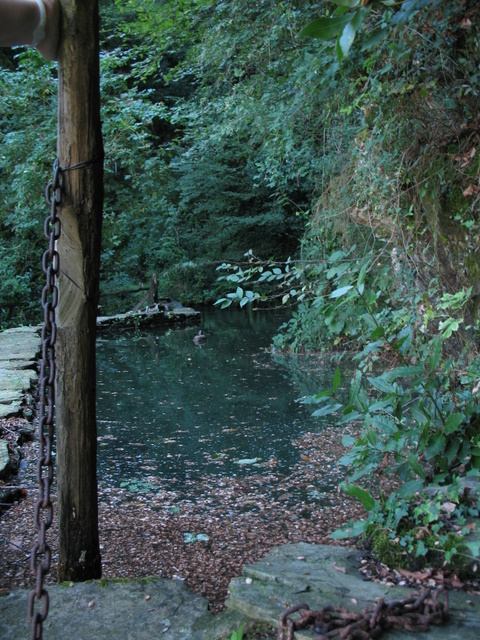
The water can be directed down an earth and stone canal to tumble into the waterwheels that powered the various milling operations:
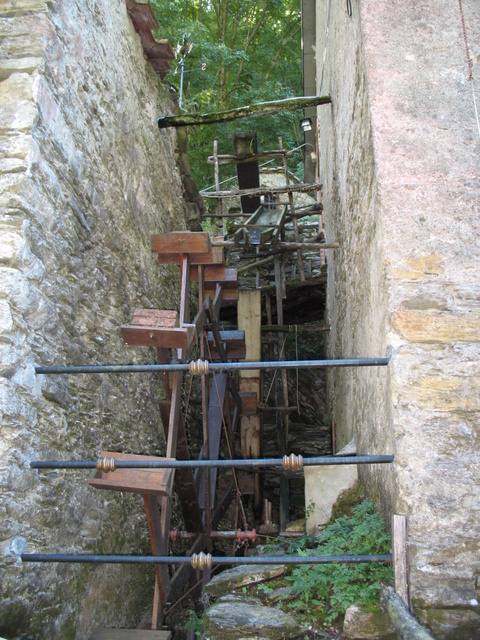
The oldest structure in the complex is the old stone bridge that crosses the San Francesco, built in the Roman style, quite possibly during Roman days.
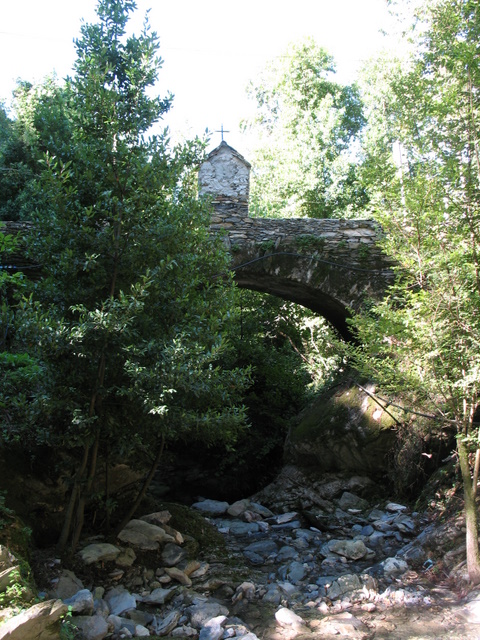
The little chapel on the bridge, a recent addition, honors the Madonna of Montallegro and is called Nostra Signora della Cipressa.   According to the story, there was a chestnut tree that stood nearby. One day, during the plague years, the tree suddenly died – in just the one day! The belief is that the tree, through the intercession of the Madonna, absorbed the deadly disease and rendered it harmless, thereby saving the citizens of San Maurizio di Monti. (For more about the Madonna of Montallegro and the plague, see here).
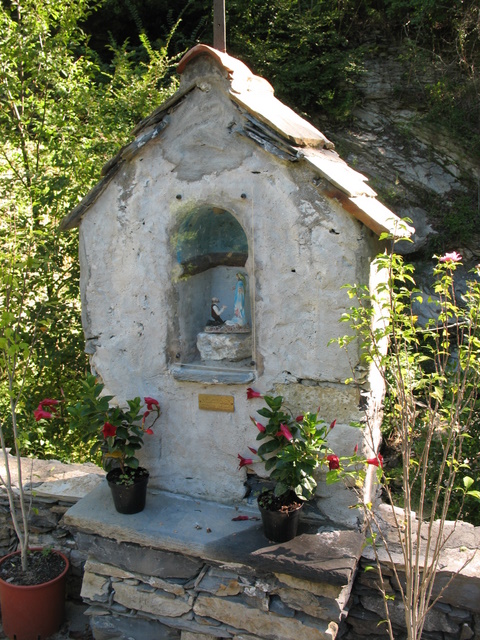
There have been several re-structurings of various elements of the complex, including one in the early 18th century, one in the 1920’s, and another in the early years of this century . During the recent renovations the large building was turned into a museum, Il Museo della Civilta’ Contadina “Cap. G. Pendola” – the Museum of Rural Culture (named in honor of Giovanni Pendola, a heroic Captain in Garibaldi‘s Army). In it you will find old implements that farmers employed to wrest a livelihood from these steep hills, as well as accouterments of the mills themselves. It is open on the third Sunday of each month from 3 – 5 p.m., at which time a very well informed docent can explain the uses of the various tools, and tell about each of the buildings. (The renovations in 2001 won Second Prize in the 2003 Concorso  “Ama il nostro paese” – love our country – sponsored by the City of Rapallo and the Rapallo Lions Club.  In 2006 the Complex was designated a National Monument.)
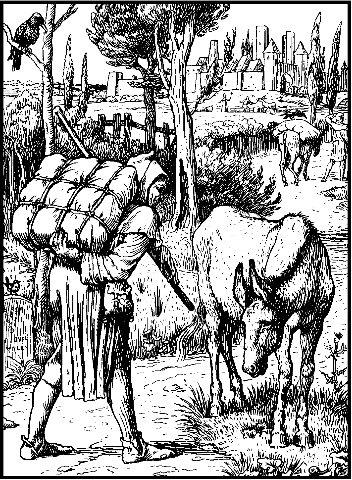
Some centuries before our mill, but I like the image!

Although the mill was still functioning as late as 1940, it is much more fun to imagine what it would have been like in, say, 1750. You’ve gathered all the chestnuts in your part of the woods, have dried them over a smoky fire and have thrashed them out of their husks.


Now you put them in barrels that are firmly strapped, one on each side, to your mule. Slowly and carefully the two of you make your way up the path, your mule finding a careful foothold between the upturned stones on the steep parts of the road. You hear the mill before you see it; the water is rushing down the canal and the big wheel is squeaking a little as it turns. When you get a little closer you can hear the big gears groaning and clicking as they engage. There are a lot of other people there with their chestnuts, too. Chestnut flour is a staple, and a good crop might form the basis of your family’s diet for much of the year. (For an interesting article on historical food uses of chestnuts, look here.) While at the mill you have a chance to exchange gossip with neighbors you haven’t seen for a while and to catch up on the news of the town below. After you’ve left your chestnuts to be ground into flour, you might continue up on the mountain to give thanks at Montallegro for a good harvest, and to ask the Madonna to protect you through the short winter ahead.

There’s another great story associated with the mills. The present owner’s grandfather, the  Giovanni Pendola for whom the Museum is named,  was the owner of the mill in 1907 when he went to Genova to take aid to the victims of a cholera epidemic there. He contracted the disease himself, and died soon afterwards. His true love, a lady named Caterina who was, they say, still beautiful, lost her will to leave her house when she received the news of his death. Then, taken by an irresistible urge for freedom, she became a wild creature of the woods.
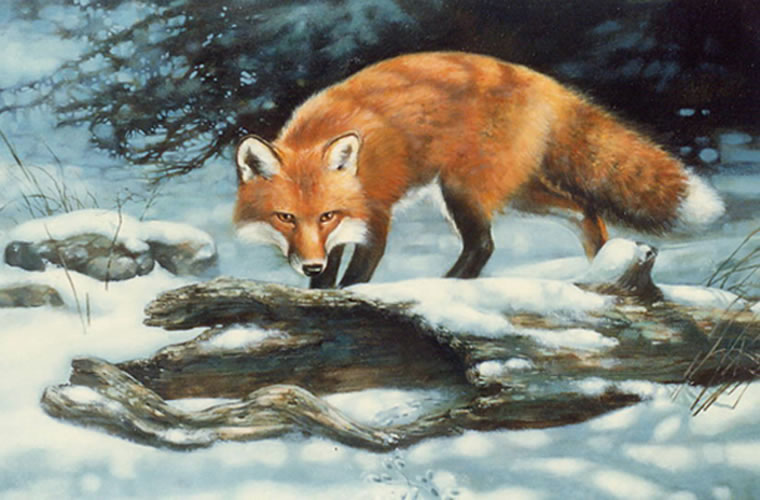
Painting by Patrick Soper, soperstudio.com

Still today, disguised as a fox with a soft tawny tail, she wanders during the coldest days, “those of winter when the cold north wind blows, or when windy gusts blow the last dry leaves, and the bare, rattling branches of  trees reach to the sky like imploring arms.” The tradition says that if you meet this fox and look into her eyes, you may lose your memory or be swallowed up by the woods.

If you’d like to see some more pictures of the mill, click here.  Click on ‘slideshow.’

Many thanks to the website lacipresse.it, from which I learned the content of this post.
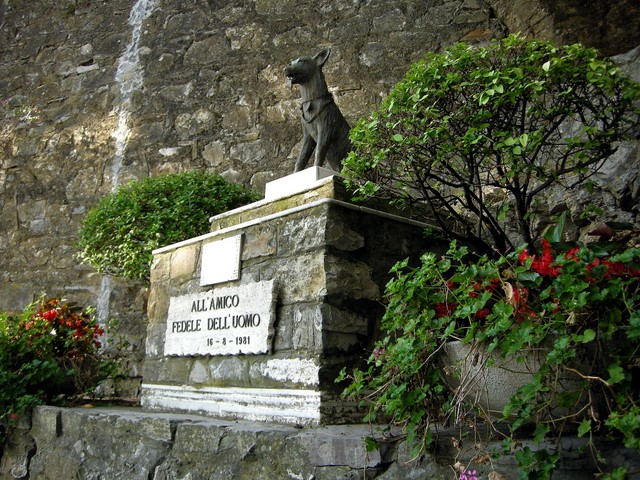
No Bad Dogs

22 Sunday Aug 2010

Posted by farfalle1 in Animals in Italy, Dogs, Italian festas, Italy, Liguria, Photographs, Uncategorized

≈ 16 Comments

Photo taken by by Pier Luigi Baglioni

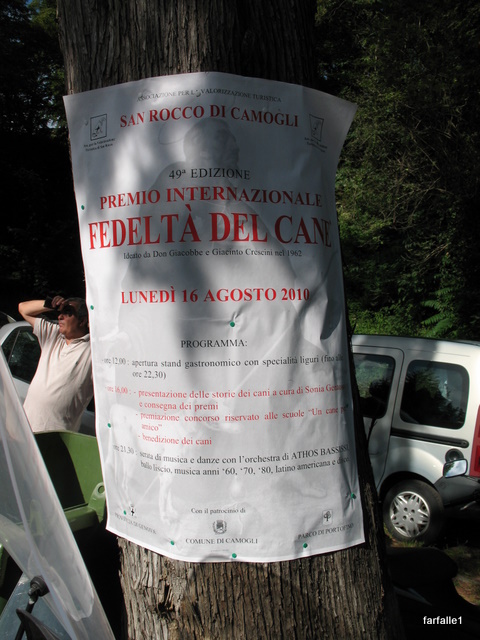
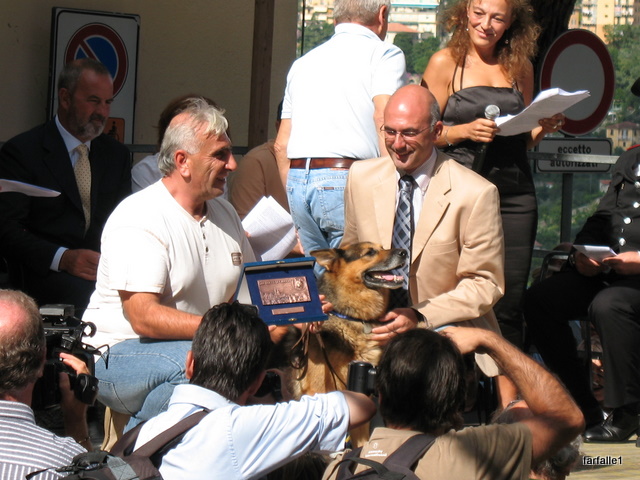
San Rocco di Camogli is a lovely frazione high on the hill overlooking its mother town.  The Saint for whom it is named is, rather alarmingly, the patron saint of contagious diseases.  He lived in the 1300’s and helped plague victims during his travels from his native France through Italy.  At one time he himself contracted the plague, and was saved in part by a dear dog who brought him crusts of bread in a cave where he’d taken shelter.

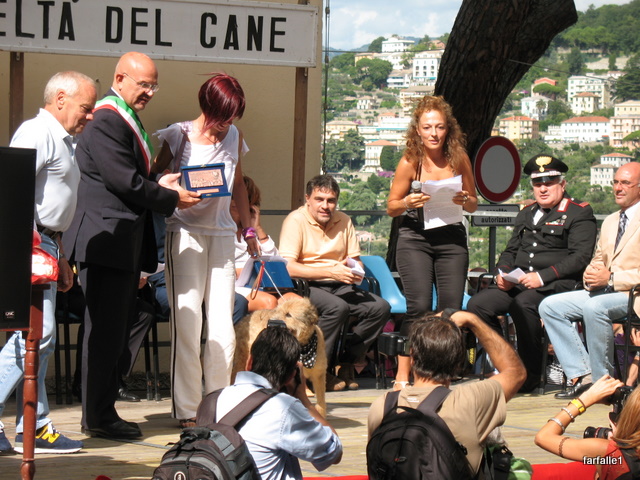
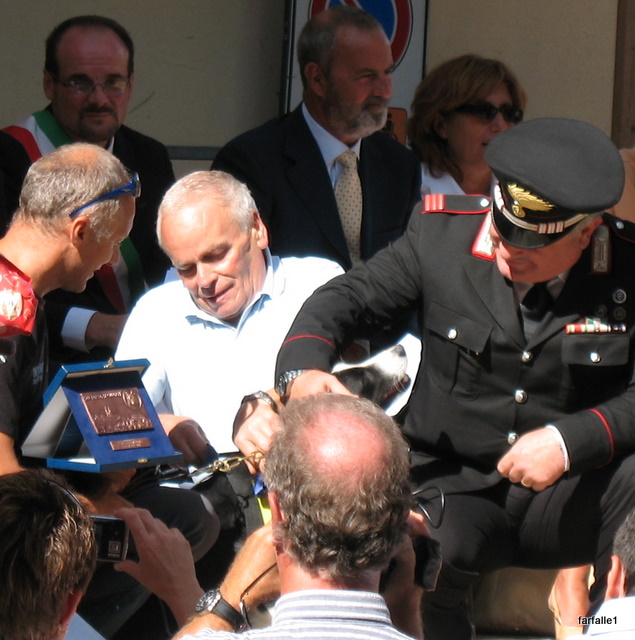
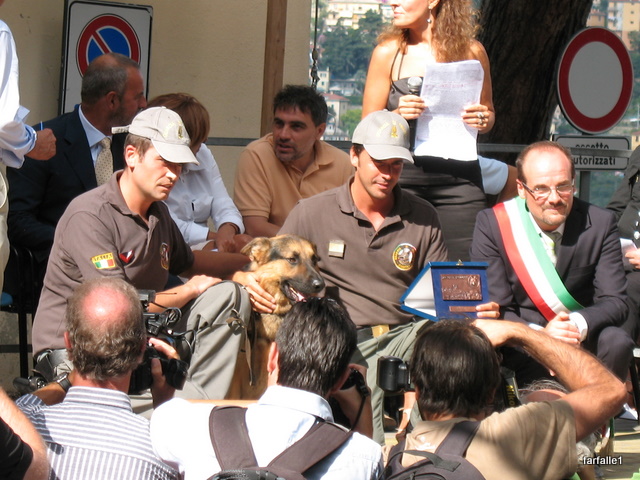
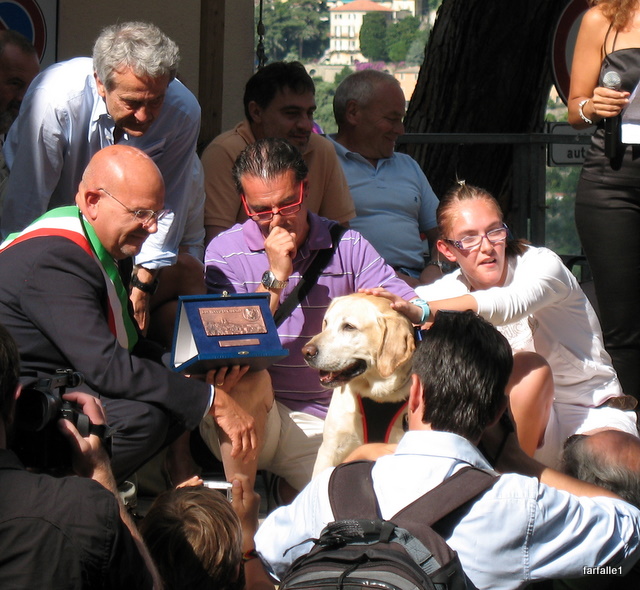
San Rocco’s day is August 16, and for 49 years now the eponymous town has given prizes to reward acts of bravery and courage by our four-footed friends, and to bless the species.As you can see from the photo above, it is exhausting!  But if you are a dog-lover it is a wonderful event to attend.  This year the weather smiled on the many dogs and even more people who came to meet the prize-winners and receive a blessing for the year ahead.  Sonia Gentoso was an excellent Mistress of Ceremonies; without leaving out any important information she managed to keep things moving in as orderly a fashion as possible, given the number of dogs present.  There were a number of important people on the dais for the ceremony, one in an impressive uniform and one with a very handsome ribbon across his chest (probably the sindaco – mayor – but I’m not sure).
The prize-winners were:

Antares.  Antares was not present to receive her prize, although one of the women in her story was there to accept it for her.  Antares usually spends her mornings with her ‘Nona’ while her mistress is at work.  She goes to the second floor and barks outside Nona’s door until she is let in.  One day a neighbor, familiar with this practice, heard Antares barking in the middle of the morning.  Strange, she thought – why is the dog barking now?  So she called the Nona and found that she was very ill from a hemorrhage.  The neighbor called the ambulance, and thanks to the early notice of trouble from Antares, the Nona did not suffer long-term consequences.

Bimba

Bimba saved her family in Genova from a fire.  Awakened in the garage where she sleeps by the smell of smoke, she made her way to the upstairs of the house and barked and scratched on the door until her master awoke and was able to get his wife and 4-year old daughter safely out of the house. But poor Bimba!  She was pregnant at the time, and because of the stress she gave birth later that night to a dead puppy.  The vet was able to safely deliver her of two healthy pups soon afterwards though, so the story has a happy ending for all.

Cody

Cody works with the Scuola Provinciale Cani da Ricerca di Trento and is an ace at finding people who have gone missing.  She did some very unhappy work in Abruzzo after the terrible earthquake.  She won her prize for an event with a happier outcome: an old gent wandered off from the rest home where he lives and was missing overnight.  Cody found him in the woods the next day.  Thanks to her, he did not come to any great harm.

Fado

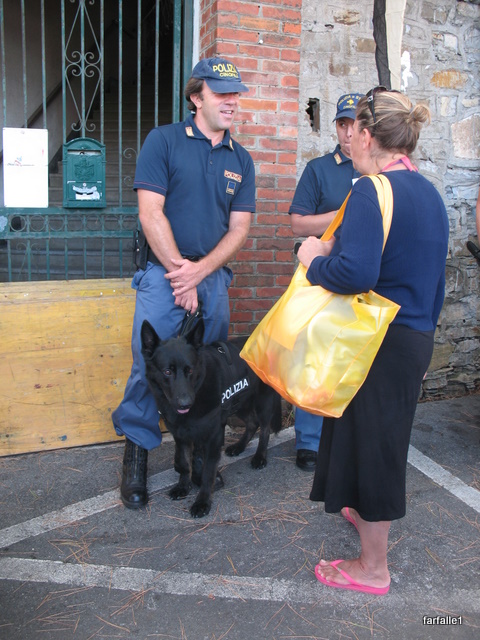
Clever Fado works with the Polizia di Stato in Genova as a drug-sniffer.  He recently found 5 kilograms of cocaine.

Ioda

You’ll have to look hard to find Ioda, but she’s there.  She won her prize for dragging her master away from the path where they were walking in Monza moments before a huge plane tree fell right where he had been standing.  Because of her, he suffered only some minor cuts instead of being completely crushed.

Lily.  Alas, my photo of Lily did not come out, a pity.  Lily is a 2-year old border collie from Belluno.  Lily works with her master, a volunteer of Soccorso Alpino di Agordo.  A Polish skier was caught in an avalanche and buried under a half-meter of snow for 35 minutes.  Lily found the skier and he was rescued, not long before his supply of air would have run out.

Rocky

Rocky made an incredible journey.  He was abducted from the beach while his master was bathing near Carrara three years ago.  Eventually he ended up in Salerno where he was abandoned by the nomads who had stolen him, and adopted by a kind family there.  But he kept running away, always heading north.  Eventually he left them a final time and made his way to Pisa, where a woman found him.  His collar gave the number of the family in Salerno and she called them.  They said, he is a lovely dog and we love him but he has never adapted to living with us, you keep him.  So she took him to a vet, who found the tattoo identifying his original owner.  They were reunited after 3 years.  It took Rocky 2 months to travel the 625 kilometers from Salerno to Pisa.

Talon

Talon works with the Guardia di Finanza in Genova and is another drug-sniffer.  He recently discovered 7 kilograms of marajuana and 3.5 kilograms of cocaine.

Zoe

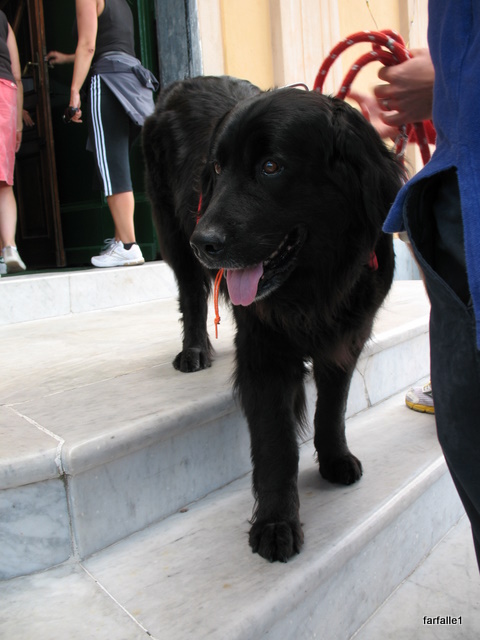
Zoe, a 7 year-old Newfoundland, saved three swimmers near Pisa.  Two women were swimming with the 11-month old child of one of them when they were carried away by the swift current.  They shouted for help, and were some 80 meters from the shore when the life-savers and Zoe reached them and brought them to safety.

First Prize winner was Pongo

Pongo was walking with her master near their home in Settimo Milanese when they heard the cries of a 67-year old man who had slipped on the edge of a canal and fallen several meters into the water and mud below.  Though the water was not deep (40 cm – a bit more than 3 feet) the man was too stunned to extricate himself from the mud, and could only moan for help as he commenced drowning.  Pongo’s insistance on dragging his master to the edge of the canal undoubtedly saved the life of the poor man below.

There was the 4th Annual edition of an art contest for young people in conjunction with the event.  This year’s theme was -Un Cane per un Amico – a dog for a friend.  The art was charming, of course.

If you’d like to see some more photos of the event, click here for a web album.  As usual I recommend a slide show.

A dog’s life in Italy can be pretty comfortable; Italians dote on and respect their dogs, although they do not always train them well, and they almost never castrate or neuter them.  In America if you are a mixed breed dog, you are a mutt; in Italy, you are a ‘fantasia.’ I know which one I’d rather be!

Gara di Pesto

08 Sunday Aug 2010

Posted by farfalle1 in Food, Italian recipes, Liguria, Rapallo, Uncategorized

≈ 13 Comments

Tags

Fred Plotkin, Giancarlo Dughera, Latte Tigullio, Marcello Ghizzo, Pesto, RapalloExpo, Recipes from Paradise, Roberto Ciccarelli

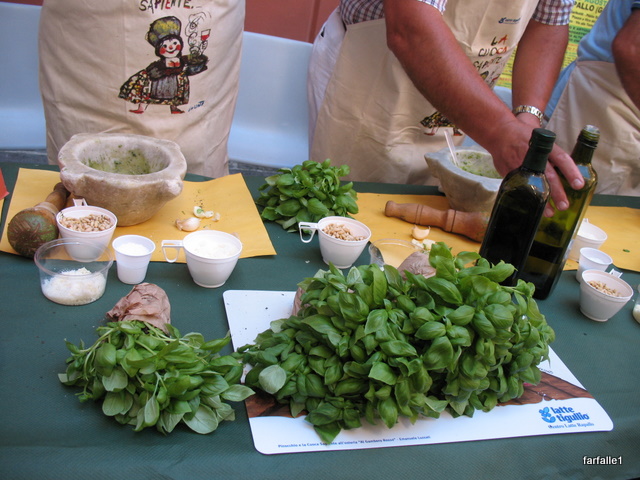
6 contestants, each with mortar and pestle; 7 ingredients; 20 minutes; and 2 judges:  that’s all that was required for the 3rd annual Gara di Pesto al Mortaio which took place Saturday afternoon as part of RapalloExpo 2010.

This four-day event featured a street market with more stalls than usual, conferences on various aspects of food production (bees and honey!), entertainment, and my favorite: the pesto cook-off.  It’s not really a cook-off, of course, because pesto isn’t cooked; so perhaps ‘competition’ would be a better word, though that hardly conveys the sense of excitement as a small crowed watched the very physical preparation of Liguria’s signature sauce.

Fred Plotkin, in his wonderful book Recipes from Paradise (Little, Brown and Company, 1997) gives 16  pesto recipes, including one for tourists, and one for people who are physically impaired and must use a food processor.  (Impairment is the only excuse for using a processor, according to Mr. Plotkin, because the delicate perfumes and flavors of the ingredients will be compromised by the harsh treatment of the metal blades.)

No, mortar and pestle is the only way to make pesto.  And there are only 7 ingredients in the classic Ligurian pesto (since Liguria is the home of pesto, it goes without saying that Ligurian pesto is the only one worthy of consideration).    The 7 ingredients needed are coarse sea salt, basil leaves (preferably small), garlic, pinoli, Pecorino Romano cheese, Parmigiano-Reggiano cheese and olive oil.  (Mr. Plotkin’s rendition of the classic dish can be found here.)

Chef Mario (pictured below), president of the Association of Chefs for the Genova region and Chef of Ristorante Da Mario in Rapallo was joined in the judging duties by a gentleman from Genova who is, if I understood correctly, somehow involved in the oversight of Pesto making in the region.

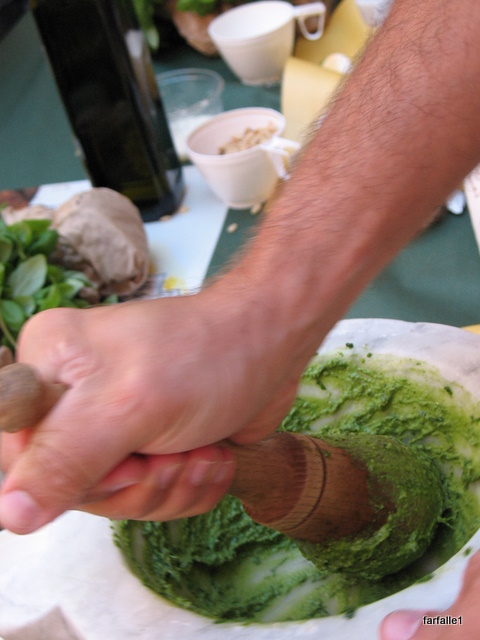
Pesto is made by putting a little bit of sea salt in the mortar, and carefully but enthusiastically adding the other ingredients and grinding it all into a thick paste.  The finished product looks like this:

The contestants made only a small amount of pesto, enough for the judges to taste to reach their decision.

The first to finish was this lady, though sadly she did not win first place:

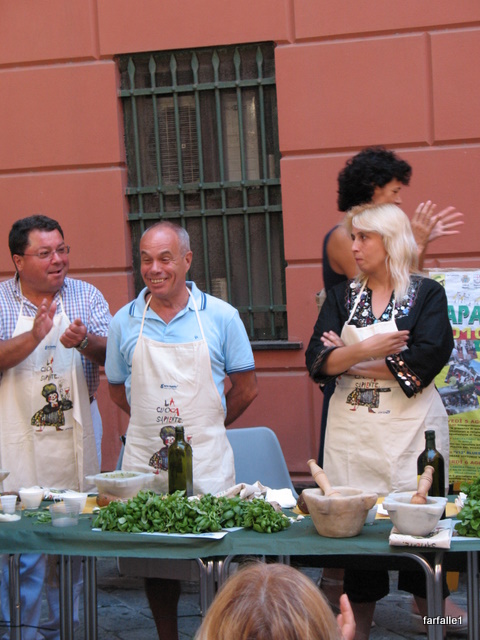
So who did win?  Well, third place went to Marcello Ghizzo, center below:

and the second prize was awarded to Giancarlo Dughera:

The grand 1st place finisher was Roberto Ciccarelli:

What were the prizes?  There was something that looked like a large gym bag, an apron, and various condiments from Latte Tugullio, the local company that generously sponsors many civic events.  Oddly, included in the prizes were jars of… pesto!

The carton pictured above is a milk product called  Prescinsêua (pronounced pray-zhun-sieu), also called Quagliata Genovese.  It is a basic Ligurian ingredient made of fermented milk, not too different from clabbered cream or, perhaps, sour cream.  Some people use Prescinsêua in their pesto-making.

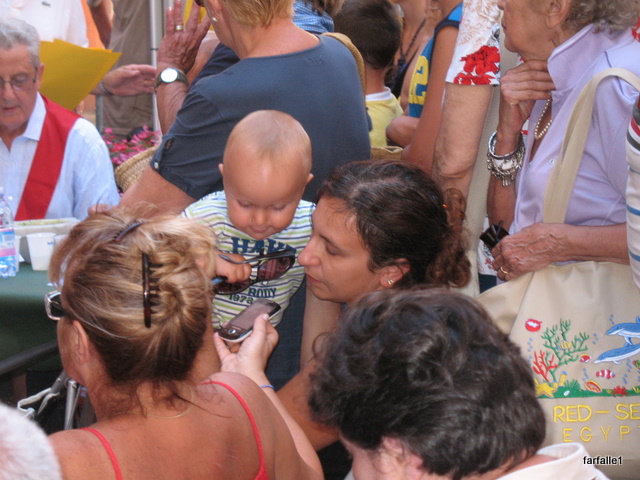
It was a lovely event.  Everyone from participants to audience to judges were good-humored.  Finally, here are a couple of pictures of the audience, because what’s a Gara without a crowd?

Old Dogs, New Gardening Tricks

19 Saturday Jun 2010

Posted by farfalle1 in gardening, Italian habits and customs, Italy, Liguria, Rapallo, Uncategorized

≈ 6 Comments

Tags

Fascie gardening, Gardening in Narrow Strips

When in Rome, do as the Romans – how many zillions of times have we heard that expression?  Enough to be thoroughly sick of it, for sure.  Wouldn’t you think that after all the repetition the meaning of that irritating nostrum would’ve sunk in?  Well, in terms of the garden, this year it finally did for us… after a mere eight years.

We’ve served our time trying to pry vegetables from the rocky New England soil, and were more or less successful, depending upon how early in the season our enthusiasm flagged.  But New England has nothing on Italy when it comes to rocky soil.  Here it might be more appropriate to call it soily rocks, at least in our mountainous zone.  Doesn’t matter.  Make a cutting of something, anything, drop it in the ground here and it will probably grow very happily.

Which reminds me of a funny digression.  We lived for years in the Icebox of Connecticut, not far from the much larger Torrington, a manufacturing town with a large Italian population.  One day my husband brought a client from Torrington over to see our garden.  This gent, a gnarly, deeply tanned gardening pro took one look at our efforts and said, “You’ve got too many stones in your garden.”  “Well, how should we get them out,” my husband asked.  “That’s easy,” the old fellow replied.  “Every evening send your wife out and tell her to take all the stones out of one row.  Soon enough she will have done the whole garden. Then she can start over.”  I took a dim view of this plan, and it was never put into effect.

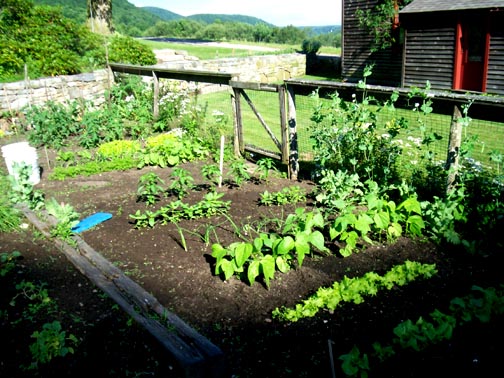
Anyway, it was not difficult to adjust to the soil conditions here, and we blithely chose our largest fascia (terrace) for our vegetable garden, and for eight years planted much as we were accustomed to in New England: in rows like this

(This is a photo Hatsy Taylor took of her veggie garden in East Canaan, Conn, which she has kindly allowed me to use.)

The problem was that our largest fascia is too shady. (We have six fascie, measuring anywhere from 3′ – 20′ in width; most are about 9′.)  For starters there is a large palm tree that takes a lot of the morning light.  Then we planted an orange tree right in the middle of the space because it is pretty there – more shade.  The house blocks the sun from mid-afternoon on, so all in all our poor veggie garden got about 3 hours of sun a day.  Nonetheless we were able to grow enough tomatoes to make all the sauce we need for a year, as well as a pumpkin or two, some cukes, beans,  lots of herbs, some roses and flowers for cutting.  We were never successful with zucchini, oddly – probably due to the amount of shade.

Our neighbors here on the steep slopes of Montallegro use their limited fascia space so intelligently.  They plant narrow strip gardens facing the sun, just in front of the stone wall that supports the fascia above, sometimes even under their olive trees, which make only dappled shade.  It makes so much sense!  The wall behind offers support and holds and reflects the sun’s warmth.  Weeding is ever so much easier (should one actually decide to do it) because every ‘garden’ is one, or at most two, rows deep.

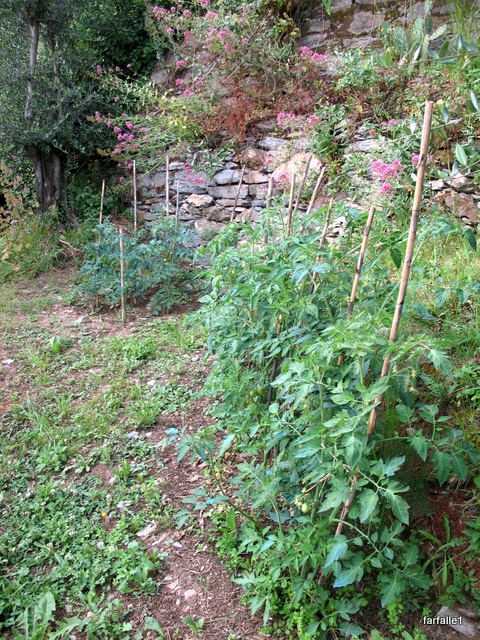
This spring the Captain took a pickax to the land in front of our sunny walls, and we now have four new strip gardens.  On the top level we have two plots of tomatoes.

They are growing like crazy  – partly because of all the rain we’ve been getting, but also because they love the warm soil in front of the wall.

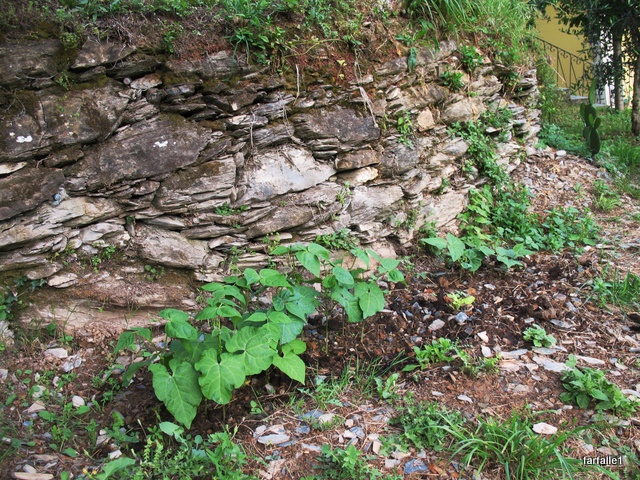
The next level down is not so satisfactory.  The ground was stonier than normal, so it was hard to make a good bean bed.  The ones that came up (both bush and pole) are doing fine, but probably only 30% germinated, in spite of a healthy dose of bagged manure. (moo pooh?)

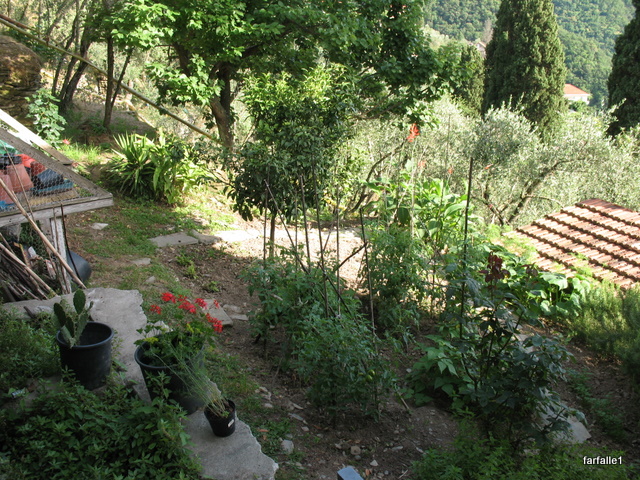
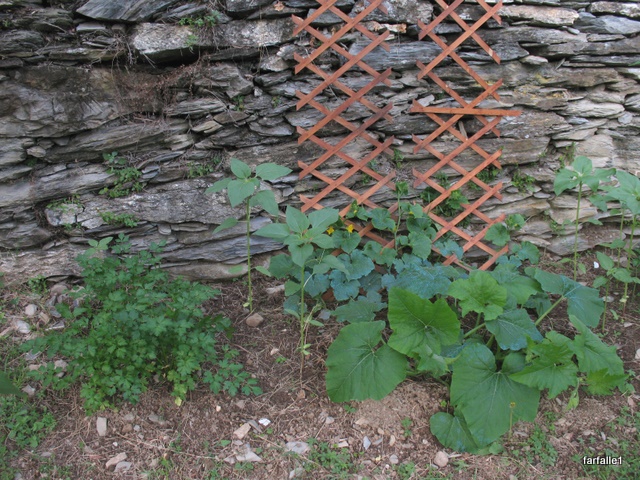
The next level down is my favorite because it is so mixed.  In one spot are three leftover tomato plants.  Then there is a small strip with cucumbers climbing the trellis that used to keep Luciano from wandering off our terrace, with some bushy pumpkins in front.  Parsley flanks these climbers, with some giant sunflowers thrown in just for fun.

None of it looks like much now, but it’s all growing by leaps and bounds.  Already  teeny tomatoes and cucumbers have formed, and every day each plant looks about 6″ taller.

So, what’s happening with the old garden?  The Captain planted a lot of ground-cover, but the seeds all washed away in the two weeks of rain that followed; we’ll replant, probably in the fall.  He also has constructed an elegant new compost area, and has almost finished a new potting table.  It will be a cool and shady area in which to relax on all those hot summer days we’re waiting for.  Thyme, marjoram, mint, sage and rosemary are still happily ensconced there.  Dill, cilantro and basil like it hot, hot, hot, so they are growing in pots on the terrace.

By the way, there’s another family that’s doing some interesting gardening this summer, but I see that with their luxury of flat space they are using the more traditional layout:

I’m guessing Michelle and Barack have a bit more help with their garden than we do with ours.  Yes, our new garden strips are working really well, but yes, it’s a lot more work to get water to four places instead of just one.  But you know what they say… when in Rome…

All Fall Down

22 Tuesday Sep 2009

Posted by farfalle1 in Italy, Liguria, Uncategorized

≈ 2 Comments

Tags

preventing rock slides, rock falls in Italy, rockslides in Italy, steel netting

In April the town of L’Aquila and neighboring towns were devasted by a terrible earthquake.  Almost 300 died, hundreds more were injured and tens of thousands were left homeless.  Events such as the L’Aquila earthquake and the 1997 quake in Umbria that severely damaged the cathedral in Assissi are catastrophic seismic events that draw attention to a more mundane fact: Italy is a falling down kind of place.

In an April article in the Times, Mark Henderson, Science Editor, wrote: “Italy is on one of the most seismically active regions of Europe, where the African tectonic plate pushes up against the Eurasian plate. The situation is further complicated by a microplate beneath the Adriatic Sea that is moving northeast, pulling apart the rocks that make up the Apennine mountain range running down the country’s spine. The result, according to John McCloskey, Professor of Geophysics at the University of Ulster, is an “extremely complicated geology” in which “the entire country is crisscrossed by lots of faults”. …  Professor Bob Holdsworth, of Durham University, said that in the Apennines “recently created mountains are now slowly collapsing due to a complex large-scale interaction between plate tectonic forces and gravity.””

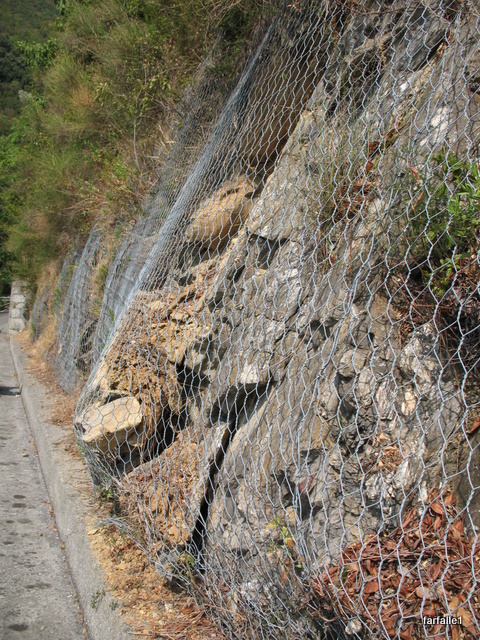
It takes a lot less than seismic activity to get Italy’s hillsides and cliffs rocking and rolling; sometimes all it takes is a good rainstorm, or a heavy truck passing by. It’s not uncommon to see stone cliffsides along roads held in place with huge expanses of heavy cable netting.  Frequently the cables are precautionary.  Are they necessary?  You betcha.

rock net full

This bulging net is along the road that leads to San Maurizio di Monti, much of which is netted.  There are frequent rock slides here; last January our neighbor Turi came out of his house one morning and found a whole hill in his driveway.

turi's rock slide (2)

It’s all cleaned up now, but a friend who met him shortly after his discovery described him as grey and shaking – imagine if he’d been in his car on his drive when the side of the hill gave way!

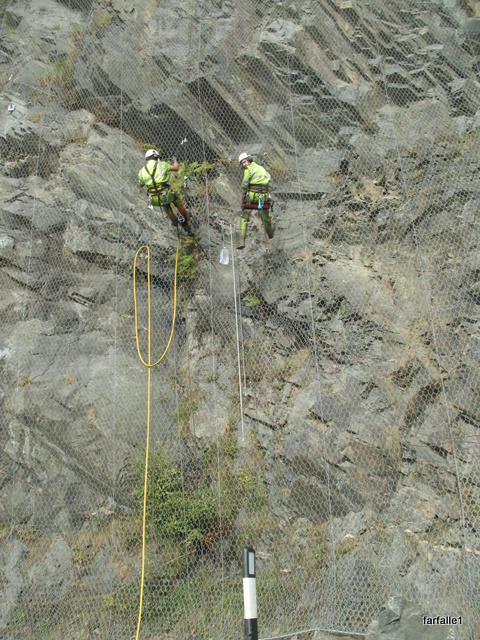
Several years ago we watched men installing nets on the rock cliffs above Punta Chiappa in Camogli.  I didn’t have a camera with me then, but it looked pretty much like these men whom we saw in Scotland last week – a cross between rock climbing and web-weaving… not a job I would enjoy, that’s for sure.

hanging rock nets

These are the road signs that alert drivers to the danger of possible rock falls.  I find them hopelessly confusing; there’s something about the positive/negative of the black and white that just doesn’t say ‘Cliff’ or ‘Falling Rocks’ ; to me they look more like ships in deep space or something from chemistry class,  or perhaps a video game (I think it’s the hexagonal ‘rocks’ – they just aren’t that tidy in real life).

img022

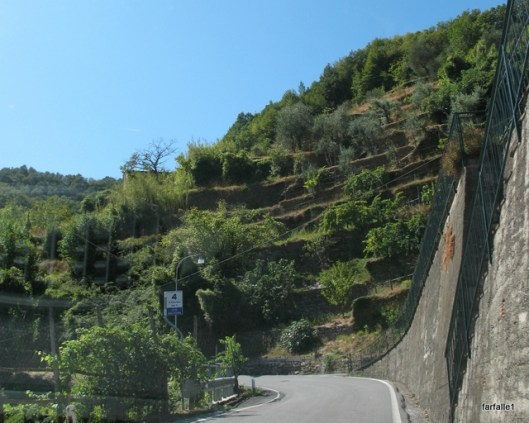
In addition to the nets there’s another thing that helps keep the hillsides well behaved: it’s all the terracing that’s been done.  Those walls, built by hand over centuries, serve a purpose beyond giving people a bit of flat land on which to grow things – they actually help hold the ground in place, and in a place where the earth is always wanting to move, that’s a good thing.

terraced hillsideA

Expo at Val Fontanabuona

13 Sunday Sep 2009

Posted by farfalle1 in Italy, Liguria, Uncategorized

≈ 4 Comments

Tags

Expo at Van Fontanabuona, Val Fontanabuona

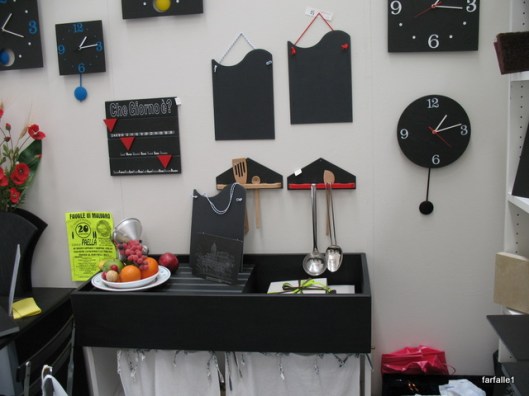
Not exactly a Sagra, not exactly a trade show, the Expo at the Val Fontanabuona was a showcase of the arts and businesses of the Valley.

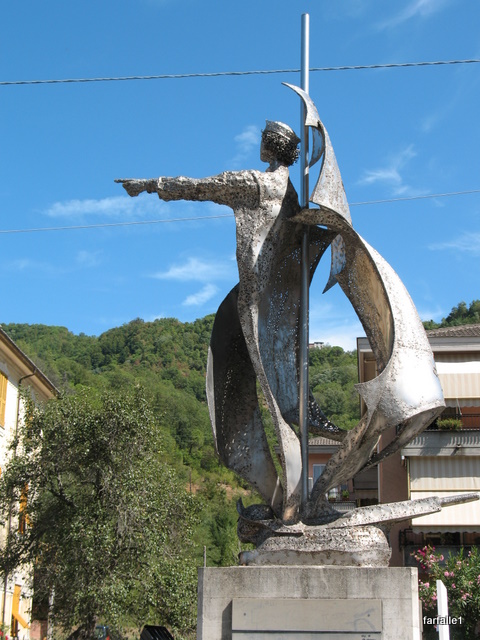
The Expo was held in Calvari, which, like almost every other town in Liguria, sports a statue of Cristoforo Colombo.

cristoforo columbo

(Why do the statues so frequently depict Columbus pointing?  I’m sure he was too busy to stand at the prow with his finger out-stretched – it looks so he-went-thataway.)

Containing many small communities (and several larger ones) (View Map) the Val Fontanabuona, which runs behind the sea-hugging mountains between Genova and Chiavari, is perhaps best known for its ardesia (slate) mining and production. (There are some exciting mining photos in the link.)  Below are some small items made of slate, but it is as often used in construction here for steps, window sills and trim work.

things made of slate
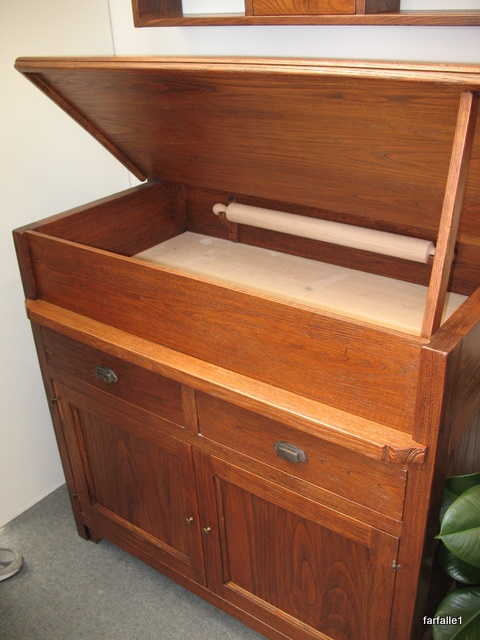
There are lots of other business in the Valley, though, and the Expo is a way of demonstrating the variety and quality of production there, as well as giving a boost to the region’s towns, many of which had information booths at the Expo.  The many wood-working and furniture-making shops in the Valley produce everything from reproduction pasta-making chests

pasta making furniture

to wooden bowls and decorative items

wood worker

to timber framing for building construction.

wood framing

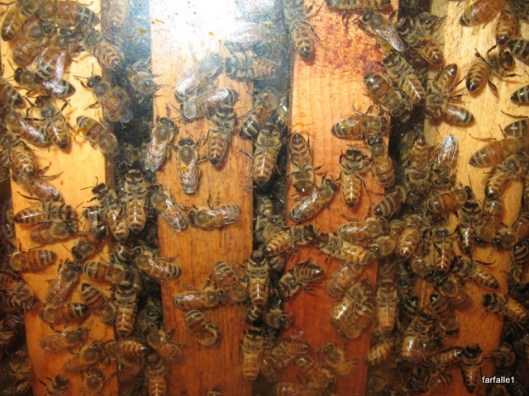
Several solar heating companies displayed their mysterious pipe arrays, and there was even a very efficient German vacuum cleaner sucking up piles of crumbs and dirt from an aged oriental carpet.  A food distributor handed out cups of Covim Caffe (the Captain’s favorite!), and the booth for Borzonasca gave us lovely little fried squares of polenta to taste – secret recipe, alas. The ubiquitous food booths touting dried porcini, wines and cheeses of the region were augmented by displays of honey, which evidently is in high production in the VF.  We could even watch some of it being made in a portable show hive.

bees (2)

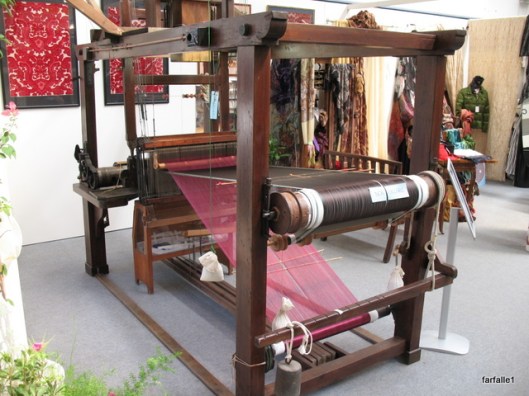
One of the more interesting displays, I thought, was a 16th century loom which is still in use to weave the famous Genoese velvet, made from 100% silk, which is lustrous and rich.  The Cordani Velluti company of Zoagli owns the last three looms in existence; each loom can produce a piece of fabric daily measuring 30 cm x 60 cm.  No wonder it’s expensive!

16th century loom

The regional food specialty, available in the dining tent, was battolli, a pasta from Uscio made from wheat and chestnut flours, served with pesto:

battolli (2)

The chestnut flour gives the dish a touch of sweetness which is both surprising and delicious.

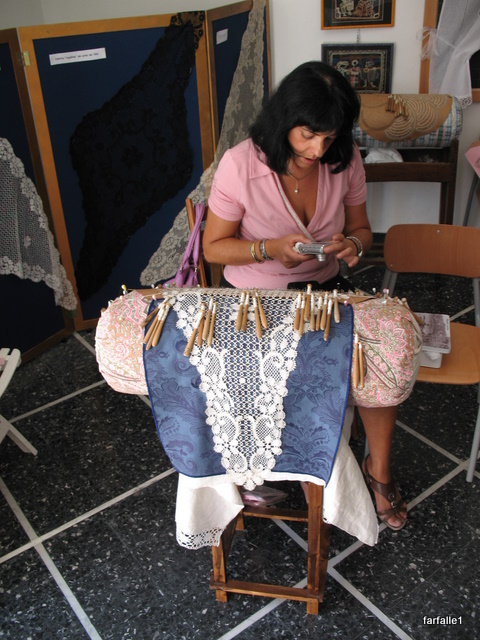
The Captain has always said that the Val Fontanabuona reminds him of what Italy must have been like fifty years ago.  This woman perfectly exemplifies the marriage of old – the tombolo (Genovese bobbin lace) she is making – and the new – the IM she is receiving on her cell phone.

tombolla and telefonino

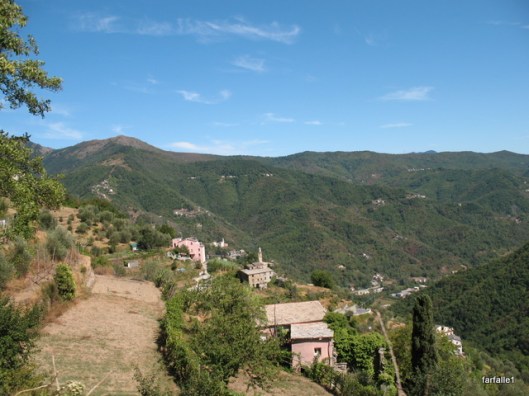
The Val Fontanbuona is like that: behind some of the very small town exteriors are some very modern businesses that are serving customers all around the world.  The Expo was a great way to become familiar with some of them, and to learn more about the beautiful Valley itself.

the val (2)

GPL

22 Monday Jun 2009

Posted by farfalle1 in American habits and customs, Driving in Italy, Driving in the U.S., Italy, Liguria, Travel, Uncategorized

≈ 7 Comments

Tags

Bi-fuel cars, Chevrolet Matis, Ecocentives, fuel efficiency, GPL, LPG

GPL in Italy is what we call LPG in the U.S.: liquid propane gas, and cars fit to take it are widely available here (Chevrolet, Fiat, Mazda, Opel,  Peugeot, Renault).

Quick disclaimer:  I’m not a gear-head or an engineer.  My understanding of internal combustion engines is on a par with that of my sister, who once described the reason her car was in the shop as “a loose screw in an oil place.”

Unfortunately, a visit to fueleconomy.gov, a U.S. site, informs us that one of the disadvantages of LPG as an auto fuel in the U.S. is that no new passenger cars fitted for its use are commercially available (though kits to retrofit are).  It is more commonly used there for fleets, taxis, and forklifts (there are about 600,000 LPG vehicles in operation in the U.S. today out of 240,000,000 total vehicles (+/- 2.5%).  As a corollary to this, the fuel itself is not widely available at ordinary filling stations.  And I have to ask, why??

The U.S. is one of the largest producers of LPG, which is a petroleum product (learn all about it here).  It was first developed by Dr. Walter Snelling in 1910 (the first automobiles that ran on propane appeared in 1913).  Though it is a petroleum product, it burns up to 40% cleaner than gasoline, emitting far fewer hydrocarbons, and it is less costly than gas.

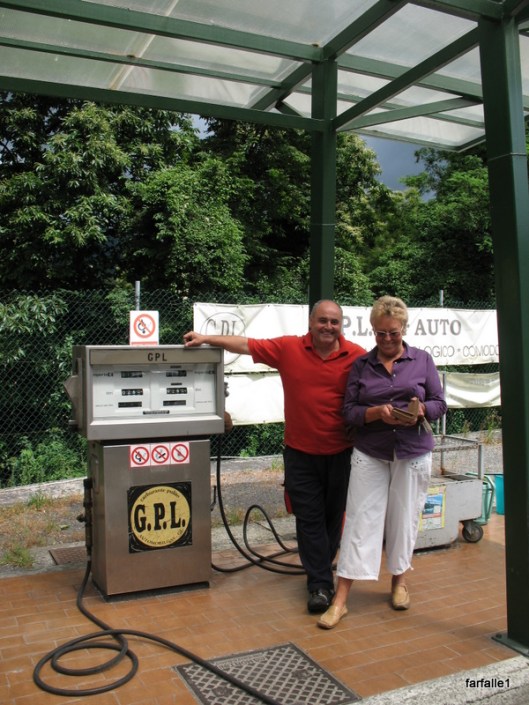
Look at this happy woman:

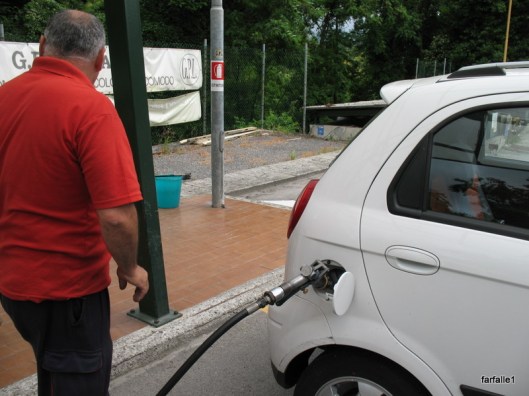
GPL

She is my friend Anita, and she is happy because she has just filled her bi-fuel Chevy Matis with GPL.  Bi-fuel?  It means her new car runs on either conventional gas or, with the flip of a switch, GPL.  She is happy because there is still money in her wallet after filling her car.  One reason is because her GPL costs about E .57 per liter instead of the E 1.39 for gasoline. (The man who pumped the GPL is smiling because he likes having his picture taken.)

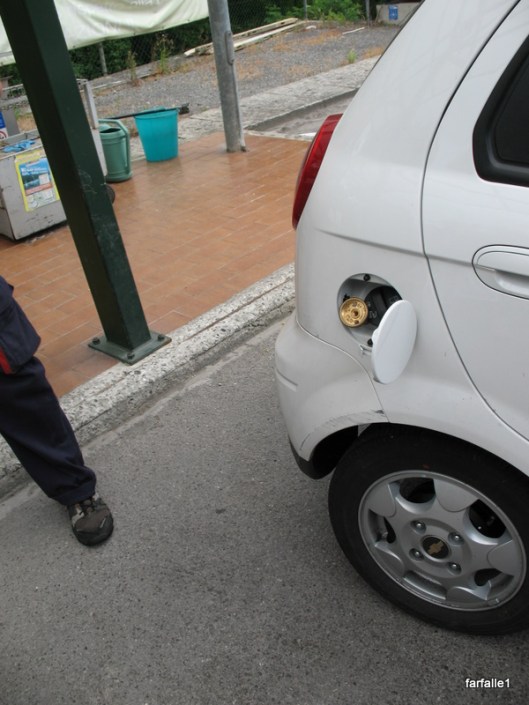
Here are two more reasons she’s smiling.  When she took her old Volvo wagon off the road the Italian government said Thank You For Taking That Big Polluting Monster Off Our Roads by giving her E 1,500.  Then she was rewarded with about another E 3,500 when she chose to buy her bi-fuel Chevrolet Matis. (Other car manufacturers in Italy also offer ‘ecocentives’ to those who purchase bi-fuel cars.)

GPL-1

The only trick is to find a station that sells GPL – it’s easier to do here, where there are at least 19 dealers in Liguria, than in the U.S., where you seldom see it sold.  But if you can’t find a station, no worries – you can still drive on conventional fuel.

There’s a special adaptor that couples with the GPL fuel receiver of the car – brass!  Very pretty.  And after the car has been fueled, very cold.  The smiling man simply took the adapter, screwed it in, and then attached the pump nozzle to the adapter.  It didn’t take any longer to fuel with GPL than with regular fuel.

GPL-3

I’m surprised more is not done with this fuel in the U.S., where efforts seem to be going instead to ethanol blends and bio-diesel.  I learned here that if you purchase a hybrid, diesel or dedicated alternative fuel vehicle (what a mouthful), you may be eligible for a tax credit of up to $4,000, which is nothing to sneeze at.  There is no reward in the U.S. for purchasing a bi-fuel car.  Nor is there a reward that I could find for removing a heavily polluting, inefficient vehicle from American roads.  An alternative in the U.S. to LPG is compressed natural gas, or CNG, which burns even cleaner than LPG, but takes up much more room.  (Again, new cars are not available with CNG, but retro-fit kits are.)  Isn’t it odd that American auto manufacturers haven’t paid more attention to a  cleaner technology that’s been around since the beginning of car time?  Oh, wait a minute.  Thinking about those yo-yo’s, maybe it isn’t so surprising after all.

Every Inch

10 Wednesday Jun 2009

Posted by farfalle1 in gardening, Italian habits and customs, Italian men, Liguria, People, Rapallo, Uncategorized

≈ 2 Comments

Tags

Cliff gardening, Rick Gush

It has always amazed me how every square inch of space in Italy seems to be put to some kind of good use.  There are 60 million people living in Italy, a population density of 515 people per square mile.  In the US the population density per square mile is 80.  No wonder roads, houses, cars and people there are large – there’s enough space for everything and everyone.  But here in Italy every square inch must give the most it can.  You realize this particularly if you’re out walking on a woodsy mountainside and suddenly notice overgrown stone walls: the land on those mountains was important enough that people put in hundreds of hours of labor to terrace and farm them.

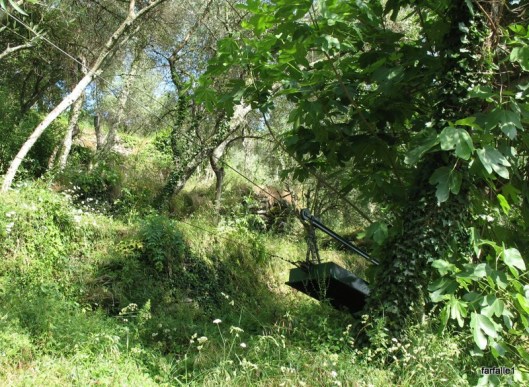
Now agri-business has arrived in Italy, too, and some of the farming land on the really steep and inaccessible mountains has gone wild.  But individuals will squeeze an enormous amount of production from whatever land is available to them.  And they have devised some very clever inventions to make the job easier.  It’s not uncommon to see a small cable and carrier system stretching across a wooded valley from one hillside to another – a way to transport cut wood.  Or to see the same thing coming down the olive-studded hill to a road below – a way to get the harvested olives to a waiting Ape (the little three-wheeled workhorse truck named for bees, because that’s what the two-stroke engine sounds like).

cable system (2)

People practice intensive gardening here – a lot of the garden maintenance is done by hand, so rows to do not have to be widely spaced to accommodate a tiller.  Down the hill in Rapallo I have watched an elderly gentleman prepare and plant his garden this spring – he did it all by hand.  First he turned the dirt with a spade, then he put in mounds of fertilizer (probably cow manure from the farm up the road), then he forked it all in by hand, and finally he was ready to plant.

garden squares-1aIsn’t it tidy and pretty?  If you get out your magnifying lens you might just be able to spot the man himself in the midst of his tomato stakes behind the tree in the center.  Or you can just take my word for it that he’s there.
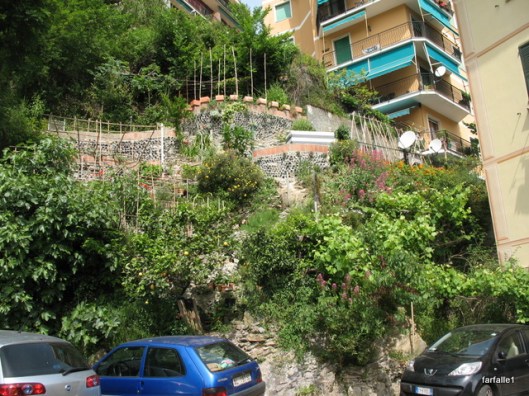
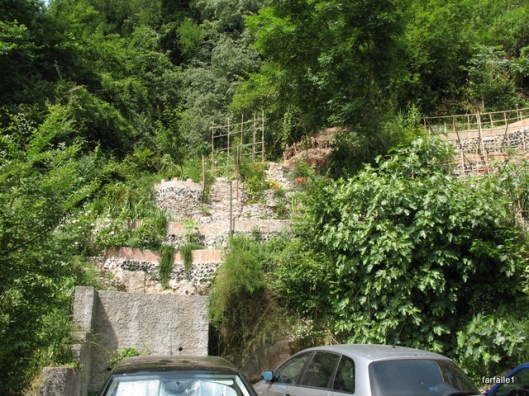
The prize for getting the most out of every inch, though, goes to this man’s neighbor a bit farther down the road, another American transplant by the name of Rick Gush.  Rick is the guy that if you give him a sow’s ear he’s going to give you a purse the next time you meet.  He’s the guy who’s never even heard of the box everyone else is trying to think outside of.  Every time we meet Rick we learn of some new  job he once had.  An incomplete list of his accomplishments includes adventure game designer (Kyrandia, Lands of Lore), psychic soil analyst (easier than it sounds, he says, if you live in Las Vegas, as he did at the time), intimacy counselor (“those that can’t do, teach,” he says), artist, uranium miner, gardener and garden writer.  He took all the disparate skills suggested by these activities and put them to work in building his hillside garden.

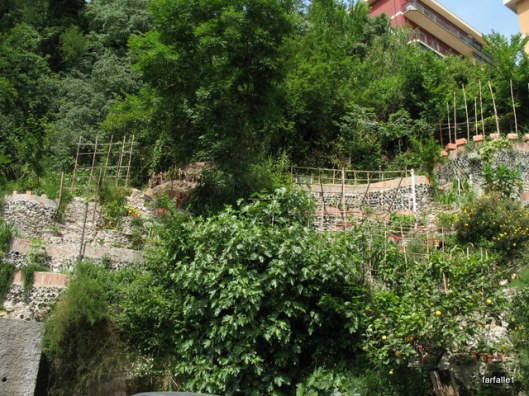
The steep, stony land, a cliff really, behind his and his wife Marisa’s apartment building had gone completely to seed.  Over the last few years Rick has terraced it and built walls of cement and old wine bottles laid on their sides with the bottoms facing out.  Sounds weird, but it’s really pretty and a very clever way to recycle hundreds of wine bottles.  And being a fanciful fellow he has put turrets on the walls.

Rick's garden

This is a view of the right side of the garden.  There are grapes on the right and a big fig tree on the left, with a smaller lemon between them.  There’s a set of steps, invisible in the photo, above the blue car roof.  Above you can see flowers, bean poles, tomato poles and satellite dishes. Just below the uppermost wall there is a very pretty curved arbor with a flowering vine  growing over it.

Rick's garden-1

This is the left, and more recently constructed part of the garden.  More turrets, the big fig, and more poles to support cukes, squash and pumpkins.

Rick's garden-3

This pictures shows the amount of wall building Rick has done, but it’s hard to see the details of the plants.  This is a garden in the true spirit of Italy – there’s not one centimeter wasted, and, best of all, it’s beautiful.  There’s been an addition since I took this photo – up on the top fascia now sits a small, gleaming white greenhouse – heated by manure.  (To read more about Rick and his cliff garden, click here.)

Rick strangles thin air-1

Sgabei

25 Monday May 2009

Posted by farfalle1 in Desserts, Food, Italian habits and customs, Italian holidays, Italian recipes, Liguria, Uncategorized

≈ 4 Comments

Tags

Assado, Sagra, Sgabei

What do “Sgabei!  Gesundheit!!”  and “Who doesn’t love a party?” have in common?  This weekend it was San Maurizio di Monti.

Sgabei (it’s an odd word, pronounced pretty much the way it’s spelled) is a typically Ligurian treat that originated in the Val de Magra on the eastern end of Liguria, on the border with Tuscany. While it is not often found on menus, it is not an unusual offering at a Sagra, a local festival which often involves food and some other kind of entertainment or a sporting event.  Sagras are very popular – it’s a rare weekend when you can’t find a sagra somewhere nearby with its attendant food specialty.

San Maurizio, our little town, just held its third annual Sagra degli Sgabei.  Why Sgabei?  Well, it is a typical food, but also most of the other regional specialties had already been taken by other nearby towns – Santa has fritters, Camoglie has a huge fish fry (fish are cooked in the World’s Largest Fry Pan), and there are several Trofie al Pesto shindigs.  So, for whatever reason, the Comitato Amici di San Maurizio, the volunteers who work hundreds of hours to make it all happen, decided to make Sgabei the main draw of their Sagra.  In addition to the food there were two dance bands, one on Saturday evening, the other on Sunday.

There are always treats other than the signature dish at a Sagra, frequently porchetta, assado and usually some kind of pasta.  Our choices included Trofie al Pesto (also a Ligurian specialty) or Ragu, porchetta, assado, sausages, beer or wine, and of course the highly touted Sgabei themselves.

Assado has its origins in Argentina, where the cowboys would find themselves hungry and far from any source of food… other than their cows.  So they would slaughter a cow and eat it.  Assado is the part of the animal around the stomach – that is, not the guts themselves, but the flesh and muscle that holds them in.  It is marinated, cooked on a big rack near an open fire for about six hours, then sliced off.

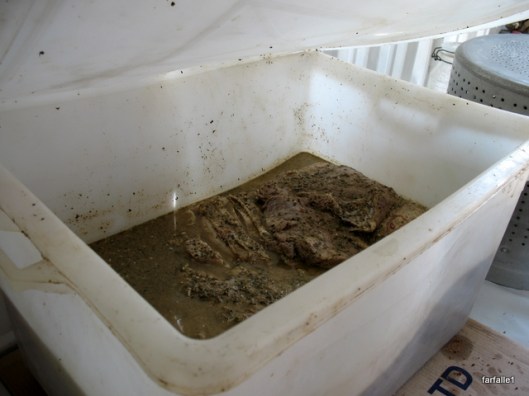
sgabei assado marinade

Each Assado chef has his own secret marinade recipe, but it will usually contain at least thyme, salt, pepper, hyssop (which grows wild in the woods here).  My sources tell me that most chefs put something alcoholic in the marinade as well: grappa, wine, or…

sgabei assado

After all those hours cooking the meat is tender (sort of) and ready to be eaten.  A chef with a big knife takes slices from the side away from the flames, and voila – your Assado is ready to serve:

sgabei assado-1

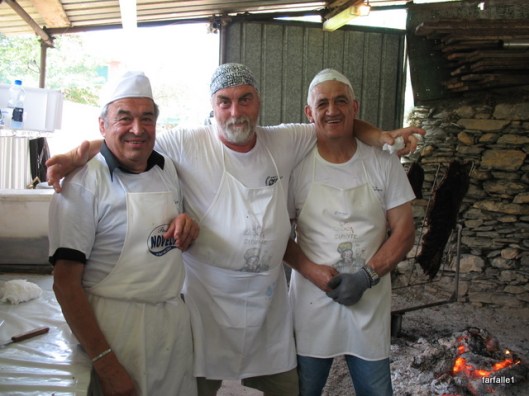
They say that a lot of the tastiness of food has to do with the spirit and energy that the chef puts into the preparation.  That could explain why the Assado at the San Maurizio Sagra was so darned good:

sgabei assado cooks

They told me they are the best, and I believe them.

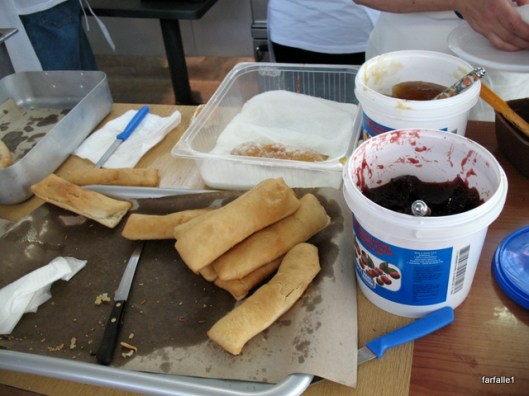
So, what about the famous Sgabei?  A secret: I don’t much care for them.  I’ve never been a great donut lover, and to me Sgabei is simply a torpedo shaped donut that’s been sliced lengthwise and filled with something – in the case of this weekend’s sagra either strachinno (a very runny cheese), cherry jam or Nutello.  No thanks, I’ll pass, though I will take some of that cherry jam.

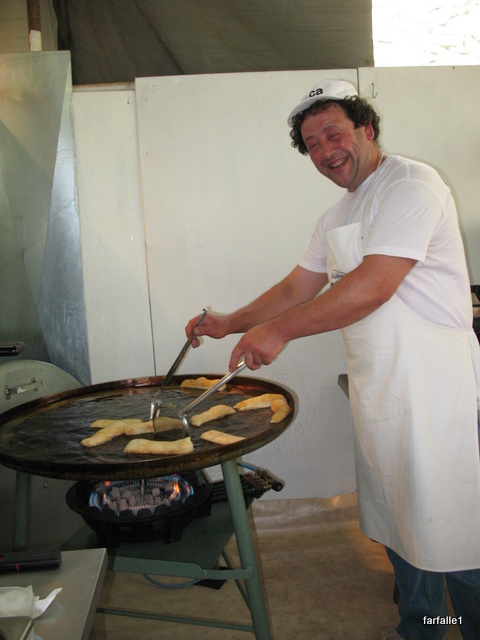
For the same reason that the assado is so good, I’m sure the sgabei are the best this side of Genova:

sgabei cooking

Here’s what they look like before they’ve been stuffed:

sgabei

As Fred McGourty used to say, Highly regarded by people who like that sort of thing.

If you’re interested in reading more about other Sagras, hop over to Rowena’s blog and read her section called 100 Ways to Celebrate Italy (there’s a link about halfway down the front page on the left).  She’s up to 35, which is way more than we’ve been to.

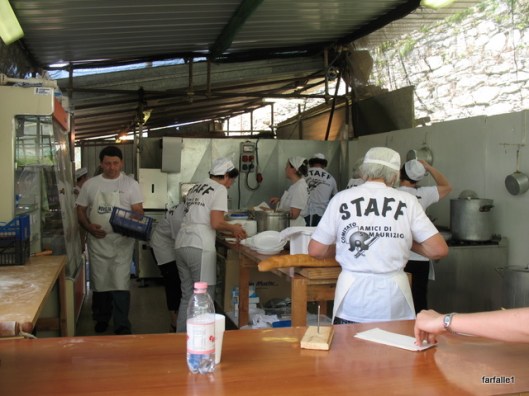
I’d love to know more about the Sagra – what do they do with the money, for instance?  We assume it’s a fund-raiser, but for what?  And most of all, how can I get one of these great Staff tee-shirts??

sgabei kitchen

Back in the Saddle Again

17 Friday Apr 2009

Posted by farfalle1 in Driving in Italy, Flowers, Italy, Liguria, Uncategorized

≈ 2 Comments

louis-gil-rose

The saddle of my scooter, that is…  and what a great way to travel it is.  It’s economical and efficient – scooters here routinely pass a standing (or slower moving) line of cars, and move to the head of the class at any red light. (That’s my scooter… but that’s not me!)

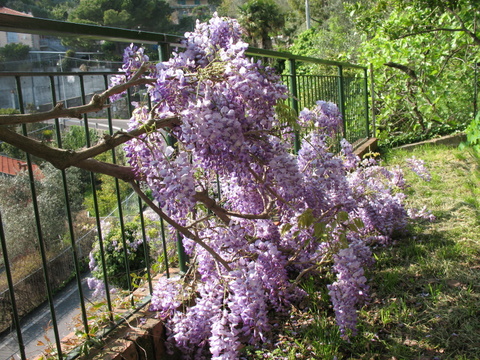
One of the unsung pleasures of scootering is that you get an ever-changing panoply of scents.  It’s true, they’re not always pleasant, but at this time of year they tend to be floral and heavenly.  The wisteria (glicine, pronounced glee-chee-nay) is in bloom and is draped over numerous walls along the highways and byways.

wisteria

It puts out a delicious aroma.  The jasmine (gelsomino, prounounced jell-zo-mee-n0) is just beginning to flower.  It’s a thug (that’s a technical horticultural term for anything that spreads rapidly and is hardy), but is so pretty and has such a sweet smell that we forgive it its pushy habits.

jasmine-4-14-2009-12-31-14-pm

About the time this finishes blooming the ‘false jasmine,’ the pitosfero, will appear, and it’s perfume is a match for the true jasmine.

Riding in a car one tends to miss most smells except the most overstated (I’m thinking about a skunk, aren’t you?).  But riding on a scooter in the Riviera can be like inhaling a dictionary of different odors, and this time of year they’re more likely than not to be extremely pleasant.  Just riding up Via Betti at about 9:30 a.m. one enjoys first  the garbage plant (not so nice), some glicine over a wall (gorgeous), and fianlly the smell of freshly baked bread from our local bakery (scrumptuous)… and it’s only been half a kilometer.

We were glad to see more scooters in the US than in previous visits.  No, it’s not the safest mode of transport – for that I suppose you’d want a Hummer.  But for ease, economy and pure gioia di viaggiare, nothing beats a scooter.  We were both really glad to climb back aboard ours.

← Older posts
Newer posts →

Enter your email address to follow this blog and receive notifications of new posts by email.

Join 114 other subscribers

rss

Subscribe in a reader

Search the Blog

A. Useful Links

  • bab.la language dictionary
  • Bus schedules for Tigullio
  • Conversions
  • English-Italian, Italian-English Dictionary
  • Expats Moving and Relocation Guide
  • Ferry Schedule Rapallo, Santa Margherita, Portofino, San Frutuoso
  • Italian Verbs Conjugated
  • Piazza Cavour
  • Rapallo's Home Page – With Link to the Month's Events
  • Slow Travel
  • The Informer – The Online Guide to Living in Italy
  • Transportation Planner for Liguria
  • Trenitalia – trains! Still the most fun way to travel.

C. Elaborations

  • A Policeman’s View
  • Driving School Diary
  • IVA refunds due for past Rifiuti tax payements
  • Nana
  • Old trains and old weekends
  • The peasant, the Virgin, the spring and the ikon
  • Will Someone Please, Please Take Me to Scotland?

D. Good Recipes - Best of the Week winners are starred

  • 'Mbriulata
  • *Baked Barley and Mushroom Casserole*
  • *Captain’s Boston Baked Beans*
  • *Crimson Pie*
  • *Louise’s Birthday Cake*
  • *Melanzane alla Parmigiana*
  • *Penne with Cabbage and Cream
  • *Pizzoccheri della Valtellina*
  • *Pumpkin Ice Cream*
  • *Risotto alla Bolognese*
  • *Rolled Stuffed Pork Roast*
  • *Spezzatini di Vitello*
  • *Stuffed Grape Leaves*
  • *Stuffed Peaches (Pesche Ripiene)*
  • *Swordfish with Salsa Cruda*
  • *Tagliarini with Porcini Mushrooms*
  • *Tagliatelli al Frutti di Mare*
  • *Three P's Pasta*
  • *Tzatziki*
  • 10th Tee Oatmeal Apricot Bars
  • Adriana’s Fruit Torta
  • Aspic
  • Bagna-calda
  • Best Brownies in the World
  • Clafoutis
  • Cold cucumber soup
  • Crispy Tortillas with Pork and Beans
  • Easy spring or summer pasta
  • Fish in the Ligurian Style
  • Hilary's Spicy Rain Forest Chop
  • Insalata Caprese
  • Lasagna al forno
  • Lasagna al Forno con Sugo Rosato e Formaggi
  • Lemon Meringue Pie
  • Leo’s Bagna Cauda
  • Leo’s Mother’s Stuffed Eggs
  • Louis’s apricot chutney
  • Mom's Sicilian Bruschetta
  • No-Knead (almost) Bread
  • Nonna Salamone's Christmas Cookies
  • Pan Fried Noodles with Duck, Ginger, Garlic and Scallions
  • Pesto, the classic and original method
  • Pesto, the modern, less authentic method
  • Pickle Relish
  • Poached pears
  • Poached Pears
  • Polenta Cuncia
  • Recipes from Paradise by Fred Plotkin
  • Rustic Hearth Bread
  • Shrimp and Crayfish Tail Soup
  • Sicilian salad
  • Slow Food Liguria
  • Slow Food Piemonte and Val d'Aosta
  • Spinach with Garlic, Pine Nuts and Raisins
  • Stuffed Eggs, Piemontese Style
  • The Captain’s Salsa Cruda
  • Tomato Aspic
  • Zucchini Raita

E. Blogroll

  • 2 Baci in a Pinon Tree
  • Aglio, Olio & Peperoncino
  • An American in Rome
  • Bella Baita View
  • Debra & Liz's Bagni di Lucca Blog
  • Expat Blog
  • Food Lovers Odyssey
  • Italian Food Forever
  • L’Orto Orgolioso
  • La Avventura – La Mia Vita Sarda
  • La Cucina
  • La Tavola Marche
  • Rubber Slippers in Italy
  • Southern Fried French
  • Status Viatoris
  • Tour del Gelato
  • Weeds and Wisdom

Photographs

  • A Day on the Phoenix Light Rail Metro
  • Apache Trail in the Snow
  • Aquileia and Croatia
  • Birds on the Golf Course
  • Bridge Art
  • Canadair Fire Fighters
  • Cats of Italy
  • Cloudy day walk from Nozarego to Portofino
  • Fiera del Bestiame e Agricultura
  • Football Finds a Home in San Maurizio
  • Hiking Dogs
  • Mercatino dei Sapori – Food Fair!
  • Moto Models
  • Olive pressing
  • Rapallo Gardens
  • Rapallo's Festa Patronale
  • Ricaldone and the Rinaldi Winery
  • Rice Fields
  • Sardegna ~ Arbatax and Tortoli
  • Sardegna ~ San Pietro above Baunei
  • Sardegna ~ The Festa in Baunei
  • Scotland, including Isle of Skye
  • Slow Food 2008 Salone del Gusto
  • The Cat Show and the Light Rail Fair
  • The desert in bloom
  • Trip to Bavaria

Pages

  • Fagioli all’ucelleto

Archives

Recent Posts

  • A Superior Visit
  • Fun at the Ranch Market
  • The MAC
  • Welcome Tai Chi
  • Bingo Fun for Ferals
December 2025
M T W T F S S
1234567
891011121314
15161718192021
22232425262728
293031  
« Jul    

Member of The Internet Defense League

Blog at WordPress.com.

  • Subscribe Subscribed
    • An Ex-Expatriate
    • Join 114 other subscribers
    • Already have a WordPress.com account? Log in now.
    • An Ex-Expatriate
    • Subscribe Subscribed
    • Sign up
    • Log in
    • Report this content
    • View site in Reader
    • Manage subscriptions
    • Collapse this bar
 

Loading Comments...