Punta Chiappa

Tags

,

How many steps from San Rocco to Punta Chiappa? I meant to count, but of course lost track somewhere along the way. I can tell you this: the change in elevation is from sea level to 210 meters above sea level; and the last little staircase on the return back up to San Rocco has 206 steps.

But I’m getting ahead of myself…
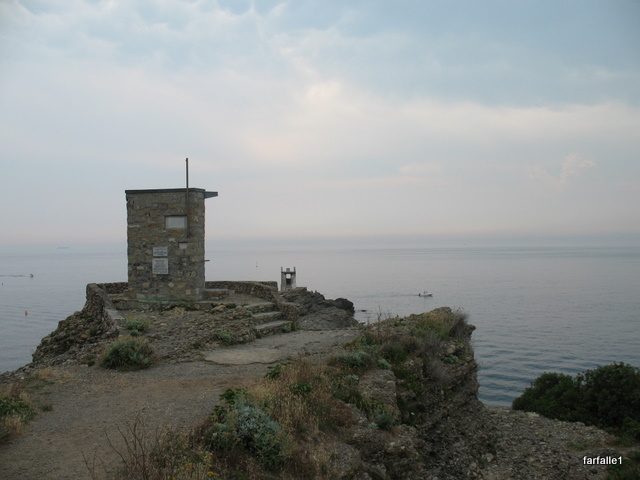
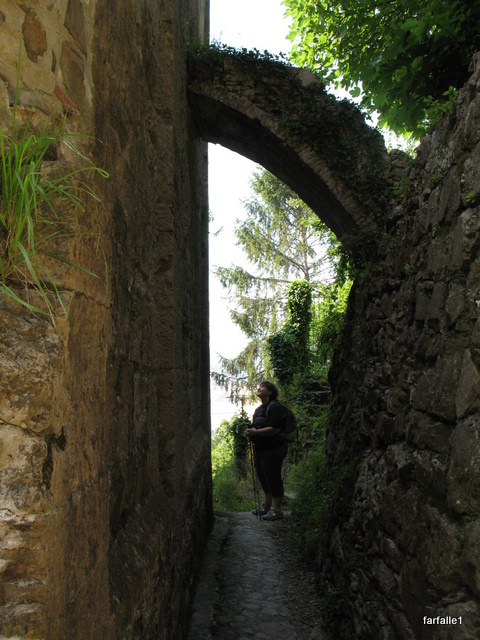
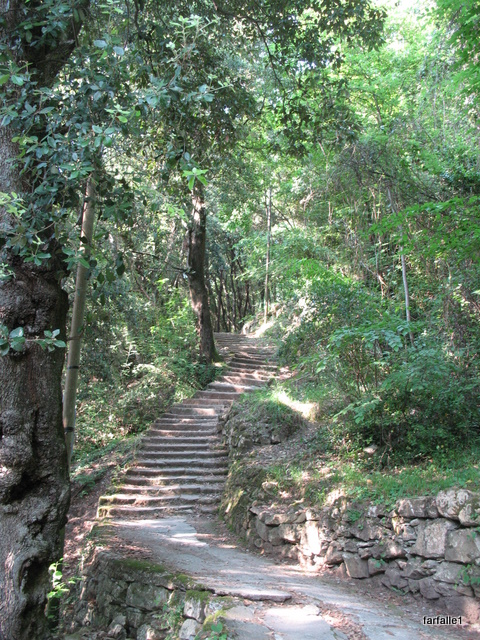
Punta Chiappa is the rocky tip of one side of the Portofino Peninsula. Like San Fruttuoso, which is not far distant, you can get there only by boat or on foot. The difference is that to reach San Fruttuoso by foot takes several hours from either Camogli or Portofino. You can reach Punta Chiappa in about half an hour from San Rocco, the lovely community above Camogli on a delicious woodsy path that has long paved sections and, by someone else’s estimate, 900 steps.
From Punta Chiappa there is a fine view back towards Camogli and the big hills behind it; down the coast to Genova and perhaps, on a clear day, the French Riviera; and to the southeast the continuation of the Portofino peninsula.
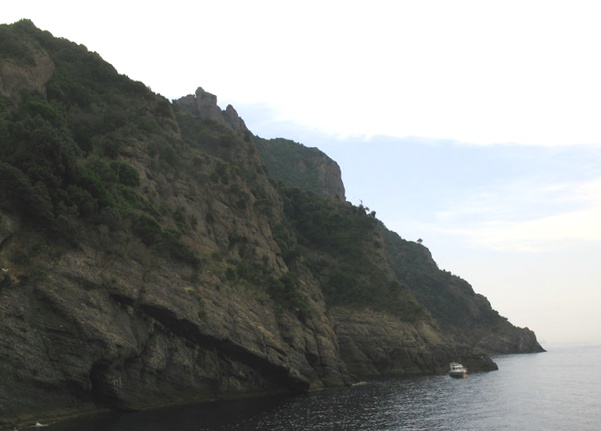
The point itself is made of rock, and plenty of it, although some brave plants have found a foothold there.
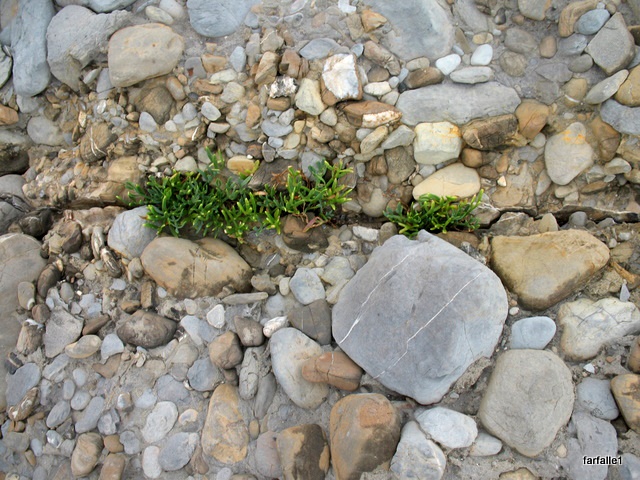
All the beaches on the peninsula feature these beautiful gray rocks with white lines in them.

The day we walked down was hot and steamy, but in the early afternoon the clouds rolled in and thunder began sounding its alarm over the mountains.  Nonetheless we set out on our adventure.  In fact the storms never materialized, but the cloud cover made the hike down and the looong hike back much more bearable.

There is not a lot of commercial activity at Punta Chiappa.  Once upon a time a lot of ship related iron work was done there, but no more.  You can still see the small cranes that moved heavy anchors and so forth, mounted on the side of the path.  There are several great looking restaurants there.  I’ve never eaten at one, but it’s now on my list of things to do.  There is also, a bit further on, a restaurant for cats.
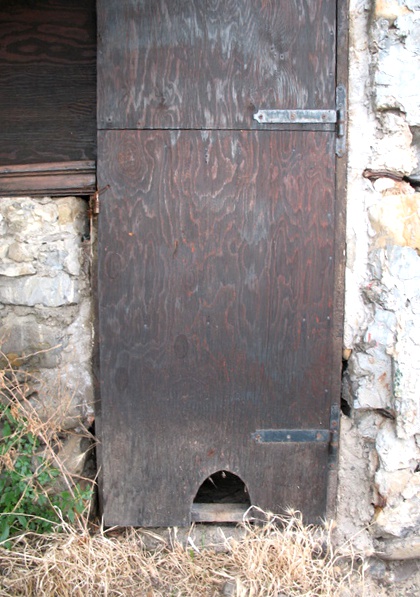
The door is well locked, but the kitties can come and go through the mouse hole below.  Inside are several trays full of kuckies – which is what we call cat kibble, because when the cats chew it it sounds like kuckie kuckie kuckie.  We saw one of the generous women who keep the restaurant stocked, as well as several satisfied customers who were just leaving.

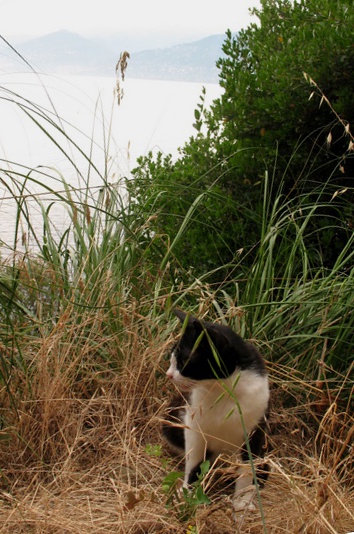
(By the way, if you like pictures of cats, check out the web album Cats of Italy; click the button for a slideshow.)

Cats of Italy

It felt a bit like stepping into a child’s story book when we arrived.  There were not many people and there was a magical haze over the sea; boats drifted in and out of visibility, and it was not hard to imagine there were some great pirate adventures happening out there (if you squint you will see a 4-masted sailing ship in the photo below).

We swam a little, and read our books as the ferry and fishing boats trolled back and forth.  A sudden movement caught our eyes: a school of sardines skimming across the top of the sea, with a dark shadow not quite breaking the surface behind.  A second school appeared and skimmed, followed immediately by the graceful black arc of the back of a dolphin in search of supper.  It all happened so fast we weren’t sure we had actually seen it.  But we had, and it was wonderful.

Wonderful too was the walk back up to San Rocco.  We took a much steeper, but shorter path which brought us in no time to San Nicolo’ di Capodimonte.  I know!  another San Nicolo’.  Am I fated ever to find San Nicolo’ when I am with this particular friend?  Evidently so!
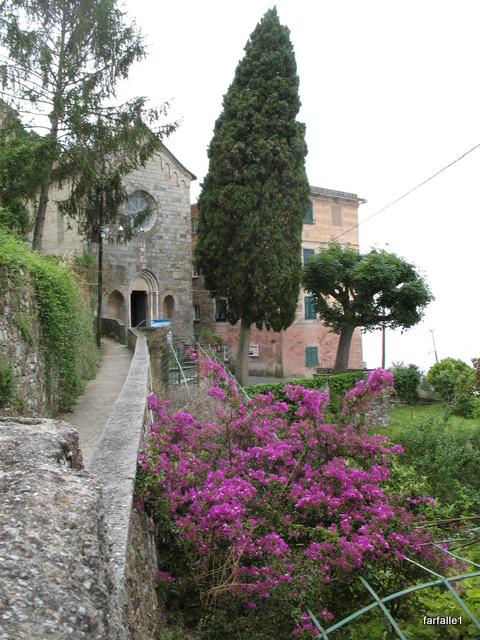
This church, however, is in much better condition than its namesake near Genova. And there is another restoration underway. We saved our visit to the interior for the walk back, and were rewarded with a cool and peaceful respite. This church also is very simple inside, though it boasts a particularly beautiful rose window.
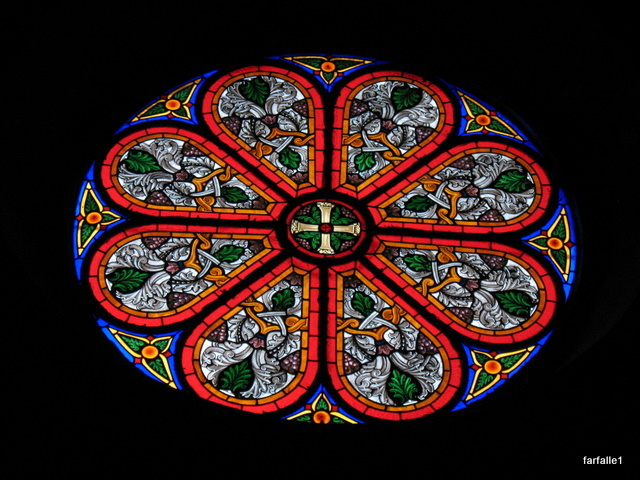
San Nicolo’ di Capodimonte is reputed to have been consecrated in 345 CE, although of course there are no written records to confirm this.  The present Romanesque church is supposed to have been built around the year 1000.  Like its poor brother church, this San Nicolo’ too passed into private hands in 1860 during the suppression of the churches, which accounts for its lack of interior decoration.  In 1865 Cav. Andrea Bozzo bought the church, restored it and built the neighboring residential houses.  The church reopened for worship in 1870.  After the death of Cav. Bozzo’s son in 1910 the church again became ecclesiastical property.

I can tell you two more items of interest.  Although the church is called ‘Capodimonte’ it is nowhere near the top – more like halfway down.  The second thing is this, heed my hard-earned advice: if you take this hike, and I hope some day you will, don’t wear sandals!

A Modest Festa

Not all Festas in Italy are grand affairs with costumes, regional dances, unusual local food and hoards of people.  Some, like the Lions Club Pancake Breakfasts I remember in the States, are simply a modest offering of food and some paid-for entertainment as a means of raising funds.

San Maurizio’s Fireworks committee had just such a festa a week ago.

Under ordinary circumstances I’m sure the dining tables would’ve been set up outside under a leafy tree.  But we had not been living with ordinary circumstances; we had been living with rain, rain, and more rain.  Sensibly the organizers decided to move the festa indoors.  But where?  Fortunately a property-owner nearby has an apartment that is only partway through restoration, and he was willing to rent it for the festa.  It made for one of the more unusual venues I’ve ever seen for such an event.

A house in the midst of restoration is not necessarily the most festive sight, but the organizers the Fireworks Festa did their best with happy face plastic streamers to dress up the entry.

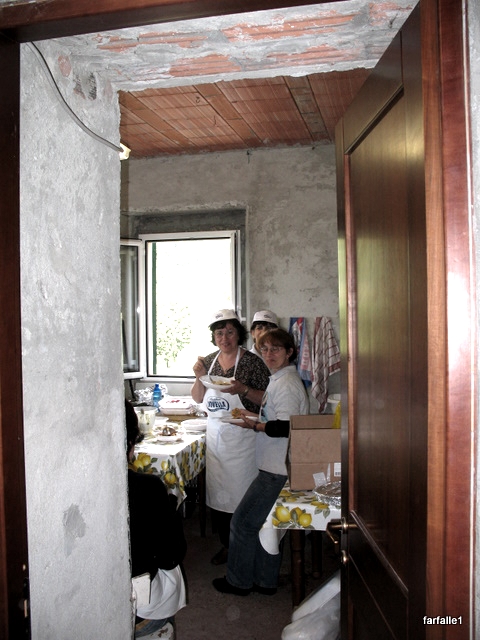
The offerings were uncharacteristically simple as well: ravioli al ragu or trofie al pesto; spiedini (meat cubes grilled on a stick), sausage or matama’ (thin-sliced meat) with gravy; french fries; simple tossed salad; beer, wine, water.  The prices were very reasonable (E 5 for the trofie al pesto; E 3 for the sausage), and the plates were assembled in the ground floor kitchen by the cheerful ladies (no, those are not hardhats).

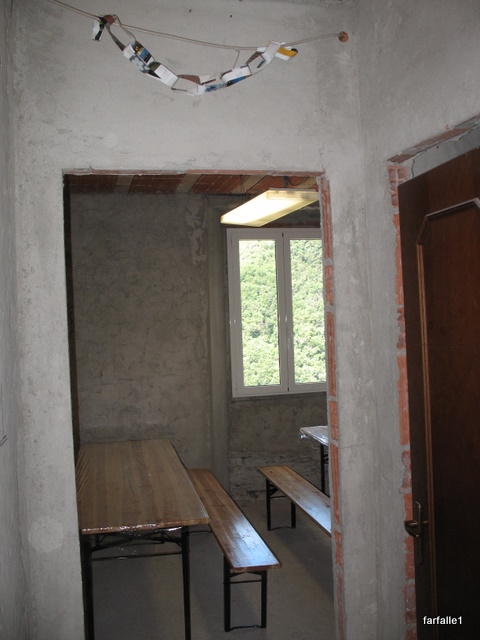
Once we left our order with Giuseppe at the Cassa we were instructed to go upstairs and find a table.  We were early so finding a seat was not a problem, but it was the oddest arrangement I’ve ever seen.  It being an apartment, and a Ligurian one at that, the upstairs was divided into three quite small rooms with a long hall and what I imagine will someday be a bathroom.

Evidently the children helped with the decorations which can be reused, in a pinch, at Christmas time next year.  Each small bedroom held two tables and bench seating – all new, from the looks of it, and quite comfortable.

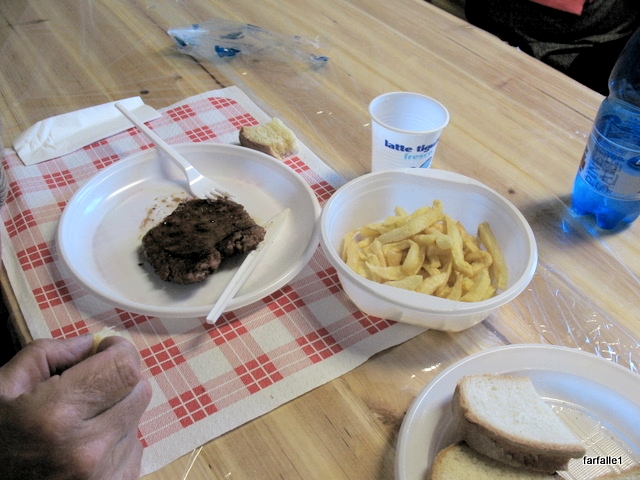
The Captain had sausage and French fries (we were too early, the oil wasn’t up to temperature yet so they were, alas, a big soggy).  I had the trofie al pesto, which is one of the best things in the world to eat.  This bowl was superb.

We didn’t have dessert, which is a pity (but a person can only do so much – do you see how much trofie there is in that bowl??).  The desserts were all home made: a couple of lovely tortas and some cupcake-sized custard, or perhaps pana cotta, in both vanilla and chocolate.

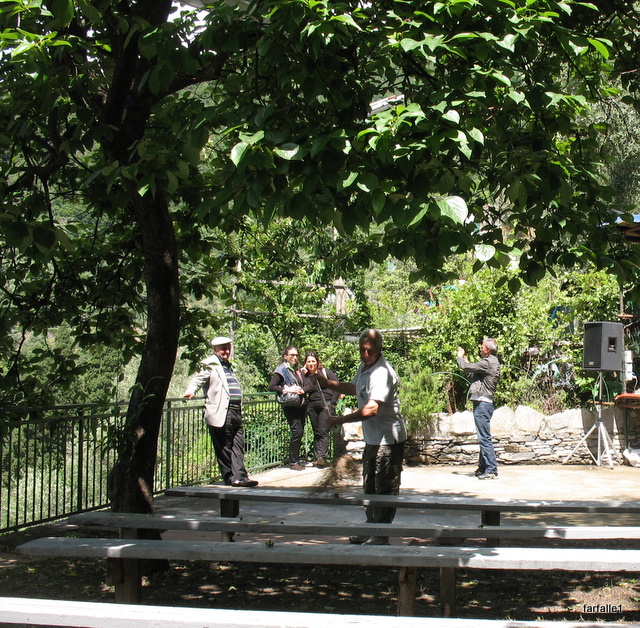
It was small in scale, and the surroundings were certainly modest.  But for all of that, it was a festa, and there was a holiday air about the whole proceeding.  Outside on the terrace one of the men was dancing with a broom between bouts of sweeping. The sun was shining for the first time in days, and everyone’s spirits were high.

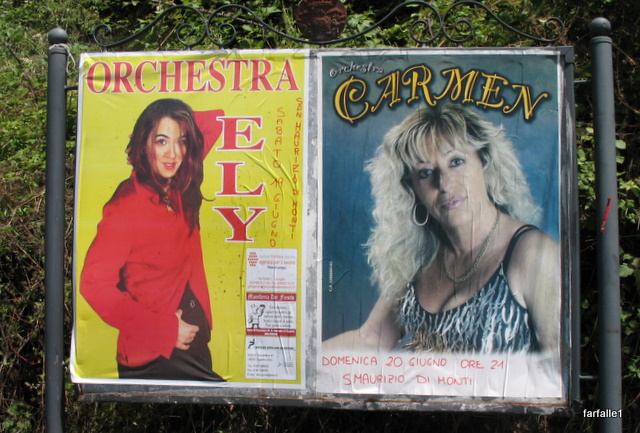
Other men were setting up the sound system for the afternoon and evening entertainment.  All afternoon we  listed to karaoke, which is quite amusing. It’s especially endearing to hear the high croakings of the kids, shouting out the words in a sort of tuneless unison.  It was tempting to go back and belt out a few oldies in English, but I resisted.  In the evenings  there was live entertainment – Carmen!  No, not the opera, the woman.

She came on Sunday; Ely was there Saturday night with her orchestra.  We were all buttoned up in the house because of inclement weather, and never heard a peep – perhaps the performers were indoors as well.

It amazes me that a town of only about 500 people can organize a two-day event like this, at least twice a year, and everything goes without a hitch (well, everything except the weather). It’s a real community effort.   Giuseppe said that, given the weather, the event had been a success and some money had been raised for the fireworks.    Cross your fingers for a fine evening on San Maurizio Day September 22; the Comitato Fuochi deserve it.

Meanwhile, Rapallo is gearing up for the Really Big Festa – 3 days (July 1, 2 and 3) in honor of our patron the Madonna of Montallegro.

Sad Day for Some

Tags

, ,

Rapallo, and all of Italy for that matter,  is draped in crepe after Italy’s upset loss to Slovakia in yesterday’s World Cup game.  Well actually, Rapallo is draped in sun and beach towels, but there is an air of resigned sadness amongst soccer fans of all stripes.

Here’s what’s really good about an Italy World Cup game – you can drive through Rapallo and the streets are eerily deserted and navigation is a snap. We visited a car mechanic’s shop and had to tear him away from his buzzing, humming radio – the radio was fine, it was those plastic horns the fans blow, the vuvuzelas.  Then I stopped with the Captain at his golf course, also deserted.  Inside the club house, though, we saw no fewer than 4 big-screen TV’s, each with a crowd of men (only men!) watching and offering unsolicited and unheard advice to the players and coaches.  Then I went to the local AgriTech to buy some plant food – the radio was on very, very loudly – more swarms of bees.

It seemed there would be no one at exercise class, either – I arrived about 10 minutes before it was due to start.  2 minutes later the game ended and 5 minutes after that about 15 other exercisers streamed in.

Following football is a national pastime in both the U.S. and Italy, though the games followed are completely different.  Here’s another difference between the two countries.  We were in Arizona when the Phoenix Cardinals won a berth in the Super Bowl XLIII (2009).  It was absolutely quiet all around the town immediately after the game.  Here, if Italy so much as scores a goal in a world cup match the town erupts in noise – shouts, car horns, cheers.  The enthusiasm is infectious and very, very loud.  Kind of like vuvuzelas but without the plastic.

So now we will all be sad for a few days because we’re out of the Cup race; then we can begin watching and waiting for 2014, when surely Italy will once again be a contender.

Old Dogs, New Gardening Tricks

Tags

,

When in Rome, do as the Romans – how many zillions of times have we heard that expression?  Enough to be thoroughly sick of it, for sure.  Wouldn’t you think that after all the repetition the meaning of that irritating nostrum would’ve sunk in?  Well, in terms of the garden, this year it finally did for us… after a mere eight years.

We’ve served our time trying to pry vegetables from the rocky New England soil, and were more or less successful, depending upon how early in the season our enthusiasm flagged.  But New England has nothing on Italy when it comes to rocky soil.  Here it might be more appropriate to call it soily rocks, at least in our mountainous zone.  Doesn’t matter.  Make a cutting of something, anything, drop it in the ground here and it will probably grow very happily.

Which reminds me of a funny digression.  We lived for years in the Icebox of Connecticut, not far from the much larger Torrington, a manufacturing town with a large Italian population.  One day my husband brought a client from Torrington over to see our garden.  This gent, a gnarly, deeply tanned gardening pro took one look at our efforts and said, “You’ve got too many stones in your garden.”  “Well, how should we get them out,” my husband asked.  “That’s easy,” the old fellow replied.  “Every evening send your wife out and tell her to take all the stones out of one row.  Soon enough she will have done the whole garden. Then she can start over.”  I took a dim view of this plan, and it was never put into effect.

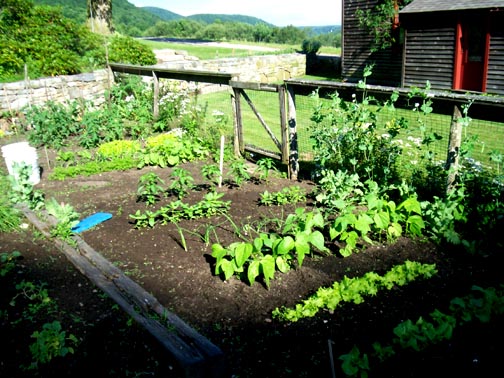
Anyway, it was not difficult to adjust to the soil conditions here, and we blithely chose our largest fascia (terrace) for our vegetable garden, and for eight years planted much as we were accustomed to in New England: in rows like this

(This is a photo Hatsy Taylor took of her veggie garden in East Canaan, Conn, which she has kindly allowed me to use.)

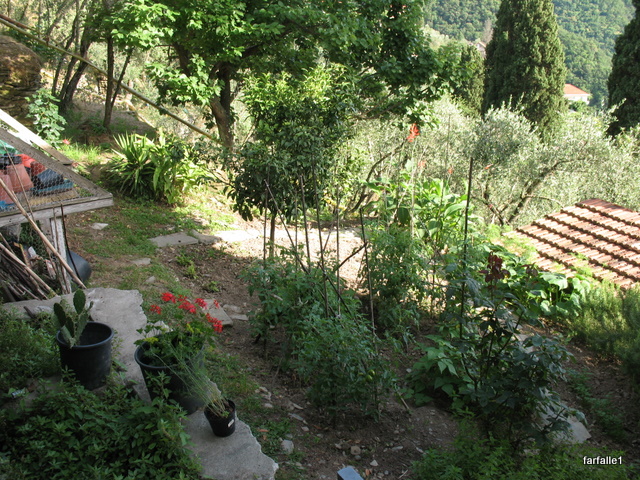
The problem was that our largest fascia is too shady. (We have six fascie, measuring anywhere from 3′ – 20′ in width; most are about 9′.)  For starters there is a large palm tree that takes a lot of the morning light.  Then we planted an orange tree right in the middle of the space because it is pretty there – more shade.  The house blocks the sun from mid-afternoon on, so all in all our poor veggie garden got about 3 hours of sun a day.  Nonetheless we were able to grow enough tomatoes to make all the sauce we need for a year, as well as a pumpkin or two, some cukes, beans,  lots of herbs, some roses and flowers for cutting.  We were never successful with zucchini, oddly – probably due to the amount of shade.

Our neighbors here on the steep slopes of Montallegro use their limited fascia space so intelligently.  They plant narrow strip gardens facing the sun, just in front of the stone wall that supports the fascia above, sometimes even under their olive trees, which make only dappled shade.  It makes so much sense!  The wall behind offers support and holds and reflects the sun’s warmth.  Weeding is ever so much easier (should one actually decide to do it) because every ‘garden’ is one, or at most two, rows deep.

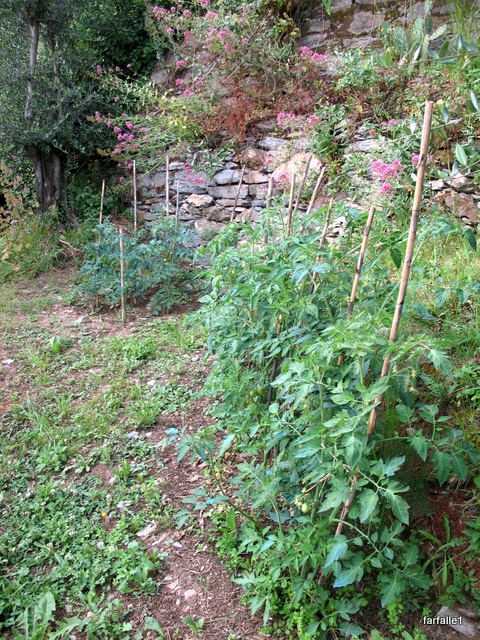
This spring the Captain took a pickax to the land in front of our sunny walls, and we now have four new strip gardens.  On the top level we have two plots of tomatoes.

They are growing like crazy  – partly because of all the rain we’ve been getting, but also because they love the warm soil in front of the wall.

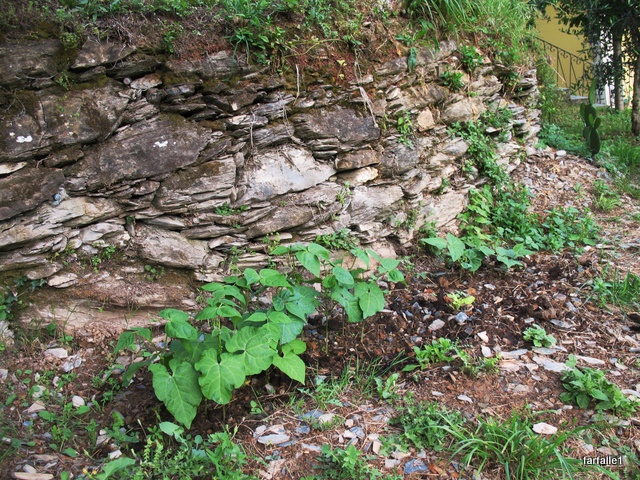
The next level down is not so satisfactory.  The ground was stonier than normal, so it was hard to make a good bean bed.  The ones that came up (both bush and pole) are doing fine, but probably only 30% germinated, in spite of a healthy dose of bagged manure. (moo pooh?)

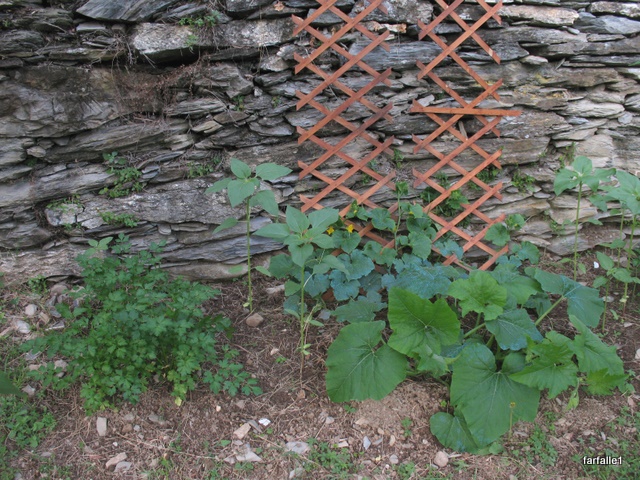
The next level down is my favorite because it is so mixed.  In one spot are three leftover tomato plants.  Then there is a small strip with cucumbers climbing the trellis that used to keep Luciano from wandering off our terrace, with some bushy pumpkins in front.  Parsley flanks these climbers, with some giant sunflowers thrown in just for fun.

None of it looks like much now, but it’s all growing by leaps and bounds.  Already  teeny tomatoes and cucumbers have formed, and every day each plant looks about 6″ taller.

So, what’s happening with the old garden?  The Captain planted a lot of ground-cover, but the seeds all washed away in the two weeks of rain that followed; we’ll replant, probably in the fall.  He also has constructed an elegant new compost area, and has almost finished a new potting table.  It will be a cool and shady area in which to relax on all those hot summer days we’re waiting for.  Thyme, marjoram, mint, sage and rosemary are still happily ensconced there.  Dill, cilantro and basil like it hot, hot, hot, so they are growing in pots on the terrace.

By the way, there’s another family that’s doing some interesting gardening this summer, but I see that with their luxury of flat space they are using the more traditional layout:

I’m guessing Michelle and Barack have a bit more help with their garden than we do with ours.  Yes, our new garden strips are working really well, but yes, it’s a lot more work to get water to four places instead of just one.  But you know what they say… when in Rome…

Proud Ruins

Tags

,

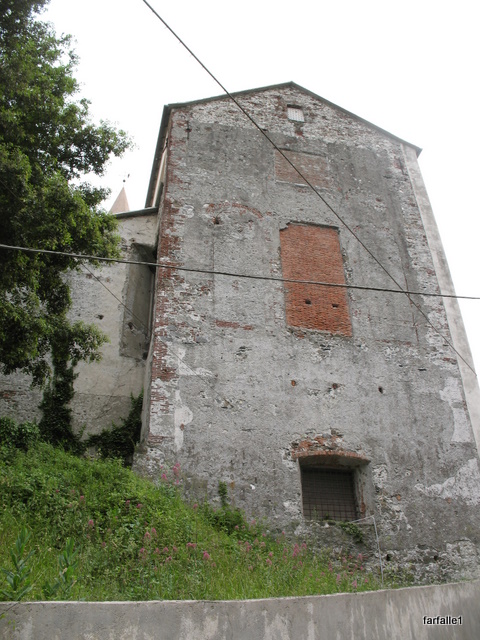
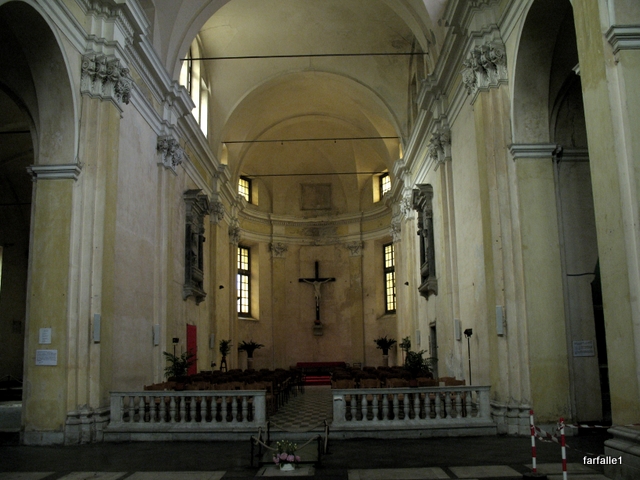
Not all churches are created equal. In fact, not all churches are simply churches, as is the case of San Nicolo del Boschetto in the Val Polcevere section of Genova (outside the old city walls):

San Nicolo is actually a former Abbazia, or Abbey, which for centuries served as home and place of worship for anywhere from a dozen to eighteen or so monks. It was officially recognized by Pope Martin V in 1415 at which point it was nothing more than a simple chapel and a rustic building, both given to the Benedictines by the heirs of Magnone Grimaldi (yes, that Grimaldi family; there was an important branch of the Monagasque monarchy in Genova). What’s interesting about the above photo is that the exterior of the structure is rectangular; the interior is in the usual churchy curvilinear form, and there is empty space between the interior and exterior.

In the succeeding two hundred years it became a complete and lovely monastery, its Abbot an man of local influence in matters both spiritual and worldly.

And just who was San Nicolo?

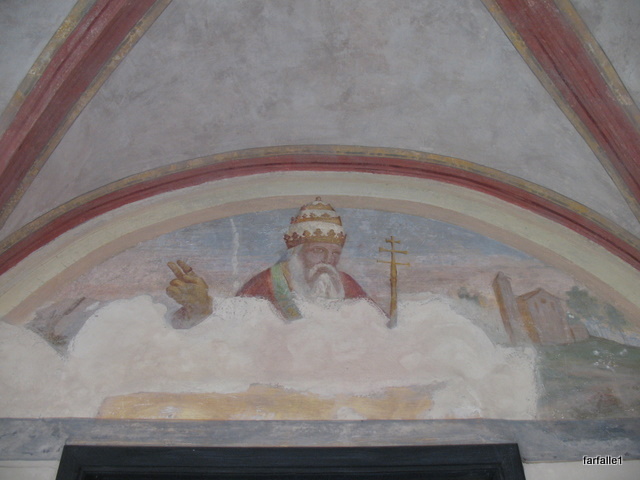
Santa Claus!  Though as is usually the case with saints, the story is complex.  As patron saint of sailors it is not surprising to find a chapel dedicated to him in Genova, one of the most important ports of the peninsula. Don’t you love the hat?  And the rustic depiction of the Abby behind him?  And the staff that looks like a telephone pole?
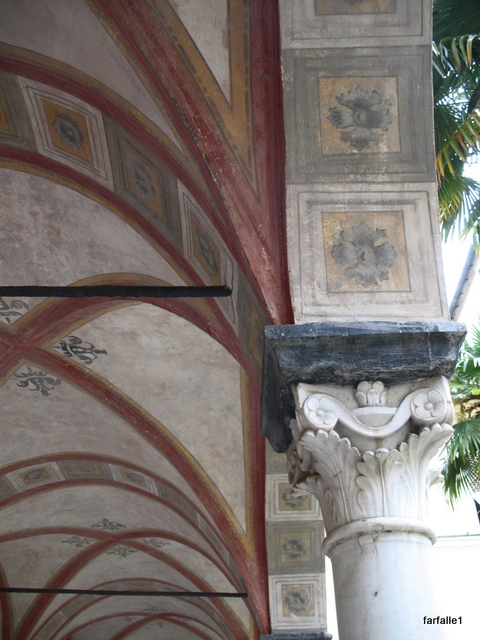
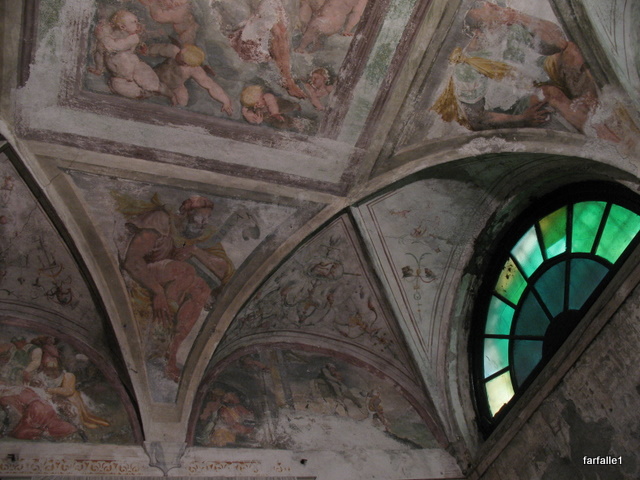
This photo shows the ceiling of the walkway that surrounds the interior courtyard, with much of the original fresco work amazingly still intact.

Under Napoleon and the Kingdom of Italy (early 19th century) many monasteries were confiscated. San Nicolo passed into private hands; the new owners stripped the church of everything of value which could be removed. For that reason the church is uncharacteristically simple inside.

No crystal chandeliers, no dark oil paintings of saints, no ex votos – even the original altar was removed from this main chapel.

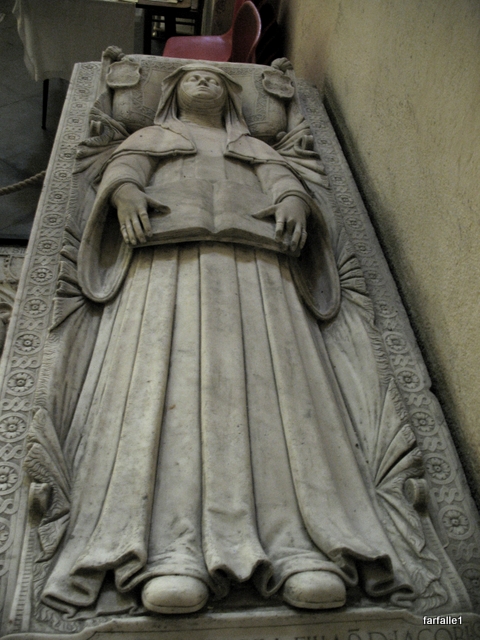
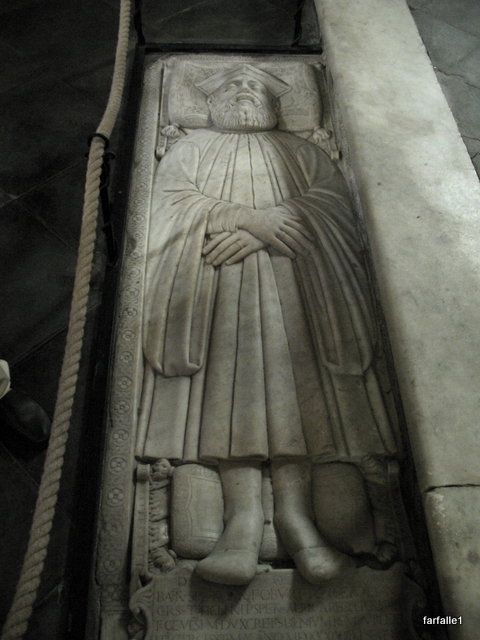
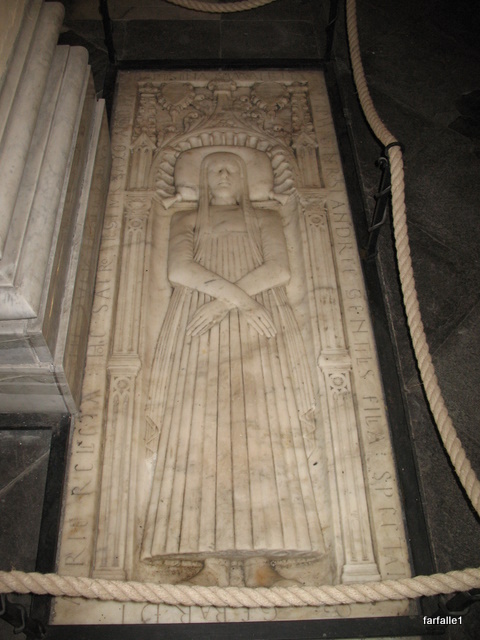
What couldn’t be removed and what is one of the most interesting aspects of this chapel is the many stone portraits of the people entombed below.

Unfortunately I was not able to understand much of what our very lively and informative tour guide Franco told us – my Italian simply wasn’t up to it, alas.  So, though he had a lot to say about the tombs seen above, I cannot pass it on to you.  Each of them has such character and personality, though; and of course it’s always interesting to see the dress of the day.

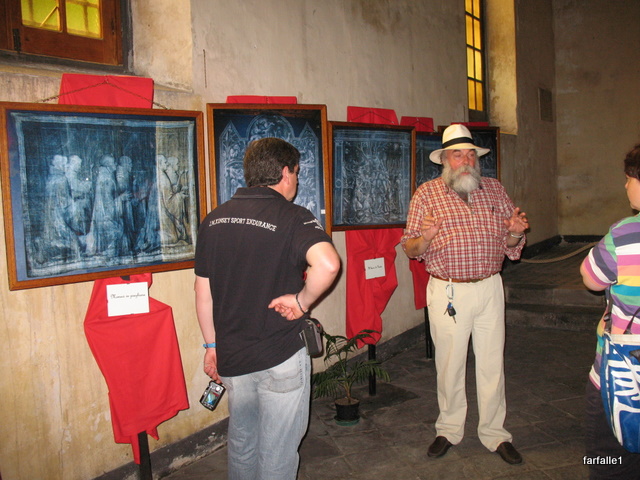
In this photo Franco is standing in front of photographs of sacred art that was made on denim cloth and which originally was on the walls at San Nicolo, but is now housed in another church.  (Jeans trousers were first made in Genova (the French word for Genova is Genes; denim was invented in Nimes, France, and was called Serge de Nimes, later shortened to denim).

This is the oldest chapel of the abbey; it still has a lovely altar decorated with inlay.

There is one of those eye-teasing geometric floors in the newer central (and now main) part of the chapel. How complex the pattern and cutting are to fool us into thinking the floor might not be flat. Is there a single right-angle there?  Watch your step!

Most of the abbey has not yet been restored, but some small part of it has, principally the so-called Sale Capitolare, the room in which the Abbot met to discuss important matters with visitors.  To me the restoration seems garish, but perhaps the colors were just this bright when they were originally applied 500 years ago.

I find the cracked and peeling old unrestored parts of the church much more pleasing, if only because they are more subtle and, like some others of us, don’t mind showing their age.

There are a zillion churches, abbeys, retreats, convents and so forth in Italy, and of course there is never enough money to take care of all of them.  For every San Marco there most be a dozen San Nicolos, churches that were never terrifically important and that through a series of historical tricks and fate  have fallen on hard times.  But each has its own fascinating history and its cast of colorful characters, and it’s always a pleasure to make their acquaintance.

Hidden Treasures

Tags

, , , , , , ,

On a recent walk up the hill from our house I noticed these two flowers hidden in the growth on the side of the road.  My first thought was, I must go home for my trowel!  But my second, and prevailing, thought was, these will never survive in our sunny garden; better just to leave them.

This one almost escaped my notice because of the unusually dark color of the flower. Isn’t it great??  How and why did it ever evolve into such an unusual shape?  Why the ominous color? Is it a meat-eater?  It reminds me of jack-in-the-pulpit’s evil twin.  I was able to identify it – it’s called Aristolochia rotonda, which somehow doesn’t make me feel like I know it better than I did before. It’s not a name that’s going to stick in my mind, that’s for sure, though one of its nicknames, Fat Hen, might.

I so want this one to be an orchid, and I’m pretty sure it is, but I’m not positive. It has a smooth straight stem and lovely speckled leaves. It looks almost exactly like the picture in the book of Dactylorhiza maculata (Orchis maculata) – an orchid! – but the leaf arrangement on the stalk is a little different than my book shows.

Anyone know what it might be for sure?  Whatever it is, it needs a catchier name than Dactylorhiza… Heath Spotted Orchid is mentioned on web sites, but something zippier, like Fat Hen, is required, no?

A week after the above walk we took another jaunt to the same general area.  The flower immediately above was still in evidence, but the Aristolochi had faded into the general undergrowth.  Instead we found this complex treasure:

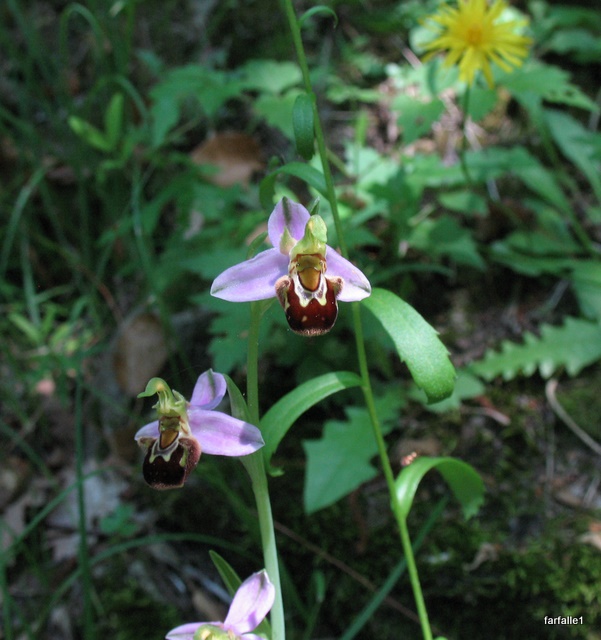
It is Orchid Ophrys, also known as the Bee Orchid for its fuzzy shoulders and beguiling (?) face.  According to the linked article this clever flower practices sexual deception to be pollinated.  Unwitting bees think the flower is the bee equivalent of Marilyn Monroe and get all excited and dive in.  The article suggests it is a chemical substance that attracts the bees, but I think it far likelier that it is the flowers demure lace collar above an obviously ample bust that drives them wild.   Who knew there was such drama going on amongst the hidden treasures?

PS – an alert reader commented that there was a good article on Orchid trickery in the National Geographic.  She was right.  The article is here, and it’s fascinating.  Thank you, Elora.

Where there’s fire, there’s smoke…

Tags

At least that seems to be the case in Italy.  And there are plenty of fires. About a year ago I wrote about our neighbors’ smoke and how distressing it was.  Things have not improved.

The other day the Captain returned from a day at his labors to find a very unhappy Expatriate.  Our neighbors below began burning about 7 in the morning, and continued non-stop until 8 that evening.  We wouldn’t mind a bit if they would move their burn pile, but they persist in burning immediately below our terrace… to the point that we suspect they are doing it on purpose (oh how suspicious we are!).  The smoke envelops and seeps into the house and soon everything smells smoky and some of us get sore throats.

The Captain, after barking down at the neighbor and receiving some barking in return, decided that Enough was Enough.  The next day he visited a friend at the Police Station and was given the supposed rules for burning.  They are strict to say the least: one may burn between midnight and 6 a.m.  One may not burn less than 50 meters from another building.  One may not burn at all in July and August.  And my favorite: one may not produce any smoke from one’s fire.  Amen to that impossible rule!

Regulation in hand the Captain sought out our neighbor S.  It is his land that surrounds us, and his cuttings that are burned under our noses, though it is not he who does the actual burning.  That is done by his brother-in-law and sister.  The Captain waggled the rules under Sandro’s nose and said, “Listen.   We don’t care if you burn from dawn to dusk, but please just move your pile so that our house is not engulfed in smoke for days at a time.”  “I’m not the one burning,” replied S helpfully.  “I know,” said the Captain, “but you are the family’s representative aren’t you?”  Bingo.

Photo courtesy of http://www.lucanianews24.it

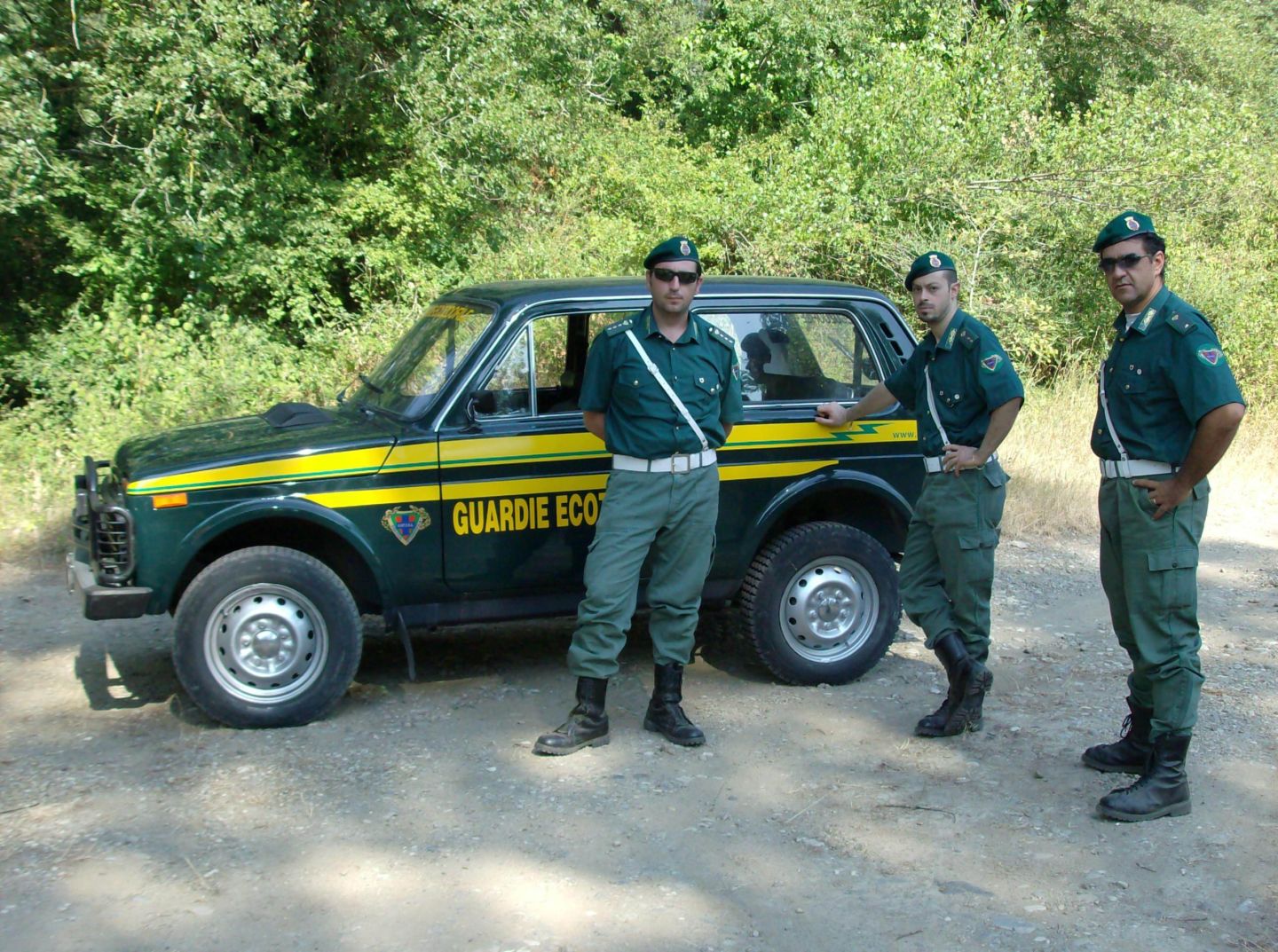
S took a look at the regulations and said, “Ah, but these don’t apply to us because we have an ulivetto, and we are allowed to burn whenever we want to maintain the orchard.  And it’s not the police, but the Forestale (forest rangers) who regulate this kind of burning.”  We’ll see about that, thought the Captain, and the next day marched down to the office of the Forestale in Rapallo, only to find that they receive the public only on Fridays from 9 to 11 a.m.

Except they don’t.  He returned on Friday, and the office was locked up tight as a drum.  Numbers for the Chief are posted, both cell and fax, and the Captain tried to send messages to both, but thus far we have heard nothing in response.

So we find ourselves in the midst of another Italian conundrum.  Who does regulate the burning?  What are our rights and responsibilities as neighbors and as burners ourselves?  A friend has suggested that it may be even more complicated than we think: there may be European Union regulations that come into play.  How exciting!  Maybe we can start an international incident.  In the meantime, there has been less burning down below since the great kerfuffle, and we have been able to enjoy the early summer breezes wafting through open windows.

Rice addendum

There are a couple of great books out there about rice in all its mysterious variety.  We have and have used Seductions of Rice by Jeffrey Alford and Naomi Duguid (2003) – it is exhaustive to say the least, and a great addition to any cookbook collection. Alford and Duguid travel the world for their food research, and they take gorgeous photographs as well.  I don’t think they missed a grain of rice in their studies.  Another, which I have not seen, is The Rice Book by Sri Owen.  Written in 1993 it has a lot of great reviews and has gone on my Amazon wish list.

Rice!

Tags


You’ve got to love any food that can be served for every course of a meal.  Rice is just such a one.  You can have your cheese ‘befores’ on rice crackers, eat risotto for a first course, serve rice with the main course, and enjoy rice pudding for dessert.  And of course it is all washed down with delicious sake (rice wine).

Unless you live in a rice-growing region you may think, as I used to, that rice grows in grocery stores in bags labeled “Carolina”.  But of course it doesn’t; it grows in rice fields which, in this season in Italy, are exquisitely flooded with water.  Those of you who read this blog regularly know that I’m a huge fan of Piemonte, not least because the scenery around the rice fields is so exotic.

The land, flat as a rice cake, suddenly rears up into snow-capped Alps.  Add the acres of flooded fields reflecting the surrounding trees and mountains and, well, it’s just something that can’t be done justice with a photo.

Illustration courtesy of Botanical.com

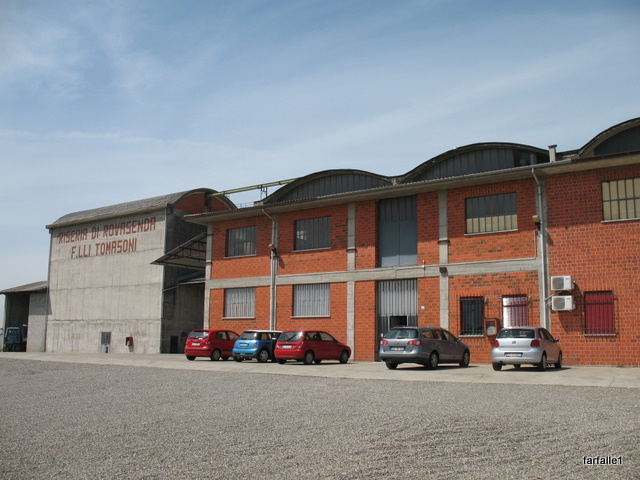
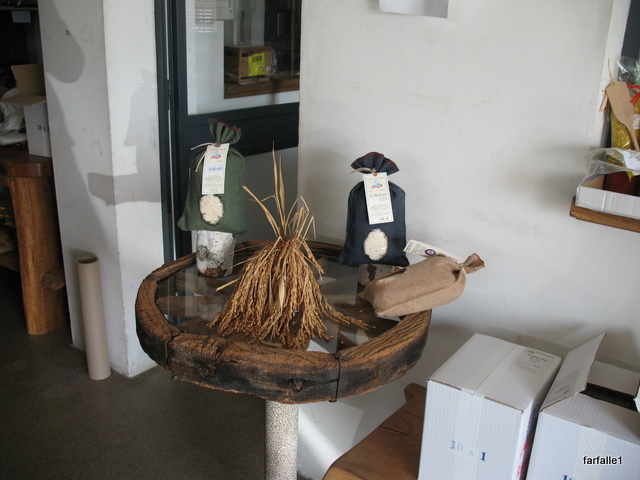
But how does the rice get from lake to table?  Ha.  That’s where Tomasoni Brothers Riseria (and countless other small  processors) come in.  The rice, which is a tall slim grain, is harvested and when dried looks like the brown bouquet in the center of the photo at the top of this post.  The illustration on the left shows all the bits and pieces of the plant. The rice kernels are the seeds, which are produced at the top of the grassy stalks.

When ripe, the rice kernels are threshed from the chaff (and I’m not exactly sure where or how this happens) and the resulting ‘seeds’ are brought to Tomasoni to be turned into salable product.

Here are some of the machines that accomplish this miracle:

The rice is carried into the riseria in huge sacks – we’ve seen this happen in the late summer.  Then it is fed into the wonderful old  machine above from another room.

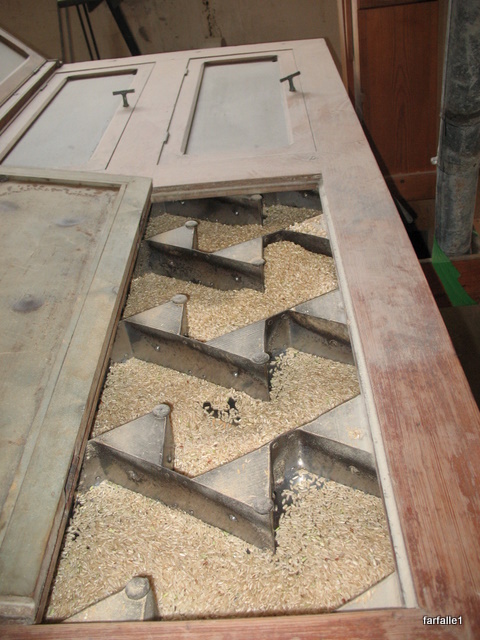
This is the inside of the machine – it engages in some kind of swishy motion evidently.  As you can see, the rice is still brown, that is, it still has its husk.  After it has been swished around a good bit, the kernels fly through some other machines and lose that husk, becoming the white rice we are accustomed to buying to make risotto.

This is the most amazing machine of all and, I suspect, one of the newest.  Each and every grain of rice is scanned by this gleaming device, and if a black speck is detected, that kernel is shot off to another place to become animal food.  Only the unblemished best for us humans!


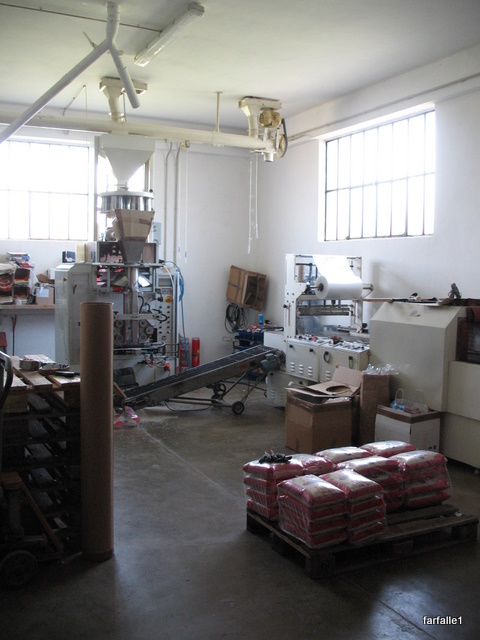
Then all that remains is to package and label the rice. That happens in another room, seen above.  I have no idea where the fabric for the bags comes from, but it is all cheerful and silly.


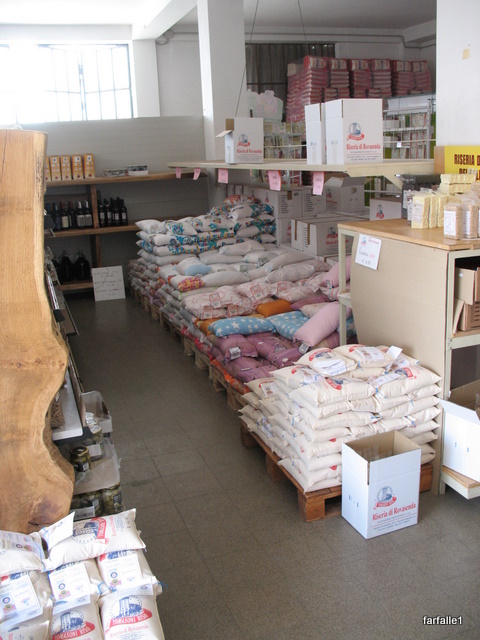
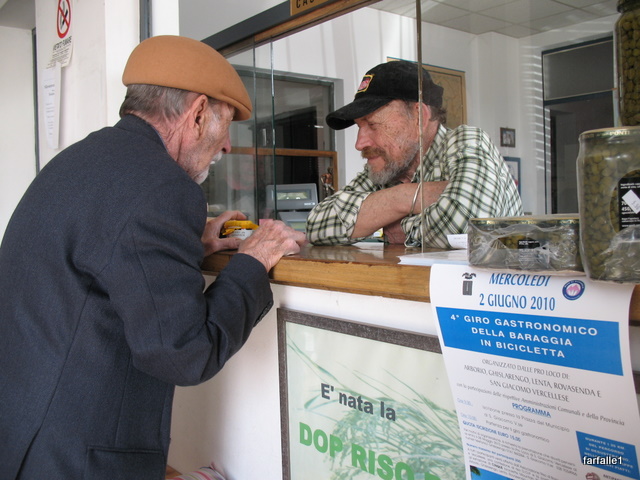
After all the cleaning and packaging is done, one needs only customers to buy the rice.  As is so often and so charmingly the case in Italy, selling has more to do with socializing than with actually taking money and handing over goods in exchange.

And finally, here are the cheerful and helpful brothers Tomasoni, Virgilio and Luigi.  They are always willing to discuss rice, to tell you which is the best variety for Risotto (Carnaroli) or to find a particularly happy print bag of whatever it is you want.  You can find them at their Riseria, which is in Rovasenda, just past Arborio.