CSA

Tags

, , , , ,

Community Supported Agriculture.  Community Sustainable Agriculture.  Take your pick or make up something else.  Whatever you call it, it is big in the U.S.  My sister in Tennessee and my dear friend in Vermont have both joined their local CSA’s. Even in Arizona, where one thinks more of desert or agri-business than vegetable farms, there are a number of CSA’s.

Here’s how it works.  At the beginning of the growing season community members pay a fee to a local farmer.  The farmer can use the money that’s been paid up front to buy seeds, fertilizer, whatever he needs, without having to take out a bank loan.

Whatever the farmer harvests, or some portion of it, is then divided by the number of members who joined, and they, the members, can come once (or sometimes twice) a week and pick up their share of produce.  In the case of my friend in Vermont the fee to join was $200 which entitled her to 10 weeks of harvest pick-ups..
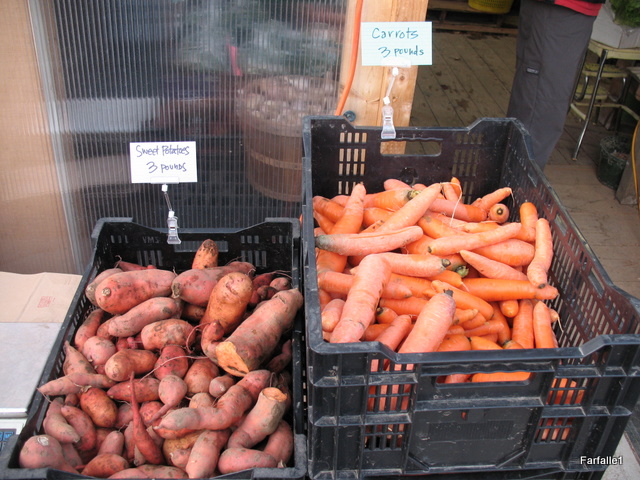

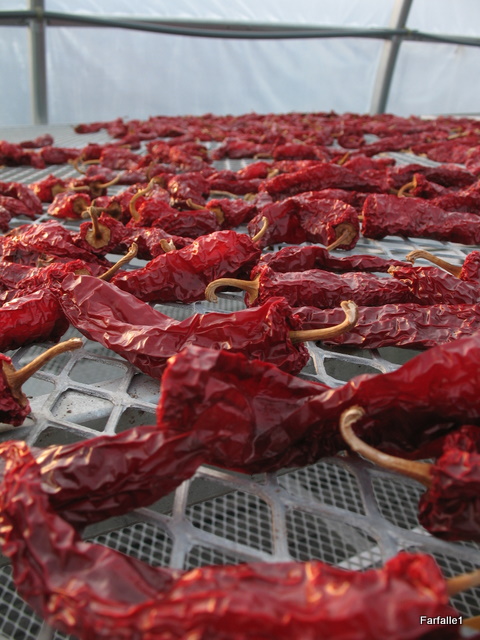
Obviously these are fall crops.  My friend’s CSA was organized for autumn vegetables; the people who own the farm also offered a summer CSA for use at their farm stand. Members could buy summer vegetables and everything else the stand sells (meats, cheeses, plants, honey, eggs) during the four summer months at a 10% discount.

There are probably as many organizational charts and methods of distribution as there are CSA’s.  Mrs. H, here in Arizona, belonged to a CSA for one year; when she went for pick-ups the produce had already been divied up and put in boxes.  She was given a box, over whose contents she had no real say.  My sister in Tennessee went to her pick-up and could tell the farmer what she wanted of the available offerings.  The farmer picked out individual pieces – better, but still not perfect.  The Vermont system seemed best to me; the farmer put a sign above each box of produce announcing the weight of each share.  For instance, each share-holder was entitled to 3 pounds of carrots in the photo above.  She could also take less, or decide not to have carrots at all that week.

There was a large amount of autumn produce on hand the week that I went with my friend; she staggered out with two full bags of locally grown organic vegetables, including onions, carrots, potatoes, sweet potatoes, kale, brussels sprouts and more.

I was able to speak to the owners/farmers of my Vermont friend’s CSA, Jon and Courtney of Woods Farm in Brandon.
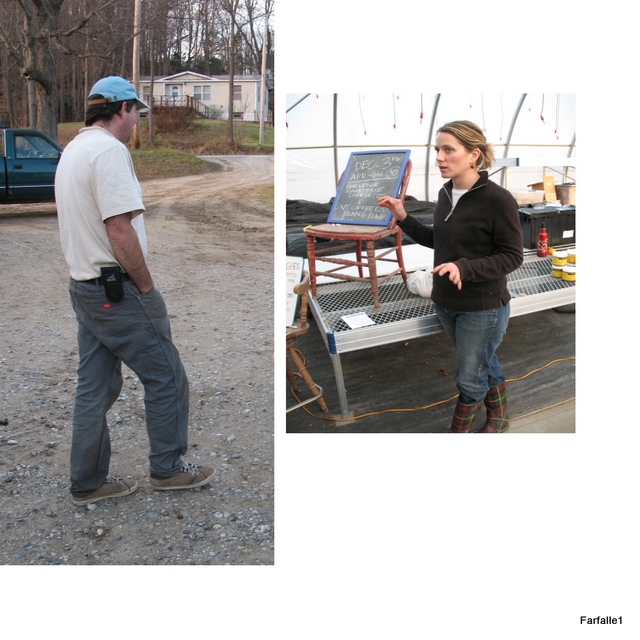
Jon moved to Vermont from Massachusetts in 2000 to farm the fertile river valley; Courtney came for a job on the farm and ta-da, partners in the fields and partners for life.  They have 25 of their own acres of light, productive soil.  In addition they lease 35 acres, 15 of which they put in alfalfa and 5 of which they put into sunflowers (a less than successful operation this year because of excessive rain). This was the first year they offered the summer CSA program at their farm stand – it was more successful than the sunflower crop; they had more subscribers than their goal.

CSA’s appeal to people who are interested in knowing where their food comes from.  There’s been a huge growth of the ‘localvore’ culture in the US, and CSA’s both feed and profit from this movement.  I haven’t seen anything like this in Italy, although there is such a strong tradition of local markets be begin with, there may be no need for such a thing.  But for Americans, who are accustomed to buying veggies that have been trucked in from hundreds, or even thousands, of miles away, the CSA’s offer a winning formula for everyone.
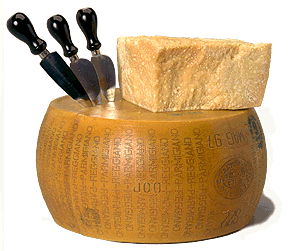
Cutting the Cheese

This photo belongs to Parma Shop.It

Before leaving on our trip we stopped at Rapallo’s very popular Ekom market to pick up some Parmigiano Reggiano cheese to bring as gifts to the U.S.  (Yes!  It’s legal to carry it in – just be sure to declare it on your entry form and go through the quick Dept. of Agriculture scan at customs).  When I grew up this comestible was known as Parmesan Cheese, or, more simply, grated cheese, and was consumed only on those infrequent occassions when we ate spaghetti for dinner (never called ‘pasta’ then).

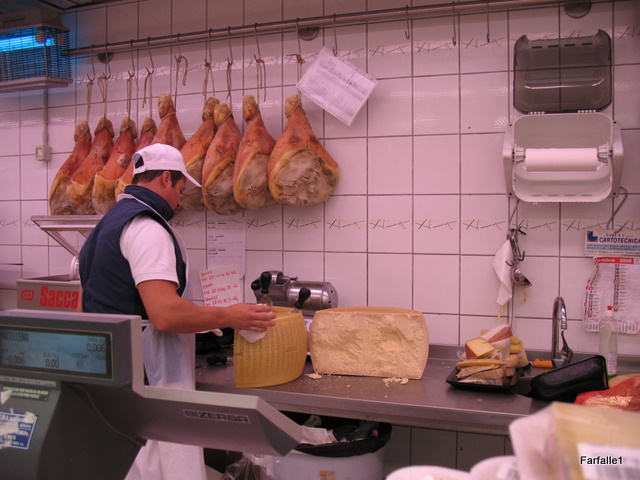
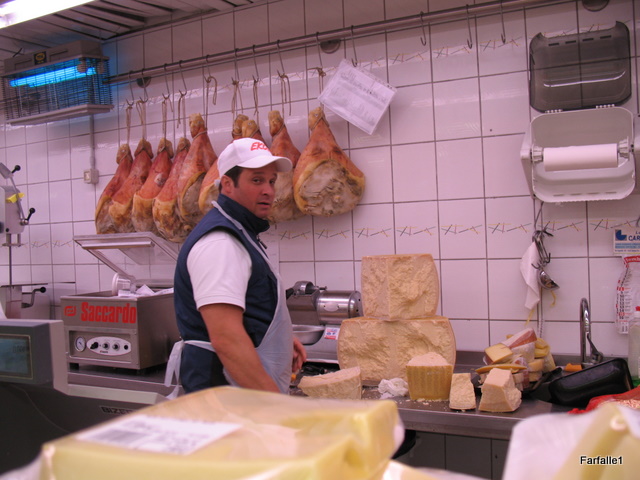
Ekom was out of Parmigiano, but were expecting it early the next morning, so I left an order for 6 pieces, vacuum-sealed, for mid-day.  I showed up at the appointed hour, but alas! Roberto had not had time yet to cut the cheese.  Which worked out well, because I had never seen how a Parmigiano is opened before, and it is quite amazing and labor intensive.

The purloined photo above shows the main tools used to crack the beast.  It is never cut, either with knife or wire, but rather is split, much as cord wood is split for fuel.

An aside: the Wikipedia link above to Parmigiano Reggiano has some great photos of the cheese being made, and gives the history and details of this delicacy, so I won’t repeat them here, other than to mention the average wheel of Parmigiano weighs about 80 pounds.  Just so you know.  It’s very heavy.

The first step is to score the thick, tough rind of the cheese.  This is done using a short knife with a short little hook at the end where you would expect to find a point.  Roberto went across the middle of the top of the cheese, down the two sides, and across the bottom.  He wiped all the cuts, and then recut, a little deeper.

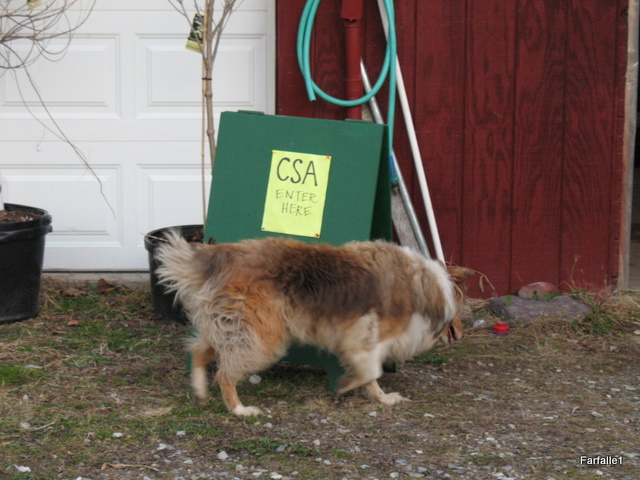
Excuse mis-focus, please. But you have to admit, good shot of the yellow sign.

He then used one of the triangular shaped knives that you can see best in the very top photo, and, using his mean tenderizer as a hammer, pounded it into the marks he had made with his hook. He did this all around this cut. Then he used a longer knife and pounded that it, and finally he was able to separate the cheese into two halves.

All of the cutting is accompanied by a great deal of wiping with a cloth.  The exterior of the cheese is extremely oily, which makes it slippery and all the more difficult to work with.

This scoring, wedging and splitting process is repeated a number of times until usable pieces of cheese begin to emerge from the block.  It’s a bit like sculpture, I guess; the cheese wedges are in there, you just have to cut away until you find them.  Roberto did resort to an ordinary knife to cut off one edge of rind as I requested.  It’s much easier to use Parmigiano in the home kitchen if it has only a side rind and is all cheese at top and bottom.  By the way, cooking the rind in a minestrone or other soup can add great flavor, and if your teeth are good it’s even fun to chew the rubbery thing, assuming it has cooked long enough.

The final step was putting each wedge in the vacuum machine and sealing it up so none of its goodness would escape on its long trip to the US.  It took over 30 minutes to pull my 6 pieces of cheese from the giant wheel, and it looked like Roberto had at least another hour or so of work ahead to finish the job.

All the cheeses we carried over arrived undamaged, and people seem to like them.  We did keep one for ourselves.  Of course.  We’ll eat it on spaghetti.

A Really Good Thing We Ate This Week – Hilary’s Spicy Rain Forest Chop

spicy rain forest chop

Some years ago our dear friend Hilary decided that we needed to eat in a more ‘heart-healthy’ way, and she sent us a recipe that she really liked to get us started on the road to salvation.  There’s something about the words ‘heart-healthy’ that simply sounds unappetizing, at least to me.  I know we want our hearts to be happy and healthy, but can’t we simply describe the appropriate food as ‘hearty?’  That sounds much better, conjuring up, as it does, great vats of steaming stew, mountains of fresh bread still warm from the oven with lots of butter gently melting into the slices.  Maybe I’m missing the point, I hear you mutter. Well yes, maybe so.

We decided to give Hilary’s recipe a chance, though, or rather the Captain did, as he is the Chef of All Meals in this house.  He perused the ingredients (chicken breast, vegetables and spices) and commented, “She’s left out the most important ingredient.”  “What’s that?” I asked.  “The sausage,” he answered “This is a recipe that wants sausage.”

He was right.  He made it his way (you’ll find the recipe here and over on the right under ‘recipes’) and it was delicious. We revisit this dish every autumn when the winter squashes are in.  This year we used half of our pumpkin crop (1 pumpkin) instead of the squash, which proved to be a happy (and healthy and hearty) substitution.

Where did the name come from?  I have no idea.  When Hilary sent us the recipe it was called something like “Heart Healthy Stew.”  The Captain gave it a new name, and Rain Forest Chop it now is.  And oh yes, Hilary likes it better our way, too!

Free Kibble X 5 for Hungry Dogs and Cats

Tags

, , , , ,

free kibble nov 5

In April, 2008, 12-year old Mimi Ausland founded Freekibble.com in an effort to help feed dogs (and latter cats) in Oregon animal shelters.  With two pet-food makers as partners, Mimi and her friends think up fun trivia questions every day, one on the subject of dogs, one on the subject of cats.  Each time a person plays the game, 10 pieces of kibble are donated to animal shelters (the answers do not have to be correct, luckily).The success of Mimi’s website has been astonishing (over 1,700,000 meals earned since inception), and now she is helping feed animals all across the U.S.

On Nov. 5, each trivia player will earn five times the usual donation – so if you like dogs and/or cats and you’ve never played Freekibble, why not give it a try by clicking here?  I get a daily e-mail reminder, and it takes less than a minute to play.  10 pieces of kibble doesn’t sound like much but it adds up quickly.  Here’s a picture of Mimi with one of her friends:

Mimi-Ausland_med

You don’t have to be in the U.S. to play… and who knows, maybe one day Freekibble.com will expand to Italy…

Cinquecento

Tags

, , ,

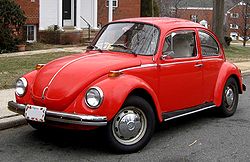
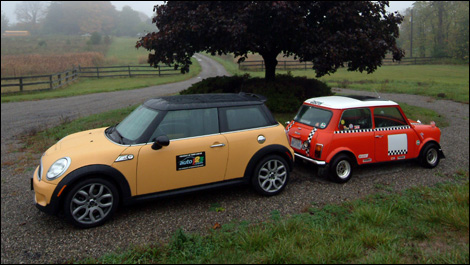
Most countries, it seems, used to have an automobile that in some way expressed the national character: the Germans had the uber-efficient BMWs and the VW Beetle, the Brits had the Mini Cooper (much favored in rally driving and now newly reborn as a BMW), the French had the quirky Deux Cheveaux (nicknamed The Ugly Duckling), Americans had a bunch of high performance ‘muscle cars’ (GTO’s, Chargers) and their affiliates, the ‘pony cars’ (Mustangs, etc.).  Here in Italy we had the Fiat Cinquecento (cinquecento means ‘500’).

Fiat has sometimes been accused, affectionately I hope, of being an acronym for Fix It Again Tony.  Back in the day this was not unfair, in fact, and the early Cinquecentos did require a certain amount of tuning and repair. But most cars did.  The Cinquecento was originally made in Torino at the huge Fiat motorworks from 1957 to 1975 (I like the number inversion of the dates, don’t you?).  It quickly became ubiquitous in post-war Italy; it was a relatively inexpensive way for the suddenly growing and more urban middle-class to get around. In 2007, fifty years after the first Cinquecento was made, Fiat reintroduced the model, and in 2008 Fiat/Abarth brought out a model with 135 hp, up from the 13 hp (!) of the original version.

What many of these cars have in common, muscle cars excepted, is that they’re all cute.  I realize cuteness is probably not one of the main concerns of car designers, but dang, the Beetle, the Mini, the Deux Cheveaux and, especially, the Cinquecento are all as cute as can be.  Take a look:

Volkswagen_Beetle_

VW Beetle

Deux Chevaux2

Deux Cheveaux, photo from pollyvousfrancais.blogspot.com

minis old and new

Minis, new and old, photo from the MiniCooper News

And where is the Cinquecento, you ask? Well, last weekend about fifty of them were in Rapallo for the 15th annual gathering of  Cinquecentos under the auspices of Rapallo’s  Motoclub A. Olivari.  I decided to go have a look.

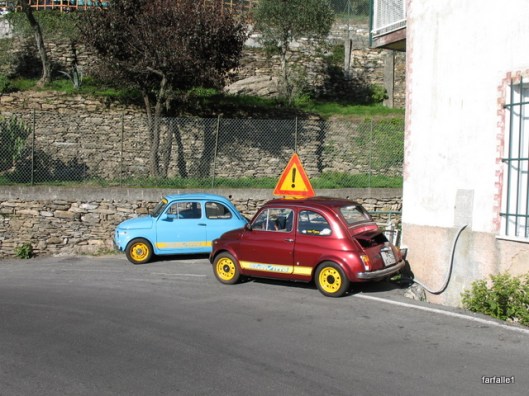
I didn’t have to go far; just around the corner from our house I found a couple of cars parked, the owners undoubtedly enjoying a mid-day meal at either Ristorante Paolin or Trattoria Rosa, San Maurizio’s justifiably famous eateries.  It kind of looks like the red one is plugged into the house, doesn’t it?  It’s not.

fiats

The main event was in the center of town near the port.  One of the best cars there, I thought, was the Cinquecento’s predecessor, the  Fiat Topolino, or ‘little mouse’, which dates from 1950.  It made me think of the phrase ‘saloon car’ for some reason.  The Captain, who does not think of ‘saloon car’ when he sees the Topolino, tells me that backward opening doors like this are called ‘suicide doors’ – you can imagine why.

fiats (16)
fiats (17)
What struck me is the time, effort, and yes, love that the owners pour into their Cinquecentos.  The paint jobs, the interiors, the engines (I’m guessing about the engines) were all exquisite.  Here are a few shots of the some of the cars.  There is a small album here where you will find about fifteen more photos if you’re interested (slide show recommended, F11 for full screen).

fiats (8)

Fancy paint job

The photo above gives a good idea of how small these cars are. Those are ordinary-sized people in the background, not basketball players. Once people are in a Cinquecento, though, they look like giants.

fiats (22)

Call me a cab!

fiats (24)

Strange wiper arrangement

When I originally saw the car below I thought, ‘Aha!  I know what under sign this owner was born.’  But no.  The Scorpion is the logo for Abarth. Abarth was an Italian racing car maker founded in 1949, which later branched out into tuning kits for for road vehicles, mainly Fiats.  In 1971 Fiat bought Abarth. Many of these period  Cinquecentos were sporting Abarth engine upgrades (the engine, by the way, is at the rear of the car).

fiats (21)

It was all too exhausting for some of the participants.  The day was perfect, the sun was warm, and I just have to imagine that someone had finished a fine luncheon not too long before I happened along.

fiats (5)

The new Cinquecento is a very cute car too, in the roundy way of so many of the old-timey cars.  I wouldn’t mind having one; we don’t need a car here, but perhaps someday in the States, if the Chrysler-Fiat marriage can arrange it, you will see this in our garage:

fiats (33)

DST

Tags

It’s over for another year – daylight savings time, that is – and suddenly the sun is going down at 5 p.m. instead of 6.  Well bah!  I guess it’s nice that the sun is arriving in Rapallo an hour earlier, but to tell you the truth, I miss it at the other end of the day much more.

New Zealander George Vernon Hudson first came up with the idea of our modern DST, back in 1895.  He collected bugs and thought it would be useful to have more hours of light for his hobby after his work day ended.  William Willet, a Brit, came up with the same idea independently in 1905.  He was a golfer… need I say more?  DST has been touted as an energy-saver, a boost to the economy, and a public safety boon; you can read a great deal about it here if you are interested.

ThClepsydra-Diagram-Fancye problem of the seasonal Incredible Shrinking Day has vexed people since the concept of ‘time’ became important.  Day – too long in the summer, too short in the winter.  The Romans had a great solution – ‘hours’ were of varying lengths during different times of the year.  The Water Clock, seen at the left,  was a complex device that had a different scale for each month of the year… not very practical for modern life – and imagine what a wrist watch would look like.
Not everyone has bought into the idea of Daylight Savings Time.  Arizona, for instance, doesn’t observe it – but it is the only United State that doesn’t.  How confusing is that?!  Most of Africa has no use for it, and neither does most of the former Soviet Union and part of Australia.  It seems strange in these days of greater and greater uniformity that there would be such a discrepancy in something as important as time.  Must be fun for the airlines.

Here in Italy we go off DST a week or two before the US, which makes it confusing for phone calls.  Just what time is it over there anyway??

I e-mailed a friend the other day, and in a nyah-nyah-nyah kind of way exclaimed that we had gone off DST and I was an hour richer.  She wrote back gloomily, ‘another hour of darkness.’   And it does rather feel that way with the afternoon becoming evening so early.  No matter how you divide it up, the fact is that in the northern and southern parts of the world there is always a part of the year when the days are just plain too short.  Maybe we should all move to the equator.

By the way, for any who have trouble remembering when the clocks go forward and when back, just think about a kitten attacking a string: Spring forward, fall back.

Bersalgieri Visit Rapallo

Tags

, , ,

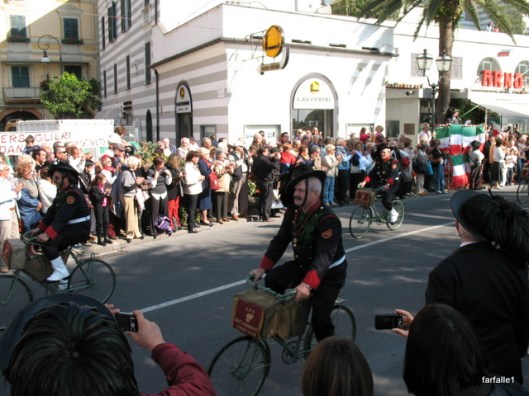
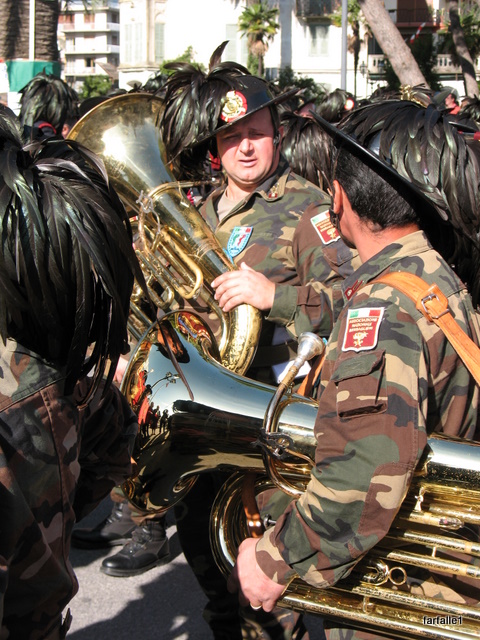
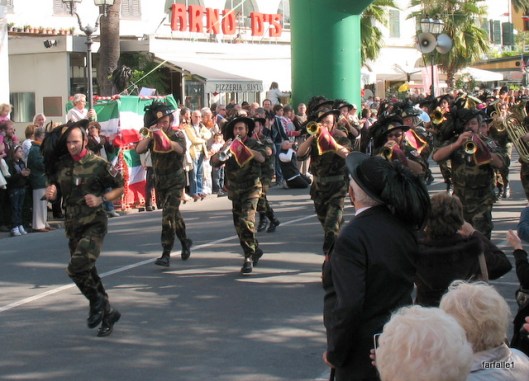
For a couple of weeks the main streets of Rapallo have been criss-crossed with hundreds of little Italian flags.  Why? we wondered.  This weekend we found out: the Bersaglieri visted Rapallo and some neighboring towns for a gathering of the Corps from central and northern Italy.  There were many events around their visit, including a concert on Saturday evening and a parade on Sunday morning.  We were able to go to the parade for a few hours, which made us  swell with pride, if not for being Italian, at least for living here.

pre-parade (10)

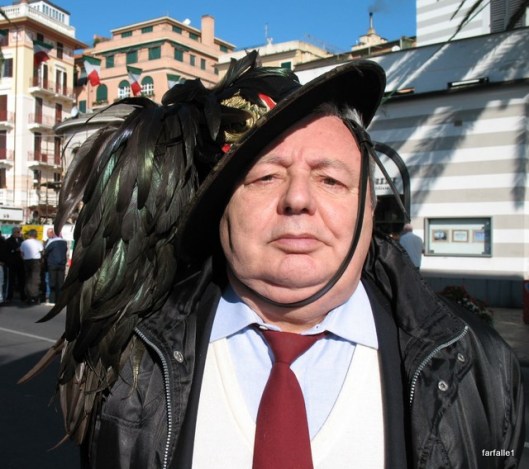
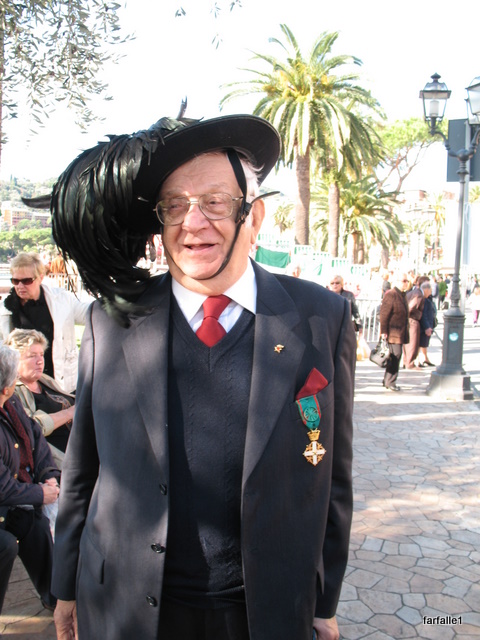
There’s something about a uniform – or at least there always has been for me – and the signature feathers of the Bersaglieri hat are so over the top (oh excuse the pun) that they are divine.  Where did that idea ever come from?  Was it a type of ill-thought-out camouflage?  Perhaps it was to suggest the speed of flight (though wood grouse, the source of the feathers, have never been noted for speed)?  Me?  I think it was simply a Style Statement, and a very fine one, too.

The Bersaglieri were founded in 1836 to serve as high-speed infantry in the Piemontese Army (this was before Italy was unified). Piemonte could not afford a large, expensive horse-mounted cavalry, so instead developed a superb corps of sharp-shooters that featured quick movement, either on foot or bicycles, and later on motorcycles.  The Bersaglieri never walk – they run everywhere, whether in training, in the field, or in a parade. Their demanding physical training made them useful as mountain troops, too; the Alpini, the elite mountain troops, were founded in 1872, and there is still a friendly rivalry between the two groups (there were several groups of Alpini in the parade and some proud veterans watching).  While there have been as many as 12 regiments of Bersaglieri in the past, today there are six, and they are all now mechanized.

pre-parade (15)

In addition to unique headgear and running everywhere, the Bersaglieri are famous for their fanfara, the brass bands that accompany every regiment.  The musicians must be adept not only at playing, but at playing as they run, because they, too, are obliged to run everywhere they go.  The Fanfara from northern and central Italy formed the major part of Sunday’s parade, and they certainly impressed with their musical skill and physical stamina!

parade (18)

During World War II there were both bicycle and motorized troops:

parade (41)

parade (59)-1

There was a huge ovation for the oldest gent on a bicycle – 92 years old and still going strong:

parade (40)-1

And how about the fellow who has to ride a bike AND play the trumpet??

parade (55)-1

I find it very moving to see old Vets watching a parade, and Sunday was no exception.  There were scores of former Bersaglieri watching the parade; it wasn’t always easy to read their expressions.

veteran

veteran (2)

veteran (3)a

veteran (5)

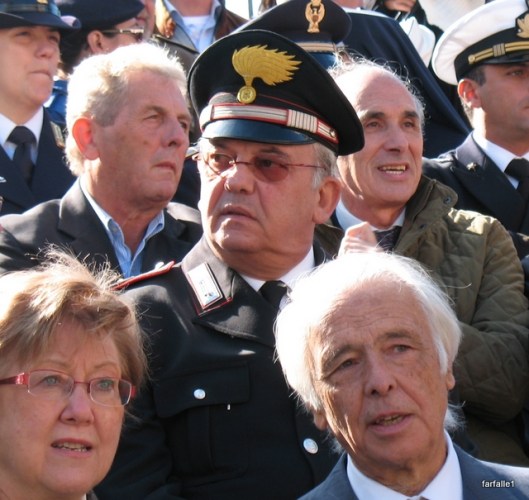
And of course there was a viewing stand full of dignitaries:

dignitaries (2)b

A parade is always fun, and a military parade particularly stirring.  But only in Italy, I think, will you find a military parade that showcases such stamina, showmanship and style in one package: The Bersaglieri.

If you’re interested in some more photos of the parade, you may see them at a web album here.  I recommend a slide show, F11 for full screen.

Colpo d’Aria

Tags

Oh, the dreaded Colpo d’Aria!  If you’ve suffered a Colpo d’Aria you’ve been struck by some moving air, most probably chilly air, and most probably on your chest or perhaps the back of your neck.  If you live in Italy, it can be deadly; ask any Italian!  I’ve heard Colpo d’Aria blamed for everything from stiff muscles, to inner ear infections, chest colds and even heart attacks.  I have not yet heard anyone say that a Colpo d’Aria caused his cancer, but that, and gum disease, are about the only illnesses for which a stiff breeze has not been held responsible.

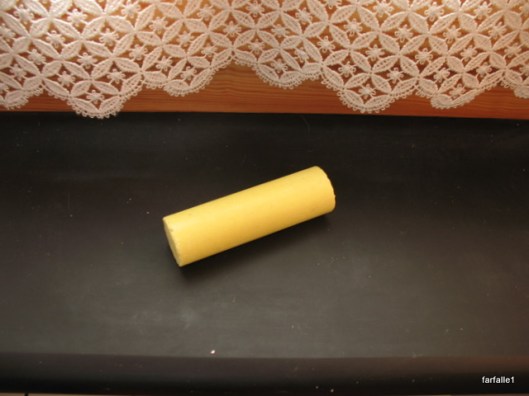
Fortunately there is some good treatment available should you fall victim to an evil air current.  The first thing you want to do is go to the pharmacy and get a bastone di zolfo, a stick of sulphur.

bastone di zolfo

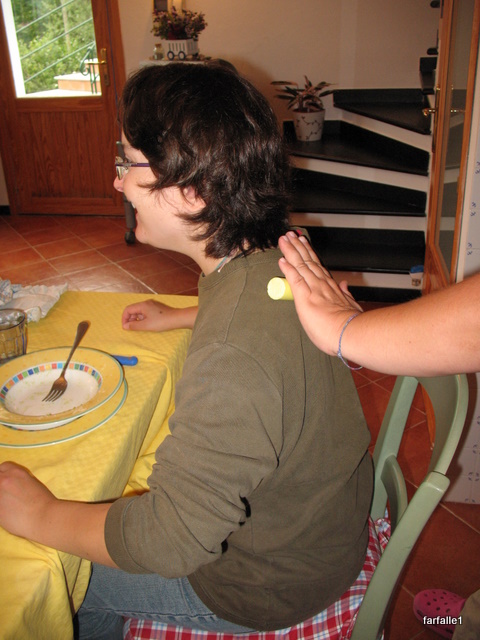
You roll this stick back and forth across the skin of the afflicted area (our model was shy).

bastone di zolfo in use

The great thing about the bastone di zolfo is that when it has outlived its usefulness it crumbles or breaks.  Then you know it’s time to buy a new one.  Evidently the sulphur absorbs… what? moisture? bad vibes? infection?  My guess is moisture, but I wouldn’t swear to it.

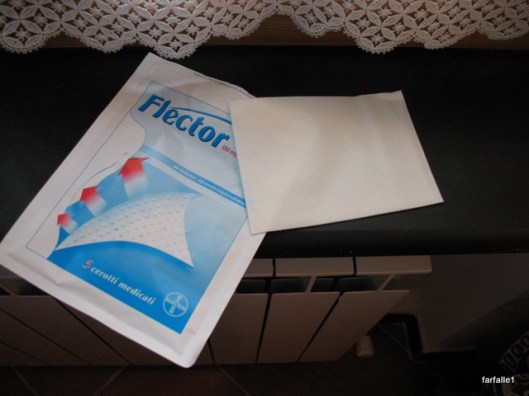
The next line of attack is the Flector patch, a bit of treated rubbery material, about 4″ X 5″,  that is slightly adhesive on one side so it will stick to your skin. It is in the NSAID family of medicine, and delivers a non-steroid anti-inflamatory drug topically. From all reports it also feels good.

flector pads

There are probably as many treatments for Colpa d’Aria as there are sufferers.  My prescription would be a day in bed with an endless supply of hot tea with lemon and honey, and a good trashy novel.  The best line of defense though is always prevention: stay out of drafts!  I grew up sleeping with the windows wide open, and still do – it’s a miracle that I’ve survived so long.  If you live in Italy the only thing worse than a colpa d’aria is a colpa d’aria in the dark.  Many Italians sleep with their windows tightly closed and shuttered.  Also, now that the cool weather has arrived, don’t forget to bundle up when you go out, and remember especially to wear a good warm scarf to protect your chest and neck from the dangerous air currents.

I’m making light of this notion, but I’m not so sure there isn’t a measure of truth in it.  It falls in the category of folk belief, but such beliefs are often based on years of experiential evidence.  I may laugh at the idea of a colpa d’aria harming me, but I have a great collection of scarves and never go out without one in cool weather.  As they say here, ti raccomando!

The Best Thing We Ate Last Week – Baked Stuffed Peaches

Tags

, , ,

pesche ripiene - stuffed peaches

Our friend Leo made Pesche Ripiene (stuffed peaches) for dessert when we visited in Piemonte last week.  They are amongst the best things I’ve eaten, ever, in my whole life.  And they are easy to make.  In fact, they are so easy I will give you the recipe here rather than send you off to another page for it.

Here’s what you’ll need:  peaches, amaretto (or amaretti) cookies (about 3 per peach half, depending on size of cookies and size of peaches), marsalla, sugar, butter

Cut firm but ripe free-stone yellow peaches in half – Leo recommends Elberta. (They are widely available here but nowadays are not as common in the U.S. as they once were).  Chop up the cookies, add some sugar (+/-  1/2 tsp per peach half), and add enough marsala wine to make the cookie stuffing hold its shape.  Overfill each peach half with the cookie mixture and top with a dab of butter.  Put in a preheated (350) oven and bake until done.  The peaches are delicious with this stuffing, and somehow there is a by-product of excellent caramel sauce that can be drizzled over the top (Leo says it comes from the moisture the peaches throw off mixing with the sugar).

Next time you need an easy dessert and peaches are in season, try making stuffed peaches, and then when everyone tells you how fantastic they are, send a silent thank-you to Leo.

leo