You want a purse, lady?

Tags

, , ,

Haven’t you always wondered about the African guys selling purses, dark glasses and CD’s in every town in Italy? Me too! I always imagined there was some kind of Organization of African Vendors, with a capo who brought young men into the country (legally? illegally?) and then directed them where to go to set up shop. This evil capo, of course, would take all the profits, thereby effectively enslaving the fellows doing all the work. And he was probably running all the prostitutes as well.

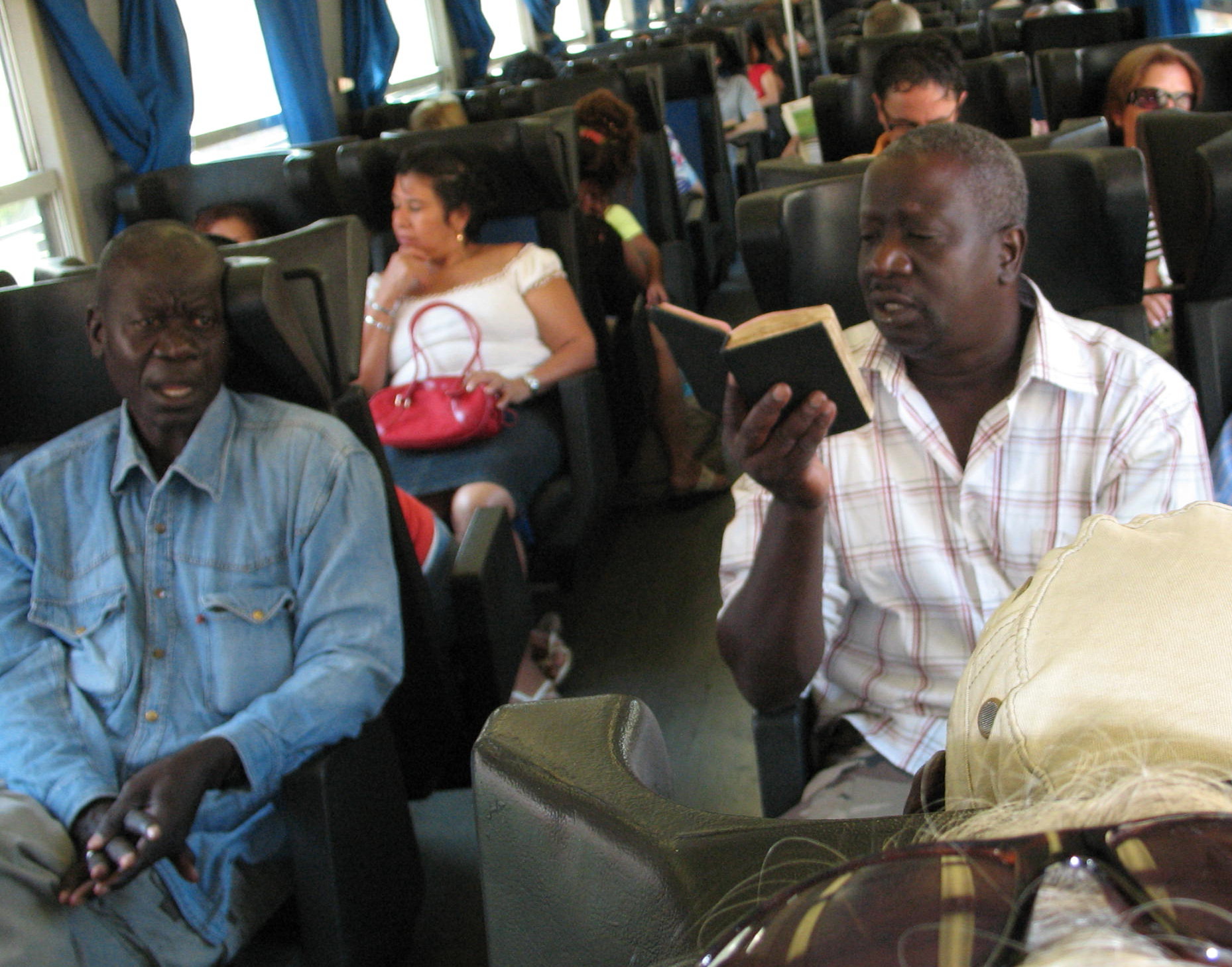
Well, I couldn’t have been more wrong. A couple of weeks ago we were on a morning train from Rapallo to Celle. At one of the stops on the outskirts of Genova a whole bunch of Africans with bags of merchandise got on our car. The most picturesque arrival was a woman in a printed African dress, the kind with a long skirt and a top, with matching turban. She had a huge hand-rolled cigarette dangling from her mouth and an I-dare-you expression on her face – wish I’d gotten a photo (I didn’t dare). I did sneak an in-back-of-me shot of a couple of the gents.

After a pleasant day we boarded our train to return to Rapallo, and I ended up sitting next to a young man, clearly of the African vendor fraternity; let’s call him Franco. He turned out to be about the pleasantest person you could imagine, and didn’t mind my pumping him for information.

So here’s what I learned: Almost all the vendors come from Senegal, on Africa’s west coast (formerly a French colony, so French is the official language of the country and the language used in school). Wolof is the official Senegalese African language, and is the native language of about 40% of the population, though there are many other languages. Franco said it was like the different dialects in Italy – someone from the north of Senegal wouldn’t necessarily understand the language of someone from the south. All these languages are based on a different sound system than western languages – which is obvious when you hear it spoken. Franco had to get off before the language lesson got very far, but we both learned ‘man’ = I, and ‘moom’ = he, she, it. That last raises some gender questions.

There is no empire of vendors under the evil thumb of a capo. All the vendors come over independently, usually joining friends or family members who are already here. Franco chose his selling locale because a friend who had been here for 20 years said he did well there. He commutes daily from Busalla, north of Genova, to Pietra Ligure, west of Savona, for his day of work. In the winter he works in Viareggio, well to the south. Unlike sleepy, beachy little Pietra Ligure, Viareggio is still moderately active in the winter. The things he sells are almost all made in Italy, he said. (I did doubt that.)

What surprised me most was that Franco and his friends are legal entrants to the country. He said that he went to the Italian Consulate in Dakar and got a visa to come to Italy. I believed him, in spite of the fact that some studies suggest that up to 50% of immigrants in Italy enter illegally (Senegal accounts for only about 2.5% of immigrants to Italy).  (There are a lot of Pakistani vendors in Italy, too; they seem to specialize in silver jewelry, fabric items and pinwheels, leaving the dark glasses and purses to the Senegalese.)

Another thing that really surprised me is that Franco buys his merchandise from a wholesaler – actually another Senegalese whose ‘warehouse’ is his apartment in Genova. Far from being told what to sell by someone else, it turns out Franco is an entrepreneur!

He’s been here working for two years, but he does get home to visit occasionally. He would like to work and save for another few years and then return home for good.

How brave to leave your homeland, move to a distant country (though not that distant really – 2500 miles or so, about the same as New York to San Fran), hastily learn enough of the language to harangue passers-by, invest your savings (or money borrowed from family and friends) in a stock of dark glasses, and then go stand under the beating sun to sell your goods. Phew. It’s no wonder Franco has such a winning personality – he has to in order to succeed in his line of work.

Can you hear me now??

Tags

Writer Michael Grant, whose blog I enjoy a great deal (he’s so cranky!) recently wrote about Italian inefficiency, especially as exemplified in the loooong mid-day break for lunch and whatever.  He observed that Italians rarely take the shortest route between Points A and B.

I have to disagree.  It’s not mainly inefficiency that slows everything in Italy to a creeping crawl.  It’s over-regulation, too much bureaucracy, and an unwillingness to let people act on their own initiative.  I can think of many illustrations of this, but here’s a recent one:

Oh, the things we take for granted! For instance, having a telephone which doesn’t sound like your callers are trying to reach you from the dark side of the moon. Lately this is what all our hard-line phone calls have sounded like:

Us: Pronto!

Caller: snap, chhhhhh, bzzt, hissssss, crack, pip, bzzt ffftttttccccch

Us: Pronto, pronto, we’re having phone trouble, can you speak up?

Caller: Crzzzzk grack, snfffff, zzzzt bfft gritz hsssss. beep beep beep.

The last three recognizable sounds are used by Telecom Italia to inform you that your call has been terminated.

The problem started almost (sit down) two months ago when the Captain was at home alone. Being a sensible and intelligent man he immediately called the phone company. They were not very sympathetic; they barked at the Captain for not having put filters on our two telephones: of course we were having trouble, how stupid could we be (never mind that everything has worked very well for five years).

Of course the filters did nothing, so again the Captain called Telecom, and this being Italy a technician moseyed on over a few days later. He opened a box, found a junction thingy (technical term) and a lot of mud. He removed the latter, replaced the former and declared us back in business.

Except we weren’t. Things were slightly worse. About the time I got home the second technician moseyed on over and crawled around on the floor under the computer (had to try again with those pesky filters – they didn’t work for him either). He then went down to an inside junction box, disconnected and reconnected a lot of wires, declared himself puzzled but confident the problem was solved, and left. Not only was the initial problem unsolved, but we were now without internet access!

Again we approached the Telecom altar, penitent and hopeful – and maybe just a little irritated. How is it they can make us feel that it’s our fault? But they do. This time the high priest was sent with an acolyte. In no time at all he found the wire his colleague had left unconnected, and we were on line again. Phew!

They went back to the outside junction, plugged our wires into a magic box. “Look!” the older one said, showing us a confusing array of numbers on his device. “The problem lies within 50 meters of the house.” Well, pretty much everything lies within 50 meters of the house, but never mind. He further said that it was not a Telecom problem but a problem that would require our electrician. Clearly our outside wires were at fault. He, at least, seemed to know what he was talking about. It’s amazing what a confident air and a magic black box can do for a person.

We summoned Enzo the Electrician, who arrived with his nephew. He looked at everything everyone else had already looked at and declared that the phone wires were not where they should be and that we would have to dig to find them, and then probably replace them.

The Captain’s trench-digging days are happily behind him, so we summoned the Human Backhoe, Giovanni, the Romanian powerhouse who has done more work around here than I can say (it was he, when we moved in, who blithely put a queen-size wooden futon on his back and carried it down 40 steps to the house.  Here he is, waving cheerfully).   He sent  a recently arrived Romanian buddy who brought along his girlfriend, because she speaks Italian.

Turns out this fellow knew something about wires, so he looked at everything everyone else had already looked at.  Then he (and the translator) dug a pair of small trenches, one near the parking platform (under which the phone line passes, we learned to our horror) and one near the house.  He, at least, figured out, with the help of a plan the Captain drew some years ago, where the wires were.

Now we had no telephone and two big holes.

Again, yesterday, Louis called Telecom.  At last, at LAST, two technicians arrived today with some scissors and a big spool of phone line.  They removed a long section of wire off our property and replaced it.  They put a junction box in a sensible place.  The whole operation took an hour.  Our phone is fine now.

Don’t you wonder what the problem was?  Turns out the sheathing had been removed from a section of wires and the wires were touching and making all the static.  Who removed the sheathing?  A RAT.  They like to eat the plastic in the winter.  No accounting for taste, is there?

So to get back to Michael Grant and his points A and B – the Italians will also go from A to B, albeit at a more leisurely pace than an American.  The real problem arises when you are trying to get from point A to point F.  In America the first phone repair guy (point A) would’ve looked around the rural area where we live and said to himself, “Well, I bet its them dang rats again,” pulled out his scissors, and corrected the problem (point F) on his first visit.  But here in Italy there is a protocol to get to point F; in this case it involved filters (point B), an inexperienced technician in the house (point C), another Telecom visit (point D), a licensed Italian electrician (point E) and finally the experienced guy who said, “Oh yeah, probably rats. Let’s fix it.” (I’ve left out the Romanian episodes because we added those on our own; maybe we’re becoming Italian after all!).

If Italy ever wants to become more efficient (and I’m not sure it does) or at least more productive, it will be necessary to cut miles and miles of red tape and allow smart people to use their wits to solve problems.

The Best Thing We Ate This Week – Swordfish with Salsa Cruda

Tags

,

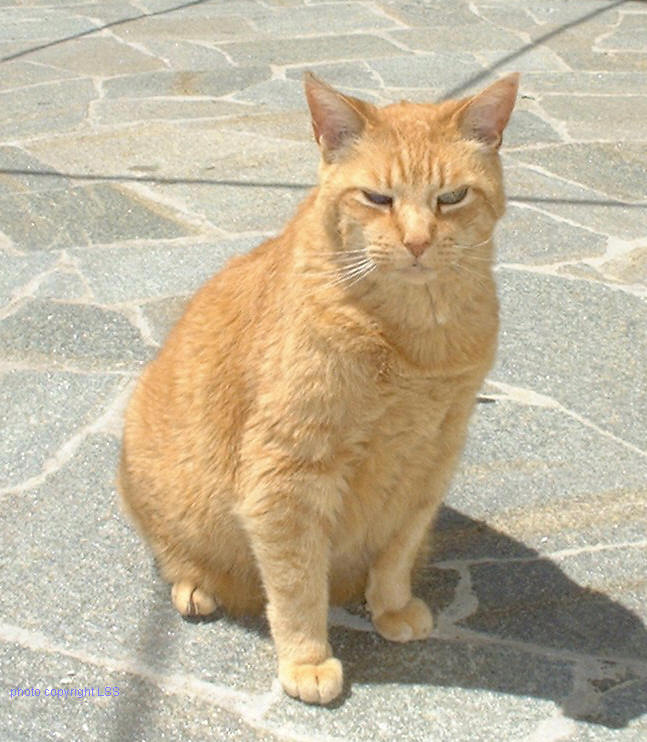
This will be, I hope, a weekly posting.  We’ll ask everyone in the house, “What was the best thing we ate this week?” and whatever it is, we’ll post the recipe over on the right under Recipes. * Best Foods* will be marked with *asterisks*.  There are usually only two of us present; we don’t listen to Luciano the cat because he thinks everything is a Best Food.

A couple of things you should know:  The Captain is the Chef; I am the lowly sous-chef and bottle-washer, but also a major eater.  We will frequently differ on what the best food was; in cases of an impasse I will consult with Luciano and we will decide. If we have a guest we will politely defer to the guest’s opinion.

The Captain has opined that there is no such thing as a ‘best’ food.

We seldom eat out, but we’ll include restaurant meals or meals eaten at friends’ houses in our consideration. There may or may not be photos of The Winner, because we don’t photograph everything we eat.  Thank goodness.

And of course we always want to hear about your favorite food of the week.

Permesso, part the second

Back in May I told you about our application process for Permesso renewal (read it here).

Amazingly, the Captain received a message on his telefonino instructing him to report to the Questura in Genova on November 13 and to be prepared to be photographed and finger-printed.  Yikes!  It may have to do with the new law whereby all residents will be finger-printed… or it may not.  We’re a bit puzzled.

And we’re amazed that such an important communication would be trusted to a cell phone message… wouldn’t you think a letter, or at least a real call??  Stay tuned.

The ladri are coming, the ladri are coming!

Tags

, ,

It’s not “if”, it’s “when,” all our friends have told us. You will be robbed. The ladri (thieves) will visit you and will take whatever gold and money they can find.

“No, no!” we cry, “we do not want to be robbed.” Well, obviously. Who does? But the fact remains that here in Italy breaking and entering is standard operating procedure, and for a number of rather complicated reasons it appears to be officially condoned (it is not).

Our friends the B’s, who live across town and up another hill from us, have been broken into three times, the first 20 years ago, then 9 years ago, then two weeks ago. They practically shrugged off the last outrage – there was nothing left in the house to steal.

Our friends J and M live in a beautiful, large villa in Santa. In spite of having lights and custodians on the premises, they have been broken into twice. The first time M’s jewelry was not stolen because she had cleverly hidden it in the cavity of a frozen chicken. All the other meat from the freezer was taken, but not the lowly chicken. Ha. In the later robbery their special paintings were not taken because they had hidden them in a very clever place which I’m not allowed to mention. Suffice it to say they were in such an obvious place they were not seen (no, not on the walls, not that obvious) (no, not under the beds either. Stop guessing; I promised not to tell.)

Our friend S was smart. He had a heavy steel safe installed in a wall behind a painting. About 2 months ago while S was out for the evening thieves came through his garden, picking up S’s iron pry bar on the way, and forced open the metal gate guarding the glass kitchen door, which they then broke. Insult to injury: at least they could have the courtesy to bring their own tools. Somehow they knew right where to find the safe. I can see visions of “Oceans 11” dancing in your head, the intelligent, handsome and clever robber placing his ear next to the door of the safe as he delicately spins the knob, listening for the click as the tumblers fall into place. No, not these guys. They just used the pry bar to smash up the wall and remove the whole safe, which they carried away with them.

And lest you think the wealthy are the only victims – two years ago our cleaning angel L and her husband D were victimized. They lived at the time on the fifth floor of an apartment building in a modest residential section of Rapallo. The back of their building was bare except for a small gas pipe that was fastened directly to the wall and which passed near their kitchen window. It gets hot in Rapallo in the summer, and they left their kitchen window open for a little ventilation. Someone, somehow, shinnied up that half-inch pipe and sashayed into their small apartment. The thief was bold enough to creep into the bedroom where L and D were asleep and relieve L of her purse and cell phone. (D’s was too beat up; they left it behind.)

If one is lucky, as the B’s were this last time, the thieves are courteous; they come when you’re out and though they look everywhere, they don’t leave a huge mess behind and they do not engage in gratuitous destruction. If you’re less lucky you will have a big mess, as S did, and if the thieves are frustrated by lack of goodies they may start breaking things. One can only hope for Gentlemen thieves (Roger Moore, anyone?).

Everyone protects their windows with shutters and/or grills. Doors are always locked. It doesn’t seem to matter. Even having a fierce dog doesn’t help. Our friends J and G thought their large dog would be a deterrent (oh all right, poodles aren’t terribly fierce, but this one at least was large and had a good bark). Someone took the trouble to get to know the dog, bringing food as a treat ahead of time. J and G know this because the dog had a delicate tum and the strange food made her ill; they wondered at the time what she had eaten. A week later it became clear when thief was able to gain entrance to the house without setting off the doggy alarm.

This last was a very troubling event because it happened at about 6 p.m. and J and G’s teen-aged daughter came home alone shortly after the thief gained entrance to the house. Evidently she scared him off and he left by a back window, but what if he hadn’t? Breaking, entering and stealing here are not usually accompanied by any kind of physical threat, nor are people on the streets often mugged. The pick-pockets will cheerfully lift your wallet from your back pocket and the thieves happily take all your jewelry, but they don’t often seem to want to stick a knife into you or shoot you or even find you at home. So far.

The police come, but it seems not much happens. Thieves are rarely caught, and if they are they may not go to prison. In Elaborations over on the right, there is an entry called a Policeman’s view, which explains in a little more detail why this is so…

Last week as I was typing away at about 11 p.m. I heard an odd rustling at the nearby door, a sort of scratch, scratch, scratch – pause – scratch, scratch, scratch. Animal? I wondered. But no, it was too regular. After about the 6th series of scratches I tiptoed over to the door and turned on the overhead light outside (we have no peep hole in the door, alas). Immediately the sounds stopped. I didn’t hear any other noise, and when I was bold enough to open the door a minute or two later there was nothing to be seen. Nothing, that is, but a new small hole on the inside edge of the door, as if made by a punch. Probably, our friend the policeman told us, someone just testing to see if the door is wood or steel. It’s steel. Double steel with treble bolts. But we’re resigned. Although we’ve taken all the precautions we can, we believe our friends: the ladri are coming.

Roadkill

Tags

, , ,

No, no pictures of dead animals here, I promise, so read on…

And why are there no pictures? There is little roadkill here, that’s why. It always shocks me when I go back to the States and see so many dead animals on the road, from small (squirrels) to huge (deer, moose). And how frequently the almost sweet, almost sickening smell of skunk wafts over the highway during a summer evening’s drive in New England, becoming suffocating as you get near the poor corpse on the side of the road.

Here if you see something that you perceive from a distance to be roadkill it will be one of the following, given in order of likelihood: litter (still a lot, but becoming less), a bit of foliage, squashed fruit (yesterday’s sighting: a watermelon!), an oily rag or discarded halter top. Very rarely you will see a dead animal. I’ve seen several hedgehogs on our mountain road, as well as snakes, and several cats and one dog on the autostradas. Once we saw someone’s white specialty pigeon with a fanned out turkey type tail flouncing stupidly along the side of the road. Sadly it was hit by the time we got back, and we spent weeks kicking ourselves for not rescuing it on our way into town instead of assuming it would be smart enough to fly home.

But as you can see, if we can remember specific incidents there are not many of them. I’ve asked myself why this is and here’s my theory, completely unsupported by any external evidence or corroboration: I think all the   small animals from the woods around here were eaten during the War, and they’ve never re-established themselves. (Having said that, there are plenty of wild boar – and you wouldn’t want to hit one of them – they’re HUGE – but they were introduced to the area 10 or 15 years ago).

I won’t belabor this WWII theme, or I’ll try not to – but it is something I think about frequently. It’s impossible for those of us born safely after that war, or Korea or Vietnam, to imagine the deprivation suffered by the people who are now Italy’s oldest citizens.

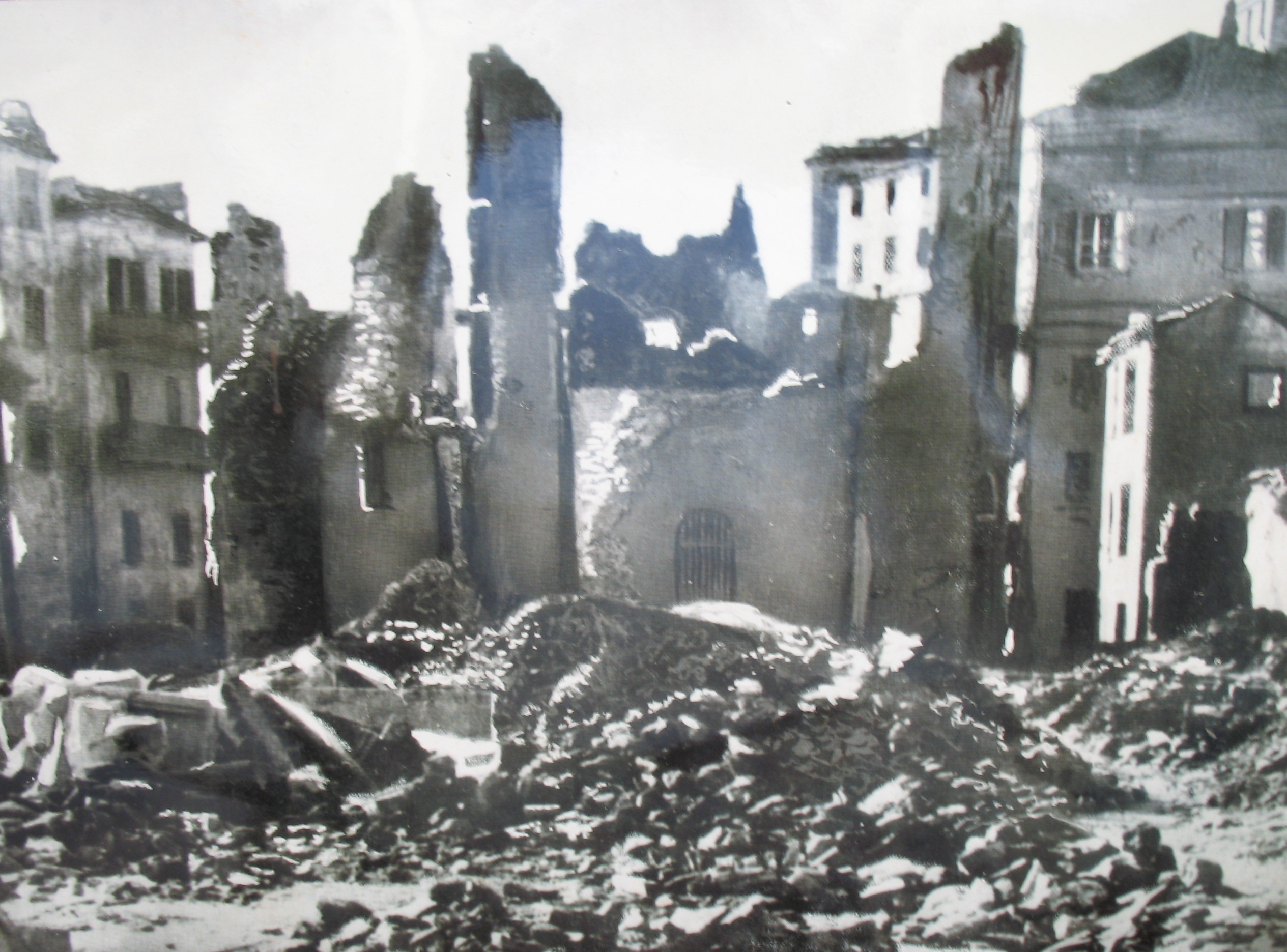
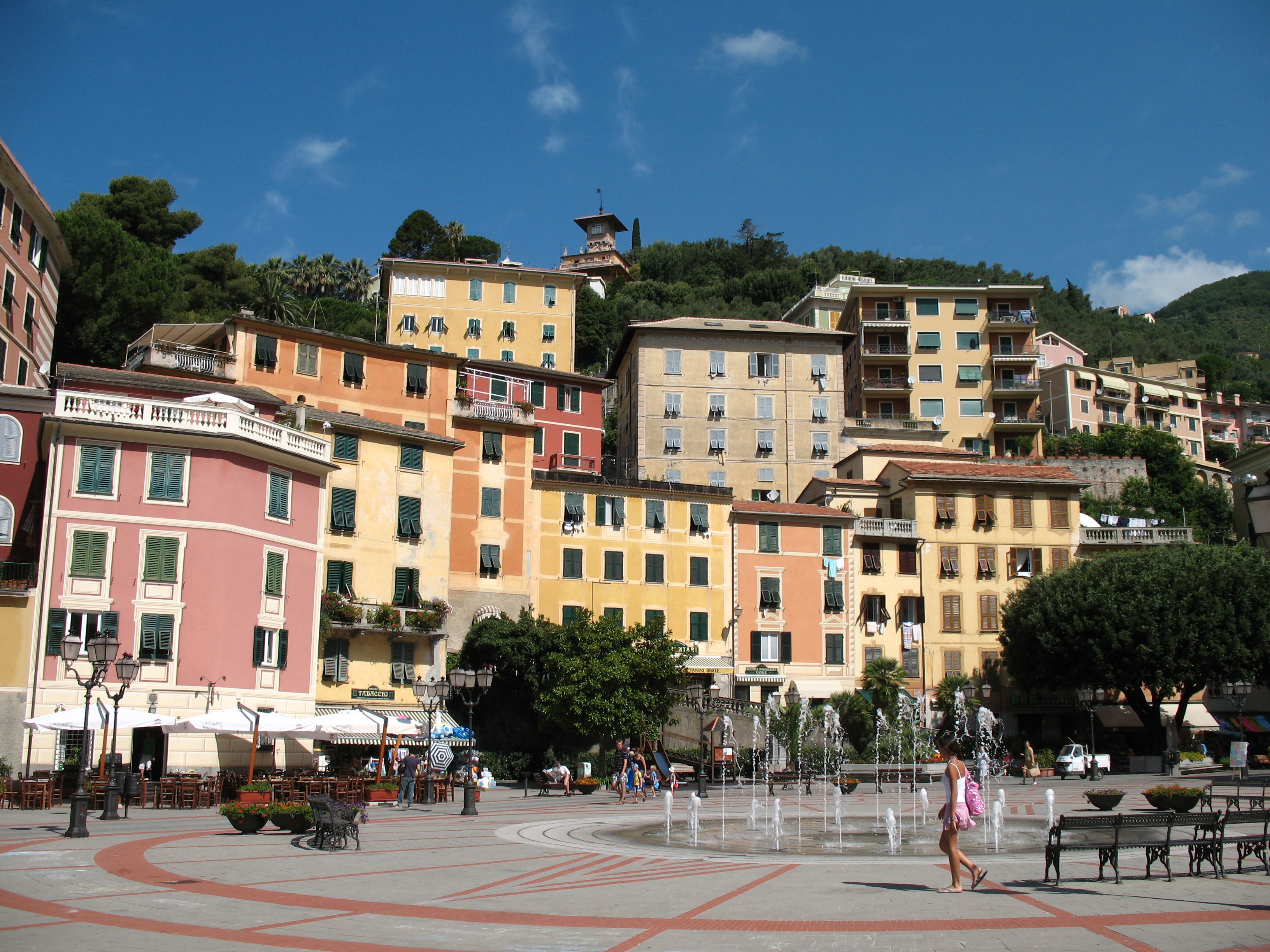
Here’s a pictorial example. The Captain and I had business in the town hall of Zoagli, our neighboring village, last week. They have an exhibition of photos from the December 27, 1943, Allied bombing of the railway bridge there (Happy New Year, everyone!). I can’t give attribution because I couldn’t figure out who took the photos, but I took pictures of them anyway – sorry, they are pics of pics and of poor quality, but interesting anyway. Compare the 1943 photos above of the town center and the railroad bridge to those of the same places taken last Friday, 65 years latter, below.  Perhaps if our town looked like the one above we would take to the hills in search of food…

Zoagli town center today

Zoagli bridge today

The passeggiata

Tags

, ,

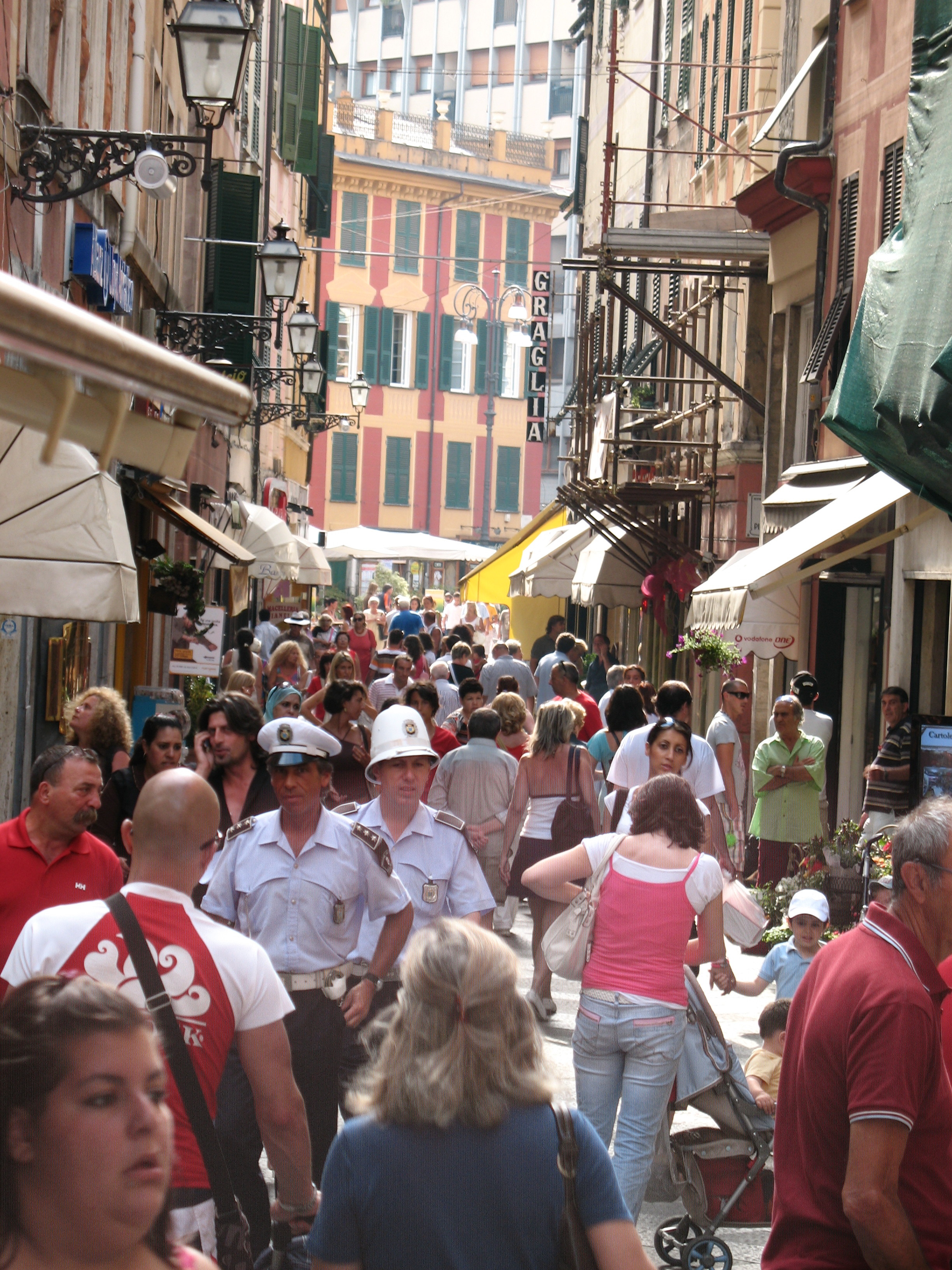
The passagiata on Via Mazzini

The passeggiata on Via Mazzini

The passeggiata is a central feature of afternoon life in Italy. Literally the passeggiata (pass-ah-jah’-tah) is the stroll that many Italians take between the hours of 4 and 6 p.m.

There is more to it than exercise. Italians gather together to talk, frequently, endlessly. If you could put a sound meter on the country, you would hear a constant undercurrent of conversation, a sea of noise that reaches high tide about 5 p.m. I once asked the Captain, “What do they talk about all the time?” He replied, “Food, family,” to which I would add also weather, politics and some good general gossip.

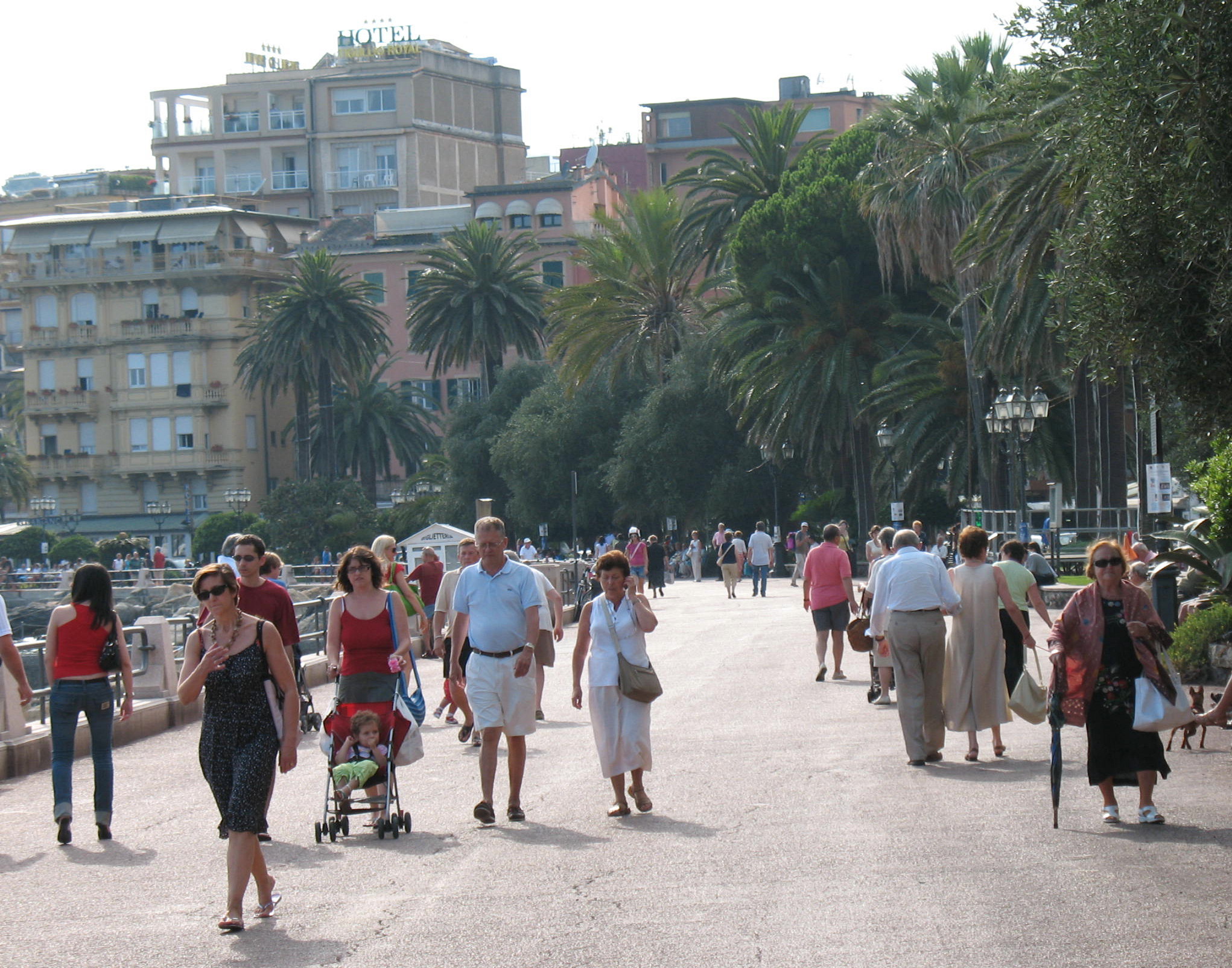
In Rapallo the passeggiata proper occurs on two streets: Via Mazzini (a pedestrian shopping street) for the young people, and along the Lungomare for the older people who, it must be said, frequently take their passeggiata sitting down on a bench. In passeggiata people amble along, looking and being looked at, stopping to speak to acquaintances or to admire a new baby in a stroller.

Passeggiata on the Lungomare

Passeggiata on the Lungomare

The passeggiata gives you an opportunity to strut your stuff, and to check out what everyone else is wearing. It gives you an opportunity to see your neighbors, see if they look well or poorly, see who has a new frock, a new dog (a popular accessory in Rapallo), or new tattoos.

So much of life in Italy is lived outside. The weather co-operates, of course, especially in a seaside town like Rapallo. But the passeggiata takes place in every town, every day (unless it’s raining of course; you wouldn’t want to melt, would you??). Living quarters tend to be small, so it’s very pleasant to take oneself out to the larger world, and all the more pleasant if you find a friend with whom to walk arm-in-arm down the Lungomare, admiring or dissing all the others, and catching up on the local news of the day.

Public Gardens and Parks in Paradise

Tags

,

Being a tourist town, Rapallo has a vested interest in looking pretty, and pretty it is, especially the parts of town most frequented by visitors.  I took some photos of the gardens to show you (earlier in the summer, as a matter of fact).  You’ll find them here or over on the right under photographs (Rapallo Gardens).  When you click on the link you’ll find yourself on a Picasa page; I suggest choosing the slide show.

Each season the various beds are replanted with appropriate flowers.  In  Winter it’s cyclamen, in the Spring pansies, and so forth.  Even the smallest traffic circle has a little bed of flowers around the familiar blue sign with white arrows.

Rapallo has a large park which includes a play area for children, a mini-golf (!) and the public library (Biblioteca Internationale: books in Italian, French, German and English).  There are lovely gardens all through this park.  There are at least two other parks for children, one with a pint-sized train that toot-toots around the perimeter.  There is another park near an elementary school which is largely cement, but has the advantage of having a basketball court.

Upon entering Rapallo from the Autostrada the first thing you see is an island garden, lately with a desert theme.  It has sprouted almost as many signs as cacti, but is attractive none the less.  As an aside, in the photo of this garden take a look at the traffic coming into town – a Friday afternoon in July is not the optimum time to arrive in Rapallo by car.

The area between the Lungomare and the street that borders it is planted with cactus, palm trees (festooned with lights at Christmas) and low flowers.  The benches along the edge of the gardens are always filled to capacity with ancient Rapallesi.

The Whimsicality Prize has to go to a small garden at the end of Via Marsalla.  It boasts two kayaks that have been painted yellow and white and filled with flowers.  It is about the silliest thing I’ve ever seen.

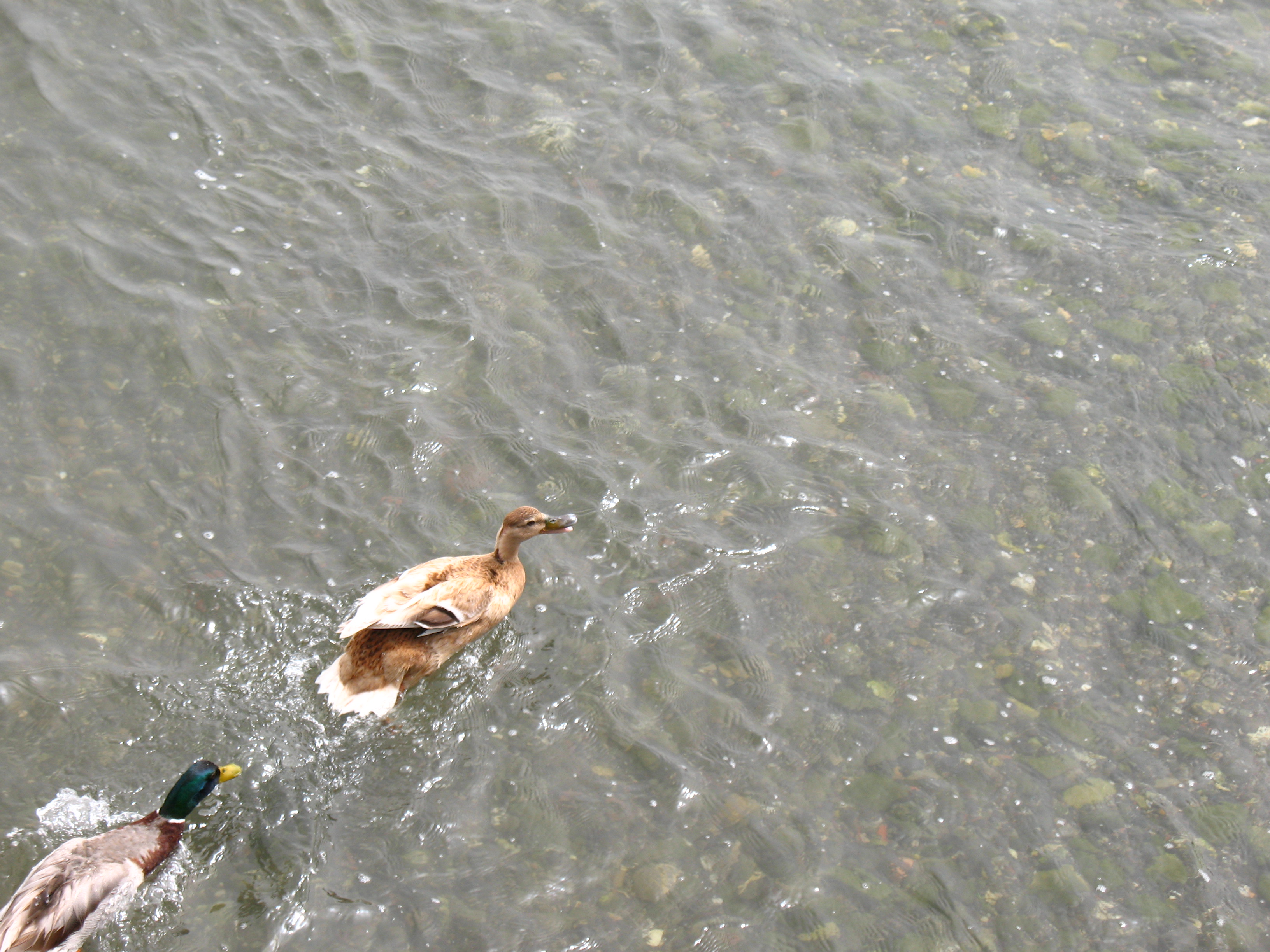
If the Polipo Fountain is the sculptural mascot of Rapallo (it is), the living mascots have certainly got to be the ducks.  There are zillions of them, some right at the shore, many more in the various rivers that empty into the Gulf.  The greatest number of them are mallards, but there are some large white ducks as well. And as if the city were running a genetics experiment, there are several pockets of very confusing looking ducks which are neither one species nor another, but are greatly speckled and strange.  The Rapallesi love their ducks; it’s not unusual to see someone with a huge sack hanging over the San Francesco Torrente tossing bread bits to the ducks below.  And oh my, in spring when the babies are born everyone keeps track of the number of chicks in each clutch and tallies the survivors weekly.

The ducks are amusing, especially when they turn up where you don’t expect them – walking along the top of a wall, for instance, or trying to enter a shop (this is where I won’t tell you the duck-in-store groaner with the punch line, “Oh I’ll just put it on my bill”) (oh all right, I’ll tell you: the duck walks into the Norfolk Pharmacy and asks for ChapStick.  Ever helpful Kevin supplies same and asks, “will that be cash or charge?” and the duck replies… but you know what the duck replies.)  Their quacking is one of Rapallo’s background noises; why is it that ducks quacking sound so officious?

What the ducks have to do with the gardens, I can’t say, certainly they are not frequent garden visitors.  They are both prominent features of the shore area, though, so they’ve ended up together here.

There are other gardens in Rapallo which I haven’t photographed or mentioned, for example the Verdi garden, where the famous Wall of the Partigiani is, and where a very interesting dog show was held last year for both pure-breeds and what the Italians gallantly call Fantasie (or less gallantly, Bastardi), which is what you and I call mutts.  The gardens and parks of Rapallo are lovely to look at, but above all they are put to great use, both casually by individuals and in an organized way for events.  Whether it is the above mentioned dog show, or movies and shows behind the Library, there is frequently something going on in one of the park areas of the town.  It’s very satisfying in a Yankee kind of way to see space not only made beautiful, but also put to good use.  Take a look at the pictures

PS  There are two new recipes today, too – Clafoutis (no kidding, that’s what it’s called!): if you like custard and fruit you will love Clafoutis; it’s easy and yummy.  The Sicilian salad is made from oranges and onions; again, really easy, and quite beautiful as well.

Peacocks

Tags

,

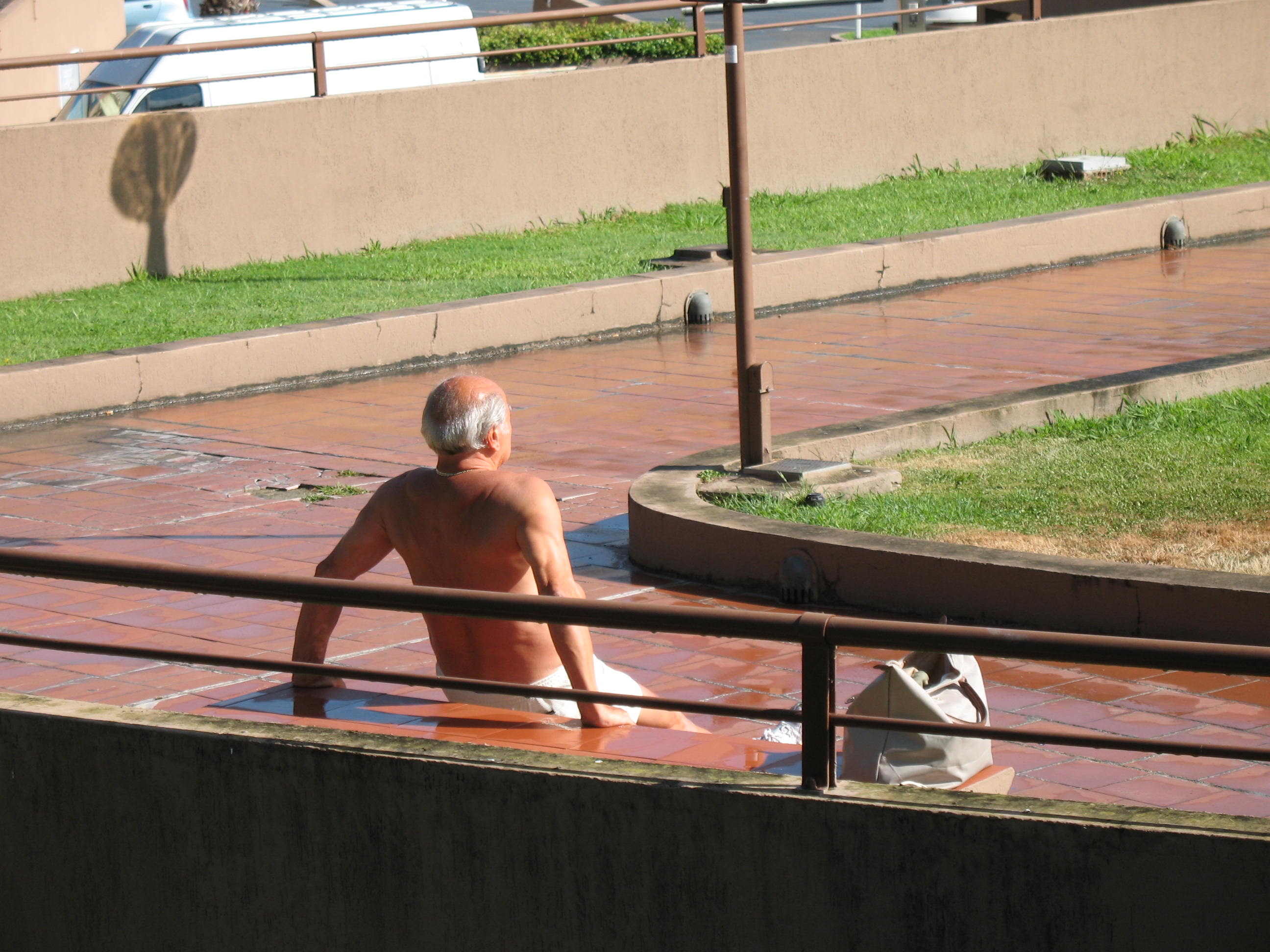
Italian men are peacocks (in the best sense of the word)!  Well, not all of them, of course, but most of the men I’ve met here take a serious interest in their appearance, and they like to show their plumage and be admired.  Sometimes it makes them behave in ways which, to the New England eye, seem rather strange.

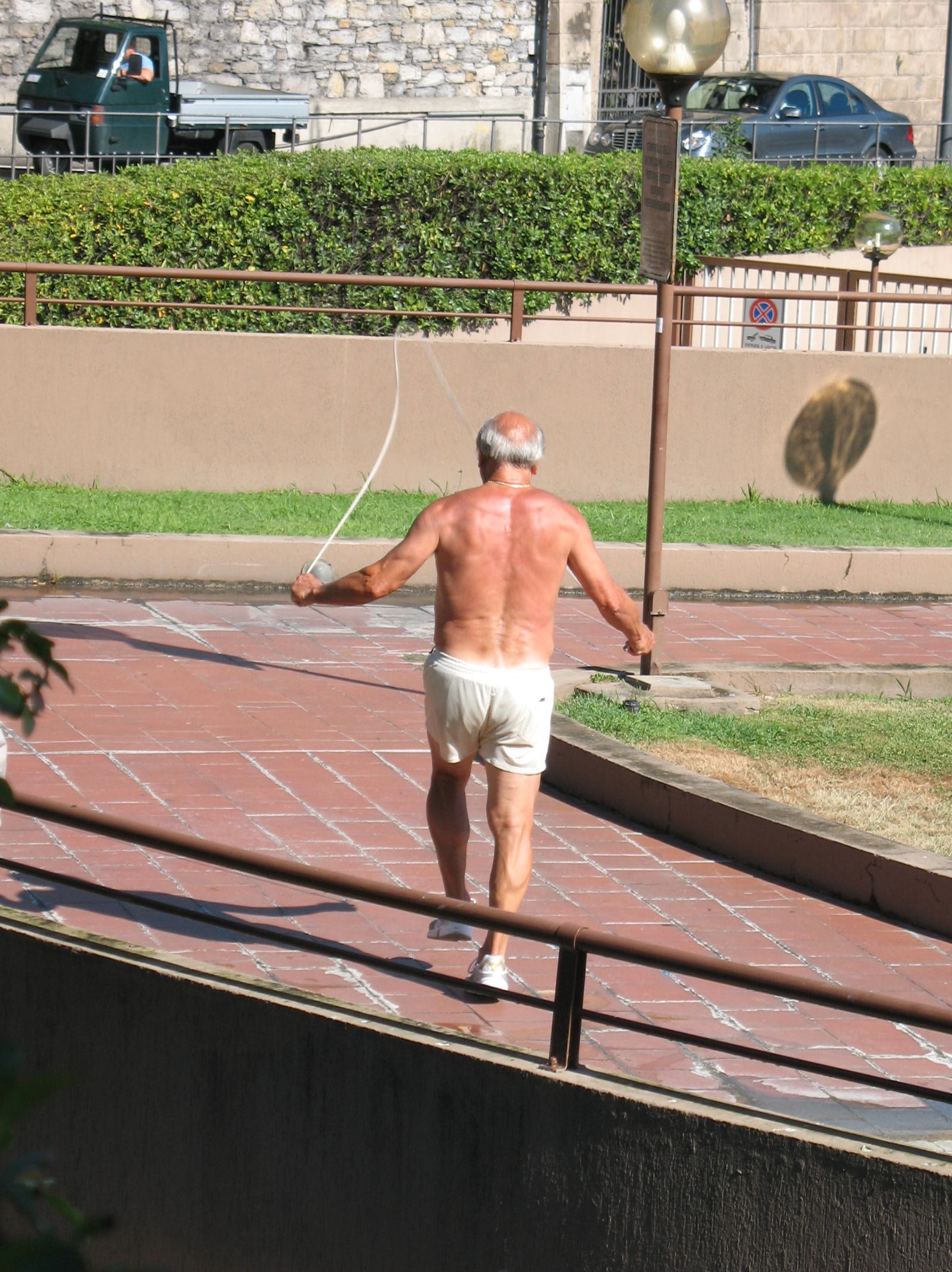
Take for example this fellow.  He has chosen for his morning exercise routine the rooftop over the Rapallo Port parking garage. This is located on the busiest road on the peninsula, the road that leads from Rapallo through Santa Margherita and on to Portofino.  From morning to late at night there is a steady stream of cars, public transit buses, tourist buses, campers, vans, SUVs – all full of faces peering out at the passing scene.  This hale gentleman was engaged in deep knee squats when I first saw him as I walked from Rapallo to nearby San Michele, his arms held horizontally in front of himself like a sleepwalker. And he was good!  He did a ton of them while I watched. As I ambled along fishing in my bag for the Trusty Canon he segued to the odd sort of body lift here pictured – legs splayed out in front, arms on the bench behind him, then flex arms, release, flex, release – I’m sure it’s very difficult.

My business at the Post Office in San Michele didn’t take long, but it must have been 25 minutes before I got back to the Rapallo port, and Charles Atlas was still at it, jumping rope now, his back glistening with sweat. He seemed rather pleased when he caught me with the camera out just after taking this photo.

Try as I might I can’t imagine, say, a New York stock-broker engaging in such exhibitionist behavior on Wall Street, or a Mid-West farmer requisitioning the yard in front of the county court-house for his calisthenics, or a tweedy college professor stripping down to his swim trunks in the Quad.

But isn’t it wonderful?  What’s the use of having gorgeous feathers, real or imagined, if you don’t show them off to the rest of the world?

Rainiero

Tags

, ,

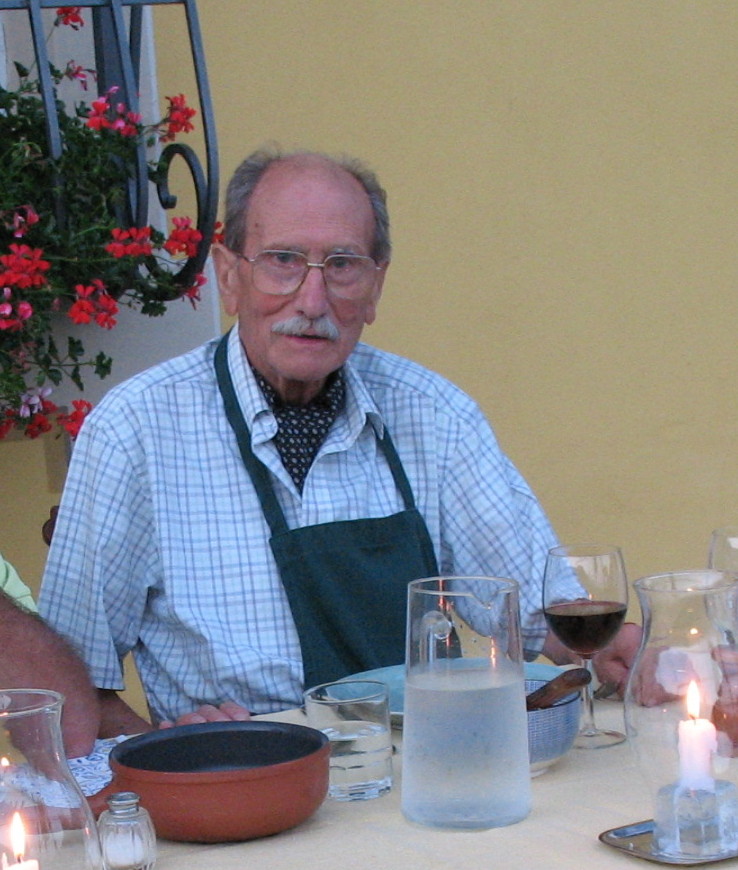
This week we said goodbye to a dear old friend, Rainiero Cesarini.  He was 87 and had been sick in the hospital for two months, so his death was a great sadness, if not a surprise.  But what a life he’d had!

He was born before the invention of Life Savers, zippers, crossword puzzles, toasters, Band Aids and bras.  The Italy of his youth was a much poorer country than today and was soon to be ensnared with the other Allies against Germany and Austria in World War One.

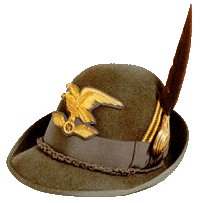
Rainiero was a boy as Mussolini and the fascists rose to power in Italy*; he served in World War II as a member of the Alpini, the highly trained and regarded Alpine mountain fighting units of the Italian Army.  They are famous for their bravery and stubborn refusal to give up.  They are also admired for their jaunty hats festooned with a long feather.

Rainiero enjoyed a much happier fate than that of his fellow Alpini who went to Russia, most of whom died there: he was captured by the British in Libya.   Not long before his death he told the Captain about his experiences: there were more than 100,000 Italian prisoners, and the British certainly didn’t have the manpower or resources to organize them all immediately.  Basically they were told by the British to organize themselves, which they did, building their own prisoner-of war camps and settling in.  After some amount of time they were taken to Alexandria and thence by boat across the perilous Mediterranean to Great Britain.

Rainiero went to a farm to work, where he was treated with kindness and respect; he remained friends with his farm family for the rest of his life.  A chef by profession he lived and worked in England after the war, no doubt partly due to the good treatment he received at the hands of the British; he and his wife raised their daughter Amanda there.**  When his working days were over he and his family moved back to Italy.

His death and his experiences make one think about what Rapallo and Santa must have been like during those war years.  It was only 65 or so years ago, but it’s impossible to imagine.  The people were impoverished; the Partigiani were hiding in the hills and, when caught, being lined up against a wall and shot – you can still see the wall in Rapallo, pocked with bullet holes.  The German army retreated up the boot, the Allies following, and destruction was left in the wake. Song birds were prized not for their music but for the protein they provided.

What a change from those days to today, when Rapallo and Santa are havens for old folks and tourists, where everything is beautiful, there’s plenty to eat, health care is universal (sort of – that’s for another day), everyone chatters on cell phones, and people drive like maniacs.

I may not be accurate with this history – if not, please tell me!  And do try for a moment to picture yourself living when Rainiero did, and imagine all the changes that took place in his long lifetime, beginning with zippers and bras, and ending with iPods.  What a journey.

* Italy was not well-pleased by her treatment as a second-rate ally during the peace forged at Versailles.  Though she had fought next to the other allies, she did not reap any of the rewards. Mussolini was able to take advantage of this dissatisfaction during his rise to power.

** The Captain was especially struck by the fact that Rainiero chose not to repatriate.  The invitation to stay in England was made to many Italian prisoners-of-war, but the majority of them chose to return home.