No, we’re not in Italy again, sad to say. Instead Greece came to us in the form of St. Anthony’s Greek Orthodox Monastery, located in Florence, Arizona.
Friends had visited there a year or two earlier and thought we would enjoy seeing it, which we did. Disclaimer: I know pretty much nothing about the Greek Orthodox Church, other than having attended a Greek wedding once about 25 years ago, so if some of what I write sounds ignorant, well, it’s because I am! ( I don’t remember a lot about the wedding, but I remember a flowery bower and the bride and groom’s hands being lightly bound with ribbons several times. It was great.)
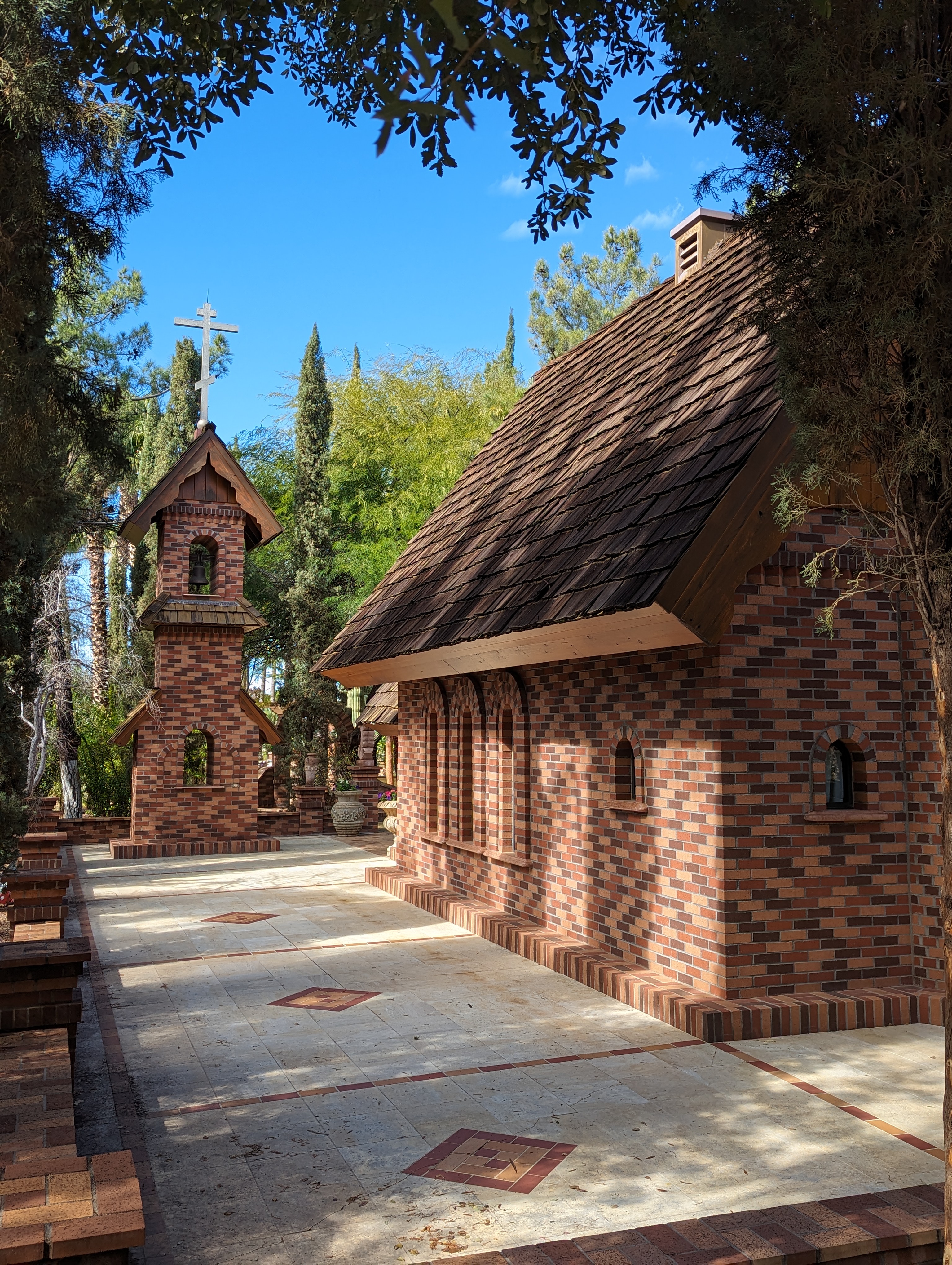
Six monks arrived in Florence, Arizona, in the summer of 1995. Florence is a town of some 25,000 people with a sweet downtown. The monastery, however, is nowhere near the downtown. It is in the back of beyond, popping out of the desert like a decoration on top of a flat cake. These first six arrivals began the work of building, which continues to this day. There are now over fifty monks and novices in residence. In addition to the main church, dedicated to St. Anthony and St. Nectarios the Wonderworker (one of your newer saints), there are chapels for Prophet Elijah, Saint John the Baptist, Saint Seraphim of Sarov, Saint Demetrios of Thessalonica, Saint George the Great Martyr, Saint Nicholas the Wonderworker and St. Panteleimon the Healer. Heaven knows we can use all the Wonderworkers we can get with the world in the state it’s in. There are eleven St. Anthonys, and I’m not sure which one is venerated in Florence, but St. Anthony of Padua seems to be most often referred to.
In addition to all the chapels, the monastery encompasses a vegetable garden, a small vinyard, citrus orchards and an olive grove. Highly designed gardens, pathways, gazebos and Spanish fountains lend a botanical garden air to the whole enterprise.
You want to visit this monastery if you are a fan of ornate decoration, woodworking, bright colors, mosaics and/or the Greek Orthodox Church.
The monastery sits on a flat plain:
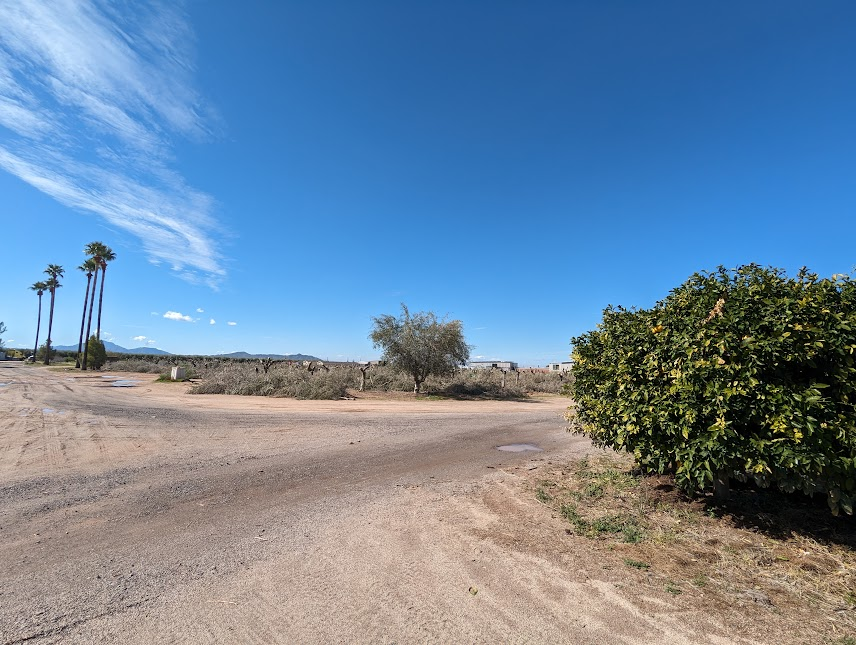
This is the site of the olive orchard. We were not sure if it has been removed or just really pruned.
There is intricate woodwork throughout the chapels, both in the building itself and in the altars and furnishings:
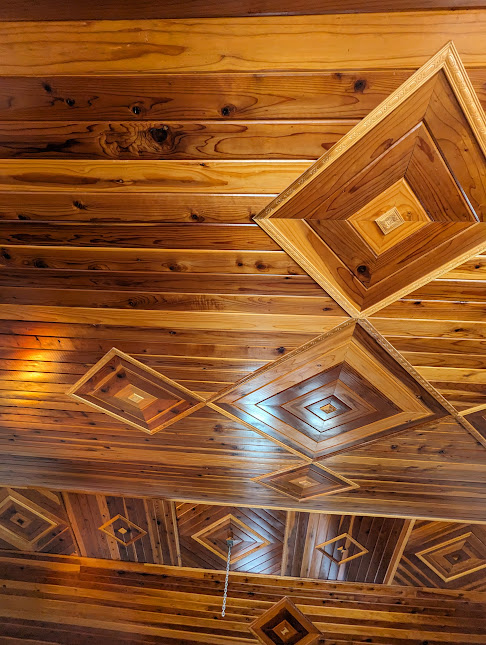

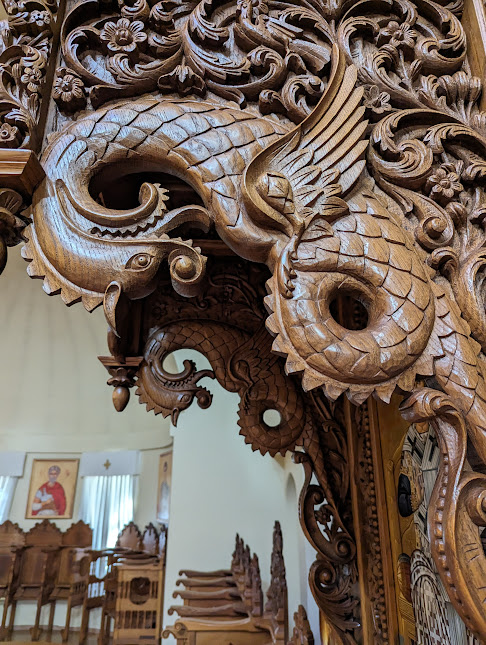
Let nothing be unembellished!
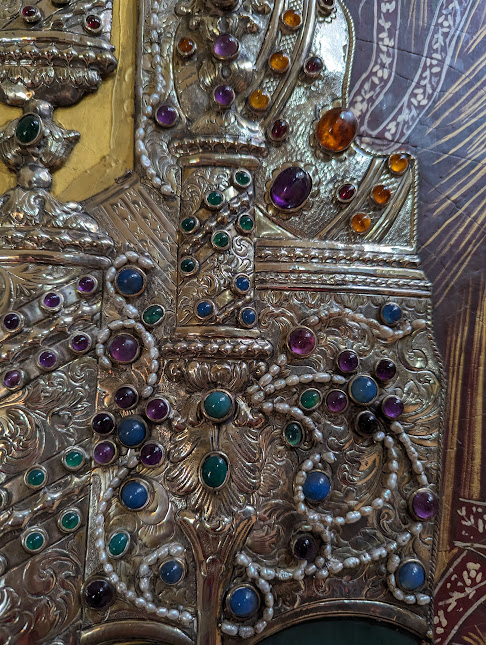
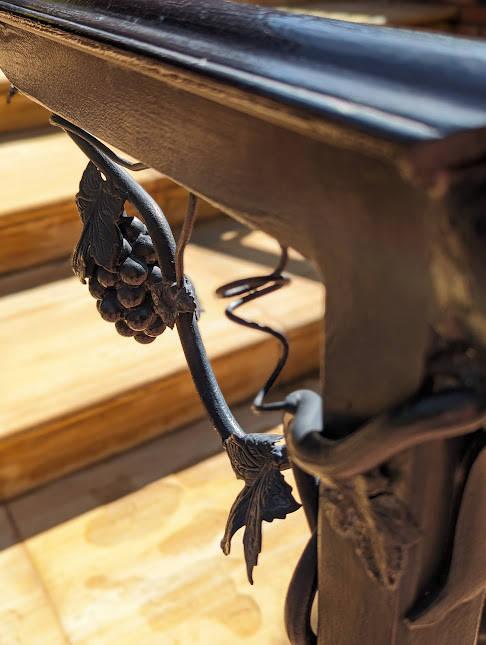
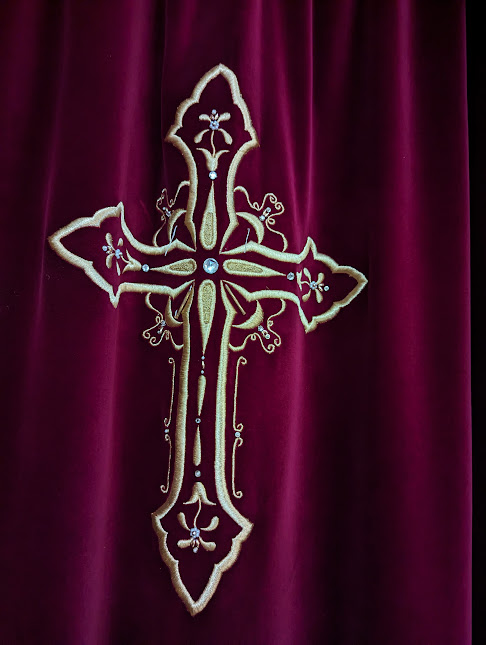
Although outer altars were visible to visitors, the interior altars were all hidden behind purple cloth.
Every saint gets at least one portrait in mosaic.
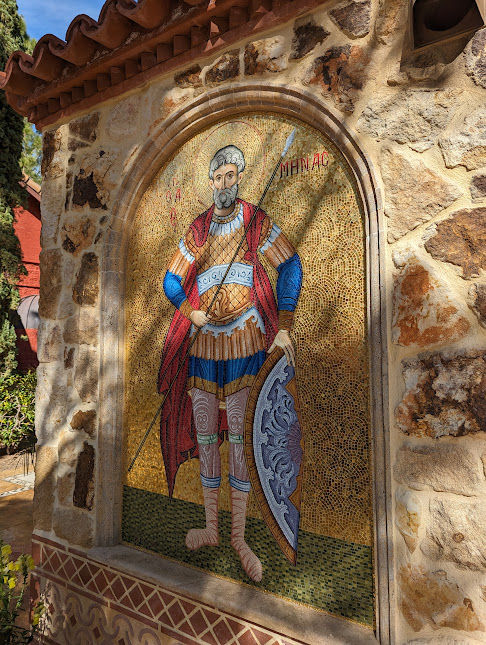
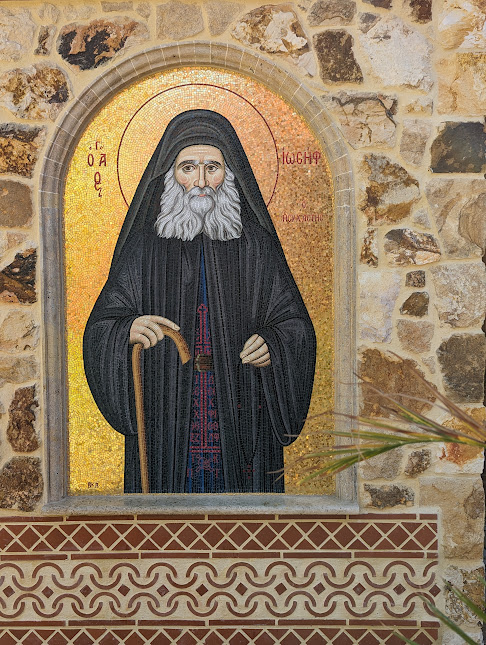
The monks have truly made an oasis in the desert.
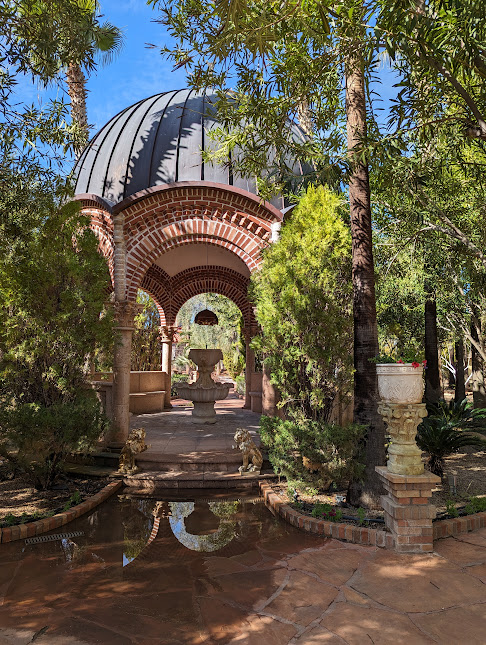
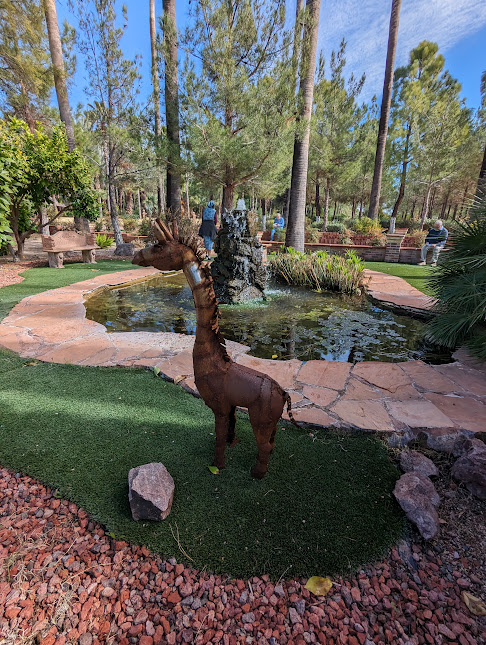
I’ve made an album with far too many photographs and a couple of short videos that you can look at here.
Our visit was interesting, though visually exhausting. Dress codes always annoy me, especially ones with an unspoken assumption of the devious and wicked nature of women, and the inability of men to resist us. We were required to wear long skirts, long-sleeved blouses and headscarves. On the other hand, all the monks were draped head to toe in heavy black fabric that looked exceedingly warm. Their house, their rules, so of course we willingly complied; and they are very generous to open their grounds and chapels to visitors, so I shouldn’t complain.
It all felt too bright and too new to me during our time there. Afterwards, though, I thought – maybe visitors in the year 2424 will find it all as charming as we find the chapels in the other Florence, the one in Italy. They were new and bright once upon a time.
You too can visit the monastery if you’re in the Phoenix/Tucson/Florence area. They welcome guests from 10:30 to 2:30 every day, though it’s best to check their website and make sure they are open.
 An Ex-Expatriate