 Recently I went with two friends on a cruise of the Western Caribbean. It was my first cruise, and was an eye-popping experience, from the the size of the ship (1,112 feet

long) to the enormous quantities of very good food provided daily, to the variety of entertainment on board (an ice show! imagine!! It was a really excellent one, too!!!), and the variety of excursions we were offered on shore.
Our second stop was in Costa Maya on the Yucatan peninsula of Mexico.

Recently a port was built to accommodate cruise ships, which includes a shopping village, and which is a jumping off point for excursions to some delicious less-developed Mayan ruin sites such as Chacchoben, which we visited. The Mayan ruins are a subject for several other posts – they are as fascinating as they are ancient and mysterious.
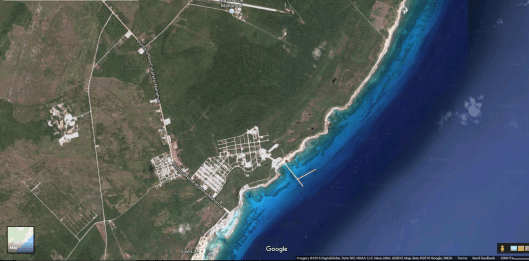
As you can see from the Google Earth screenshot above (thank you G.E.) the area around the cruise port is sparsely developed. There’s been more growth lately, but so far most of it is centered around cruise ship arrivals and tourist dollars. (That off-center T in the water is the cruise ship dock.) I gather when there are no cruise ships the little village is closed up. It does not seem to be much used by locals.
This faux village has a central square, and in the middle of the square is a 30 meters tall pole with climbing rungs. Wikipedia gives a detailed account of the history of the Danza de los Voladores (Dance of the Flyers). It originated some hundreds of years ago at a time of great drought. The ceremony was developed to appease the gods and bring back the rain.
The dance is usually performed by five young men (the ones we saw were ‘apprentices,’ aged 18-22, but they looked pretty darn professional to us. Six marched in, four climbed the pole). They march into the square, one of them playing a small flute and banging a teeny drum (note the yellow cords hanging down).
Then they begin to climb the pole. This is heart-stopping – it seems impossible that they can climb so high, and that they can perch on the teeny structure at the top, which can revolve.
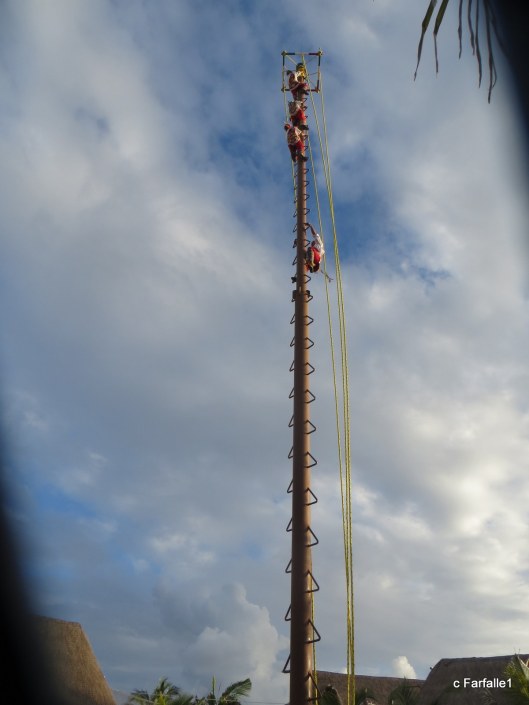
Once they are at the top they haul up their ropes in a very particular way and wrap them around the pole. Then four of them address the cardinal points of the compass, while the fifth stands in the middle. In our instance there were only four, and they all flew.
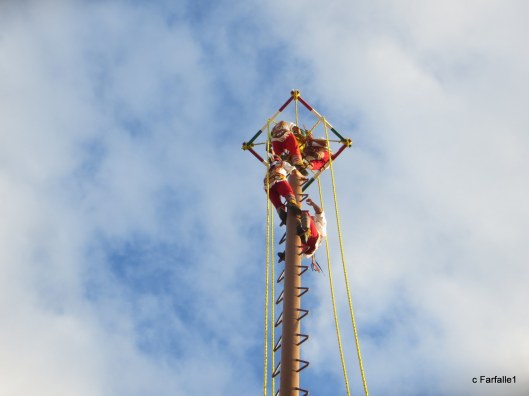
The four tied their ropes to their legs and stepped into space, slowly spinning around the pole as they descended in a stately and controlled manner. Impossibly, the drummer/ flute player continued to play both instruments as he flew down.
It is done in a very particular way. They must circle the pole exactly thirteen times. Thirteen times four (number of flyers) = fifty-two, the number of years in the ‘calendar round’ (see the Wikipedia article for more detail). Here they are, gracefully descending.
I apologize for not getting them all the way down for you, my camera ran out of battery (grrrrr).
It was an amazing thing to see, looking far simpler than it is, I think. The Danza de los Voladores has been named an Intangible Cultural Heritage by Unesco in 2009. As a result, the Mexican government has a responsibility to protect and promote the Dance. If you have a chance to see it, don’t miss it.
 it’s infinite, they’re probably multiplying as you read. It’s hard for the Captain and me to imagine the pleasure anyone would take from living in a metal box in the desert, but there must be a lot to it we don’t understand, as many seem happy to be doing it. Most of the license plates were from cold northern climes, and perhaps that is all the explanation that’s required. It was interesting to see that quite a few of these mobile homes are now generating their own power with solar panels and small windmills mounted on the roofs.
 The streets of
 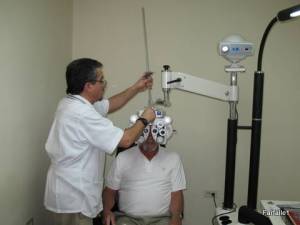 nal manner. We each received a very thorough eye exam, including the test for glaucoma. Several space-age looking machines stared deeply into our eyes and provided the rough corrections we each needed. Then we were ushered into a different room where our prescriptions were fine-tuned. Dr. Robles spent a very long time with the Captain who required two different kinds of glasses – one pair for regular life, and another with different focal lengths for working at the computer.
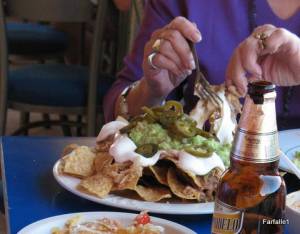 The restaurant where we sat on a second-floor balcony and ate some of the best nachos that have ever been constructed. Yes! That’s pulled beef under the guacamole and sour cream – yum!
 This man, seen from our luncheon eyrie, was selling fresh strawberries. We bought some, forgetting that we probably couldn’t carry them back across the border. We later gave them to a passer-by.
 You can’t visit Mexico without trying on a great big hat…
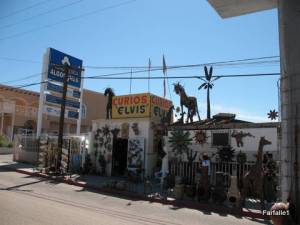 We didn’t buy anything from Elvis, but it’s kind of reassuring to know that the King still lives… in Los Algodones…
 No, we didn’t buy a whistle, either, though it was extremely tempting.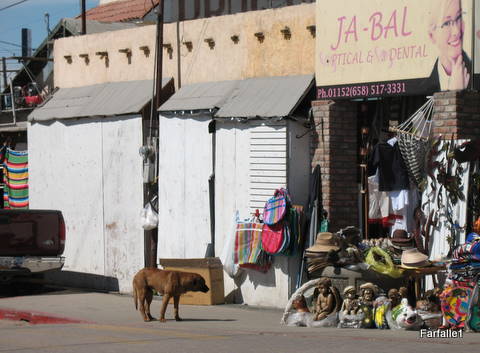


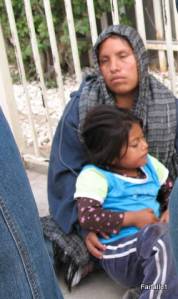 Because there were only three beggars and because, sad expressions aside, they looked reasonably healthy, we assumed that it was some kind of controlled concession. But we still couldn’t walk by and do nothing… could you?
 There are many date farms in the area, specializing in
 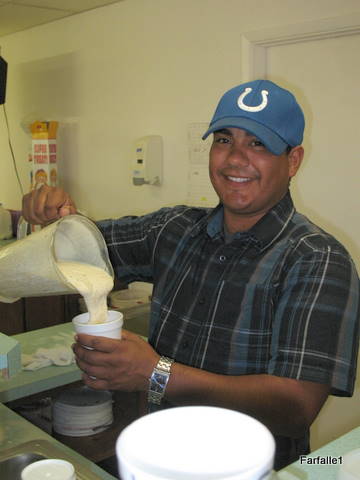 Then it was back past the miles of lettuce farms. I bet half the lettuce eaten in the US comes from this part of the world. Our friends from Tennessee say they eat the lettuce shipped by these growers. Here is what a really BIG red and green lettuce garden looks like:
 We were pretty tired out after our day’s exertions. After a delicious dinner with our friends we crossed one last seamless border, and tumbled into bed in the Cocopah Indian Nation – at the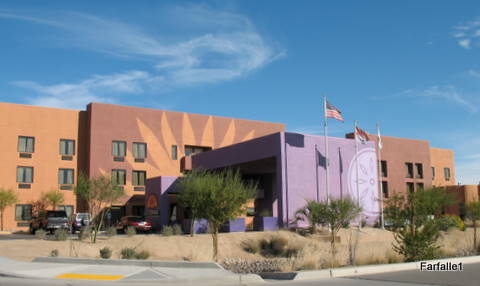
 An Ex-Expatriate