Not all churches are created equal. In fact, not all churches are simply churches, as is the case of San Nicolo del Boschetto in the Val Polcevere section of Genova (outside the old city walls):
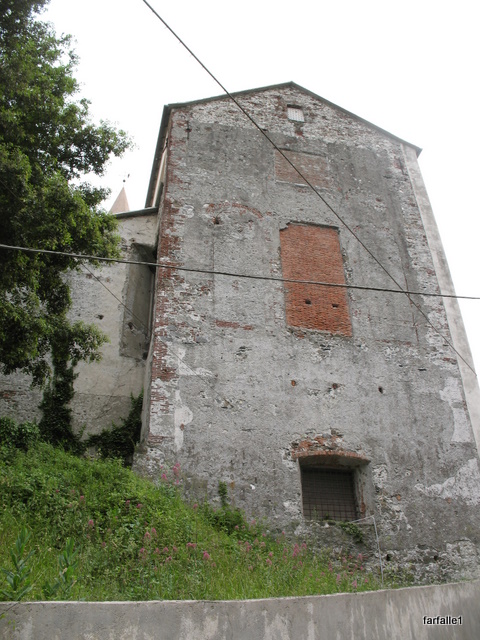
San Nicolo is actually a former Abbazia, or Abbey, which for centuries served as home and place of worship for anywhere from a dozen to eighteen or so monks. It was officially recognized by Pope Martin V in 1415 at which point it was nothing more than a simple chapel and a rustic building, both given to the Benedictines by the heirs of Magnone Grimaldi (yes, that Grimaldi family; there was an important branch of the Monagasque monarchy in Genova). What’s interesting about the above photo is that the exterior of the structure is rectangular; the interior is in the usual churchy curvilinear form, and there is empty space between the interior and exterior.
In the succeeding two hundred years it became a complete and lovely monastery, its Abbot an man of local influence in matters both spiritual and worldly.
And just who was San Nicolo?
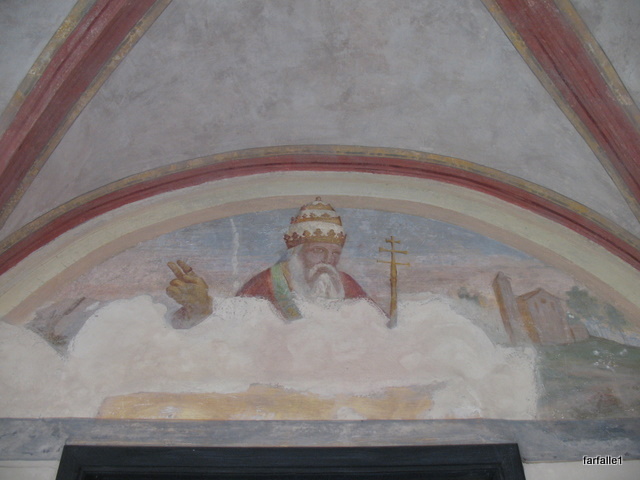
Santa Claus! Though as is usually the case with saints, the story is complex. As patron saint of sailors it is not surprising to find a chapel dedicated to him in Genova, one of the most important ports of the peninsula. Don’t you love the hat? And the rustic depiction of the Abby behind him? And the staff that looks like a telephone pole?
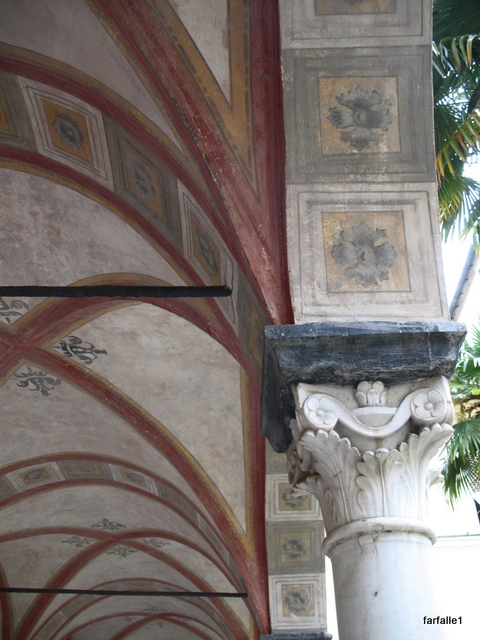
This photo shows the ceiling of the walkway that surrounds the interior courtyard, with much of the original fresco work amazingly still intact.
Under Napoleon and the Kingdom of Italy (early 19th century) many monasteries were confiscated. San Nicolo passed into private hands; the new owners stripped the church of everything of value which could be removed. For that reason the church is uncharacteristically simple inside.
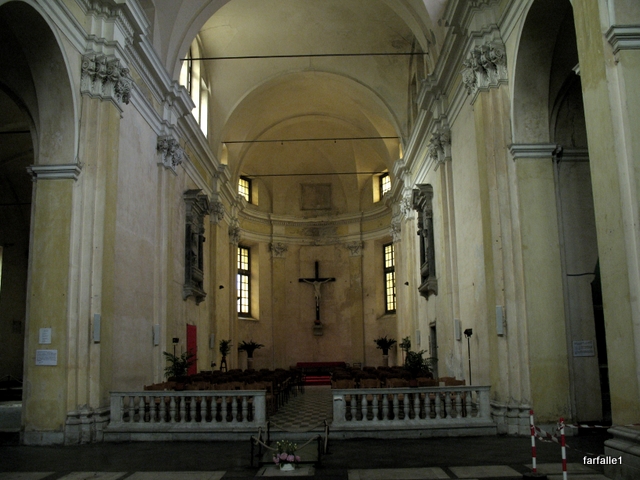
No crystal chandeliers, no dark oil paintings of saints, no ex votos – even the original altar was removed from this main chapel.
What couldn’t be removed and what is one of the most interesting aspects of this chapel is the many stone portraits of the people entombed below.
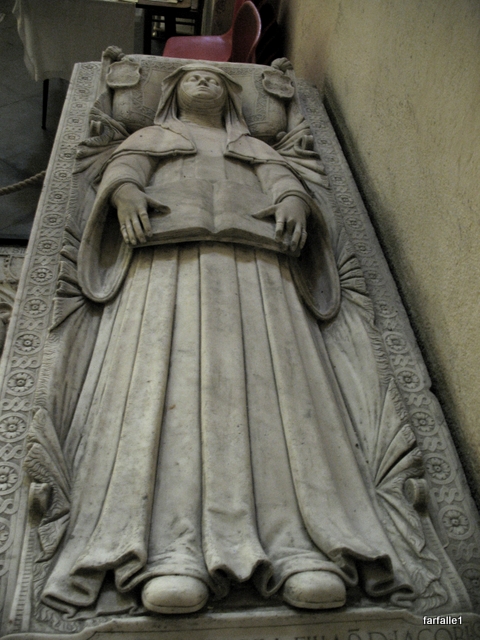
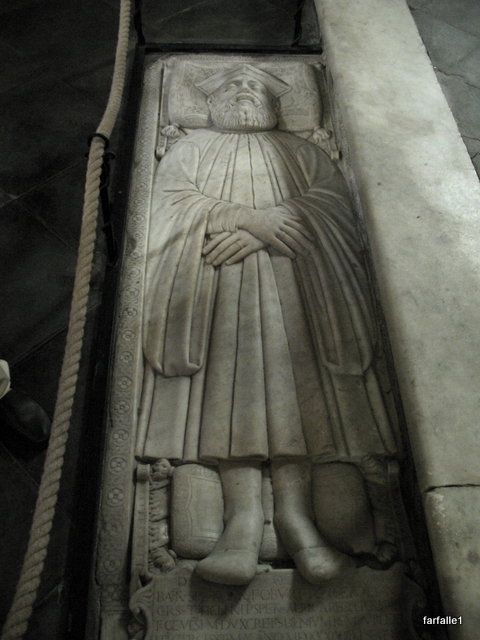
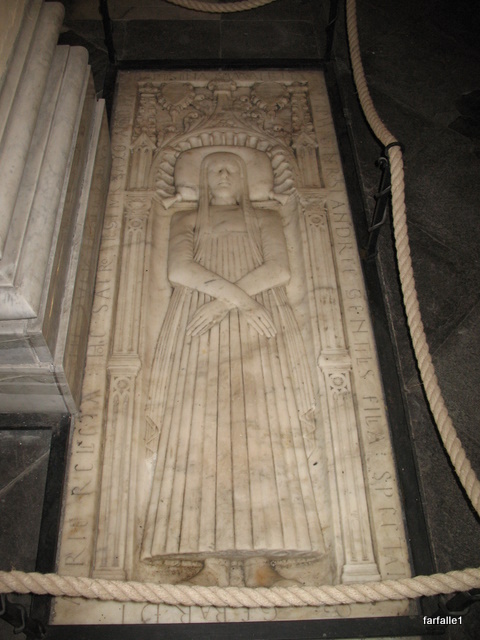

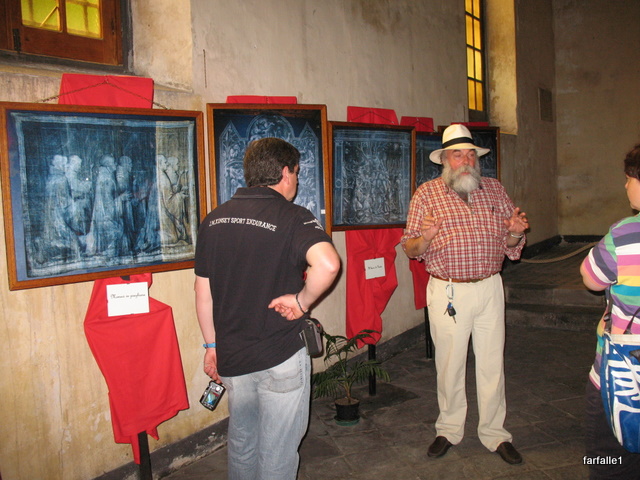 Unfortunately I was not able to understand much of what our very lively and informative tour guide Franco told us – my Italian simply wasn’t up to it, alas. So, though he had a lot to say about the tombs seen above, I cannot pass it on to you. Each of them has such character and personality, though; and of course it’s always interesting to see the dress of the day.
In this photo Franco is standing in front of photographs of sacred art that was made on denim cloth and which originally was on the walls at San Nicolo, but is now housed in another church. (Jeans trousers were first made in Genova (the French word for Genova is Genes; denim was invented in Nimes, France, and was called Serge de Nimes, later shortened to denim).

This is the oldest chapel of the abbey; it still has a lovely altar decorated with inlay.

There is one of those eye-teasing geometric floors in the newer central (and now main) part of the chapel. How complex the pattern and cutting are to fool us into thinking the floor might not be flat. Is there a single right-angle there? Watch your step!

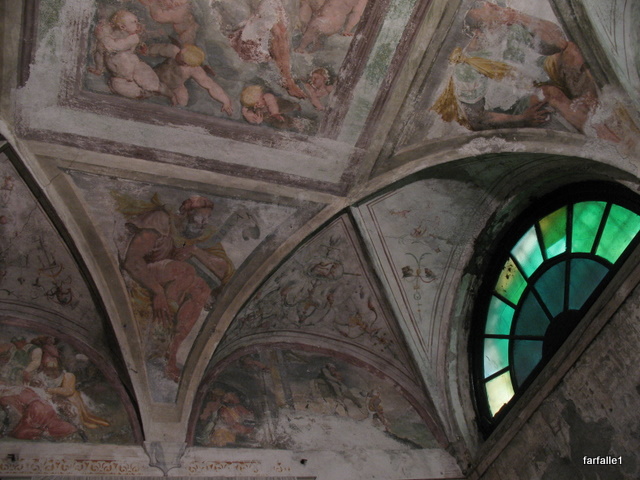
Most of the abbey has not yet been restored, but some small part of it has, principally the so-called Sale Capitolare, the room in which the Abbot met to discuss important matters with visitors. To me the restoration seems garish, but perhaps the colors were just this bright when they were originally applied 500 years ago.

I find the cracked and peeling old unrestored parts of the church much more pleasing, if only because they are more subtle and, like some others of us, don’t mind showing their age.

There are a zillion churches, abbeys, retreats, convents and so forth in Italy, and of course there is never enough money to take care of all of them. For every San Marco there most be a dozen San Nicolos, churches that were never terrifically important and that through a series of historical tricks and fate have fallen on hard times. But each has its own fascinating history and its cast of colorful characters, and it’s always a pleasure to make their acquaintance.
 An Ex-Expatriate
The tomb sculptures are wonderful. From the style of the garish frescoes (I agree, they’re hideous!) I’d say that they’re not original to the church and probably date to the 18th century. I’m sure that if the other, older frescoes were restored, they’d still be quite pleasing! It’s true, though, that it’s simply impossible to maintain and restore all the historic buildings in Italy. The country’s cultural patrimony is huge!
So it’s not just me, Karen, those ‘new’ frescoes are ghastely. No matter – it is a style and interesting for that. And nothing can detract from the calm grandeur of that little, spare chapel. We’ll never run out of things to discover, will we?!
How wonderful! I, too, like the unrestored frescos best – I like what’s left to the imagination – but my art history courses certainly suggested that the original color was extremely bright. I like your word “garish…”
Perhaps you’d be willing to visit again when I’m there?
Would love to visit again, Pidge, but it may be hard to find it open at a convenient time. It’s not a place that receives a lot of visitors, I believe… we’ll find plenty of great places to visit, no worries!
Thank you, Louise. I love following your adventures, reading your colorful descriptions, and learning about the Italy many of us wish we knew better. I had never heard of this abbey before now and suspect it was simply pushed down into the layers upon layers of even more spectacular vistas, villas, and churches that seem to be listed first in the travel brochures. What a cool find! Did you locate a kitchen? Wine Cellar? Living/sleeping area?
I don’t think St. Nicolo will show up in any guidebooks – for starters it seems to be open only once a month. No, I didn’t find a kitchen or wine cellar… but we were with a guide and he pretty much just showed us the tarted up room and the lovely, haunting chapel. Thank you for following my adventures – it’s great to have you along!
This was just beautiful…I gazed and gazed at those tombs and the lovely floor! Wow! I worked on a ship in the Med and we all had St. Nicholas medals! More please!!
I always thought St. Christopher was the guardian of travelers, but I guess he’s been decommissioned. I must get myself a St. Nick medal one of these days. Somehow the tombs in that bare chapel were so much more eloquent than similar things in more crowded spaces. They were really compelling.
Oh Louise – your photojournalism is the next best thing to being there! The whole place is breathtaking, but the tombs are particularly arresting. Who knew that St. Nick was the patron saint of sailors? No wonder Jeff loved Christmas!
Thanks, Hilary – you are too kind. It is a gorgeous country; around every corner there is something new and fascinating to see. I guess many sailors and non-sailors love Christmas! Here, as in other parts of Europe, St. Nicholas’s day is actually December 6. By the way, he is also the patron saint of thieves and children.