Tags
In my last post I told you about the Abby at Tiglieto. Following our visit there Elena, Michela and I took a ring hike through the adjacent Beigua Regional Park. Beigua is the largest park in Liguria and covers a variety of terrain from high mountains to streams to woodlands. We saw just the teeniest corner, but it was enough of a taste to make us want to return for more. Elena’s guidebook suggested it would take us two hours to complete our walk, but it took us four! I guess that’s what happens when two of the three hikers are toting cameras.
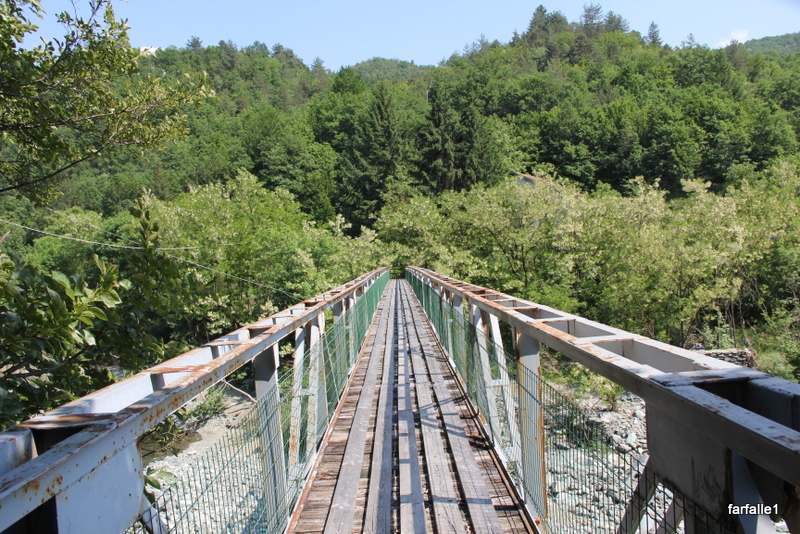
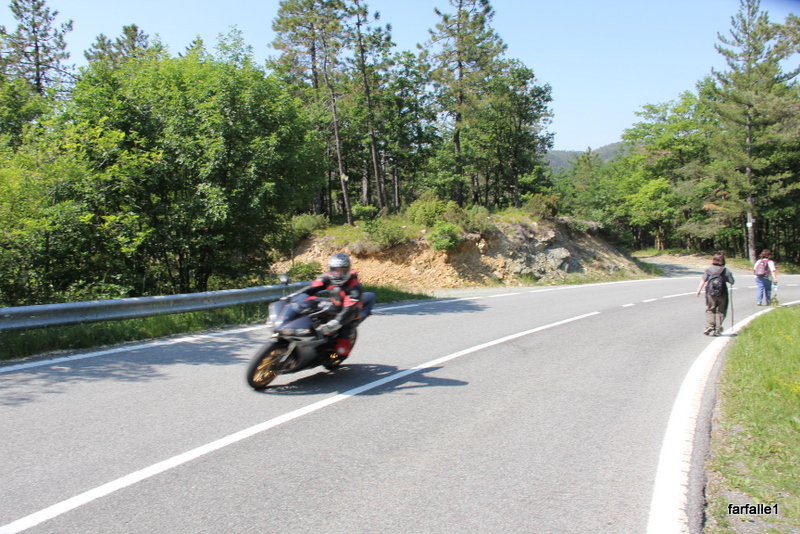
We crossed a number of bridges on our hike, some more rickety than others. One had enough missing boards to be downright worrisome, but most were in fine repair. The curvy, hilly roads in the park are a mecca for bicyclists and motorcyclists, of which we saw many on the occasions when our path crossed the road. Here, in no particular order, are a few photos taken on our hike.
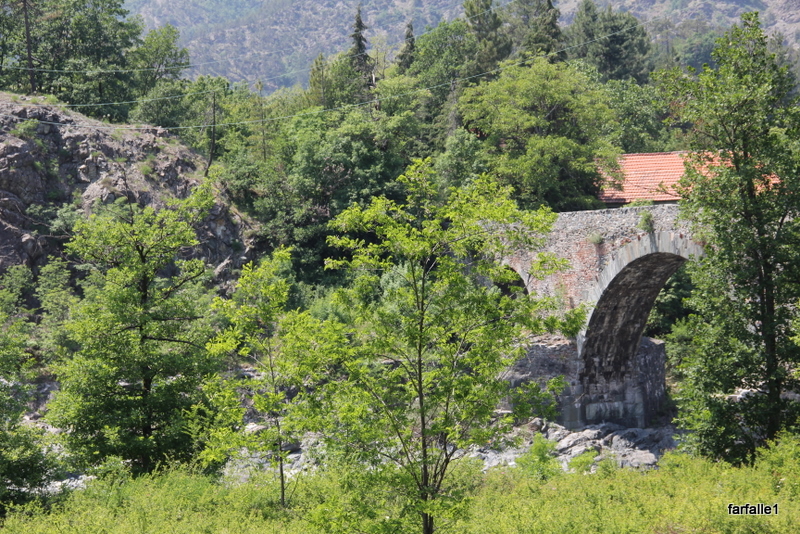
Roman bridge

Beigua's Grand Canyon
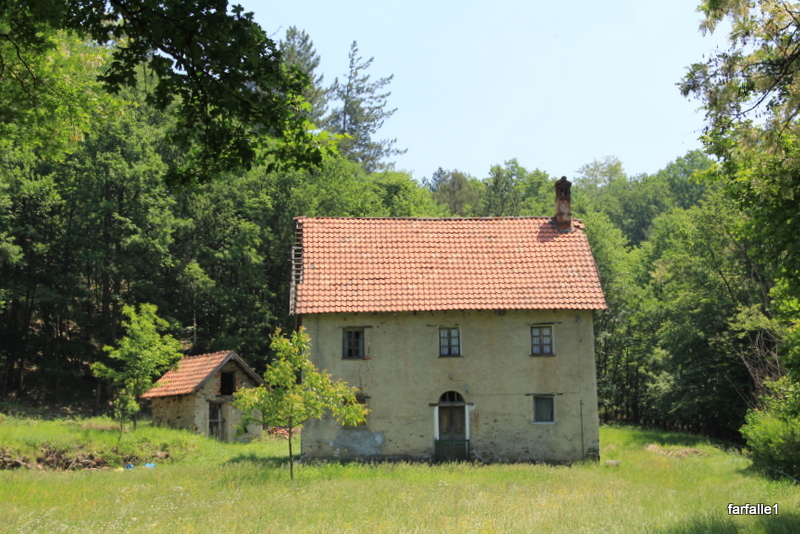

An old oven


Old shrine

On the way home we stopped in the pretty town of Campo Ligure which features a castle built by Genova’s Spinola family in 1309 (closed by the time we arrived), a spacious central piazza with a 14th century palazzo (also Spinola) and a medieval bridge which has been much restored.
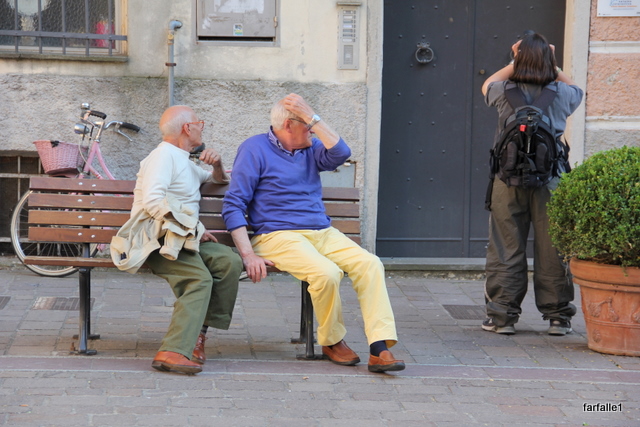
Here are some photos of that brief visit. An amusing event while we were there: a pair of old gents on a bench in the piazza kept staring at Michela as she took pictures – I couldn’t figure out why. It turned out they just wanted to be sure she knew about the medieval bridge and would go there to take photos. In fact, the man in the yellow pants followed us to make sure we did just that!
The highly touted bridge was built over the River Stura in the 9th century and rebuilt several times from the 18th century onwards:
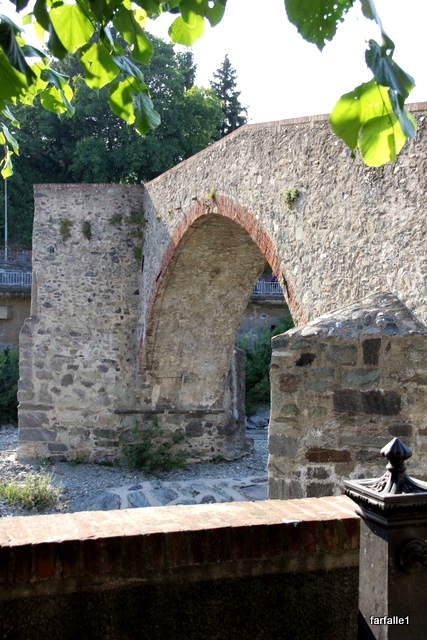
In spite of the rebuilds it still has a pleasingly romanesque shape.
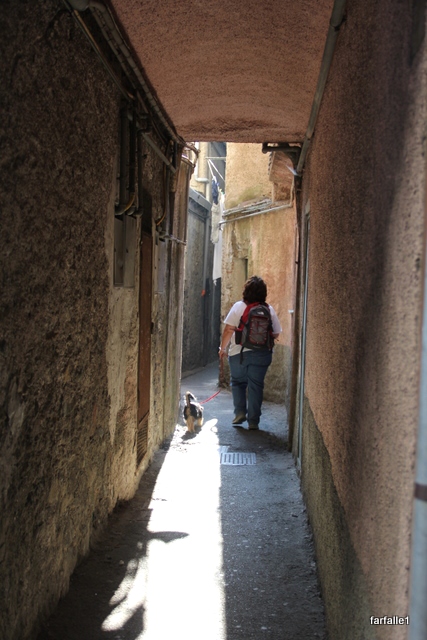
The old center of the town is laced with narrow medieval alleys:
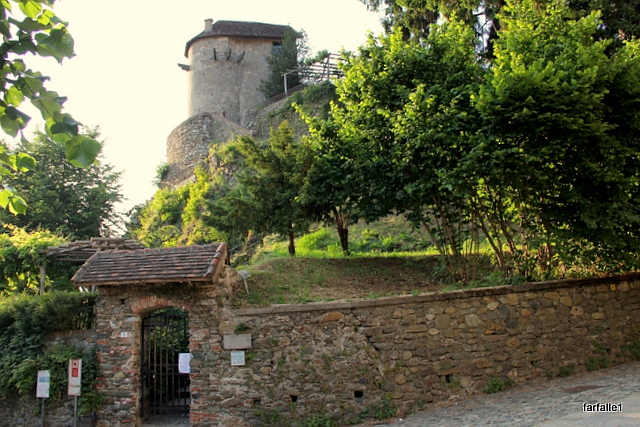
The castle sits atop the hill behind the town:
I’m not sure what purpose this chimney serves, or why it is so deliciously turned. If you know, please tell me:

This nonna and her tow-headed grandson were having excellent fun diverting the water from the lion’s mouth to make their own fountain:

Campo Ligure is a perfect example of what makes Italy such a delightful country to explore. Without be ‘important’ it offers a brief and interesting history lesson, as well as many beautiful little corners to discover.
 An Ex-Expatriate
Nice article. I think the brick chimney is turned to show the skill of the mason. It took a very skilled and experienced bricklayer to accomplish that. Probably the building or oven or furnace it once served has been torn down. Similarly, the arched bridge was built to show technical skill, as the arch deftly transfers the weight of the center to the sides without a huge center beam. Looking forward to your next piece.
I expect you’re right about the curved chimney – I can’t imagine how it was accomplished. Thanks for stopping by…
How delightful!
And what is it about old, Italian men leading people places? Remember in Ravenna?
Helpful and charming old gents.
I particularly love the picture of the narrow medieval alley – lights up my imagination with stories of intrigue and plague…
I wonder if you’ll find such an alley in Edinburgh?
People are wonderfully helpful here. I was lost in Genova about a month ago and a woman out walking her dog walked me all the way to my destination, about a quarter of a mile away. She said the dog needed the exercise. I thought the dog looked rather tired already! But I was ever so grateful.