
No, we’re not crackers, at least not yet. But we do love to eat them with our late afternoon snack with salami (Speedy) and cheese (Fern).
Not long ago we discovered at our local bakery an absolutely delicious, crispy cracker which they call ‘krick-krock’ and which are known throughout Italy as lingue (tongues) for obvious reasons:
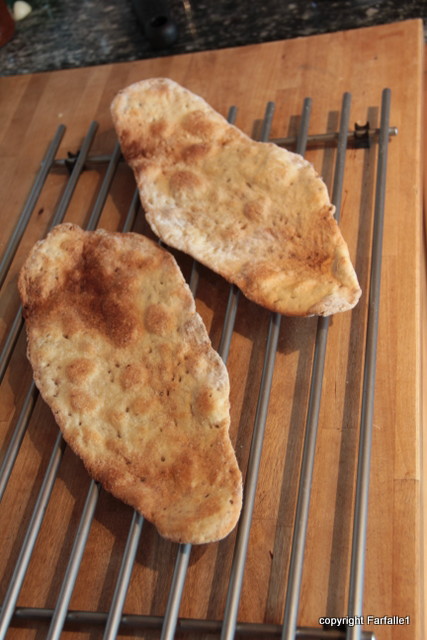
Say ‘Ahhhhhh!’ The problem is they are rather expensive, at least when one eats them in the quantities that we like to. What to do? It didn’t take Speedy long to break the code on how they’re made. Does it take a bit of work? Well, yes. Are they easier to produce with four hands than two? Yes, but not at all impossible with only two, Speedy can attest to that. I guarantee they are worth the effort – you’ll never want another Trisket or Saltine after you eaten these crackers (I just can’t call them ‘Speedy’s tongues’ – it sounds troubling).
Here’s the recipe Speedy developed.
First, make a starter (called a ‘biga) by dissolving
Let the starter age anywhere from 2 hours to 24 hours – it lives to serve you.
when the yeast is dissolved stir in
your biga
2 tsp salt
1/4 Cup olive oil
1/3 Cup whole wheat flour
1/3 Cup corn meal
enough White Flour to make a stiff dough (2-3 Cups)
Pre-heat oven to 500. (!)
Knead into the risen dough
2/3 Cup crumbled rye bran
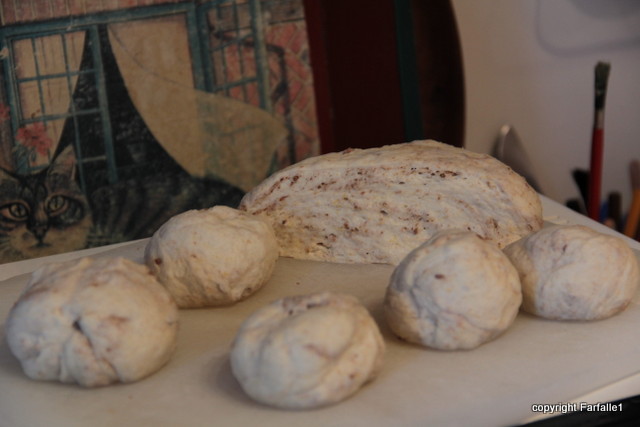
Break off a knob about the size of two extra large eggs, and roll out on a well-floured board to desired thickness (1/8 inch isn’t so bad) in the shape of a long thin tongue.
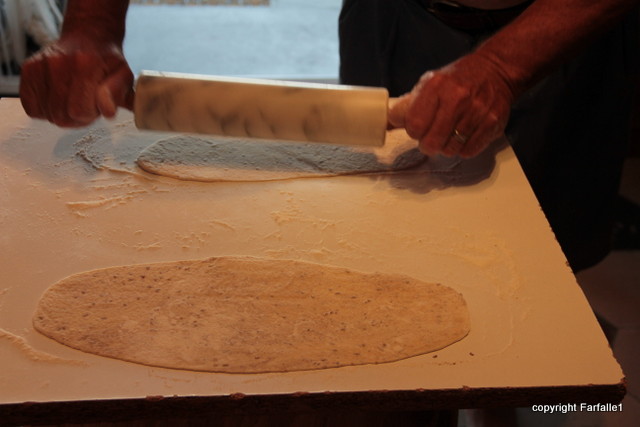
Transfer the tongue to an oiled baking sheet, brush with olive oil and salt to taste (we use a lot of salt because we love our crackers salty) and put on the top rack of the oven.

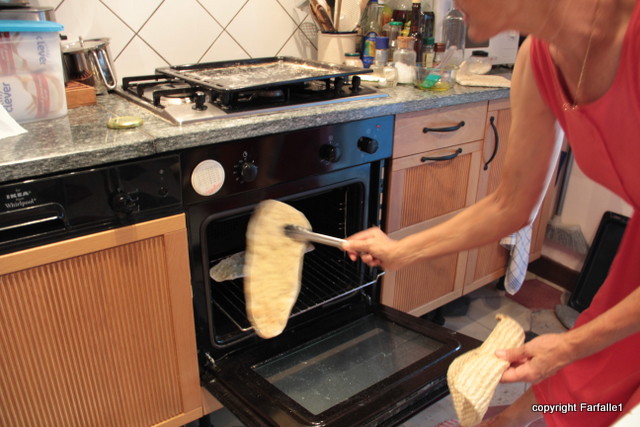
Keep an eye on them! When they just start to take a little color pull the pan out and use tongs to flip the tongues over (no need to oil or salt the other side).
Pop them back in and keep a watchful eye. When the top again begins to brown pull them off the baking sheet with tongs and place them on the bottom rack of the oven to dry out a bit, finish cooking and get crispy. Keep an eye on them, this step doesn’t take very long. You can be rolling out and baking the next lot while the first ones are on the bottom rack.
When they’re done put them on a rack to cool. They keep very well in a plastic container for as long as you can keep from gobbling them up (we use an ancient Tupperware cake saver). Just break them into the size you want and enjoy.
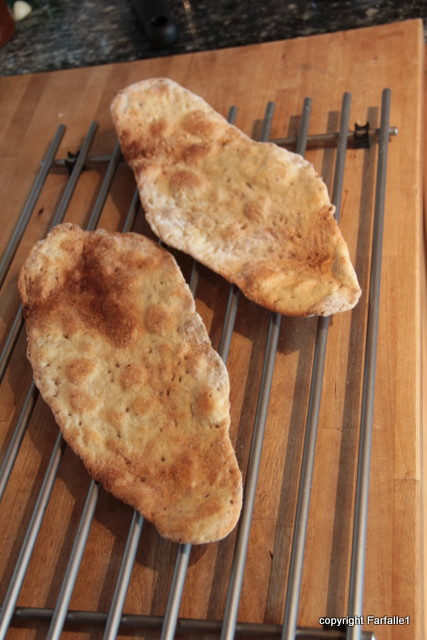
I know it sounds like a fair amount of work, but the results are very much worth it; you won’t be sorry. Even if they get a little over-done on the bottom rack they are still delicious.
Buon Appetito, and please pass the beer!
 An Ex-Expatriate
Ah – you know me. I was born with a green thumb, but when it comes to baking I have a black thumb. That’s okay – no one wants to hog all the gifts the world may bestow. I have enjoyed reading about Speedy’s cracking of the lingue code, and know that others will be taking advantage of it in their kitchens. Your posts are just so wonderfully unpredictable and enriching!
Thank you for those kind words. We just made crackers again this evening (they don’t last long around here) – it seems less of a Big Deal each time we do it.
How spectacular! I’m certainly going to try this. Thank you Speedy for figuring it out and you, Fern, for writing it up so clearly. (I covet Speedy’s marble rolling pin – and Fern’s lovely arms!)