Tags

Pronounced Sah-Wha’-Roh, this beautiful cactus is probably the most recognized symbol of the American southwest (along with the rattle-snake). Native to the Sonoran Desert, the saguaro often grows in ‘forests’ like the one seen above.
It’s a slow-growing critter. Night-blooming flowers form in bunches on the tops of the arms from April through June, and the resultant red fruit produces seeds to make more little saguaros. The flowers (the saguaro is the State Flower of Arizona) are pollinated mostly by bats, and often stay open into the morning hours.
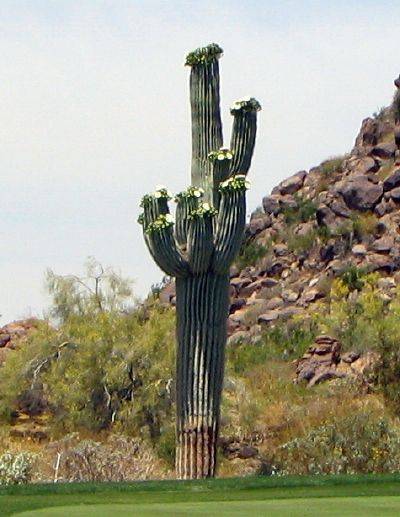
photo courtesy of Phoenix.about.com
The first arms don’t form on a saguaro until the plant is about seventy years old, so when you see a big one with a lot of arms, you know it’s old. They can live for one hundred fifty years or more.
Saguaro babies like to begin their lives in the shade of nearby shrubs which give them protection from passing animals.

Once they’re old enough they’ll put out their first stubby little arms:
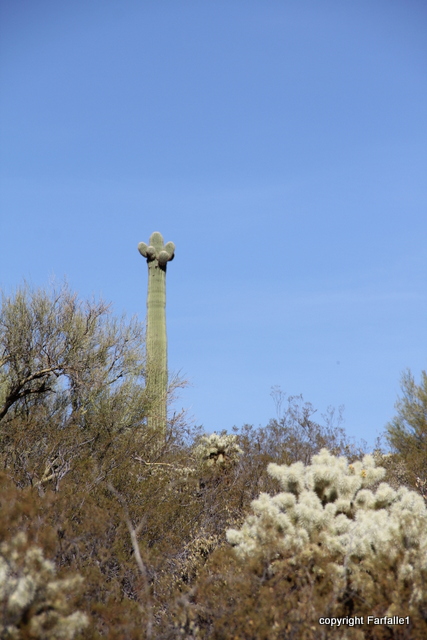
And if they’re lucky and get enough water and nutrients over the years, they will grow into the giant specimens that can be seen in the Tucson -Phoenix area, southern California and down into Mexico. Here’s a picture of one that began its life long before the electricity running behind it was harnessed.
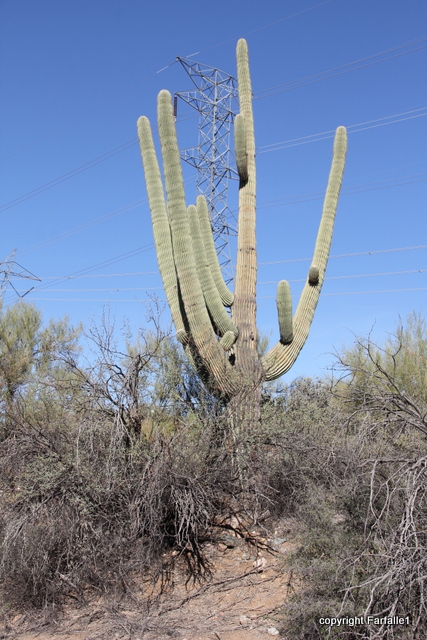
Eventually, like all of us, these giants succumb to to illness or just plain old age:
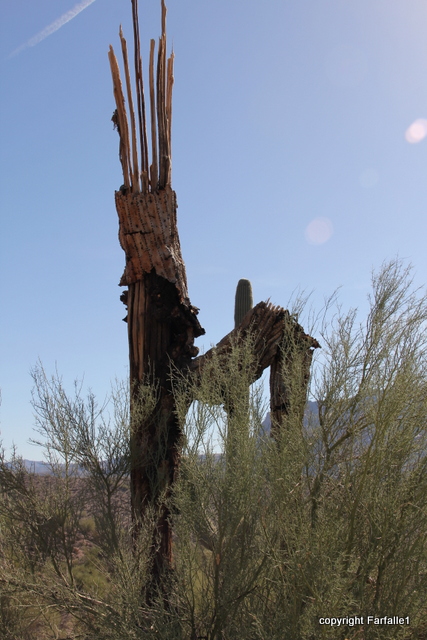
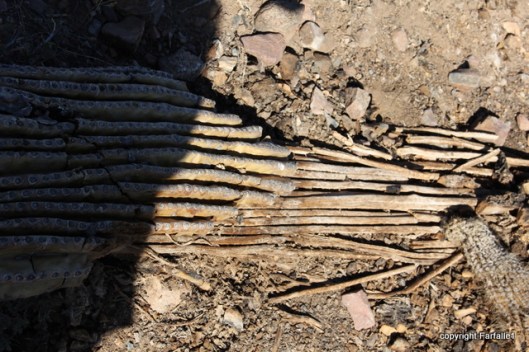
It’s then that they share the secret of their interior architecture. Their bodies and arms are full of long pipes that hold any scarce water the plant is able to absorb during the rainy season. When they die, they look like a bundle of old bamboo sticks on the ground.
Birds like to nest in the saguaro, and for reasons I can’t quite fathom, hunters like to shoot them, so you often seen them with holes of one sort or another.

Victim of too many errant shots on the golf course
When a hole is made in its skin, the saguaro heals on the inside by forming a sort of wooden bowl that keeps the hot dry air out. The Gila Woodpeckers like to make fresh nest holes every year in the cactus. Other birds, such as cactus wrens, flickers and finches then can use this bowl as a nesting site.
While most of the saguaros lift their arms in surrender, every now and then you come upon a comedian.
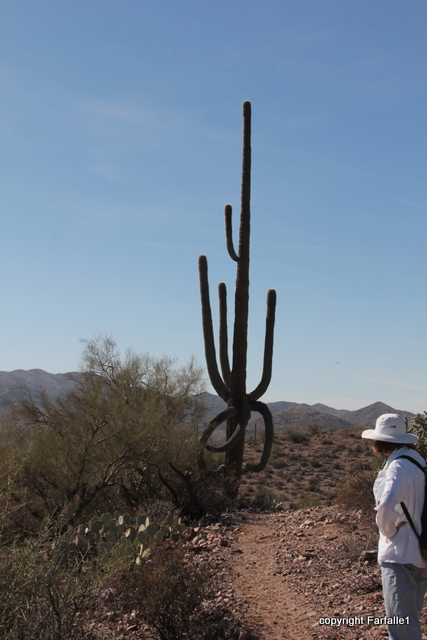
It’s hard to imagine what would make those lower arms form in that way. Can you come up with a good caption for the photo?
In 2011 Curt Fonger made some wonderful photographs right here in Gold Canyon of a bobcat which had climbed to the top of a saguaro to avoid being caught by a mountain lion. You can read the story here and see other photos.
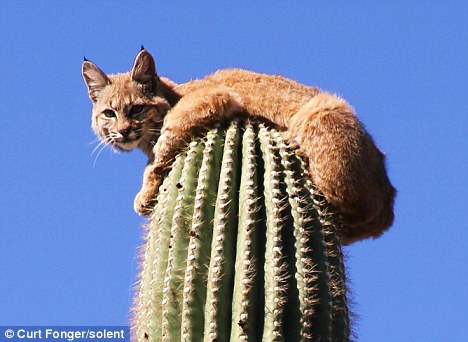
photo copyright Curt Fonger/solent
I love seeing the saguaros on hikes, but if I ever start talking to them, I’ll know it’s time to hang up my hiking boots.
 An Ex-Expatriate
Your curiosity about all things is so wonderful. Your posts are so interesting and informative! Love the cat on top of the cactus!
Gosh thanks, Diana. Aren’t the cat pictures amazing?! How I wish I’d actually seen that.
In wonder if his fur kept the thorns out of the bobcats underside – but then if its life or death he most likely didnt care. Desert plants are fascinating!
What a fascinating post, thanks 🙂
Thank you, Lindylou!
What amazing plants! You couldn’t make this up could you?
No, you certainly couldn’t make them up. Not only are they absolutely specific to a rather restricted zone, they can be downright amusing.