• Contact
  • Elaborations
    • A Policeman’s View
    • Driving School Diary
    • Great Danes
    • IVA charged on Tassa Rifiuti
    • Nana
    • Old trains and Old weekends
    • The peasant, the virgin, the spring and the ikon
    • Will Someone Please, Please Take Me to Scotland??
  • Recipes
    • ‘Mbriulata
    • *Baked Barley and Mushroom Casserole*
    • *Captain’s Boston Baked Beans*
    • *Cherry Tart*
    • *Crimson Pie*
    • *Louise’s Birthday Cake*
    • *Melanzane alla Parmigiana* – Eggplant Parmesan
    • *Penne with Cabbage and Cream
    • *Pizzoccheri della Valtellina*
    • *Pumpkin Ice Cream*
    • *Risotto alla Bolognese*
    • *Rolled Stuffed Pork Roast* on the rotisserie
    • *Shrimp and Crayfish Tail Soup*
    • *Spezzatino di Vitello*
    • *Stuffed Grape Leaves*
    • *Swordfish with Salsa Cruda*
    • *Tagliarini with Porcini Mushrooms*
    • *Tagliatelli al Frutti di Mare*
    • *Tzatziki*
    • 10th Tee Apricot Bars
    • Adriana’s Fruit Torta
    • Artichoke Parmigiano Dip
    • Best Brownies in the World
    • Clafoutis
    • Cod the Way Sniven Likes It
    • Cold Cucumber Soup
    • Crispy Tortillas with Pork and Beans
    • Easy spring or summer pasta
    • Fagioli all’ucelleto
    • Fish in the Ligurian Style
    • Hilary’s Spicy Rain Forest Chop
    • Insalata Caprese
    • Kumquat and Cherry Upside Down Cake
    • Lasagna Al Forno con Sugo Rosato e Formaggi
    • Lemon Meringue Pie
    • Leo’s Bagna Cauda
    • Leo’s Mother’s Stuffed Eggs
    • Louis’s Apricot Chutney
    • Mom’s Sicilian Bruschetta
    • No-Knead Bread (almost)
    • Nonna Salamone’s Famous Christmas Cookies
    • Pan-fried Noodles, with Duck, Ginger, Garlic and Scallions
    • Pesto
    • Pesto
    • Pickle Relish
    • Poached Pears
    • Polenta Cuncia
    • Pumpkin Sformato with Fonduta and Frisee
    • Rustic Hearth Bread
    • Sicilian Salad
    • Soused Hog’s Face
    • Spotted Dick
    • Swedish Tea Wreaths
    • The Captain’s Salsa Cruda
    • Tomato Aspic
    • Vongerichten’s Spice-Rubbed Chicken with Kumquat-Lemongrass Dressing
    • Winter Squash or Pumpkin Gratin
    • Zucchini Raita

An Ex-Expatriate

~ and what she saw

An Ex-Expatriate

Category Archives: Italian bureaucracy

Citizen Salamone

04 Wednesday May 2011

Posted by farfalle1 in Italian bureaucracy, Italian habits and customs, Italy, Law and order, Uncategorized

≈ 11 Comments

Tags

Italian bureaucracy, Italian citizenship, Trattoria del Sole

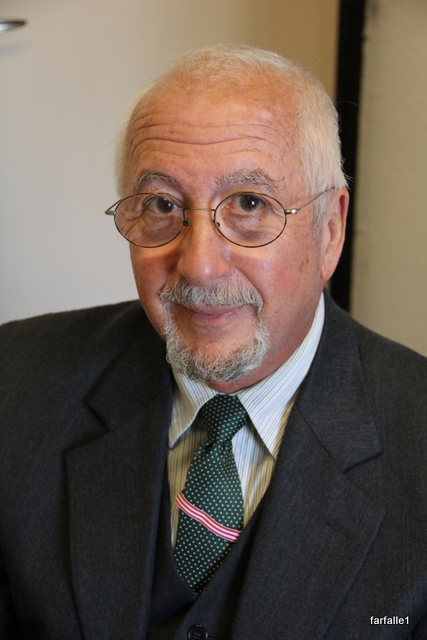
Meet Italy’s newest citizen, The Captain, aka Louis Philip Salamone.

The procedure, I can’t call it a ‘ceremony,’ took place in the office of the head of the Ufficio Stato Civile, Dotoressa De Filippi this morning and was more casual than solemn (I would have liked a bit more ceremony, myself). Nonetheless, for us it was the culmination of several years of work and waiting, and we were both thrilled with the outcome and moved by the Captain’s new status.

At first we were afraid we were headed for a problem, one which has reared its ugly head in past administrative wrestling matches.  Whenever one gets a document, carta d’identita, permesso di sogiorno, etc.,  one must put place of birth on a form.  By place of birth Italian bureaucracy means town or city.  The Captain’s U.S. passport lists place of birth as ‘Wisconsin.’  This led to no end of trouble early in our stay here, but for some reason the good Dotoressa merely shook her head and commenced redoing the various declarations (they had to be further altered to correct the Captain’s misspelled middle name).  Then began the ritual ‘signing of the many forms,’ which occurred no fewer than four times.
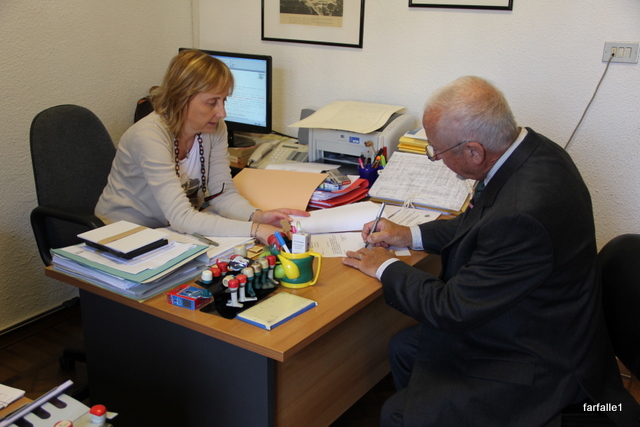

Somewhere in the midst of the signing the Captain took an oath to uphold the Constitution and the Laws of Italy.  There was  no hand on heart, no holy book, no blood asked for or given, just a verbal promise to be a good citizen.

In the midst of all this the phone rang, and our proceedings were interrupted by a long discussion of what the caller’s daughter had to do to get her passport. 
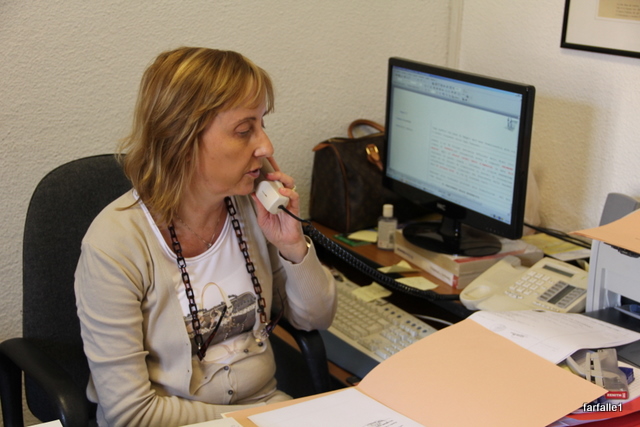

It certainly detracted from the feeling that ours was a special moment, but we quickly got over it.
  Then the Dotoressa read a lengthy declaration to the effect that the President of the Republic had accepted the Captain as a citizen and showed us the Presidential decree, a photocopy of which was given to us later.
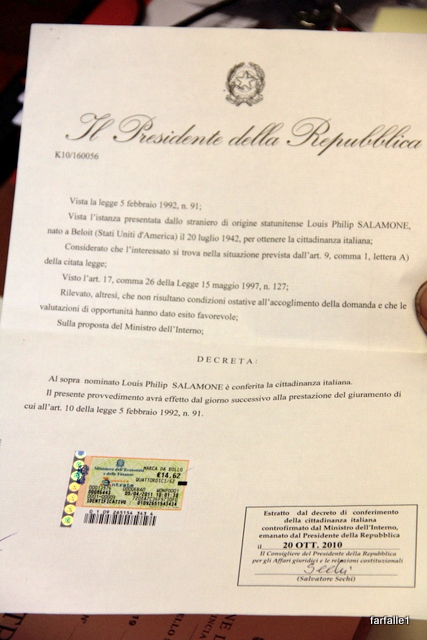

A quick handshake, and the deed was done.
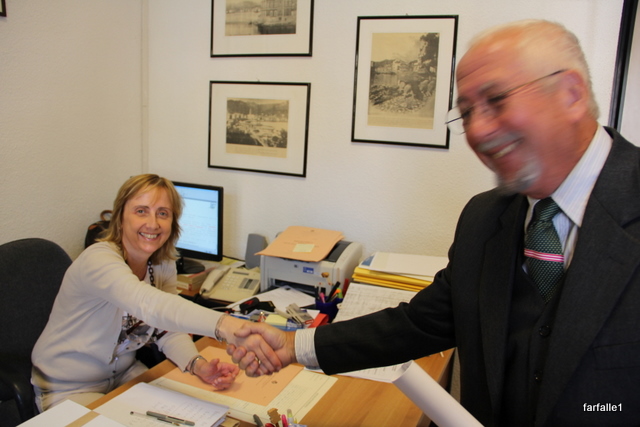
I thought my Captain looked so handsome in his suit – it’s perhaps only the second time he’s worn it in the ten years we’ve been here.  I wish I could fit into clothes I had ten years ago!  He did not have a red, green and white tie, so he chose a green and white tie which we decorated with a bit of red and white ribbon, a not entirely unItalian thing to do. 

Today was the end of a long road that we began in 2005.  The quest began in the office of the very knowledgable and always helpful Anna Maria Saiano, the head of the Genova branch of the U.S. Consulate.  She led us to Signore Bevilacqua (Mr. Drinkwater!) who sent us to Dotoressa De Filippi in Rapallo.  She was disinclined to give the quantity of help we needed, so we returned to Sig. Bevilacqua in Genova, and he got things going for us.

There are many ways to become a citizen, one of the most common being ‘lineage.’  We had assumed this would be our route as both the Captain’s parents were Sicilian, one by birth, one by blood.  However, because the Captain’s father became an American citizen before the Captain’s birth, in effect renouncing his Italian citizenship, it became more complex.  We would have to go back to the grandparents, born in Sicily not all that long after the unification of the country.  Two world wars have had their way with that island – the odds of finding all the requisite birth certificates were low. 

We resorted to a ‘naturalized’ Citizenship, possible after five years of residence if either of the parents were born in Italy.  There are  other routes to citizenship, which you can read about here.  Gathering all the requisite data took some time, but was not especially difficult: 1) the application 2) Marca di Bollo (stamp) for E14.62  3) Income tax returns for three years  4) Father’s birth certificate  5) Captain’s birth certificate  6) FBI certificate / arrest record (done through fingerprints taken in Genova and sent to the US) 7) our marriage certificate 8) residency certificate proving length of residence in Italy  9) Permesso di Sogiorno  10) notarized copy of passport.  All documents in English required  certified translation, which we were able to procure from an office in nearby Chiavari.  The Captain did the translation himself; the certifying administrator didn’t speak English.

What the Captain didn’t have to do, which aspiring U.S. citizens must, is learn a lot of history and take a difficult test.  I’m happy to tell you that the Captain has read the history of Italy many times over, because it interests him, and I’m sure he could pass tests in both language and history.  But isn’t it interesting that in the U.S. there is a test to prove you are worthy, and in Italy it is simply a question of having the correct papers and forms?  Bureaucracy!  Having watched Craig Ferguson’s (The Late Late Show) citizenship swearing-in on TV I was surprised there was not a bit more pomp and circumstance, and at least an upraised hand when giving the oath. 

Once we filed the application and all the attendant paperwork we simply had to wait.  The State had  two years (actually seven hundred thirty days) in which to process the application and render a decision; they didn’t go too many weeks over.  News of our success reached us when we were in the U.S., and a visit to Dottoressa De Filippi was the first order of business when we got back to Rapallo. We were surprised to learn that the Captain was the twenty-seventh new citizen she had processed already this year.

So it was an exciting and momentous morning for us.  The Captain pursued citizenship for several reasons.  In a way it closes a circle that was opened when his father left Sicily for Ellis Island in 1921.  It makes life here much less complicated: no need to be traipsing off to Genova every few years for permission to remain.  Mostly it just gives official confirmation to something the Captain has known all his life: he is Italian.

All that remained for us was a quick celebratory lunch at the delightful Trattoria del Sole across from the petrol stations on Via Mamelli where we took advantage of the daily special: penne with funghi; fried achiuge (sardine-like fish), carrots, potatoes, wine, water and coffee, all for the princely sum of E 8 each (Ligurians have the reputation of being tightfisted with their money – who are we to go against type?).
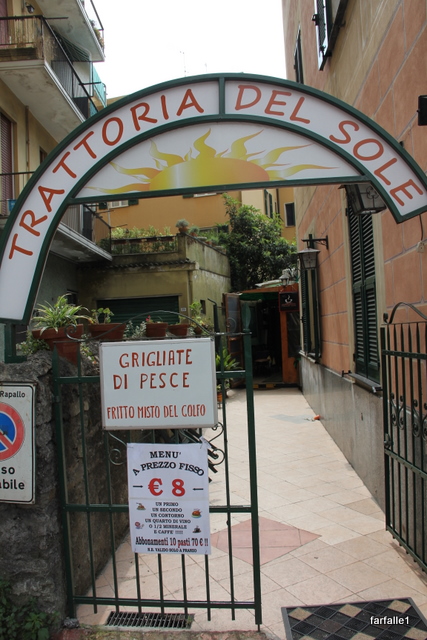

We hadn’t eaten here before, though the place has been beckoning to the Captain for some time, and were charmed to find examples of the owner’s art and crafts on the walls.

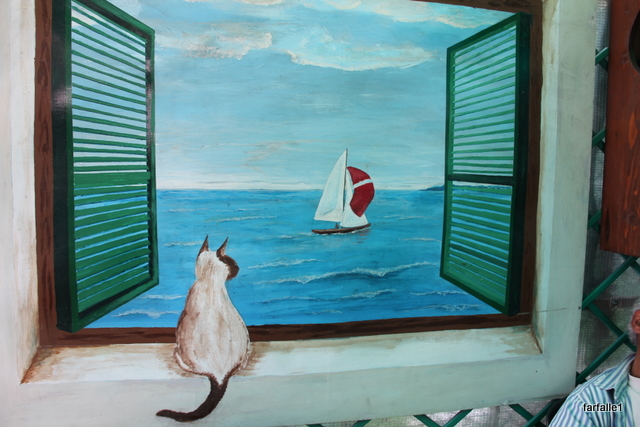
So came to a close a festive (for us) and memorable morning. Viva Italia!
Parli Italiano?

28 Friday Jan 2011

Posted by farfalle1 in Customs, Italian bureaucracy, Italian habits and customs, Italy, Law and order, Uncategorized

≈ 14 Comments

Tags

Assimilation, Cultural assimilation, Italian language law

Illustration courtesy of Tile Hill Wood School

Italy has passed a new law that requires immigrants to offer proof of proficiency in the Italian language and to have a basic understanding of Italian culture.  Wow!  Can you imagine that happening in the U.S.?  Here are the details as set out by Baker and McKenzie in their website:

On June 10, 2010, the Italian Government enacted a new decree… that introduces substantial new developments for what concerns immigration permits. Once fully enforced, these new provisions will apply to all non-EU citizens who enter Italy for the first time with a stay permit having a duration of at least 1 year or more. Purpose of the new law is to guarantee that foreigners, who will be living in Italy for a long period of time, integrate in the community where they live and conditions the renewal of the stay permit to a series of new obligations that must be fulfilled by the foreigner.

The main aspects of this new law may be summarized as follows:

a) upon presenting an application for a stay permit, for whatever reason this may be (work; study; humanitarian reasons, etc.), the foreigner will be required to execute an agreement according to which he/she undertakes, in the following 2 years, to acquire sufficient knowledge of the Italian language (lev. A2) as well as Italian civic culture and lifestyle.

b) in order to help the foreigner acquire the knowledge mentioned above, the Italian Republic will sponsor adequate projects and in any case will hold courses of civic culture free of charge.

c) upon execution of the agreement mentioned above in a, the foreigner will be granted 16 credits. If he/she does not participate in the courses of Italian civic culture, mentioned above in b, he/she automatically looses 15 credits.

d) credits may be increased (to a maximum of 30 credits) if the foreigner participates in courses or acquires certificates, diplomas or degrees. Instead, credits may be lost if the foreigner incurs in criminal sanctions or even serious breach of administrative and tax laws.

e) the Immigration Office (Sportello Unico per l’Immigrazione), via the documentation that must be provided by the foreigner him/herself, will verify if he/she has acquired the 30 credits necessary to sustain a test, organized by the Immigration Office, to ascertain knowledge of the Italian language and Italian culture.

f) if the foreigner acquires 30 credits and passes the test mentioned above, his/her stay permit is renewed. An extension of one year, for the fulfillment of obligations deriving from the agreement, may be granted in the event that the foreigner has not acquired 30 credits at the end of the first 2-year period. Instead, with 0 or less credits, the foreigner will not receive renewal of his/her stay permit and will be forced to leave the country.

Leave it to Italy to make the process incredibly complicated.  Credits?  Pluses and minuses?  Why not just give the exam and then issue a card proving successful completion?  I know why!  It would require only a testing room at the Questura, instead of numerous teachers, classes, etc.  I can’t help but think that Italy herself is in love with all the layers of bureaucracy that make the rest of us wring our hands.  Surely it could have been designed more simply.

Two things strike me particularly about this law:  The first is that it applies only to non-EU immigrants.  I suspect it had to be written that way to appease Brussels, but it does rather favor those immigrants coming from the new eastern members of the Union (Bulgaria, Cyprus, Estonia, Greece, Latvia, Lithuania, Poland, Romania, Slovakia and Slovenia) over those from the Middle East and Africa, to say nothing of those coming from the U.S., Canada and South America.  Fair?  Not really, but then perhaps that isn’t the point.

The second is that while the government will sponsor courses in civic culture, it is up to the immigrant to keep track of all those pesky credits and present himself at the Immigration Office in a timely fashion – another example of people being given responsibility for their own record-keeping (as discussed in this old post). Come to think of it, maybe this is a good introduction for the new arrival to this do-it-yourself feature of Italian life.

What would happen if a similar law were passed in the U.S?  Well, first of all, such a law never would be passed because it would be deemed discriminatory.  But if through some strange course of events it were, what a hue and cry there would be!  There are whole pockets of immigrant populations scattered about the country who have maintained a strong ‘foreign’ cultural identity.  The Captain’s own grandmother lived in Illinois for 60 years and never learned to speak English.  No one came after her waving a language law.

What it boils down to for an immigrant is the conflict between assimilation into a new culture, and maintaining one’s own, often very different, cultural identity.  Personally I think it’s an excellent idea to learn the language, geography and history of the country to which one moves.  I’m just not sure passing a law to make it mandatory (for some) is the best way to go about getting it done.  And I’m quite unclear on what the actual motivation behind this particular Italian law might be, though I have some suspicions, based on no clear evidence at all.

Sometimes he doesn’t ring at all…

19 Sunday Dec 2010

Posted by farfalle1 in Italian bureaucracy, Uncategorized

≈ 6 Comments

Tags

Italian postal system, Mail in Italy

Image courtesy of scrapologie.blogs.com

This morning my friend Deborah called from San Francisco called to say that the letter I mailed to her from Rapallo on October 18 had arrived yesterday.

What wonders did my letter see on its long journey from me to Deborah??!

I guess we’ll never know, because although it’s full of words, it’s not talking.  Guilty conscience, no doubt.

It’s Your Responsibility

03 Friday Dec 2010

Posted by farfalle1 in Health and health care, Italian bureaucracy, Italian habits and customs, Italy, Medical care in Italy, Medical care in the U.S., Uncategorized

≈ 4 Comments

Tags

Health care in Italy, Health records in Italy, Health records in the U.S.

In Italy people tend to take much greater responsibility for the little details in life than we do in the United States.

Take bills, for instance.  Certainly we receive many, too many we often think!  But actually, we receive too few in Italy.  There are many obligations which we must remember we owe, track down the amount due, and then pay in a timely fashion.  These include automotive taxes, health insurance (which we pay for because we are not citizens), automotive insurance, other taxes (income and property – of course! – though the property tax on primary residence has been repealed), and various inspections – motor vehicles, gas heater and so forth. Helpful reminders are not forthcoming, and penalties apply for late payment.  We forgot to pay the car tax a couple of years ago and the penalty was substantial – about E 100 if memory serves.  Auto registration and driving licenses  are also on the list of things we must remember to renew without benefit of a reminder.  The Captain has created a great month-by-month calendar on the computer so that we won’t forget what to pay when.

It’s not consistent, though.  For example, we receive bills for the TV tax, the Road Access tax (don’t ask), and the Garbage tax, but not for the various taxes noted above.  Who decides these things?  How do they decide??

And even when help is available its isn’t always, well… helpful.  When we bought our tumbling down house in the hills above Rapallo we were stunned to discover that property tax bills were not forthcoming.  The Captain went right away to the appropriate office for help in figuring out what we should pay for the ICI (property tax, pronounced ‘eetchie’) each year.  They were  helpful, and we were thrilled because it was about € 35 a year – a real bargain!  When the reconstruction of our house was finished our geometra registered the change of house category with the regional property office, which should, one would think, have triggered a change in taxes owed. (A geometra is a cross between an engineer and an architect, in our case the man who designed the reconstruction and oversaw its realization)

We have always asked a ‘commercialista’ (an accountant) to prepare our Italian taxes, and after a couple of years the man who does them was able to calculate our ICI due from information on record about our house, saving us our annual jaunt to the nice lady in the ICI office.  Years passed.  The ICI was repealed for primary residences.  The very year the repeal went into effect we were summoned to the ICI office; we were in arrears.  To make a terribly long story shorter, the ICI office had never updated the valuation of our house, in spite of the category change being registered, so we paid years of taxes on an uninhabited rustico instead of an occupied house.  In addition, the house is in both our names (which are different).  Each year when the Captain went to the office to ask what we owed and later, when the commercialista took over, the figuring was done on the Captain’s share of the tax.  No one realized Farfalle owed tax too.

We were able to negotiate the dismissal of the huge penalties and interest on unpaid taxes since the proper forms had been filed after the work was done.  But still, we owed some six years of taxes at a higher rate for the Captain, and all taxes for Farfalle – it was well over € 1,000, a truly horrid surprise.

Another responsibility people in Italy carry is keeping track of their own health records.  Certainly doctors will have records but if, for instance, you get an X-ray, the film is given to you to carry home, not filed at the doctor’s office or in the hospital or lab where it was made (do they have copies I wonder?  Surely they must).  In fact, all lab results are given to the patient, not sent to the doctor. This is very convenient if you decide to visit another doctor for a second opinion.  But it’s really inconvenient if you go to the doctor and forget to take your files with you!

Vets do the same thing.  Each patient has a ‘libretto’ – a record book of visits, treatments, procedures.  I recently disposed of the late Luciano‘s records (with a bit of a cry) which included some mysterious X-rays I couldn’t recognize.  A paw, perhaps, or maybe a bit of tail. It was easy to keep track of his records – I simply left them all in his cat carrier.  If only I could come up with such a reliable system to keep track of our own records!

We’re in the U.S. now.  The Captain had some blood tests done over a week ago.  They have not been forwarded to his doctor yet, and the lab absolutely refuses to release the results to him.  They treat us like incompetents here.  Inconsistent as things are in Italy, at least we are generally treated like adults.  And while I may not have brought the results of the Captain’s previous blood tests over here with us, I know where I’ve filed them in Italy.  Take that, LabCorp, who can’t manage to get them to an office in the same building within a week!  Why not allow us just a little responsibility… but maybe not quite as much as in Italy?

A Visit to the Bank – Part 2 of Daring Exposé of Italian Banking Practices

19 Tuesday Oct 2010

Posted by farfalle1 in Italian banks, Italian bureaucracy, Italian habits and customs, Uncategorized

≈ 10 Comments

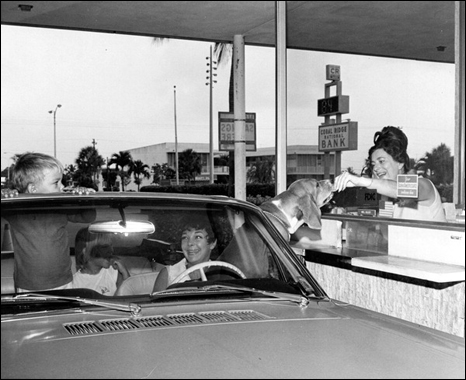
Going to the bank in Italy is never a casual affair.  For starters, you have to remember when your branch is open, and try to get there early so the line will not be too long.  Typically the banks are open most of the morning and an hour or two in the afternoon.  Drive through banking?

Not for you in Italy, and certainly not for your dog.

Though come to think of it, there is an element of drive-through banking that exists here.  You know those plastic tubes that you put your transaction in if you’re at a drive-through bank bay away from the teller’s window?  There’s some sort of pneumatic whoosh and the plastic tube is whisked away to the desk of the person who can take care of your business.  A minute or two later it arrives back with another whoosh, containing your receipt.  Well, when you want to enter many banks here you step into something that looks like a person-sized version of that plastic tube.  One side of the tube slides open, you step into the tube, the open side closes, you stand there trying not to panic, and then, finally, the bank side of the tube opens and you are in the lobby.  Phew!  At least you don’t have to do the whooshing bits.

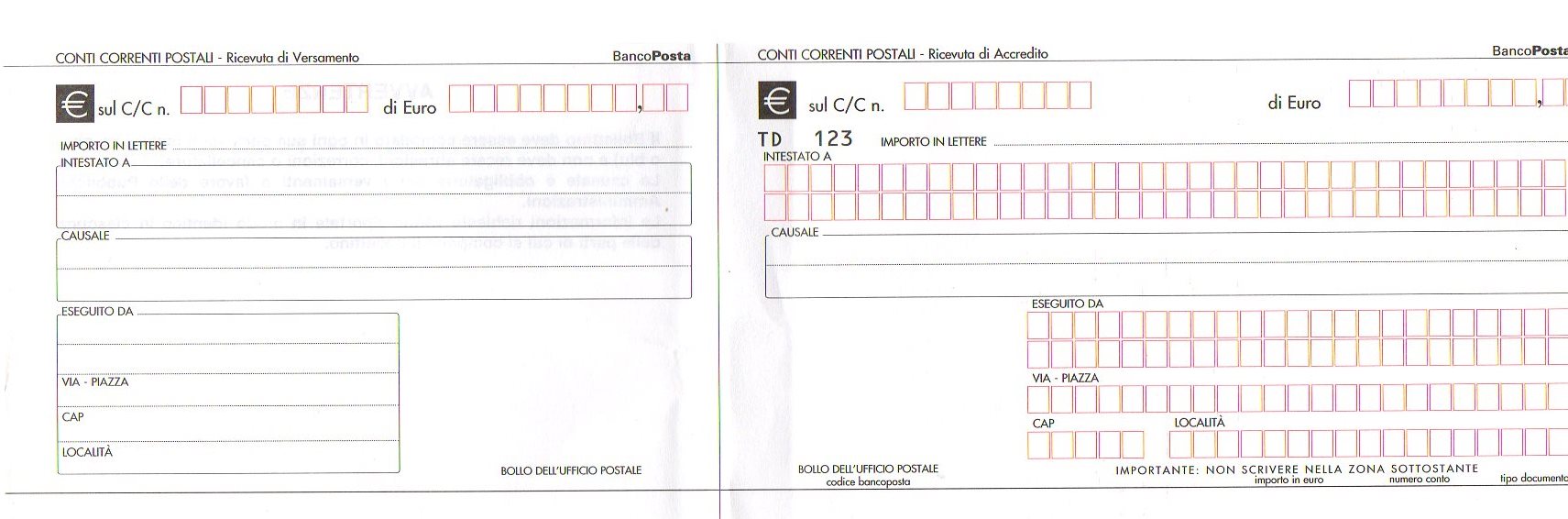
Once safely inside you take a number and wait your turn.  With luck your wait will not be more than 5 or 10 minutes.  You can do all the usual things at an Italian bank, it just takes longer.  People don’t use checks in Italy as much as in the U.S.  Frequently if you have a bill to pay you will go to the bank and pay what you owe directly into the other person’s account.  Which of course means that if I owe you money, you will give me your account number.  Why thank you!  Many times bills come with a payment/deposit form (called a ‘bollo’) attached, which has the payee’s bank info and the amount owed already printed on it.  Here’s what a blank one looks like (click on the image to see it in a more legible form):

You or the bank employee fill in the right side, which includes payee’s bank account #, amount to be paid, reason for payment (!), name and address of payee.  The part on the left is your receipt and proof of payment.

I watched a bank employee (let’s call him Carlo) dealing with a check the man in front of me had evidently deposited.  First Carlo stamped the check.  Then he ran it through some kind of scanning machine.  Then he took his scissors and nipped one corner off the check.  Then he paper-clipped it to a large form, signed the form and stamped it,  and put it on top of his to-do pile.  I was there to make a deposit in the checking account which is, mysteriously, in only my husband’s name.  It led to this very amusing exchange:

Me: “I’d like to make a versamento (deposit) and this is my account number.”

Carlo: “Is your account in this bank?”

Me: “No, it’s in the Zoagli branch.”

Carlo.  “Ah.  Zoagli.”  big sigh.

Me:  “Is there a problem?”

Carlo, haltingly: “No, no…” followed by much tapping at his keyboard.  A long pause.  “Captain Captain is the name on the account?”

Me, delighted: “Yes!  That’s the account.”

very long pause

Carlo: “The address is That Wee Village Road, #27?”

Me:  “That’s right.”    longer pause, worried (both of us).

Carlo: “This account has a masculine name; you are a woman.”

Me: seeing the light (and rather glad he noticed): “Ah yes… that is my husband’s account.”

Carlo, in great relief: “Good, good, alright then. Your husband.  You are the wife.”  Paper in machine, tap-tap-tap, paper out, my signature, his signature, stamp, stamp.

Success!

Here are some of the quirky (to us) things about Italian banks.  1) Various branches of the same bank are not necessarily connected to each other electronically.  They are always happier if you do your banking in your particular branch.  2) Should you write a check to someone, it is not returned to you canceled after it has been cashed.  Nor is it returned to your bank.  It stays in whichever bank your payee deposited it.  Which means if you need to capture proof that you’ve paid someone, you need to know where he stashed the loot.  3) A mortgage is readily available, especially if you can prove that you already have the money to pay it all back.  4) The Post Office is also a bank, and judging from what we see in the lobby, it does more business with banking than with mail.  But you can’t buy a stamp at your bank.  5) Sometimes other agencies serve as banks – for instance, we pay our vehicle insurance and tax bills at the Automobile Club of Italy.  6) Sometimes one bank will be an agent for a particular vender, so you can pay your bill at that bank for no charge or a small charge, whereas paying it at a different bank will carry a larger charge.

But for all their quirks, and for all the waiting and complications and charges, we have always found the people who work in the banks to be invariably patient and helpful.  We are not always good at explaining what we want, and we frequently don’t know the correct words, but the bank employees work with us for as long as it takes to make us satisfied customers.  And not just for us foreigners; they are courteous and helpful to everyone.  I expect that is part of what makes for the long waits…

Hidden Charges – Part 1 of Daring Exposé of Italian Banking Practices

09 Saturday Oct 2010

Posted by farfalle1 in Italian banks, Italian bureaucracy, Italian habits and customs, Uncategorized

≈ 8 Comments

Tags

Bank charges in Italy

We have gotten so accustomed in the U.S. to banks being very open about the charges they make – not because they necessarily want to be, but because they are obliged to by law.  We’re spoiled in the U.S.!  We get free checking accounts, free credit cards, and if we go on the right day, free donuts and coffee.

It’s not as simple here (and I don’t mean just the donuts and coffee, which I have never, ever seen in an Italian bank lobby, never mind finding a bank branch in a super market or even a donut shop as you can in the U.S.). Every service the bank provides carries a charge.  It’s not that they’re hidden, exactly; we do receive a long list annually of bank services and their attendant fees.  It’s just that they are so unexpected.  We see them on the quarterly statement (quarterly!) that the bank provides… for a fee of E 5.70 every two months (actually, this fee is for the stamp that attests that the account is… what?  is something!  Correct? Still there?).

There’s a mysterious fee on each statement which is called ‘interessi e competenze’, usually about E5 or 6.  I can’t figure out exactly what it’s for; as it’s levied only once a quarter, perhaps this is the fee for the statement.  Anyway.  To my mind ‘interest’ is something the bank pays us for being kind enough to let them use our money.  To the Italian banker’s mind, ‘interest’ is something to be charged on a checking account.

One gets Telepass, the Italian equivalent of E-Z Pass  for automated payment of highway tolls, at the bank (I know!  Why??!) and it’s easy to arrange to have your tolls deducted right from your account.  Back when we first started with Telepass we had to pay a monthly fee for that convenience.  Fortunately in the last few years that fee has been dropped.  However, the bank gets a commission on your Telepass charges; not a lot (about 1.50 on our last statement), but still.

My favorite charge is the one we pay every month for the privilege of accessing our account online.  That’s E2.  Each month.  However, if we make two bill payments in one month  through online banking, the fee is waived for that month.  We’re not always able to do that, as not many places are set up for automated payment in this manner.  Recharging the cell phone credit is one good way to accomplish this mission, though.

Things are better than they were.  Of the 61 activities listed for a checking account for which the bank could charge, the 2007  list of applicable charges      reports 30 have been repealed and another 13 are listed with a charge of 0.  That leaves a mere 18 activities which carry charges.  It just happens that they are the very things many people do on a regular basis – use Telepass, access the bank online, carry a debit card.  To give them credit though (ha ha), they do not charge a per-use for the debit card.

I guess we shouldn’t complain.  The banks are open Monday-Friday from 8:30 to 12:15 and again from 3:45-4:30 – that’s real convenience!  The ATM’s, which we use to transfer US money to Italy (the easiest way to do it, and what we recommend to all traveling friends), frequently work, which is handy. That’s an improvement from ‘sometimes,’ which was the best they could do a few years ago.  In fact, I’ll give a little free advertising here to Deutsche Bank – their ATM’s always work (well, almost always), even when every other bank in town is spitting our card back with a suggestion to call our bank.

Bottom line?  Banks do very well in Italy.  You might want to invest in one!

Where there’s fire, there’s smoke…

04 Friday Jun 2010

Posted by farfalle1 in Customs, Italian bureaucracy, Italian habits and customs, Uncategorized

≈ 7 Comments

Tags

agricultural burning

At least that seems to be the case in Italy.  And there are plenty of fires. About a year ago I wrote about our neighbors’ smoke and how distressing it was.  Things have not improved.

The other day the Captain returned from a day at his labors to find a very unhappy Expatriate.  Our neighbors below began burning about 7 in the morning, and continued non-stop until 8 that evening.  We wouldn’t mind a bit if they would move their burn pile, but they persist in burning immediately below our terrace… to the point that we suspect they are doing it on purpose (oh how suspicious we are!).  The smoke envelops and seeps into the house and soon everything smells smoky and some of us get sore throats.

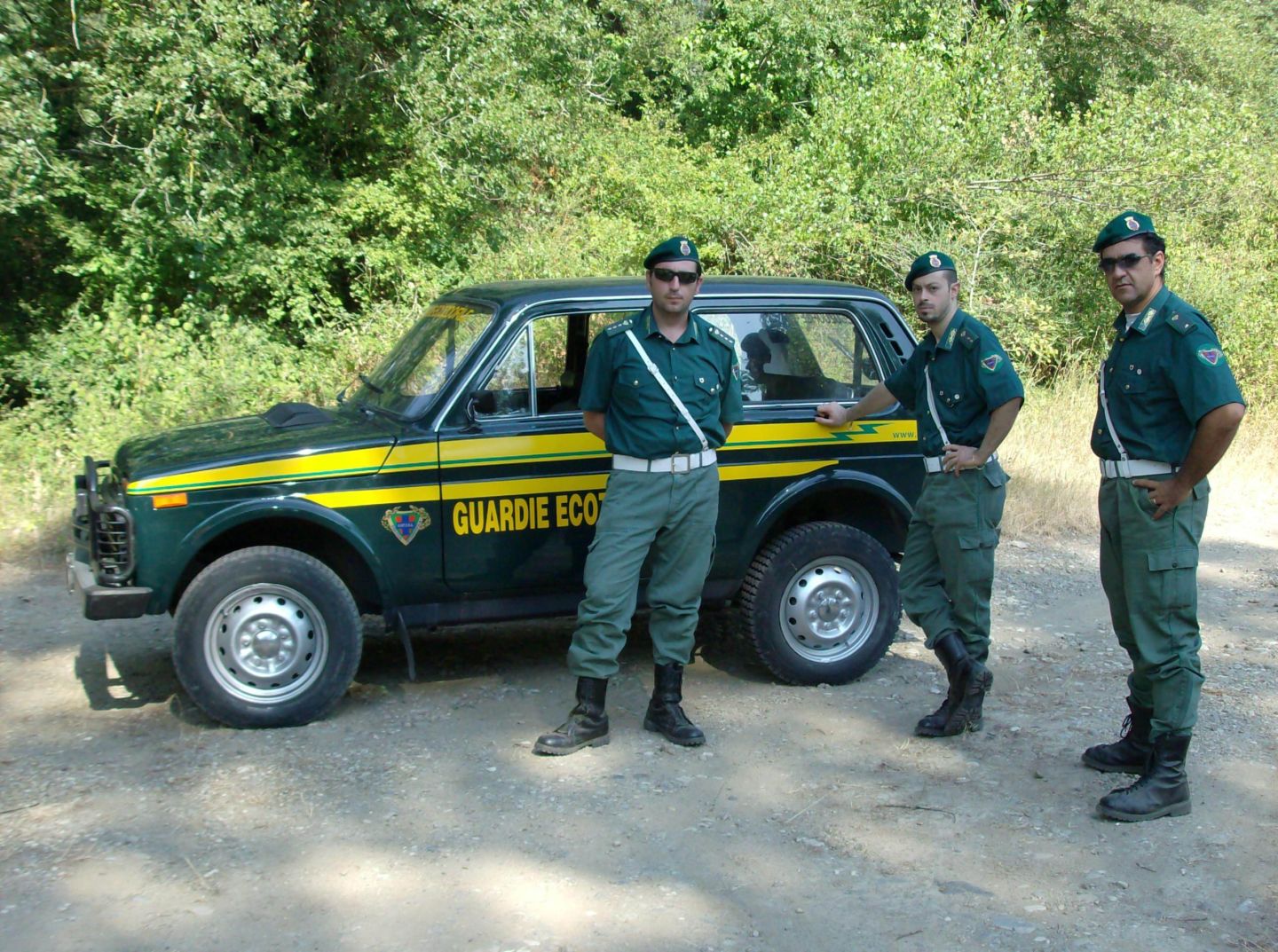
The Captain, after barking down at the neighbor and receiving some barking in return, decided that Enough was Enough.  The next day he visited a friend at the Police Station and was given the supposed rules for burning.  They are strict to say the least: one may burn between midnight and 6 a.m.  One may not burn less than 50 meters from another building.  One may not burn at all in July and August.  And my favorite: one may not produce any smoke from one’s fire.  Amen to that impossible rule!

Photo courtesy of http://www.skyblu.wordpress.com

Regulation in hand the Captain sought out our neighbor S.  It is his land that surrounds us, and his cuttings that are burned under our noses, though it is not he who does the actual burning.  That is done by his brother-in-law and sister.  The Captain waggled the rules under Sandro’s nose and said, “Listen.   We don’t care if you burn from dawn to dusk, but please just move your pile so that our house is not engulfed in smoke for days at a time.”  “I’m not the one burning,” replied S helpfully.  “I know,” said the Captain, “but you are the family’s representative aren’t you?”  Bingo.

Photo courtesy of http://www.lucanianews24.it

S took a look at the regulations and said, “Ah, but these don’t apply to us because we have an ulivetto, and we are allowed to burn whenever we want to maintain the orchard.  And it’s not the police, but the Forestale (forest rangers) who regulate this kind of burning.”  We’ll see about that, thought the Captain, and the next day marched down to the office of the Forestale in Rapallo, only to find that they receive the public only on Fridays from 9 to 11 a.m.

Except they don’t.  He returned on Friday, and the office was locked up tight as a drum.  Numbers for the Chief are posted, both cell and fax, and the Captain tried to send messages to both, but thus far we have heard nothing in response.

So we find ourselves in the midst of another Italian conundrum.  Who does regulate the burning?  What are our rights and responsibilities as neighbors and as burners ourselves?  A friend has suggested that it may be even more complicated than we think: there may be European Union regulations that come into play.  How exciting!  Maybe we can start an international incident.  In the meantime, there has been less burning down below since the great kerfuffle, and we have been able to enjoy the early summer breezes wafting through open windows.

Passo Carrabile

05 Wednesday May 2010

Posted by farfalle1 in Italian bureaucracy, Italian habits and customs, Italy, Uncategorized

≈ 20 Comments

Tags

Garbage tax, Italian taxes, IVA on Rifiuti, Passo Carrabile, Rifiuti tax, taxes, Taxes in Italy

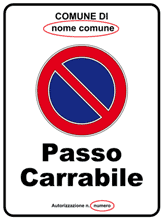
photo courtesy of areablog.net

It’s silly season for Italian taxes.  In the last couple of weeks we’ve received the Rifiuti tax and the Passo Carrabile tax.  I don’t know why paying for garbage removal is a tax and not a service fee, but that’s what it is. (There’s been a nice lawsuit on this subject; it has resulted in eligibility for an IVA refund for rifiuti tax payers.  Read more about that here or in Elaborations on the right). The rifiuti tax costs about the same here as it used to cost us for a year of garbage pick-up at our home in Connecticut, roughly E350.  The difference, of course, is that in Connecticut the garbage man came to us; here we walk to the Cassonetto di Spazzatura (which, by the way, the Captain thinks is the most sonorous of Italian phrases).  This one we have no problem with because we are getting good service for our money (and yes, we do get good garbage pick-up service).

No, the one we have trouble with is the tax for our Passo Carrabile. It’s an Italian concept, handled as only the Italians would handle it.  ‘Passo Carrabile’, according to the Oxford web translator means ‘driveway,’ but it actually means any alley, drive or portal that must left accessible for the owners.  In other words, don’t park here, buster.

In the U.S. it seems common sense applies more often than not – if there’s a driveway, one knows not to park across its access to the road.  If there’s a store that needs access to get goods in and out, a simple ‘No Parking’ sign, available for not much money at any hardware store will do the trick.  Easy!

Well, you won’t be surprised to learn it’s a little more complicated here.

About three years ago we built, at no small expense, a small parcheggio on the side of the road above our house.  It was a complex project involving many permits, an engineered plan, checks by various officials during construction, new walls, etc.  In fact, the file I have for “Parcheggio” is three times thicker than the file called “House Reconstruction.”  Why the added fuss?  Because we were building something attached to a public road.  In our innocence we thought that The State would be thrilled with one less car parked on a narrow, crowded road.  And insofar as permits were forthcoming without much delay, evidently they were.

But, as the saying goes, No good deed goes unpunished; and we are punished every year for our parcheggio.  Because it opens directly on the road we are obliged to post Passo Carribile signs so that no one will park in the middle of the road.  Seems obvious to us that no one would, especially since cars park on the other side of the street, making it impossible for more than one vehicle to pass through at a time.  A car parked adjacent to our parcheggio might completely block the road.  However, we have access to the street, so we must pay the tax.  Apparently it is based on how many feet of opening you have on the street.  Because of the steep terrain here, our parcheggio runs horizontally along the road, not perpendicular to it.  We have a lot of street frontage, and we pay accordingly.  Last year the Captain went to the appropriate office and said, “We don’t want a Passo Carrabile,” but he was told that because we’re on a public way we are required to have one.  And what does it cost, you may ask?  About the same as it costs to have garbage service.

So every year we pay for making the street we live on incrementally safer and easier to transit.  Oh well.  Italy is a taxing kind of country, and this is the season of silly taxes; probably the tax collector is laughing all the way to the bank.

L’ICI

17 Monday Aug 2009

Posted by farfalle1 in Italian bureaucracy, Italy, Law and order, Rapallo, Uncategorized

≈ 4 Comments

Tags

Ici, Italian taxes, L'ici, taxes

So, what did you think when you read the title ‘L’ICI?  Lice?  Itch?  Well, in a way both are correct, since  L’ICI (pronounced leach’-eee) has been a pesky little problem that’s been driving us nuts.

Rapallo coat of arms

The ICI (eetchy!) is Italy’s real estate tax.  We’ve always been thrilled at how small it is compared to what we’re accustomed to paying in the U.S., where such taxes generally pay for public education.  I’m not sure what the ICI pays for here – it is a tax imposed by the commune (the town), and is used for ‘services.’  It seems to me that we are already taxed for just about every service we receive (garbage, TV, etc.), but I digress.

When we first bought our house we went to the Tribute Office where such things are paid, and asked how much we owed.  Perish the thought that a taxing body should actually prepare and send a bill!  No.  It is up to the tax-payer to a) know that there is a tax due, b) know how much it is and c) know where, when and how to pay it.  Okay.  We can and have learned this stuff, and keep a careful calendar so we won’t miss any payments.  The trick we never mastered was knowing how much to pay, so each year we went to the office and they were nice enough to tell us.  Sort of.

Last year we received a certified letter that we had to pick up an important document at the Tribute.  It turned out that since 2002 we had been paying an incorrect amount, on two counts.  First, we were paying as if our house were still a rustico instead of a restructured habitation (in spite of the fact that our geometra filed the correct forms informing the commune of the change) and second, only the Captain’s share of the tax had been paid, and that was only half of what was owed.  So we owed in excess of E 800.  They were nice enough to understand that these were honest mistakes (and not just ours), so the accrued penalties and interest were set aside.  Grudgingly we paid – yet another unexpected and large expense.  We still don’t understand why the office didn’t give us the correct amounts due each year when we trudged in to ask.

L’ICI for primary homes was abolished beginning last year (thank you, Mr. Berlusconi), which means we no longer pay.  Only businesses and those who own more than one home now have to pay.  But the ICI wasn’t finished with us, not yet.  We received a note this year telling us that we had not paid for 2002.  We hauled out the many forms and receipts left over from last year’s adventure and discovered that in fact we had nothing to show we’d paid more than the original incorrect amount in 2002.  So back the Captain went to the Tribute Office, gathered all the materials and, once again, we will be making an unexpected tax payment.

We shouldn’t complain, I suppose.  It is still way, way less than Americans pay annually in property taxes.  It’s just the inefficiency of it all that drives us crazy.  They probably never would have cottoned to the errors if the tax on primary residence hadn’t been abolished, but now I guess the workers in the Tribute office have time on their hands.

This should be the end of our ICI Adventure, but you just never know in Italy.  These things have a strange way of being resurrected at the most inopportune times.

Q8 Rip-Off

07 Tuesday Jul 2009

Posted by farfalle1 in Crime, Driving in Italy, Italian bureaucracy, Italian habits and customs, Italian men, Rapallo, Uncategorized

≈ 10 Comments

Tags

gasoline credits in Italy, Grand Theft Gas, Q-8, Rapallo Q-8

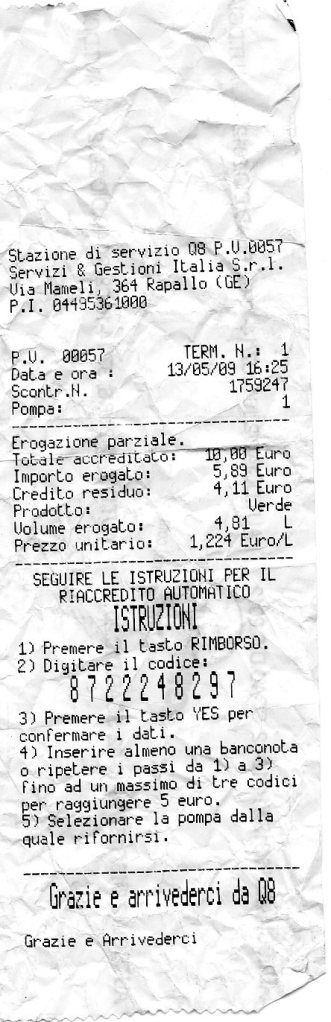
Q-8 receipt

You get what you pay for, right?  Well, sometimes when you buy your gas at Q8 you don’t get anything at all!

Here’s the story.  Way back in May I filled my scooter, which has a small tank, and paid with a E 10 note.  There was a credit remaining of E 4.11.   I wasn’t sure how to use the credit slip, though, even though a thorough explanation is given at the bottom.  My Italian just doesn’t always measure up to the fine print.  I know!  It’s my fault, I should be better at my second language.  But I’m not.  Yet.

Wanting help with this credit receipt, I kept waiting for there to be an attendant at the Q8 station, which is, it seems, a rare event.  Finally about a month ago there was a man there who explained to me that because my credit was less than E 5 I wouldn’t be able to use it without putting in more money.  Huh??  When is a credit not a credit??  When it’s for less than E 5 at Q8, that’s when.

It seemed mighty peculiar to me, but I said ok – and as it happened I already had plenty of gas that day, so I didn’t take advantage of the attendant’s presence and actual willingness to help.  I figured I’d catch him another day.

Fast forward to last week (can you believe how much effort is going into a credit for E 4.11??!).  The door to the attendant’s box was open, so I whizzed in to buy some gas.  There was a young woman there, and I asked her, is it true that I can’t use this credit without adding more money?  “I don’t know,” she said, “Can you come back on Monday when the regular guy will be here?”

“Well, okay,” I replied, but can you give me change for this E 50 so I can pump some gas?  I don’t want to put E 50 in the machine.”

“No,” she answered.  Sooo, I went to the grocery store just behind the Q8, bought a few necessities and returned to the gas station with a crisp E 5 note.  The attendant had fled.

I began the automated process to get gas, and one of the choices indeed was for a receipt number, so I punched in the number on my credit.  Immediately what came up was the original screen suggesting, ‘Go ahead, put some money in here and see if you get lucky.’  At least that’s what I think it said. I really just wanted the credit’s worth, so I tried again.  No luck.  Then I stared around in agony and asked the Gas Goddess to come to my assistance.  Then I punched in the credit code again and got a message that it was invalid.  So I just put in E 5 and got my gas, puzzled as could be.

Today my tank was low again and guess what!  There’s a GAS STRIKE in Italy over the next two days so it will be difficult to buy gas (amusingly, one of the strike issues is ‘long working hours’).  It seemed prudent to fill up, and, to my amazement, the door to the attendant’s box at the Q8 was open again, and sure enough there was a man seated at a desk within.  I went right to him and said I wanted to use my credit to buy gas.  He looked at it and said, “There’s not enough credit on here, you need at least E 5, so you will have to put more money in.” (Can you tell me what difference it makes to an automated system if your credit is for E 4.99 or E 5.01?  It shouldn’t matter one whit.)

I explained that I had tried to do that but that it hadn’t worked.  “Can you help me with this?” I asked – and I was still being extremely polite.  Can you guess what he said?  He said, “No.”  Then he said, “The instructions are written down here.”

“I know,” I said, “but when I put my credit number in it doesn’t work.  Can’t you help?”  Rolling his eyes to the heavens and heaving a mighty sigh he… you think I’m going to say he got up, aren’t you?  No, he didn’t budge his skinny ass.  He punched a few buttons on the computer in front of him and said, “This number is invalid.  Didn’t you take a new receipt when you tried before?”

“No,” I explained (and I was getting a little irritated by now), “I didn’t because there wasn’t one to take.”

“There was,” he assured me, “and you should have taken it.”

“So what you’re telling me is that Q8 has my E 4.11 and I’m not going to get any gas for it?”

“This receipt is invalid.”

“But I didn’t get anything for it.  I’m just giving Q8 my money and not getting any gas in return.”

He gave the final, infuriating, ‘tough shit’ shrug and turned away.  That’s when I crumpled up the receipt (but didn’t throw it at him – I’m so glad because now I can show it to you!) and informed him tartly that I wouldn’t be buying any gas from Q8 ever, ever again.  You know, I don’t think he cared.

As a side note, during the long wait for this story to unwind I received another credit slip from the Shell station in the middle of town, this one for E .94.  The attendant (who is there morning and afternoon, daily) took my slip and applied it to my next gas purchase.  So easy!

May I tell you what would have happened if this had occurred in the U.S.?  1) the attendant would have been there more than ten minutes a week.  2) he would have made at least a cursory effort to help  and 3) he would have believed me and would have made good on the credit.

Now you might say I’m the victim of my own ignorance, and I guess that’s true, but  I think people who are selling things should try to be helpful to customers.  You might call my wish to have the gas credit honored the typical unreasonable American sense of entitlement.  I call it honesty.

← Older posts
Newer posts →

Enter your email address to follow this blog and receive notifications of new posts by email.

Join 114 other subscribers

rss

Subscribe in a reader

Search the Blog

A. Useful Links

  • bab.la language dictionary
  • Bus schedules for Tigullio
  • Conversions
  • English-Italian, Italian-English Dictionary
  • Expats Moving and Relocation Guide
  • Ferry Schedule Rapallo, Santa Margherita, Portofino, San Frutuoso
  • Italian Verbs Conjugated
  • Piazza Cavour
  • Rapallo's Home Page – With Link to the Month's Events
  • Slow Travel
  • The Informer – The Online Guide to Living in Italy
  • Transportation Planner for Liguria
  • Trenitalia – trains! Still the most fun way to travel.

C. Elaborations

  • A Policeman’s View
  • Driving School Diary
  • IVA refunds due for past Rifiuti tax payements
  • Nana
  • Old trains and old weekends
  • The peasant, the Virgin, the spring and the ikon
  • Will Someone Please, Please Take Me to Scotland?

D. Good Recipes - Best of the Week winners are starred

  • 'Mbriulata
  • *Baked Barley and Mushroom Casserole*
  • *Captain’s Boston Baked Beans*
  • *Crimson Pie*
  • *Louise’s Birthday Cake*
  • *Melanzane alla Parmigiana*
  • *Penne with Cabbage and Cream
  • *Pizzoccheri della Valtellina*
  • *Pumpkin Ice Cream*
  • *Risotto alla Bolognese*
  • *Rolled Stuffed Pork Roast*
  • *Spezzatini di Vitello*
  • *Stuffed Grape Leaves*
  • *Stuffed Peaches (Pesche Ripiene)*
  • *Swordfish with Salsa Cruda*
  • *Tagliarini with Porcini Mushrooms*
  • *Tagliatelli al Frutti di Mare*
  • *Three P's Pasta*
  • *Tzatziki*
  • 10th Tee Oatmeal Apricot Bars
  • Adriana’s Fruit Torta
  • Aspic
  • Bagna-calda
  • Best Brownies in the World
  • Clafoutis
  • Cold cucumber soup
  • Crispy Tortillas with Pork and Beans
  • Easy spring or summer pasta
  • Fish in the Ligurian Style
  • Hilary's Spicy Rain Forest Chop
  • Insalata Caprese
  • Lasagna al forno
  • Lasagna al Forno con Sugo Rosato e Formaggi
  • Lemon Meringue Pie
  • Leo’s Bagna Cauda
  • Leo’s Mother’s Stuffed Eggs
  • Louis’s apricot chutney
  • Mom's Sicilian Bruschetta
  • No-Knead (almost) Bread
  • Nonna Salamone's Christmas Cookies
  • Pan Fried Noodles with Duck, Ginger, Garlic and Scallions
  • Pesto, the classic and original method
  • Pesto, the modern, less authentic method
  • Pickle Relish
  • Poached pears
  • Poached Pears
  • Polenta Cuncia
  • Recipes from Paradise by Fred Plotkin
  • Rustic Hearth Bread
  • Shrimp and Crayfish Tail Soup
  • Sicilian salad
  • Slow Food Liguria
  • Slow Food Piemonte and Val d'Aosta
  • Spinach with Garlic, Pine Nuts and Raisins
  • Stuffed Eggs, Piemontese Style
  • The Captain’s Salsa Cruda
  • Tomato Aspic
  • Zucchini Raita

E. Blogroll

  • 2 Baci in a Pinon Tree
  • Aglio, Olio & Peperoncino
  • An American in Rome
  • Bella Baita View
  • Debra & Liz's Bagni di Lucca Blog
  • Expat Blog
  • Food Lovers Odyssey
  • Italian Food Forever
  • L’Orto Orgolioso
  • La Avventura – La Mia Vita Sarda
  • La Cucina
  • La Tavola Marche
  • Rubber Slippers in Italy
  • Southern Fried French
  • Status Viatoris
  • Tour del Gelato
  • Weeds and Wisdom

Photographs

  • A Day on the Phoenix Light Rail Metro
  • Apache Trail in the Snow
  • Aquileia and Croatia
  • Birds on the Golf Course
  • Bridge Art
  • Canadair Fire Fighters
  • Cats of Italy
  • Cloudy day walk from Nozarego to Portofino
  • Fiera del Bestiame e Agricultura
  • Football Finds a Home in San Maurizio
  • Hiking Dogs
  • Mercatino dei Sapori – Food Fair!
  • Moto Models
  • Olive pressing
  • Rapallo Gardens
  • Rapallo's Festa Patronale
  • Ricaldone and the Rinaldi Winery
  • Rice Fields
  • Sardegna ~ Arbatax and Tortoli
  • Sardegna ~ San Pietro above Baunei
  • Sardegna ~ The Festa in Baunei
  • Scotland, including Isle of Skye
  • Slow Food 2008 Salone del Gusto
  • The Cat Show and the Light Rail Fair
  • The desert in bloom
  • Trip to Bavaria

Pages

  • Fagioli all’ucelleto

Archives

Recent Posts

  • A Superior Visit
  • Fun at the Ranch Market
  • The MAC
  • Welcome Tai Chi
  • Bingo Fun for Ferals
December 2025
M T W T F S S
1234567
891011121314
15161718192021
22232425262728
293031  
« Jul    

Member of The Internet Defense League

Blog at WordPress.com.

  • Subscribe Subscribed
    • An Ex-Expatriate
    • Join 114 other subscribers
    • Already have a WordPress.com account? Log in now.
    • An Ex-Expatriate
    • Subscribe Subscribed
    • Sign up
    • Log in
    • Report this content
    • View site in Reader
    • Manage subscriptions
    • Collapse this bar
 

Loading Comments...