Dirty Dogs

Tags

, ,

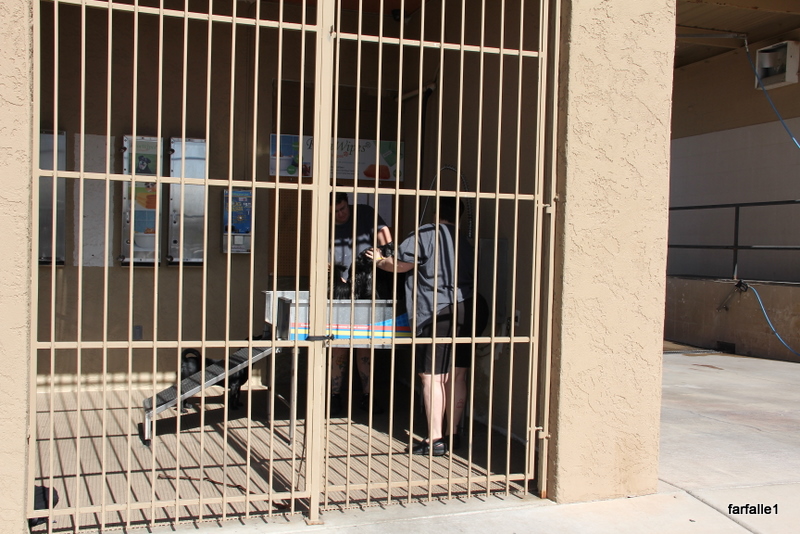
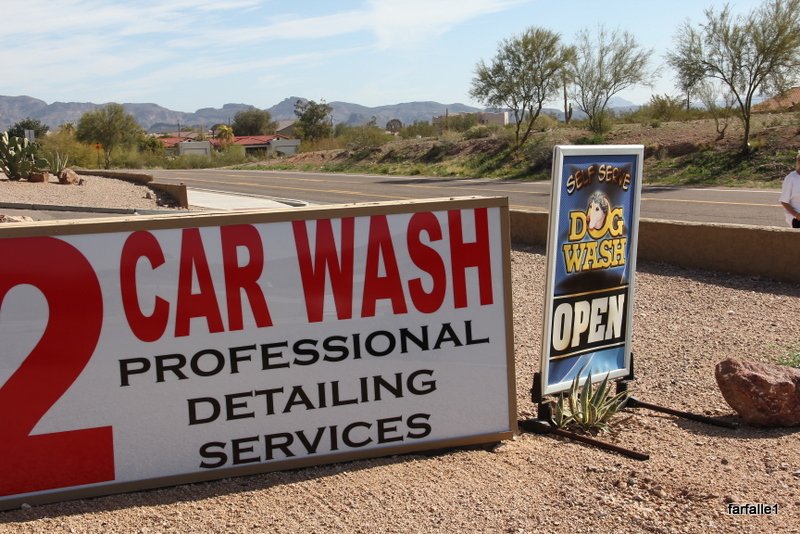
If it’s a slow day in Gold Canyon, Arizona, as frequently happens, you can just amble down the street to the local Dog Wash. You heard me, pardner, I said ‘dog wash.’

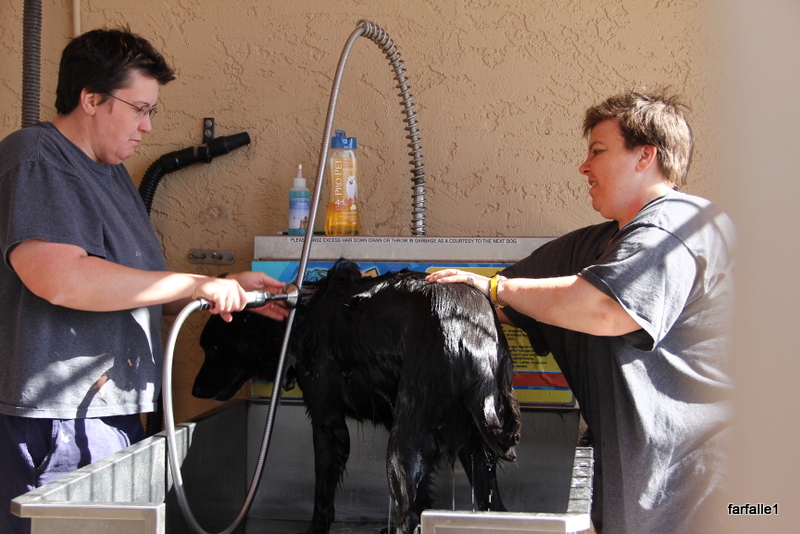
It is nothing if not entertaining to watch pooches in various degrees of dinginess, walk the plank and into the sink.

The dog wash provides everything you need, including shampoo, water, towels and even a blow dryer. At $5.00 a pop it is probably a lot cheaper than taking Bowser to the groomer. The sign suggests that Miss Kitty might like a bath as well, but anyone who has ever shared living quarters with a cat knows better.

It’s not nice to chuckle over some other critter’s misery, but it’s hard to keep a straight face when watching the normally bouncy Bowser put on a long-suffering and patient face. You can almost hear him thinking, can’t you? ‘Why are they doing this to me??? I thought they loved me!’ You can also see immediately that the expression ‘hangdog’ originated in the Dog Wash.

Never fear, handsome Bowser, when you are all fluffed and buffed your cheerful disposition will return. You will frolic around happily, play with your mistress, and then run out to the desert where you will find a nice big cow plop to roll in. Then you know what will happen? It’s back to the dog wash for you! And maybe this time mistress will wash the Honda, too.

PS… if you’d like to see some photos of Arizona Hiking Dogs and their people, click here.

A True Story

Tags

,

Photo courtesy of animal-wildlife.blogspot.com

Speedy was at our local supermarket not too long ago when his eye fell on a tray containing two enormous, beautiful octopuses (octopi?).  With great excitement he asked Sherry behind the counter what the story was.

With a big sigh she explained that a customer had ordered the octopus, but had then changed her mind and decided not to buy them after all, thereby leaving the store holding the bag, as it were.

Speedy was delighted with the appearance of the octopus, and the price was very reasonable, so good hunter-gatherer that he is, he brought one home.  Sherry was thrilled and said that she would probably be given a week off for selling one. When I say it was big, I mean it was Big – at over two pounds it was larger than what we’re accustomed to finding in Italy.  We ate about one-quarter of it as an antipasto that very night; the other three-quarters repose in the freezer where they are becoming ever more tender.  (Gone are the days when you had to hurl your octopus against a wall to tenderize it; freezing does the trick perfectly.)

The next time Speedy was in the market he asked Sherry when she was getting her week off.  Sadly she told him that in fact she was not given time off for the sale.  What a pity.

It’s funny about octopus in the U.S.  Delicious as it is, it is not commonly eaten in much of the country.  I suppose in the big sophisticated cities like New York and L.A. there is a certain following for the tentacled treat.  But here in the desert – well, it’s just never found on a menu or in a market fish case.  Which would seem downright insane to any self-respecting Italian.

Octopus can be prepared in a number of ways.  Speedy likes a cold salad with oil, garlic, lemon and parsley.  Our friend Tay is mad for the Mexican version in a salsa close to pico de gallo, but with lemon or lime juice.  A simple warm Spanish salad with oil, potato slices, hot chili and parsley is also quite yummy.  Mario Batali has a nice recipe here which you can try… if you can find an octopus.  Ask at our market – my guess is they still have one lurking about somewhere!

Taxi!

Tags

, ,

Quick!  Take me to the Pharmacy!

Photo courtesy of italyfromtheinside.com

An article in the English edition of ANSA describes a wildcat strike by taxi drivers in Rome.  They are unhappy because the Monti administration, in its package of reforms, wants to loosen requirements to become a cabby.  This is just one of many measures aimed at boosting Italy’s flagging economy and making it possible for young people to find work –  all of which are being offered in tandem with severe austerity measures.

Photo courtesy of tuscantraveller.com

Back in 2007 the Roman taxi drivers were angry, too.  At that time the city wanted to add 1,000 cabs to the stable.  Rome had, at that time, 3 cabs for every 1,000 residents, the fewest of any city in Europe, according to a Marketplace report.

Prime Minister Monti, photo courtesy of The Guardian

Another of the proposed Monti reforms calls for relaxing the regulations around opening a pharmacy.  As things are now it is almost impossible to open a new pharmacy.  A young person can go to school and become a pharmacist, but without family connections to an existing business, finding a position will be difficult (not impossible, but difficult).  But the entrepreneurial pharmacist who wants to open a new drugstore is just plain out of luck.  The number and opening hours of pharmacies are regulated by law according to about.com.  It is also true that if you want to get aspirin or vitamins you will have to go to a pharmacy where you will find them hideously packaged on foil covered cardboard.  Last time I forgot to bring aspirin from the States I paid € 6 for 30 aspirin.  Speedy says that often when viewing the painkiller section of a Walmart store and seeing 500 Iboprofen selling for $6.28, he thinks an Italian seeing the same shelf would need a cardiologist rather than some pills.  Until recently the only place you could buy prepared baby food was at a pharmacy.  Imagine!

While there is a lot wrong with the pharmacy system in Italy (and probably the taxi system as well), there is a lot right.  There is always at least one pharmacy open within shouting distance, and the pharmacists are highly trained, knowledgeable and able to help with minor medical emergencies, saving one a trip to the emergency room.  But the regulations against competition in pharmacies could be relaxed without reducing the requisite training for pharmacists – that would be good for consumers and for young pharmacists.

The larger problem, of which these two issues are representative, is that Italy is a country strangled by bureaucracy and regulations.  There is no place for young people to find work because all the trades and professions are so busy protecting their own interests that they are unwilling to be open, to expand or to share.  That’s bad for all concerned, it seems to me.  Educated young people live with their parents and fruitlessly hunt for jobs; the professions stagnate and suffer gross inefficiencies due to limited scope and size. Speedy reminded me that the current generation of Italians is called the NEETS (not in education, employment or training) generation (15 to 29 years-of-age), of which there are some 2 million.  These NEETS comprise 11.2 % of this age group in Italy compared to 3.6% in Germany, 3.5% in France, 1.7% in the UK, and but .5% in Spain.  All that talent going to waste!  Clearly, this is a socio-economic problem that will have long-lasting effects unless the new government, and the Italian people, can turn around their unique approach to social management.

To an American it seems ludicrous.  In the States it is relatively easy to start a business – all you need is a good idea and either money, or backers with money.  Granted, some 35% of new businesses will fail within the first two years, but at least one has the opportunity to try.  And if only 35% fail it means  that 65% succeed, giving income and occupation to more people and, because of the competition generated, giving better services and lower prices to society in general .

It will be interesting to see how it all plays out in the months ahead.  In the meantime, don’t get sick in Rome – it might be hard to find a cab to take you to the pharmacy.  And if you’re visiting Italy from the States, do bring your own aspirin.

Songbirds: Friends or Food?

Tags

, , , , ,

Somehow it’s hard to think of chickens and turkeys as birds.  Sure, they have feathers, but we never see a flock of them high overhead, migrating south for the winter, their clucking stirring our own restlessness.  Nor do we startle them when we take a walk in the woods.  We don’t listen for their sweet morning calls and try to identify exactly what chicken it is we’re hearing.  Wait!  Is that a Rhode Island Red or an Ameraucana?  Hand me my binoculars!

No.  Chickens and turkeys are ambulatory food for the most part.

Songbirds, however, are not.  One of the  pleasures of being here in Arizona is watching the birds that come to our feeder every day.
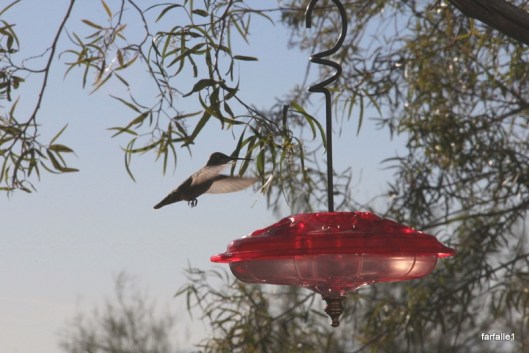
Anna's hummingbird, noisy and aggressive

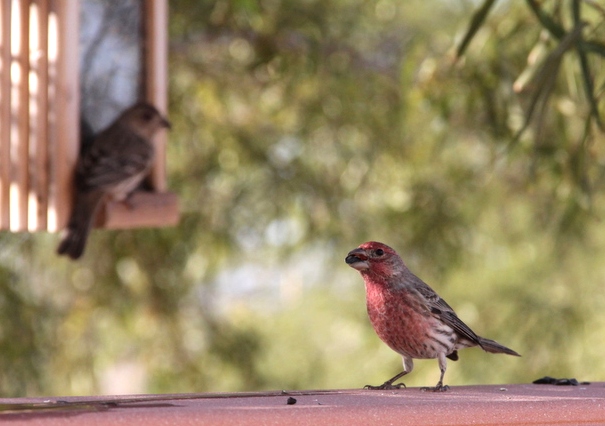
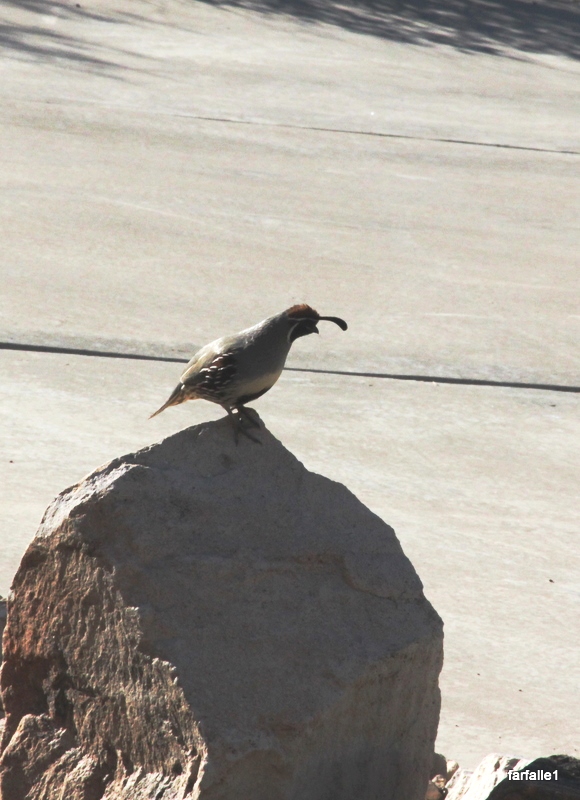
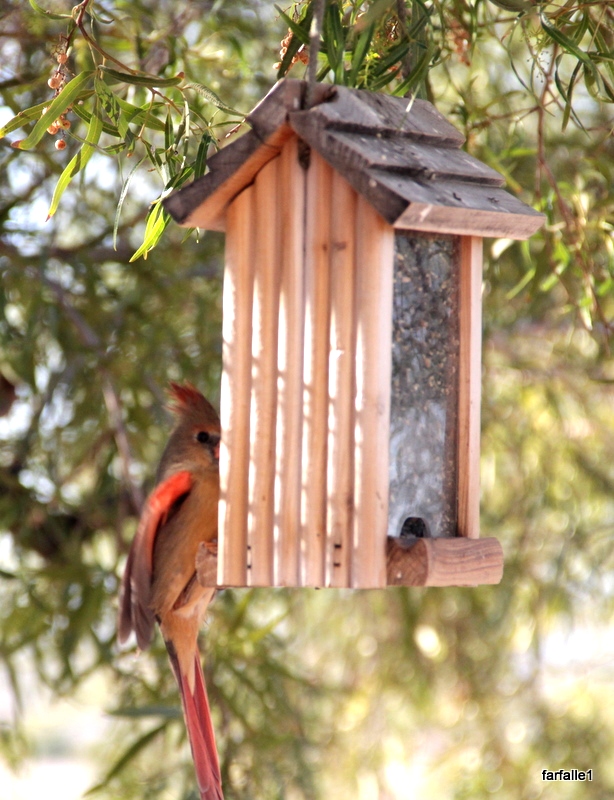
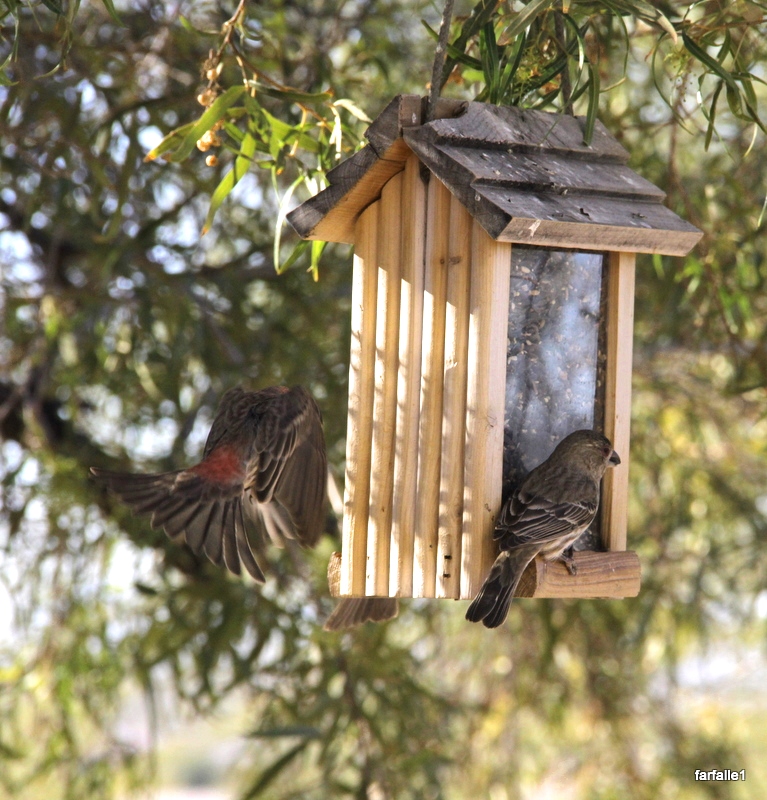
We don’t get anything terribly exotic (and we have yet to see a chicken) –  many purple finches, the ubiquitous Anna’s hummingbird, Abert’s towhee , Gila peckers, Cactus wrens, and, on the ground below, Inca doves and the amusing Gambel’s quail, which makes a bweep-bweeping sound, reminiscent of burbling water, while it wanders around beneath the feeder.
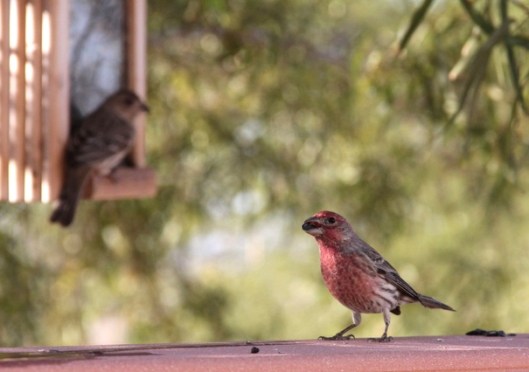
Male finch enjoying a seed while female thinks about it

Gambel's quail, males conveniently carry bulls eye on their breasts

It’s a pleasure we don’t enjoy in Italy.  Not because there are no songbirds – there are.  We get huge amusement and satisfaction from the merli (a sort of black robin with the unfortunate Latin name Turdus merula, called ‘merlo’ in the singular) which are curious and companionable, and which have the beautiful song typical to thrushes.  We seldom work outside in spring or summer without an appreciative audience of merli.  But bird-feeding as a hobby does not seem to exist in Italy, at least not in our part of the country.  I have never seen a bird-feeder at anyone’s house, and I have never seen bird feed for sale.
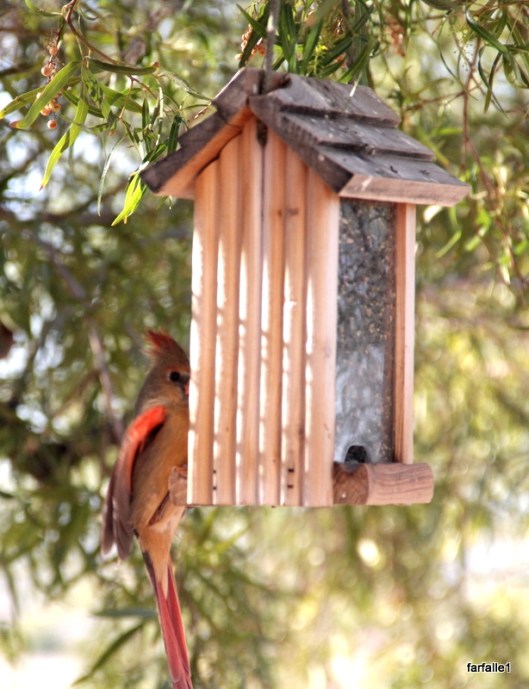
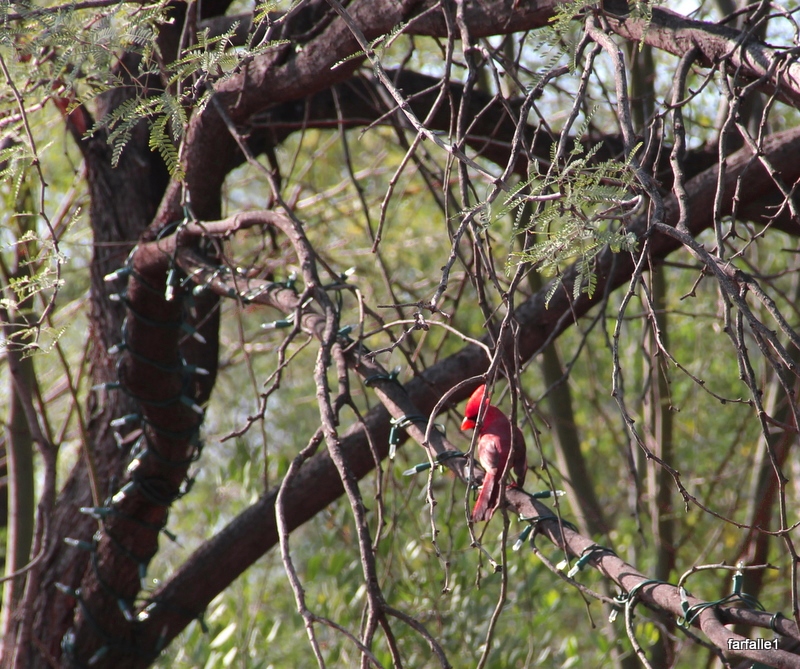
Male cardinal

Instead in Italy there is a sizable, though fortunately shrinking, trade in trapping and killing wild birds.  The CABS (Committee Against Bird Slaughter) web site has a great deal of information about the illegal trapping of birds which occurs, in Italy, mostly in the north (Lombardia), the southern Italian coast, Sardinia and Sicily.  There are a couple of good reasons why this illicit activity continues.  One is that it is a matter of long tradition to trap songbirds, and Italy is nothing if not wed to her traditions.  In earlier times songbirds were an important source of protein for hungry Italians. Another reason is that some restaurants persist in serving songbirds, though you will never see them on the menu.
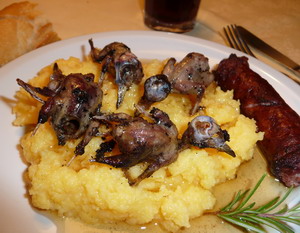
Little birds with polenta, photo courtesy of CABS

Happily, CABS reports that hunting songbirds is truly on the wane in northern Italy, a trend we can only hope (or I can only hope, anyway) will continue.
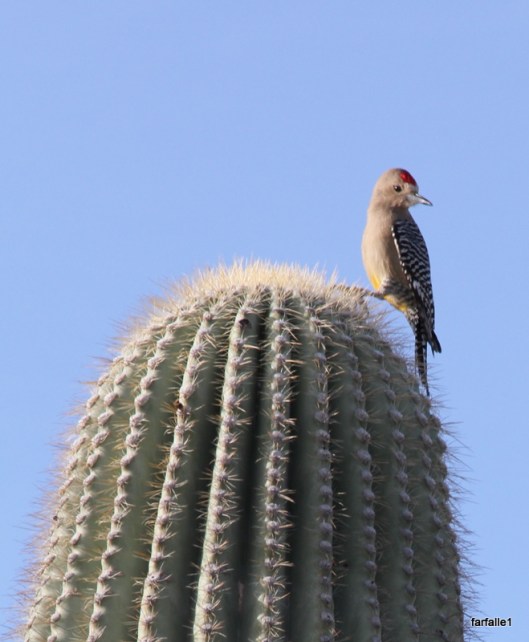
Gila woodpecker atop a nearby cactus

Hunting for sport is as popular in the U.S. as it is in Italy.  In 2006, according to the U.S. Fish and Wildlife Service, 2.3 million people hunted migratory birds such as doves or waterfowl.  Such hunting is highly regulated; hunters must have appropriate licenses and stamps, and can hunt only certain birds in certain places at certain times.  Sport hunters in both countries are generally dedicated and law-abiding conservationists, interested in protecting the populations of the species they like to hunt.  In a perfectly counter-intuitive bit of logic, sometimes bird populations must be ‘culled’ in order to protect the well-being of the species.  It makes no sense to me, but if the people at Audubon say it’s true, it must be true.  Mustn’t it?

No doubt there is illegal hunting in the U.S., but it is difficult to get away with it.  Some years ago when we lived in Connecticut a man of our acquaintance became very angry at the number of messy geese on his pond and lawn.  He got out his rifle, stood on the back porch and shot one, no doubt hoping to scare away the others.  His neighbors heard the shot and came running to find out what was wrong, so he was caught red-handed.  He did not go to prison, but he did have a reprimand and a sizable fine.  Even worse, he became known locally as ‘Goose Killer’ – and it was not the sort of affectionate and admiring nickname that, say, ‘Speedy’ is.

The illegal taking of birds in Italy is of a different order entirely.  According to CABS, ‘millions’ of birds are taken every year, hundreds of thousands of them in Northern Italy.  They are sometimes taken with guns, as in the wholesale slaughter of migrating birds videoed here (supposedly ‘legal,’ but against the very EU regulations Italy signed on to uphold), and frequently taken in any of several various types of traps, all of which are illegal (bow, snap, snare, cage and nets).

It’s hard to understand what the appeal or pleasure is in trapping or shooting  songbirds.  It’s not as if they’re particularly challenging prey, or especially meaty.  The declining number of traps in Italy attest to the gradual change of attitude towards this cruel practice; but it remains a big problem.
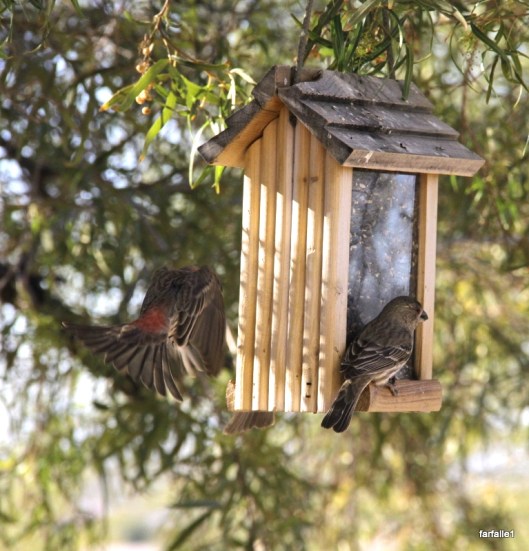
Male finches 'discuss' seating while a female thinks about it all

According to Wikipedia 55 million Americans are bird-watching hobbyists.  They spend $3 billion a year on seed and $800,000 million on bird feeders and other accessories.  Maybe there’s an opportunity here to help the struggling Italian economy.  Don’t kill the birds, feed them. Photograph them.   Enjoy them.  Encourage touristic bird-watching trips. And when the irresistible blood lust of the hunter comes over you, go down to Signore Marrone’s farm and bag a few chickens.
Cluck!

Tags

, , , , ,

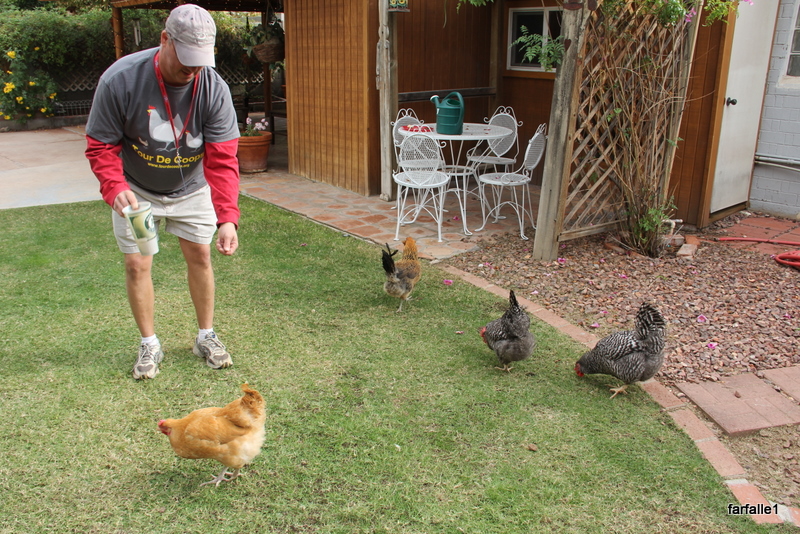
Chicken people are happy people.  My intrepid friend Mrs. H and I learned this when we went to downtown Phoenix last weekend for the third annual Tour de Coops. That’s right, downtown Phoenix! Urban agriculture is alive and well in the Valley of the Sun, in part due to the efforts of the Valley Permaculture Alliance, under whose auspices the Tour is sponsored.

Twenty-one generous chicken farmers opened their coops to several hundred visitors, all of whom probably asked the same tiresome questions. How many chickens do you have? (anywhere from three to a dozen or so); how old are your chickens? (anywhere from six months to eleven years); do you eat your chickens? (yes. no.);  how many eggs do you get a day? (in general about two eggs for every three chickens);  what are the names of your chickens? (way too many to list; some of my favorites were  Itchy, Lafawndut, St. Alfonso’s Pancake Breakfast, Waffles, Tika, Roti and Catchatori); is it really fun to have chickens in the back yard? (YES!)


The Tour was meticulously organized. Tourists registered at one of two starting points where they were given a muslin shopping bag containing water and chick feed (thank you Fresh Foods and Nutrena) and a thirty-two page directory of the Coops on the tour which was a model of clarity. Each coop location had its own page with a map indicating its location and a brief description of the coop and its inhabitants.

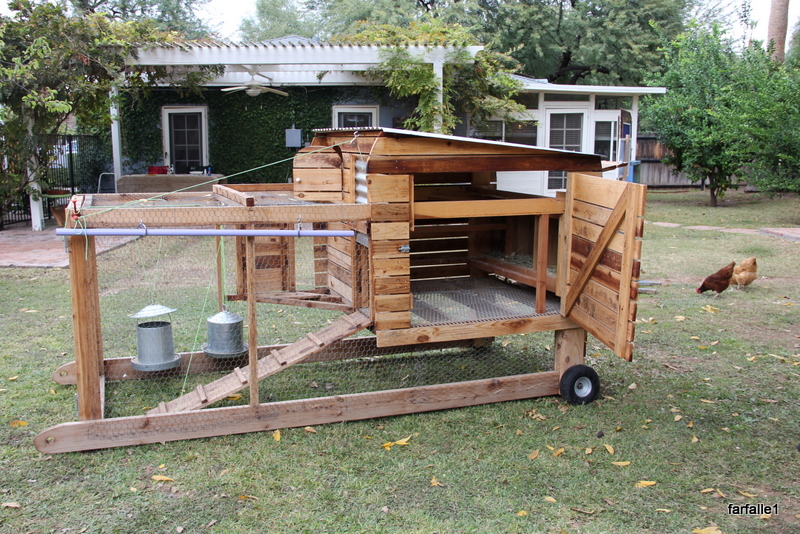
Mrs. H and I did not have time or energy (mostly energy) to visit all twenty-one coops, but were mightily impressed by the ones we did see. Coops come in all sizes and shapes, and are as diverse as the people who devise them. The first coop we visited was belonged to Maggie and Bjorn Olson. It was the only portable coop we saw:

The Van Slyke coop is renowned for its chandelier:

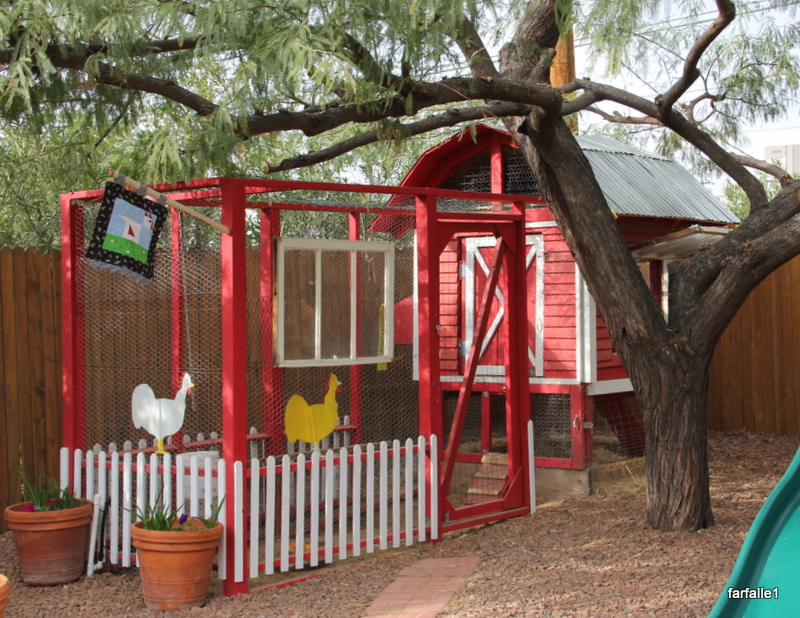
The Poulins pay homage to their roots in Vermont and New York with their barn-like coop:


As diverse as the Chicken People are, they all share an interest in sustainable living and in gardening (what else are you going to do with the chicken poop?). Whether on the ground or in raised beds, the veggies these families are growing are uniformly robust and appetizing.

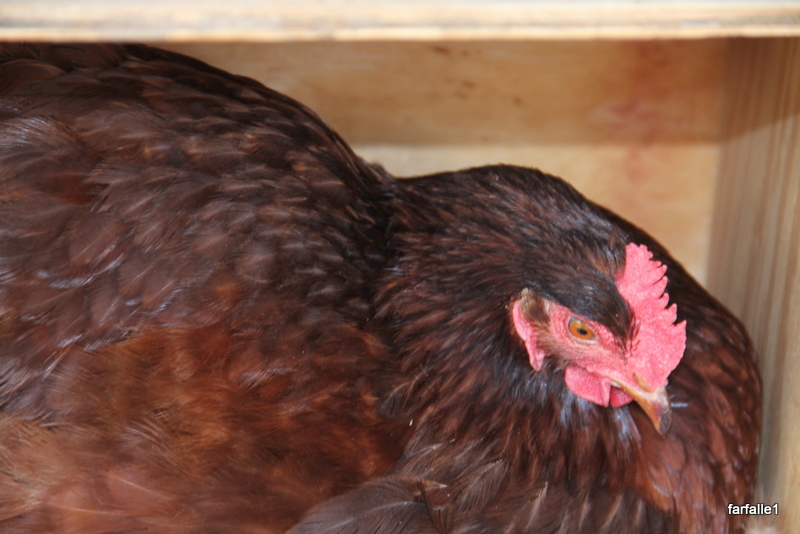
But I digress. Let’s get back to the hens and their houses. Each coop we saw had several nesting boxes where the girls take turns laying their eggs. By the way, egg production is the impetus for a huge amount of self-congratulatory clucking. The Taylors were dealing with a broody hen in one of their boxes:


Every now and then a hen just decides that she must sit on her egg(s) and will peck at anyone who tries to remove them. Fortunately hens are not the smartest birds in the world, and a plastic egg or even a golf ball will satisfy a broody bird. (This is, in fact, the genesis of all those plastic eggs that children receive at Easter. They are hatched from other plastic eggs by broody hens. The chocolate inside them, as we all know, is from the bunnies. But again, I digress.)
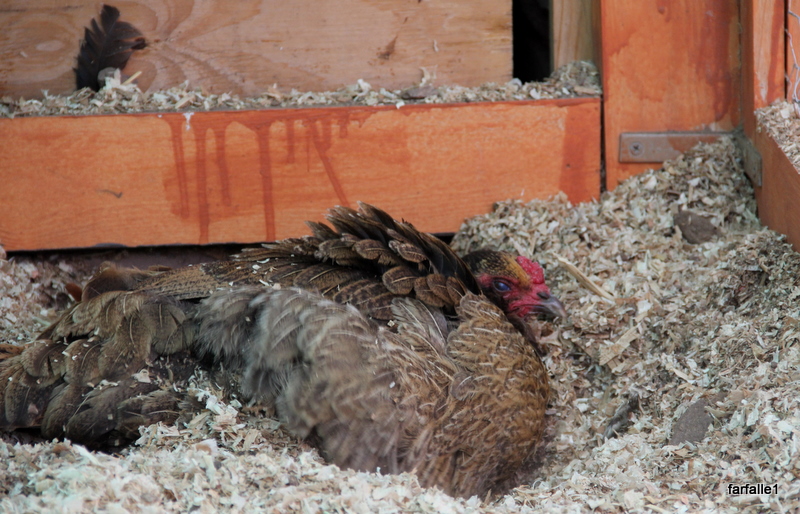
Each coop has an integral yard outside the structure itself. Like all of us, hens like to move around and need a little space in which to do so. They like to take dirt, dust, or sawdust baths to clean themselves – they fluff around in the dirt, the what-ever-it-is they want to get rid of sticks to the dirt, and then they groom out the whole business from their feathers.

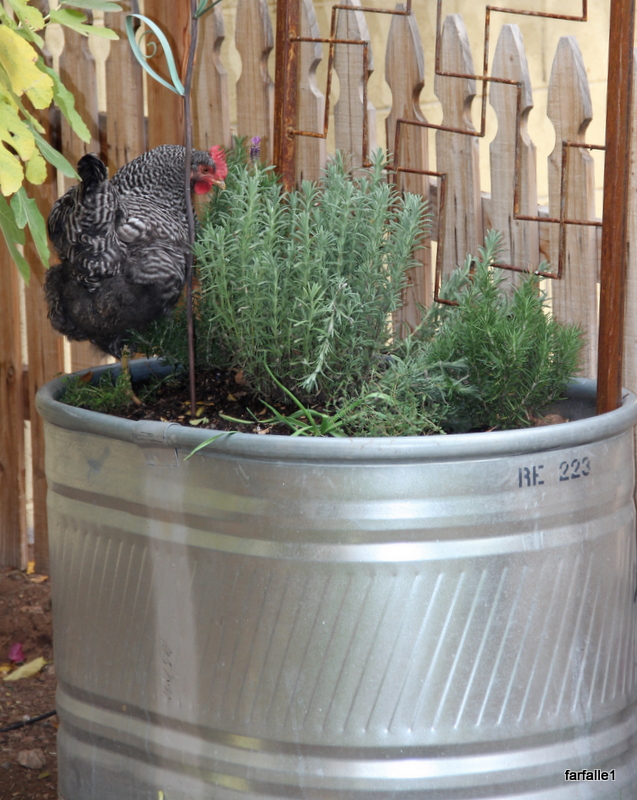
Most of the owners let their hens out to ‘free-range’ for at least part of the day. Depending on the neighborhood they may or may not need supervision. Watchful chicken parents are not worried about gangs or drugs; those close to the city worry about the peregrine falcons that now hunt from the tall buildings.

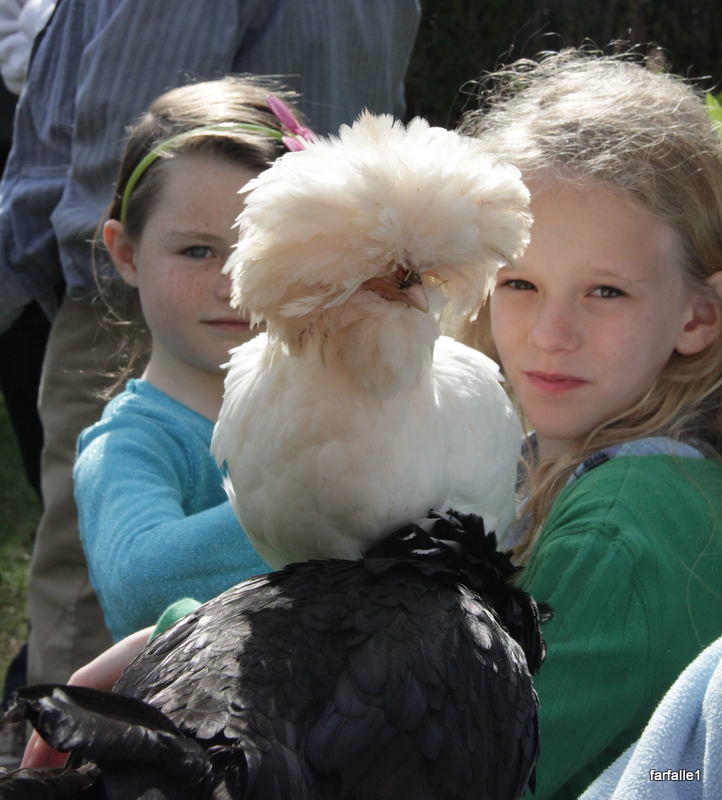
We saw quite a variety of chicken breeds. The most common were probably the Barred Rocks, the Ameraucana, and the Buff Orpingtons. At the Perry house we saw exotic and silly looking polish hens:
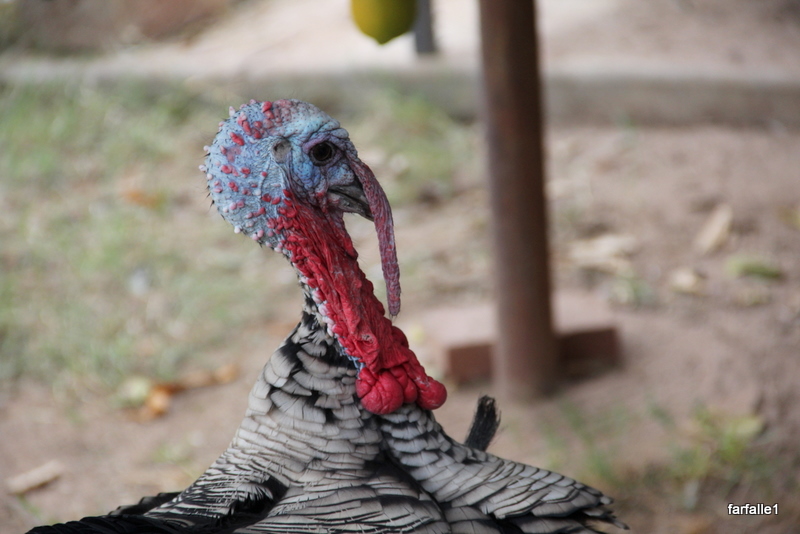
And at the Olesen house we admired a pair of turkeys. They turn blue when they’re upset or uneasy. Probably the combination of all the guests and the proximity to both Thanksgiving and Christmas ruffled their feathers.
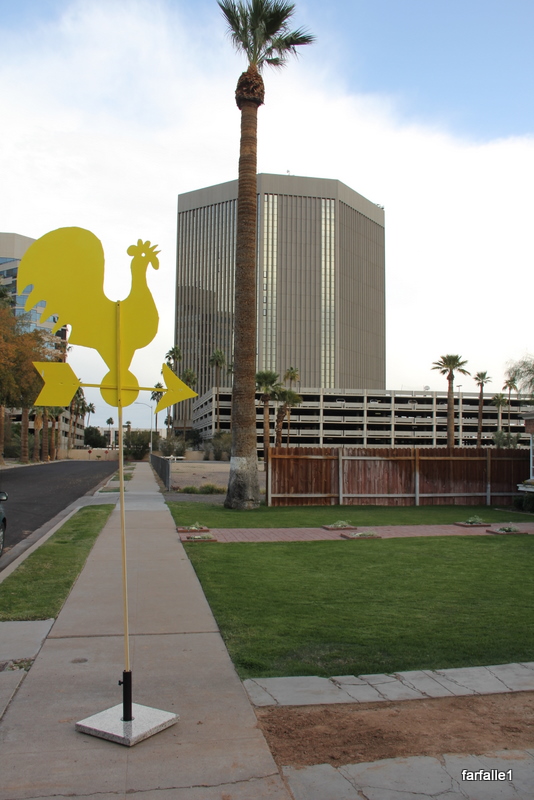
I’d like to say a few more words about the organization of the Tour, because it really impressed us. Each house was identified by a large yellow chicken cut-out sign, which was very helpful as we drove down unknown streets hunting for house numbers.

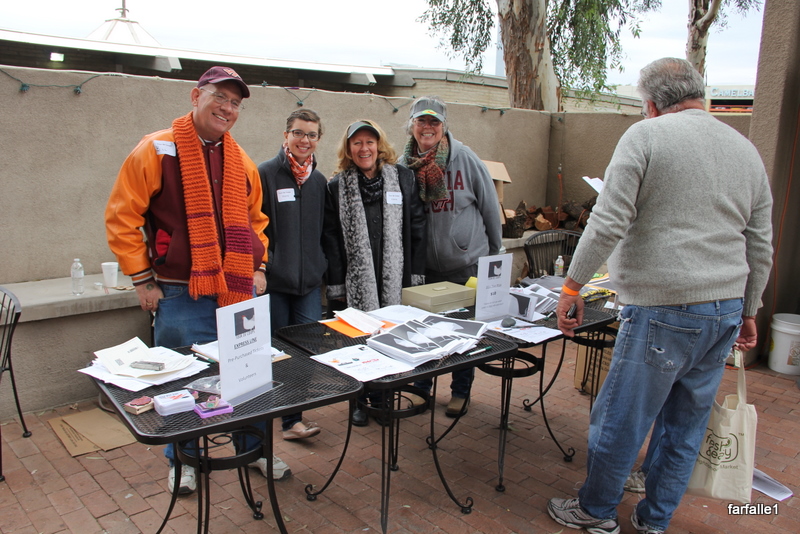
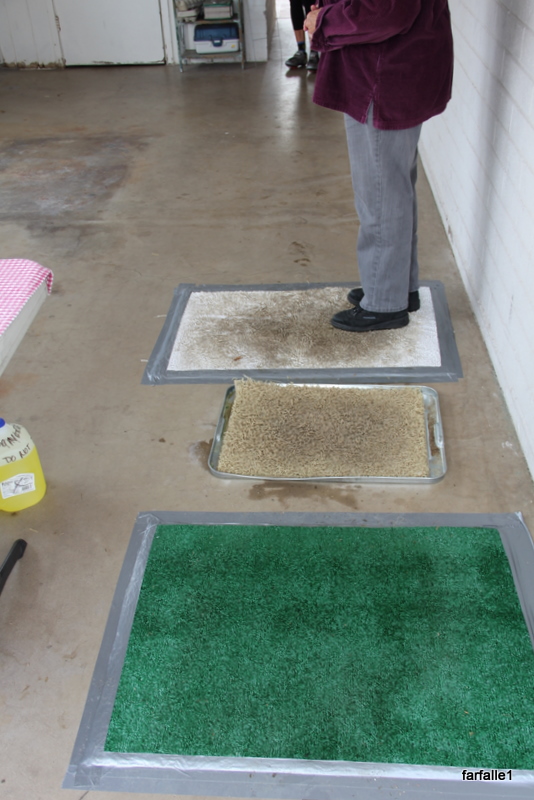
Volunteers staffed a table in front of every house to check visitor bracelets and to ensure that every visitor stepped through the foot bath and used the hand sanitizer.

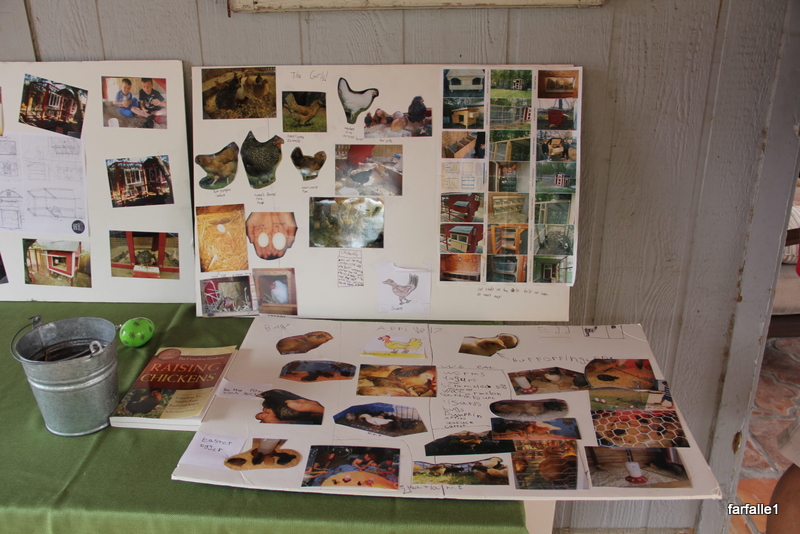
All the owners were on hand to talk about their hens, and many had posters describing the various chicken breeds present. Some of these posters were made by grown-ups, some by children, and at the Williams house the hens did all the work.


If you are interested in more photographs from the Tour de Coops, pop on over here and select the slide show option.

If you are interested in more information on the Valley Permaculture Alliance (“committed to promoting the conscious design of cultivated urban ecosystems to include diversity, stability and resilience”), visit their web-site here, where you can find out more about their mission and the many classes they offer in its service.

Mare Nostrum

Tags

, , ,

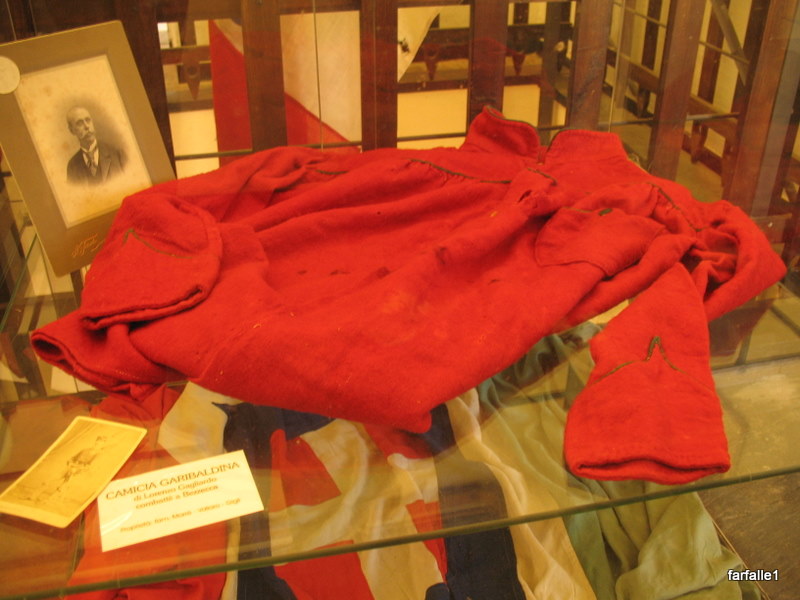
From November 4 – 20 the Castello in Rapallo hosted a terrific annual exhibit called “Mare Nostrum” (“Our Sea”) which included history, art and most specially, many ship models.  This year’s exhibit focused on the 150th anniversary of Italy’s unification, and included a special exhibit outlining the sea-faring highlights of that very complex and violent undertaking.  Called ‘Garibaldi, un Uomo di Mare’ it was curated by Maurizio Brescia, Emilio Carta and Carlo Gatti (who has one of my favorite last names).  Fascinating.  In one glass case there was an actual ‘Red Shirt’ worn by one of Garibaldi’s thousand (six of whom hailed from Rapallo, according to the exhibit catalog), a little the worse for wear, but definitely red.

Both the exhibit and the catalog,a handsome 64-page booklet chock full of photos, describe the preparations and outfitting for the voyage from Genova Quarto down to Sicilia, with special attention paid to the ships, models of which could be seen in other rooms.

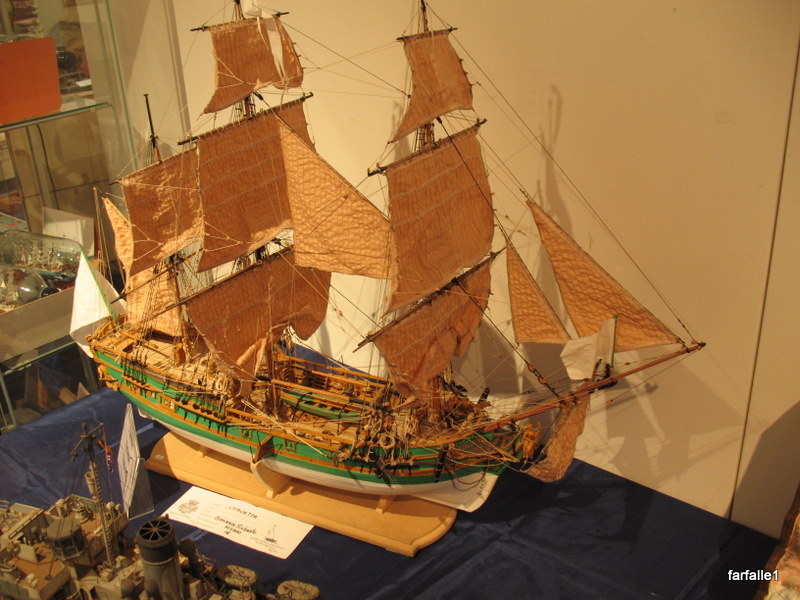
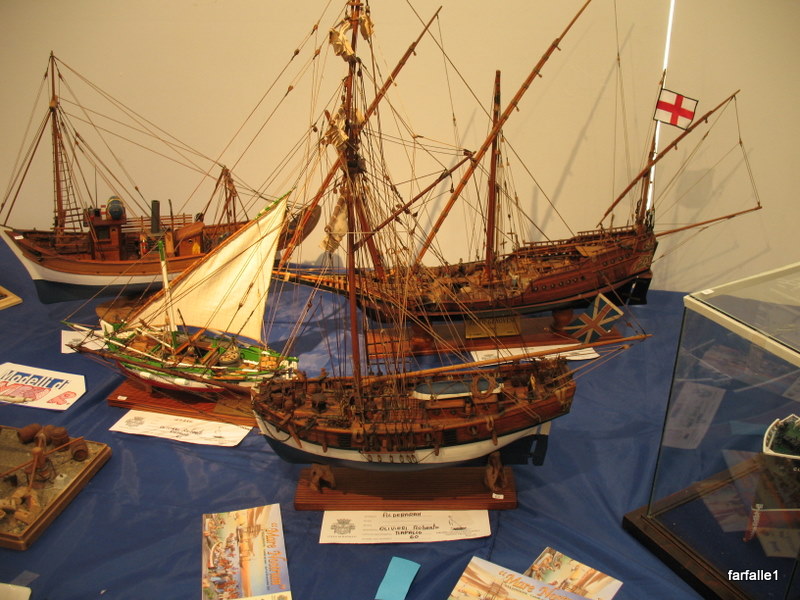
The models are remarkable. Most are made from what we usually assume models will be made of: wood, bits of string and fabric, like the “Aldebaran” below by Roberto Oliveri.

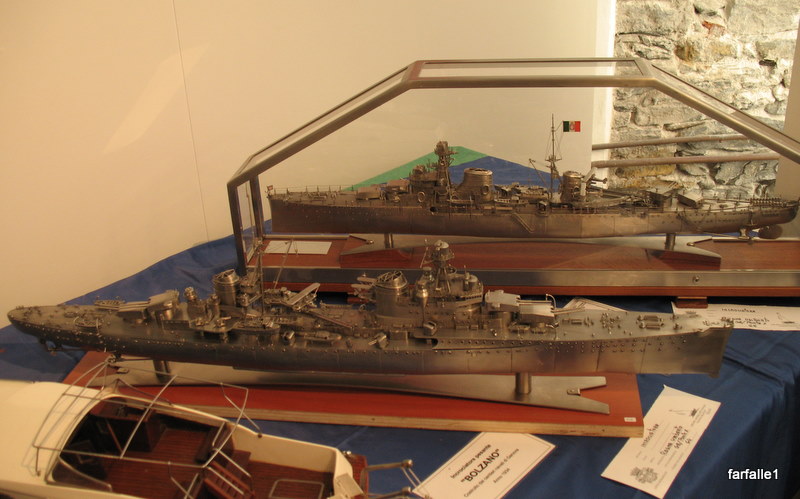
But several of the boats were made from more unexpected raw material. Umberto Rogma made his models from riveted steel:


He must have a rather sophisticated work shop.  I doubt Mrs. Rogma would welcome riveting on the kitchen table.

Andrean Brown chose paper for his model medium:


In addition to being very compliant in the bending department, paper has the added advantage of being a quiet material – no pesky sawing or riveting.  But really, look at the detail – can you believe that’s all made from… paper?!

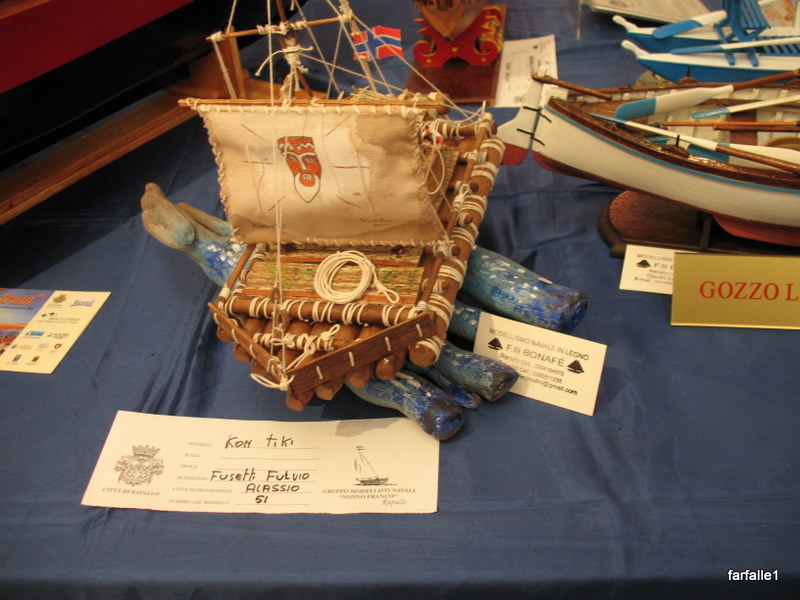
Many of the models are of particular vessels, like the famous Kon Tiki by Fulvio Fusetti:

and others are of a particular class of ship, such as this Corvette by Roberto Boniardi:

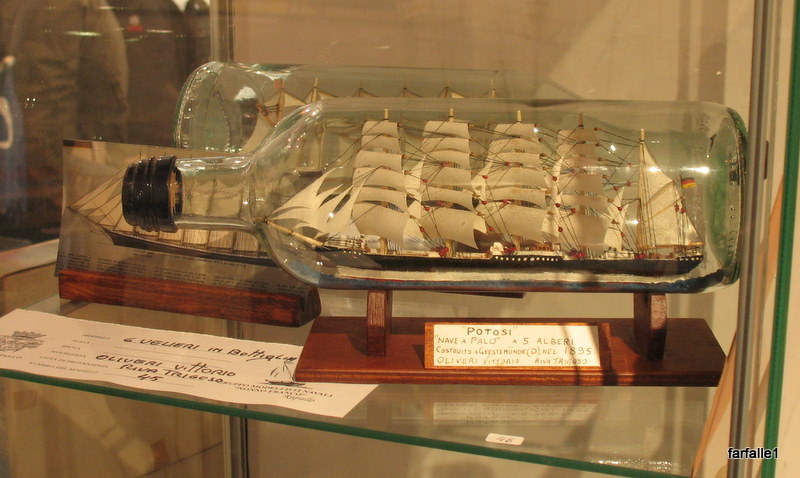
What would a model ship exhibit be without a ship in a bottle? The complexity of this construction takes my breath away. This is the ship Potosi, by Vittorio Oliveri:

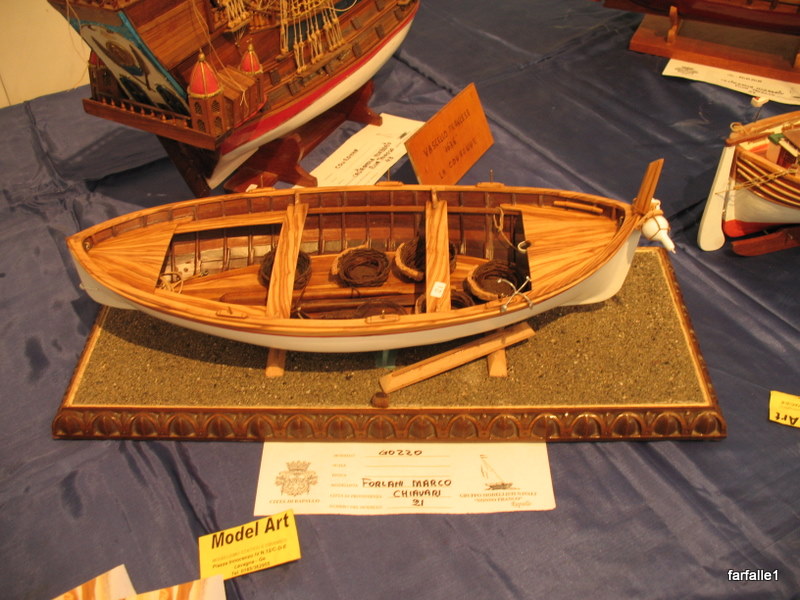
Three of the models particularly captivated me. The Gozzo is the typical Ligurian fishing boat of yore. How brave the sailors were who set out  in these small boats with no Loran, radar, GPS, etc. You will still see many Gozzi in the harbors around Rapallo, but they are now used as daytime pleasure craft; the fishermen have moved on to more elaborate boats, thank goodness. This model was made by Marco Forlani.

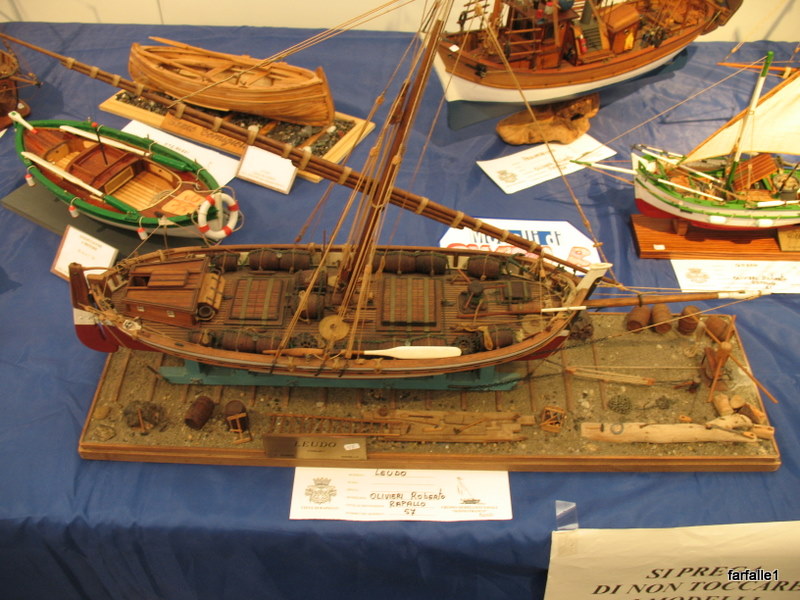
Some of the models recreate the ships’ on-shore environs. I loved this one for all the on and off-board detail, the tools, casks and ladder lying on the beach next to the boat. Roberto Oliveri fashioned each element himself.

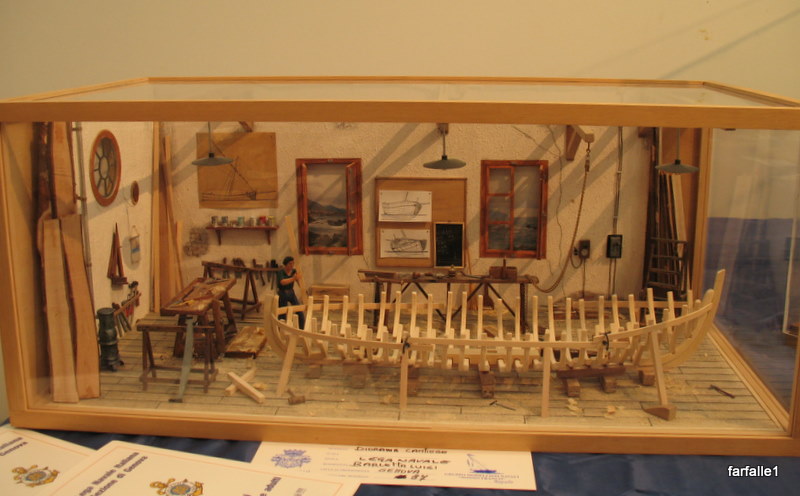
Luigi Barletta has shown us what the old ‘cantiere’ (ship-building works) looked like:

Could that be a Gozzo under construction?

These are just a few of the many, many models that were on exhibit. The show is over for this year but it will almost certainly return next year. If you’re in the neighborhood of the Castello at the right time, do go see it. It’s free and it’s wonderful.

Bye Bye “Captain”

Tags

, ,

Do we all long to have a nickname?  I did, and when I was in grade school I tried to give myself one.  It didn’t take.  Since then I’ve always thought that nicknames must be chosen by others, people who have observed your particular peculiarities or, perhaps, find something amusing about your given name.

One of the Captain’s friends gave him a nickname when he was a boy – ‘Salad’ – harvested from the garden of his last name.  It didn’t stick though and no one other than this one friend ever used it.

A year ago the Captain filled out one of those endless forms we are given in Doctors’ offices.  One of the questions was simply, “Nickname.”  ‘Well,’ thought the Captain, ‘I guess everyone must have one. I don’t, but I would like to.  I’ve always thought of myself as ‘Speedy’ ‘ and he wrote that on the form.  It felt just right when the doctor breezed into the  examining room a few minutes later with a cheerful, “Hi there, Speedy.”

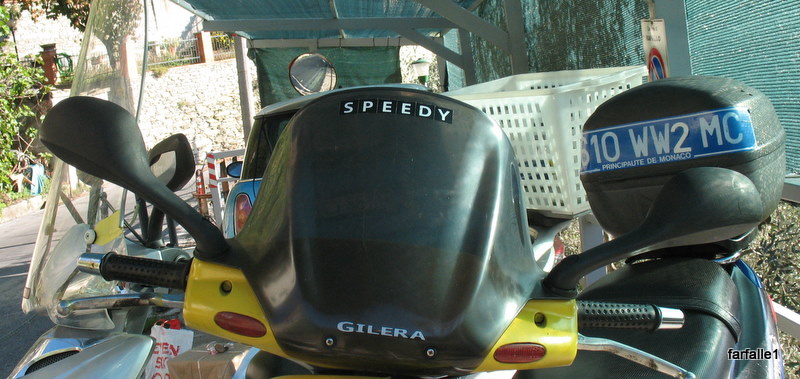
It’s hard to change your name when you and your friends have used the same one for, oh, let’s just say ‘many’ years; but the Captain, I mean Speedy, is persistent and has reminded all of us from time to time of his new moniker. I knew it was serious when he put his new nickname on his scooter.

Not too long ago he mentioned that he’d like not to be ‘the Captain’ any more in these pages, so join me in wishing that alias a fond goodbye and welcoming ‘Speedy’ to our midst.  Same great guy, new name, and one of the few people who’s ever had the satisfaction of choosing his own nickname.

Movin’ on

Photo courtesy of hannibalkennels.on.ca

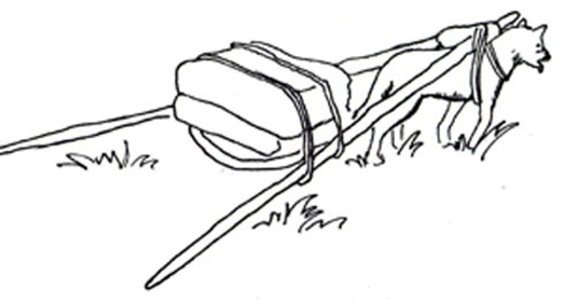
Rapallo is making it very hard to leave. After the terrible rains and devastating floods the weather has become sunny, warm, in a word, perfect. But we know winter is coming, so it is time to pack up our gear and head to warmer climes. I’m just glad we don’t have to carry our home with us as the plains Indians used to do. Now that would be complicated.

We’ll report from the other side in a week or two. Meanwhile, I hope the sun is shining on you, too.