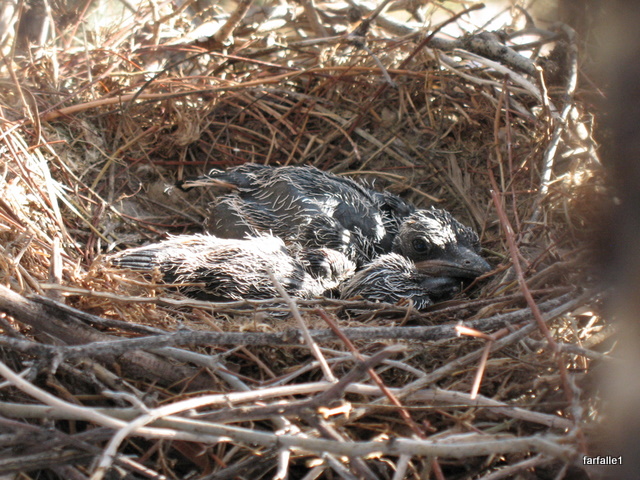
I just realized I never caught you up on the Arizona roadrunner who, when last seen, was sitting on her nest in a cactus. The venture was a success.
28 Wednesday Apr 2010
Posted in Animals in the U.S., Uncategorized
I just realized I never caught you up on the Arizona roadrunner who, when last seen, was sitting on her nest in a cactus. The venture was a success.
22 Thursday Apr 2010
If you wanted to know where the 14th annual Cartoons on the Bay Festival in Rapallo was last weekend, all you had to do was follow the sea of yellow balloons that bobbed along the Lungomare, firmly held by young hands. When I hear the word ‘cartoon’ I think of newspapers, The New Yorker and Gary Larson. But of course I live in the papery past. Nowadays cartoons are all about TV shows, videos and animated films. The Festival’s subtitle should have made it obvious: International Festival of Televised and Cross-Media Animation.
The festival is, perhaps, the Academy Awards of animated television here in Italy, with Pulcinella Awards given in various categories, including TV Series for Preschool, for Kids, for the Tween generation and Young Adults; Educational and Social Products; TV Series Pilot; and Interactive Animation. To my absolute delight, though, the shows the children evidently found most appealing were the ones that featured real, living people, albeit some of them disguised as giant mice.

or Star Wars Characters
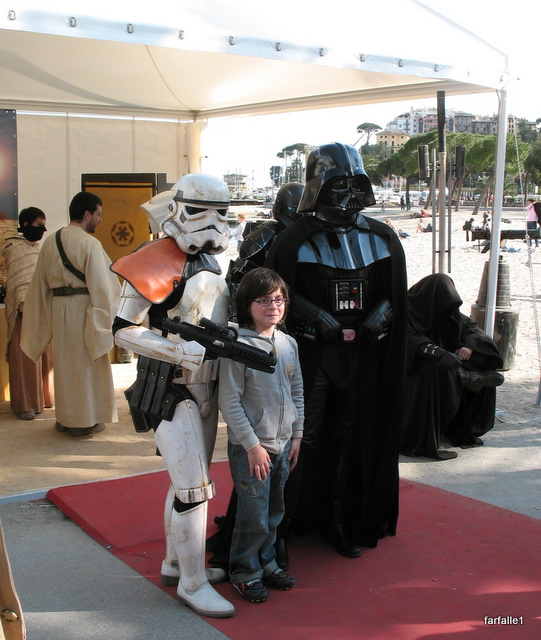
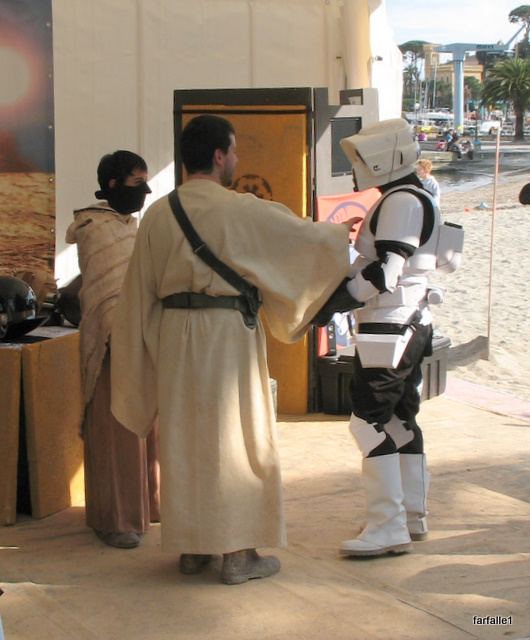
or chickens
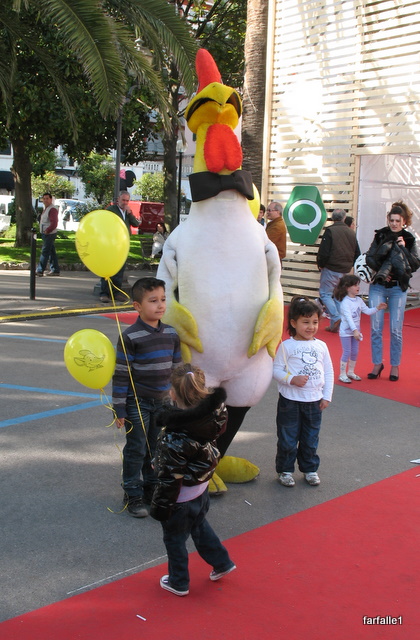
or one of my favorites, Batman!
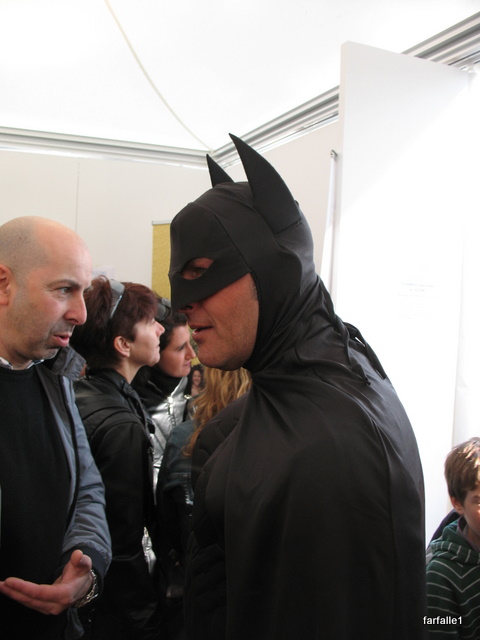
I want the job where you get to dress up in a silly outfit and play with children!
One end of the Lungomare was given over to the Cartoon Village, a series of cheerful white temporary buildings that housed various displays, including several by sponsors. (RAI, the state-run television, was the main sponsor of the event. Other sponsors included Kinder Sorpresa (my favorite because they were the only ones to give me something – a white chocolate egg with a prize inside) and Monwatch, a clever and inexpensive water-proof item that can be slipped in and out of plastic watchbands of many colors.) Here’s a photo of a display of Kinder Sorpresa prizes from the 1970’s.

The largest tent held several hundred people, most of whom happened to be screaming youngsters at the time I dropped in. They were excited about the stars of a famous TV show:

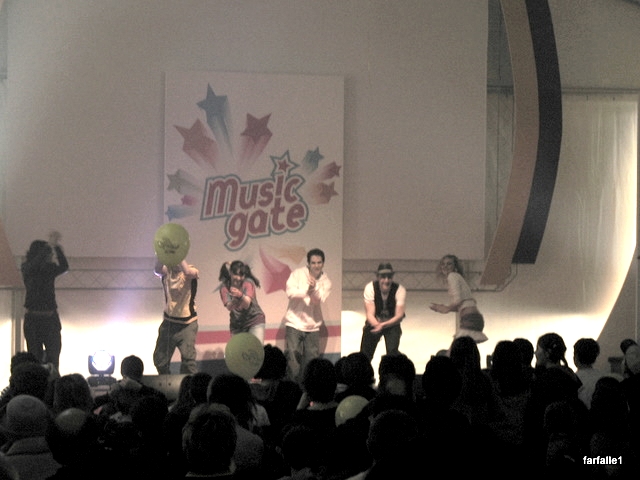
The din was extraordinary. And though I really enjoyed watching the dancing, the crush of people and the decibels chased me out after about five minutes.
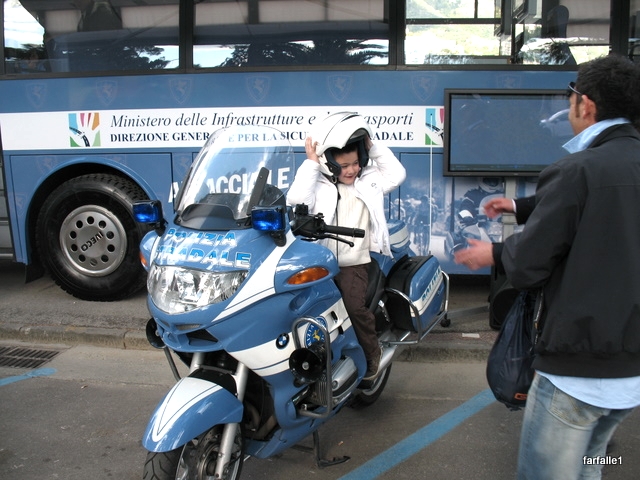
After Music Gate, a visit with the Police, who were present in great numbers, was positively calming. Behind the young lad trying out a fast cycle below is the large bus which is used for education – it houses a bunch of computers that teach highway safety. In addition, in a neighboring kiosk a policeman was giving a PowerPoint display on safety to a rapt group of older people – probably the grandparents of all the kids screaming in the tent.
Without a doubt, though, my favorite part of the Cartoon festival had nothing to do with cartoons and everything to do with fast cars. I have never seen a cruiser like this in the U.S. (or such a spiffy police uniform, for that matter).
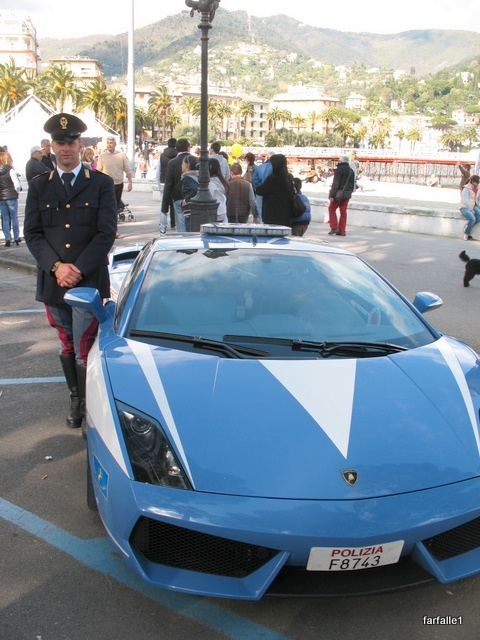
It’s a Lamborghini Gallardo capable of speeds up to over 200 mph. It lives in Rome and is driven by either the handsome gent standing next to it, or his partner, who was nearby. They sometimes use it to apprehend speeders on the Autostrada, but frequently it is put to a far better use: transporting transplant organs – hearts, kidneys, corneas and so forth. I asked how much of that went on and the policeman said sometimes they do as many as four in a day, sometimes none.
It was a grand festival, and it tied Rapallo up in knots for days. There was a big bike race on the Saturday, called Cartoons on the Bike. My sources tell me that some of the most important ciclisti of Italy participated. In the weeks leading up to the race some of the main streets around Rapallo were re-surfaced, which led to horrible traffic snags. But as our friend G said, the race is over, but we get to keep the improved roads. The link above to the bike race includes a great many fun pictures of the event, which included children as well as adults and took place between Rapallo and Portofino, on one of the loveliest and most famous stretches of road in the country.
Now… can you guess which person in the photo below is me??!

18 Sunday Apr 2010
Posted in Flowers
Tags
Rapallo in springtime is a festival of flowers. All the public spaces have been freshly planted with cheerful pansies, petunias, calendulas, and lots of other flowers I can’t identify.
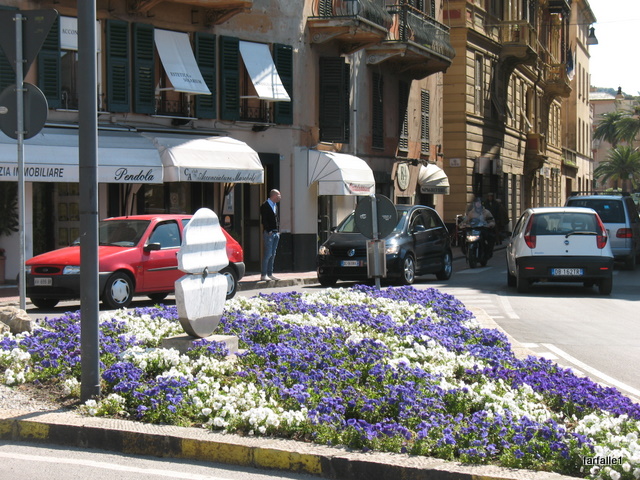
There is a special floral tribute to Easter each year, usually on the Lungomare across from the bandstand. This year, probably due to bandstand construction, it was near that other famous Rapallo landmark, the Polipo (octopus). He’s looking a little dejected just now, isn’t he?
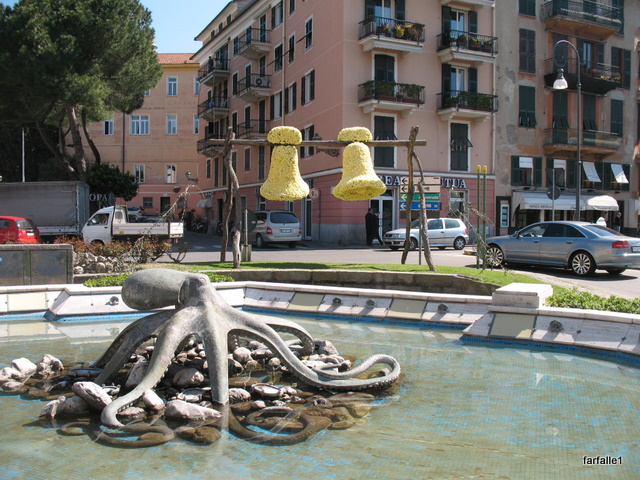
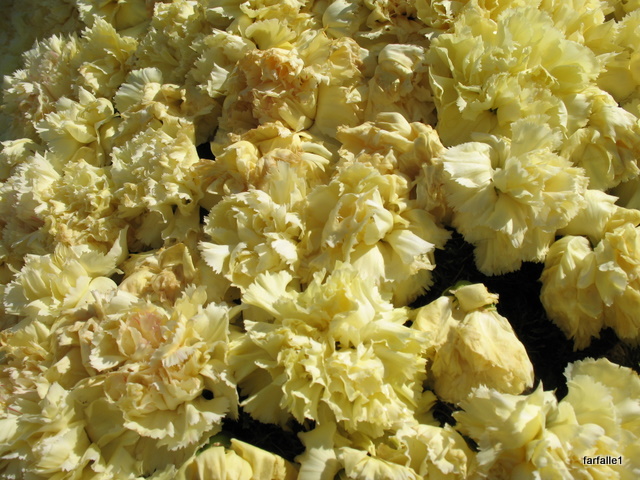
The supports for the bells were decorated with other flowers for Easter, no doubt, but by the time I came upon the display those flowers had gone past. The bell flowers were on their last legs, but still make quite a show.
I love the way the giardinieri think nothing of decorating with trees. Every now and then olive trees will appear in the middle of a piazza where they’ve never been before, and then a month or two later just as mysteriously disappear. Last week there was a mature lemon tree ‘growing’ out of a piazza. Limoncello, anyone?
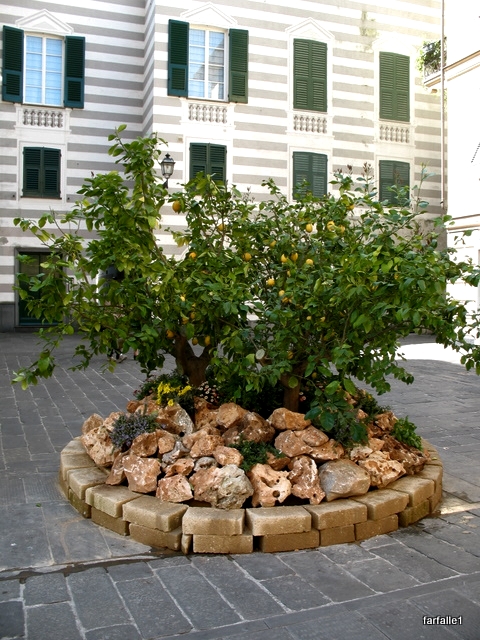
Rapallo takes its appearance very seriously. The flowers will be kept healthy and flowering as long as possible, and when their work is done they will be replaced by new recruits. It’s just one of the many pleasures of living in this pretty town.
14 Wednesday Apr 2010
Posted in Travel, Uncategorized
Tags
Enkirch, Hahn Airport, Kirst B&B, Raversbeuren, RyanAir, Trarbach, Trier
We’re back in Italy now, and it is just wonderful to be here. Not that we don’t love our homeland, but we love our adopted land more every year. Each time we return it feels more familiar, and more like ‘home.’ Of course soon after our arrival the usual train of bureaucratic nonsense began, but that’s a story for another day; and truly, it is not enough to dampen our spirits (as long as the sun continues to shine).
This time we returned through Frankfurt, taking advantage of American Airlines nonstop from Dallas to Frankfurt, and then low-cost RyanAir‘s nonstop from “Frankfurt” to Pisa. RyanAir is a good bargain most of the time, but you have to be rather careful about exactly where you are going to find yourself. Several years ago the Captain and I went to “Glasgow” from Pisa via Ryan, and arranged to rent a car at the airport. Ha ha. Ryan’s “Glasgow” flight goes to Prestwick, which is 30-40 minutes distant by car. We arrived in Prestwick, and not surprisingly found no car waiting for us. The AutoEurope people were fantastic, though, and quickly figured out what had happened. In short order we had a car and were on our way, laughing at our own carelessness. (In fairness, I have to say that the RyanAir website now says “Glasgow/Prestwick” – I don’t think it did a few years ago.
Likewise the website refers to “Frankfurt/Hahn.” You might think from the linking that the airports are close to one another; in fact it takes about an hour and a half to drive the 116 kilometers that separate the two airports. Ryan didn’t fool us this time, though; we had cleverly done our homework. There is very good and reasonably priced (E 12) bus service between the two airports, but we wanted to spend the night near Hahn and enjoy some good German beer and wurst. Unfortunately we were unable to find convenient bus/train service, so we simply rented a car, which had the added advantage of giving us lots of freedom… a good thing since the little town in which we chose to stay, Raversbeuren, was not exactly stuffed with pubs or restaurants. Click here for map of the area (The pin A is in Raversbeuren, Hahn doesn’t show on map, but is right there.)
As we approached Raversbeuren we passed right by one of the Hahn Airport taxiways; it seemed decidedly odd to be so close to this large transport which had just landed.

A few minutes later we found ourselves in the B&B run by the charming Berta and Helmut Kirst:

They could not have been nicer to us. Their hospitality extended to an elaborate mid-afternoon tea with four different kinds of sweeties made by Berta herself. Our overnight there cost only E 40, permitted us early check-in, and included this amazing breakfast:

In addition to the spread of meats and cheeses, jams and breads, there are boiled eggs under those cheerful little red hats. Behind the tea pot (good tea) is a plate of more of Berta’s sweeties. There was not room for everything, but it was a pleasure to do our best to eat it all.
Hahn Airport was, until the mid-90’s, a U.S. Air base (cool airplane pictures here), and that’s pretty much what it still looks like. For starters, it’s in the middle of nowhere. You will not find the usual big hotels that sprout like weeds around more urban air hubs. But you will find lots of small charming villages, and endless expanses of fields.

The photo above is of farm fields just outside Raversbeuren. Hahn and its airport are about 5 km to the left. Many of the houses and barns in Raversbeuren are clad completely in slate, which gives them a rather dour, imposing look, and which is, I think, quite unusual.
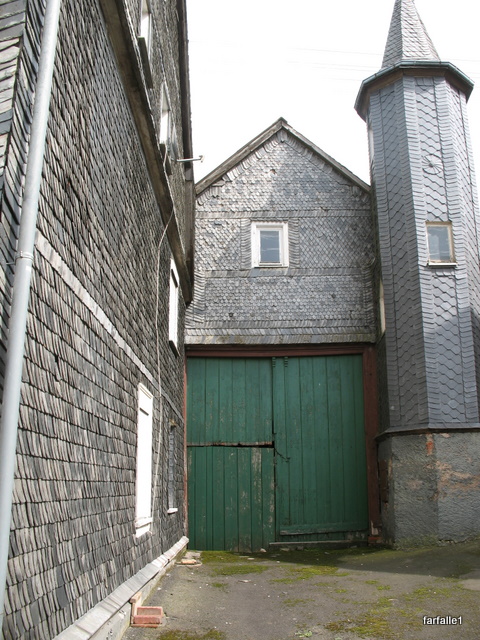
After our usual post-arrival nap we hopped in our nifty little car and took off to tour of the neighboring towns. Enkirch is very nearby and is where we returned for a delicious dinner. The sister towns of Trarbach and Traben lie on opposite sides of the Mosel River; both are picturesque and rather touristy. They are connected by a fancifully painted bridge. (There is an album of photos of these towns and other parts of the trip here.)
We arrived in Germany the day after Easter. I don’t know if any other country has more fun with Easter than Germany. Shop windows are given over entirely to springtime displays featuring flowers, rabbits, eggs, and bales and bales of straw grass. Both our room at the Kirst B&B and the pub where we stopped for some excellent German beer were decorated for the holiday. It seems you can’t go anywhere around Easter time without tripping on a bunny or an egg.


Arriving at the airport the next morning was a bit surreal. We came in through the back entrance, rather than the somewhat more polished main entrance. After traveling about a mile on dreadful heaved up and bumpy pavement we arrived at the gate, which looks much more like a base entrance than an airport entrance… for the simple reason that for years that’s what it was.

Fortunately we didn’t have to stop and show military ID. But the strangeness continued as we drove past one hard stand after another. (The Captain explained to me that the hard stands each housed one airplane and its crew, which were always at the ready for almost instantaneous deployment. Hahn was important during the cold war.). We must have driven by fifteen of them at least. It certainly didn’t feel like the beginning of a commercial air trip.

But it was, and eventually we found the place to return our rental car and were driven back to the air terminal. The flight to Pisa was gorgeous as the Alps were in plain view for a change, as were the Lakes (and Lecco… where I think I saw some Rubbah Slippahs); so often one sees just the peaks popping through a heavy cloud deck. As we approached Pisa we had ample proof that there has been a ton of rain in Italy. Here is the muddy Arno emptying into the sea:

A few minutes after the above photo was taken our feet were once again on Italian soil, and all the joys and inconveniences of Italy re-entered our lives: we ate a fabulous panino while we waited for the train, which was delayed one and three-quarters hours.
07 Wednesday Apr 2010
Posted in Uncategorized, Wine
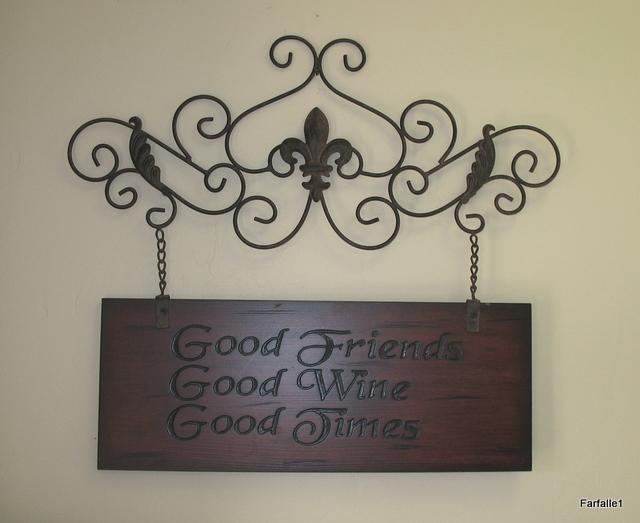
Truer words were never scratched into wood. And is there not a little old wine-maker hidden inside each of us who enjoys drinking the fermented grape? The Captain and I think of it sometimes, and we enjoy watching our friends up the hill in San Maurizio labor and worry over first their grapes, then their juice, then their fermentation, and finally their bottling. But having watched the intensity of the labor that goes into producing wine (and, co-incidentally, not having any grapes) we limit our ‘wine-making’ to either helping our cousins pick their grapes, or bottling wine we’ve bought in bulk.
We are wine spoiled living in Italy much of the year. It’s no secret that Italy is the source of some of the finest wines in the world. And if your taste runs to the more prosaic vintages, you can satisfy your thirst for a pittance. We are accustomed to paying +/- E2 a liter ($2.60) for our table plonk.
It’s always a rude awakening to price wine in the U.S., to the point that it kind of takes the fun out of shopping for it. What a pleasant surprise, then, to discover Wine Canyon, one of Gold Canyon’s newest stores. No, Wine Canyon is not a liquor or wine store, per se. Rather, it is a place where you can buy wine ‘juice’ and make your own wine. I know! We’d never heard of such a thing either.
According to proprietor Loren Kensrud, the idea started up in Canada, a country definitely not famous for its fine wines, but full, evidently, of frustrated vintners. It’s pretty simple, really, and looks like loads of fun.
You buy a box of grape juice, which has been tested for appropriate sugar and acid content before being packaged. Your box will produce 6 gallons (30 bottles) of wine, as a rule. The ‘wine juice’ comes from vineyards all over the world – Australia, France, Germany, South Africa, New Zealand, California and, of course, Italy.
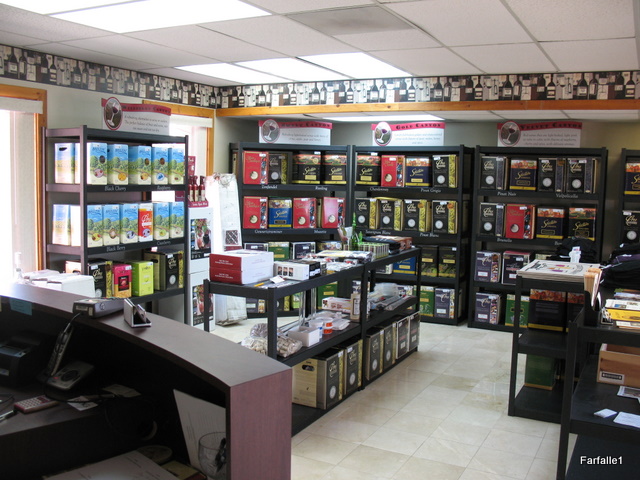
Each of these boxes is a different wine – there’s no shortage of choices, no matter what your taste. Calling it ‘grape juice’ makes it sound like the wine will taste home-made in the worst sense of the phrase (I’m thinking of the dandelion ‘wine’ my father and I once made – undrinkable!). But these juices are the true varietals from their regions and make ‘real’ wines, such as Cabernet, Merlot, Shiraz, Barolo, Chianti, etc., etc.
You mix your juice with the provided agents (yeast, benonite, potassium sorbate and potassium metabisulphite) and let it stew in a bucket for a while. Then you put it into big glass bottle and let it ferment for four to eight weeks, depending on the wine. The kits contain only one-third to one-fifth the amount of sulfites that are present in commercial wine, which is good news for the headache-prone.
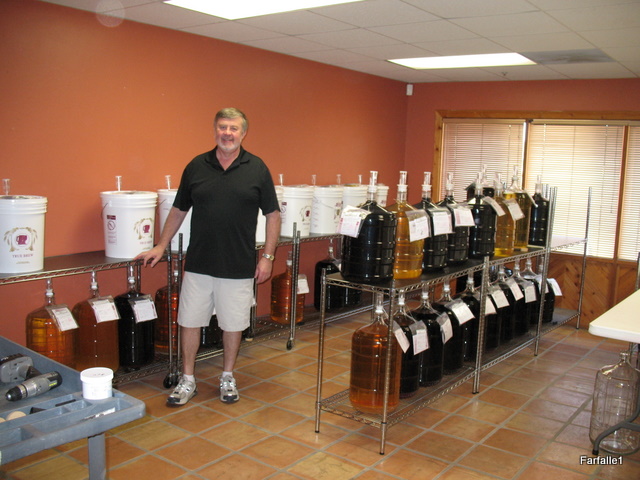
Loren Kensrud in his fermenting room
After that you make an appointment to come back and bottle your wine. The hardest part for most people, according to Mr. Kensrud, is that you must let your wine sit for anywhere from one to six months or more after you take home the bottles. That’s all there is to it.

Then there’s the fun of designing your own label which will surely impress your friends.
What does it cost? Probably somewhere in the $4 – $8 range per bottle, depending on the kind of wine you make. Mr. Kensrud gave us a taste of a couple of wines, including a delicious Brunello, a wine that is available at Liquor Land for $35 – $100 a bottle, and we thought it was excellent. Making your wine this way may not have quite the charm of a visit to a vineyard in Piemonte, but it’s certainly more interesting and a lot more fun than going to Liquor Land. Maybe next year? Stay tuned.
01 Thursday Apr 2010
Posted in Food, Indian recipes, Uncategorized
 Some years ago the Captain found a restaurant (Indonesian? Malaysian?) not far from his London layover hotel, The Kensington Hilton (located in Hammersmith, not Kensington at all). He has never forgotten the soup he enjoyed that night at dinner. Recently he found a package of frozen crayfish tails and he thought, Aha! Now is the time to try to recreate that magical soup.
It was initially scheduled for a few weeks ago, but to his horror he found that the cans of tomato pieces he had bought contained oregano. That flavor was definitely not part of his taste memory of this particular soup, so a quick menu change ensued.
Finally, though, the perfect opportunity presented itself, and on a recent Friday he produced the divine soup pictured above. With a bit of piquancy, a bit of cream and a bit of heat it is easy to see why he never forgot this particular dish.
The crayfish tails tasted to me of lobster, so I think they could easily be substituted if crayfish tails are not available. You can find the recipe here or over on the right under recipes.
27 Saturday Mar 2010
Posted in Animals in the U.S., Desert
Tags
We last met the goofy roadrunner in this post about desert camouflage. When does a roadrunner stop being goofy? When it’s a female sitting on her nest; then a roadrunner becomes sweet and vulnerable (for probably the only time in her life). She remains, however, well camouflaged.
These photos are thanks to the Captain, who has the eaglest of eyes. He heard a cardinal singing, and when he looked for it his eye fell on the roadrunner in her nest, well and truly hidden in a protective cactus.

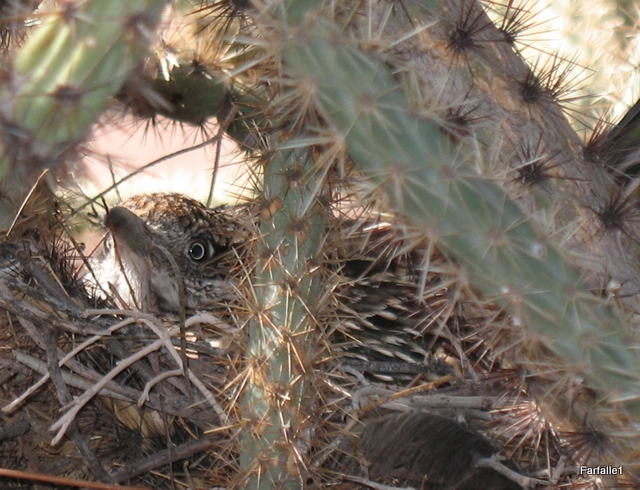
Still difficult to see, isn’t she? It’s hard to imagine being a baby anything and having to find your way out of such a prickly nest; on the other hand, no doubt those nasty spines will keep predators from the sitting bird and the new hatchlings when they arrive.
17 Wednesday Mar 2010
Posted in American habits and customs, Uncategorized
Expatriate finds herself in Vermont again. We think of the West as being wild, wooly and lawless, but things can get out of hand in a Vermont State Liquor Store as well!
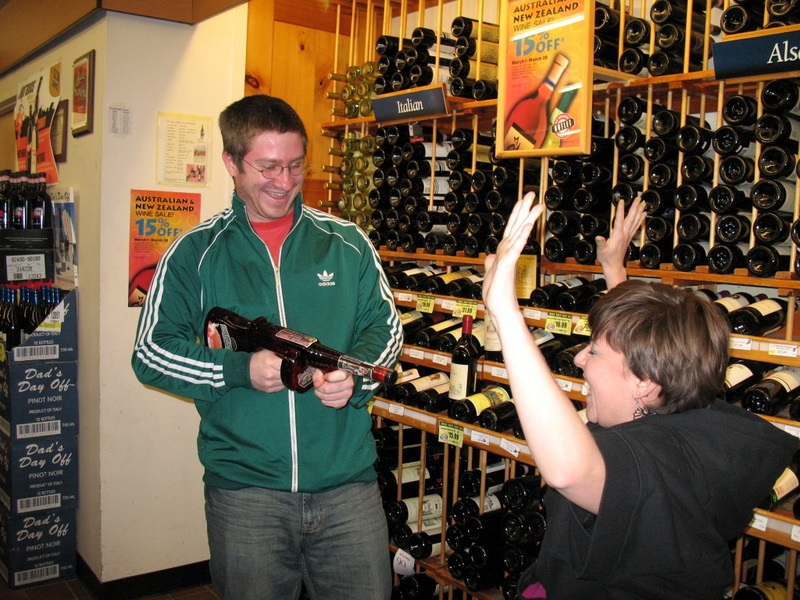
Stick ’em up! Your Tequilla or your life!!
10 Wednesday Mar 2010
Posted in Customs, Food, Italian habits and customs, Uncategorized
There are many dining differences between the U.S. and Italy, but some of them are rather subtle. The food is the first and most obvious, with the dining hour a close second. Holding the fork in the left hand to eat after cutting food is also the common Italian practice, as it is in much of Europe… much more efficient than the American practice of shifting the fork from right hand to left to cut meat, say, then shifting it back again to the right to eat politely.
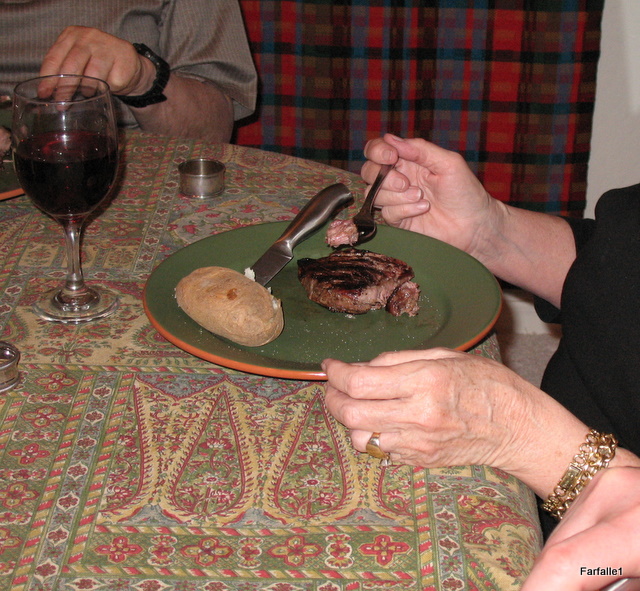
How much more sensible to just spear it with that fork, saw off a hunk, and ahhhhhhh.
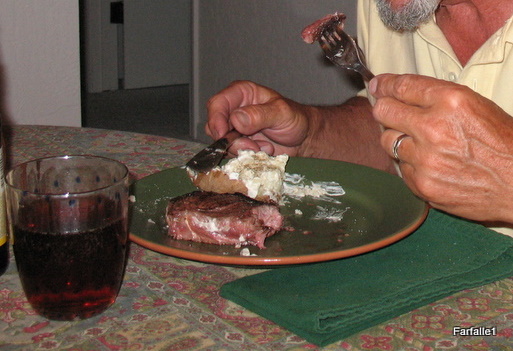
There are otherItalian dining customs that we have learned about only slowly. The hands on the table for instance; in the U.S. it is considered polite to keep your non-working hand in your lap and your elbows off the table. In Italy this is highly suspect – just what do you have in your hand that you don’t want your fellow diners to see? No. The unoccupied hand should rest, fist gently closed on the edge of the table, where everyone can see what you’re up to. It’s not unusual to see people rest the whole arm on the table, from near elbow to fist. Our hand model in the first photo above is illustrating a hybrid of the two practices, eating with her fork in her right hand (American) but resting her left paw on the table (Italian).
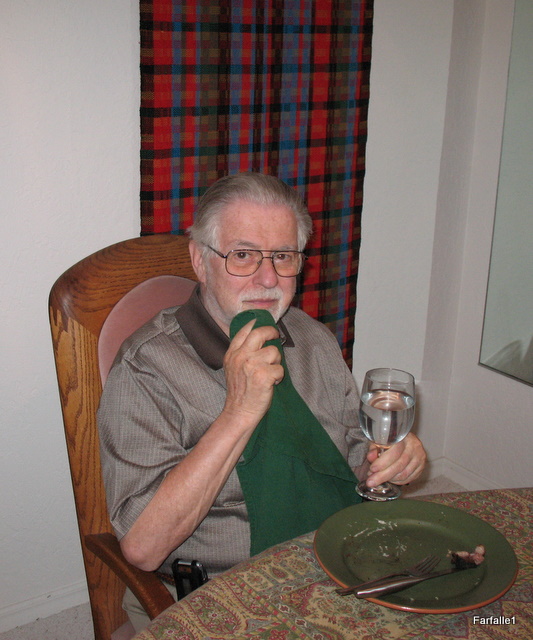
Thirsty? Hang on a second. Don’t just pick up your glass and drink; you’ll get food residue on your glass. Instead you want to wipe your mouth with your napkin, then take a sip. Then wipe your mouth again.
Perish the thought you should get an itchy scalp during a meal. In Italy it is considered bad manners to touch the hair while eating. I’m not exactly sure why this is so. It’s not like you’re running your fingers through your hair and then sticking out your hand to shake with someone else (we see golfers do this all the time at the end of matches – ick!). But then, I’m not sure manners always make a great deal of sense.
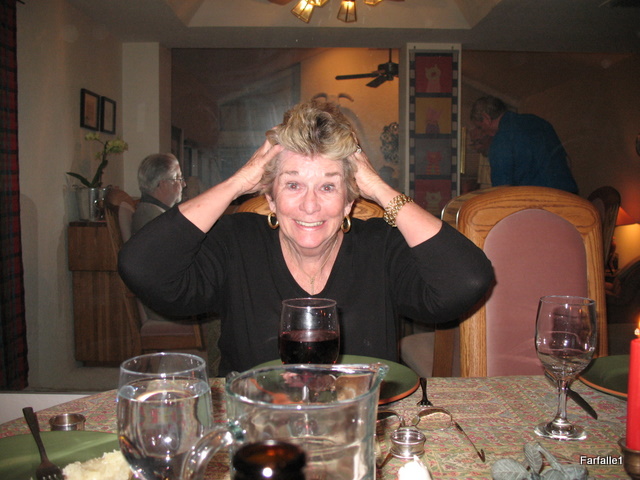
(It’s no wonder our patient model wants to pull her hair out – this is about the 6th time I’ve said to her, “Wait! Wait! Let me take a picture of that!” Makes it hard to enjoy the food…)
Dinner’s done and it’s time to clear the table. In the U.S. it is not unusual to make multiple trips to the kitchen carrying two items at a time – it’s not polite to stack plates, we were taught. I’m happy to say that this work-inducing custom does not exist in Italy. Everyone, from the very talented waiters in restaurants to the maid serving a fancy private dinner, will stack the plates before staggering out to the kitchen with them: another triumph of common sense!

Time for fruit. Wait! Don’t pick up that fruit with your hands! In Italy we cut our fruit with knives and forks, and eat it with forks. And it’s best not to eat the skin – just cut that off as well. You never know what might be on it, even if it has been well washed. It is a joy to watch an Italian delicately separate the skin from, say, a pear, and tidily eat – it’s an art form. This is a skill I have not yet mastered. I still like to eat my apples the American way, cut in quarters and enjoyed from the hand.
Care for a cafe? Well, okay. I won’t join you, because I don’t care for it myself, but I’d be happy to make you some. Just remember that in Italy, coffee after dinner means espresso. Period. It does not mean cappuccino, which typically is drunk only in the morning, or any of the other myriad Italian coffee styles. It means a short, dark and very strong espresso.
I’m grateful to the students in my adult ESL classes of a few years ago for teaching me these niceties. There are probably a lot of other customs of Italian dining I’ve omitted – any additions, fellow bloggistas?
28 Sunday Feb 2010
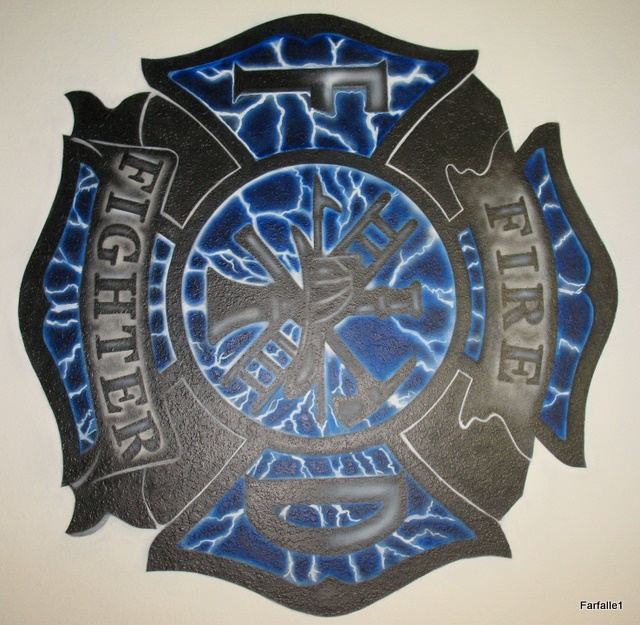
Our friends Elena and Michela, sisters, arrived from Italy for a visit a couple of weeks ago. It was their first ever plane ride and, obviously, their first visit to the USA. We ran ourselves ragged seeing the sights the Phoenix-Tucson area offers, and each day I asked them what had impressed/amused/irritated them the most.
The answers were pretty much the same each day – everything is bigger here than in Italy (cars, roads, even the host at communion); everything is so clean. Elena was fascinated by the Adopt-a-Highway program, something which does not (yet) exist in Italy.
But the thing that amazed them the most, over and over, was how friendly and welcoming people here are. (Interestingly, when we moved to Italy we were struck by how very welcoming people there were to us.) Elena and Michela both enjoy meeting new people in new situations. Michela has a special gift for drawing people out. Her secret? She just walks up to people and starts speaking to them in Italian; they are completely charmed. Then it’s my turn to insinuate myself as translator, and before you know it, we all have some new friends.
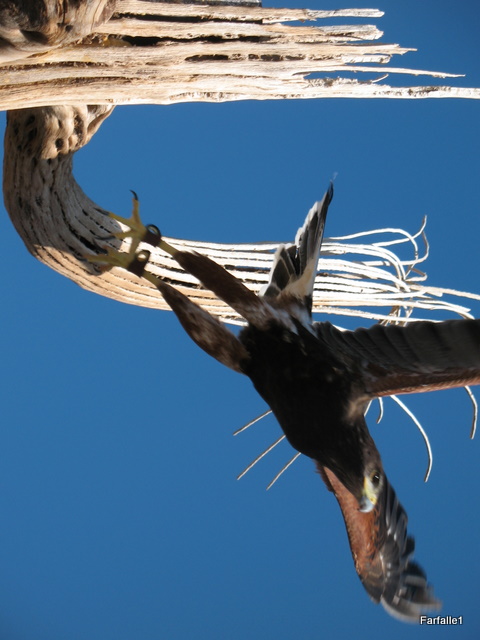
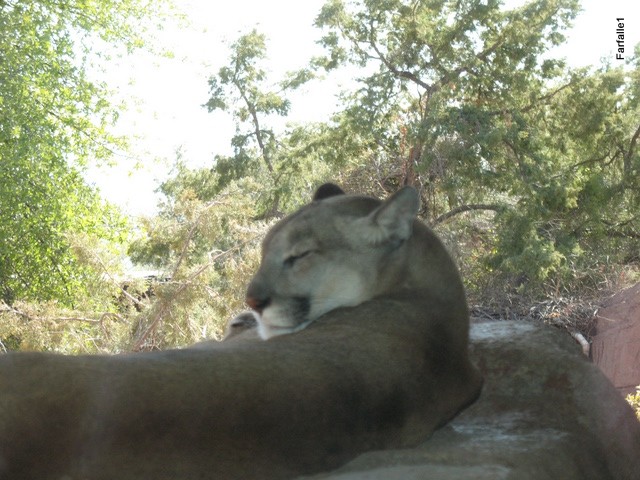
Nowhere was this better illustrated than in Picture Rocks, north of Tucson. The famous Mrs. Harris took Elena, Michela and me to the fascinating and beautiful Arizona-Senora Desert Museum. If you’re ever in Arizona this is so worth a visit – you can learn about all the Sonora Desert plants and see all the animals that are residents, including (among many others) the Harris Hawk
and the dozy mountain lion.
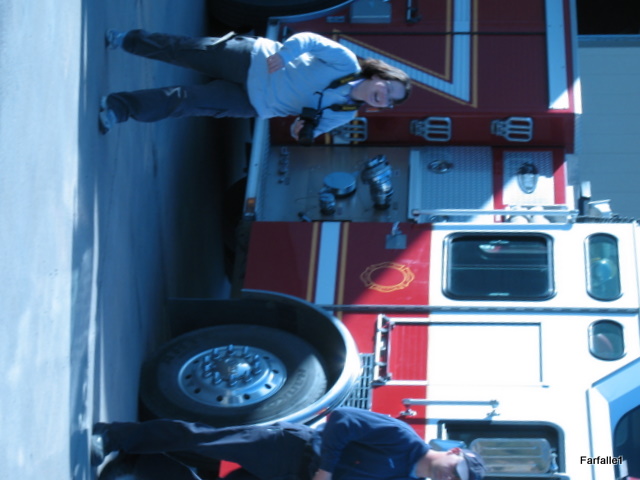
But the really exciting part of the day happened as we were on our way home. A big red fire engine pulled in to the gas station where we stopped to tank up. As Michela is an avid amateur photographer, Mrs. H marched up to the firemen and asked if it would be alright if Michela photographed the truck.
Of course! was the answer. They couldn’t have been nicer. They opened up all the doors and secret compartments of the engine so she could photograph them, and explained what all the different tools were and how they are used. Then they got permission from the Fire Chief to give Michela a ride to the fire station in the truck.
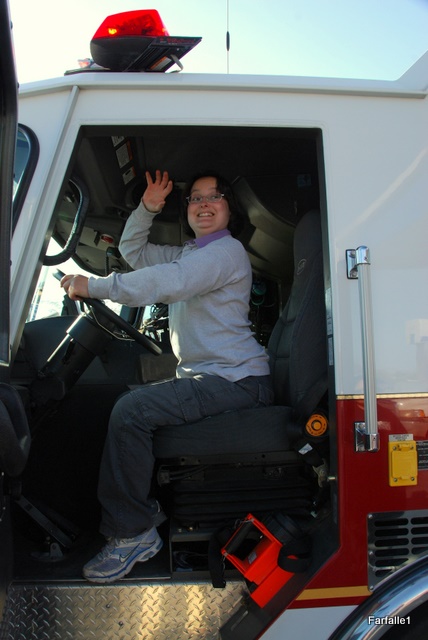
(Not the best picture ever taken of Michela, but one that shows her glee.)
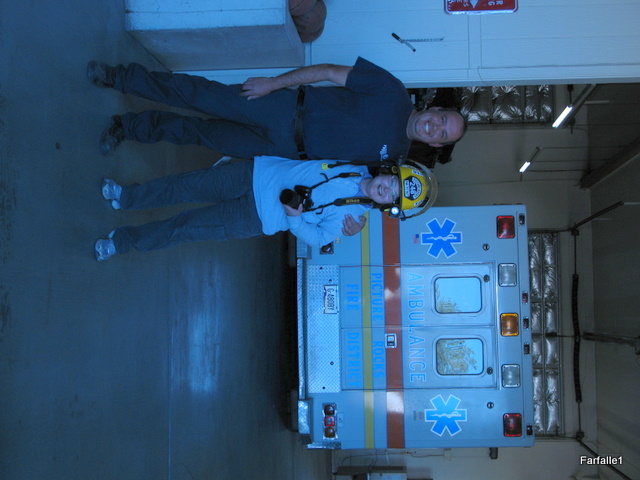
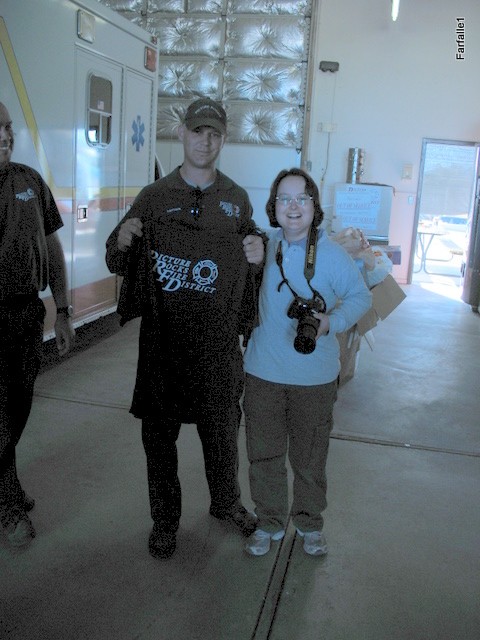
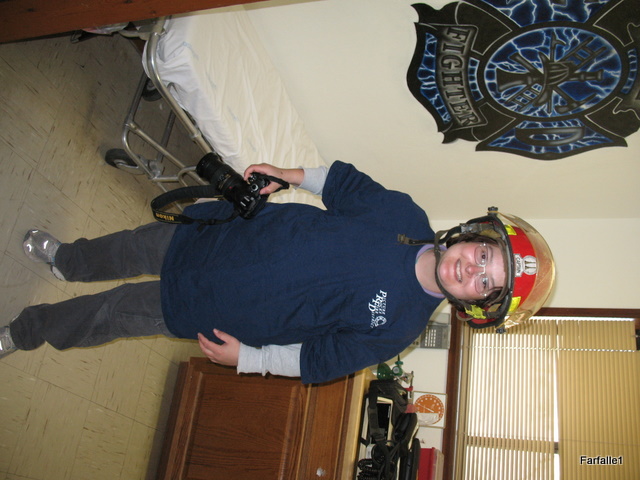
Back at the fire station the kindness escalated. We were all given Fire Department tee shirts – deep blue, my color! Then they found a helmet for Michela to try on, and before we knew it, she was all kitted out in complete fire-fighting regalia.
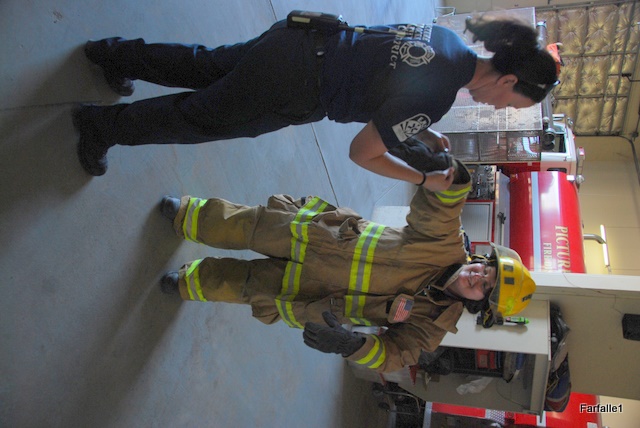
We were given a tour of the whole building – including the kitchen where the smell of cooking brisket got our appetites revved up.
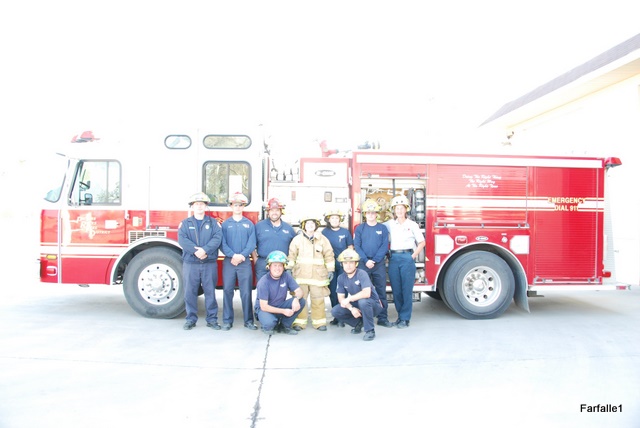
Some of the firemen who weren’t present at the moment were summoned, and we took pictures of the whole group in front of the beautiful fire engine.
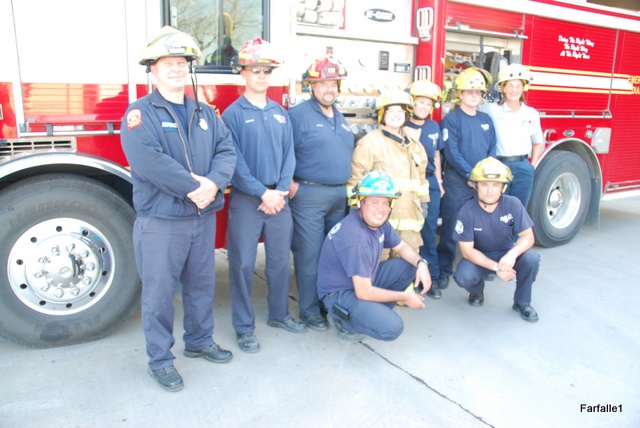
They showed us the small plastic name tags that they each have attached to the inside of their helmets with velcro. Anyone who goes into a burning building removes his name tag and leaves it with those remaining outside. That way, as one of the firemen told us, “they’ll know whose mother to call.” It was a reminder that much of their work is hot, dirty, hard, dangerous and unhappy. They each removed their name tags and velcroed them to a strip of cloth for Michela to take back to Italy, a symbol of a new friendship – it was a real hands across the ocean moment.
Picture Rocks Fire Department employs about 64 people, men and women, and covers an area of about 64 square miles. They are very likely to be called out numerous times daily, because in addition to fighting fires, they are the emergency response team.
All in all we spent about an hour and a half at the fire station – it was the highlight of the sisters’ visit to Arizona, and certainly one of the most interesting and moving experiences I’ve ever had here. Every member of the team was generous and kind to us, for no reason other than that that’s how they are. It was humbling.
And oh yeah – they gave Michela the helmet to take home, too – a real helmet that had been damaged and can no longer be used. Our friends left on Thursday evening, and they had an interesting time packing around that helmet. But they, and the helmet, have arrived safely back in Rapallo with some memories which we hope they will never forget; we know we won’t.
Here are a few more photos from our visit to the Picture Rocks Fire Department which, I have to imagine, is the best Fire Department in the world.
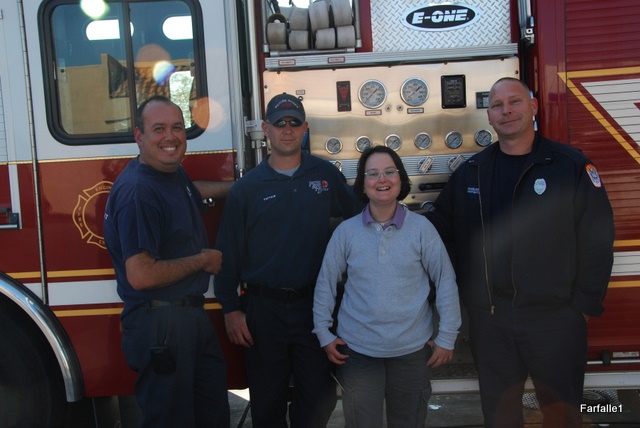
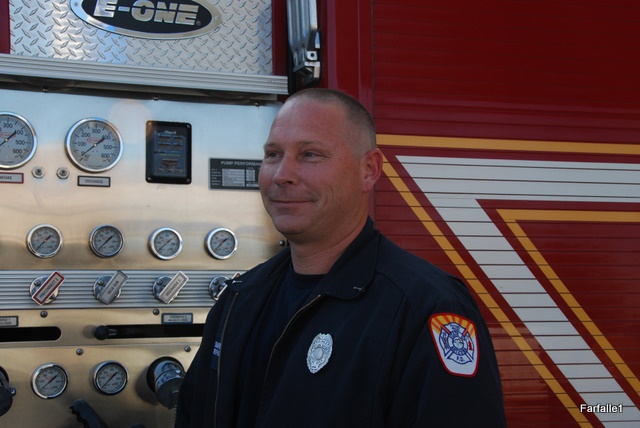
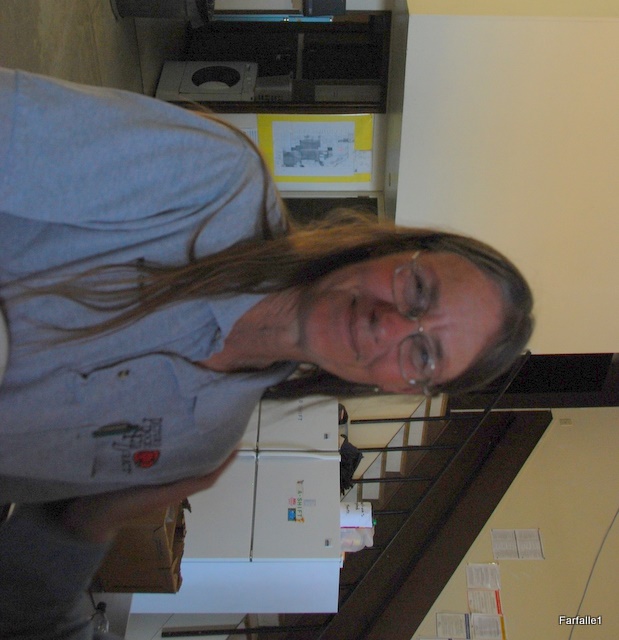
Fire Chief Kathy Duff-Stewart, 27 years service with the department!