How to bust a diet – Italian style

Tags

, ,

A friend who is dieting recently wrote an e-mail lamenting the fact that she had fallen off the wagon by eating – gasp – a piece of toast with marmalade, and drinking – double gasp – a G & T.  I had to tell her that hers were but minor peccadillos…

THIS is how you really shoot a diet all to pieces ~  Get up too early, eat a sensible breakfast, drive 2+ hours to Sostegno in Piemonte, to the country house of Leo and Isa. Hang around waiting for Carlo and Reka to show up for lunch, eat bread while waiting. Then eat some more bread and drink some wine with it. That wine was good; have some more.

Carlo and Reka & Anna and Jacobo appear, go to the table. Eat polenta cuncia – usually eaten in winter but it’s cold and rainy today, so… it is made with lots and lots of cheese and butter and it is so good you must have just a little bit more. Then have some other anti-pasti, perhaps a brace of stuffed eggs, some more bread with egg yolk something on it, then some bagna cauda on half a broiled red pepper (bagna cauda is a sauce made of anchovies, garlic and oil.  Its name is sometimes written “bagna calda”, but it is a Piemontese dish, and the correct Piemontese word is “cauda”.  Thus sayeth Leo). The salami looks pretty good too, so try several slices of both kinds. But it’s all so salty! Drink more wine.

Then eat the main course, which is just plain old ordinary polenta and a cotechino, which is a sort of fatty, spicy mixed meat something stuffed in a casing and boiled for a while. Red wine. Feel like you’re going to die. But wait. L & I’s daughter Anna’s boyfriend’s mother has sent along a tiramisu, and it would be awful if word got back to her that someone didn’t like it. Eat tiramisu. Oh gosh, look at the time – it’s after 4 p.m. Go for a walk, a long walk, no matter the rain.

Prepare for dinner. Help by setting the table and testing to see if the bread is still good. It is. When asked say that you want the fish instead of the beef (because after all you are on a diet!). Commiserate with Louis that his pesto lasagna has had to sit too long before being served. Eat a big square so he won’t feel badly. Eat your whole fish after removing head and tail – it has been baked in tin foil with olive oil and has been stuffed with thyme. It is heavenly. Feel sorry for all the fatties eating meat. Eat a second portion of salad because it is good diet food. Wine? Yes! Some of each please, and 2 extra glasses of the Triminer because it is particularly good with the fish. Dessert? No thank you. Oh, that’s right, we brought it (purchased, not made: a light cakey thing called Dolce Varese)- the others might think it’s poison if you don’t eat it. Have a second piece to lay their worries completely to rest.

Go to bed hating yourself, but resolving to do better tomorrow.  That’s how we go off-diet in Italy! How do you do it?

Festa!

Tags

, , , ,

 Every Italian town and village has an annual festa in honor of its saint.  Here in San Maurizio di Monti they celebrate the eponymous saint every autumn, taking his plaster image from the church and giving him an airing in a solemn procession with prayers, dreadful through a loud-speaker, along the main road.  (San Maurizio is one of eight frazione, or administrative appendages, of Rapallo.)

Rapallo proper requires three days for its celebration.  The reason is that the Virgin Mary visited Rapallo once upon a time, and the miracles that have accrued (and continue to accrue?) require more than the usual amount of celebration. (For a brief account of the miraculous origin of the Sanctuary see the link to the right, “The peasant, the virgin, etc.” under Elaborations in Pages.  It is a story that demands a touch of humor; parts of it may tax your credibility.)

For several weeks before the Big Festa, July 1, 2 and 3, pilgrims daily make their way by foot from Rapallo to Montallegro, carrying candles and singing in the early dawn.  It is haunting to hear wisps of hymns drift over the brow of the hill in the barely-there light of 4 a.m.

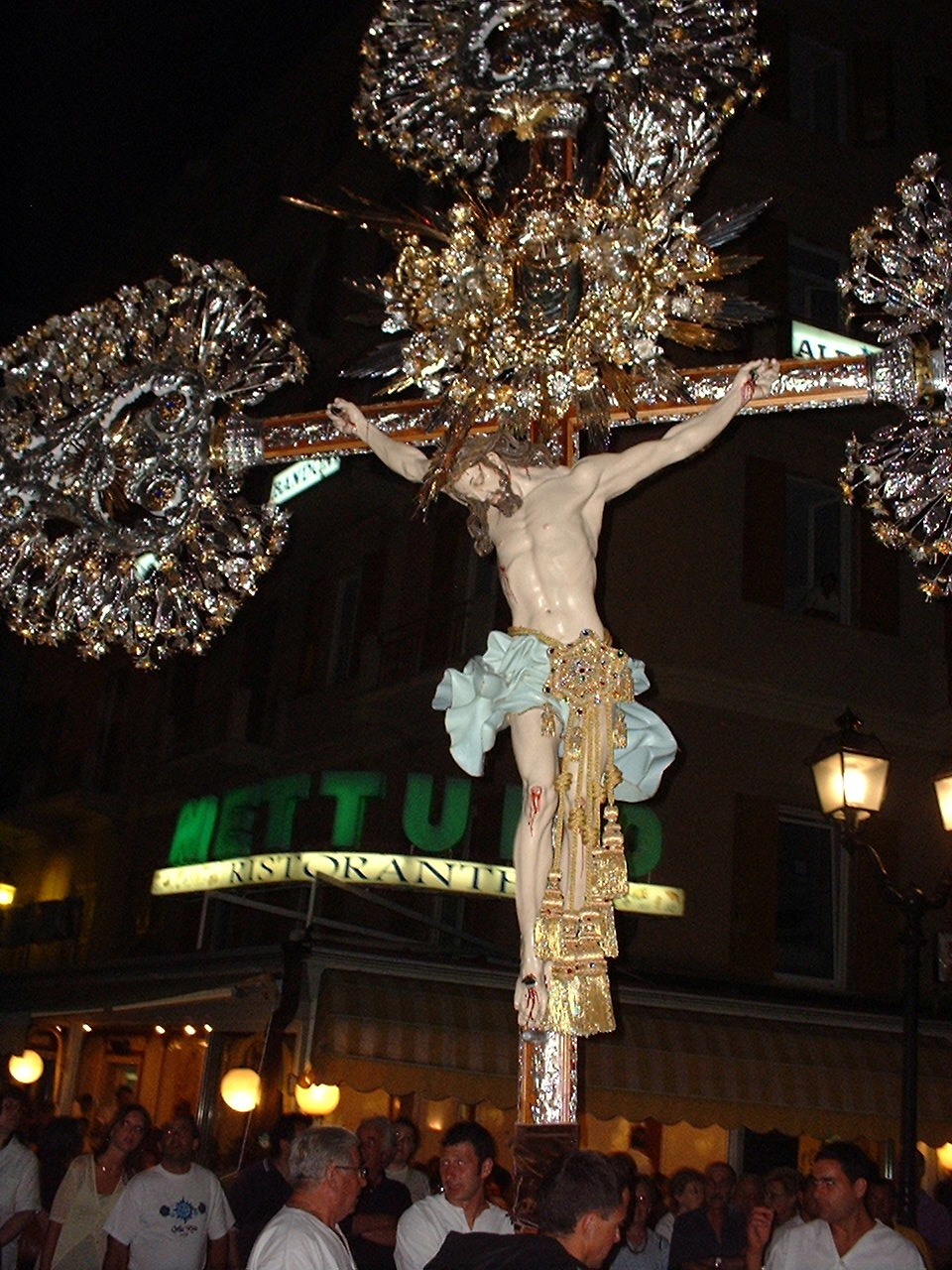
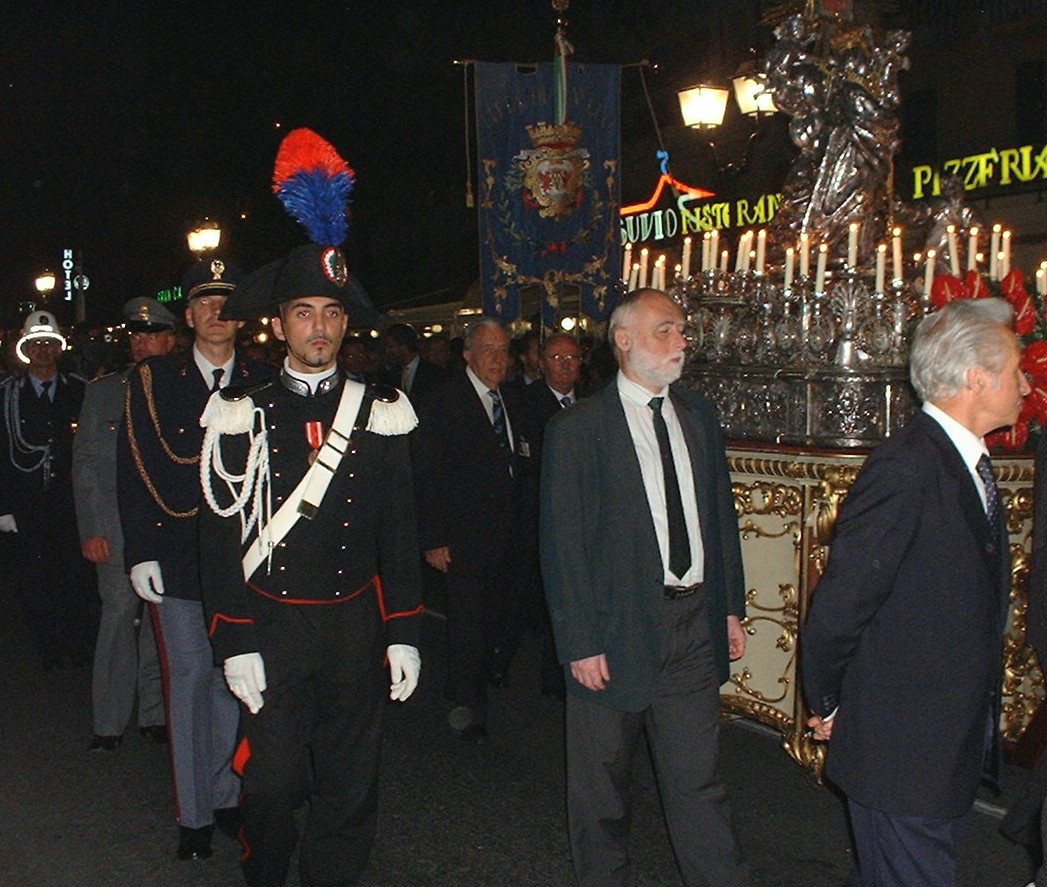
On the night of July third there is a big parade with all the special ‘parade crosses’ from the region participating.  There are white Christs, black Christs, tinsel galore, and colorful costumes.  The men who carry the crosses wear specially designed belts with a pouch to take the base of the heavy crucifix.  They stagger along balancing the crosses against their chests without using their hands.

It wouldn’t be Italy without the politicians getting into it – all the town fathers march in the parade, easily identifiable because they are the only people in town wearing suits.

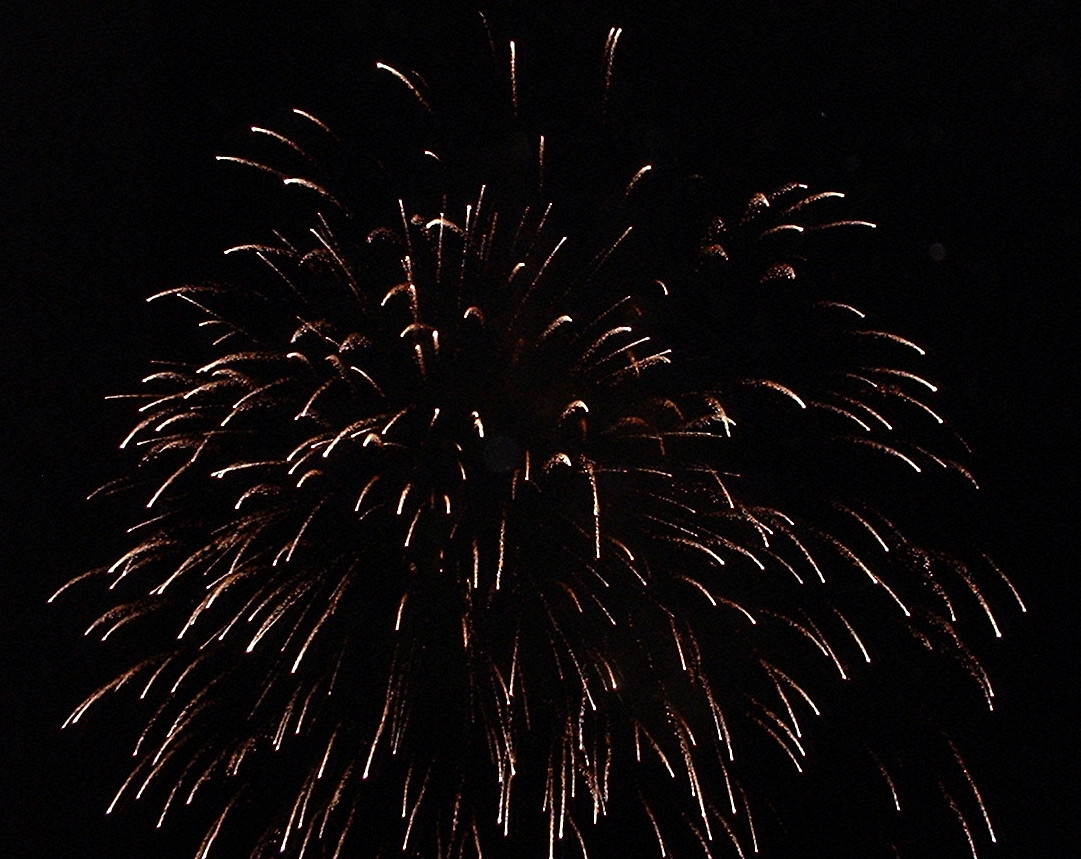
Rapallo has six sestiere, or districts, all of which compete in the annual fireworks extravaganza.  Two sestiere set off their displays on each of the three nights of the festa.   The event draws large crowds which line the Lungomare waiting for the climax: the ‘burning’ of the castello.  The castle is outlined in white flares which give it the appearance of being composed entirely of fire. 

At this year’s parade 30,000 viewers were expected, and there were 300 policemen on duty, many borrowed from nearby cities. You don’t want to try to drive through Rapallo on the night of July 3.

Re-entry

Tags

, , , , ,

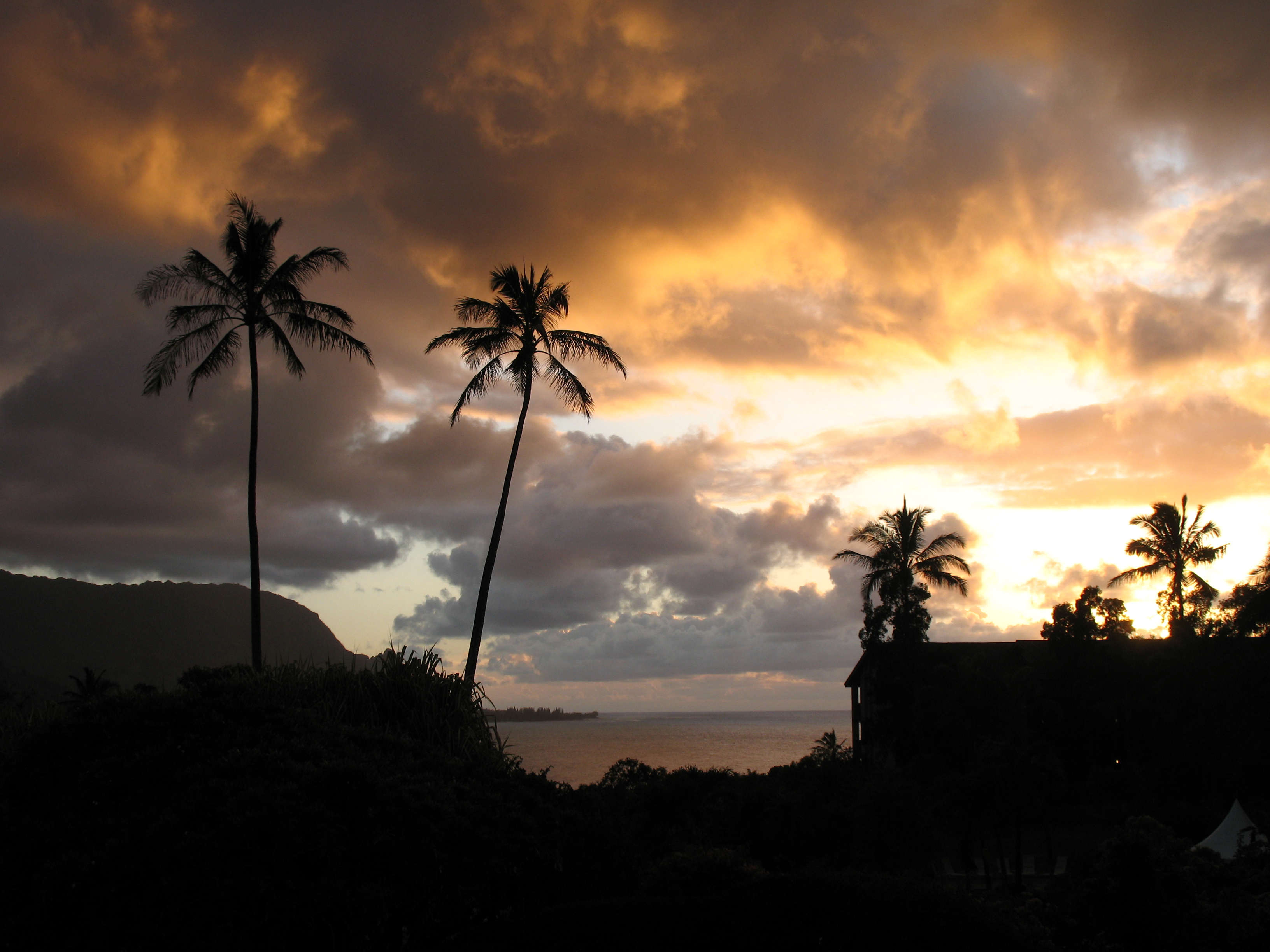
No, this is not some hokey photographic hyperbole – this is what sunset looks like from the Bali Hai Restaurant in Hanalei, Kauai, Hawaii, where we were not dining.  But the view was recommended, so we had the obligatory drink-with-umbrella and took it all in.  The picture is completely unedited, just as it came from the trusty Canon A 630; in fact, the sunset was more beautiful than this photo suggests.  As an aside, why is it that rum in any form (Mai Tai, anyone?) tastes so much better when you’re looking at a palm tree?

Culture shock on re-entering the US?  Not so bad in Hawaii where the pace of life is not so different from that of Italy, and the need for things-and-stuff seems relatively low (though the price of food was amazingly high, except for the locally produced beef).  The week or two spent in Connecticut and Tennessee were jarring indeed – everything is so big, so fast and so costly.  The biggest surprise was the general level of discontent/fear on the Mainland.  The dire economic conditions have everyone trembling;  the war is a worry; terrorism (condition = orange) a basso continuo of fear.  There is hope aplenty when people speak of the up-coming election, but undercut by a sense that so much damage has been done in the last decade that nothing will really do much good.

It was strange indeed to be back.  But, as always, there is no place like homeland, and to hear one’s native language spoken and to understand all the cultural references and subtle nuances is a joy indeed.

There is also no place like home, and it’s great to be back in Italy, trying to shrug off travel fatigue and looking at the mountain of laundry.  The Captain took care of everything brilliantly while I kicked up my heels.  All is right with the world… for the moment.

TTFN

Blog posts here will be very irregular for the next three weeks – there may be a couple, there may be none at all.  Please don’t give up – a tour of Rapallo public gardens and diet-busting Italian style are already scheduled for July… Aloha!

Sardegna

Tags

, , , ,

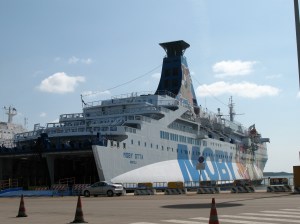
Sardegna: the large rocky island 7 hours away by ferry (Livorno to Olbia) ~ we left on Saturday morning and returned Tuesday night.  It was a far too brief visit, but packed with sights and adventures nonetheless.

Immediate reactions – there are a LOT of rocks; all of Sardegna is made of rock.  Everything grows with a vengeance; Sardegnian bougainvillas put those of Liguria to shame.  People; so many beautiful faces in Sardegna.  Animals; take your pick: sheep, goats, cows, donkeys, pigs – there are loads of all of them and they can frequently be found trotting along the roads and highways.  Mountains; they are high, they are rocky, and they look relatively new. Archaeology; plenty of ancient sites still needing excavation and study.  We visited the one in Tortoli, where we saw a ‘nuraghe‘ (an ancient construction for defense, living and food storage) and two burial sites.

Arbatax, Tortoli and Baunei (east central coast) – the only places we visited.  BUT, there was a Festa in Baunei celebrating the Old Way of Life – great photo ops and some interesting food.  A Matrimonio Finto – a ‘fake’ wedding – was part of the festa.  We were so excited when we thought we were seeing a real wedding, but even the pretend one was great.  The day after the festa we found ourselves driving again through Baunei; old ladies were still wearing ‘costume’, so perhaps some of them still dress daily in the old style.

The church of San Pietro (2nd half of XVI century) is in the hills high above Baunei and has outside an ancient and unique face carving from a nearby nuraghe.  There we found quiet, calm and the sense of peace that only very old stones and trees can give.

Photos are on the right in three web albums; as usual, slide show recommended.

Moving pictures

Tags

, , , , ,

I’m addicted to taking photographs from our speeding car. There’s something about out-of-focus grass on the verge of the highway, the slight blur of near objects and clear focus of far that is exhilerating.  Sometimes the Captain, a patient soul, stops so I can take ‘real’ pictures, but usually when we travel I shoot through the windshield, bugs and all.

Last weekend we drove in the rain up to Piemonte (about which more in a later post) via the A26, part of Italy’s magnificent and over-crowded highway system.  The A26 is one of the newer highways and features some graceful bridges and many, many tunnels. The autostrada system was one of the first highway systems in the world, and the Italians are justifiably proud of it.  Its only problems are that there are too many trucks, too much traffic in general and too few lanes… especially when many a driver wants to take his lane from the middle of the road.

In ‘Rice Fields’ under the Photograph links to the right you can see some ‘moving pictures’ of this journey taken through a rain-spattered windshield.  The Ligurian autostradas are peppered with tunnels – we went through 54 on our way home from Piemonte; the shortest was only 40 meters, the longest (Monte Castellano) was 2010 meters.  At the entry to each tunnel is a little sign which gives the name of the tunnel and its length.

Our route took us through Genova, through the many tunnels and over the graceful bridges of the A26 as it navigates the Apenines, and then onto the flat plain of the Po river with mile after mile of rice fields.  The fields are at their most beautiful now, still flooded with the broad expanses of water reflecting the trees along the edges. In many the pale green rice is already above the water. It is a shade of green that can only be described as ‘new’.  (The Captain tells me that the irrigation system still in use for the rice fields was designed by Da Vinci). If you make this trip on a clear day you will have a dramatic view of the snow-topped Alps reaching into the sky behind the fields.

The first time we approached the town of Arborio some years ago I was thrilled, imagining a small boutique village with little restaurants serving risotto in its many delicious forms.  But no.  Arborio is a very workaday looking farming town, plain to a fault.  The highway now bypasses the town altogether. Arborio gives its name to the most commonly available rice used for the dish in the U.S. Many Italians prefer the carnaroli variety of rice for risotto.

As we drove through the countryside we encountered a first-time sight: storks in Italy.  They are not uncommon, we are told, but we had never seen one in countless trips along these same roads.  Perhaps the high platforms built for nests attracted them.  They are big (this has been Big Bird month for us) and strange looking. The picture of the stork landing in its nest was from the moving car; the other when we stopped to look and wonder at the unusual sight.

You can’t make a long trip on the Autostrada without stopping at a – YUM – Autogrill.  These come in various sizes, from very small, serving only panini, to very large with sit-down restaurants. Each also has a retail section, usually featuring specialties of the region.  For me the Autogrill stops are one of the best parts of a Road Trip.

Enjoy the photos!

Permesso?

Tags

,

From the Ragazzini/Biagi Concise Italian-English Dictionary: Permesso “(2) m 1. permission; leave.”

It’s also what polite Italians ask before entering your home, as if to be sure that you really did mean to ask them in.

Permesso di Soggiorno – a piece of paper, or this year we hope a card, that gives one official permission to be in Italy.  I can’t imagine how difficult it is for an immigrant to get permission to stay in the United States.  Here in Italy if you ask nicely and can prove that you can support yourself they are pretty good about welcoming you. They let you stay for two years, and then you must nicely ask them again.  Seems fair to us.

Until this year getting our Permessi involved several comical trips to the Questura (State Police) in Genova,  a trip of about three-quarters of an hour for us.  The first trip was the best: that was the one where, after an hour’s wait with a large group of representatives from about half the countries in the world we requested an appointment.  We had to go all that way just for that, couldn’t do it over the phone.  Two weeks later we’d return at the appointed time, wait with the United Nations again, and submit our applications.  In about 6-8 months our Permessi would be ready (that’s not a typo:  6-8 months.) and we would return to pick them up.  Oh well, the system worked, albeit slowly.

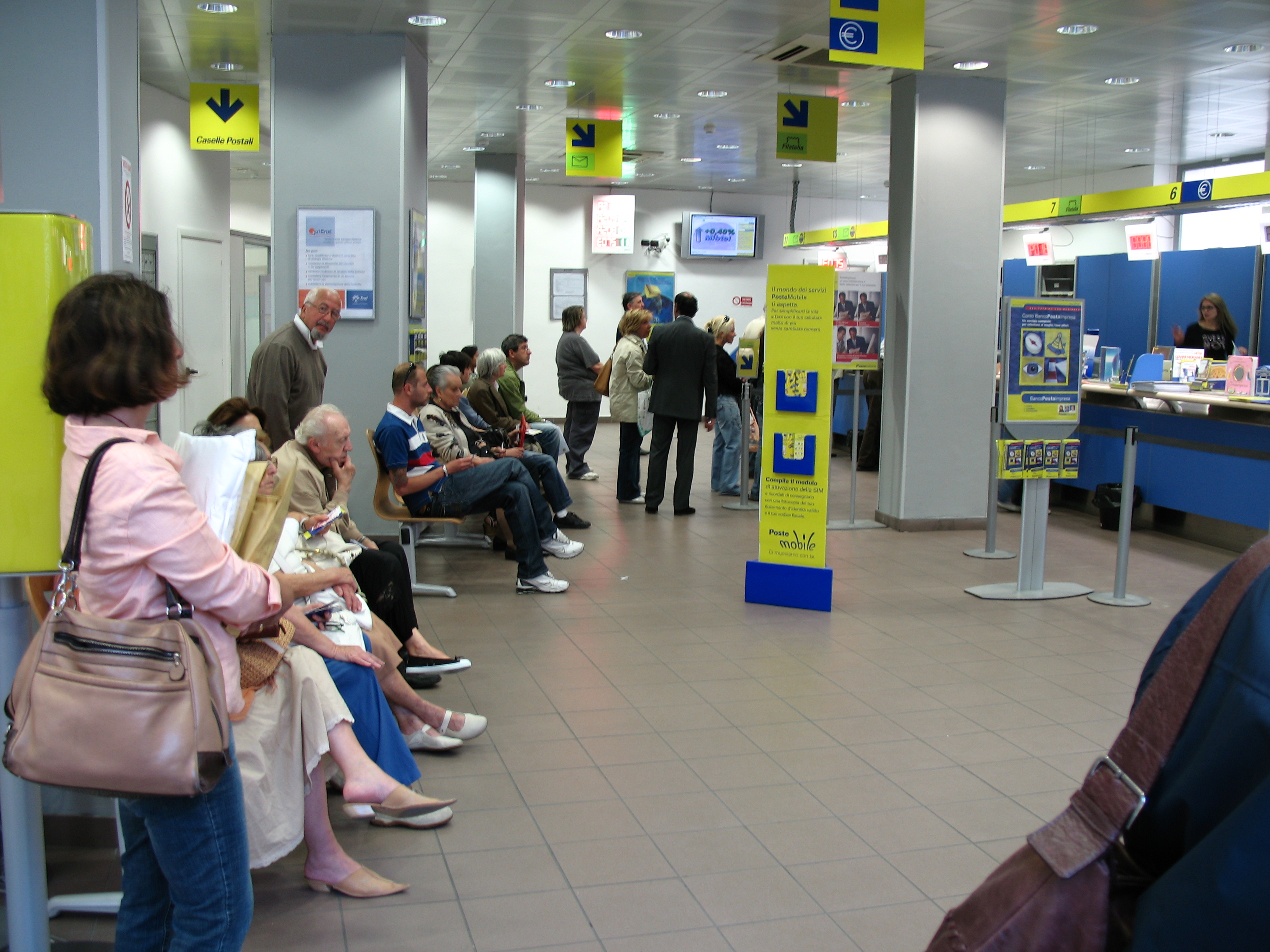
This year the application process has been given to the Post Office.  I know, don’t ask me.  But here the Post Office is so much more than in many other countries.  For starters, it’s a bank as well, and I would guess that more than half the people who visit the PO are doing banking business, not postal business.  And now of course they are doing immigration business as well.  Anyway, sharp eyes will pick out

 Louis in this photo, waiting his turn (take a number!) with the grumpy lady who gave us our application packets,  big envelopes full of confusing documents.  Even our friend Graziano, a policeman, was slightly mystified by the array of papers when we asked his advice about the application.

But we did learn something terrific.  This year Louis will have been a resident for six years which makes him eligible, we think, for a Carta di Soggiorno, which is good for six years!  As his wife I may or may not be allowed to ride on his coat-tails.  We’re still trying to find out.  He’s had one appointment at the Patronato office, which as far as I can figure from their website, is a Christian group that assists in ‘weaving the bonds of society’.  There he talked to a very helpful woman who gave him a list (a loooong list) of required documents for the Carta.

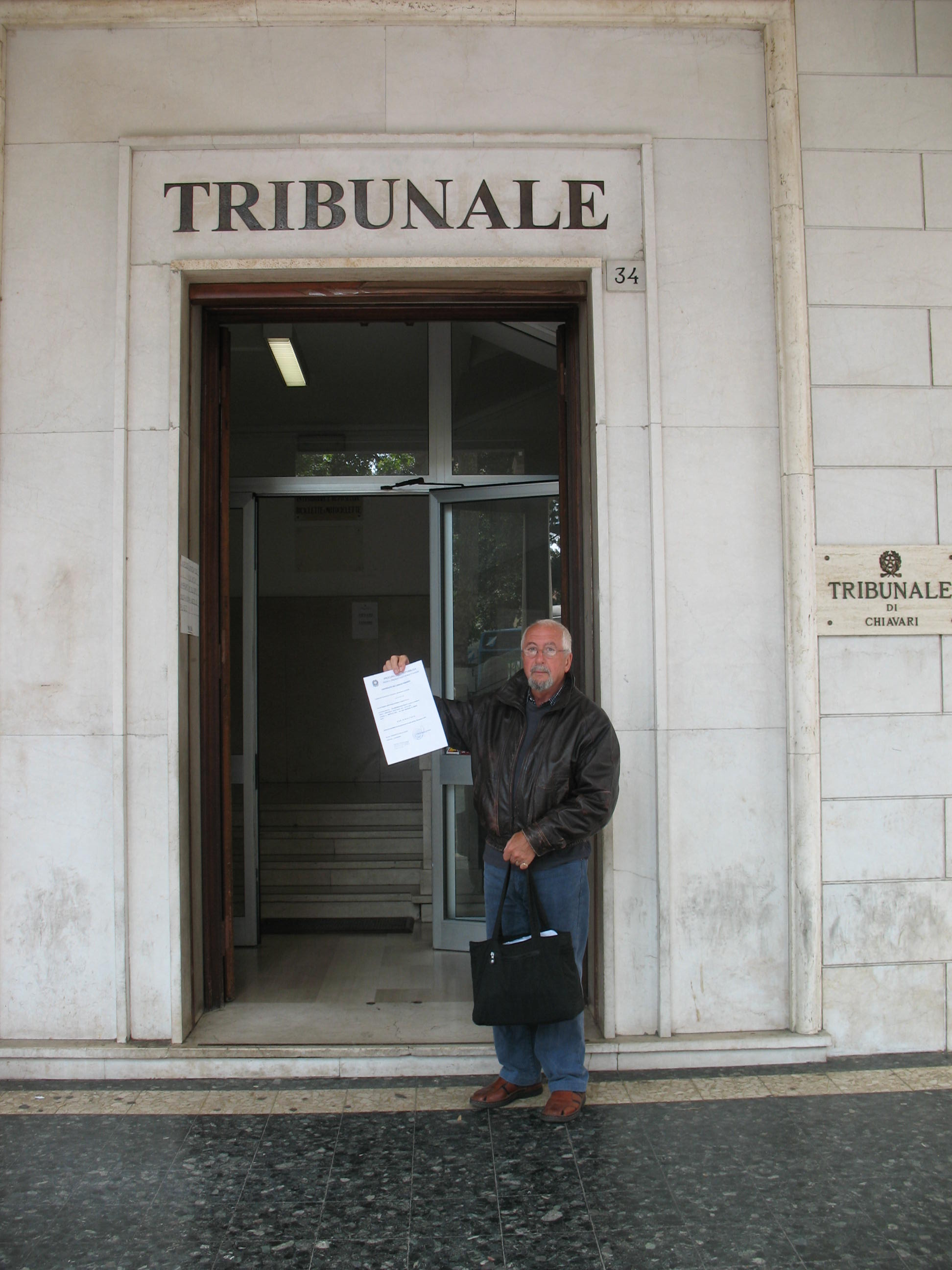
One of the documents called for a trip to the Procura at the Chiavari Tribunale (an office, not a newspaper) to get proof that neither of us has a criminal record in Italy.  To our complete and utter amazement we walked out with the needed document half an hour after walking in.  This is unprecedented in our Italian experience, and shows a degree of organization and efficiency that seems, well, un-Italian, no offense meant. It was worthy of a photograph.

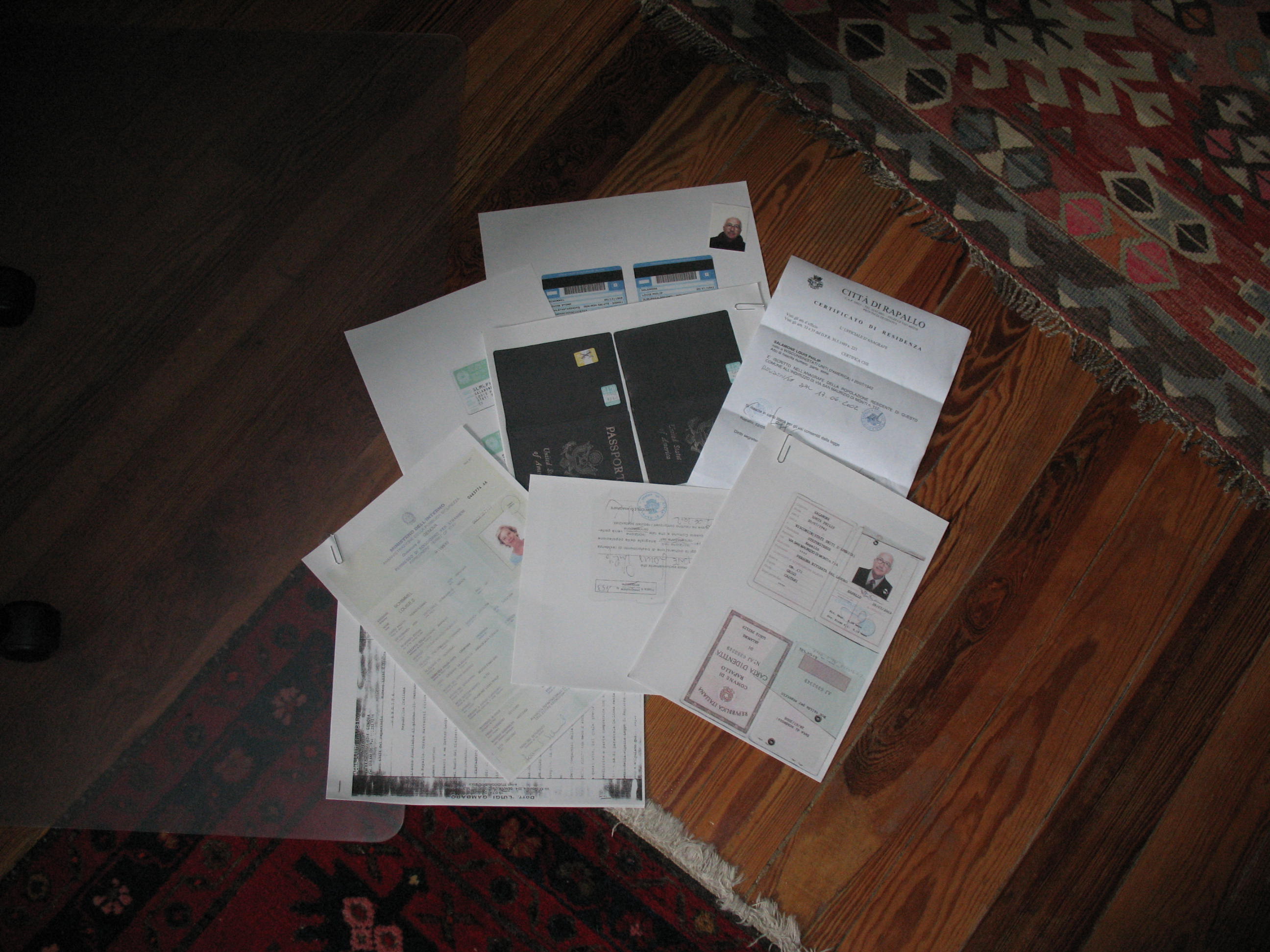
We have now acquired most of the documents, pictured below, that we need to submit with our application for the Carta di Soggiorno.  It is simply too exciting.  Will it actually work for us, or will we have to put our tails between our legs and slink back to the Questura?  Stay tuned!

A most unusual visitor…

Tags

, ,

This is a little off the stated theme of this blog, but as a friend told me recently, “It’s your blog, you can write whatever you want!” 

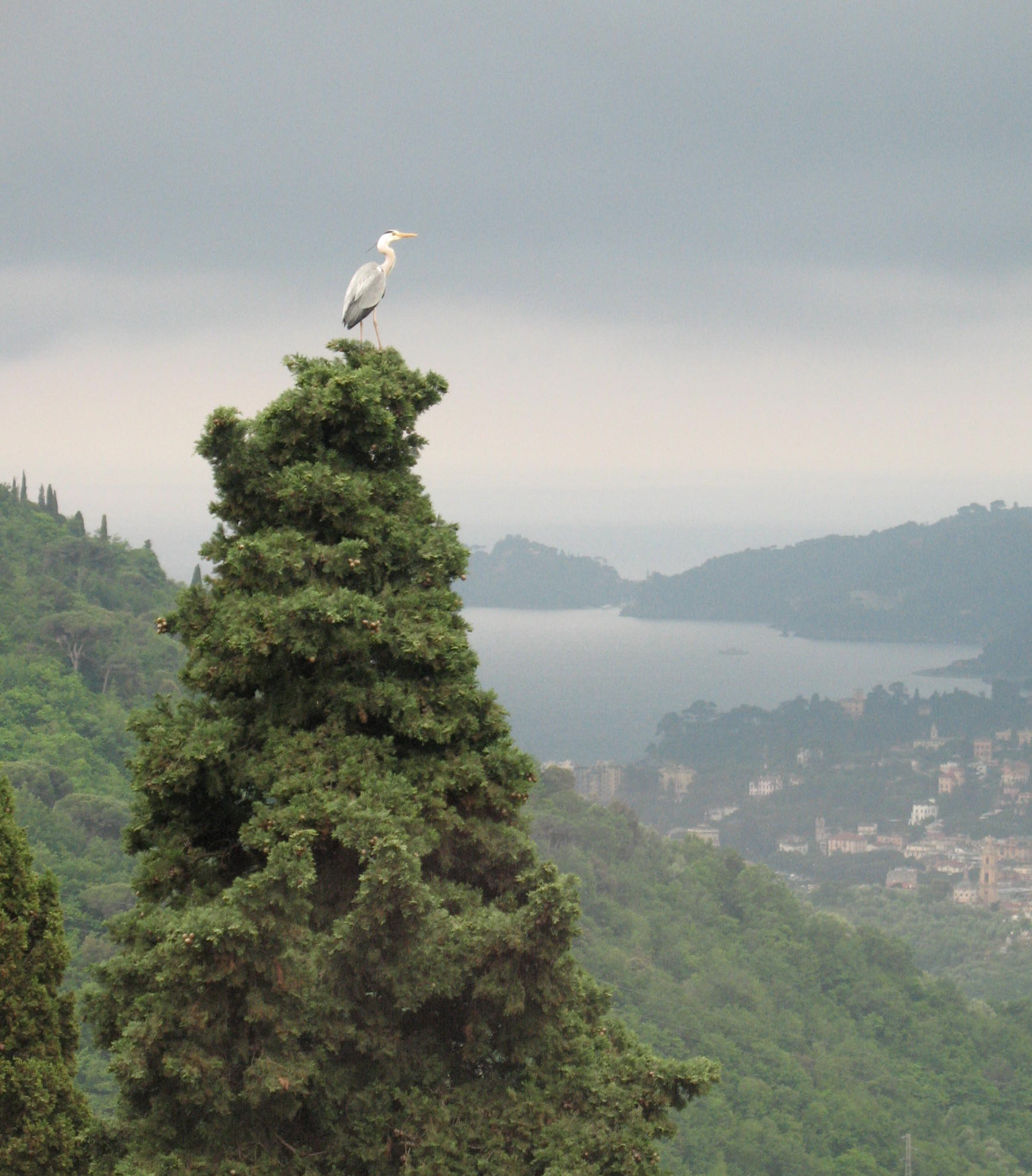
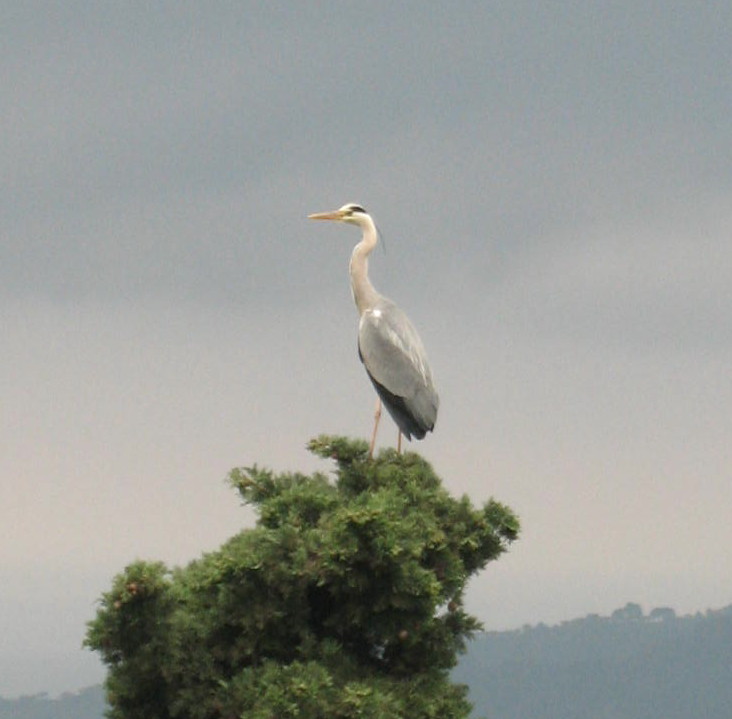
We were sitting in our upstairs studio this morning having breakfast when a movement outside caught my eye.  This is what we saw.  I think of it as a heron, the bird book calls it an Airone Cenerino, and when it sits on the top of a nearby cypress tree it is a very large bird indeed.  This one, or its kin, can frequently be found in the river that runs along Via Betti, 5 km below us on the outskirts of Rapallo proper, and while we enjoy seeing it there, we’ve never thought of it as being especially unusual.

We can’t imagine why it came to sit in a cypress tree relatively far from water.  When it left it circled higher and higher and then disappeared to the north.  Was it looking for fish in the sky?  Out joy-riding?  We like to look at birds, though we don’t seek them out or consider ourselves birdwatchers… perhaps this bird is a people-watcher and had gotten wind of a couple of Americans to add to its life-list. It just goes to show, context is everything.  In the river it’s a pleasant sight, in the cypress tree it’s astonishing.

Speaking of bird-watching, Jonathan Franzen gives a fascinating account of doing just that in China in his  ‘Letter from the Yangtze Delta,’ “The Way of the Puffin” (The New Yorker, April 21, 2008, p. 90).  I can give you a link only to the abstract of the story,  because the full article is not available free online, but if you have a library card your library may well be able to supply the full text of the story, either online or hard copy. This is culture shock seen through binoculars while searching for birds.

And on a different subject altogether, thank you all who have written comments – I am so happy you visit this site, and I love hearing what you have to say!


Meet me at 50.0 LMT at the Castello… we’ll do lunch

Tags

, , ,

Remember when the US tried to go metric?  Disaster!  Just how much is a gram, a liter, a kilo??

One of the vexing aspects of living in the EU is trying to adapt to the metric system.  Somehow 27 C doesn’t sound nearly as warm as 80 F, at least not to my American ears.  We encounter conversion woes every time we are given a recipe.  The result is that we’re living in a half-way house, marooned between metric and imperial measures.  An example is the new lasanga recipe over in the Recipes link to your right – I asked Louis to write it out for me (he made it several nights ago and it was very well received , especially by Massimo).  When he gave it to me the ingredients were in grams, for both solids and liquids, and the temperature was in Fahrenheit; fortunately a quick visit to a terrific conversion site made it easy to list the imperial equivalents for American and British friends.  Somehow I don’t think we’ll ever be completely at ease in this metric world.

Don’t even get me started on clothing sizes (bras come in 1, 2, 3 or 4… what does that mean??). And shoes (my size 39 sounds huge, but it’s really only 8.5).

At least the clock looks the same here – what would a metric clock look like?  We’d have to dispense with 2 hours on our clock face and come up with all kinds of strange names.  Turns out it’s been done!  It takes us about half a centiday (+/- 12 minutes) to drive from our house to downtown Rapallo… I think.  No, let’s stick with our present clocks with their friendly faces.  It’s hard enough to figure out how many grams of cheese to put in the lasagna!


Fill ‘er up

Tags

, , ,

Some people don’t drink wine.  I know!  But it’s true.  And those that don’t usually have very good reasons for not.  But for those who do, Italy is a great place to live.  According to Italianmade.com, Italy produces and exports more wine than any other country, and according to Patrick McGovern, an expert on ancient beverages, wine may well have been made as long ago as the Neolithic age (8,000 – 4,000 BC)(how much would a 3,000 year old wineskin of Neanderolo fetch at auction, do you think??)  Italians have been making wine for a very, very long time, and they’re very, very good at it.

Mountainous Liguria does not have a vine-friendly geography, and most wines here are made by families for home consumption, though there’s some lively production down in the Cinque Terre.  But our neighbor to the north, Piemonte, though ranked only 6th of Italy’s regions in production, has more DOC zones than any other region.  Delicious wines come from Piemonte, and many of them make their way to Ligurian tables, as do Tuscan wines.  Piemonte vines include barbera, dolcetto, grignolino, freisa, cortese and nebbiolo (from which come Barolo, Barbaresco and Gattinara wines).  (All these fascinating details come from the italianmade site.)

Here’s a quick primer on the four categories of Italian wine: 

Vino da Tavola, or table wine, is just that.  It’s usually pretty undistinguished, but often pleasantly drinkable. It comes from who knows where and generally comes in one of two colors – red or white, and one of two states – fizzy or still.

Vino a Indicazion Geografica (IGT) means that the wine is from a particular geographical area.  Other than that, see above.

Denominazione di Origine Controllata (DOC) means, again, that the wine is from a particular geographical area, but there are stringent guidelines relating to its production and naming.

Denominazione di Origine Controllata e Garantita (DOCG or DOC/G) means the same as DOC, except that the rules for production are even more rigid, the amount produced is limited, and the wine must be tasted and approved by a committee – how can one serve on that committee, I’d like to know!

You might think that with so much wine washing around the country the inhabitants would be staggering about in a constant state of inebriation – not so!  Of course Italy has, like most other countries, a certain amount of alcoholism and other diseases and problems related to over-consumption.  But in general Italians are relatively careful drinkers, and they drink far and away more wine than beer or spirits (The World Health Organization reported in 2002 that almost 16% of Italians abstain from drinking completely, and the amount of alcohol consumed has been decreasing steadily since the 1960’s). 

So, just how much do Italians drink?  Ha.  The answer might surprise you (it did me).  WHO statistics from 2003, the most recent I could find, show a per capita (over 15 years old) alcohol consumption of 8.0 liters a year, which doesn’t seem so much to someone who can put away half a liter with dinner.  The U.S. figure is 8.6 liters.  Who drinks the most?  Ugandans!  17.6 liters, and who could blame them?  Who drinks the least (and perhaps fibs a little)?  Yemen and the United Arab Emirates at 0.0.  Germans drink 12.0 liters and Irish 13.7 liters per year.

But enough facts and figures.  The whole point of this exercise was to talk about the beauties of Italian wines, from the residue-laden bottles produced at home and lovingly stored for years in dusty cantinas, to the agri-produced gleaming bottles that are exported and sold for lots of money.

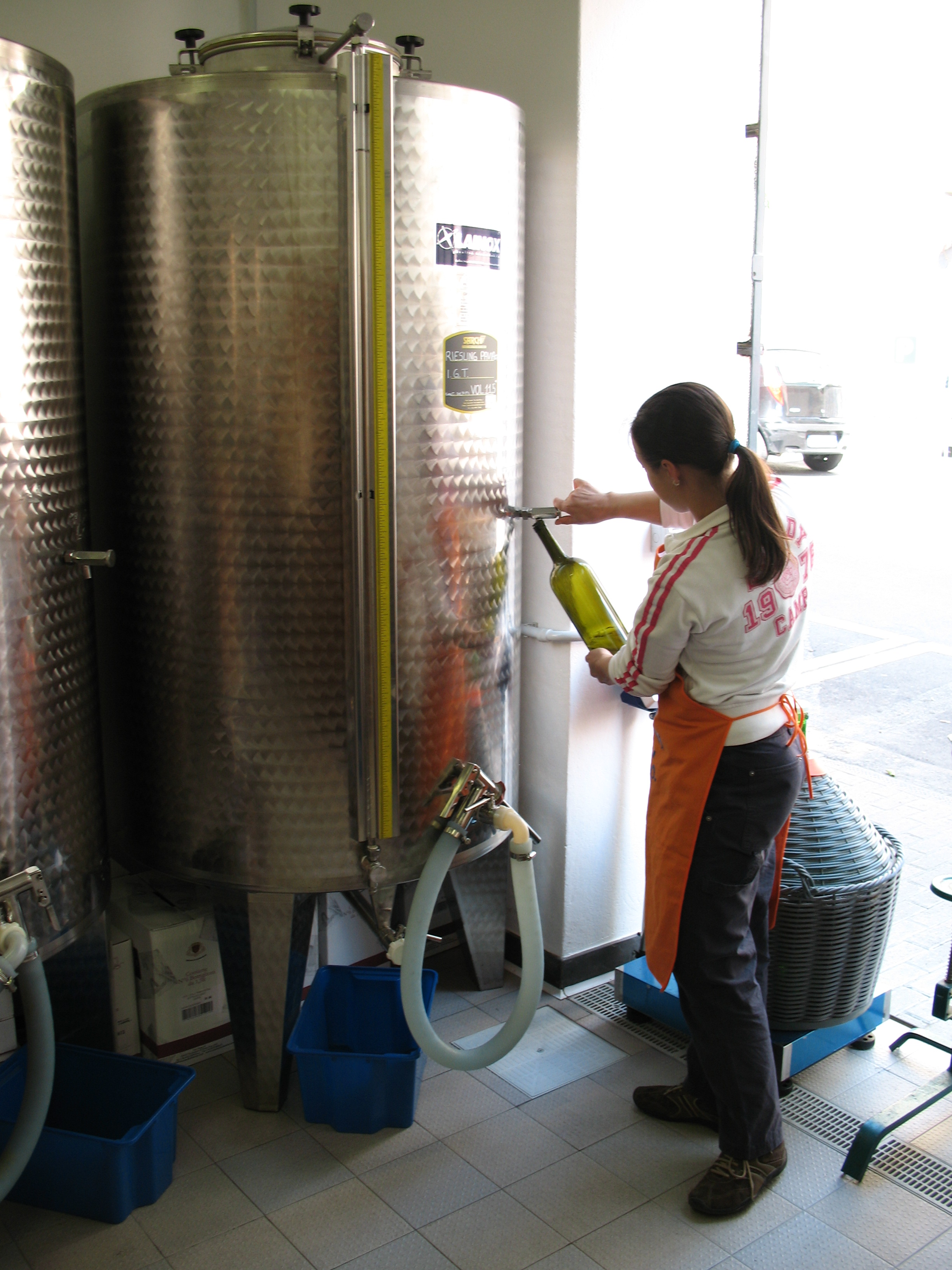
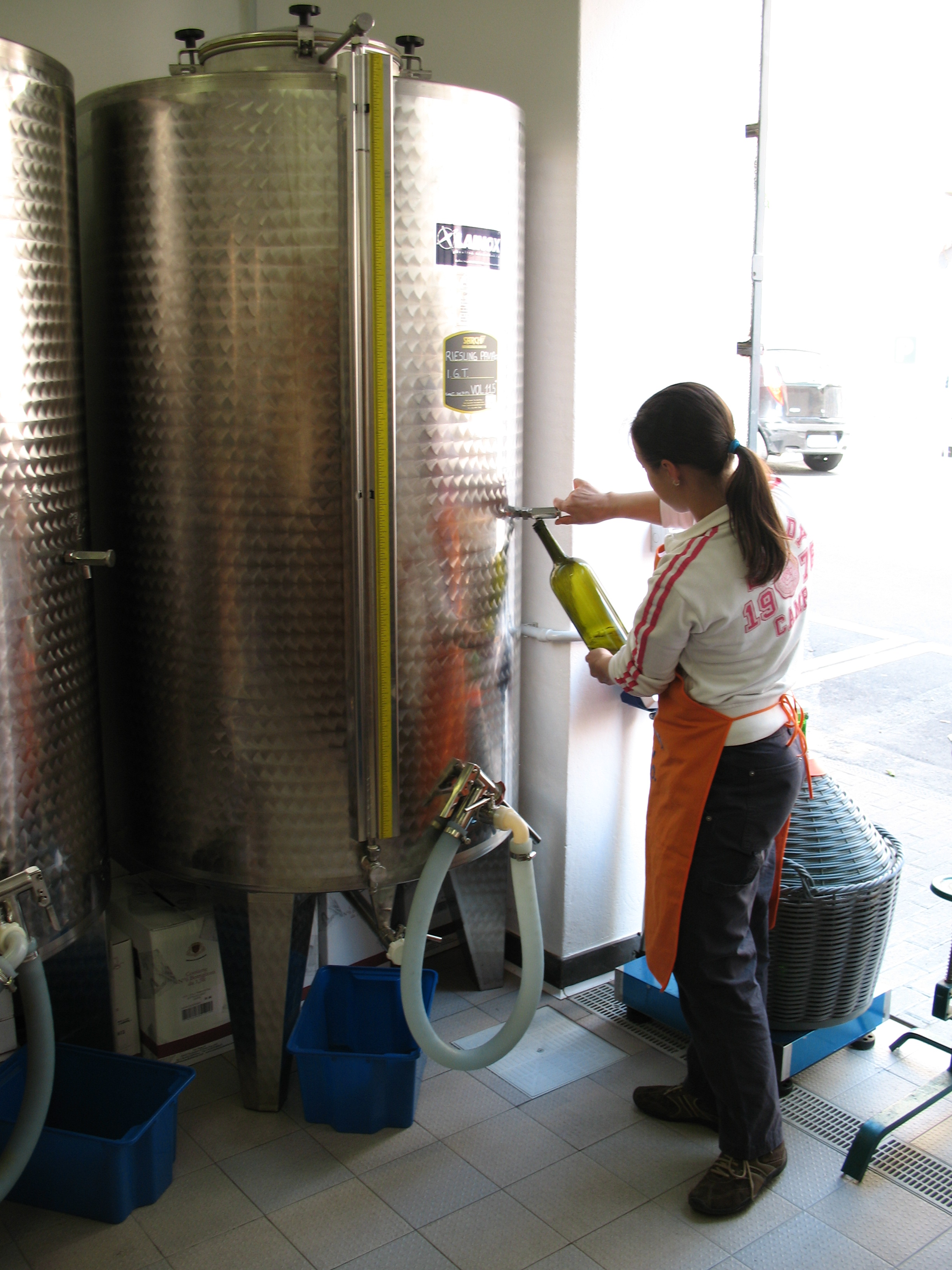
You can buy your wine many places (including often at the producing vinyards themselves) – at a specialty shop, where you will find your DOC and DOCG wines along with the others; at the super market where you never know exactly what you will find; or, as we like to do, at the ‘filling station’, a store where you can buy wine in bulk and carry it away in your own container.  This picture was taken at a new cantina in Santa Margherita Ligure, and the young lady is filling a sample bottle for me with Riesling.  They have several other wines available as well.  Big Market in Rapallo (Corso Mameli) also sells vino sfuso, that is wine in bulk.

How much will you pay for your wine?  That all depends, of course.  Oddly, price is not always tied to quality.  It is possible to get some very decent wines at a reasonable cost.  In the specialty shops you are likely to pay E 4 and up, way up, for a bottle; at the super market you can buy beginning at about E 2; vino sfuso?  At the Santa Margherita Cantina I paid E 1.70 a liter for that Riesling – pretty reasonable, I think.

Wine is central to Italian culture and eating.  Best of all, it is delicious, it can make you feel delightfully giddy, and if you ask your doctor, he may well recommend one glass of red a day because of all the good flavonoids and other antioxidants contained therein.

Cin Cin!