What do “Sgabei! Gesundheit!!” and “Who doesn’t love a party?” have in common? This weekend it was San Maurizio di Monti.
Sgabei (it’s an odd word, pronounced pretty much the way it’s spelled) is a typically Ligurian treat that originated in the Val de Magra on the eastern end of Liguria, on the border with Tuscany. While it is not often found on menus, it is not an unusual offering at a Sagra, a local festival which often involves food and some other kind of entertainment or a sporting event. Sagras are very popular – it’s a rare weekend when you can’t find a sagra somewhere nearby with its attendant food specialty.
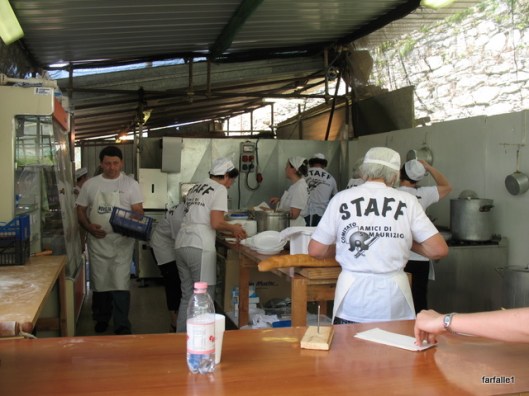
San Maurizio, our little town, just held its third annual Sagra degli Sgabei. Why Sgabei? Well, it is a typical food, but also most of the other regional specialties had already been taken by other nearby towns – Santa has fritters, Camoglie has a huge fish fry (fish are cooked in the World’s Largest Fry Pan), and there are several Trofie al Pesto shindigs. So, for whatever reason, the Comitato Amici di San Maurizio, the volunteers who work hundreds of hours to make it all happen, decided to make Sgabei the main draw of their Sagra. In addition to the food there were two dance bands, one on Saturday evening, the other on Sunday.
There are always treats other than the signature dish at a Sagra, frequently porchetta, assado and usually some kind of pasta. Our choices included Trofie al Pesto (also a Ligurian specialty) or Ragu, porchetta, assado, sausages, beer or wine, and of course the highly touted Sgabei themselves.
Assado has its origins in Argentina, where the cowboys would find themselves hungry and far from any source of food… other than their cows. So they would slaughter a cow and eat it. Assado is the part of the animal around the stomach – that is, not the guts themselves, but the flesh and muscle that holds them in. It is marinated, cooked on a big rack near an open fire for about six hours, then sliced off.
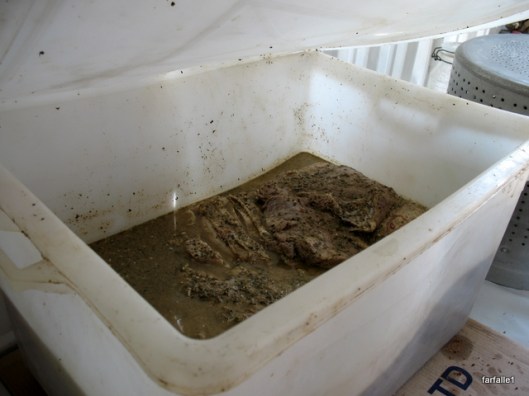
Each Assado chef has his own secret marinade recipe, but it will usually contain at least thyme, salt, pepper, hyssop (which grows wild in the woods here). My sources tell me that most chefs put something alcoholic in the marinade as well: grappa, wine, or…

After all those hours cooking the meat is tender (sort of) and ready to be eaten. A chef with a big knife takes slices from the side away from the flames, and voila – your Assado is ready to serve:

They say that a lot of the tastiness of food has to do with the spirit and energy that the chef puts into the preparation. That could explain why the Assado at the San Maurizio Sagra was so darned good:
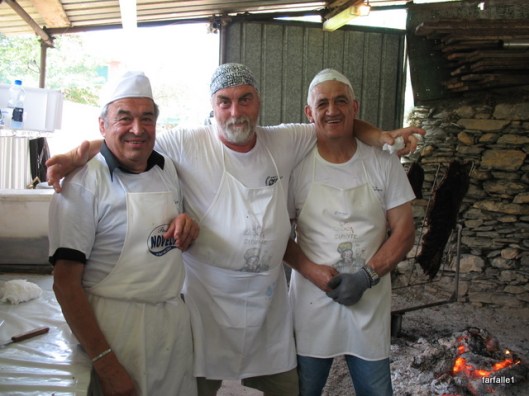
They told me they are the best, and I believe them.
So, what about the famous Sgabei? A secret: I don’t much care for them. I’ve never been a great donut lover, and to me Sgabei is simply a torpedo shaped donut that’s been sliced lengthwise and filled with something – in the case of this weekend’s sagra either strachinno (a very runny cheese), cherry jam or Nutello. No thanks, I’ll pass, though I will take some of that cherry jam.
For the same reason that the assado is so good, I’m sure the sgabei are the best this side of Genova:
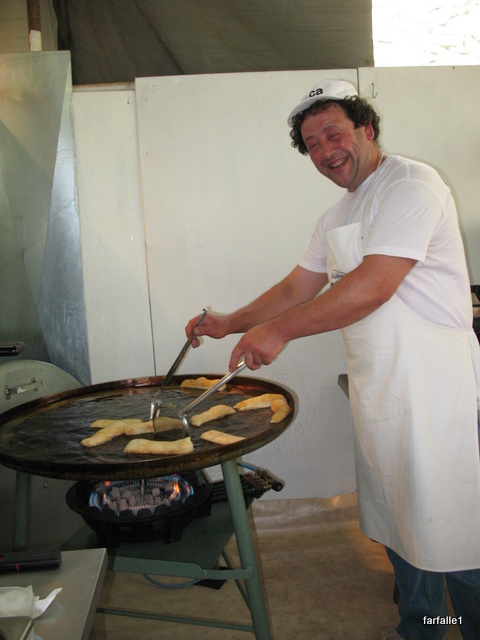
Here’s what they look like before they’ve been stuffed:
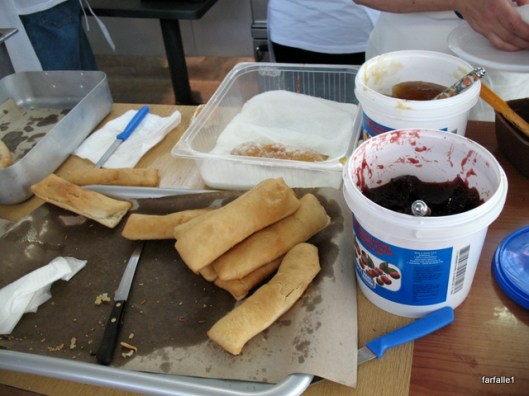
As Fred McGourty used to say, Highly regarded by people who like that sort of thing.
If you’re interested in reading more about other Sagras, hop over to Rowena’s blog and read her section called 100 Ways to Celebrate Italy (there’s a link about halfway down the front page on the left). She’s up to 35, which is way more than we’ve been to.
I’d love to know more about the Sagra – what do they do with the money, for instance? We assume it’s a fund-raiser, but for what? And most of all, how can I get one of these great Staff tee-shirts??

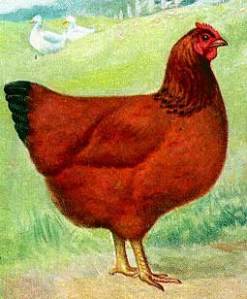 When we lived in Connecticut we had a ‘flock’ of hens. I use the term loosely; we had three hens. Ever since my grandmother told stories about making little rubbers for her chickens so their feet feet wouldn’t get wet, I wanted to raise chickens. It seemed more interactive than dolls, and less responsibility than actual children.
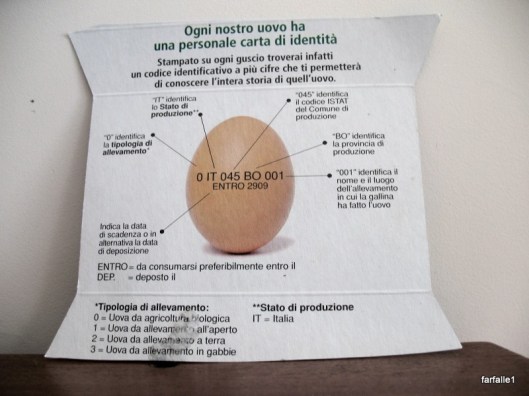
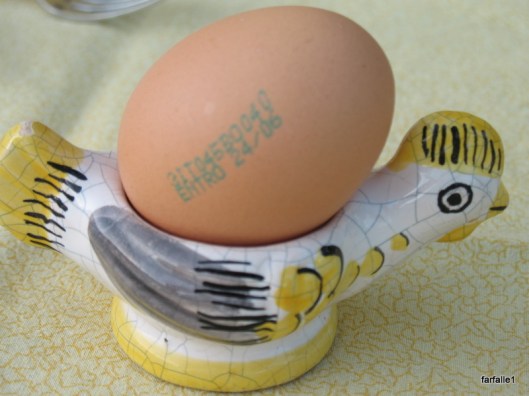
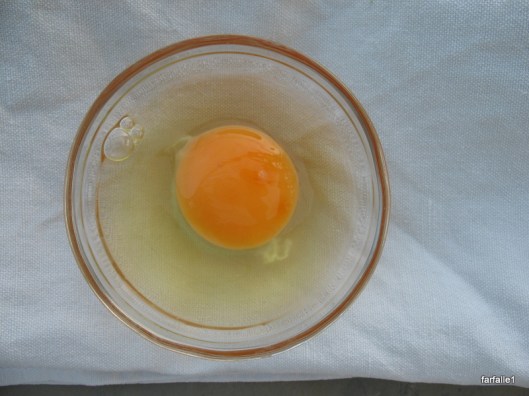 States the relatively pale yellow yolks seem anemic to us. But I must say, even our own flock of Connecticut hens produced the pale American yolk. It must be something in the Italian diet … even for the chickens.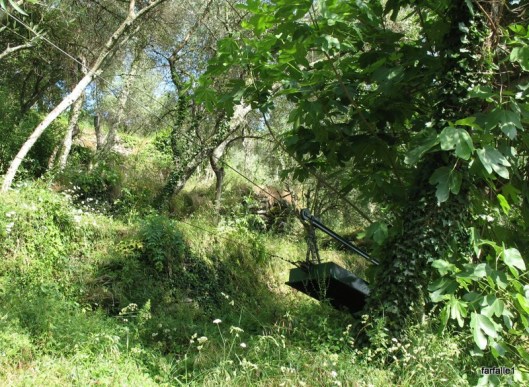
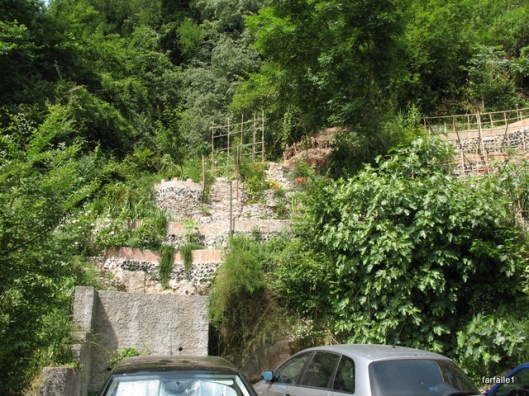
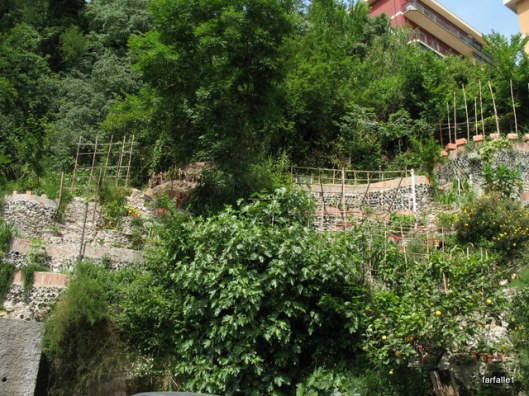
 Isn’t it tidy and pretty? If you get out your magnifying lens you might just be able to spot the man himself in the midst of his tomato stakes behind the tree in the center. Or you can just take my word for it that he’s there.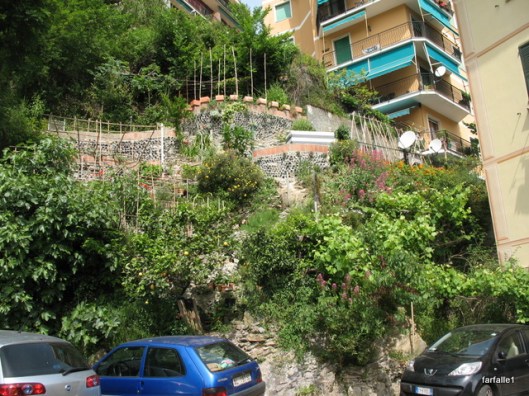

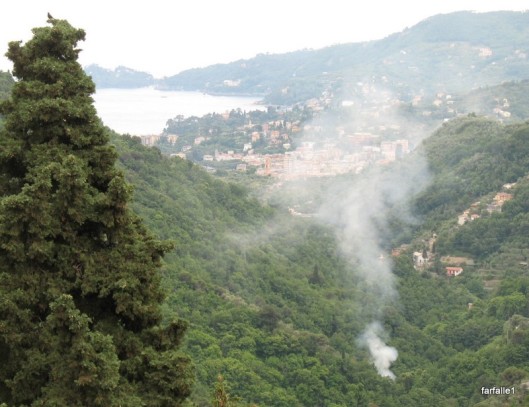
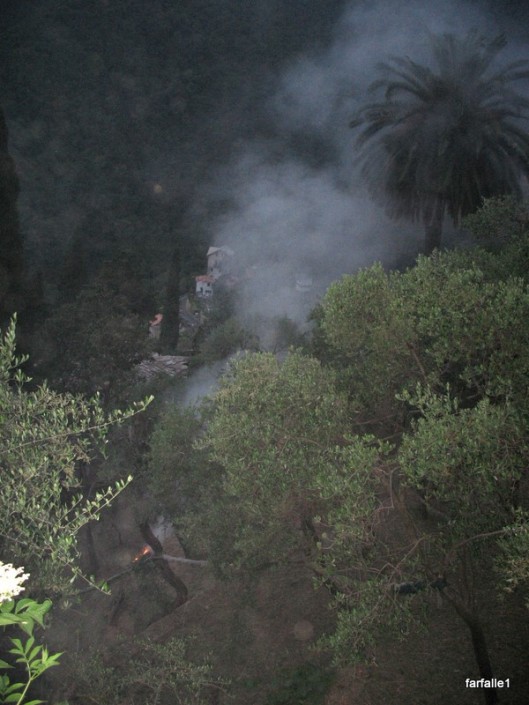
 SD +T / square root H, where ‘e’ is east, ‘w’ is west, SD is smoke diffusion, T is temperature, H is humidity and NI is neighbor irritability. Risking the Bad Neighbor Award the Captain took our longest hose and put out one of the fires. Our eyes were still watering, and our throats were scratchy the next day.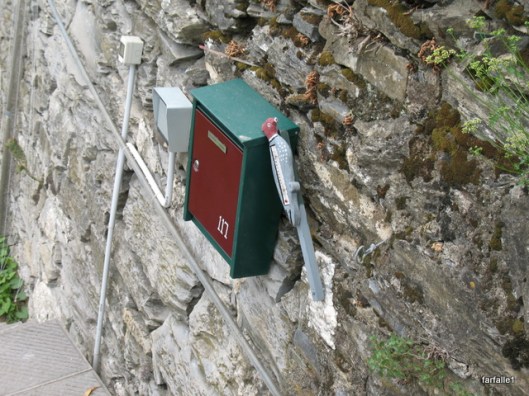
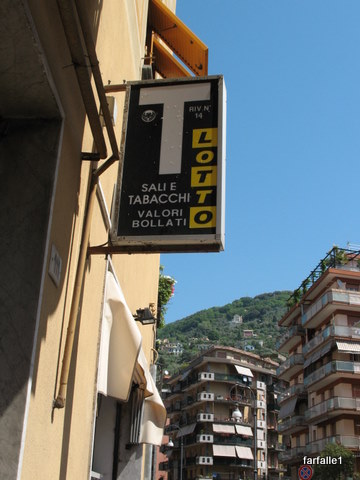 “Don’t forget to pick up some matches,” I reminded the Captain when he was headed out to market for dinner the other day.
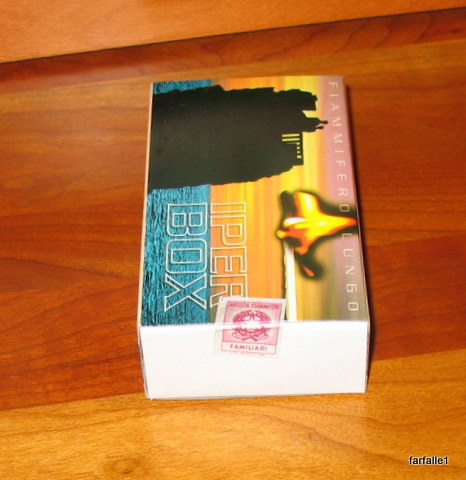 like the ones that come on liquor bottles in the U.S. No doubt the State gets a nice profit from the whole enterprise; they get to set the price and to tack on a tax. One kitchen-sized box of matches cost E1.
 shoot will shortly grow on the side of the remaining trunk, and that will eventually become the tree. After a time it too will be too old, will be cut down, and will produce another – it’s kind of like looking at yourself in a mirror, in a mirror – the images recede seemingly forever. So too the olives march away from the original tree. (It’s harder to take a picture of this than I imagined.)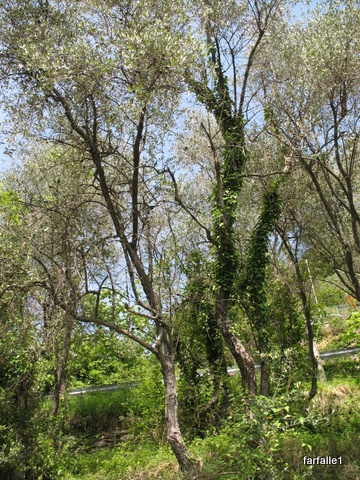

 An Ex-Expatriate
