Tags
Watching the desert bloom is like reading a long book. There’s a plot, but the action unfolds really slowly. Desert plants are tenacious; they have to be to survive the extremes this climate throws at them. And the flowers they produce seem to be pretty tough too. They may look delicate, but they hang on, day after day, in temperatures that seem high to this sissy.
The story begins with the lupines, which are strong enough to break through the road pavement and flower on the highway’s verge.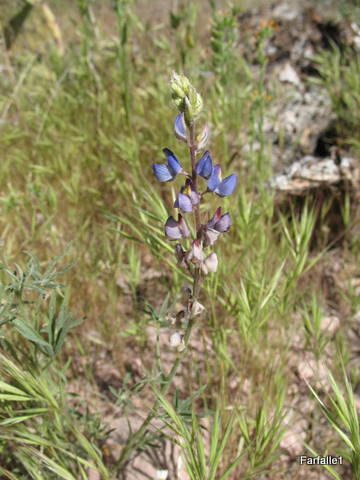
This was one of the last, but they bloomed in an understated carpet along Route 60 for most of February. The cheerful yellow California poppies bloom in broad swaths at about the same time.
Chapter two is the ubiquitous brittle bush which has tons of small yellow flowers. The creosote plant, which smells like its name when the air is humid, also puts out a small yellow flower. It makes a very amusing seed that looks like something an elf might use for a powder puff.
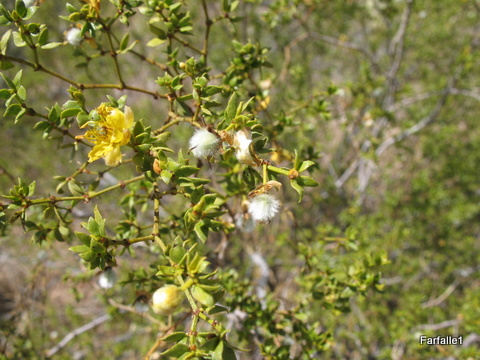
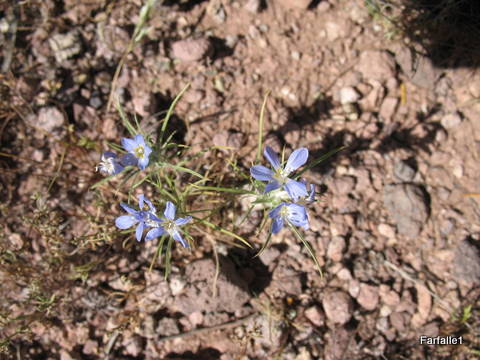
Chapters three through ten are all the small little plants that bloom on the desert floor. They are so small that it would be easy to miss them unless, like me, you are sure you’re going to trip and fall, so you always are looking down.

The climax has to be the flowering of the various cacti. The desert here boasts several varieties of cholla (pronounced choy-yah), hedgehog, pincushions, barrels, prickly pear, teddy bears, ocatillo, the enormous suguaro and others I don’t know or have forgotten. A month ago the cacti had big fat buds, and waiting for them to open has been an exercise in patience.
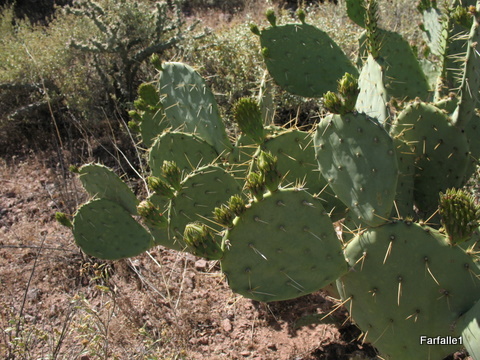
Finally they have started and it has been worth the wait. The hedgehogs are the early show-offs.
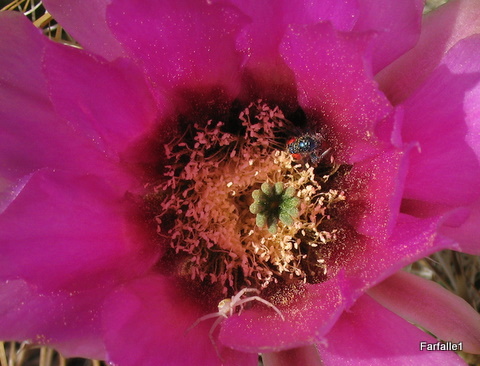
There is a world of action in that flower. Just before I took the photo a bee buried itself completely in the stamen, wiggled around for a few seconds, and then took off. I think it was drunk. Meanwhile the little black and red beetle seems to be napping. The white spider didn’t like the camera and scuttled away right after this shot.
It’s almost impossible to take a bad picture of these flowers; they make the most considerate subjects. If you would like to see some more pictures of the desert in bloom, click here, or over on the right under Photographs (choose the slide show option).
The desert in bloom is not as wildly showy as, say, an English cottage garden at its peak. And it’s different in another really important way. Almost every plant in the desert will happily impale you with something sharp and unpleasant. The dastardly cholla, whose segments stick like glue and work their way through hiking boots and jeans, the fishhook barrels with their barbed spikes, and all the others too, seem to be carrying some kind of huge grudge. Even the century plant (agave), familiar to us in Italy, is a stinker.
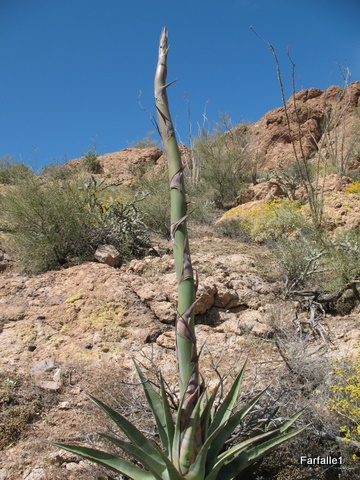
I foolishly wandered over to stroke its smooth asparagus-like stalk, and one of the spines which reside at the end of each leaf went right into my leg.
No matter where you go in the desert, and no matter how lovely the flowers are, you are always going to find yourself between a rock and a sharp place.

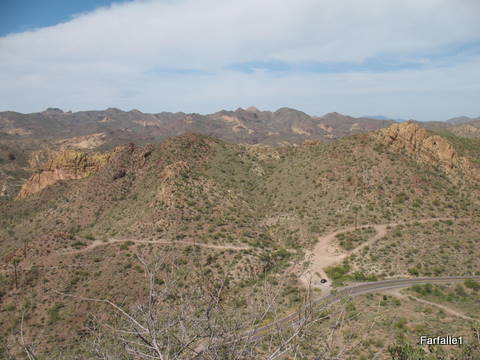



 (photo by

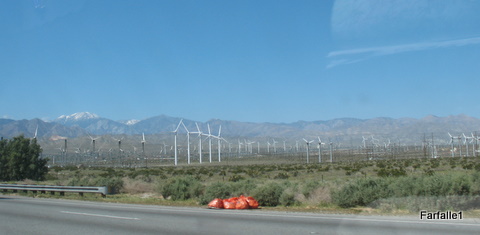

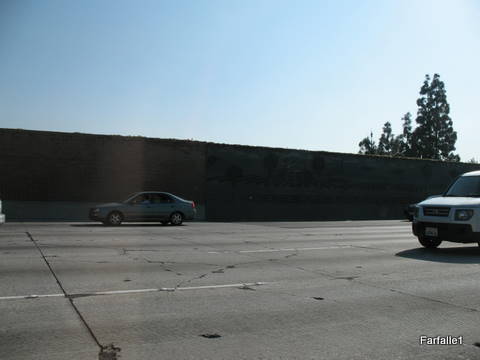
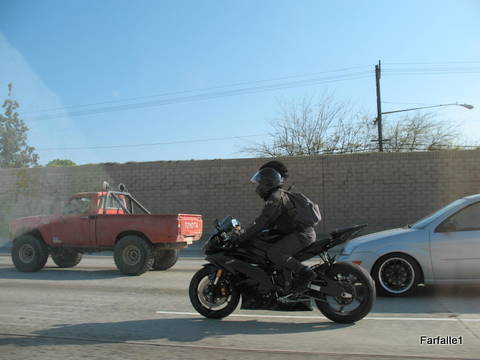

 it’s infinite, they’re probably multiplying as you read. It’s hard for the Captain and me to imagine the pleasure anyone would take from living in a metal box in the desert, but there must be a lot to it we don’t understand, as many seem happy to be doing it. Most of the license plates were from cold northern climes, and perhaps that is all the explanation that’s required. It was interesting to see that quite a few of these mobile homes are now generating their own power with solar panels and small windmills mounted on the roofs.
 The streets of
 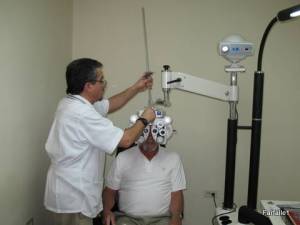 nal manner. We each received a very thorough eye exam, including the test for glaucoma. Several space-age looking machines stared deeply into our eyes and provided the rough corrections we each needed. Then we were ushered into a different room where our prescriptions were fine-tuned. Dr. Robles spent a very long time with the Captain who required two different kinds of glasses – one pair for regular life, and another with different focal lengths for working at the computer.
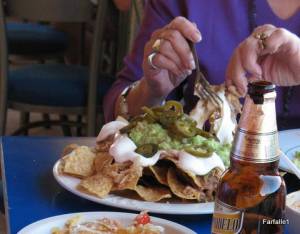 The restaurant where we sat on a second-floor balcony and ate some of the best nachos that have ever been constructed. Yes! That’s pulled beef under the guacamole and sour cream – yum!
 This man, seen from our luncheon eyrie, was selling fresh strawberries. We bought some, forgetting that we probably couldn’t carry them back across the border. We later gave them to a passer-by.
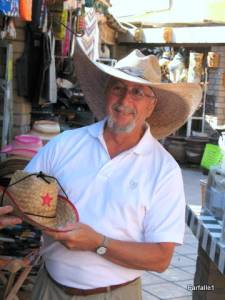 You can’t visit Mexico without trying on a great big hat…
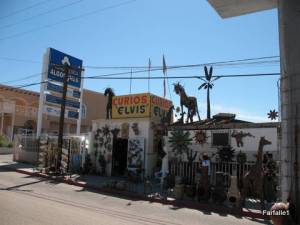 We didn’t buy anything from Elvis, but it’s kind of reassuring to know that the King still lives… in Los Algodones…
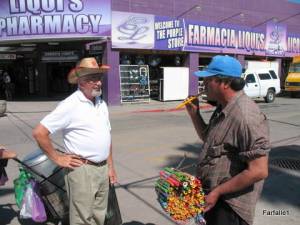 No, we didn’t buy a whistle, either, though it was extremely tempting.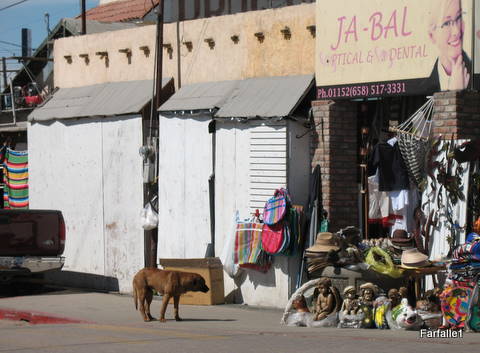


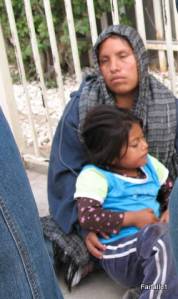 Because there were only three beggars and because, sad expressions aside, they looked reasonably healthy, we assumed that it was some kind of controlled concession. But we still couldn’t walk by and do nothing… could you?
 There are many date farms in the area, specializing in
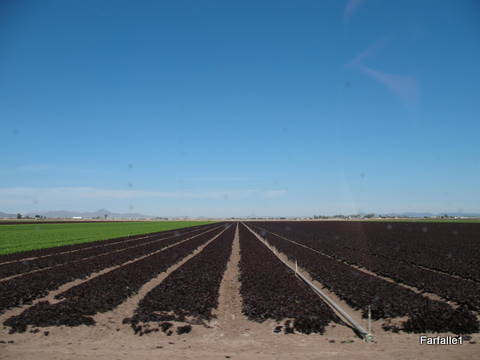
 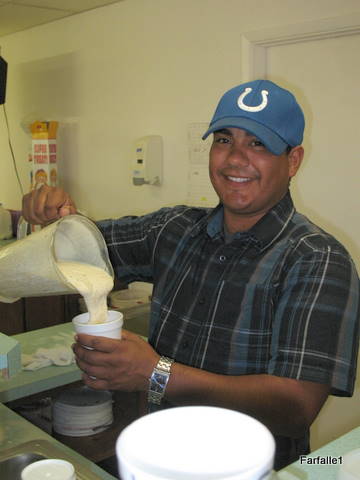 Then it was back past the miles of lettuce farms. I bet half the lettuce eaten in the US comes from this part of the world. Our friends from Tennessee say they eat the lettuce shipped by these growers. Here is what a really BIG red and green lettuce garden looks like:
 We were pretty tired out after our day’s exertions. After a delicious dinner with our friends we crossed one last seamless border, and tumbled into bed in the Cocopah Indian Nation – at the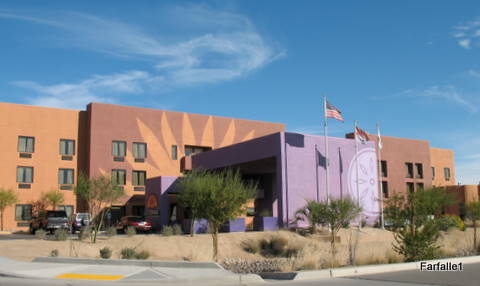
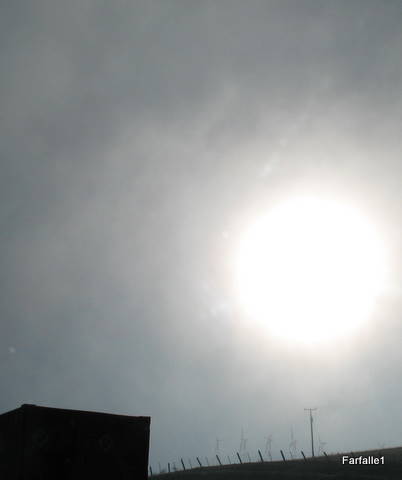
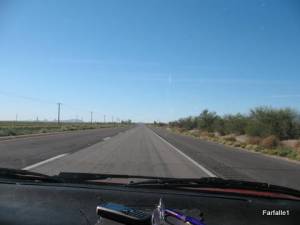 “Desolate” is a word that popped into our heads more than once on the four-hour drive from home to Yuma, in the very southwest corner of Arizona. (

 (photo courtesy of
  For starches people selected spaghetti, tortillas (2), spicy raman, potatoes and Asian sticky rice.