• Contact
  • Elaborations
    • A Policeman’s View
    • Driving School Diary
    • Great Danes
    • IVA charged on Tassa Rifiuti
    • Nana
    • Old trains and Old weekends
    • The peasant, the virgin, the spring and the ikon
    • Will Someone Please, Please Take Me to Scotland??
  • Recipes
    • ‘Mbriulata
    • *Baked Barley and Mushroom Casserole*
    • *Captain’s Boston Baked Beans*
    • *Cherry Tart*
    • *Crimson Pie*
    • *Louise’s Birthday Cake*
    • *Melanzane alla Parmigiana* – Eggplant Parmesan
    • *Penne with Cabbage and Cream
    • *Pizzoccheri della Valtellina*
    • *Pumpkin Ice Cream*
    • *Risotto alla Bolognese*
    • *Rolled Stuffed Pork Roast* on the rotisserie
    • *Shrimp and Crayfish Tail Soup*
    • *Spezzatino di Vitello*
    • *Stuffed Grape Leaves*
    • *Swordfish with Salsa Cruda*
    • *Tagliarini with Porcini Mushrooms*
    • *Tagliatelli al Frutti di Mare*
    • *Tzatziki*
    • 10th Tee Apricot Bars
    • Adriana’s Fruit Torta
    • Artichoke Parmigiano Dip
    • Best Brownies in the World
    • Clafoutis
    • Cod the Way Sniven Likes It
    • Cold Cucumber Soup
    • Crispy Tortillas with Pork and Beans
    • Easy spring or summer pasta
    • Fagioli all’ucelleto
    • Fish in the Ligurian Style
    • Hilary’s Spicy Rain Forest Chop
    • Insalata Caprese
    • Kumquat and Cherry Upside Down Cake
    • Lasagna Al Forno con Sugo Rosato e Formaggi
    • Lemon Meringue Pie
    • Leo’s Bagna Cauda
    • Leo’s Mother’s Stuffed Eggs
    • Louis’s Apricot Chutney
    • Mom’s Sicilian Bruschetta
    • No-Knead Bread (almost)
    • Nonna Salamone’s Famous Christmas Cookies
    • Pan-fried Noodles, with Duck, Ginger, Garlic and Scallions
    • Pesto
    • Pesto
    • Pickle Relish
    • Poached Pears
    • Polenta Cuncia
    • Pumpkin Sformato with Fonduta and Frisee
    • Rustic Hearth Bread
    • Sicilian Salad
    • Soused Hog’s Face
    • Spotted Dick
    • Swedish Tea Wreaths
    • The Captain’s Salsa Cruda
    • Tomato Aspic
    • Vongerichten’s Spice-Rubbed Chicken with Kumquat-Lemongrass Dressing
    • Winter Squash or Pumpkin Gratin
    • Zucchini Raita

An Ex-Expatriate

~ and what she saw

An Ex-Expatriate

Category Archives: Uncategorized

Why I Golf

22 Monday Dec 2014

Posted by farfalle1 in Animals in the U.S., Golf, Rapallo, Uncategorized

≈ 10 Comments

Tags

Animals on golf courses, Golf course scenery, Golf course wildlife

Speedy took up golf in about 1999 when a knee injury prematurely ended his tennis career. After several years of diletanttish play he became rather more serious when we moved to Italy. The course in Rapallo is beautiful, and Speedy made some lovely friends there. He became even more serious in his pursuit of good play when he finished all the hard physical work of redoing our home. In no time at all golf became his ‘work,’ a job to which he dedicated 5 days every week, a schedule to which he still adheres, both in Italy and here in Arizona.

What’s a poor Expatriate to do? The term ‘golf widow’ suddenly had a compelling resonance for me. The obvious solution was to take up the game myself, thereby giving myself an opportunity to share in my husband’s passion AND to have some quality time with him every week.

Here is what I quickly learned.  Golf is a tremendously difficult game. It’s no big deal to learn the basics, but to be able to apply them with any consistency is nigh on impossible. In addition, once one becomes interested in improving, the old brain kicks in and plays one trick after another. It’s just plain hard. Or, as the sage said, “It’s a cruel game.”

I also learned that it’s a game I’ll never feel passionate about; it’s difficult for me to stay engaged with something that offers such paltry rewards compared to the time and effort demanded. I’m not a good golfer, and never will be; Speedy says I could be good if I were willing to practice every day. Oh well.

However, here is what I love about golf: golf courses. Once a scoffer, I used to think that golf courses were a tremendous waste of resources, both of land and of money. But you know, you won’t find many better places to walk than a well-maintained golf course. And walk we do. For a while at our old golf course we would split a golf cart, each walking 9 holes; but now, both here and in Italy, we walk all 18 holes. There are frequently lovely views and, if there’s water present, as there almost always is, there will be an interesting variety of animals and birds.

Here, in no particular order, is an album of photos of wildlife and vistas snapped between and around tees and greens. While it may be true that ‘golf is a good walk spoiled,’ it remains true that it is a Good Walk. While I’m an ambivalent golfer, I am passionate about the walking.

First, let’s set the scene. Here’s the view down the 7th fairway in Rapallo with the remnants of a 16th century monastery on the other side of the green:
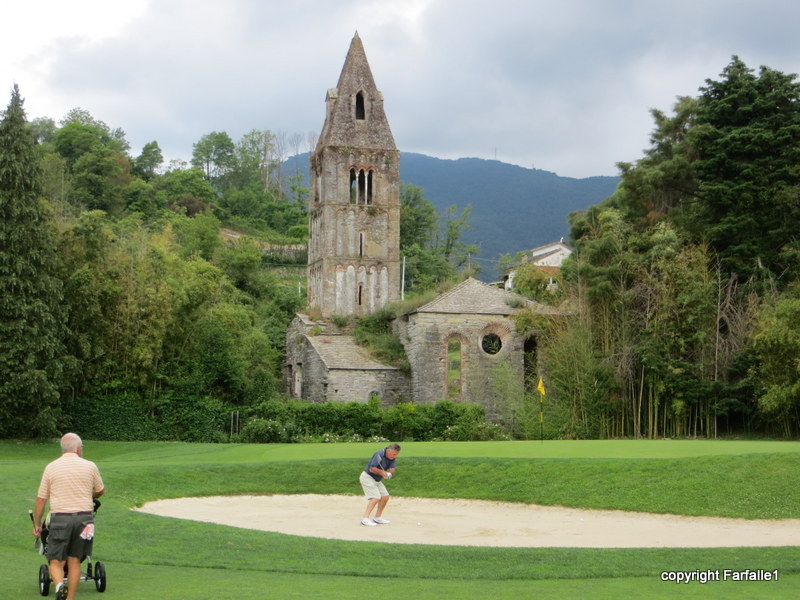
Giammi hits from the sand at #7; valle Christi

Painted Mountain in Mesa has a forest of palm trees:
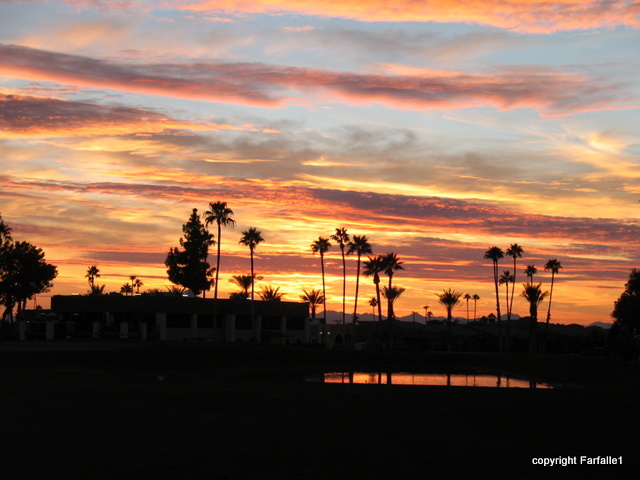
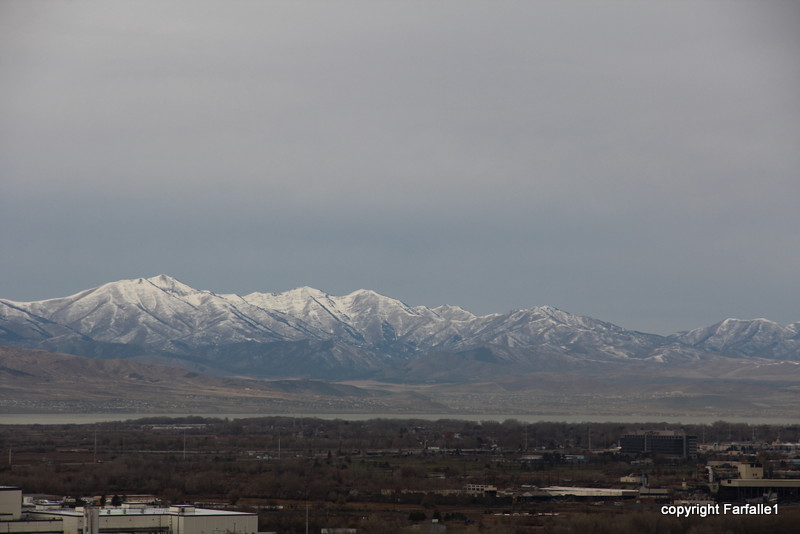
sunset over painted mountain golf courseOver Thanksgiving we visited friends in Utah. How can anyone concentrate on a golf game when these are the views the course offers?

view from Provo golf course-001view on provo golf courseLake Utah and mountains-001I didn’t even try to play that day.

Now for some fauna:
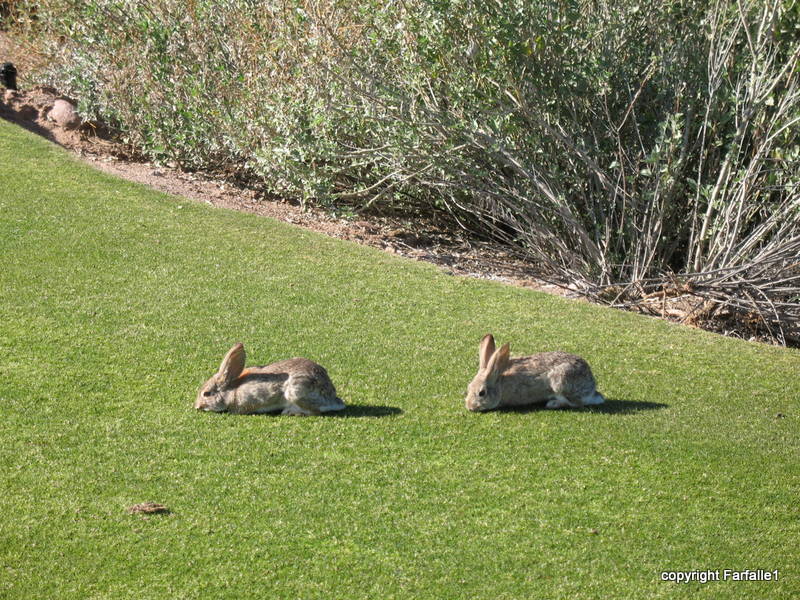
Rabbits at Painted Mountain
Rabbits at Painted Mountain

IMG_4387

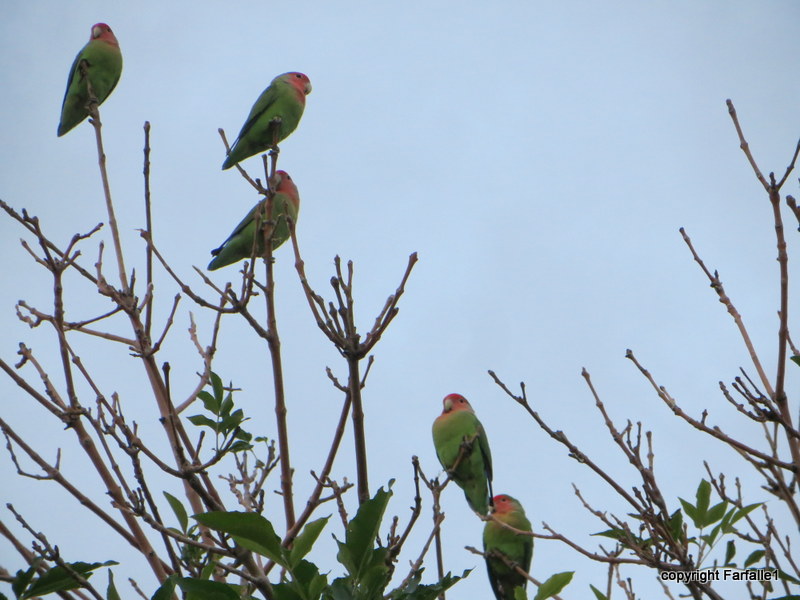
Peach faced lovebirds at Painted Mountain
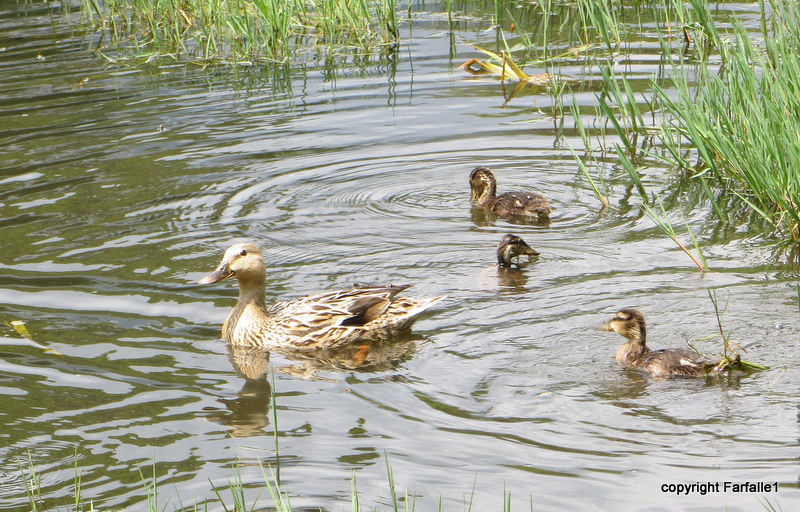
Mama duck with her babies, Rapallo
Mama duck with her babies, Rapallo

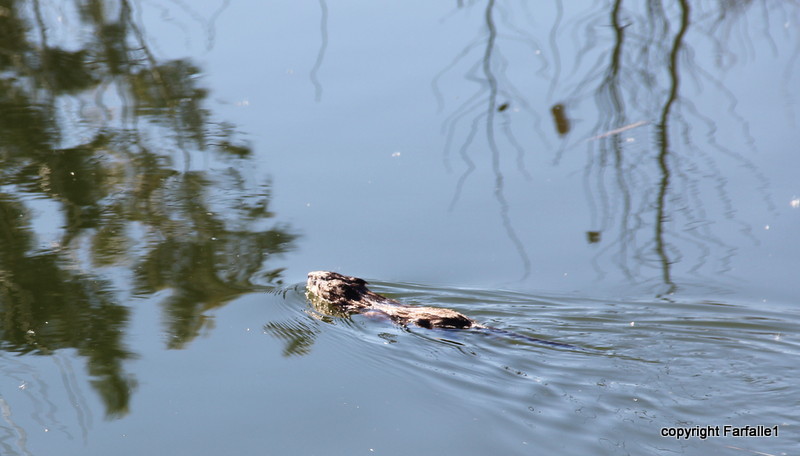
A muskrat (?) in Utah
A muskrat (?) in Utah

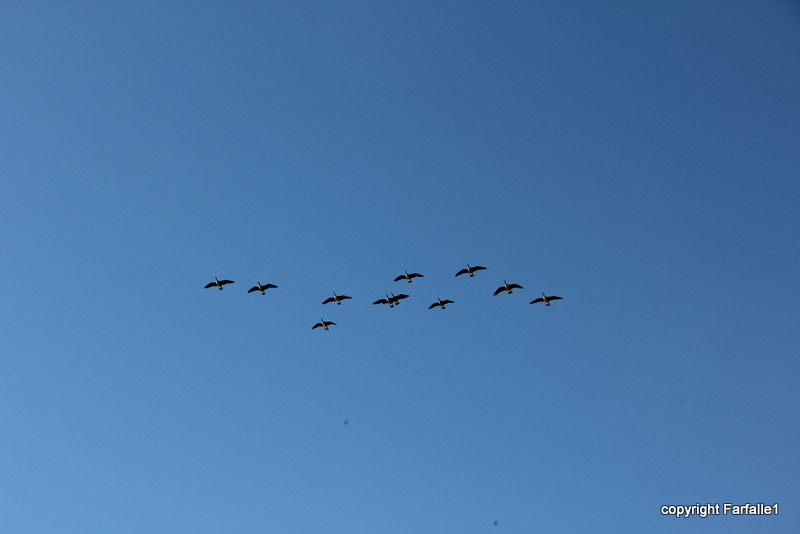
Geese overhead in Utah

Geese overhead in Utah

Remember when geese used to migrate? Now they just hang around the golf courses year-round, which makes for interesting footing if your ball lands near the water.
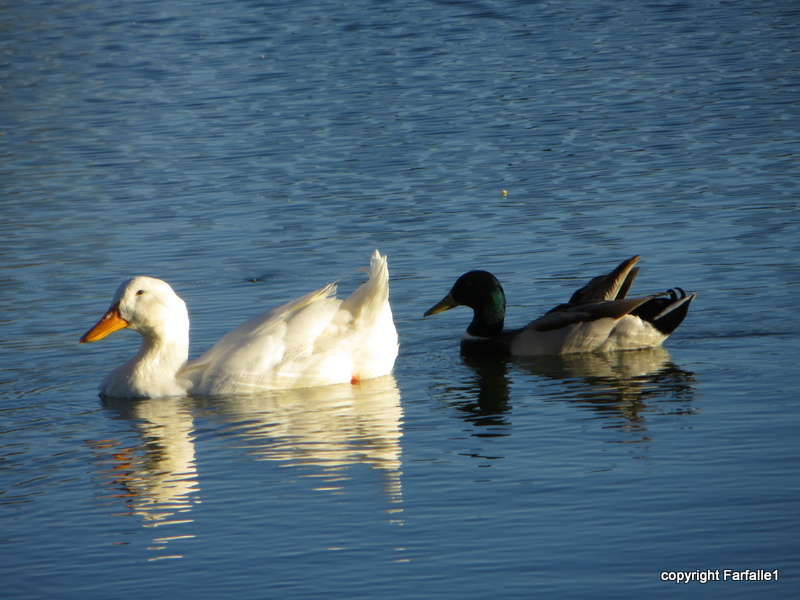
Goose and mallard, Mountain Brook

Goose and mallard, Mountain Brook

This white goose has been protecting the male mallard with a broken wing for several weeks now. They are inseparable.

True love, mallard style, Mountain Brook

True love

Speaking of inseparable, it’s getting to be that time of year. Is there any place on earth where mallards don’t thrive?

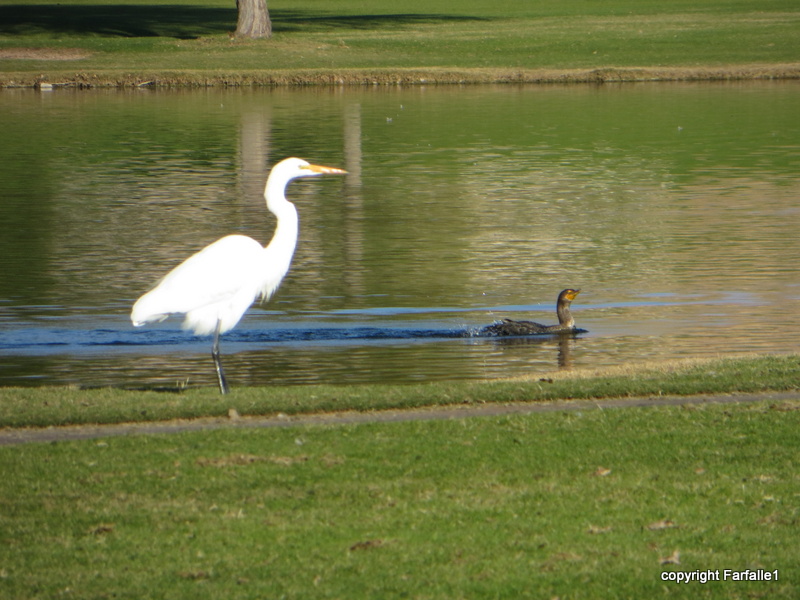
A blue heron and an egret are resident at Mountain Brook and can be found fishing in the course ponds every day.
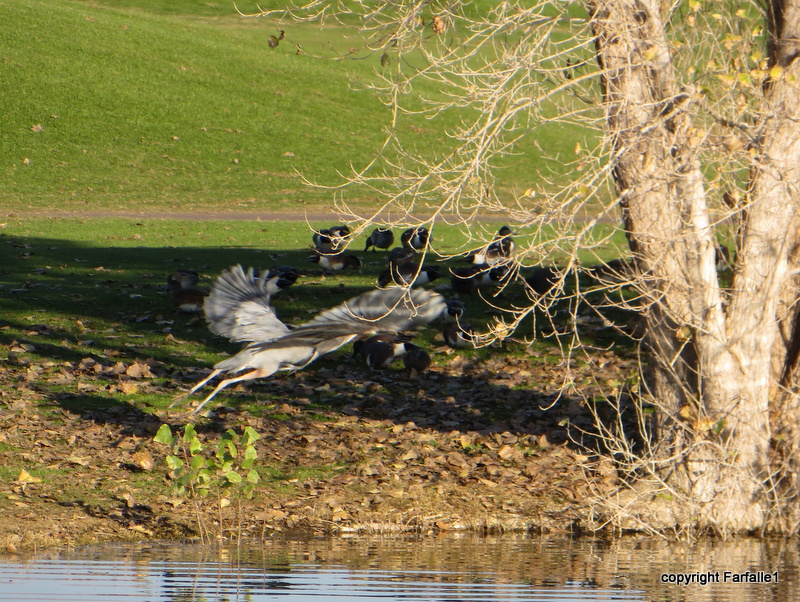
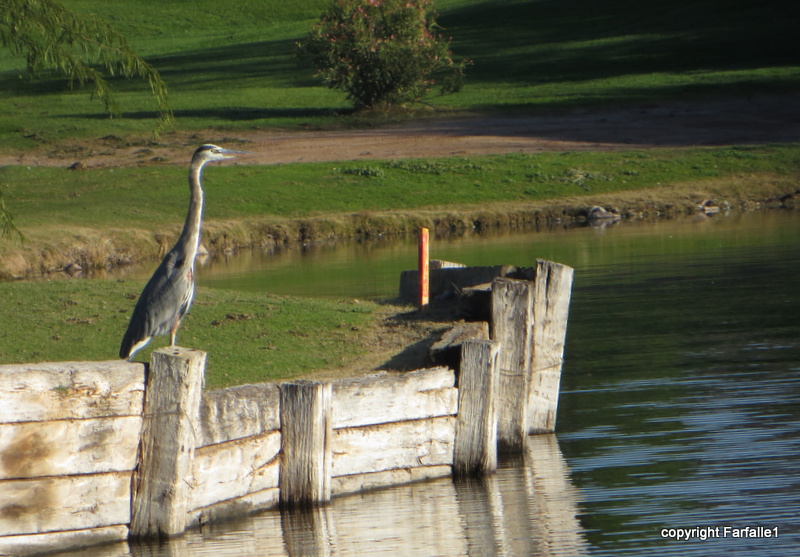
great blue flies away great blue fishing white egret and duck

Sometimes your scribe is just not quite quick enough trying to catch an action shot:
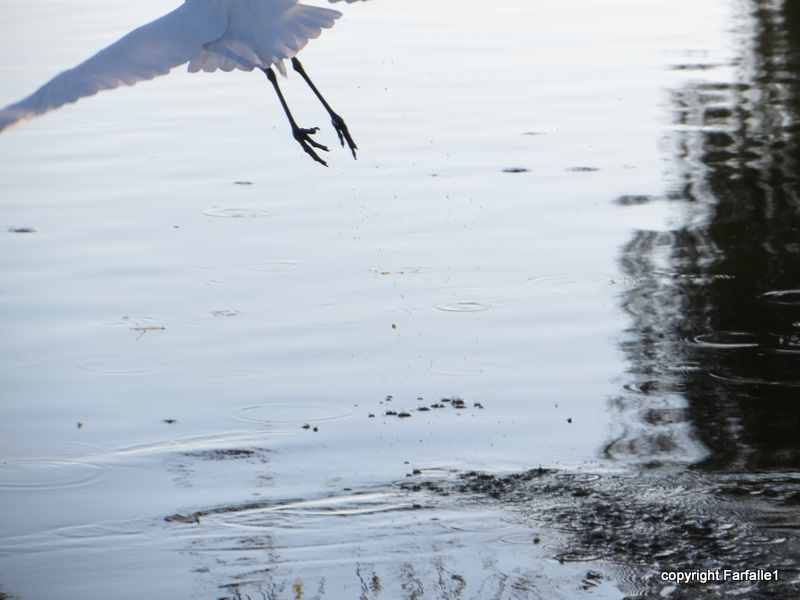
egret leaves

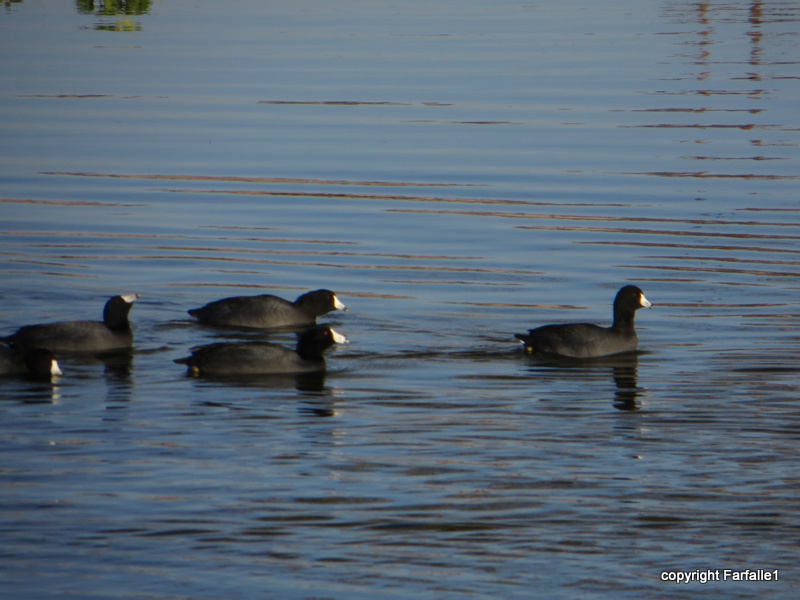
coots-001

Coots at Mountain Brook

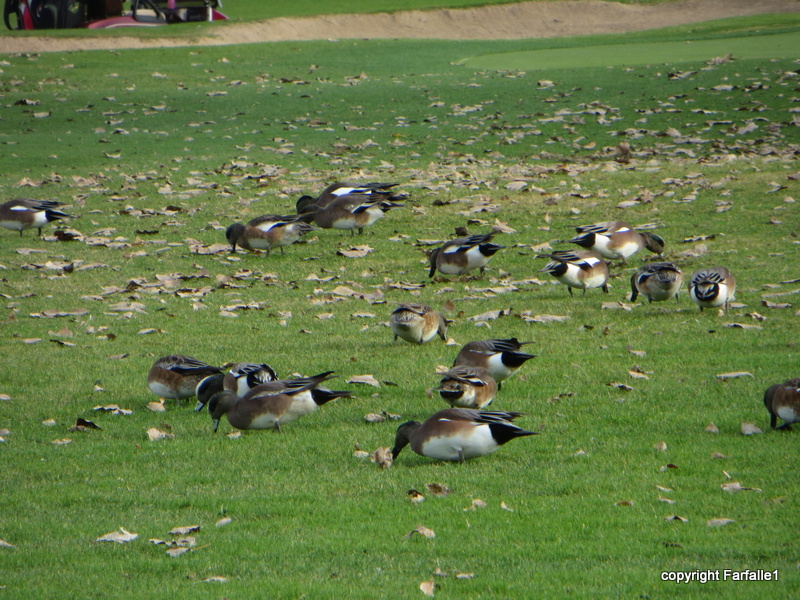
widgeons-002

Widgeons at Mountain Brook


cormorants and widgeons

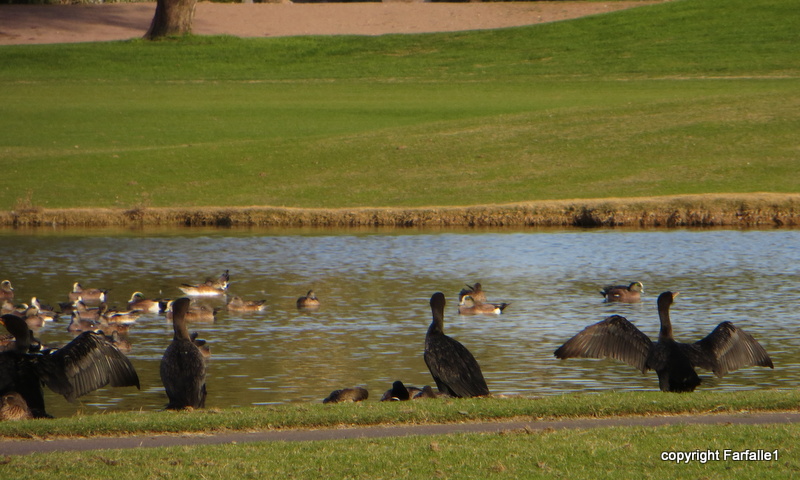
Cormorants dry their wings pondside at Mountain Brook

hawk on a wire

Hawk on a Mountain Brook wire – hunting for rabbits?
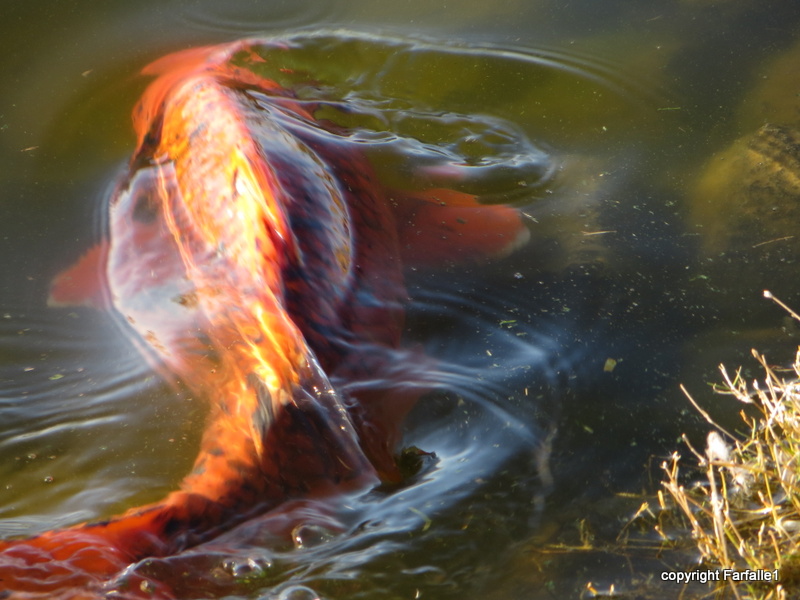
Large gold carp

Large gold carp at Mountain Brook

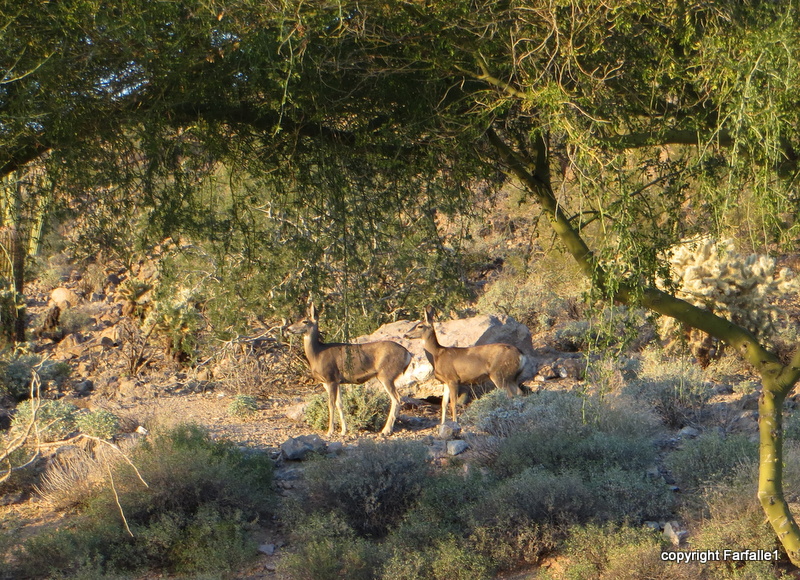
Deer come to the course 'meadows' in the early evening

Deer come to the course ‘meadows’ in the early evening

Perhaps the rarest sighting of all occurred this very evening – I saw reindeer. No, I really did! And I was able to get a photo of them.
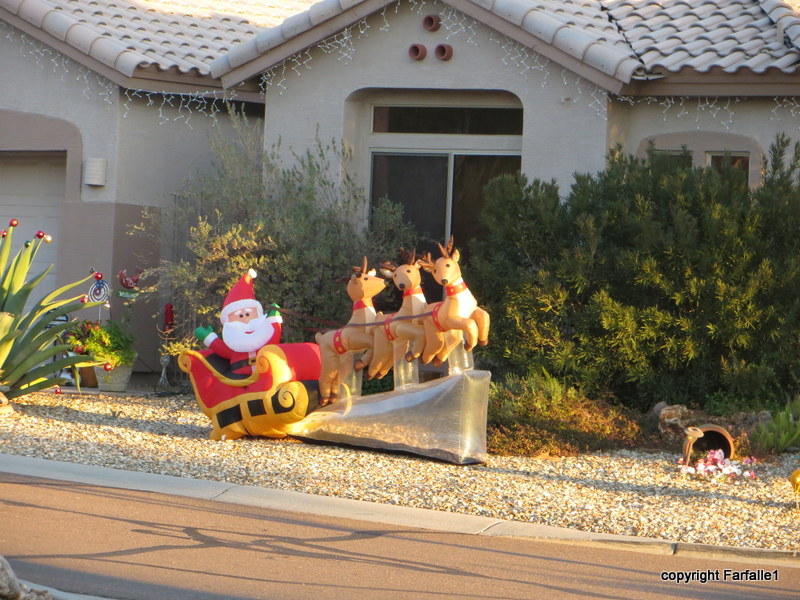
MERRY CHRISTMAS TO ALL AND TO ALL A GOOD NIGHT!

MERRY CHRISTMAS TO ALL AND TO ALL A GOOD NIGHT!

Back in the States and It’s All About Voting

03 Monday Nov 2014

Posted by farfalle1 in American habits and customs, Uncategorized

≈ 2 Comments

Tags

Elections, Vote

We returned to the U.S. yesterday, and everyone is all abuzz about voting. (Easy, comfortable trip, thank you for asking.) As an Italian citizen Speedy can vote in Italy, but I cannot. Here I can, and I’m planning to. There’s nothing like not being eligible to do something that makes you appreciate it when you can.

There are some interesting initiatives on our Arizona ballot, one that pretty much says that the Federal Government can make mandates, but if we don’t wanna, we won’t. The battle between States rights and Federalism – always spirited and interesting.

Anyway, WordPress, who gives me this blog space free (thank you WordPress!) has put together a tool to help voters, which, if you’re interested you can access here:

It says,”I Voted.” I haven’t yet, but by Tuesday afternoon that will be true. And I hope it will be true for you, too; I hope you won’t have to stand in a long line.

An Unexpected Festa

13 Monday Oct 2014

Posted by farfalle1 in Holidays, Italian festas, Italian history, Italian holidays, Rapallo, Uncategorized

≈ 2 Comments

Tags

Columbus Day, Statue of Columbus

Speedy and I took a stroll along the Lungomare and over to the Port in Rapallo on Sunday. To our delight we stumbled on a small festa we had not known about: a celebration of the centennial of the statue of Columbus that points to the new world.

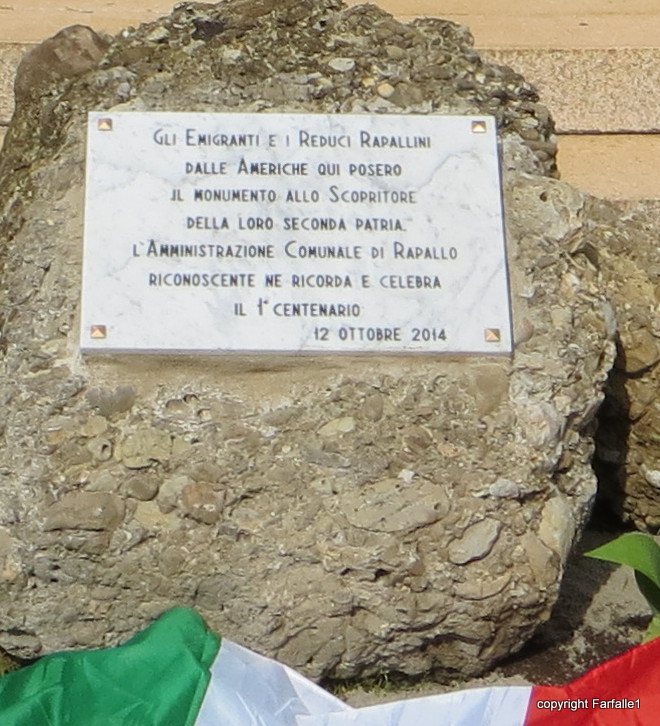
Columbus statue in Rapallonew plaque on columbus statueThe festa was in honor of the 100th anniversary of the erection of the statue. The marble plaque newly placed on the rock in front of the statue says, “The Rapallini emigrants and those who returned from the Americas here placed a monument to the discoverer of their second country. The Administration of the Town of Rapallo gratefully remembers and celebrates the first centenary.”

A small crowd gathered to hear distinguished Professor Massimo Bacigalupo (Literature in English, University of Genova) speak on the history of the statue and meaning of the various figures on it. He was eminently qualified, being the product of an Italo-American marriage. He told me he remembers that when he was young his visiting American grandmother would point to the statue and say, “That is the direction I must go soon.”

Professor Bacigalupo after his talk.

Professor Bacigalupo after his talk.

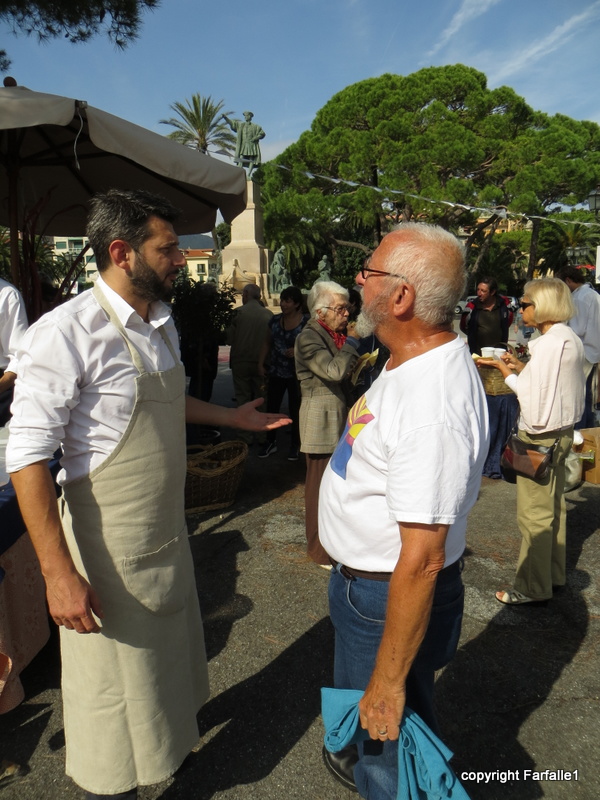
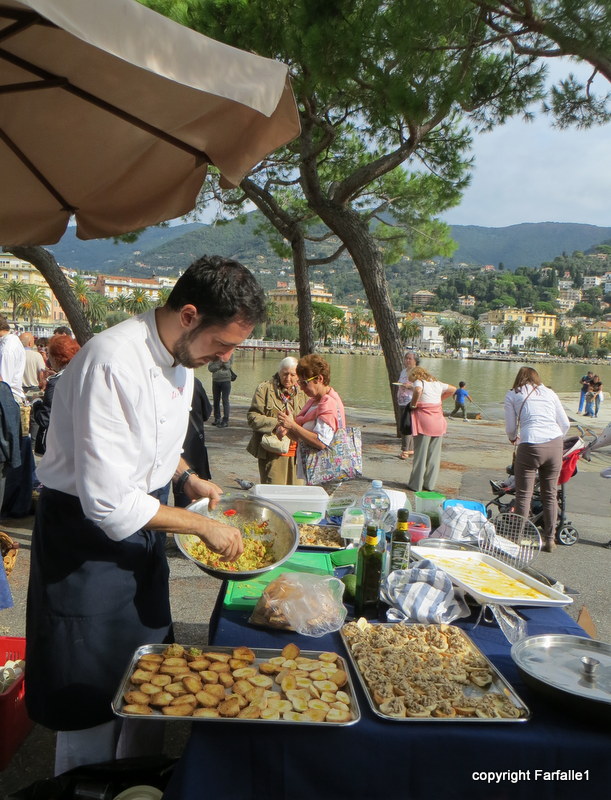
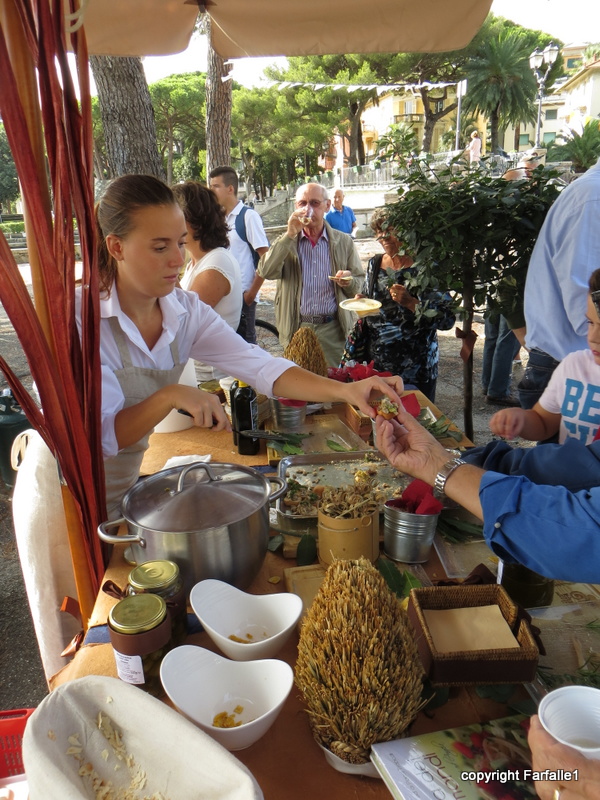
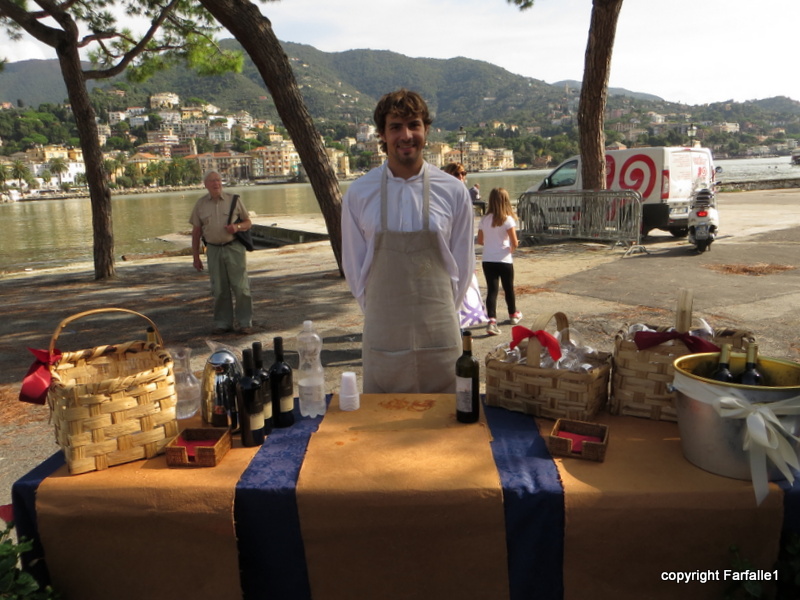
Would it be an Italian celebration without food? It would not! Food was under the capable direction of Guido, owner of Parla come Mangi, a fine food emporium in the old section of Rapallo. His choices of food reflected the new world (guacamole, tortilla chips) as well as the old (wine).

Guido and Speedy catch up.

Guido and Speedy catch up.

guacamole and other festive food

A big bowl of guacamole destined for toast points.

food almost all gone

Tortilla chips were a hit – the bowls are empty.

Red or white, the choice is yours

Red or white, the choice is yours

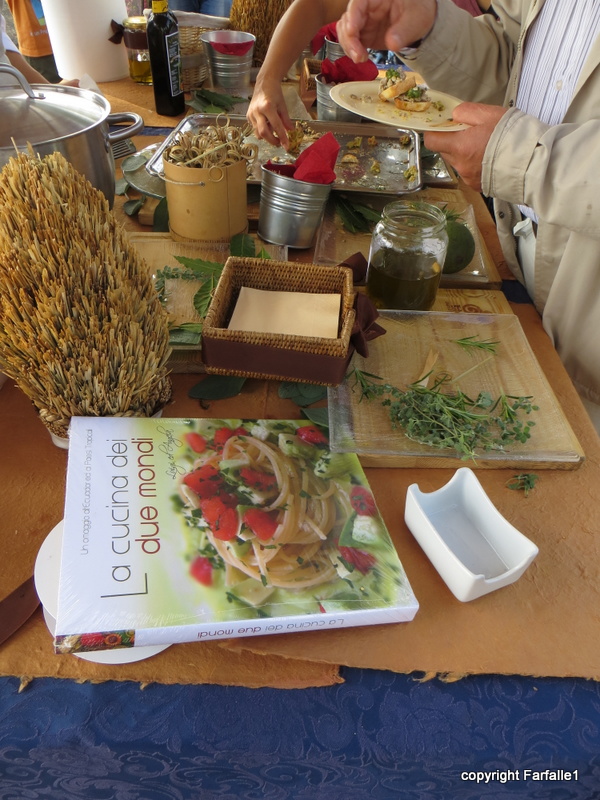
cookbook

a cookbook celebrating Italian-American cuisine

When we read about Italians emigrating to ‘America’ we Americans think of the U.S. In spite of the large number of Italian immigrants and their descendants in the States, more Italians emigrated to Central and South America. According to Wikipedia Brazil has the largest number of people with full or partial ancestry outside of Italy itself.  50-60% of Argentinians can lay claim to full or partial Italian ancstry. Uruguay and later Venezuela also attracted many emigrants, as did chilly Canada.

And that is why, in the photo at the top of this post, there are flags of so many countries, all of whom welcomed Italians in the 19th and 20th centuries, and continue to do so today, just as Italy welcomes those of us coming in the other direction.

Happy Columbus Day!

It’s All About the Weather

11 Saturday Oct 2014

Posted by farfalle1 in Genova, Italy, Liguria, Uncategorized, Weather

≈ 7 Comments

Tags

Floods in Genova, Genova floods, Heavy rain in Rapallo

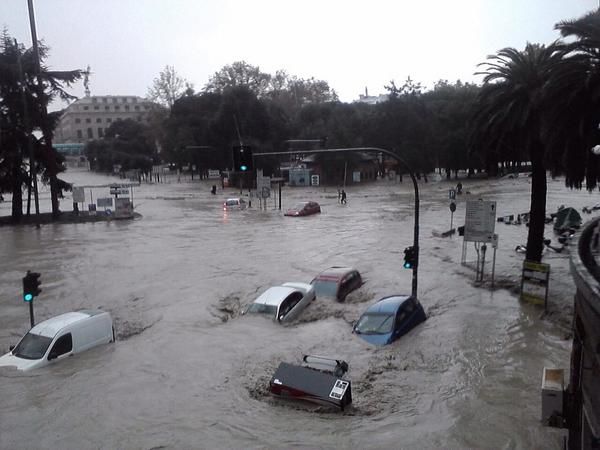
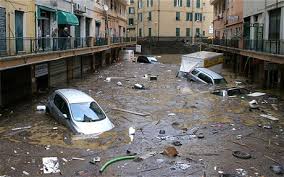
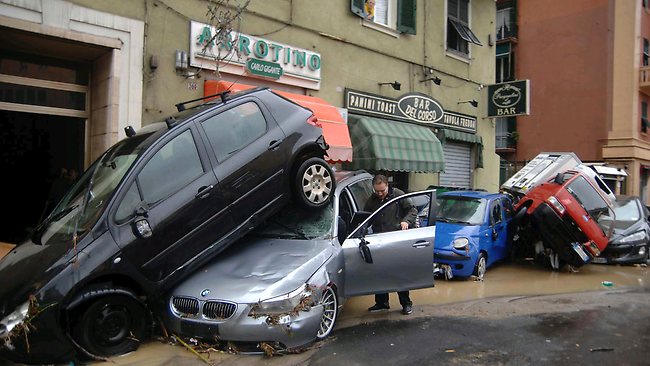
You may have heard about the terrible flooding that killed six people in Genova three years ago. Poor Genova! Again the Bisagno River overflowed and went crashing through the city’s streets, tossing cars around like matchsticks, leaving a trail of mud, debris, ruined businesses and homes, and at least one person dead.

flood genoa_italy

Press photo

Photo courtesy of The Telegraph

Photo courtesy of The Telegraph

Photo courtesy of The Herald Sun

Photo courtesy of The Herald Sun

Other parts of Liguria were hard hit by the fierce electrical storms, which went on for hours and knocked out power to many zones of Genova. In our own small area of Rapallo we received some damage. Above us a landslide closed the road that leads to the Valley behind us. Below us trees fell down into the road, damaging a guard rail. Enough were quickly removed to open up one narrow lane for traffic. Seems like very small patooties compared to what’s happened in Genova.

More rain fell this morning (Saturday, Oct. 11) with more forecast for this afternoon and tomorrow.

Liguria is a narrow bean-shaped region that hugs the Mediterranean, with high mountains that tumble right down to the sea. The mountains all drain into stream beds which, for most of the year hold only a trickle of water. Workers were mowing the weeds from our own San Francesco torrente just a couple of months ago. This is what it looked like today:

cascade

San Francesco near autostrada

It always amazes us when we open our windows or go outside after a big storm and hear the roar of falling water that fills the valley. We were lucky because the water stayed within its banks. Genova, which is also built on the thin strip of land between mountains and sea, had worse luck.

“It’s a mass of problems together. You have houses built in the wrong places, inadequate water channelling systems, poor planning and administration,” Carlo Malgarotto, president of the council in the region of Liguria, told Reuters.

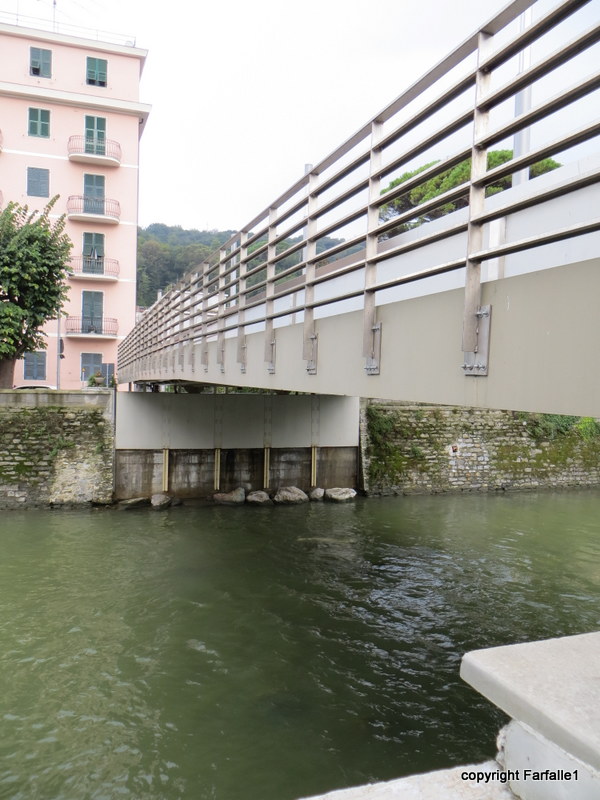
Rapallo did a bit of planning a few years ago. To prevent debris from catching on a bridge that might then back up the Boate River, they decided to rebuild it so that it could be raised in times of flood. Why? There is a new cathedral being finished upstream and a large underground parking area is part of the project. The goal was to keep the parking safe and dry. They were able to raise it yesterday, no doubt to the satisfaction of all involved in the project.

raised bridge-001

It’s a bit of an inconvenience for people who would like to use that bridge. As you can see below, the water was not really high enough to reach the bridge at all – but better safe than sorry.

water under bridge

Unfortunately Genova has not had as good luck with the plans they made after the 2011 flood. According to Reuters:  “Environment Minister Gian Luca Galletti said in a statement that 35 million euros ($44 million) had been earmarked to reinforce flood defences around the Bisagno but the funds had been blocked by a legal dispute.”

Sadly that sounds exactly like Italy. It doesn’t seem to be a country that has embraced the idea of citizens co-operating for the common good. Rather, people are much more likely to be watching out for their own interests and trying to see what they can gain personally from any project. I guess that makes Italy like a lot of other places.

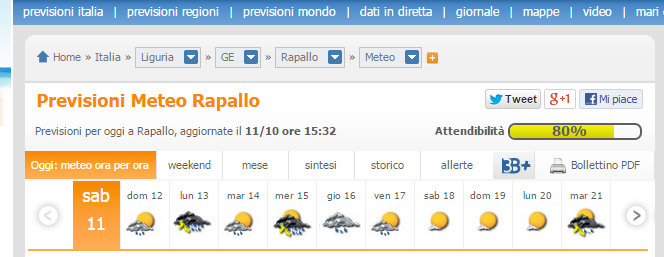
Meanwhile, more rain is forecast. Fingers crossed for Genova, because they already have their hands full.

Courtesy of 3B Meteo

Courtesy of 3B Meteo

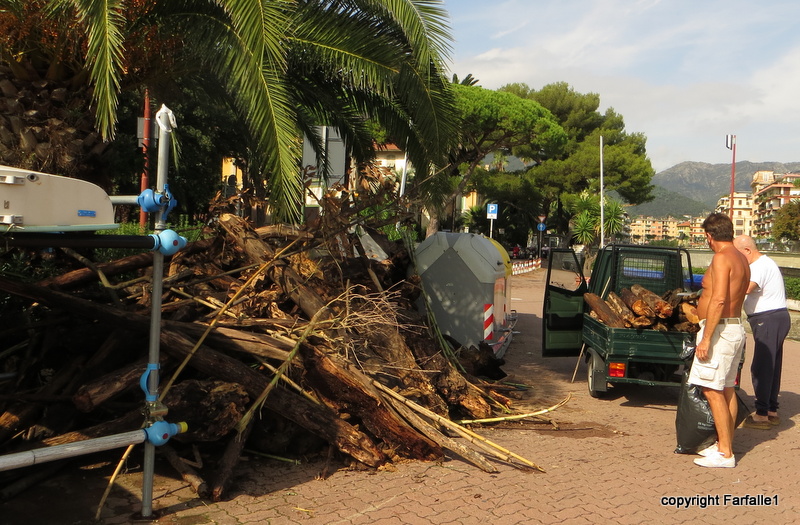
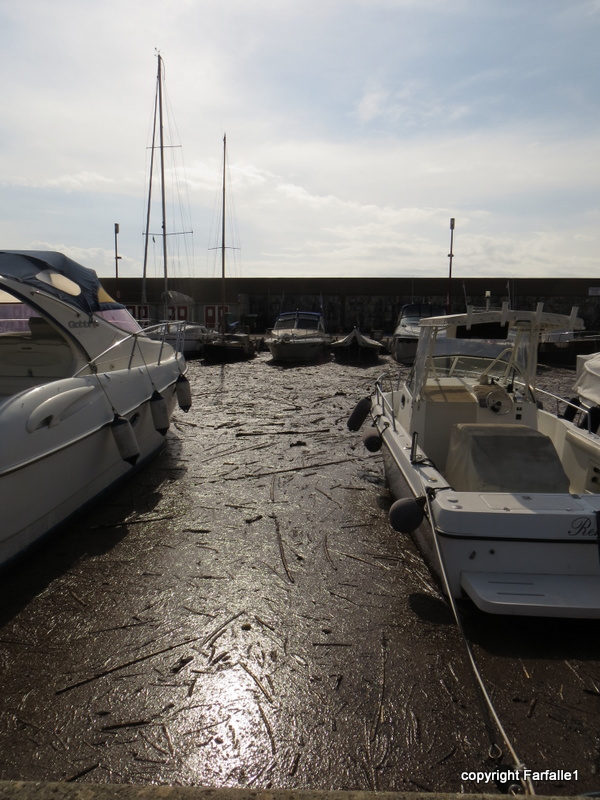
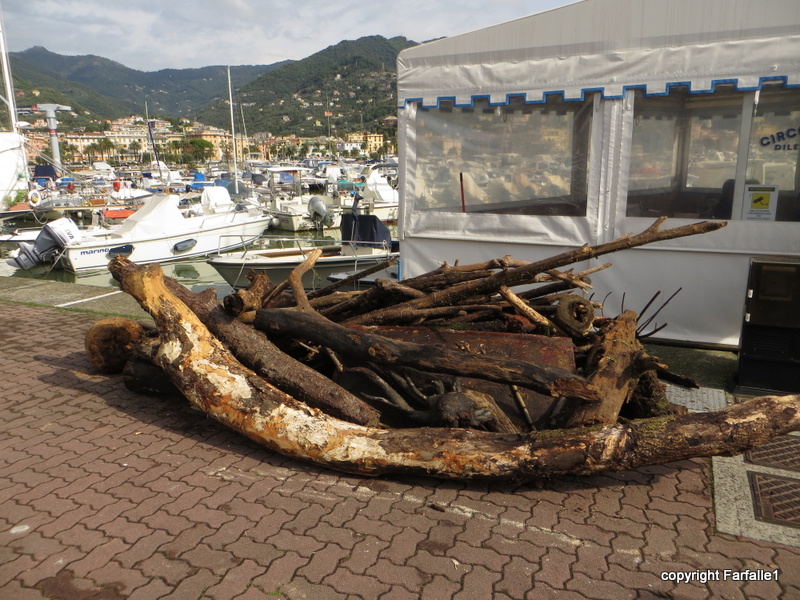
Addendum: We visited the Port on Sunday and found the aftermath of the storm: flotsam, jetsam and a lot of driftwood that had already been pulled out of the water. There was so much rubbish among the boats that the water was invisible.

driftwood in port flotsam and jetsam in port-001 driftwood


Cows Come Home… Again!

20 Saturday Sep 2014

Posted by farfalle1 in Alps, Animals in Italy, Italian festas, Italian food, Italian men, Italy, Piemonte, Portraits of people, Uncategorized

≈ 4 Comments

Tags

Antique tractors, Cowherding, Cows, Fera 'd San Bartrame', Oropa, Tractors


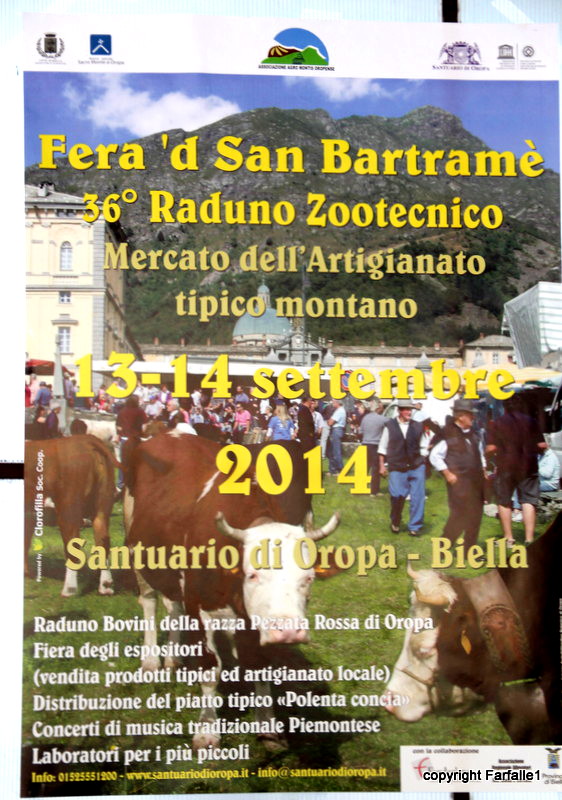
fair poster

Those who are faithful readers of this blog know there are few things that give us more pleasure than a day spent with the cows (read about last years outing here). Last weekend we enjoyed just such a day, made even better by being with dear friends.

The Santuario di Oropa sits high in the pre-Alps of Piemonte (region of Biella) at an altitude of some 1,100 meters (3,610 + feet). Its long history dates back in lore to the 4th century AD. In fact the first mention of simple churches in Oropa, dedicated to the Saints Mary and Bartholomew, occurred in the 13th century. (San Bartrame’ is Piemontese dialect for St. Bartholmew.) The present series of buildings were begun in the first years of the 17th century, with work continuing to this day. The most recent basilica was consecrated in 1960.  Our friends told us there is a saying in Piemonte to describe something that is never finished – ‘it’s another Oropa.’ There is a good, brief history of the Sanctuary, which is an important pilgrim destination here (in English).

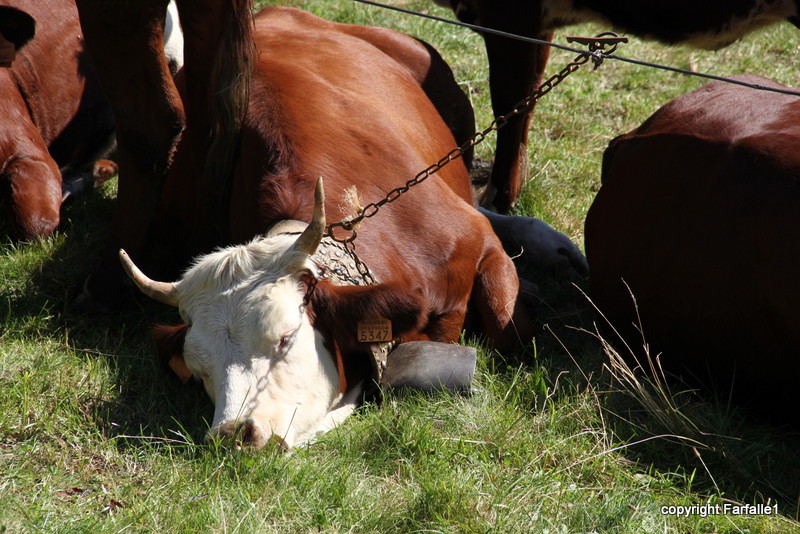
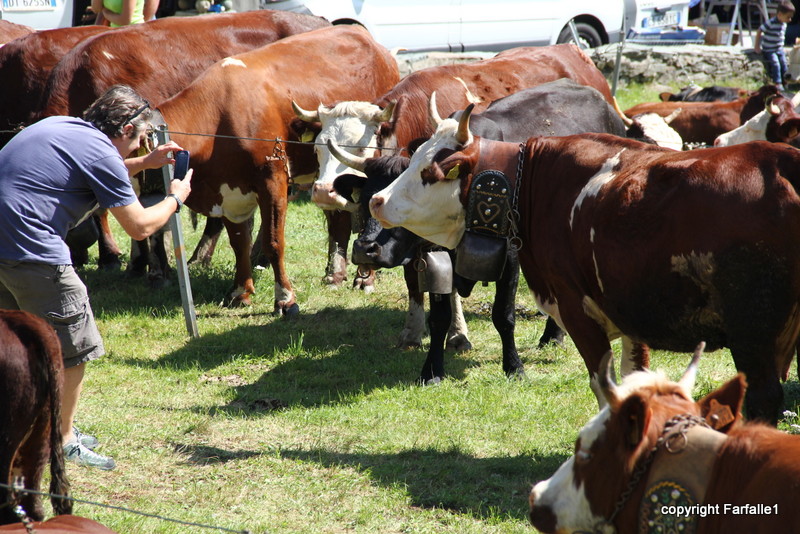
However, it was not as pilgrims that we visited the sacred site – it was as cow fanciers, in particular to get to know the Pezzata Rossa di Oropa, one of sixteen minor cattle breeds recognized by the Italian Ministry of Agriculture. The standard for the breed calls for a ‘red’ coat with white spots. In fact, there have been breeding changes over the years and, in addition to the standard, there are now all white Pezzate and black and white Pezzate.

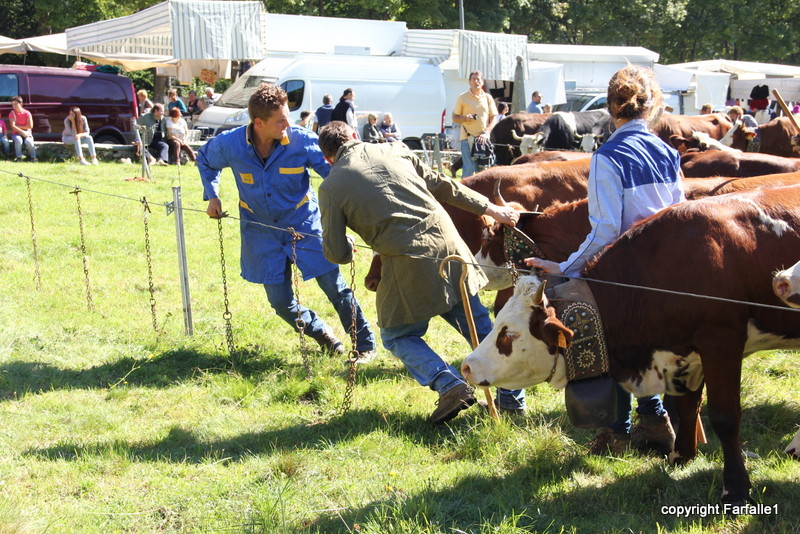
During the summer months the cows live with their herders on the high fields of the pre-Alps; it is too cold for them to remain there through the winter, and the Festa we attended was held to celebrate their return to civilization. The herds are brought down a very narrow road and driven into a large field where they are tied by chains to a flimsy wire fence.

pretty cowherd

That’s not a cane in the young woman’s hand, that’s the rather delicate shepherd’s crook that all the herders carry. Every now and then when a cow goes in the wrong direction she receives a little whack on the fanny with the crook along with a shout telling her what to do. Getting the cows to approach the fences in the field sometimes took a bit of effort. The crook was freely employed, as was simple strength.

pezzata rossa di oropa chaining them up-003There was a delightful amount of confusion while the herds were being organized – some of the cows simply did not want to stand still in a row and would try to wander off.

watchful dog and young cowherd

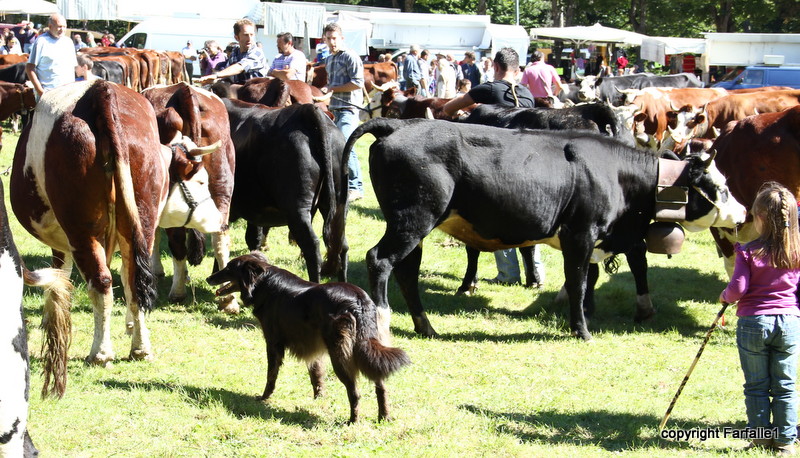
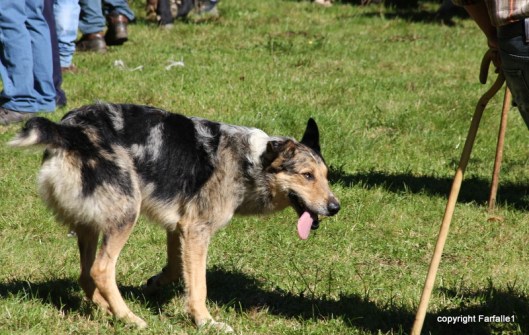
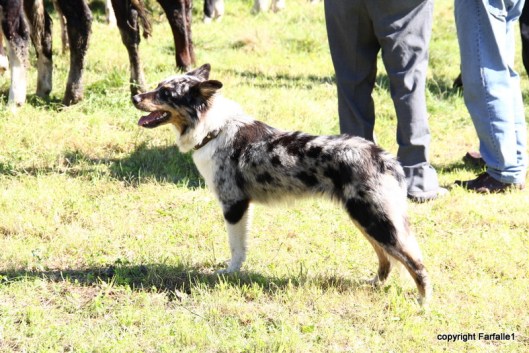
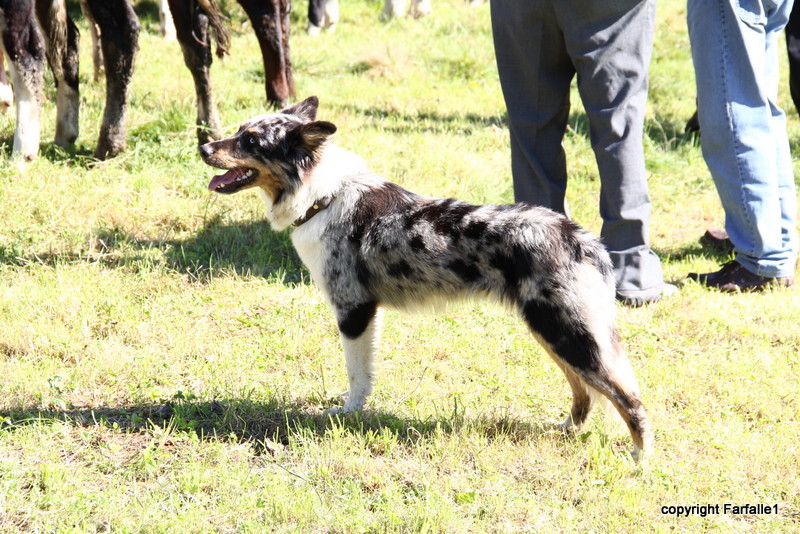
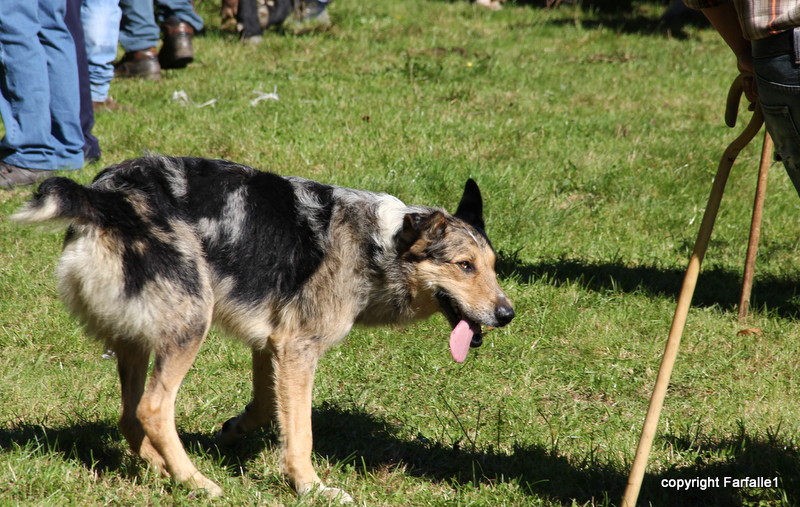
As in Scotland, dogs are central to controlling the herds, though the dogs at Oropa were very different than the border collies we have seen demonstrating herding techniques (sheep! geese!!). We asked one of the herders what the breed is and the succinct answer was, ‘bastardi.’ They certainly were bright and attentive to their work, though sometimes they looked a little goofy.

brindle dog with tongue out

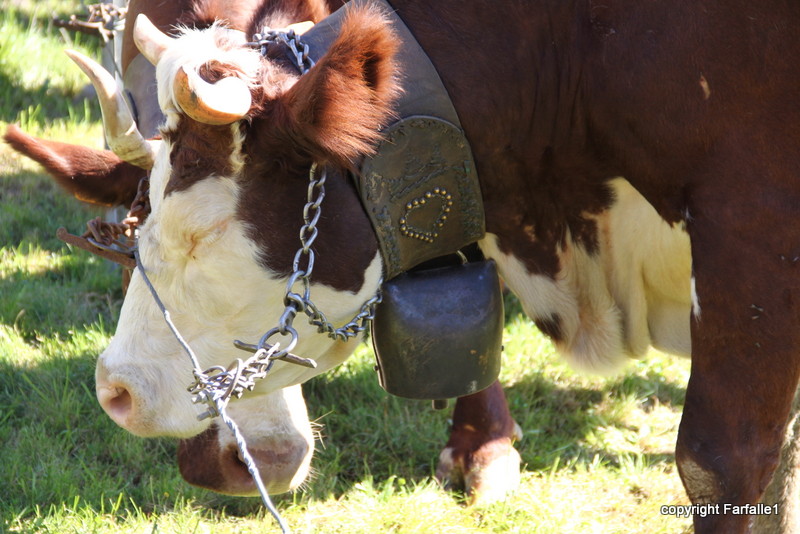
brindle cow dog-001Each herd wears its own identifying collar for the occasion. The old collars are made of wood, new ones of leather, and many are ornately decorated.
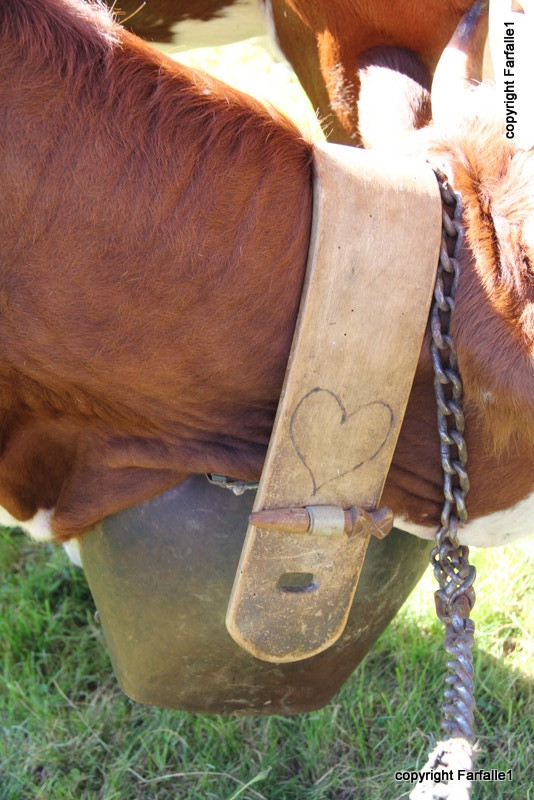
pezzata rossa di oropa leather collar pezzata rossa di oropa old wooden collar-001pezzata rossa di oropaMost of the cows were cows, but there was the occasional bull. This one was pretty randy, but he was wearing a home-made prophylactic device. Inelegant, perhaps, but effective

pezzata rossa di oropa finding shade

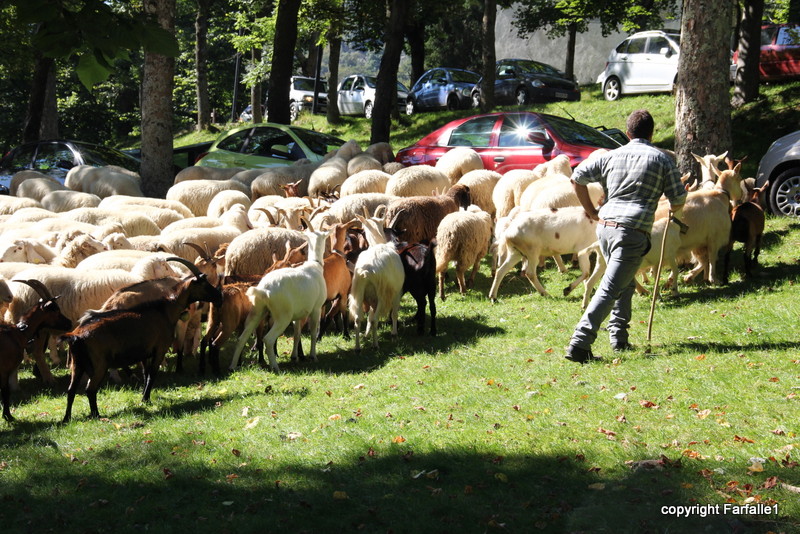
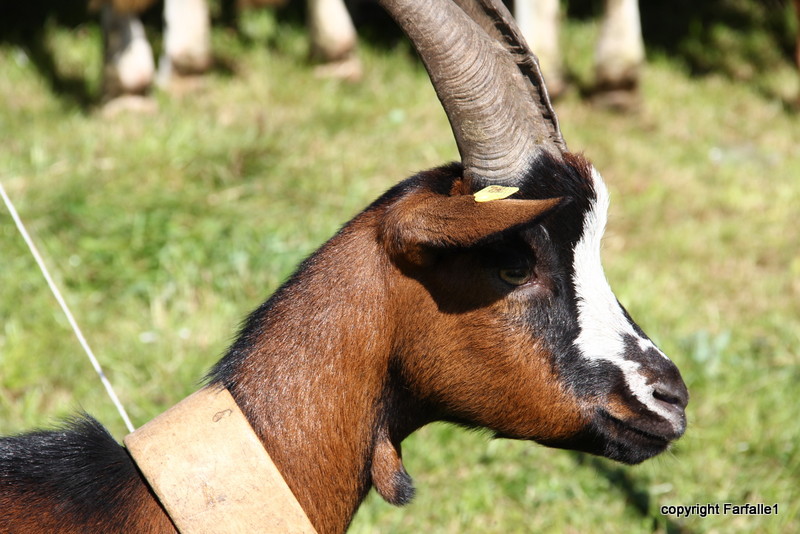
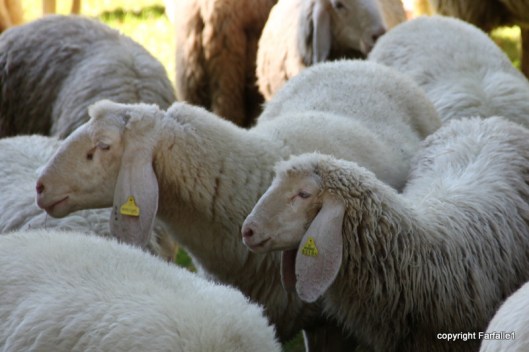
Cows weren’t the only beasts being brought down from the hills. There was a fine collection of sheep, interspersed with goats, that were put in a field across the road from the cows. I should mention that almost every single animal was wearing a bell – what with the shouting of the herders, the clanging of the bells and the bellowing and bleating of the animals there was a fine cacophony.

corraling the sheep and goats sheep and babygoatHaving been to Egypt in the last post here I couldn’t help but think that this pair was from that ancient land – such fine profiles.

sheep egyptian profileYou may be wondering why the cows were all tied up in that big field. The reason is that each herd was judged, and a prize awarded to the herd deemed to be in the best condition after a summer spent up on the mountain. I’m ashamed to say I was thinking about lunch and missed the prize presentation, but I did get to the stand in time to catch a glimpse of the winners. It seemed to be a rather low-key part of the event.
prize winners

There was ample opportunity for the many photographers present to take pictures of cows – and you can’t tell me the cows weren’t posing.

pezzata rossa di oropa posing for photographer

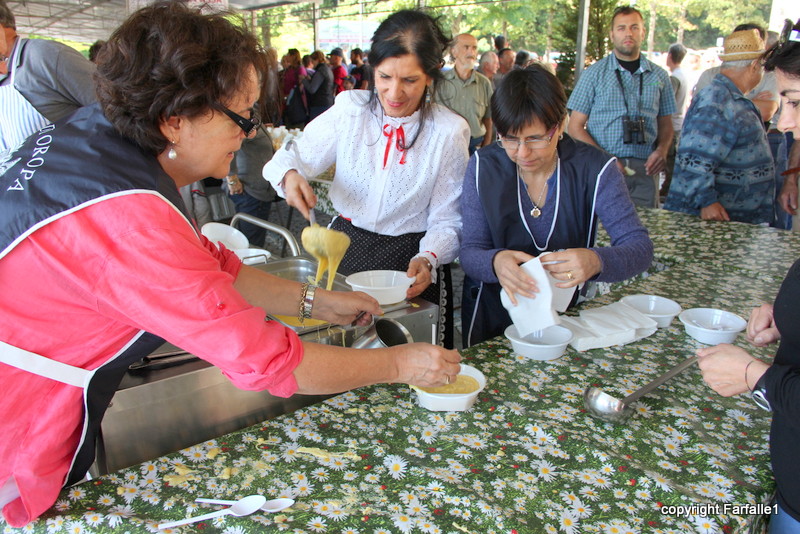
Did someone mention lunch?? It wouldn’t be an Italian festa without a good meal. The featured specialty was polenta cuncia, one of the world’s great comfort foods (you can find a recipe for it here). Basically it is a fairly finely ground corn meal cooked with either water or stock with the local cheese, toma, stirred in at the end. It is rich, hearty and extremely satisfying. The Oropa iteration was dressed with a couple of tablespoons of melted butter, a fine improvement. It took three ladies to serve the polenta – one to glop it in a bowl, one to add the butter, and one to stick in a spoon and hand it to the hungry pilgrim, along with a napkin.

serving polenta-007polenta cuncia with black butter-001It was fabulous, and after a morning of chasing cows and sheep it was most welcome, especially washed down with the earthy local red wine.

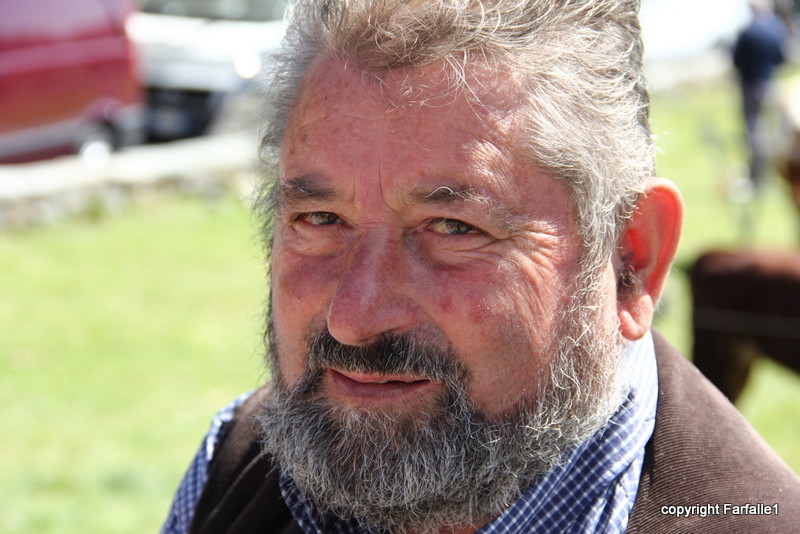
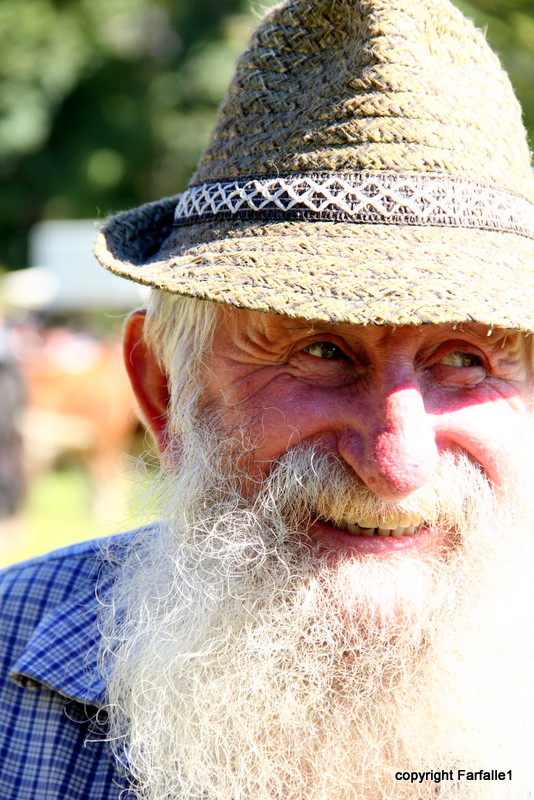
For me one of the best parts of an event like this is looking at the people. The cowherds were extremely kind in letting me take their pictures. These are men whose families have probably lived in Piemonte for centuries.

cowherd-001

cowherds cowherdThere was a lot more going on during the festa – a large array of vendors had local (and some not so local) crafts for sale; there was an excellent exhibit of tractors, old and new; there was a photo exhibit in a tram car that for decades carried sick people from Biella to Oropa for blessings and cures; in the church there was a display of preseppe (creche scenes) from all around the world (my favorite: the one from a nearby village made from marzipan); there was music. If you would like to see some pictures of these things, in addition to more pictures of the animals, please click here (for a slide show click the icon in the upper right that looks like a couple of small rectangles).

The weather was glorious, one of the few sunny days Oropa enjoys each year; it was warm, the crowd was happy, and the animals seemed to be too. It was just so much fun – and exhausting – for everyone.

pezzata rossa di oropa tired

THE END

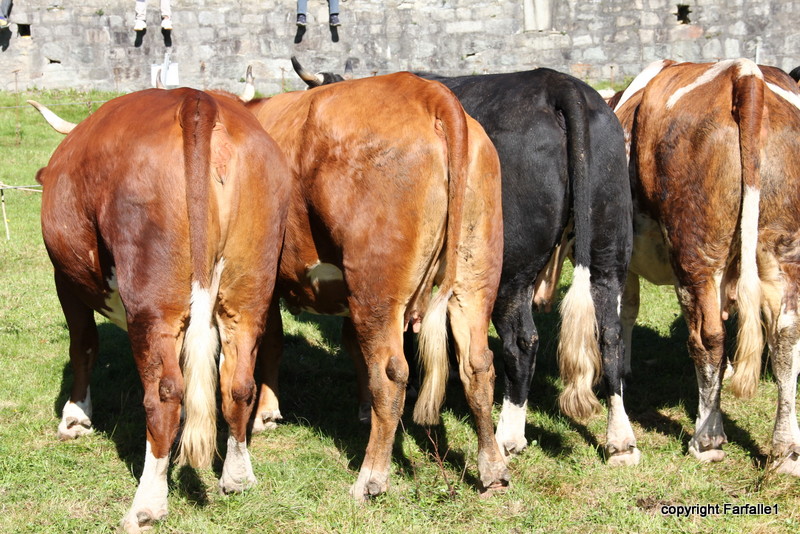
cow backsides

A Trip to Egypt

11 Thursday Sep 2014

Posted by farfalle1 in Art in Italy, Uncategorized

≈ 9 Comments

Tags

Egyptian art, Egyptian collections, Egyptian Museum, Museo Egizio, Museums in Torino, Museums in Turin, Torino, Turin

head of seated figure

No, Speedy and I didn’t hop on an airplane and go to Egypt. Instead we hopped on a train, got off in Torino, and went with friends to the Museo Egizio. Even under restoration, as it has been for a couple of years and will be for another half year or so, it is a sensational institution.

In terms of collection size it is second only to the museum in Cairo . These two are the only museums in the world that are dedicated solely to Egyptian art and culture. It is the oldest museum of Egyptian art in the world.

The first ‘Egyptian’ artifact, an altar called Mensa Isiaca, arrived in Italy way back in 1630.

Photo courtesy of Minerva Magazine, June, 2012.

This elaborate bronze tablet turns out actually to have been of Roman origin, simply mimicking the Egyptian style (Egypt had become a province of the Roman Empire in 30 BCE). Funnily, a man named Athanasius Kircher used the tablet as his primary source for translating hieroglyphics in the 17th century. Turns out Kircher was a fraud and the hieroglyphics on the tablet are meaningless. No matter, King Charles Emmanual II was quite taken with the tablet, and wanted more treasures from Egypt. To that end he commissioned Vitaliano Donati, a botany professor at the University in Torino, to travel to Egypt and bring some back. Donati went in 1753, and brought back 300 items from Karnak and Coptos. These formed the foundation of the Museum’s collection.

Photo of Drovetti courtesy of http://www.travellersinegypt.org/archives/2005/04

Fast forward about 50 years to meet the sly gentleman above, Bernardino Drovetti.  Napoleon sent Drovetti to Egypt in 1803 as a diplomat. But in his spare time he collected and sold antiquities, removing thousands of treasures from newly opened tombs and excavations. Although he collected in the name of France, he dealt privately on the side, famously breaking some treasures to increase the value of those remaining, and cheerfully breaking other artifacts into pieces to make them easier to ship. He kind of looks like he might do that sort of thing, doesn’t he?  In 1824 King Charles Philip of Sardinia acquired Drovetti’s private collection, some 5,268 pieces; these also went to the Museum, which was formally established in that same year.

The collection continued to grow under the stewardship of Ernest Schiaparelli, who was the director in the early 20th century. He led a dozen excavations between 1900 and 1920, and was responsible for many important discoveries, including the tomb of Nefertiti (unfortunately later pillaged by tomb raiders) as well as the tomb of Kha and Merit which he transported in its entirely to Torino. Other collections have been added over the years, including the Temple of Ellesiya, which was a gift of the Egyptian government to the Museum in the 1960’s. The Museum has always been in Torino, housed in a palace built especially for it. It became a private entity in 2004.

Here are a few of the photos I took during our visit. There are some more over here (the set includes a few shots of Torino as well). The light and reflections in the museum make it hard to take a good photo without a tripod; but the museum very generously allows us to take pictures as long as we don’t use flash. If you ever have the opportunity to visit Torino, I encourage you to set aside a day for the Museo Egizio; you won’t regret it.

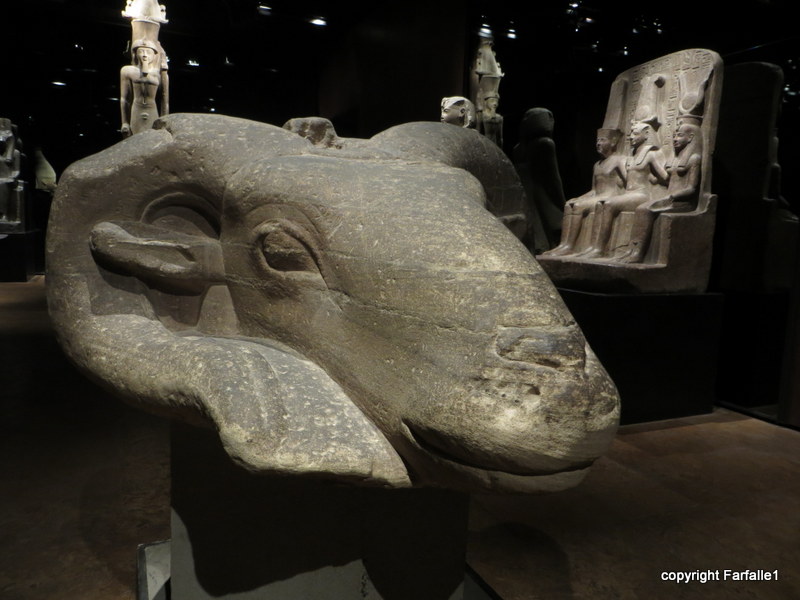
large ram's head

Large ram’s head. The ram was a symbol of strength and fertility.

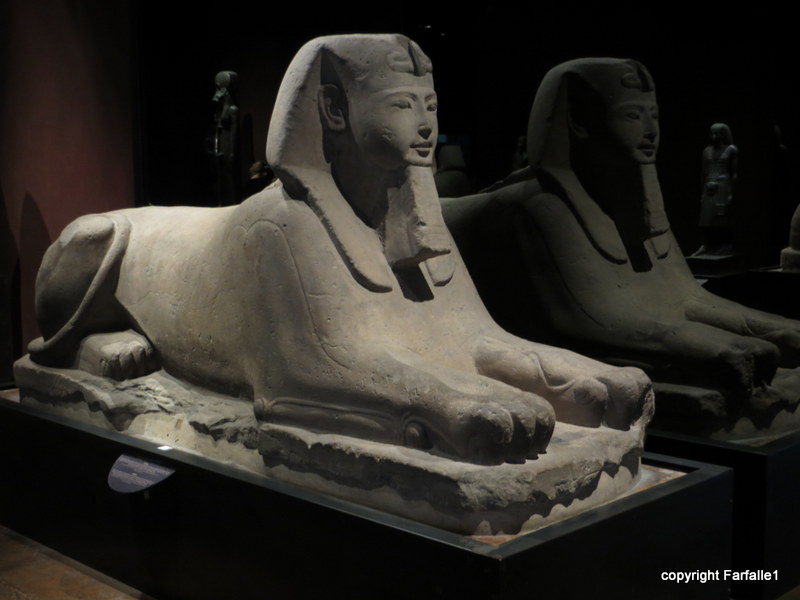
small sphinx

Small sphinx and her reflection

diorama of bakery

Tomb diorama of a bakery

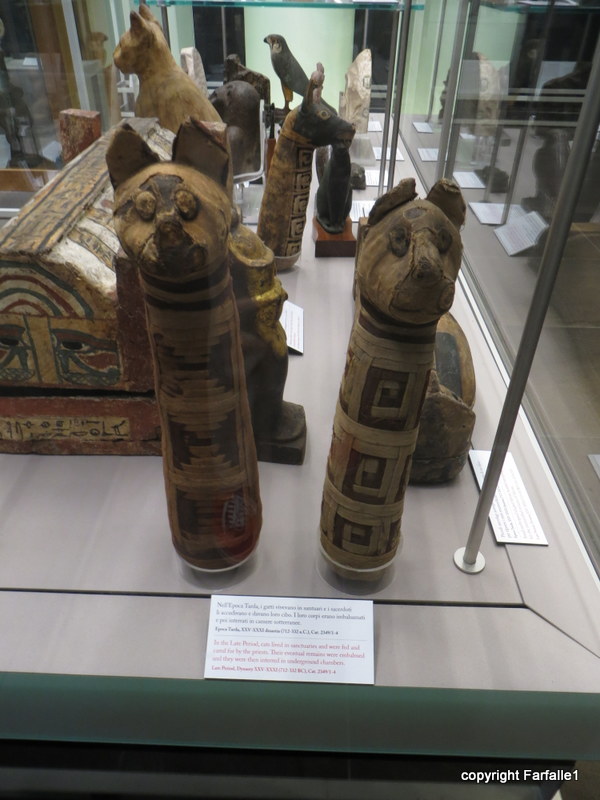
cat mummies

Cat mummies

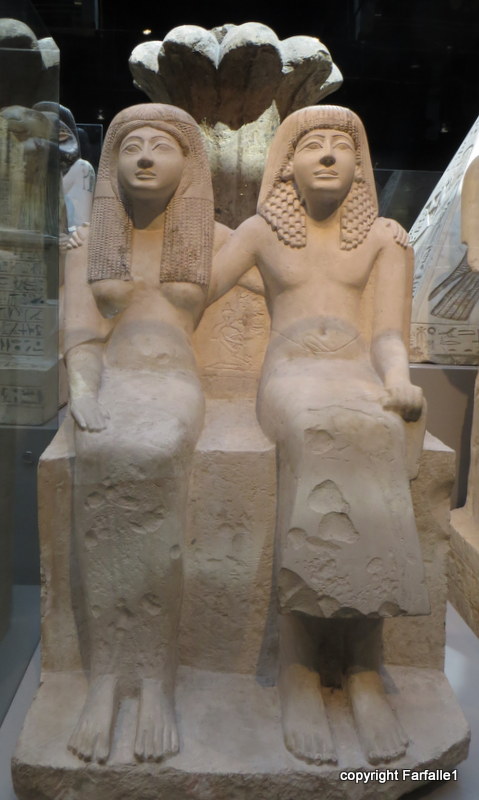
Kha and Merit

Merit and Kha

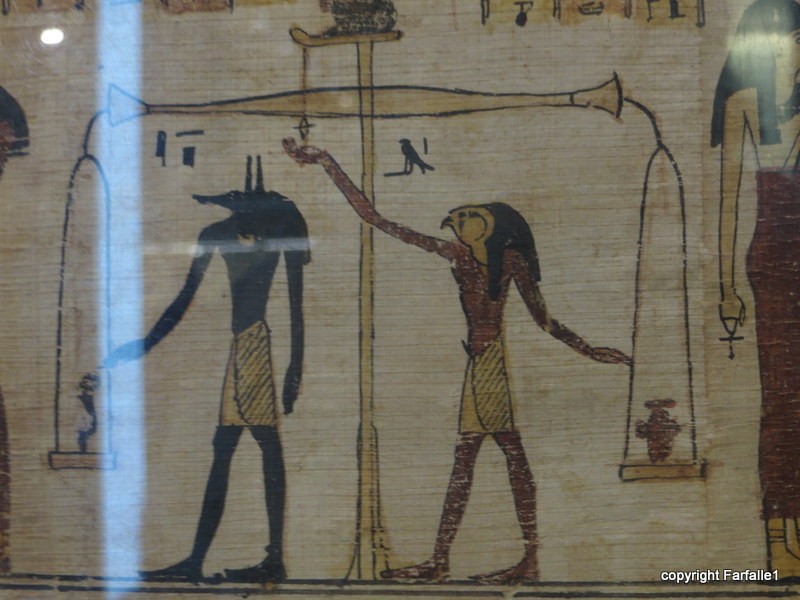
book of dead papyrus, weighing the spirit or heart

Weighing the spirit of the dead. (? not sure I’m remembering correctly)

Stele of Kadish Syrian goddess

Stele of the Syrian goddess Kadish

lion statue

Porchetta

05 Tuesday Aug 2014

Posted by farfalle1 in Customs, Food, Italian festas, Italian food, Italian recipes, Liguria, Rapallo, San Maurizio di Monti, Uncategorized

≈ 12 Comments

Tags

Comitato Fuochi, Festa di San Maurizio

Festa at San Maurizio porchetto-002San Maurizio’s wonderful Comitato Fuochi put on a weekend-long shindig a couple of weeks ago, their Summer Festival. This doughty group of volunteers was first formed in 1903. In the early days the Committee divided our frazione into three districts.   In the 1940’s the three districts became two, and in the 1980’s the two became one; since 2006 the group has been particularly active. Working with the town of Rapallo they helped organize the construction of the soccer field where they now hold their events. In the intervening years they have added several permanent and temporary structures so events can be held in all weather.

The main purpose of the group is to have a Festa in honor of our frazione’s patron saint, San Maurizio each September. One of the highlights of the annual Festa Patronale is the fireworks display; this, of course, costs money, and part of the reason for the other four annual Festas (Carnivale, Spring, Summer, Chestnuts) is to raise money for the main event.
The weekend festa is comprised of food and entertainment. Being old farts we didn’t make it down to the soccer field to enjoy the entertainment.
Festa at San Maurizio the talent

In fact, sadly the Friday night show was rained out. We did, however, stop in for lunch on Sunday, not knowing what we would find on the menu. To our delight we found trofie al pesto (a traditional Ligurian pasta), totani (small fried squid) and porchetta, seen above, amongst other things.
Wikipedia describes porchetta as “a savoury, fatty, and moist boneless pork roast of Italian culinary tradition. The body of the pig is gutted, deboned, arranged carefully with layers of stuffing, meat, fat, and skin, then rolled, spitted, and roasted, traditionally over wood. Porchetta is usually heavily salted in addition to being stuffed with garlic, rosemary, fennel, or other herbs, often wild. Porchetta has been selected by the Italian Ministero delle Politiche Agricole, Alimentari e Forestali as a prodotto agroalimentare tradizionale (“traditional agricultural-alimentary product”, one of a list of traditional Italian foods held to have cultural relevance).” The dish originated in central Italy, but is now popular throughout the country. You can frequently find it at weekly markets at a special truck, and it turns up often at festas like ours as well. This particular porchetta came from Tuscany, from Montepulciano to be exact. And it was delicious, according to Speedy (I ate the totani, which was also really, really good).

Festa at San Maurizio where pork was fromI asked Speedy to write down the story of his introduction to porchetta to share with you. This is what he said, “I first learned about Porchetta and its charms back in the 1970’s when I was flying cargo from New York to Rome.  Without flight attendants and the access to First Class fare which was available to crews on passenger flights, the guys and I would arrive in Rome famished–and with the usual thirst that follows long flights.  One day I asked one of the agents meeting the flight where was the best place to stop to take care of this problem on the way to the crew hotel in central Rome.  He suggested telling the taxi driver to take the Via del Mare where we would find one of those open-sided trucks that are, in fact, full kitchens that serve the food out on paper from a high counter that runs the length of the vehicle–this is the Italian version of a Truck Stop.  And, the ground in front would, in fact, be crawling with huffing trucks.  Anyway, we would get slabs of steaming porchetta on thick slices of crusty, chewy bread and a small glass of frascati for about a dollar.  For a couple more glasses of frascati one had to put out another quarter or so.” It is a very happy memory for him!

Image courtesy of Charcouterie Ltd.

A porchetta-like dish is not hard to make at home. You can find many recipes on the internet, for example this one from Epicurious or this one from Bon Appetit. My own favorite, natch, is Speedy’s own recipe for rolled, stuffed pork roast, which is very porchetta-like. But for the true porchetta experience you have to come to Italy and visit one of the many stands or festas where it is served. I recommend the ones at San Maurizio. You won’t find a harder-working group of volunteers any where and the food is always great. Here are a few more photos of our visit to the tent and there are more over here if you are interested.

One of my favorite poems from the book Unleashed: Poems by Writers’ Dogs (1999) is this one by a yellow lab, whose writer companion I don’t remember. The poem goes something like this:

Ya gonna eat that?
Ya gonna eat that?
Ya gonna eat that?
I’ll eat that!

Festa at San Maurizio

I love how they keep the porchetta swaddled up in a sheet – keeps the flies off.

Festa at San Maurizio the gang

These girls are run off their feet when things get busy, but they never mess up an order.Festa at San Maurizio the waitresses

A Walk Back in Time

30 Wednesday Jul 2014

Posted by farfalle1 in Hiking in Italy, Italian history, Rapallo, Uncategorized

≈ 10 Comments

Tags

La Crocetta, Val Fontanabuona

I got cabin fever last week and decided to take myself off for a short walk. The short walk soon became a rather long walk as I took a path I’d never taken before, going cross-country to La Crocetta. Why it is called La Crocetta (the cross) I am not sure. It’s probably called that because it’s where we cross over into the next valley. Or it might be that long ago it lay on an important crossroad. Or perhaps it is called that for the small chapel that is built just where the rising road turns a sharp curve and begins its descent into the valley on the other side.

Topo map of sentieros sentierii sentieri with my path cropped

Doesn’t that look impressive?  Actually, the walk was shy of two miles each way, but since there was a 919 foot change in elevation I felt extremely virtuous. The first part of the walk was along the road that leads both over the mountain pass (La Crocetta) to the Val Fontanbuona on the other side (take the left fork) and to Montallegro (take the right fork). It was near this very crossroad that I noticed a sign I hadn’t seen before:

road sign

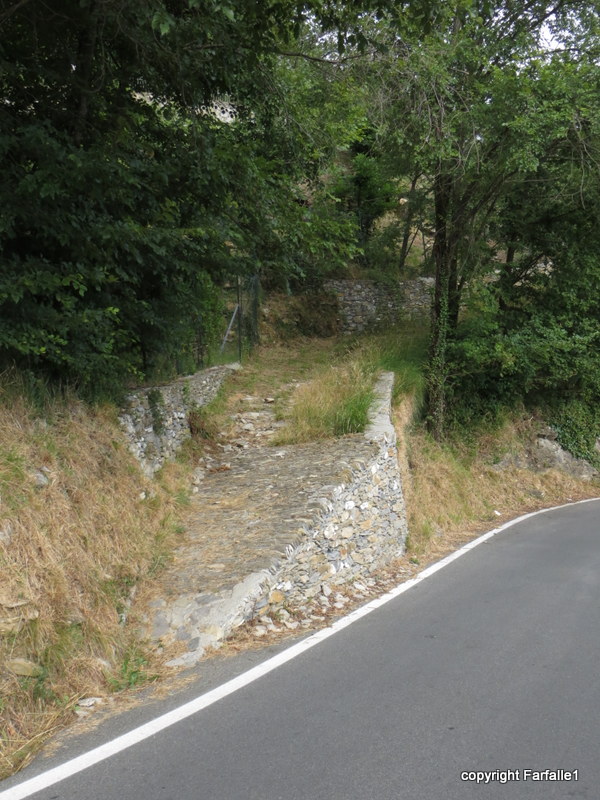
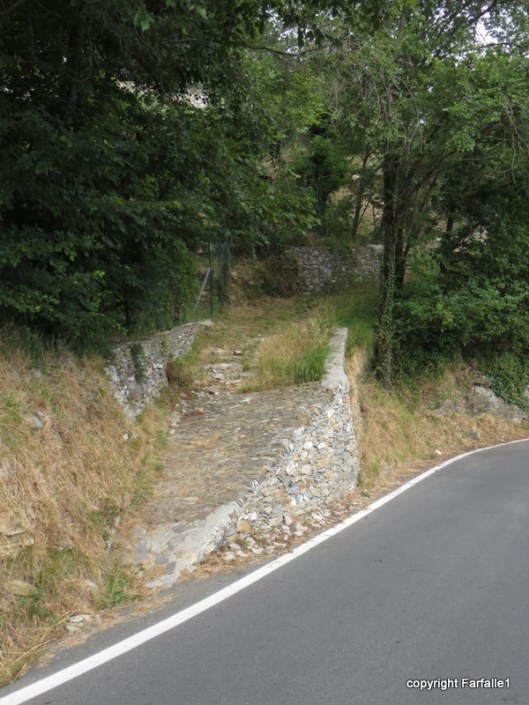
Via alla Crocetta – road to La Crocetta – but the road went down and La Crocetta is clearly up. Across the road is a bit of paved walk that runs along the boundary of a recently built home for retired nuns.

the start of the path

We always assumed it was part of the nuns’ property, but it is directly across the road from the sign and leads away exactly as if it were a continuation of the signed street. This required investigation.  The worst that would happen is that my theory that this walking path led to La Crocetta would be mistaken, and I’d have to turn around.

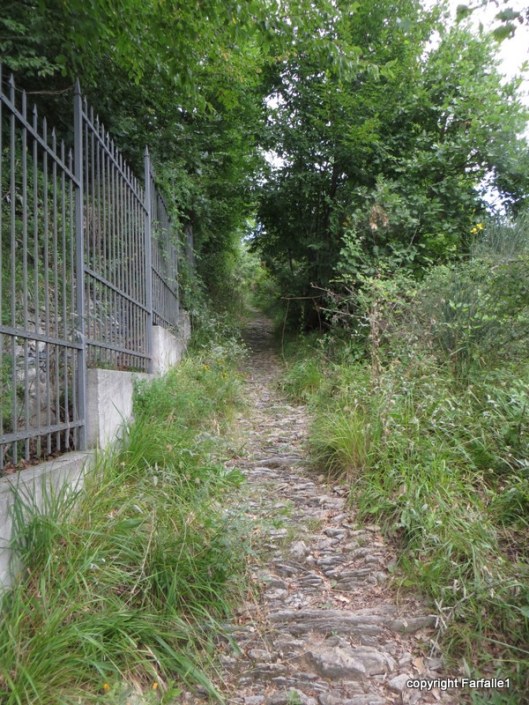
Not far along the path began to narrow.

beginning of the path up

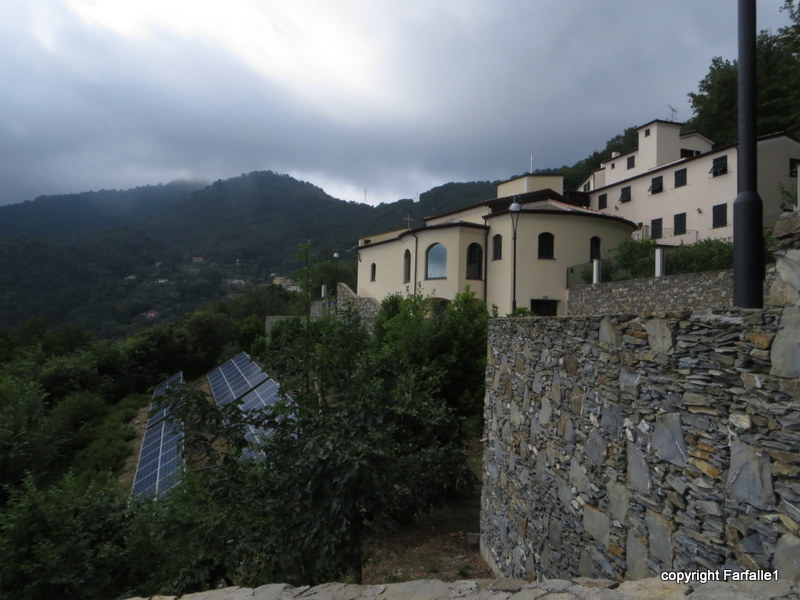
Walking along the path gave a good view of the Nuns’ home, and I was startled and delighted to see that they, too, have gone solar. That’s quite an array of panels, and as there are fewer than 20 women living there I have to think that they are generating a lot more power than they need. They live rather simply.

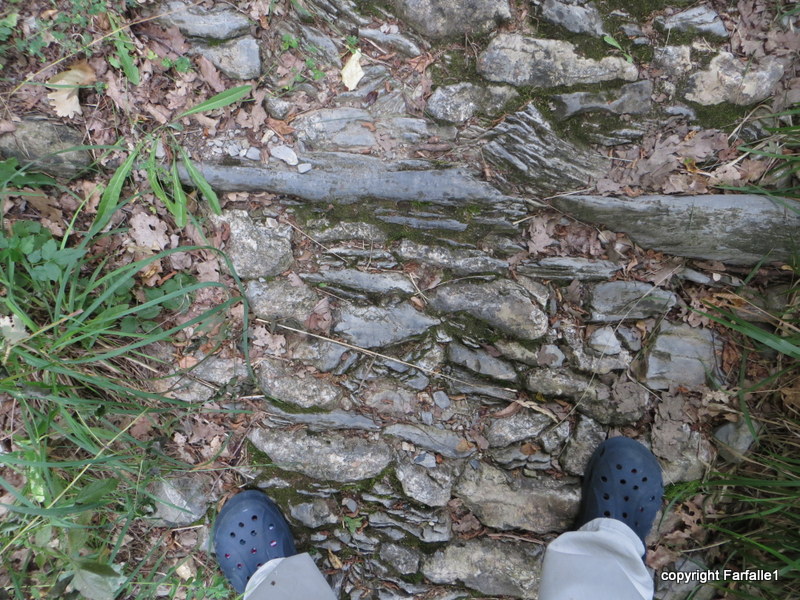
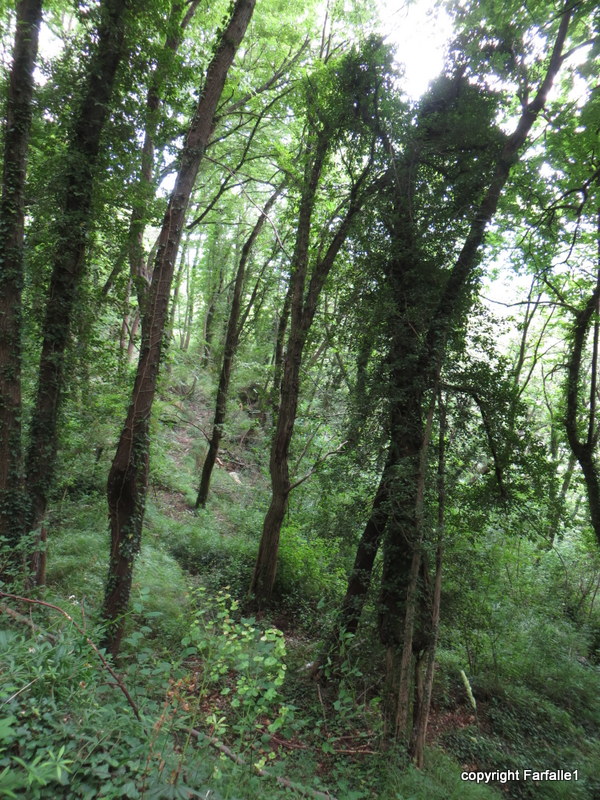
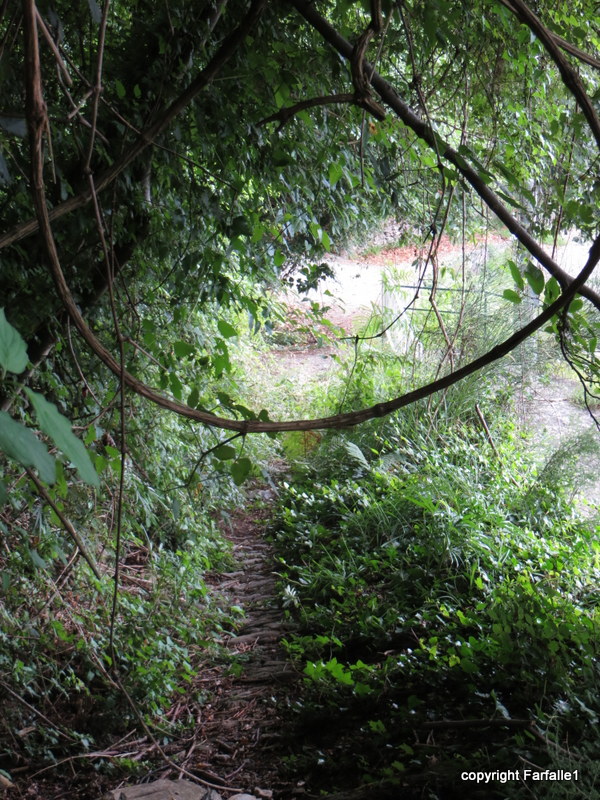
fotovoltaici at the nunsSoon I was walking through the woods with nothing but birdsong to accompany me. Although the road had narrowed considerably, there was no longer any doubt that it was going somewhere, probably La Crocetta. It was built in the same style as all the old roads here, with slim stones set into the earth on their sides, giving a ridged surface. Every now and then a few long stones are laid in for drainage.

the old road(This is probably as good a time as any to tell you that Crocs are not appropriate foodwear for a walk like this. I must have stopped over a hundred times to hike my socks up.) I have asked many people why the stones are set in this fashion, and no one has ever been able to tell me for sure. My theory, and I’m sure it’s right, is that if the stones were laid flat they could be easily dislodged, and they would also be rather slippery when wet.  In addition, the ridges, while uncomfortable for light-soled shoes, would be very effective to help mules and heavily-shod people keep their footing.

I was struck again, as I have been whenever I find myself on these ancient roads, with two thoughts: one, that I was walking on the same route that people had used for hundreds of years, a route whose frequent use was probably abandoned only within the last sixty or seventy years. Over the last decade I have spoken to two elderly people who have recounted walking from the Val Fontanabuona over the mountain to Rapallo, Santa and Portofino to sell vegetables and eggs. They arose in the dark, made the long walk, sold the little they had carried, and then walked back, arriving home after dark. They were little children. The second thought was that there is probably not a square inch of land around here that hasn’t been walked on or explored.

I climbed through the forest for quite a while and finally came upon signs of civilization.

signs of civilization-001

aha!And before much longer I came to some houses. What a view they have of Rapallo and the Gulf!

rapallo-001It’s a poor picture – there were a lot of clouds and moisture in the air – but you get the idea. You can see forever from up there.  A neighbor passed me in a small ‘furgone’ (one of the narrow pick-up trucks that are prevalent on and suited to our narrow roads) pinned down under a huge, swaying load of hay. I crossed the main road, and took off again in the woods, arriving in another twenty minutes at my objective, La Crocetta.

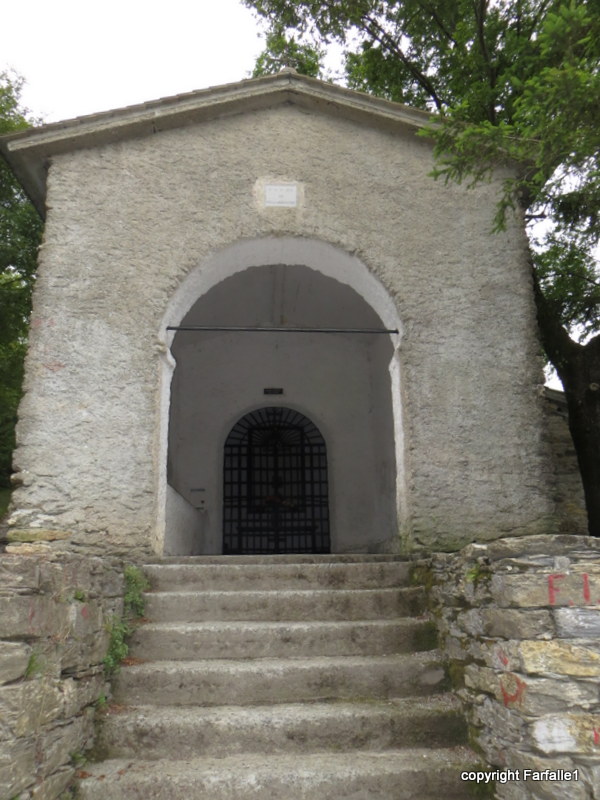
La CrocettaThis is a sweet shrine, quite small, always well maintained. From here the road plunges down into the valley on the other side. A well-used hiking trail connects La Crocetta to Montallegro in one direction, and to a well-maintained refuge for hikers on the adjacent peak in the other direction. And of course it also connects to Rapallo on the seldom used path I had just arrived on.

It took longer than I anticipated to make this little trek (all that climbing!) so without lingering I retraced my steps. Isn’t it odd how different everything looks when you’re walking in the opposite direction? On the way down I noticed some wildflowers I hadn’t seen on the way up.

purple flower

other purple flowersAs evening fell a section of tall new-growth trees felt downright spooky – they were creaking and groaning in the wind. I speeded my pace, hoping a tree wouldn’t fall on me.

creaking treesIn another spot a little farther on there were a lot of vines, waiting to trip up an inattentive walker.

branches waiting to grabIt’s hard to imagine what life was like for people who used these roads as their main highways, who walked by foot or rode on a mule to get where they were going, and did so frequently. The road would have been more open then; a lot of this land was under cultivation until not very long ago. How different their pace of life was! After a walk like this, when one feels cast back in time, it seems more than a little disorienting to return suddenly to modern life. Everything moves so fast, and it’s so noisy. What feels just right, however, is to climb into a hot tub for a good long soak. So that is what I did.


Ships Not at Sea

13 Sunday Jul 2014

Posted by farfalle1 in Italian men, Rapallo, Uncategorized

≈ 8 Comments

Tags

Franco Tassara, Model ships, Models

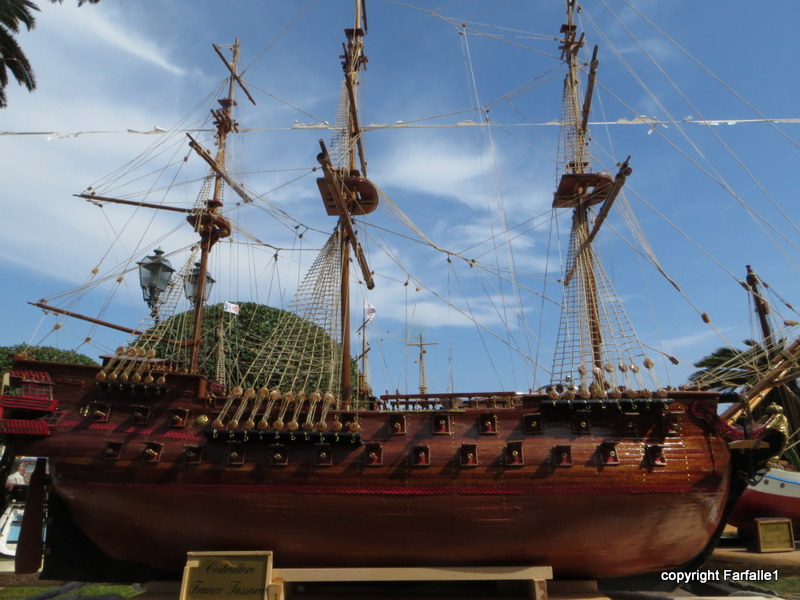
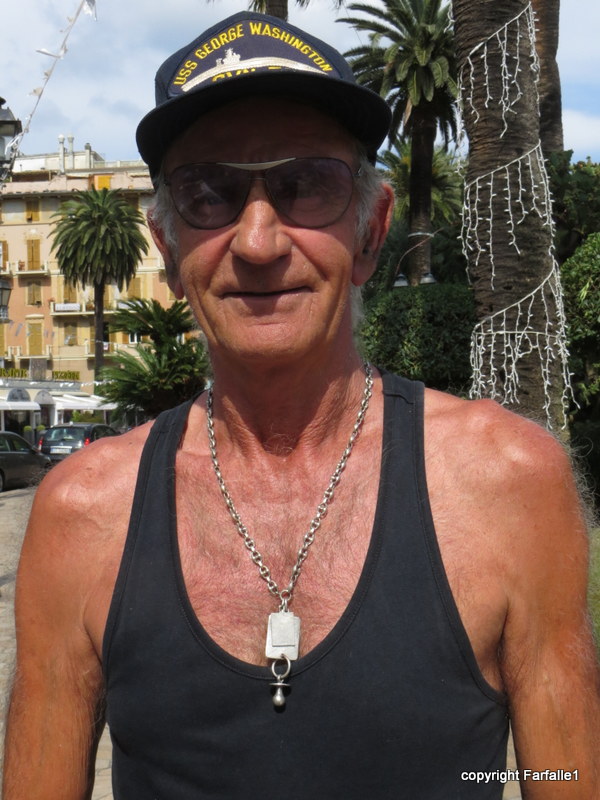
Franco TassaraMeet Franco Tassara, Master Shipbuilder, of Cogorno (a small town on the far side of the Valle Fontanabuona, on the other side of the mountain from Rapallo). Studying his photo there are two things I wish I noticed when we were chatting, and that I asked him about them. First, the hat? How did he come to have it and why? Second, why does he wear a small metal pacifier on his necklace, or is that something else, perhaps a microphone? He clearly has a sense of humor as his calling card gives him the honorific Conte Decaduto (Count Decrepit).

In any event, calling Sig. Tassara a Shipbuilder is an exaggeration, if only of scale. He does not build the ships that sail the ocean blue, rather he builds quite lovely model ships, some of which he is willing to sell and which he displays, idiosyncratically, on the roof of his auto.

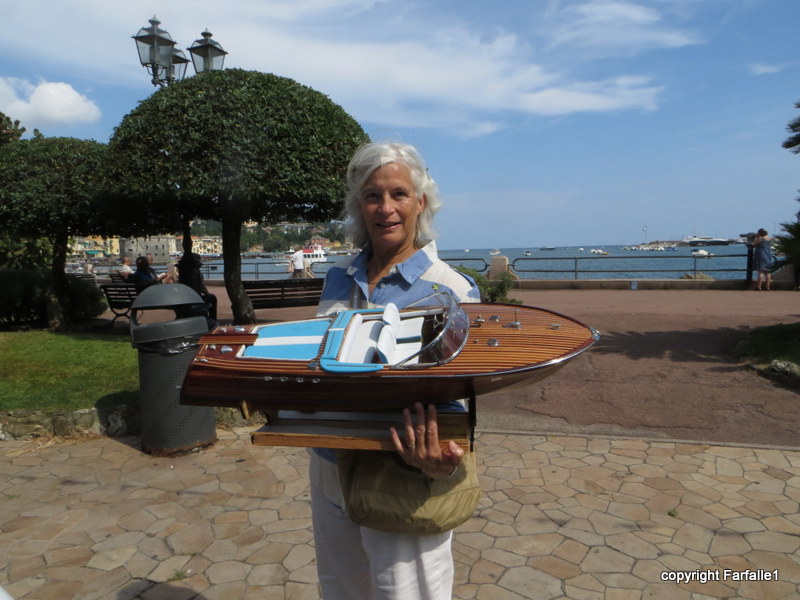
model ships on car roof-001This whimsical display caught Speedy’s eye as we motored through town a while ago, and we came back to investigate. That is when we met Sig. Tassara and chatted with him about his models. He was most eager that I pose holding them. Perhaps he thought that, like puppies, once you’ve held one you simply can’t live without it. Alas for him, it didn’t work in our case, but we did enjoy getting a close-up look at his meticulous work. He makes models of all different kinds of boats.

Foolishly I forgot to ask what the names of the boats are. Fortunately our friend T. is a nautical wizard, Dinghy Class champion, meticulous sailing judge and general mistress of the wind and seas. She told me the ship below is called a Runabout, and may be a model of the Riva Aquarama, a famous luxury wooden Runabout made by the shipbuilders Riva.

IMG_3457This large one, so intricately detailed, is a “Galeon” with a double deck of guns:

model shipJust thinking about trying to sort out all the rigging was enough to give me a headache. It’s not terribly dissimilar from the Galleone Neptune at the port in Genoa, a ship that was built in 1985 for Roman Polanski’s film “Pirates.”  Sig. Tassara’s version is a lot tidier though, to tell the truth, and not covered with all that ridiculous froufrou:

Photo from Daniele Martino’s Flickr Photostream. Thank you Daniele.

Sig. Tassara was a tug-boat captain, so the sea is honestly in his veins. He has made models since retiring and spends many an hour at it. A ship like the Galeon may take him three or four months to complete.  One like the Runabout may take only three or four weeks.

Sig. Tassara, along with others with the same hobby, exhibits his boats at the Mare Nostrum show which is held annually in November in the Rapallo Castello (you can read about an earlier iteration of the show here).  Living up on the hill as we do we sometimes forget how very central the sea is and has always been to life in Rapallo. This annual exhibition is an always fascinating glimpse of the many facets of the ongoing relationship between the two.

The dates for the 2014 show have not been posted on the Mare Nostrum website yet, but it is most always held in the latter half of November. If you find yourself in Rapallo then, do pay a visit to the show and seek out Sig. Franco Tassara, who will probably be happy to let you hold one of his puppies.

Kumquat and Cherry Upside Down Cake

28 Saturday Jun 2014

Posted by farfalle1 in Desserts, Food, Uncategorized

≈ Leave a comment

Tags

Amarene, Sour cherries, Upside down cake

kumquat and cherry upside down cake-002A friend recently asked if I was ever going to put up another recipe, and I realized that it has been quite some time since I’ve done that. For once this is something that I whipped up, not one of Speedy’s incredible dishes.  This year I have become the Queen of the Upside Down Cake, mostly by default because it is such an easy thing to make and people just love it. Especially here in Italy it is a treat because it is not a normal sort of Italian dessert.

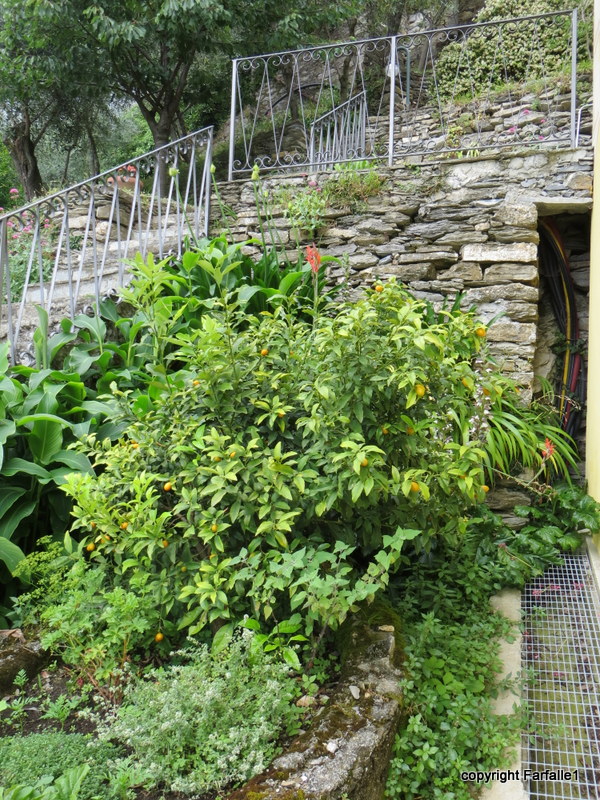
kumquat treeThat shrubby thing in the middle of the photo is our kumquat ‘tree.’ Why it is becoming a bush instead of a tree I’m not sure, but no matter. The important thing is that it has given us zillions of little kumquats this year (you can see them hiding in the leaves). For those of you unfamiliar with this fruit, it is a wee orange in reverse; that is, the skin is sweet and the inside is very, very tart. Kumquats are good to eat right from the tree if you enjoy a tart treat, which we do; it’s not to everyone’s taste.

But kumquat upside-down cake IS to everyone’s taste. Even a friend who usually declines dessert took a very thin sliver just to be polite, and then came back for a full serving (which I found enormously satisfying). I have made three of these so far this year, and each one has disappeared with gratifying speed. In the iteration pictured above I added our sour cherry crop. The great thing about an upside-down cake is you can use pretty much any fruit you have on hand – I have made plain kumquat, kumquat with cherry, the ubiquitous pineapple (from fresh pineapple please, otherwise it is too cloyingly sweet), and nectarine. All have been completely successful.

The next time you’re entertaining and want to have a dessert you can depend on that won’t take you all day to make, try an upside-down cake. You can find the recipe I used for the cake above here. It was shamelessly adapted from one found at Love and Duck Fat, a very beautifully presented web site about food (I recommend you visit them). Have some fun with your fruit and your design, there are no rules.

← Older posts
Newer posts →

Enter your email address to follow this blog and receive notifications of new posts by email.

Join 111 other subscribers

rss

Subscribe in a reader

Search the Blog

A. Useful Links

  • bab.la language dictionary
  • Bus schedules for Tigullio
  • Conversions
  • English-Italian, Italian-English Dictionary
  • Expats Moving and Relocation Guide
  • Ferry Schedule Rapallo, Santa Margherita, Portofino, San Frutuoso
  • Italian Verbs Conjugated
  • Piazza Cavour
  • Rapallo's Home Page – With Link to the Month's Events
  • Slow Travel
  • The Informer – The Online Guide to Living in Italy
  • Transportation Planner for Liguria
  • Trenitalia – trains! Still the most fun way to travel.

C. Elaborations

  • A Policeman’s View
  • Driving School Diary
  • IVA refunds due for past Rifiuti tax payements
  • Nana
  • Old trains and old weekends
  • The peasant, the Virgin, the spring and the ikon
  • Will Someone Please, Please Take Me to Scotland?

D. Good Recipes - Best of the Week winners are starred

  • 'Mbriulata
  • *Baked Barley and Mushroom Casserole*
  • *Captain’s Boston Baked Beans*
  • *Crimson Pie*
  • *Louise’s Birthday Cake*
  • *Melanzane alla Parmigiana*
  • *Penne with Cabbage and Cream
  • *Pizzoccheri della Valtellina*
  • *Pumpkin Ice Cream*
  • *Risotto alla Bolognese*
  • *Rolled Stuffed Pork Roast*
  • *Spezzatini di Vitello*
  • *Stuffed Grape Leaves*
  • *Stuffed Peaches (Pesche Ripiene)*
  • *Swordfish with Salsa Cruda*
  • *Tagliarini with Porcini Mushrooms*
  • *Tagliatelli al Frutti di Mare*
  • *Three P's Pasta*
  • *Tzatziki*
  • 10th Tee Oatmeal Apricot Bars
  • Adriana’s Fruit Torta
  • Aspic
  • Bagna-calda
  • Best Brownies in the World
  • Clafoutis
  • Cold cucumber soup
  • Crispy Tortillas with Pork and Beans
  • Easy spring or summer pasta
  • Fish in the Ligurian Style
  • Hilary's Spicy Rain Forest Chop
  • Insalata Caprese
  • Lasagna al forno
  • Lasagna al Forno con Sugo Rosato e Formaggi
  • Lemon Meringue Pie
  • Leo’s Bagna Cauda
  • Leo’s Mother’s Stuffed Eggs
  • Louis’s apricot chutney
  • Mom's Sicilian Bruschetta
  • No-Knead (almost) Bread
  • Nonna Salamone's Christmas Cookies
  • Pan Fried Noodles with Duck, Ginger, Garlic and Scallions
  • Pesto, the classic and original method
  • Pesto, the modern, less authentic method
  • Pickle Relish
  • Poached pears
  • Poached Pears
  • Polenta Cuncia
  • Recipes from Paradise by Fred Plotkin
  • Rustic Hearth Bread
  • Shrimp and Crayfish Tail Soup
  • Sicilian salad
  • Slow Food Liguria
  • Slow Food Piemonte and Val d'Aosta
  • Spinach with Garlic, Pine Nuts and Raisins
  • Stuffed Eggs, Piemontese Style
  • The Captain’s Salsa Cruda
  • Tomato Aspic
  • Zucchini Raita

E. Blogroll

  • 2 Baci in a Pinon Tree
  • Aglio, Olio & Peperoncino
  • An American in Rome
  • Bella Baita View
  • Debra & Liz's Bagni di Lucca Blog
  • Expat Blog
  • Food Lovers Odyssey
  • Italian Food Forever
  • L’Orto Orgolioso
  • La Avventura – La Mia Vita Sarda
  • La Cucina
  • La Tavola Marche
  • Rubber Slippers in Italy
  • Southern Fried French
  • Status Viatoris
  • Tour del Gelato
  • Weeds and Wisdom

Photographs

  • A Day on the Phoenix Light Rail Metro
  • Apache Trail in the Snow
  • Aquileia and Croatia
  • Birds on the Golf Course
  • Bridge Art
  • Canadair Fire Fighters
  • Cats of Italy
  • Cloudy day walk from Nozarego to Portofino
  • Fiera del Bestiame e Agricultura
  • Football Finds a Home in San Maurizio
  • Hiking Dogs
  • Mercatino dei Sapori – Food Fair!
  • Moto Models
  • Olive pressing
  • Rapallo Gardens
  • Rapallo's Festa Patronale
  • Ricaldone and the Rinaldi Winery
  • Rice Fields
  • Sardegna ~ Arbatax and Tortoli
  • Sardegna ~ San Pietro above Baunei
  • Sardegna ~ The Festa in Baunei
  • Scotland, including Isle of Skye
  • Slow Food 2008 Salone del Gusto
  • The Cat Show and the Light Rail Fair
  • The desert in bloom
  • Trip to Bavaria

Pages

  • Fagioli all’ucelleto

Archives

Recent Posts

  • Thursdays at the Shelter
  • Ahoy, Matey!!
  • The World’s Most Expensive Tomatoes
  • It all depends on how you look at it…
  • A Superior Visit
September 2026
M T W T F S S
 123456
78910111213
14151617181920
21222324252627
282930  
« Jul    

Member of The Internet Defense League

Blog at WordPress.com.

  • Subscribe Subscribed
    • An Ex-Expatriate
    • Join 111 other subscribers
    • Already have a WordPress.com account? Log in now.
    • An Ex-Expatriate
    • Subscribe Subscribed
    • Sign up
    • Log in
    • Report this content
    • View site in Reader
    • Manage subscriptions
    • Collapse this bar
Loading Comments...