The Real Reason??

Tags

,

When we returned from our jaunt to Germany we found the ‘Soccer Field’ fully decked out for our village’s Festa in honor of San Maurizio.  At Last the Committee has a spacious area in which to prepare and serve food.  It is so much easier than the old narrow fascia on this site, and much roomier than the small house and little paved courtyard around the corner which the Committee has used for the last couple of years.

Behind the ‘Amici’ sign is the new cabin which is fully equipped as a kitchen.  The tables are obvious.  Behind the tent and truck in the foreground there was a solid dance floor put down and a small stage for a band erected.  Sunday was the night for the Great Pyrotechnic Show.

Alas, as so often happens in September, it rained.  It seems like our Festa has been rained out a lot in the last few years – and what a pity it should happen the first year we have new festa grounds, I mean ‘a new soccer field.’   It cleared at the end of the rainy Sunday, but the men who set up the fireworks had not had an opportunity to do so, so the show was cancelled.

So… soccer field?  festa field?  both?  I vote for the last.  We have yet to see any soccer played here, but that doesn’t matter.  Building this public space took a lot of time (25 years, according to the Piazza Cavour web site) and a lot of citizen participation and volunteer work.  It surely contributes to San Maurizio having a sense of community.  In my dark heart I imagine that there was some grant money out there available to build soccer fields and our Festa Committee thought ‘what a good idea.  A soccer field is an ideal spot for a festa.’  If that’s what happened, I say more power to them (and I have to be honest: I have no idea what the stated purpose of the Comitato Amici di San Maurizio might be).

Surely someone will organize a soccer program one of these days, and in the meantime we can spend the next year looking forward to La Festa di San Maurizio, 2012 edition – please let it not rain!

Golf in Bavaria

Tags

, ,

(Click any photo for a larger, clearer image)

Hi everyone, we’re back.  I may as well ‘fess up right away that our brief toot in Bavaria was primarily a golf/beer vacation.  We had two days of driving, one up, one back; and three days of golf for the Captain (one for me; I decided walking with a camera was more fun).

It came about this way:  last year we were in the same general area and stopped in a town called Wasserburg where we enjoyed Maxlrainer Beer for the first time.  In fact we enjoyed it so much that the Captain did a lot of research on it when we got home and discovered – oh joy! – that there is a golf course right next to the brewery.  That pretty much solved the question of how to spend this year’s vacation.  Wasserburg, by the way, is gorgeous in its own right, and has one of the most imposing bridge entries we’ve ever seen to a town.
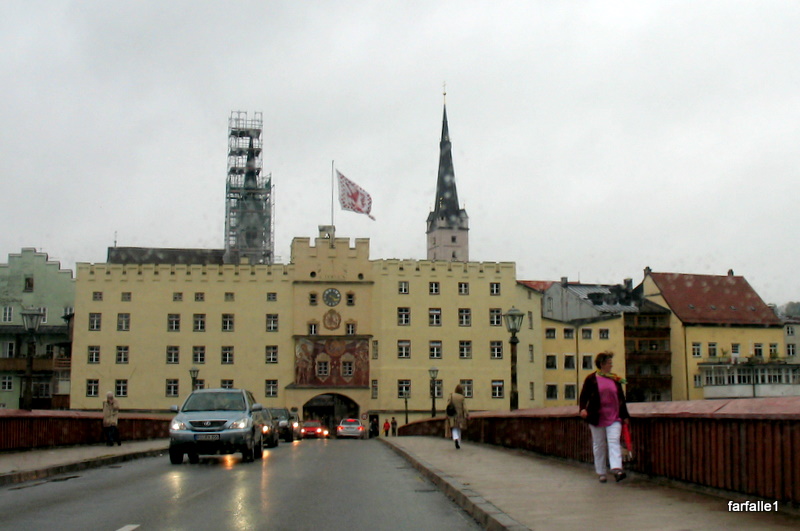

The Captain followed up his research with some emails and further searches on places to stay.  Thus armed we set off, opting to take the long route through Switzerland.  It added an hour or two to the drive but added unbelievably gorgeous scenery, as well as giving us the opportunity to boast about having been in five countries on the one day drive (Italy, Switzerland, Liechtenstein (!), Austria, Germany).  Try doing that from the U.S.A.

Switzerland is beautiful and ridiculously expensive.  They can’t help it; it’s their franc.  If only they’d joined the European Union they too could be enjoying the financial crisis.  But no, they decided to keep their own strong currency, and boy, does the Euro or American traveler feel it.  A very simple lunch set us back over E 30, and we had to pay E1 to pee.  It’s also mandatory to buy a road sticker for the car (E 40).  It’s good for a year, which is fine if you live near Switzerland or go there frequently, but not of great use to us.  On the other hand, it seems a very reasonable fee when compared to what the Italian Autostrada charges each time we set tires on their macadam.  The Swiss sticker is worth every penny; there are simply not words enough to describe the grandeur, the beauty and the sheer visual pleasure of the Alps.

Liechtenstein is an interesting country.  Double landlocked (a landlocked country completely surrounded by other landlocked countries) it has an area of just over 160 square kilometers, a population of 35,000, and over 73,000 holding companies.  Tax haven, anyone?  Unsurprisingly it has one of the highest standards of living in the world.
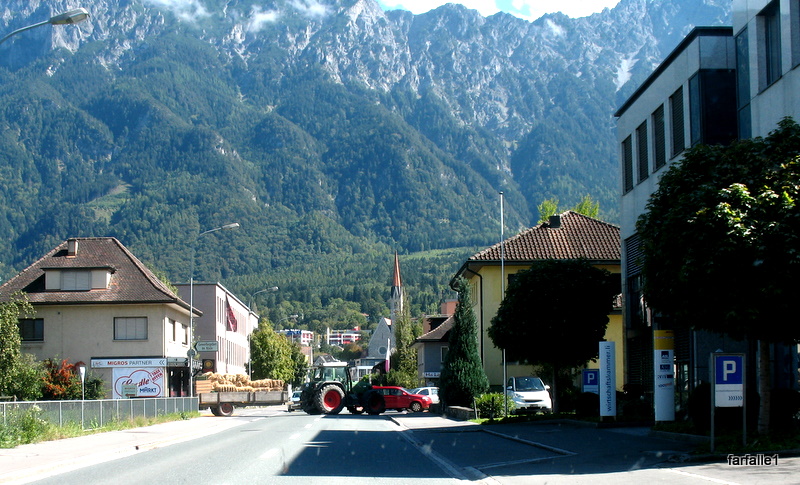
Busy city scene in Schaan, Liechtenstein

Austria also requires a road sticker in lieu of tolls.  It cost E 7.90 for a 10-day pass.  And Austria, too, has beautiful alpine scenery.   In fact, the whole drive there and back was pretty spectacular.
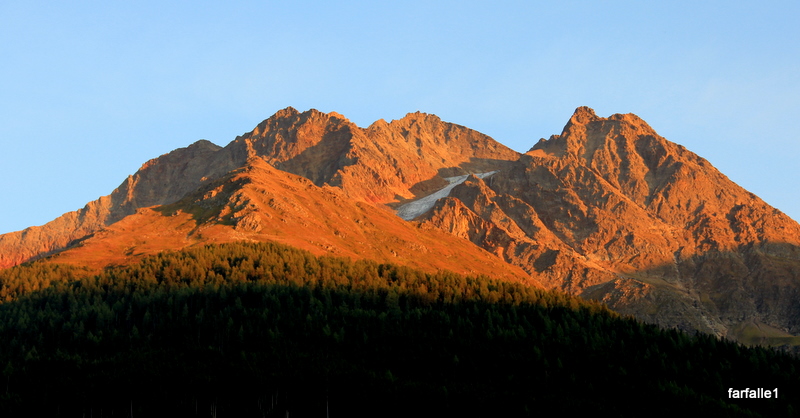
Sunset in Pettnau, Austria

The highlights of our three days in the region were 1: Playing golf on gorgeous farm country courses (Schloss Maxlrain, Schloss Elkofen and Gut Thailing).  They all seem to be pretty new and all are beautifully maintained.

Typical view from a golf course fairway

It wasn’t THAT hard!

2.  Meeting Herr Braeger, former brewmeister and now CEO of Maxlrainer Beer, who gave us over a half hour of his time and many glasses to take home.  He gave us some history of the area and the brewery as well (brewery, golf course, castle, town – it’s all owned by a Prince and Princess!  Really!!)
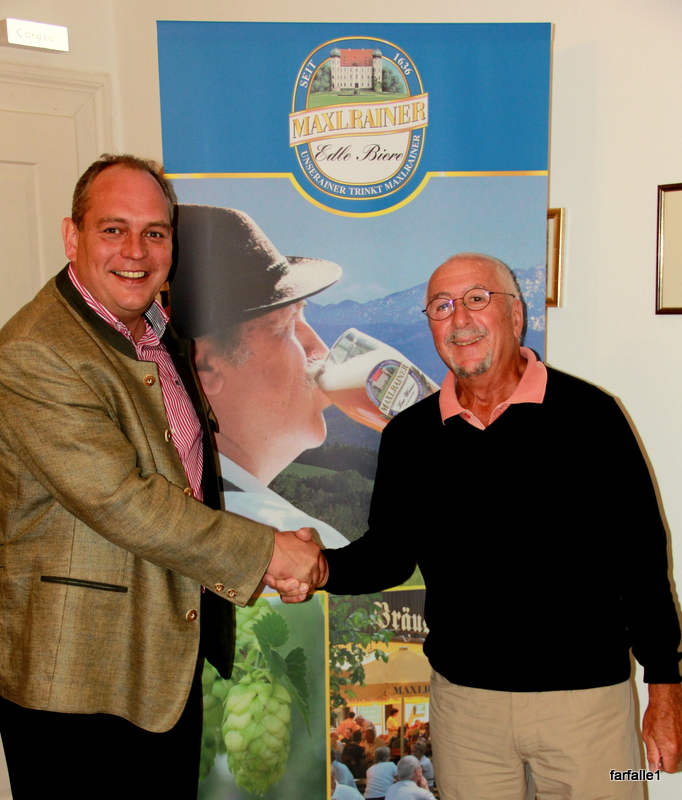
Herr Braeger and the Captain
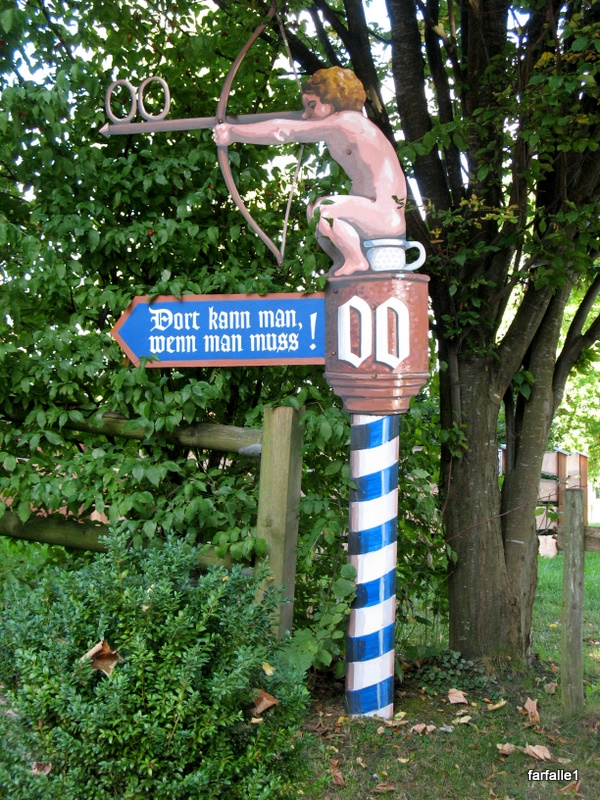
Silly sign at Maxlrainer BrewPub points the way to the loo: “If you must, here you can.”

3.  Staying one night at the Pension Egglhof, one of the most understatedly elegant places we’ve ever stayed. It was built five years ago as part of a larger farm operation.  If a nail was used in construction, we couldn’t see it. It gave every appearance of having been built in the old-fashioned way to resemble an old-fashioned structure.  But it had every modern convenience, including a fantastic glass sink and Wi-Fi.
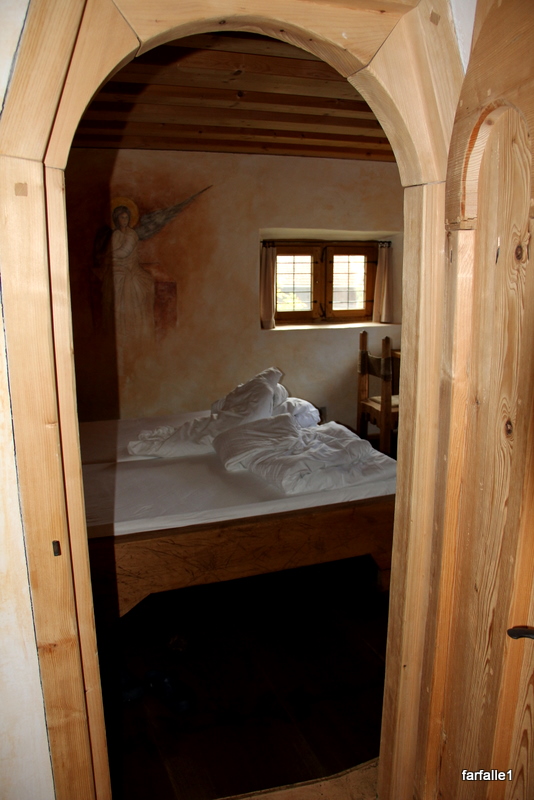
Door to room at Pension Egglhof; note fresco of angel on wall
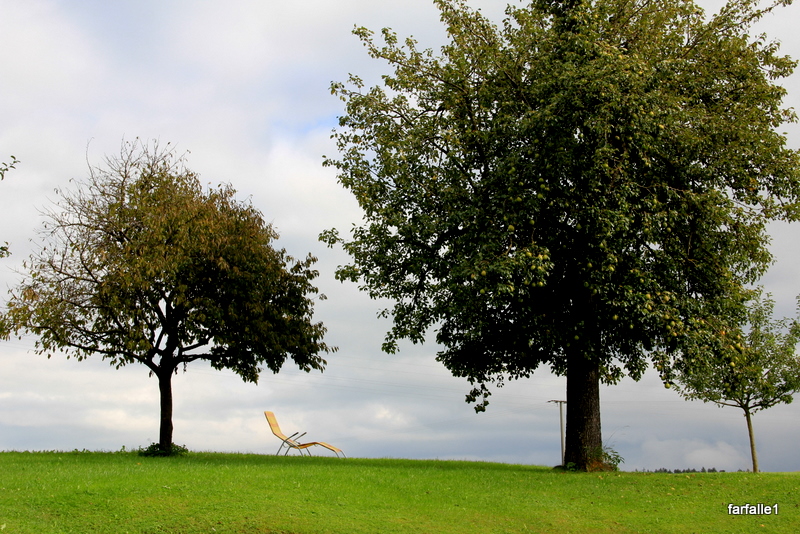
Behind the Pension…

4.  Eating and drinking traditional Bavarian fare.
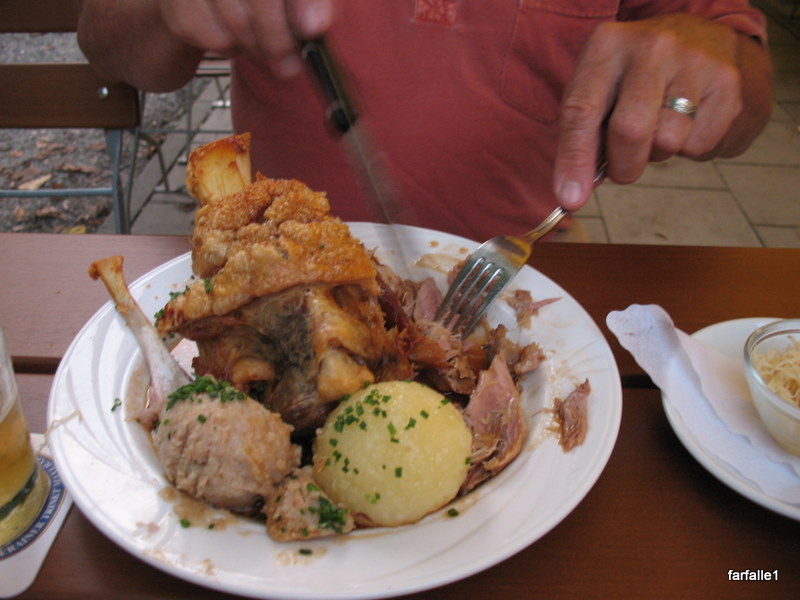
Schweinshaxe! Out of focus due to excitement.
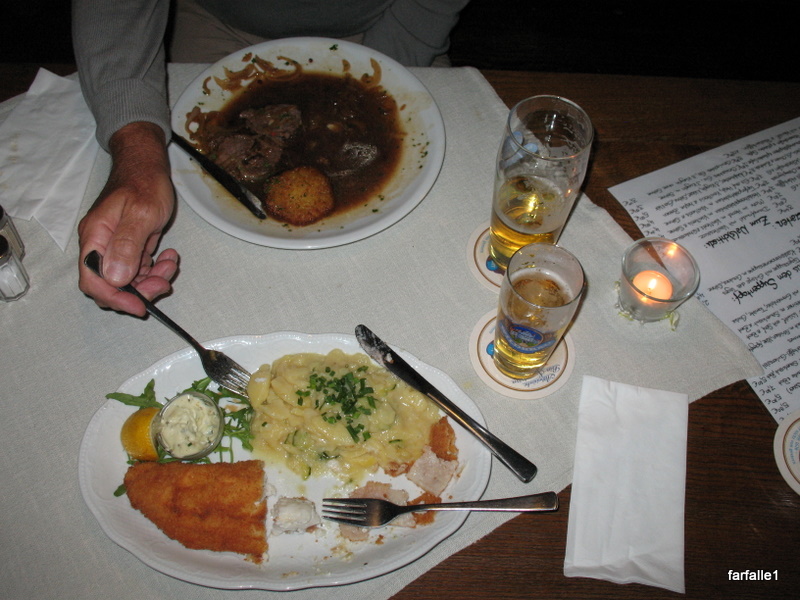
Fish and… not chips. Brown meat in brown sauce (ox, actually)

5. Asking for directions to a well-hidden gas station and having a map drawn for us on a piece of pine board.

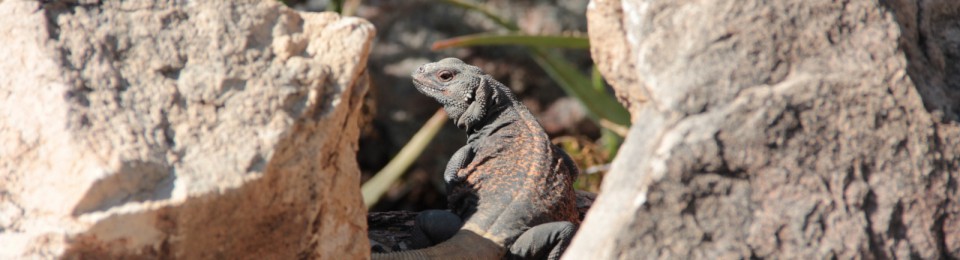
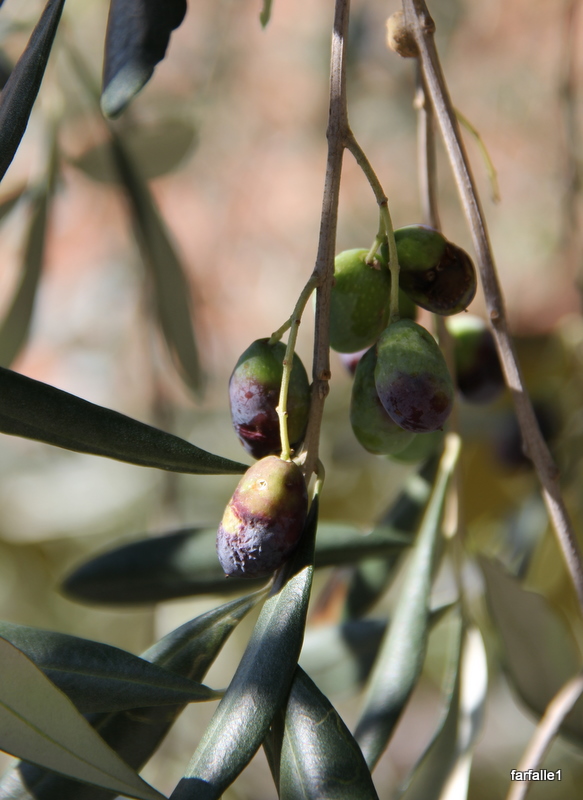
I ended up taking a lot of pictures of the animals and flowers we encountered on the various golf courses.  If you’d like to see some of them, as well as some more shots of the lovely scenery, click here  (click on ‘slide show’ for best viewing).

Much of Bavaria is rural, with hills, farms, lakes and mountain and offers many opportunities for outdoor recreation.  If that’s what you like to do, I can guarantee that you, too, can have an excellent vacation in Bavaria.
The Best Thing We Ate This Week – Stuffed Grape Leaves

Tags

,


Grapes.  Italy is covered with them, and this is the season when they come into their own.  All around Toscana and Piemonte the grapes are being harvested and turned into wine.  The markets are full of plump pale green eating grapes, sweet, succulent and seedy.  Delicious!

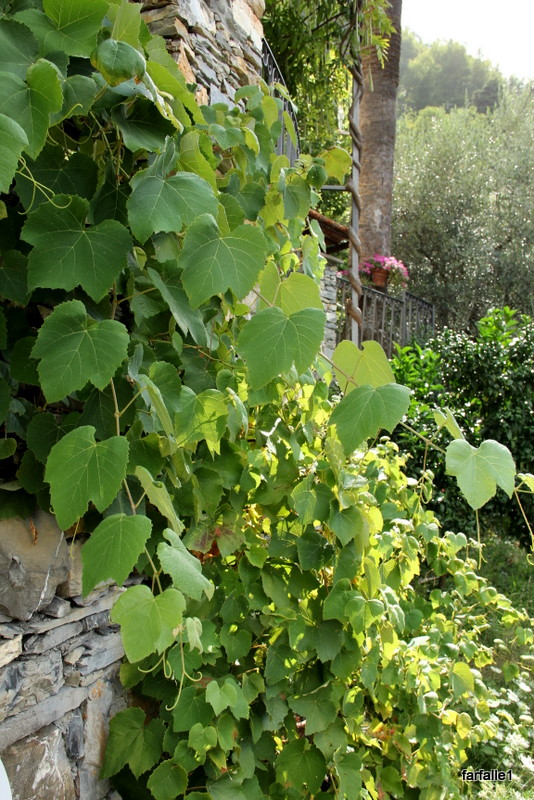
About five years ago our friends Rick and Marisa gave us a small vine of what’s called American grapes here – the sweet purple Concord grape from which grape jelly is made.  Every year it grew a little more, but remained rather small.  (One reason it did so is because some critter kept eating the new shoots each year.) Suddenly this year it exploded (as you can see above) threatening to engulf our terrace.

With great excitement we watched as many panicles developed little hard green orbs which gradually swelled and began to change color.  There were so many!  One day I hunted through the vines, mentally counting jars of jam, and, after a taste, decided that the fruit needed one more day of hot sun and then it would be perfect.

The next morning I gathered up a basket and the secators and headed down for the first ever vendemia.  But wait.  Where were the grapes??  With mounting horror I realized that there was not a grape to be seen.  The panicles were still there, their little stems taunting me, but not a one carried a grape any more.  Who was the villain?  We suspect a rat, literally, as they like sweet grapes we’re told.  Must have been a rat smart enough to finally figure out that waiting for the grapes in August was better than eating the new growth in May. But oh, grrrrrr.  I was so annoyed.

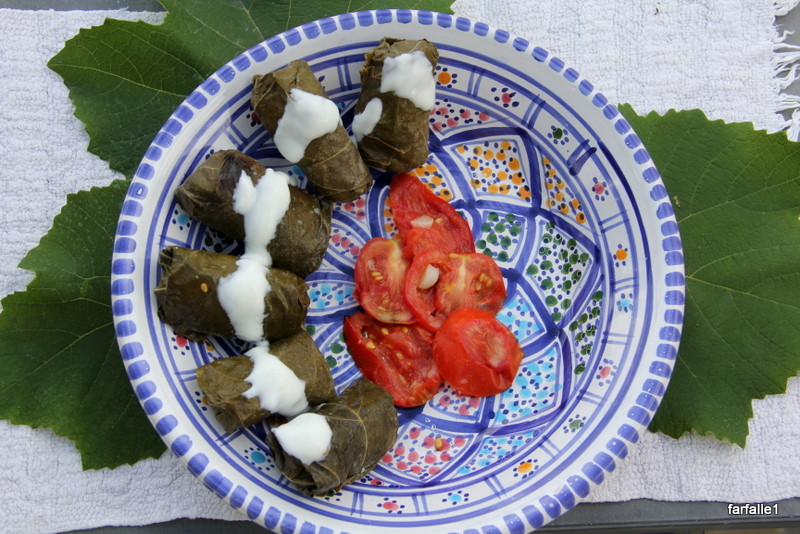
But then I got thinking, all is not lost.  We might not have grape jam this year, but the Captain makes wonderful stuffed grape leaves.  So instead of harvesting grapes I harvested a couple dozen beautiful leaves and called the head chef to report what had happened.  He made a detour to the local Middle Eastern food shop and picked up a kilo of of frozen lamb and that night we sat down to a delicious meal.  It has always puzzled us that in this country of grapes there do not seem to be recipes for the leaves.  But thank goodness other cultures have developed them, and that night we were the beneficiaries.


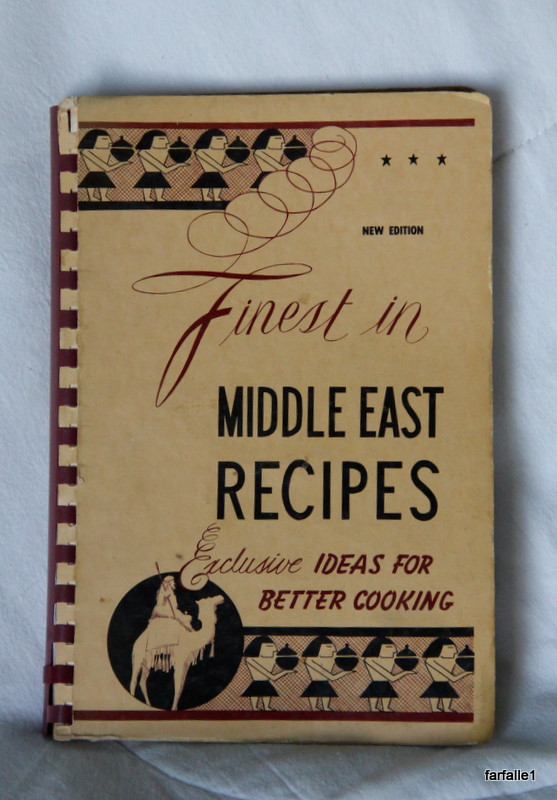
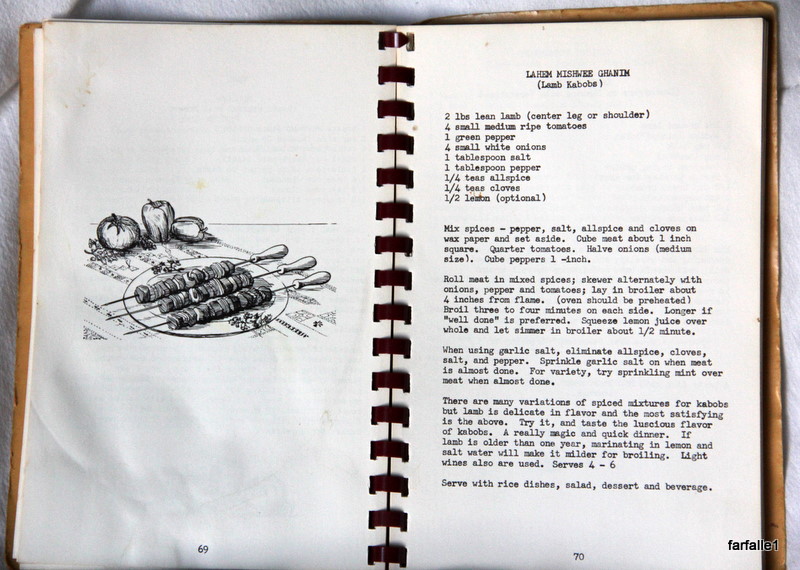
You can find the recipe the Captain uses here.  It is taken from a book called Finest in Middle East Recipes; Exclusive ideas for Better Cooking, by Yasmine Betar.

You’ll notice from the photo that the Captain’s copy of this fine book is the New Edition – 1968 (originally published in 1957).  The author is so modest she doesn’t even put her name on the cover!  The title page lures one on with the promise of “Over one hundred Recipes, Simplified, With suggested menus, Their uses origin and history… Also spicelore and herbs, Some stories of folklore origin.”  The inside of the book is as delightful as the outside:

The illustrations are by Leo Sarkisian, who is well-known as a collector and recorder of African Music.

Ms Betar was born and grew up in Wilkes-Barre, Pennsylvania, the daughter of a Lebanese food marketer.  She learned food from her father and its preparation and lore from her mother.

The Captain has altered her recipe a bit, but it is still mostly hers.  If you decide to make these stuffed grape leaves you’re in for a real treat.

Diving for Pearls in Zoagli

Tags

, , ,

(click on any photo to see a larger, clearer image)

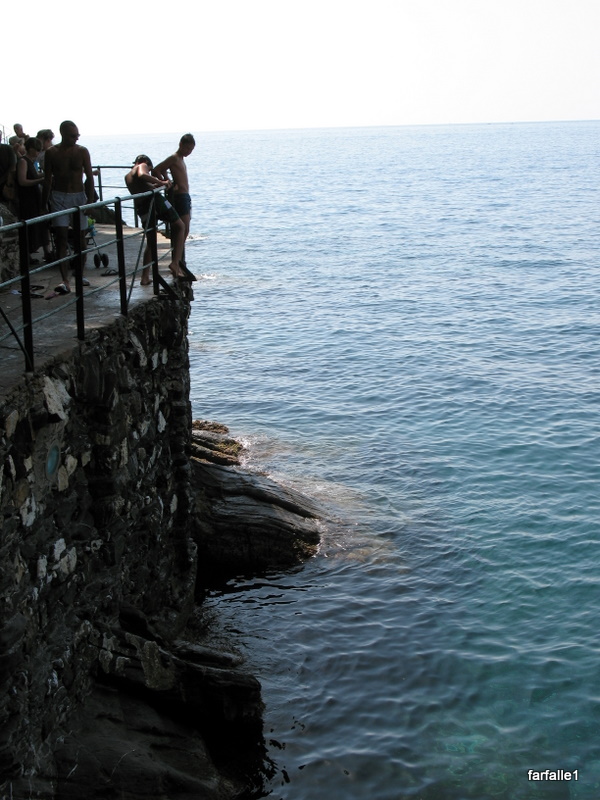
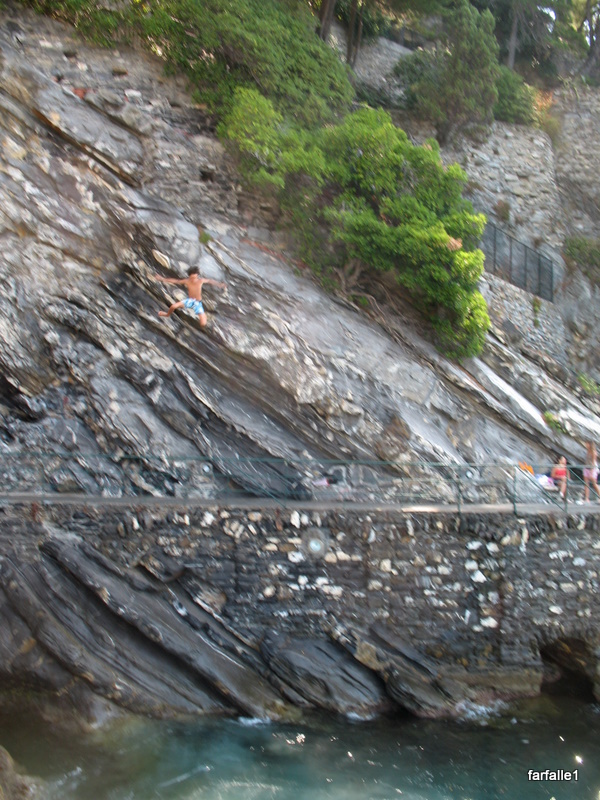
Nah, I’m just kidding, they don’t really dive for pearls in Zoagli, at least I don’t think they do. But they certainly do dive.  The young neophytes start from the passagiata walk, a gorgeous path that has been constructed where the sheer, steep cliffs meet the rock strewn sea:


And if you think mothers object to their children jumping from a great height into what looks like a pile of rocks, guess again.  Mom jumps too!


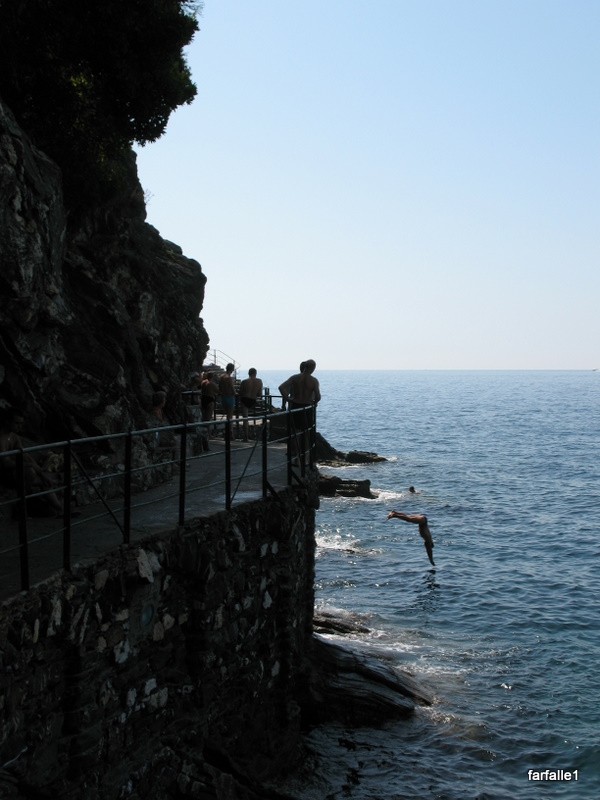
Once they’ve mastered the low dive, they move up to the medium dive.  This young man dove from the ledge above the heads of the three people standing farthest along the sidewalk; he not only had to clear the sidewalk, he had to get far enough out to miss the rocks just below the walk.


Then there’s the…. High Dive.

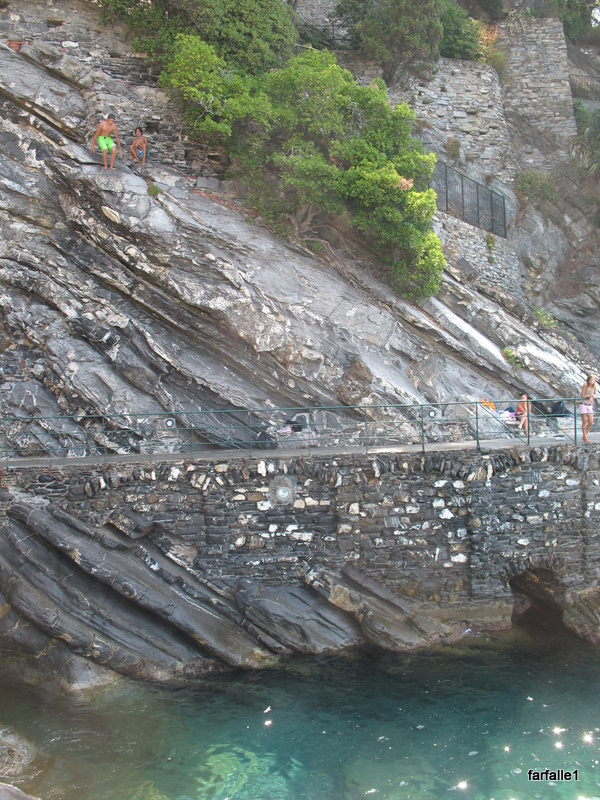
See the boy in the green trunks with his friend about twenty feet above the passagiata?  This stops my heart every time I see it – there’s no margin for error in this jump.

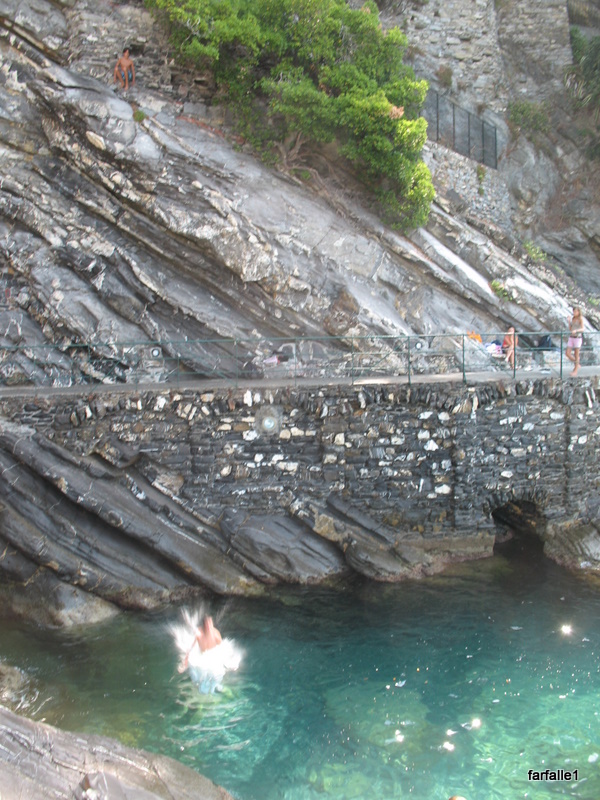
And there he goes!

The photo is out of focus because the whole thing makes me so nervous my hands shake.  But look!  He’s arrived safe and sound!

Jumping from the high rocks seems to be a rite of passage for Zoagli teenagers (mostly boys, though I’ve seen girls jump too).  It makes me kind of glad I didn’t grow up on a rocky sea coast.  No.  It makes me very glad I didn’t grow up on a rocky sea coast!

Be Well!

Tags

,

(Click on an photo to see a slightly larger, much clearer image.)

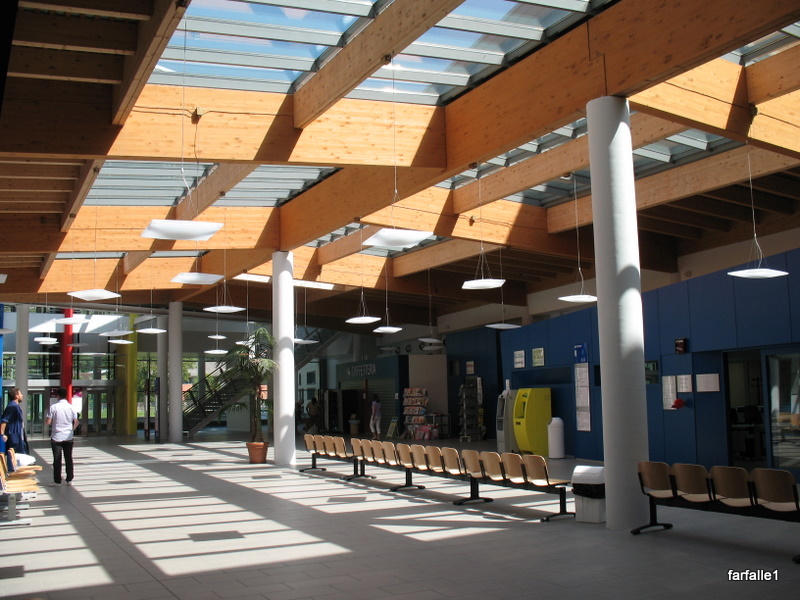
Rapallo has a new hospital, an eerie place because, the two times I’ve been there, it has seemed almost empty of people. I’m accustomed to thinking of hospitals as over-crowded bustling places, but this one isn’t, at least not yet. A beautiful structure in the modern idiom, here is what it looks like from the street:

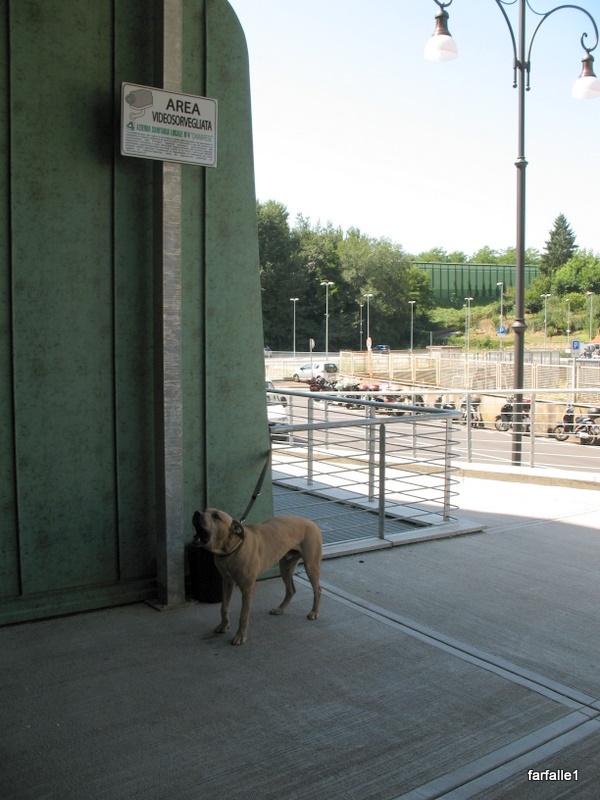
Evidently it’s one of the few places in Italy where dogs are not welcome. This fellow was singin’ the blues:


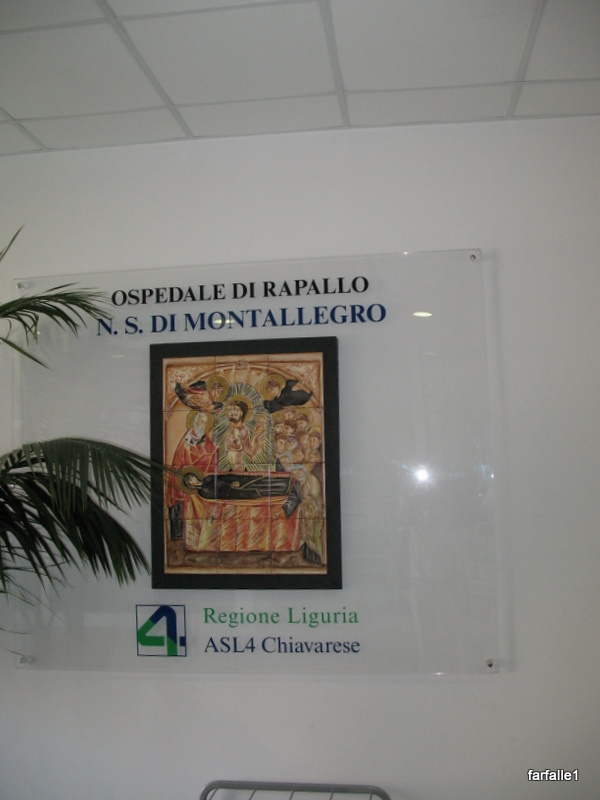
In the foyer of the building you can examine a replica of the ikon from Montallegro – the hospital’s full name is Ospedale di Rapallo N.S. di Montallegro (N.S. means Nostra Signora, Our Lady).


Once past the corridor with the very large and well-appointed gift shop you find yourself in a large interior courtyard, from which you choose to go to either pavilion A or B:


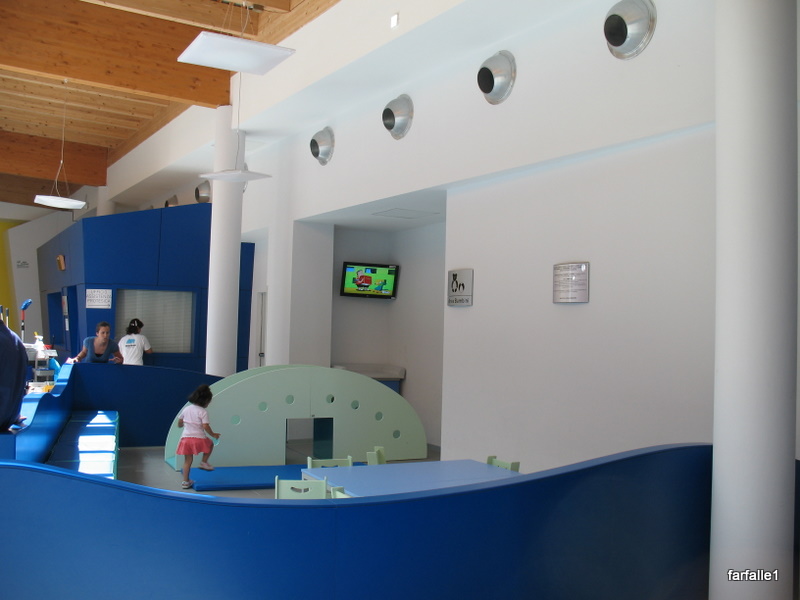
The courtyard contains a large cafeteria, closed the days I was there, and  even a play area for kids:


I was eager to ride in these elevators, but my business was in the other pavilion where the elevators are the more prosaic hidden variety:


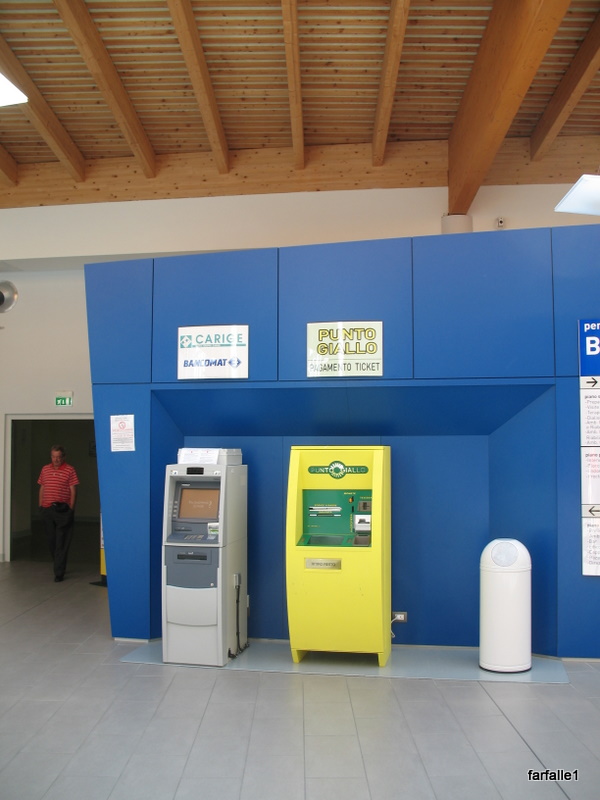
In Italy you pay ‘a ticket’ for medical attention – not always, but frequently. For instance, I went to the hospital for a rather run-of-the-mill test, for which I was charged € 25. If I had not already paid the ticket when I made the appointment at the health services office, I could have paid at the machine on the right. No ticket, no test. If you’re short of cash there is a bancomat (ATM) right there on the left.


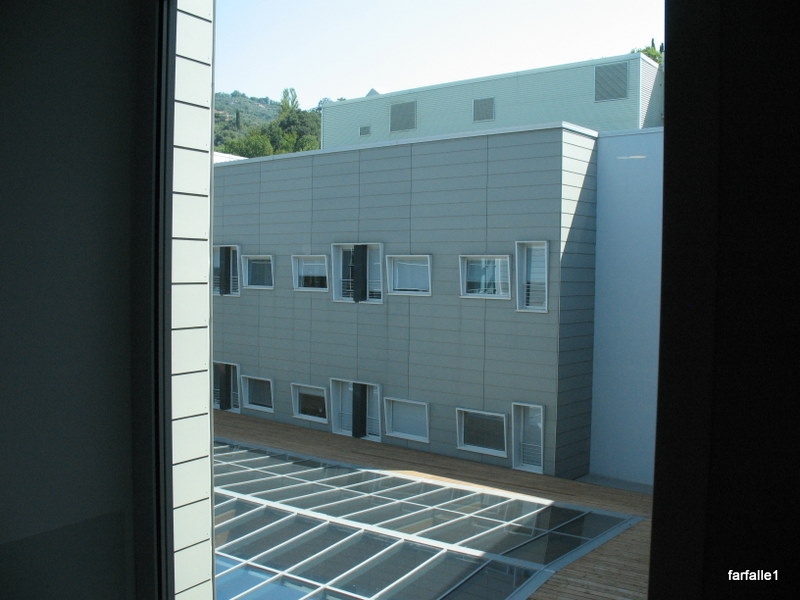
This is what the roof of the central courtyard looks like from above (I was on the third floor):


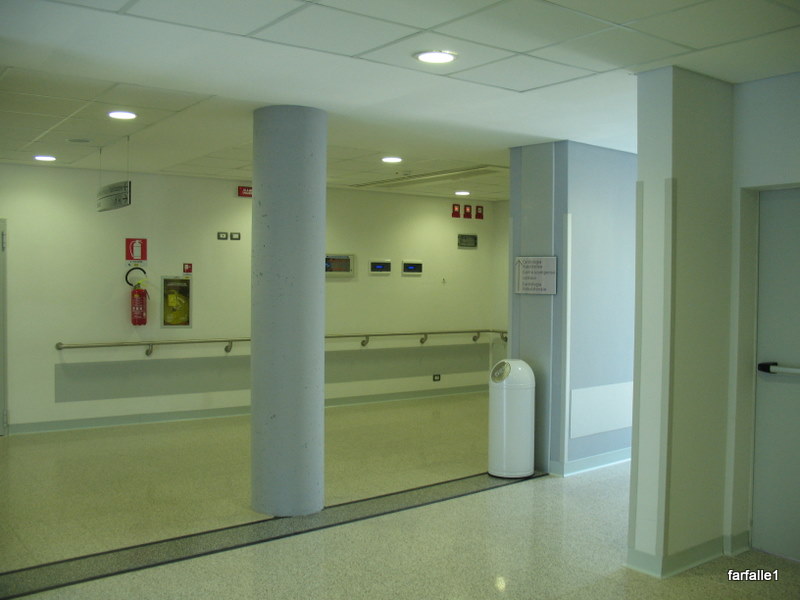
And this is the spookily empty cardio corridor:


There was a handful of people awaiting their tests in an interior waiting room, but no one had to wait more than 10 or 15 minutes, which I think must be some kind of record. When I returned the next day for the second part of my test I didn’t even have time to get my rump in a chair before I was called back to the examining room.

The hospital was constructed over a period of five years at a cost  € 43.9 million, most of which was paid for by the Region of Liguria.  Ours is a region of old folks – 27% of us are ‘vecchi’ – and the hospital has been assigned specialties accordingly: orthopedics (need a hip?) and eyes (how are those cataracts?).  In addition there is a cardiac rehabilitation center and a dialysis unit.  The hospital has 140 beds.

I’m sure this lovely hospital is getting much more use than I saw on my two brief visits, and I’m sure usage will increase over time… if only because, as my friend A. says, they serve the best cup of cafe in Rapallo (when the cafeteria is open, that is)!

Who Knew – Cold Breakfast

Tags

, , ,

Photo courtesy of mintfoods.com.au

One of the joys, arguably the principal joy, of staying at a B&B is the breakfast part of the equation. We almost always seek out small B&B’s when we travel. Sometimes the decor is plain, sometimes fussy, the beds sometimes too small or not terribly comfortable. We almost always find a level of cleanliness Expatriate could only hope to emulate in her own home. And of course, the best part: breakfast! In Germany and Austria the array of cold sliced meats and cheeses is mouth-watering. In England the FEB (full English breakfast) with fried tomatoes, mushrooms and cold toast in that silly toast-holder is a good reason to get up early.

If you visit Liguria I encourage you to stay at a B&B if that is your preference (and I can even supply the names of a few superb ones), but I must warn you, don’t come anticipating a full cooked breakfast. It’s not that the hosts are lazy or unimaginative; they are simply not permitted to serve anything other than packaged foods for breakfast.  Isn’t that crazy?

There’s a good reason for this sorry state of affairs.  B&B’s are regulated on the regional level in Italy, and there is no inspecting agency to check hygiene and food preparation standards at B&B’s in Liguria.  It’s hard to believe there is a place in Italy where the bureaucracy has declined to put out another tendril, but so it is.  So to protect guests the Ligurian regulations decree that only packaged food can be served.  Ick.  Some (not all) other provinces have such an inspecting agency – and that’s why you can get a ‘real’ breakfast in, say, Tuscany.

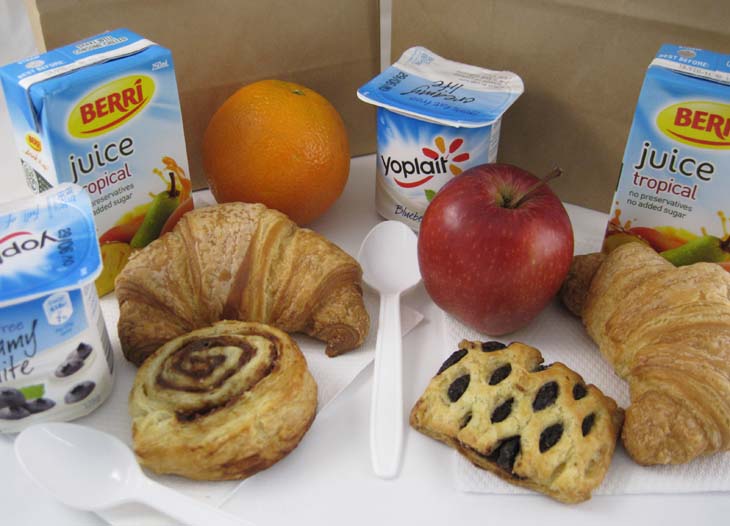
So the next time you’re at a B&B and you wonder why your highly anticipated breakfast has turned out to be only buns in a plastic bag, some cookies in a plastic sleeve, cereal in a small box and that’s it… it’s possible that those are the only available permitted foods.  Who knew?

I asked the friend who explained all this to me if eggs were allowed – after all, they come in their own rather elegant packaging.  But one would have to eat the egg raw since cooking is not permitted, and that carries its own risks.  Besides, no self-respecting Italian would eat, or serve, an egg for breakfast. Benvenuto a Rapallo and enjoy your cereal!

What the…. ??

Tags

, ,

Hot as it is outside these days (35 C, or +/- 95F) there is definitely an end-of-season feel in the air.  The birds that were noisily nesting for so long  have abandoned the eaves, the cicadas drone on, but with a new weariness in their thrum.  The sun is setting much earlier, and the shops are full of back-to-school gear.

We’ve been picking and eating tomatoes for a month, and those in the garden which have already set fruit continue to ripen, in spite of the nasty disease that is killing some of their leaves.  No new fruit is forming. The same plight has visited all our viney plants as well – cukes, pumpkins, squash and melons (we have just a few plants of each so each loss is felt all the more).  First the leaves close to the main stem shrivel, then the stem desiccates and the leaves farther along wither and die.  Once the stem dies, the fruit at the end of it stops developing and dies as well.  I don’t know what this malady is, but I notice that we are not the only ones afflicted – all the gardens up and down the mountain are looking pretty sad.

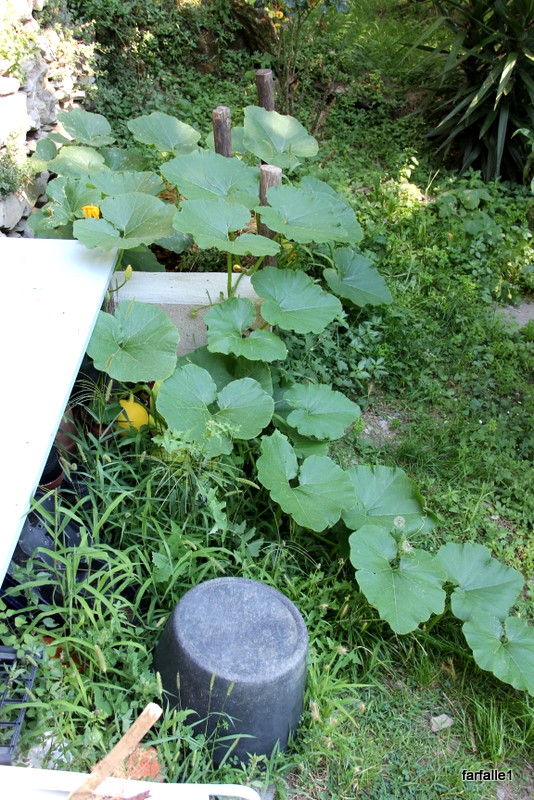
We have had one huge success, though.  The only problem is we have no idea what it is.  A squashy something emerged from the compost pile a while back, and as you can see in the photo above, it is rampaging all around our former orto (abandoned because of lack of sun).  It sure looks healthy, doesn’t it?  No withering leaves here; the worst you can say is there are a few spots of the usual fungus, but even that disease hasn’t been able to get any traction.

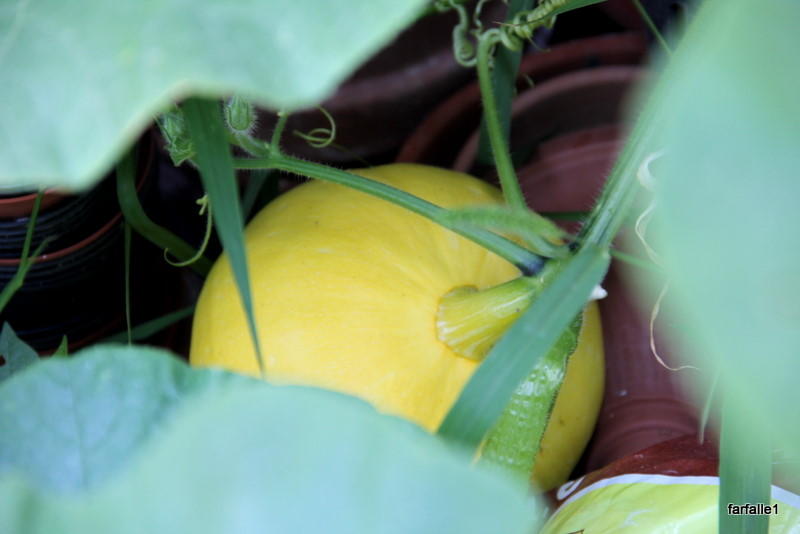
Now it is forming gigantic fruits:

They have the size and shape of rapidly growing pumpkins, but the color of summer squash, which we’ve never grown.  I can only guess that this plant is some kind of hybrid born of the alchemy of a compost pile.  And like so many mutts, this item seems stronger and healthier than all the hot-house sissies that are dying apace in our other gardens.  Bah.  The only problem is, we don’t know if we should carve it or eat it.  Maybe both?  In the meantime, we want to wait and see just how big it will grow, and try to come up with a good name for it – squashkin?  pumpkish? Any ideas?

Rapallo Goes Green

Tags

, ,


The Captain and I have been faithful recyclers since moving here, but it hasn’t always been easy.  Tossing garbage into the bins up here in San Maurizio (seen above) was a game – how fast could we do a drive-by throw? – but for recycling  glass, plastic, paper and tin we had to take our big plastic bag of recyclables on the scooter, clanking and rattling all the way down into Rapallo proper to find the appropriate bins.  The last, tin, proved especially difficult as we knew of only one receptacle, on a bridge out near the autostrada entrance. Oddly enough, the hole for receiving stuff was large enough to accept a tomato-sauce tin, but not large enough to accept a cat-food tin.  Go figure.

(By the way, the papers glued all over the front of the old bins gave very specific hours when it was permissible to throw away your garbage; basically it was allowed in evening, exact hours dependent upon whether it was summer or winter.  The theory must have been there would be fewer unpleasant aromas if the garbage wasn’t left to cook in the heat of the day.  Needless to say no one paid the least attention to these regulations.)

Well, better days are here!  Take a look at these beauties:


Reading from left to right there are bins for Glass; Paper; Plastic AND Metal; and unsorted garbage, for the stubborn old hold-outs who don’t want to recycle.  It’s also for really dirty stuff that isn’t appropriate for recycling, like paper drenched in olive oil (focaccia, anyone?) or the things you just don’t know what to do with, like the mysterious balls of horrible stuff that come out of a vacuum cleaner, or old globs of dried glue. The little brown bin at the end is for vegetable matter.  Up here we would need a bin about 100 times the size of this to accept all the cuttings, prunings and clearings that regularly occur in local gardens.  But it’s a nice gesture and, I suppose, a subtle hint to people to stop burning: too small a container and way to subtle a hint, I’m afraid.

These are our very own San Maurizio di Monti recycling bins, which means the Captain and I no longer have to go down the hill sounding like the tinker of yore when we have cans and bottles to recycle.  What a huge improvement in our lives!  Not everyone’s life improved as much though.  The reason is that though they replaced most of the old bins, they did not replace ALL of them, so some people who used to have conveniently placed bins now have to walk quite a distance to get rid of their rubbish.  Do they like it?  Not at all!  Will they stand for it?  Evidently not.  How do we know?


If they take away your old bin and don’t give you a new one, just put your garbage out on the street – that’ll show ’em.  There’s a certain elegant logic to this approach, but it certainly doesn’t add much to the appeal of Via Betti. We’re watching with interest to see who wins this stand-off, garbage-strewing residents or The Town.

Shhhh

Tags

, , , , ,

The Captain always teases me by saying, “You know I never listen;” and I tease back by saying, “True.  We have the perfect arrangement for living in Italy – you speak and I listen.”  (He’s much better at speaking the language than I.)

While the captain may be teasing, it seems true to me that often people really don’t listen to others (I include myself in this group). The reasons are many – self-involvement, disinterest, hearing impairment, multi-tasking, language challenges, etc., etc.

The TED website recently put up a talk by sound specialist Julian Treasure which I found fascinating. He talks about why people don’t listen, and how we can all improve our listening skills.  It’s a short video, just over seven minutes – here, take a look.

https://ted.com/talks/view/id/1200

One of the things that has always struck me about Italy is the non-stop noise, at least where we live.  As I type this it’s 10:30 at night and there’s a festa down the street a way with live music – very loud live music.  Driving bass, banging drums and a songstress who is, alas, a bit flat.  It’s not my taste in music, to be honest, but I don’t really resent it being forced on us (at least not until after 11 p.m. – last night the live music went til midnight and I did get a bit cranky).  It happens only a few times a year up here. The amazing thing to me is that no one complains or seems to mind.

But if it’s not live music, there is always some other kind of aural stimulation – scooters and cycles tearing up and down the mountain; the bus slowly groaning its way up, merrily tootling its horn at every curve (a necessary precaution on these narrow roads) and then loudly sighing and chuffing at each stop; church bells from our village, from Montallegro and, if the wind is right, from the Rapallo Cathedral; ambulance and police sirens; cruise ship horns; airplanes overhead; dogs barking; cocks crowing at all hours; birds; children shouting (a particularly cheerful noise, that) and always, always conversation.  Conversation as an art form is alive and well in this courteous country.  Finding three minutes of silence daily, as recommended by Mr. Treasure (can that really be his name??) is a challenge here.  Every now and then one of us awakens at 3 or 4 a.m., and we are struck by the relative silence – it is such a rarity.

In contrast the U.S. seems much quieter in general (not the cities, to be sure).  The example the Captain likes to give is this:  when Italy won the World Cup (European football) in 2006 the racket from Rapallo was amazing – horns blasted, cars tore through the center of town with kids hanging out waving flags and shouting, ships in the harbor blew their horns – it was an explosion of celebratory sound.  In 2008 when the Arizona Cardinals (American football) won the game that sent them to the Super Bowl we stuck our heads outside right after the game.  Our Arizona neighborhood was as silent as a tomb, the town was silent; and we were a mere forty miles from the stadium where the game was played.  No one was out and about because anyone not at the game was surely inside watching it on TV – but afterwards there was no public demonstration of glee.  And if someone’s party is noisy in the U.S. it takes the neighbors no time at all to call the police and complain.

So, is it harder to listen in Italy, where there is so much more ambient noise?  Though the Captain might well disagree,  I don’t really think so.  But as we know, he doesn’t listen anyway…